Garden Blog - Top Tropicals

Date: 9 Sep 2019

Time to clean your yard!
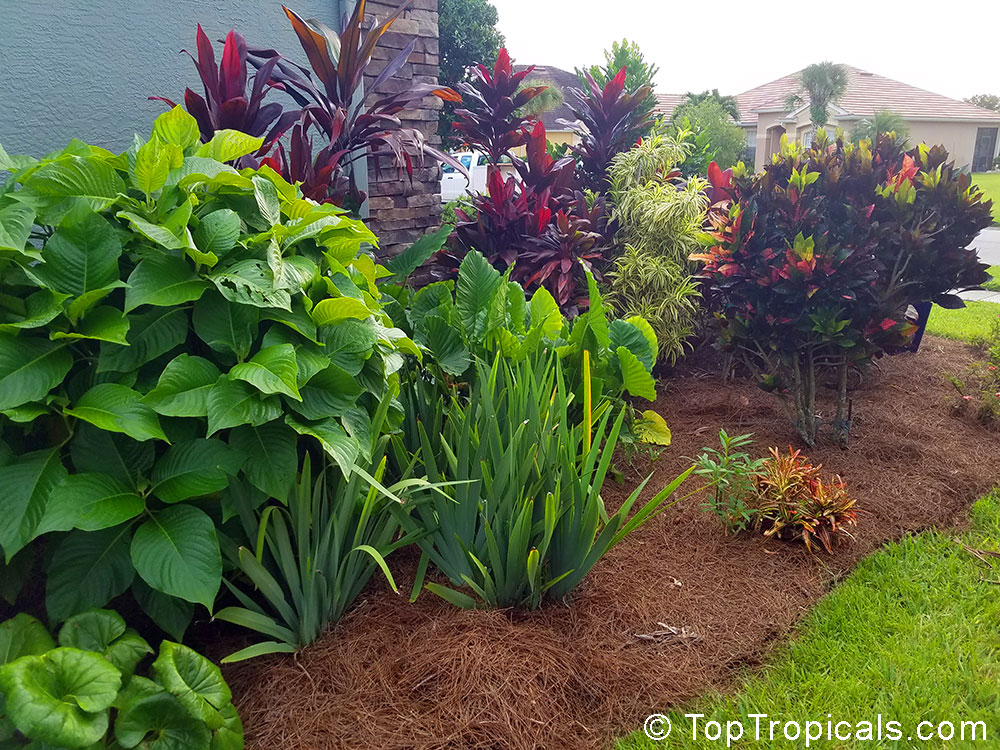
In the South. It's getting cooler in subtropical areas, and garden work becomes even more enjoyable. Your garden now is in the most perfect shape after summer vigorous growth. It is the best time now to run the last trim before winter, as well as last fertilizer application. Clean up your yard without sweating off, add mulch to help plants to survive through possible winter chills. Don't forget to start reducing watering! Remember once temperatures drop below 65F, tropical plants slow down or stop growing and go into winter dormancy sleep.

Up North. When temperatures drop below 45F, start bringing sensitive plants indoors or into protected areas. Prepare/cover greenhouse, check availability of covers (sheets, plastic) and condition of heaters. Plants indoors will experience environment change, may drop leaves, and need different care than out in the sun. Reduce watering, check for insects once a week, and stop fertilizing until spring. Remember to pick the brightest spots for overwintering your tropical plants!

Enjoy cooler weather, fresh air, and thank yourself for a wonderful work you have done in your yard!
Date: 13 Aug 2019

What are the most rare fruit trees?

Q: What is the rarest and unusual plant that you have? I want something special for my tropical fruit tree collection. I already have everything I could possibly get...

A: Are you sure you have everything? Check out our rare plant section, and look at these couple plants we just received... these won't last long, we have only a few!

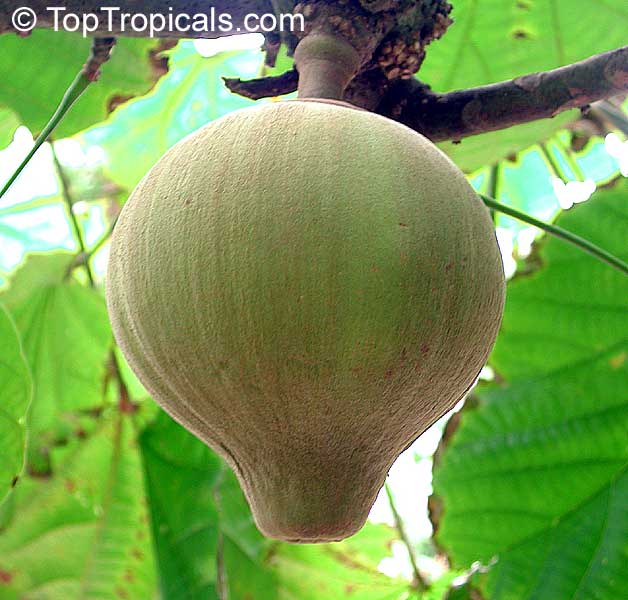
Quararibea cordata - Zapote Chupachupa, South American Sapote (with express shipping)

Chupa-chupa, Zapote, South American Sapote... One of the most amazing and showy tropical fruit trees with huge heart-shaped leaves, heart-shaped fruit, and fast-growing habit. The fruit has a bizarre shape like a large breast with a nipple, and the pulp is very tasty. For best performance, the tree needs full sun, rich soil, plenty of moisture and fertilizer.

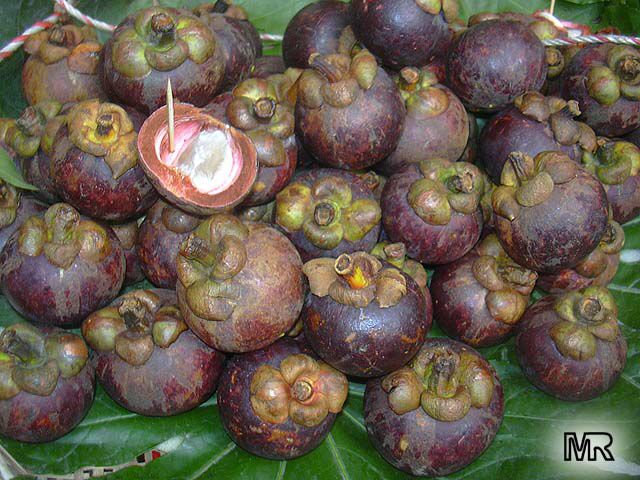
Garcinia mangostana - Mangosteen

Mangosteen... This delicious fruit has a thick, dark-red skin, inside which are creamy-white segments with a sweet, slightly tart flavor. Purported by many who have had the luxury of tasting it as being the best tasting fruit in the world.

Date: 29 Jun 2019

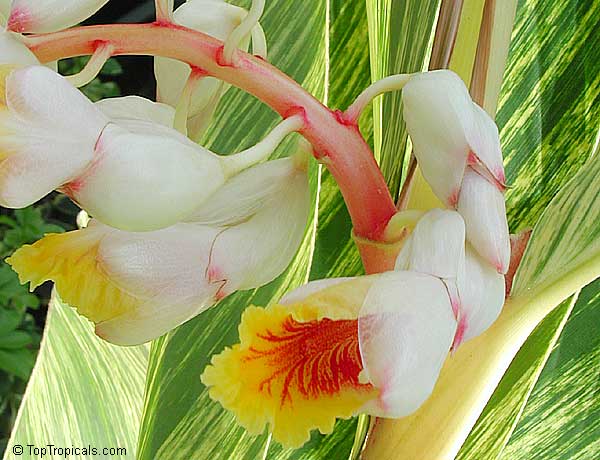
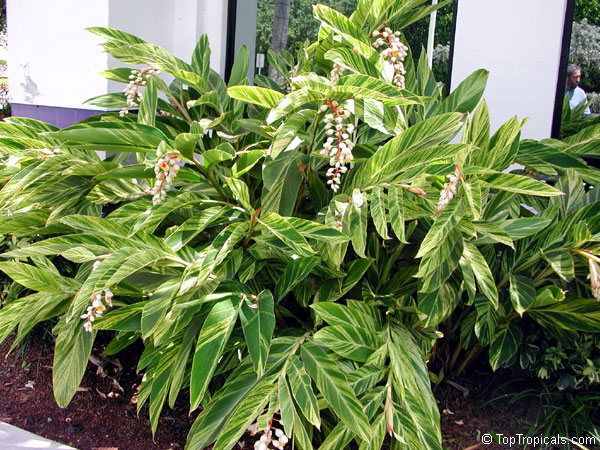
Variegated Shell Ginger - Alpinia zerumbet

By Onika Amell, tropical plant specialist

Q: I live in Deltona, Florida and hoping to find spreading ginger with interesting foliage to grow in a partially shaded area in my garden under a group of trees. Any suggestions?

A: Variegated ginger Alpinia zerumbet variegata is a clumping ginger valued for its beautiful variegated foliage. The dark, green leaves have striking yellow stripes. This ginger is sought-after, not only for the stunning foliage but also for its beautiful flowers. The flowers are different from other members of the ginger family and appear in drooping racemes from the ends of leafy stems rather than directly from the rhizomes. This ginger is also commonly known as Shell Ginger because the flowers resemble seashells! They are pink-tinged, fragrant and appear in summer. This evergreen perennial grows in upright clumps 3-5 feet tall. You may prune the plant to control size.
It does not tolerate drought or a hard freeze but can take a few hours or light frost (goes dormant in such case). In colder areas, rhizomes should be dug up and stored in a cool room during winter.
This ginger will love a shaded corner in your garden. Plant it in organically rich, well-drained soil in full sun to part shade. Keep the soil moist but not soggy, and spread a thick layer of organic mulch around the plant for moisture retention. There are no serious insect or disease problems to worry about!
This ginger can be also be grown as a house plant as long as it has bright light and humid conditions. It will grow to around 3-4 feet tall as a houseplant.

Recommended fertilizers:

Broad Leaf Plus - Ginger-Heliconia-Banana Booster
Tropical Allure - Smart-Release Booster

Limited time special offer:
Instant $5 off Variegated Ginger - Alpinia zerumbet

Date: 16 Jun 2019

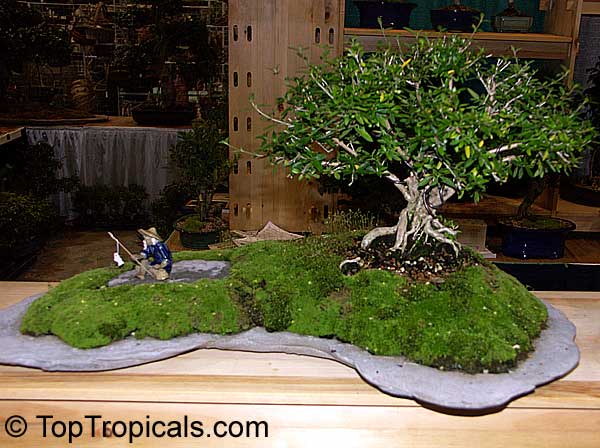
Horned Holly - a cool bonsai plant

By Onika Amell, tropical plant specialist

Q: I live in Chickasaw, Alabama. I am a beginner bonsai grower. I received a lovely little Horned Holly as a birthday present and I want to know if it is a suitable plant to bonsai?

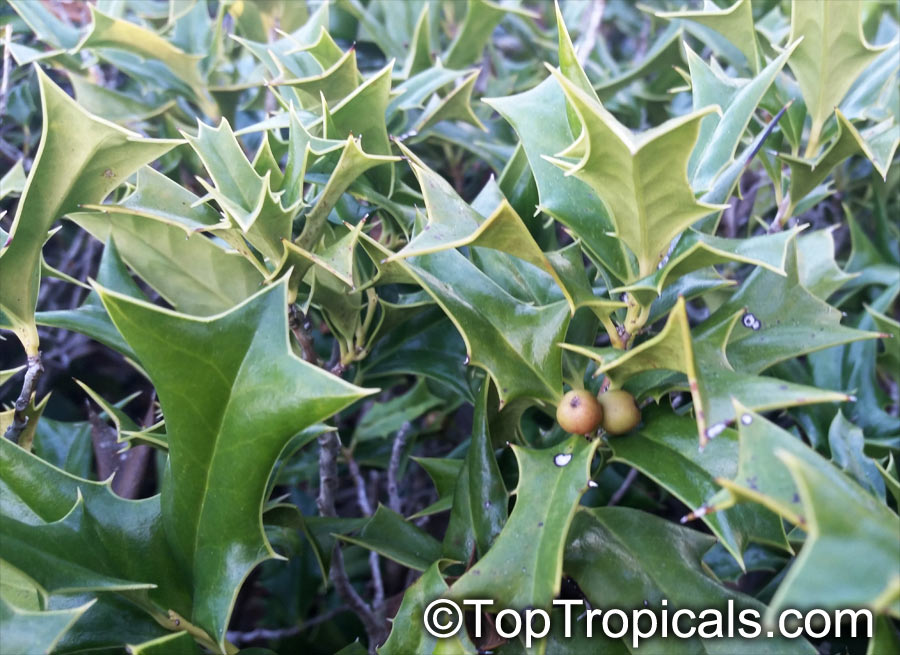
A: The Ilex cornuta - Horned Holly, or Chinese Holly, is very popular as a bonsai species. It is loved for its very beautiful and distinctive rectangular foliage and for its small, white flowers which give way to large, red berries. The berries are larger than those of the European Holly. The leaves are rectangular and unusually shaped with three large spines at the apex. This bonsai will take both sun and shade, but semi-shade is preferred in midsummer. If indoors, give it plenty of bright light. When kept outdoors, your Horned Holly bonsai will need some frost protection and should be sheltered from strong or cold winds. It will need a fair amount of water and should not be allowed to completely dry out. Watering during the heat of summer is especially important, as well as in spring right before the fruit production, and should be reduced during winter. This species will also appreciate regular misting of the foliage. Repot this bonsai every 1 to 2 years in early spring, using bonsai soil - TopTropicals Adenium Soilless Mix. Fertilize the holly every two weeks throughout the growing season using either a balanced fertilizer diluted to half strength. We recommend for this purpose Tropical Greenhouse Plus - Plant Booster. Pruning should be done in early spring.
Horned Holly is also very popular as a hedge plant as it grows dense and compact. It will grow to between 3 and 5 feet tall and will spread to an equal distance, giving it a round, shrubby form. It is cold hardy! Zones 6 through 9. It will tolerate a wide variety of soils as long as it is well-drained. It likes sun or part shade. It is heat and drought tolerant once established, and are often used in xeriscaping. Its branches produce dark olive-green foliage that is often cut for indoor decorations during the holidays.

Limited time special offer:
buy 1 get 1 free for only $10!

Date: 4 Jun 2019

Pretty in Pink... and Purple Prince for her!

TopTropicals.com

By Onika Amell, tropical plant specialist

Q: I have a bare spot in my front garden, behind a low wall, in part-sun. I'm hoping to find an evergreen, flowering ground cover that will cover it quickly. Any ideas on finding something with the ability to eventually also cascade over that wall? I live on Marco Island, Florida.

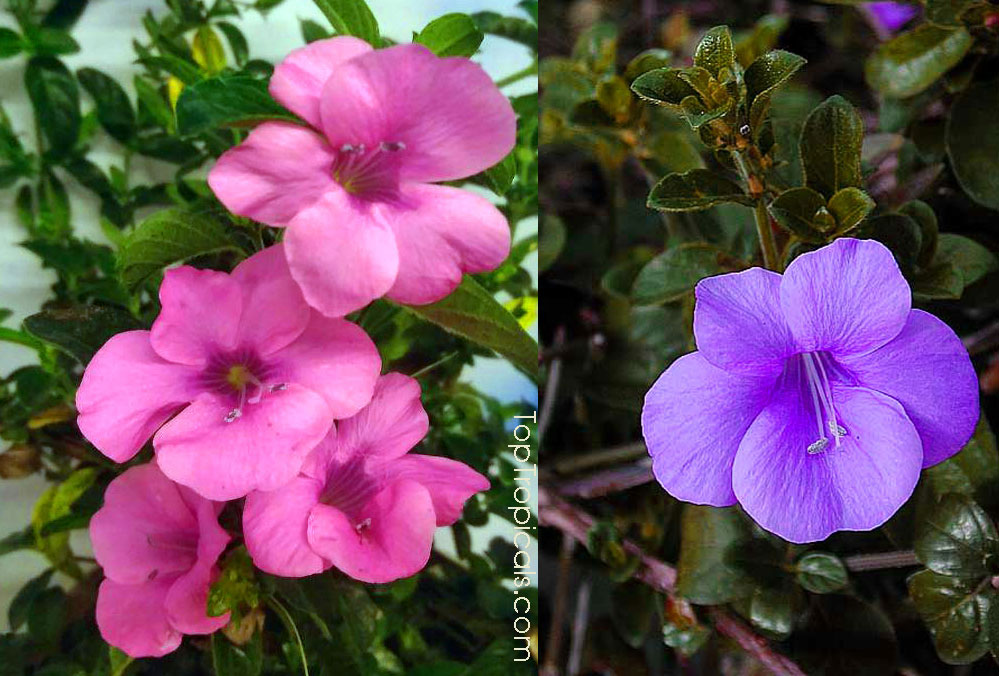
A: Barleria Repens - Small Bush Violet, is a tough, fast-growing evergreen that blooms from late spring to autumn. Of the many Barleria we see in the tropics, Pretty in Pink is one of the most striking! The name tells the whole story: pretty and pink. A lot of gardeners enjoy using them as a ground cover. They will quickly cover a large area - their stems root readily as the plant crawls along. They are easily propagated by lifting the rooted runners or using cuttings. They also reseed easily. Flowers are followed by seed pots that explode open when dry, dispersing 4 seeds at a time! But perhaps best liked by many gardeners, is their habit to cascade. It will be well suited for covering the bare area in your garden and spilling over that wall beautifully.
When used as a ground cover, remember to pinch out young shoots to encourage bushiness and prune the plant back hard after flowering to keep it neat.
Barleria repens will also adapt to different situations in a garden if you need them to. Although they usually form a rounded to spreading bushy shrub, 2 ft high by 3 ft wide, they will climb when you give them support. They are often allowed to lean into nearby trees and shrubs.
Hardy to 28F, Barleria repens is pest-free and fairly frost-tolerant. They love sun and part shade, as well as well-drained soil and plenty of organic material. Avoid planting it in deep shade as it will get leggy and reluctant to flower.
They will thrive when fed with a slow release fertilizer at intervals of 6-8 weeks, throughout the growing season.

There is another cultivar of this exact variety that has blue-purple flowers, it is called Purple Prince! It couples perfectly with Pretty in Pink! :)

See all Barlerias from our store


Recommended fertilizers:
Pink N Good Daily Plant Food Flower Booster
Tropical Allure Smart-Release Booster