Garden Blog - Top Tropicals

Date: 18 Oct 2021

Flowering vine around garage trellis

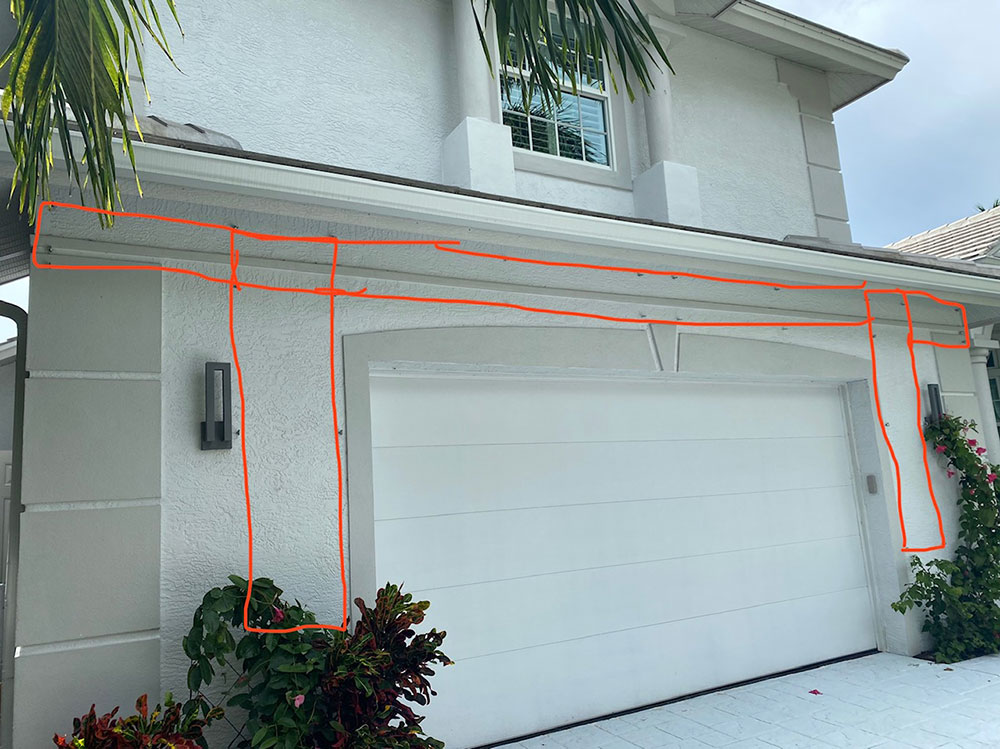
Q: I want to grow flowering vines up and around my garage; however I want to make sure whatever I put will grow long enough to make it all the way around the top. I attached photo of my garage and where I mounted the bolts for the trellis. What plants do you recommend for doing something like this that will eventually grow long enough to complete the arch over the garage? Right now I have mandevillas there but I know they aren't the right species. I know bougainvilleas will work, but I was hoping to do something less thorny since it's near the walkway.

A: There are several vines that can fit your project. These are just a few suggestions:

1017 Aristolochia gigantea - Giant Pelican Flower
Camptosema grandiflora - Dwarf Red Jade Vine
Cissus rotundifolia - Arabian Wax Leaf (very fast glowing)
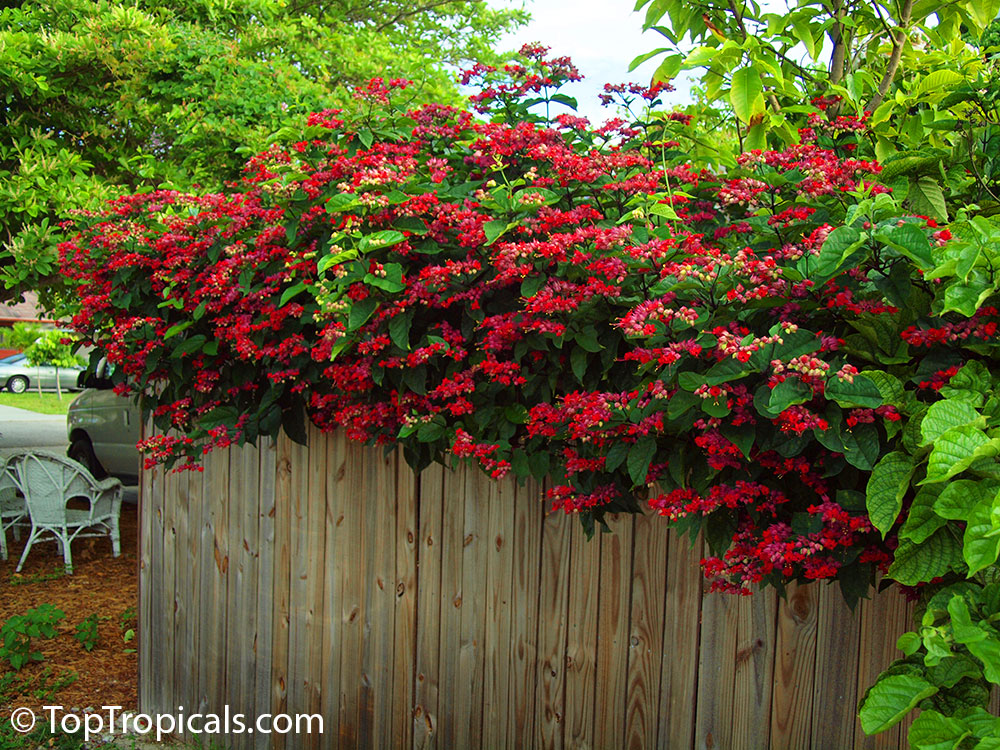
Clerodendrum speciosum - Red Bleeding Heart
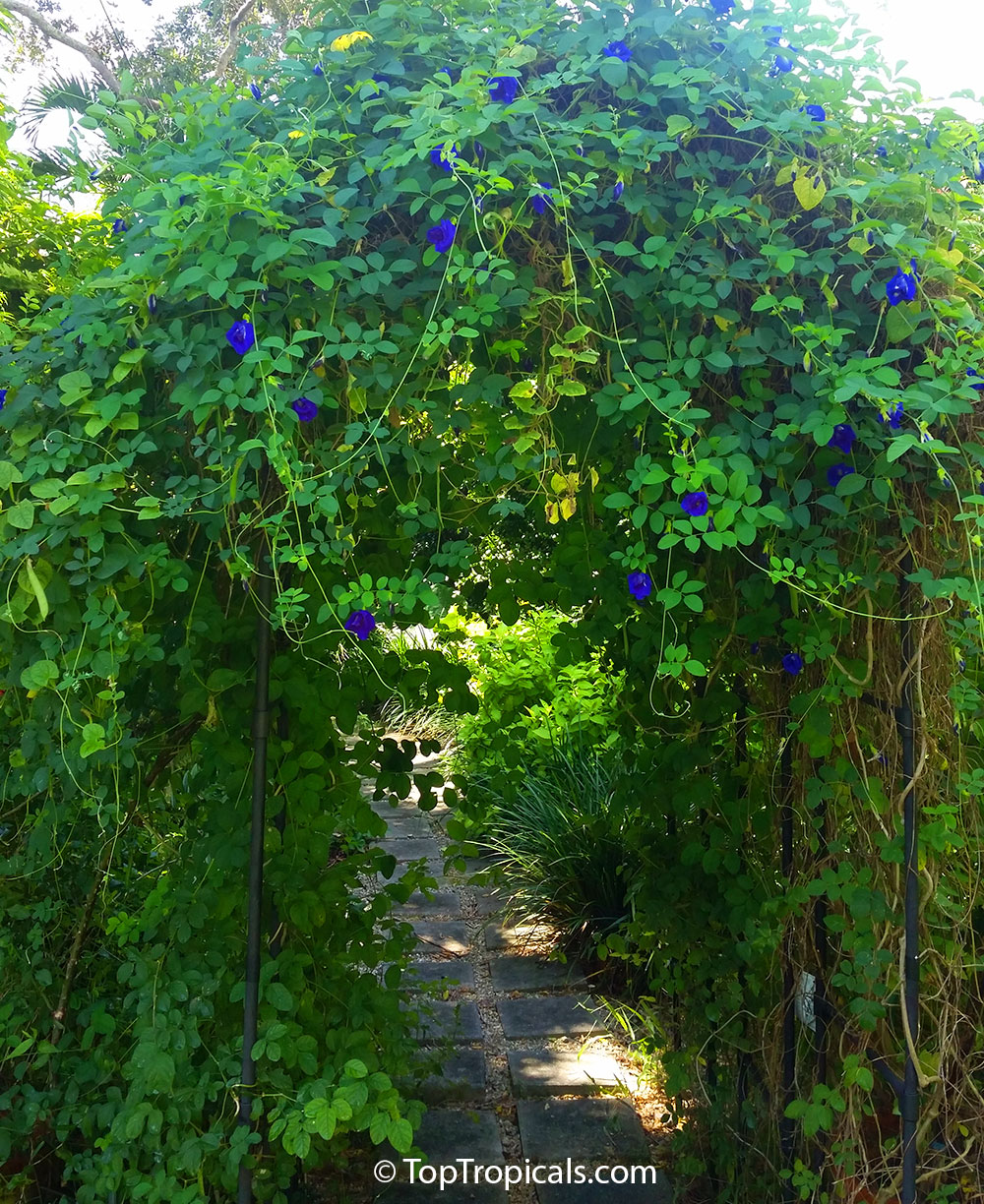
Clitoria ternatea - Blue Butterfly Pea (very fast glowing)
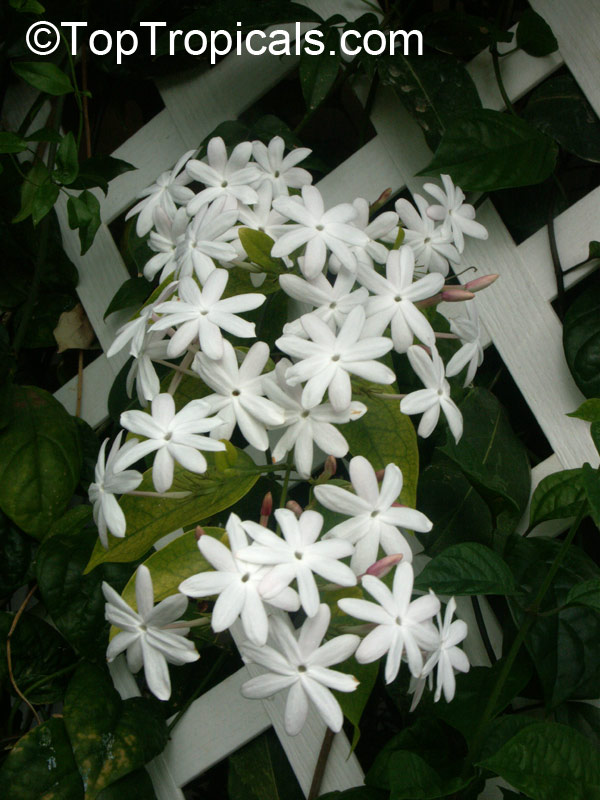
Jasminum sambac Maid of Orleans
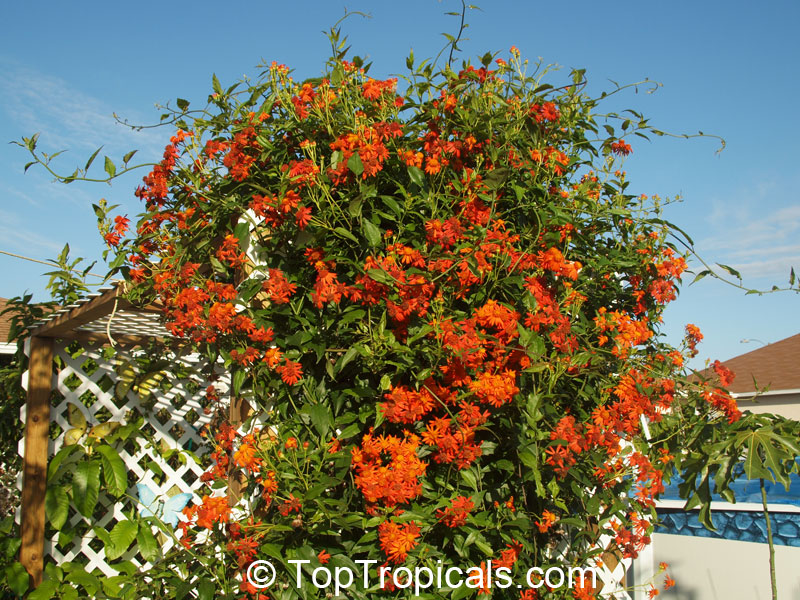
Senecio confusus - Mexican flame vine
Stictocardia beraviensis - Hawaiian Sunset Bell (very fast glowing)
Thunbergia alata var. aurea Sunlady
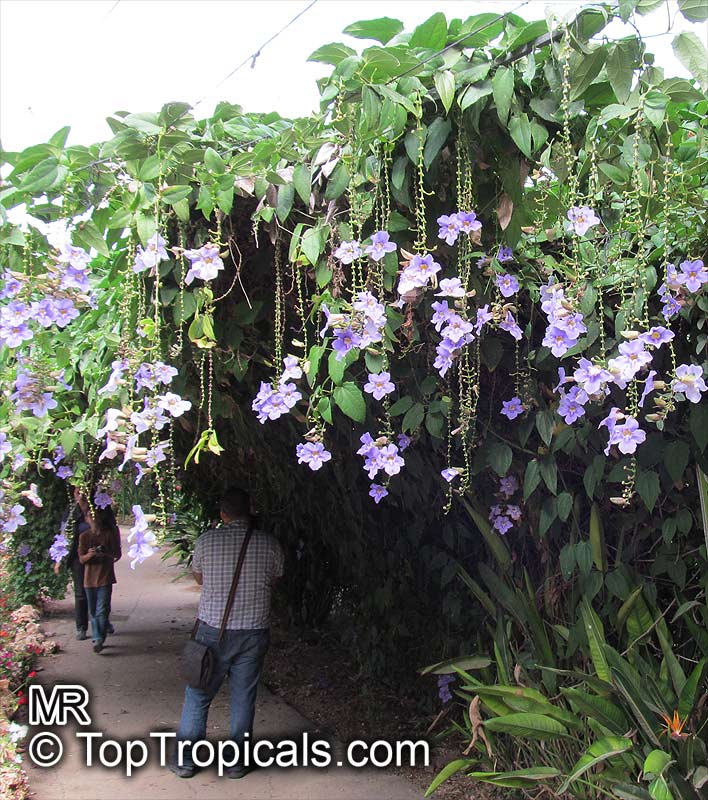
Thunbergia laurifolia - Blue Sky vine
Trachelospermum jasminoides - Confederate Jasmine
Urechites lutea - Yellow Mandevilla

Check out full list of flowering vines

Photo above: Clerodendrum speciosum - Red Bleeding Heart

Photo above: Senecio confusus - Mexican flame vine

Photo above: Clitoria ternatea - Blue Butterfly Pea

Photo above: Thunbergia laurifolia - Blue Sky vine

Date: 12 Apr 2016

Hot novelty plant for hot Arizona

Q: What plants would you recommend for very hot and dry spot in front of my house that gets full sun all day long? I live in AZ, we recently had a couple good rains but this is going to be it for a long time. It gets so hot during the day that every plant I tried didn't make it. We have a few nice orange trees growing well but I would like to plant something compact, colorful and hopefully fragrant if there is such plant.

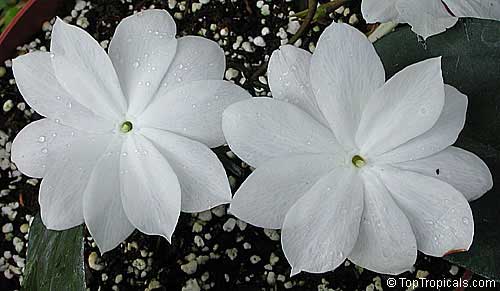
A: There is a perfect small size plant for you that is extremely fragrant and yet will be thriving in these conditions. It is the famous Jasmine sambac. It will appreciate dry air of Arizona and will bloom profusely for you in full sun or in partial shade. It doesn't mind heat at all.

For colorful accents, a proven winner is Crown of Thorns - Euphorbia millii. New giant size flower varieties were recently selected in Thailand, and we just received a great selection, look at the colors! These plants don't mind hot sunny location at all. The more sun, the better the bloom! Small plants need regular watering until establish, then once they start developing, they will require less water.

Giant Euphorbia flowers from Thailand are 4-5 times bigger than regular flower euphorbia. Diameter of the flower is around 2". Compare giant flower to normal size - picture on the right.

See full list of plants for hot and dry spots.

Date: 5 Apr 2016

Jungle on Windowsill 101

Q: I got a Jasmine Sambac and a Tahitian gardenia as presents, they are very cute plants with flowers and flower buds. I would like to be able to keep them alive and hopefully happy for a long time, but I don't know much about growing tropical plants, and I am not sure if my thumb is green enough to make everything right. What do they need? How much sun? How much water? What kind of soil? Sorry for all these (maybe silly) questions, but I want to keep them alive, please help! I live in Wisconsin and we had some snow again last week.

A: Growing tropicals is not a hard work, it is a lot of fun! These plants are actually a good starters for a beginner who wants to try growing tropical plants, no matter if you live in a mild frost-free climate, or up North where you can have these beauties as houseplants. Below are a few simple steps for you:

1. Read. Follow planting instructions included with your plants. Check plant names on the tags and learn more about them from our online catalog.

2. Soil. Plant in quality potting mix - it must be porous and well-drained, never use heavy soils (top soil or garden soil are no-no), in a pot exactly the size of the root system. You can step up your plants in the next size container once you notice vigorous new growth. Next size means: 4" pot can go into 6" pot, 6" pot into 10" pot, etc. Too big of a pot may create rotting environment, root system must fill the entire container to use all the moisture from the soil. Container must have good hole(s) for excess water to drain through. Put the pot in a saucer and get rid of excess water every time after watering.

3. Light. Most tropical plants require lots of light in order to produce flowers. If you ever visited Florida, remember the bright sun? - these are ideal light conditions for tropicals. Up North, provide as much light as possible: a bright spot on a windowsill of Southern or Western exposure would work the best. If the sun gets too hot in summer afternoon, you may shade the window a little bit with a sheet of white paper to avoid leaf burn.

4. Water. Keep soil slightly moist but not soggy. The best way is to wait until the top of the soil feels dry to touch - this is time to water again. Jasmines prefer to stay on a dry side; gardenias do not like soil to dry out - keep them slightly moist as long as soil is very porous and well-drained. The main reason of most problems with potted indoor plants is over watering. With experience, you will feel the right balance of moisture in the soil: the brighter the light, the more water is consumed by a plant; the less light, the less frequent you should water.

5. Trimming. In low light conditions, plants tend to become leggy. Trim branches as they become too long: the more you trim, the busier the plant gets. New growth promotes more profuse blooming in many species.

6. Fertilizing. Fertilize indoor plants with slow-release granulated fertilizer from march to November.

7. Insects. Check for insects at least once a month, especially underneath the leaf. If notice any problems (deformed leaves, residue, holes, or tiny insects) - clean the leaves/stems with a solution of warm water (1 cup), vegetable oil (2 table spoons), and a few drops of a dish soap.

8. Fresh air and air humidity. As soon as air temperature gets above 65F, bring your tropicals outside in the sun and fresh air: porch, balcony, outside in the yard. Air circulation is essential for your plant health. Bright light and high air humidity will promote vigorous growth, and lots of flowers for you to enjoy!

For more information on growing Tropical Plants 101, see Problem solving with potted plants - how can we help them?.

Date: 15 Jan 2024

Florida Starter Garden in Winter

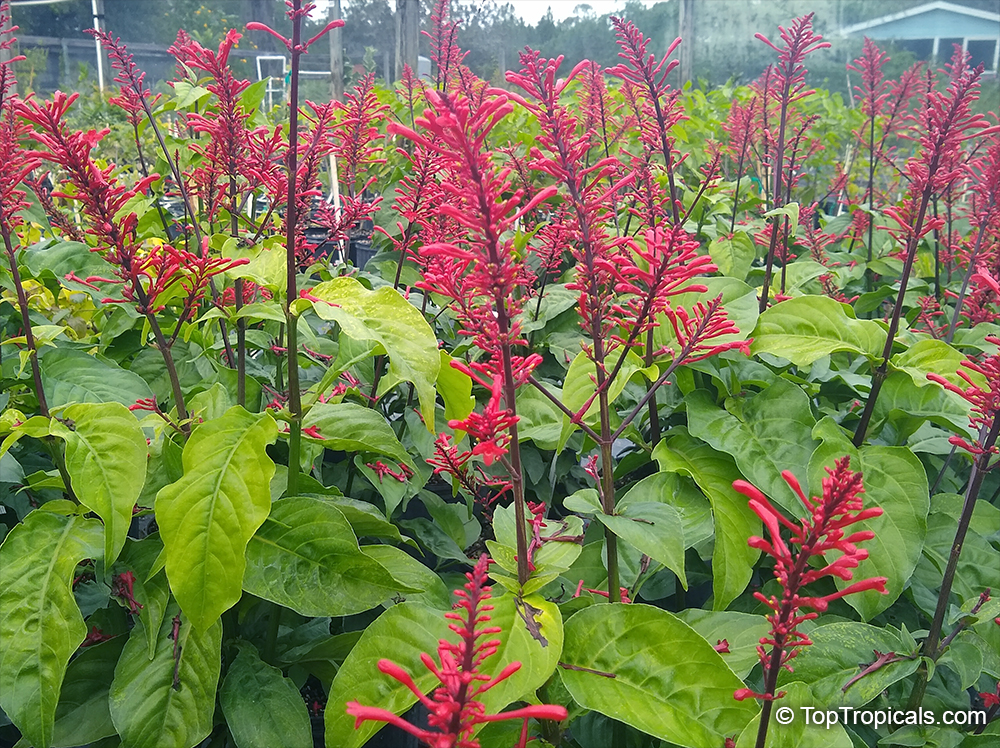
Odontonema  Firespike

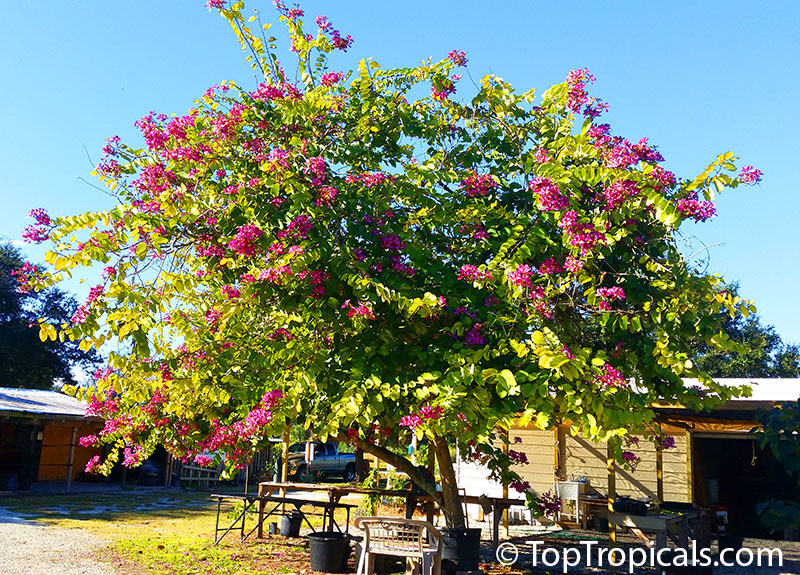
Photo above: Bauhinia blakeana - Hong Kong Orchid Tree

Q: We just moved to Florida and our yard is currently just plain grass. I want to add some beautiful tropical plants, but I'm not sure where to start. Can you suggest easy-to-care-for plants that look nice in winter, preferably with flowers? Considering it's Winter time and some trees look dormant... But I can't wait to start my tropical garden!

A: Florida residents are blessed to have mild winters, and many tropical and subtropical plants enjoy this climate year around. Just be mindful of your location's specific conditions (sun-shade, wet-dry, cold sensitive or hardy). Here are some recommendations for easy-to-grow, evergreen plants that love Florida and look great even in winter. They'll establish well during cooler months, add a splash of color to your garden with their flowers, and even treat you with fruit!

Winter flowers - will bloom now!

Clerodendrum Winter Starburst
Clerodendrum Blue Butterfly
Eranthemum Blue Sage
Odontonema Firespike
Pavonia - Brazilian Candles

Odontonema  Firespike

Photo above: Odontonema cuspidatum - Firespike

Fragrant Garden

Banana Magnolia
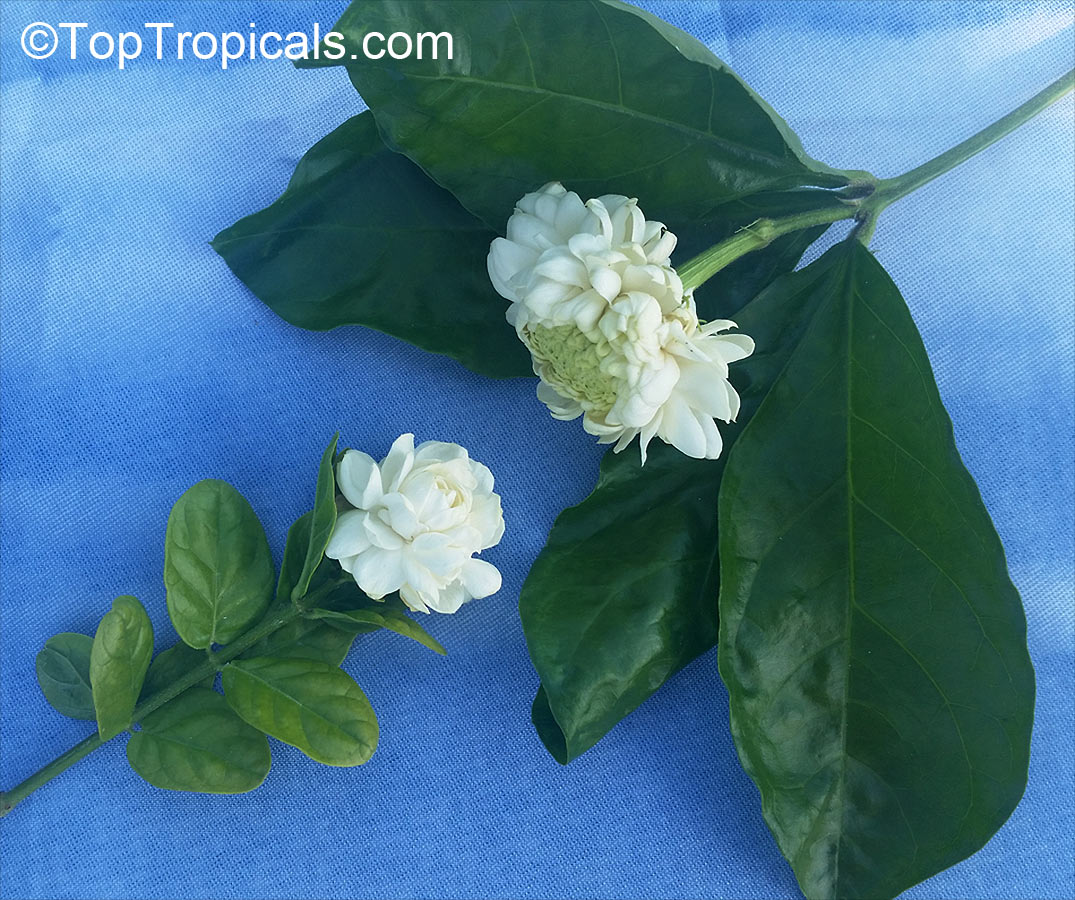
Jasminum sambac Little Duke Supreme
Vietnamese Gardenia
Nyctanthes - Parijat
Ylang Ylang vine

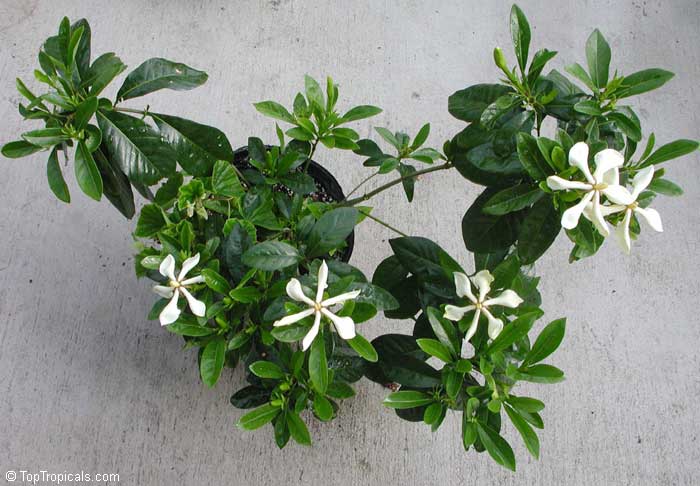
Gardenia  (Kailarsenia)  vietnamensis  -  Vietnamese  Gardenia

Photo above: Gardenia vietnamensis - Vietnamese Gardenia

Curious unusual trees

Hong Kong Orchid Tree
Candle Tree

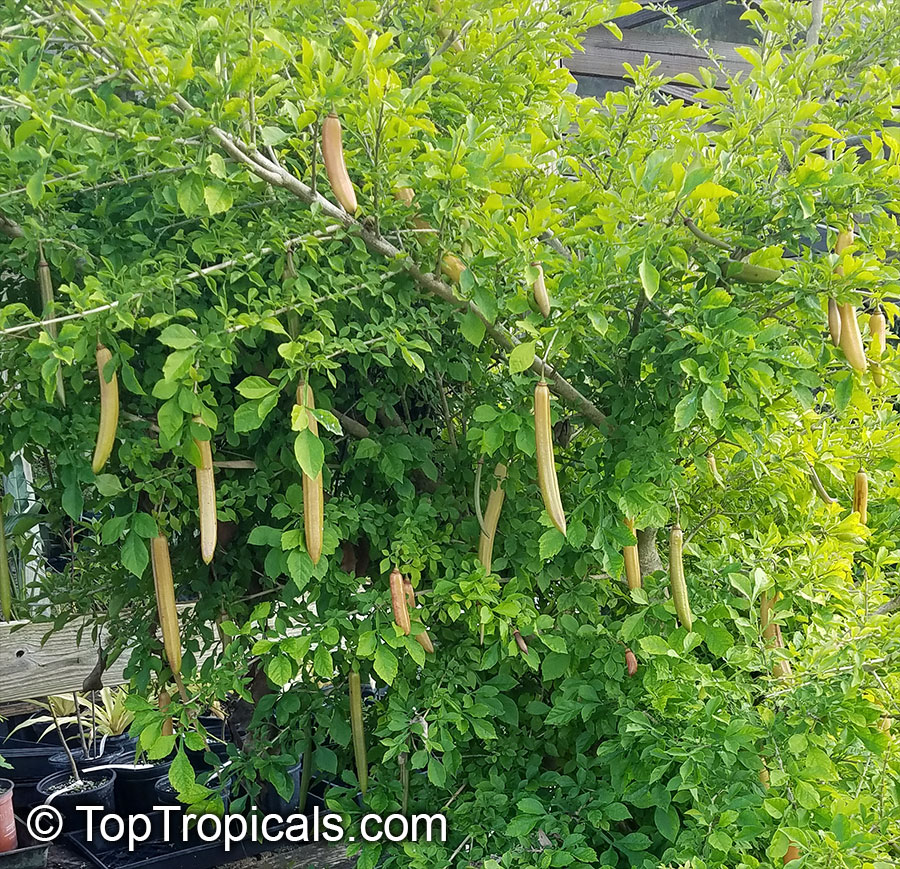
Parmentiera  edulis  -  Candle  Tree,  Guahalote

Photo above: Parmentiera edulis - Candle Tree, Guahalote

Easy fruit

Noni Tree
Yellow Dragon Fruit Palora
Coffee Tree

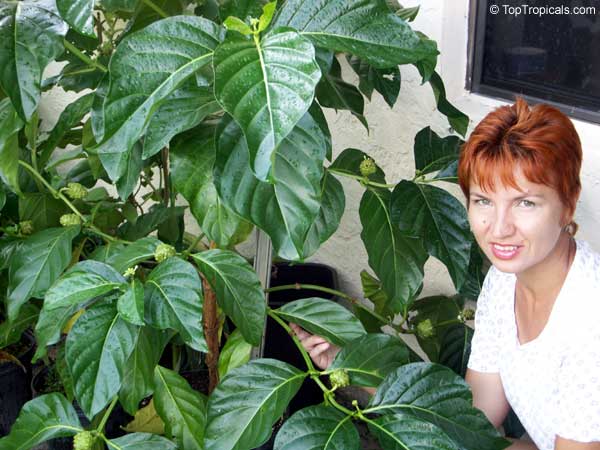
Morinda  citrifolia  -  Noni  Tree

Photo above: Morinda citrifolia - Noni Tree

Great looking now:
for Shade and Indoor Garden

Calathea zebrina - Zebra Plant
Black Bat Head Lily
White Bat Head Lily
Medinilla
Vanilla Orchid
Reed Ground Orchid
Calathea Fuzzy Pheasant
Colocasia Mojito
Syngonium

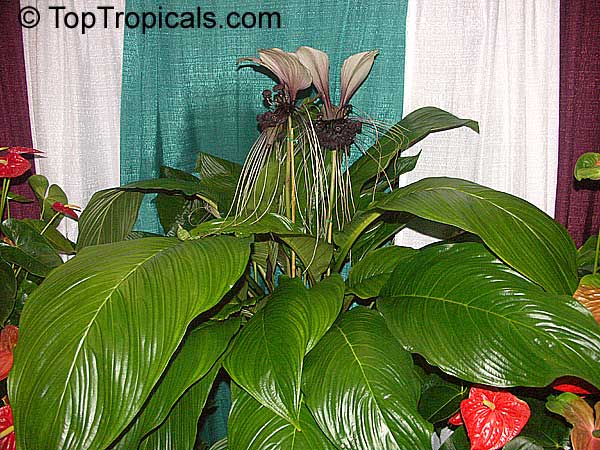
Tacca  nivea  -  White  Bat  Head  Lily

Photo above: Tacca nivea - White Bat Head Lily

Date: 10 Mar 2021

Healthy Plants: Q&A from Mr Booster

Jasmine Grand Duke flowering

Q: Hey can you help me figure out why my jasmine grand duke supreme is not flowering? Ive had it for almost a year (in NY) and only had 1 flower bloom and that immediately turned brown and died. Since then no flowers have come. The leaves are green and healthy and its growing like crazy but not flowers. Please help me figure this out.

A: For profuse flowering, Jasmine sambac needs 2 things: bright light and special plant food. We have plenty of both here in Florida. If your grow this plant indoors in colder climate, get it to flowering can be a bit tricky.
Your plant grows well overall with lots of vegetative growth, this is a good sign, it means it's healthy, and not being overwatered which is one of the most common problems with Sambacs. You're doing a great job! This jasmine just needs more sun and fertilizer.
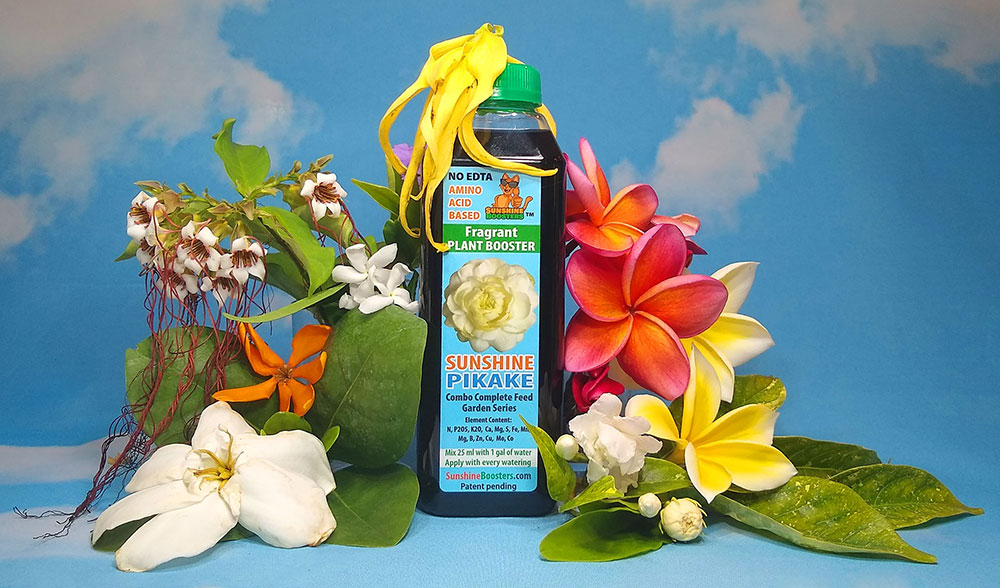
Make sure to keep it in the brightest spot of your home. The more hours of light, the better. When night temperatures stay above 65F, it is beneficial to bring the plant outside on a balcony, patio, or in a garden in full sun as a potted specimen (move to bright light gradually). You should give this Jasmine plenty of food with every watering. We recommend SUNSHINE Pikake - Fragrant Flower Booster. This is a natural fertilizer that can be applied to plants year round without risk of burning the roots or nutrient lock up in the soil. It provides all necessary elements for the flowering cycle - just add a bit into watering can, every time you water.