Date: 2 Mar 2026
Eugenia Cherries 🍒
By Tatiana Anderson, Horticulture Expert at Top Tropicals with Smokey & Sunshine help
Growing Eugenia Cherries (Cherry of the Rio Grande & Grumichama)

Cherry of the Rio Grande and Grumichama are compact, adaptable tropical fruit trees well suited to Southern landscapes. While forgiving, they perform best when planted correctly from the beginning.
Site and Planting
- Drainage is essential. Avoid low areas where water collects. Plant on a slight mound if soil is heavy or clay-like.
- Choose full sun for best flowering and fruit production. Partial shade is tolerated.
- A south or southeast exposure near a wall improves cold resilience and reduces wind stress.
- Dig a hole twice as wide as the container, but no deeper than the root ball.
- Set the tree level with surrounding soil. Do not bury the trunk.
Water and Feeding
- Water regularly during the first few months while roots establish.
- Once established, trees tolerate short dry periods but fruit best with moderate, consistent moisture.
- Feed lightly and consistenly. SUNSHINE Boosters Robusta liquid fertilizer is safe to use with with every watering. During hot season you may add controlled release Green Magic every 6 months. It is essential to apply micro elements: Sunshine Superfood micro nutrients complex
Cold Tolerance
- Protect young trees during hard freezes.
- Established Cherry of the Rio Grande can tolerate brief drops into the low 20s.
- Established Grumichama tolerates temperatures into the upper 20s.
Harvest and Production
- Cherry of the Rio Grande fruits from late spring into summer. Pick when fully dark and slightly soft.
- Grumichama ripens quickly, often within four weeks after flowering. Pick when glossy and deep purple-black.
- Both trees often begin fruiting within 2–3 years and increase production steadily with maturity.
Growing in Containers
- Use at least a 10–20 gallon pot for long-term growth.
- Ensure multiple drainage holes.
- Use a high-quality, well-draining container mix. Avoid heavy garden soil. Top Tropicals Abundance soil-less mix is specially formulated for pot growing
- Place in full sun for best fruiting.
- Water deeply, then allow the top layer to dry slightly before watering again.
- Move containers to a protected area during hard freezes.
- Prune lightly to maintain shape and airflow.
Common Mistakes
- Planting in poorly drained soil.
- Overwatering and keeping soil constantly saturated.
- Over-fertilizing with excessive nitrogen.
- Planting too deep and burying the trunk.
- Expecting heavy crops immediately instead of allowing time for maturity.
- Skipping cold protection for young plants.
Learn more: Tropical Cherries – Eugenias
❓Frequently Asked Questions: Eugenia cherries (FAQ)
-
Which one tastes better – Cherry of the Rio Grande or
Grumichama?
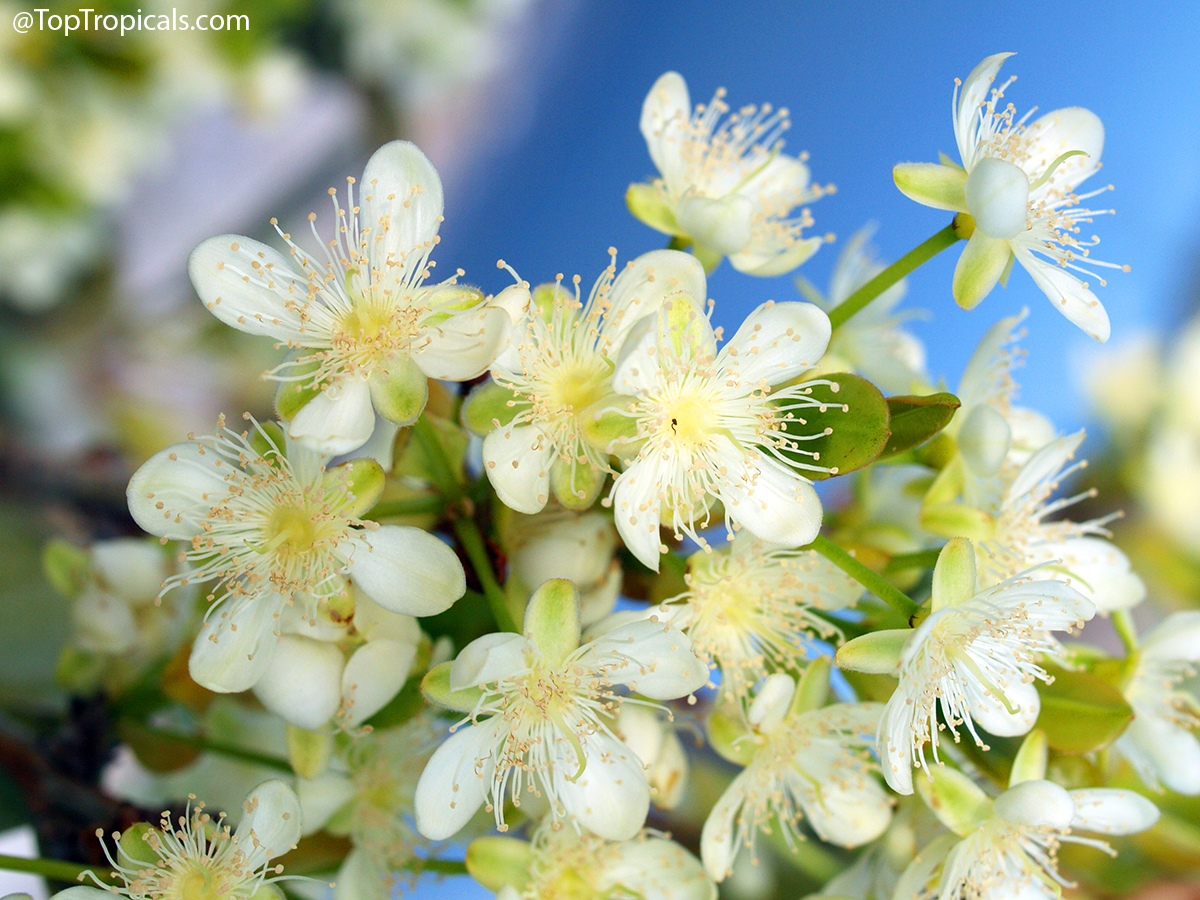
Cherry of the Rio Grande has a deeper, classic “sweet cherry” flavor with slight richness. Grumichama is softer, juicier, and often described as cherry with hints of grape and plum. Both are excellent fresh; Grumichama is especially popular for jam. -
Which tree produces more fruit?
Grumichama typically produces heavier crops once mature and can carry hundreds of fruits in a season. Cherry of the Rio Grande produces consistently but in slightly smaller volumes. -
Do birds take all the fruit?
Birds are attracted to both trees, especially Grumichama. Netting during peak ripening or harvesting promptly usually solves the issue. -
Are these true "tropical" trees or subtropical?
They are best described as subtropical tropicals. Unlike ultra-tender tropical fruits, Eugenia cherries tolerate occasional frost once established, making them more reliable in Southern landscapes. -
Do they drop fruit messily?
Fruit will fall if overripe, but the trees are compact and manageable. Regular harvesting prevents ground drop and keeps the area clean. -
Can they be used for hedging or screening?
Yes. Their dense evergreen foliage and upright growth make them suitable for edible hedges or privacy screens while still producing fruit.
Choosing between them is not about survival — both have proven resilient. It is about flavor preference, crop volume, and how you want to use the fruit in your kitchen and landscape.
Date: 17 Nov 2023
Privacy Hedges with Benefits
What's the numero uno question we get bombarded with at Top Tropicals Nursery? Well, it's a real head-scratcher:
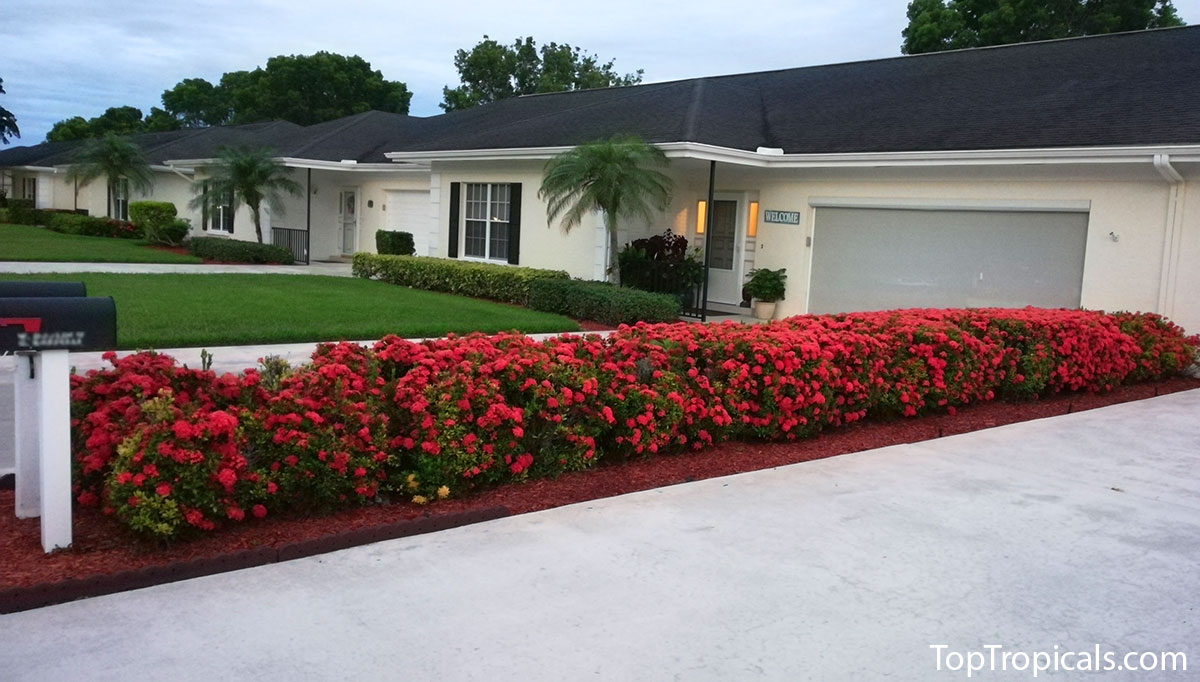
Q: "...Can you recommend me a flowering privacy hedge to spice up my yard's life? My current hedge is just a green wall and I'm tired of the monthly trim routine. I need something lively, fast-growing, and unusual if possible. No plain old ixora, please!.."
A: After over two decades of being the go-to advice-givers, we thought, "Why not spill the floral beans and share our tropical wisdom?" But where to begin? The jungle of flowering ornamentals is vast, and picking the perfect shrub is like finding the missing piece of a gardening puzzle. So, in our new column "Hedges with Benefits" we're dishing on those not-so-average shrubs that'll not only prettify your patch but also bring some serious practicality. Today's lineup is -
Top Ten Winners:
Fast growing flowering shrubs
Below is the top selection of spectacular flowering shrubs that can create a nice hedge or a natural screen within just a couple of seasons.
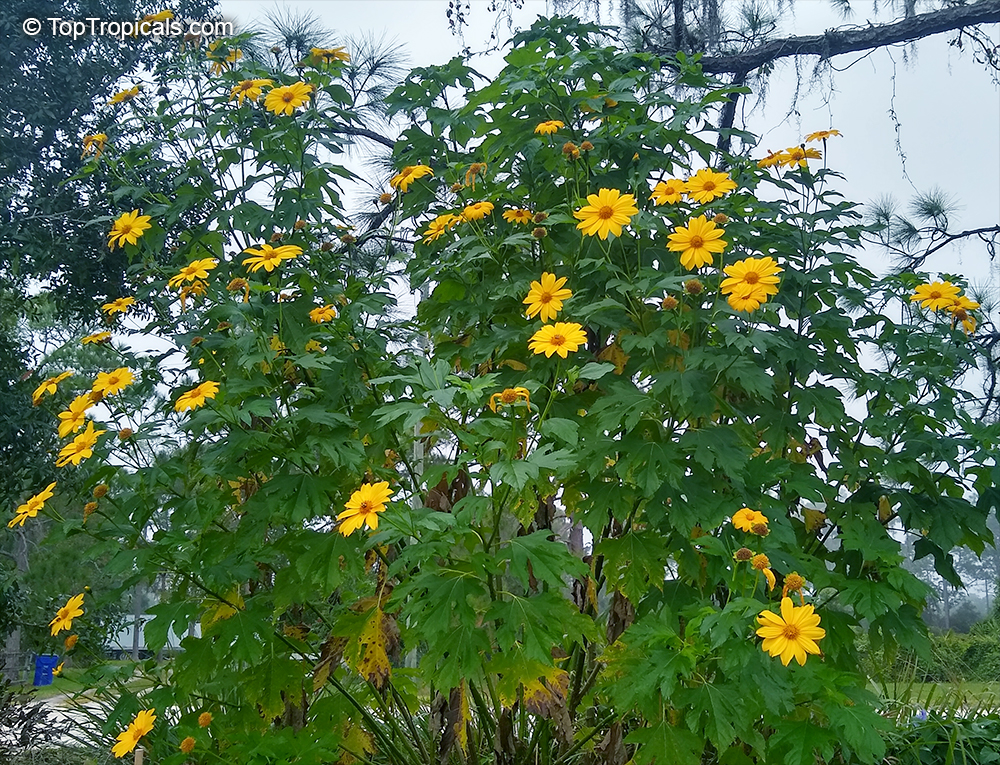
Tithonia diversifolia - Sunflower tree.
Grows super fast to a very tall dense hedge, and starts flowering right away. Full sun, very easy, not
fussy about soil or water. Winter bloomer.
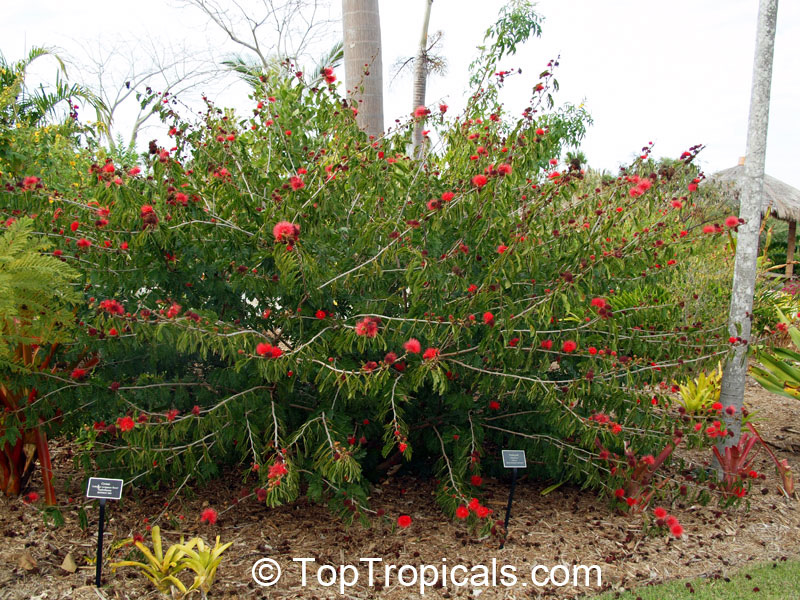
Calliandra surinamensis - Powderpuff.
Pretty pink powderpuffs almost year around! Easy to prune.
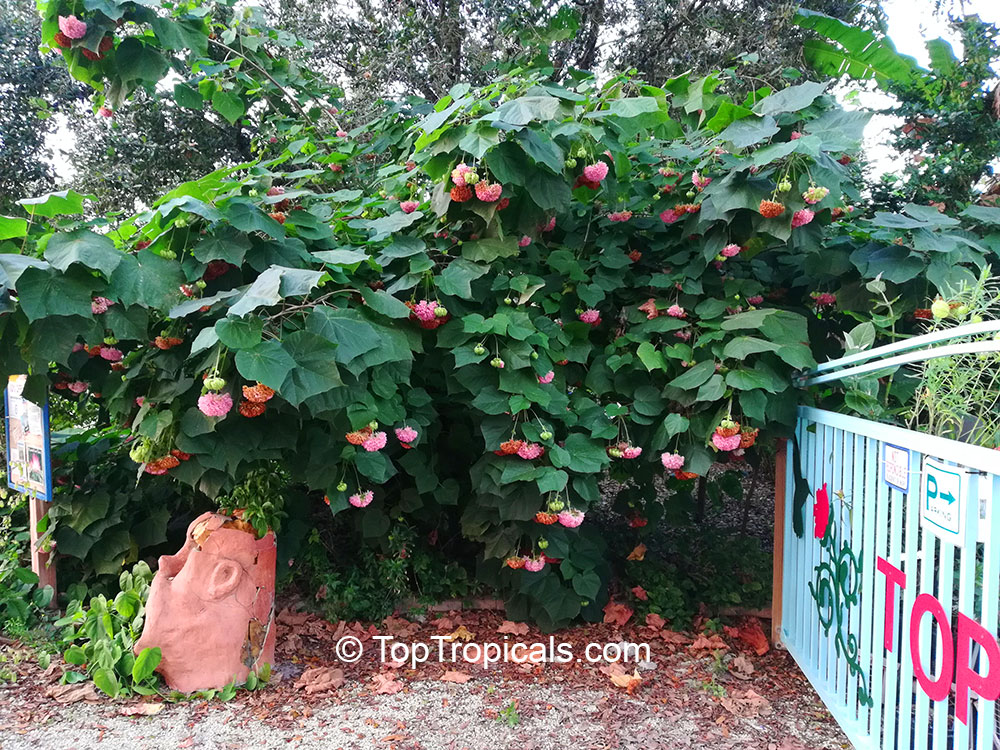
Dombeya x wallichii - Tropical Hydrangea.
You can see this beautiful bush right at Top Tropicals gate. Winter bloomer, large lush leaves and huge, pink hydrangea-like blooms. Very large and fast growing, likes water, tolerates shade.
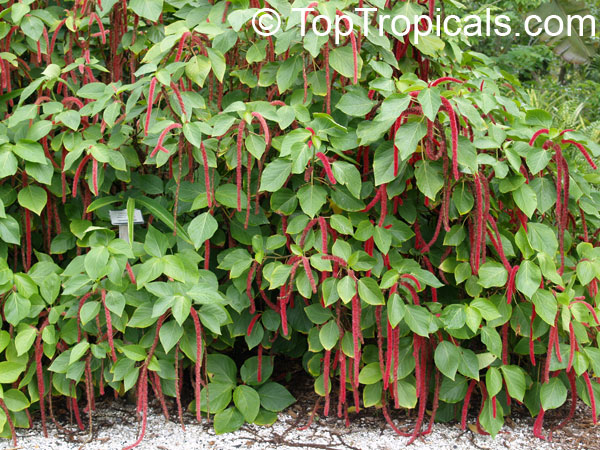
Acalypha hispida - Cat tail, Chenille plant.
All time favorite, everblooming with red cat tails! Full sun. Easy to control.
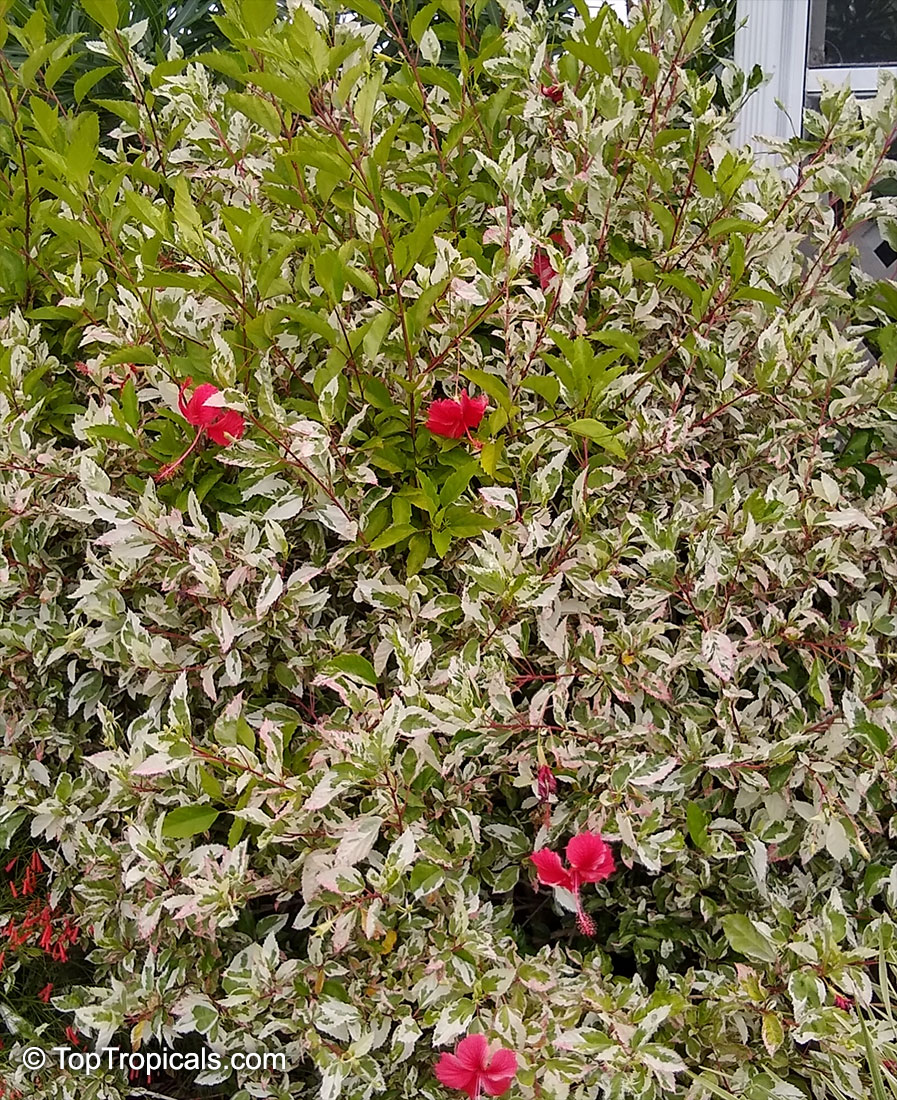
Hibiscus variegated Snow Queen.
Popular landscape bush with unusual look, red flowers over snow white variegation, very showy! Responds well to
pruning. Full sun.
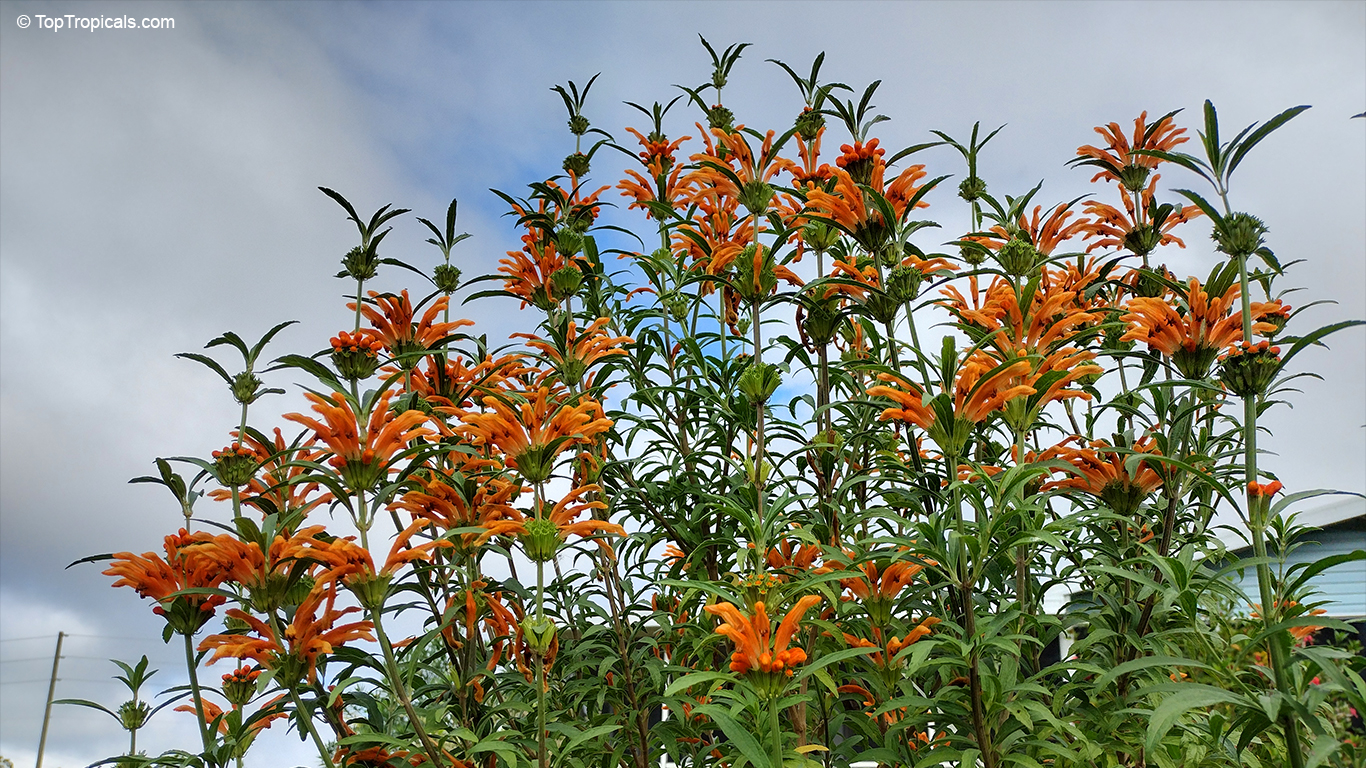
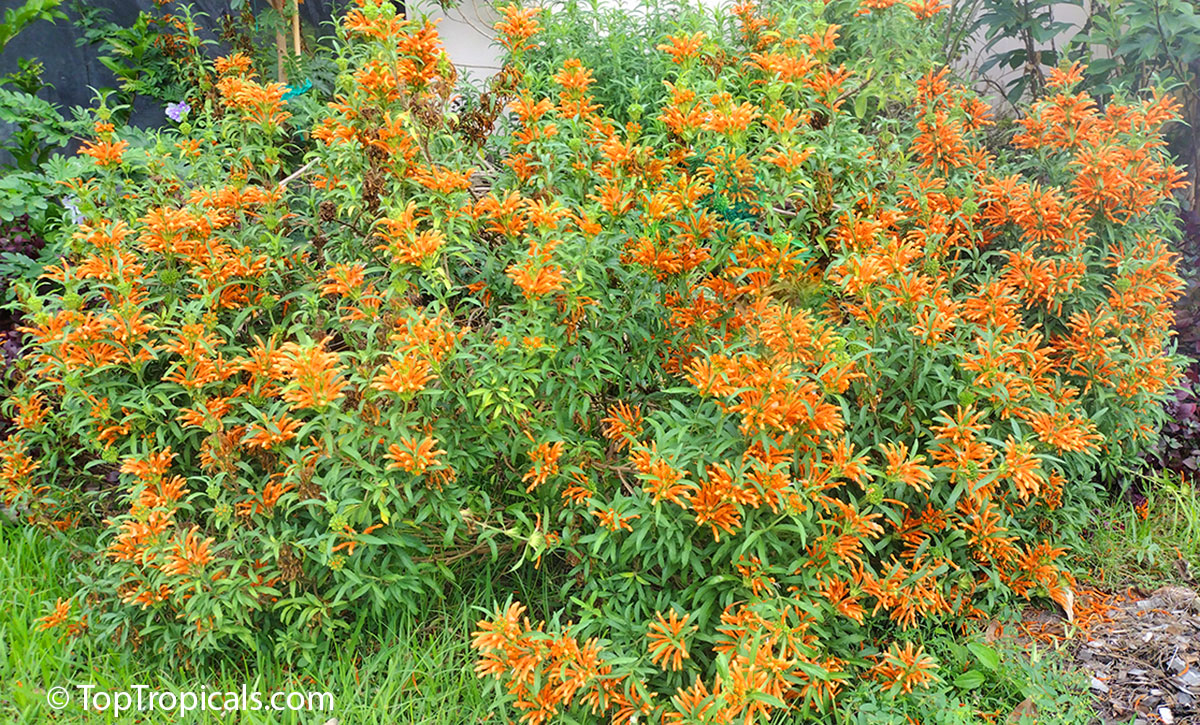
Leonotis leonurus - Lions Ears.
Winter bloomer, great for low hedges. Covered with bright orange curious flowers,
medium sized, easy to control at 3-4 ft. Full sun.
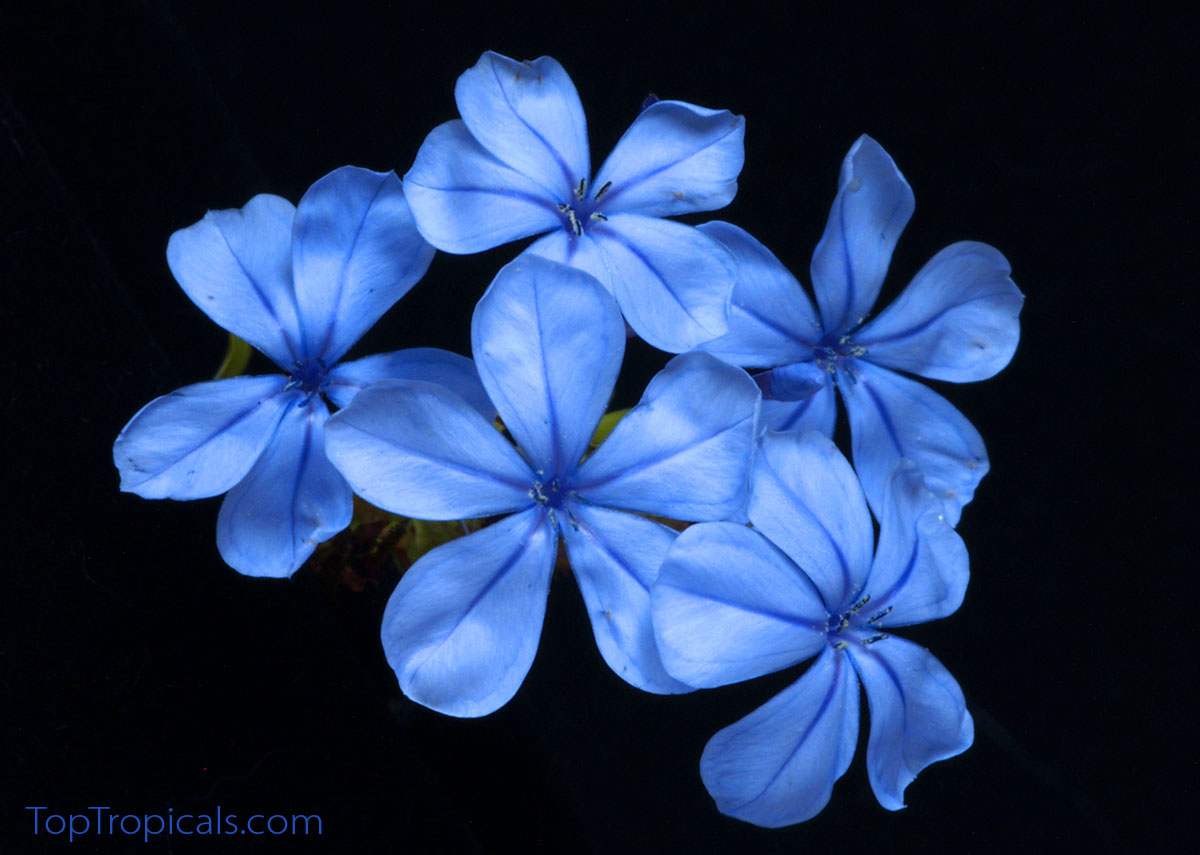
Plumbago auriculata Imperial Blue
One of the most popular Southern hedge plants, everblooming with bright blue flowers, tolerant to drought, heat, and poor soils. Can be maintained short or tall (2-6 ft).
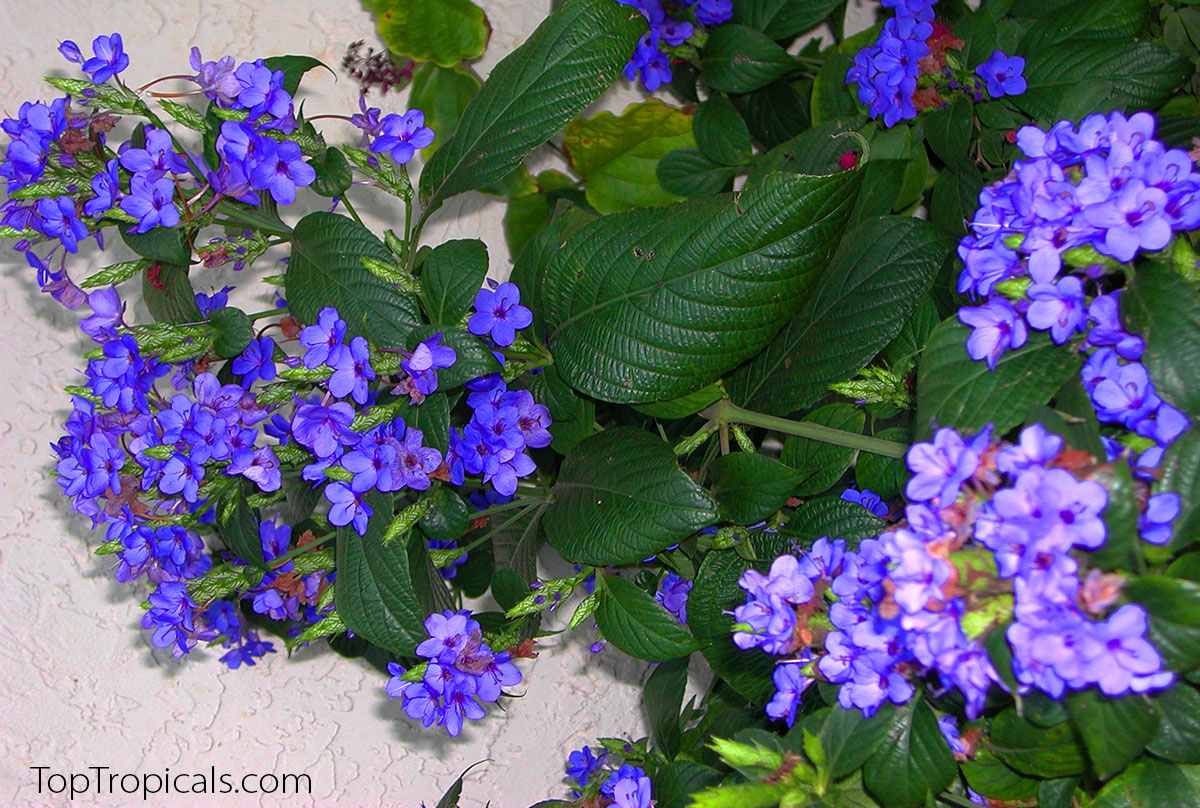
Eranthemum pulchellum - Blue Sage, Lead Flower.
Great for shady spots, winter bloomer with dark green leaves and unusual sky-blue flowers. Can be trimmed if needed. Nice and dense.
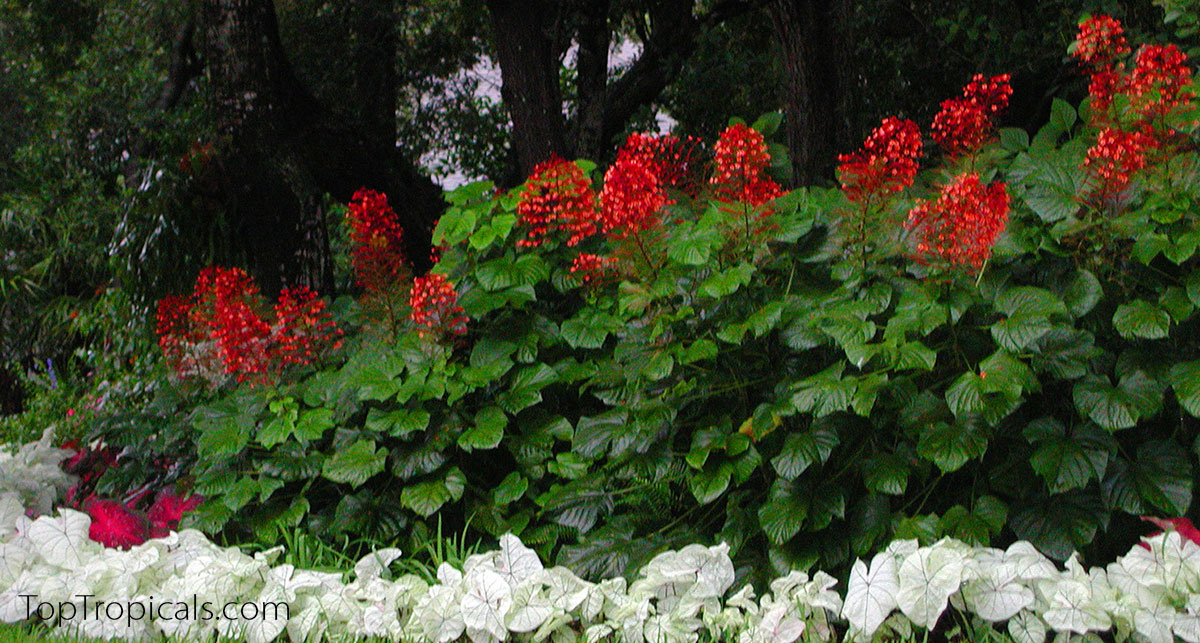
Clerodendrum paniculatum - Pagoda Flower. Happy in the sun or shade, easy plant. Loves water.
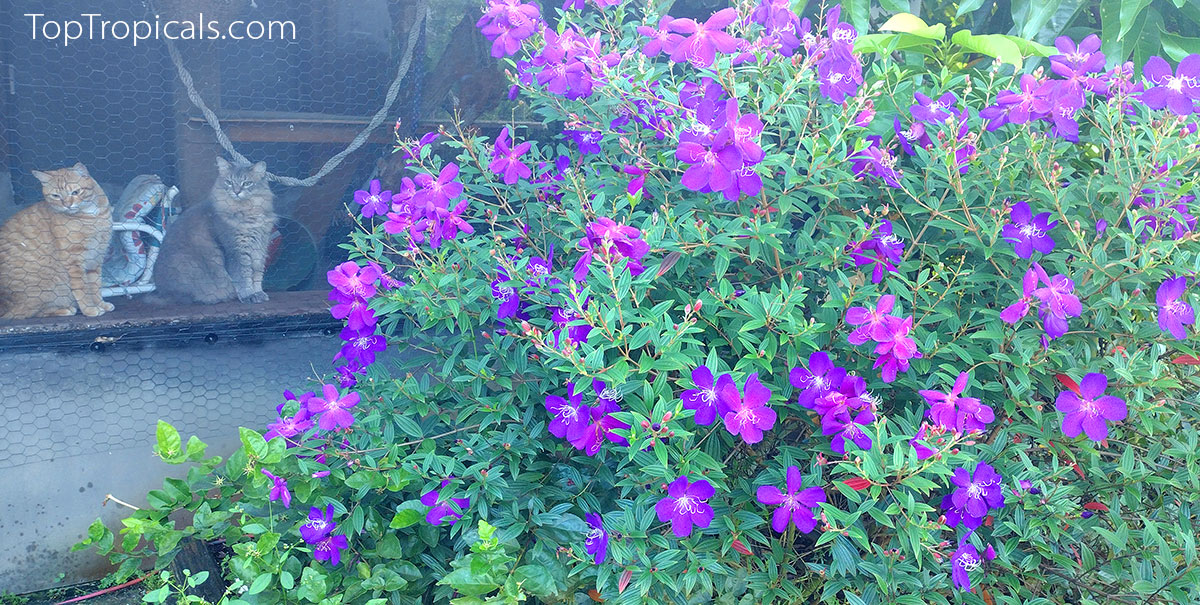
Tibouchina lepidota - Ecuador Princess, Jules Dwarf.
Sun or shade, blooms on and off throughout the year. Beautiful Purple
Princess!
Date: 30 Jun 2025
Turn up the color in your garden with the bold everblooming Brazilian plume
♨️ Turn up the color in your garden with the bold everblooming Brazilian plume
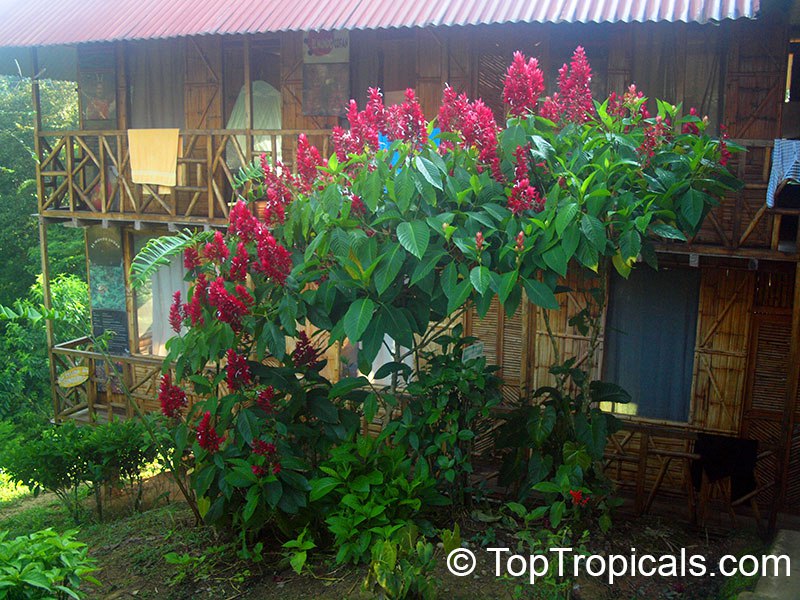
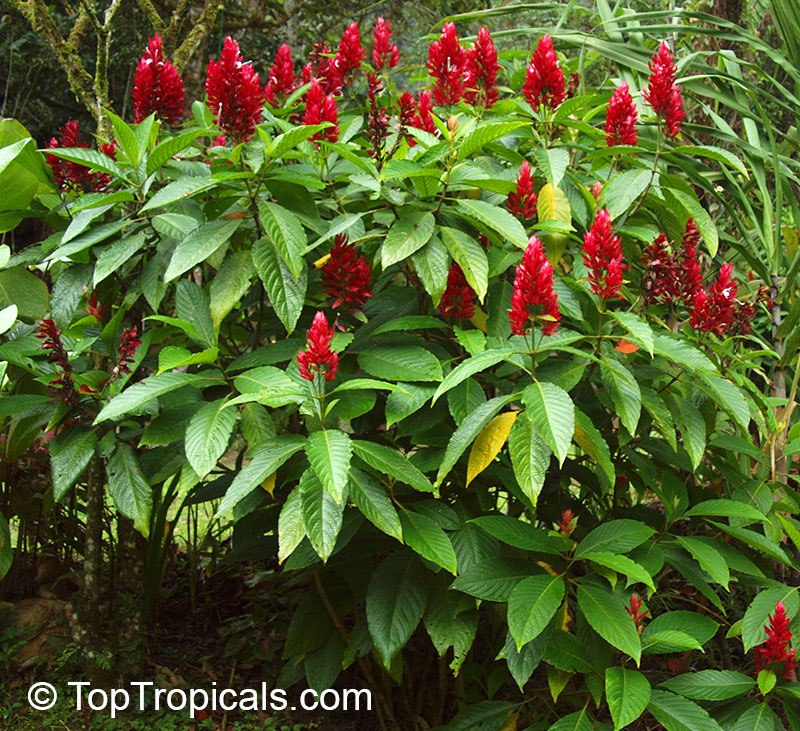
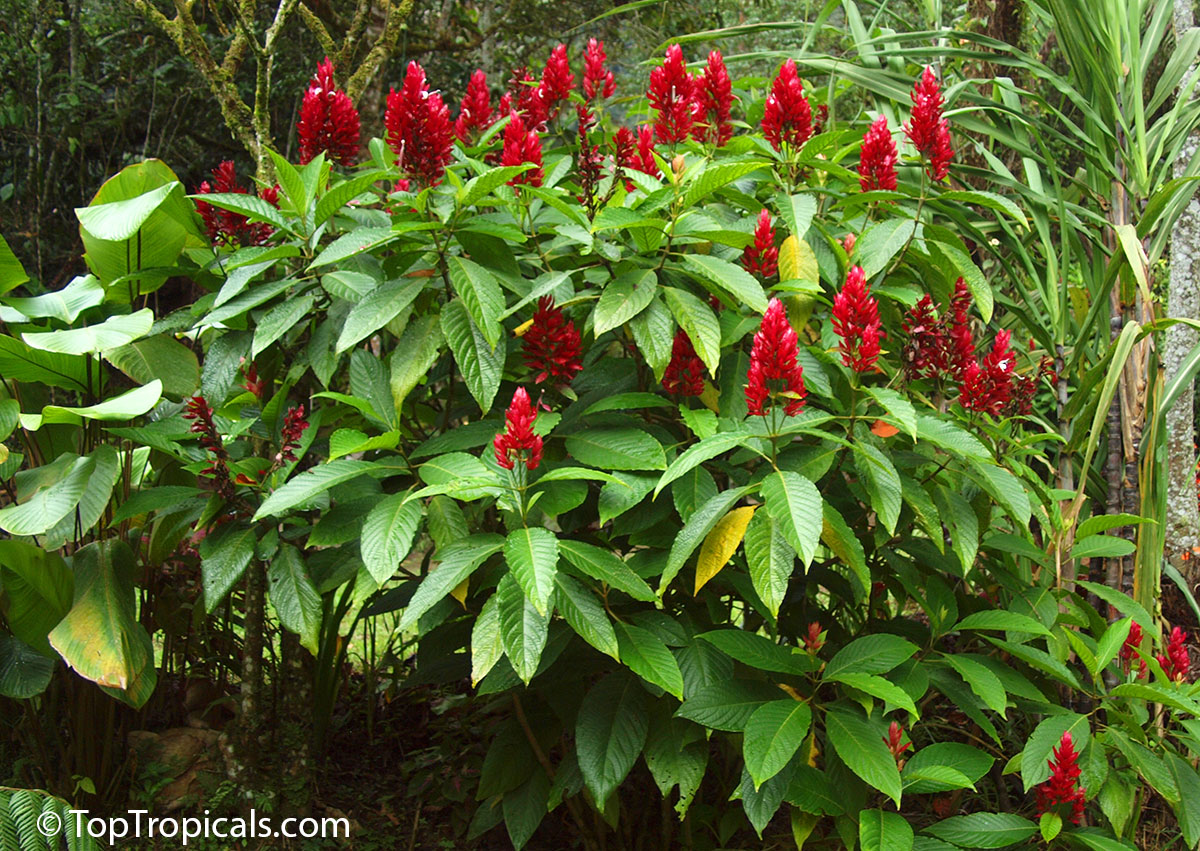
- ❣️Looking to add nonstop color, tropical flair for shade or sun, and pollinator appeal to your garden? Megaskepasma erythrochlamys - Brazilian plume or Red Cloak, is the ultimate show-stopper shrub that takes both sun or shade.
- ❣️ With its big, bold leaves and eye-catching crimson-to-mauve flower spikes, this plant brings exotic beauty - without the need for a steamy jungle.
- ❣️The best part? It's surprisingly cold hardy. This lush-looking tropical can handle brief dips into the 30s (F), making it a top pick for USDA zones 9-11. Plant it in full sun or partial shade, and with regular watering, it rewards you with a steady burst of blooms that butterflies and hummingbirds can't resist.
- ❣️Reaching 5-7 ft tall in the ground, it fills out beautifully to anchor beds or soften fences. In colder regions, it can still thrive in large pots - just give it a sheltered spot, bring it indoors when temperatures drop, and enjoy its vivid flower show all winter long.
- ❣️If you want a garden that doesn’t fade with the season, the Brazilian plume delivers color, volume, and wildlife appeal - all year round.
🛒 Make your garden pop with color of Brazilian plume
#Hedges_with_benefits #Butterfly_Plants
🟢 Join 👉 TopTropicals
Date: 18 Apr 2025
Want Constant Blooms? Plant Clerodendrums
Your Shortcut to a Colorful Garden
Q: Q: I live in Florida, and while everything is green, I want more color in my garden and patio. What low-maintenance perennials can add nonstop blooms without constant care? I'm tired of annuals that don't last. Do such plants even exist?
A: Yes, they do - and your perfect solution is Clerodendrums. These colorful tropical perennials grow fast, bloom for most of the year, and thrive in both sun and shade. They're easy to care for, relatively cold-tolerant, and come in many shapes: shrubs, vines, and even small trees. Ideal for both garden beds and containers.
Why Grow Clerodendrums?
Clerodendrums are tough, reliable, and visually striking plants:
- Fast-growing with a compact habit
- Available in many forms: shrubs, vines, and small trees
- Colorful flowers, many of them are sweetly fragrant!
- Thrive in sun or shade; cold tolerant; not picky about soil
- Bloom repeatedly or continuously
- Excellent for pots, patios, or indoors
Clerodendrums as Shrubs
- Clerodendrum
bungei - Glory Bower: fragrant pink blooms, spreads quickly
- Clerodendrum
incisum - Musical Note: unique buds shaped like musical notes
- Clerodendrum
inerme - Wild Jasmine: salt-tolerant, good for seaside areas
- Clerodendrum
mastacanthum - Pink Butterfly Bush: long-blooming, eye-catching pink
- Clerodendrum
paniculatum - Pagoda Flower: layered red-orange towers of flowers
- Clerodendrum
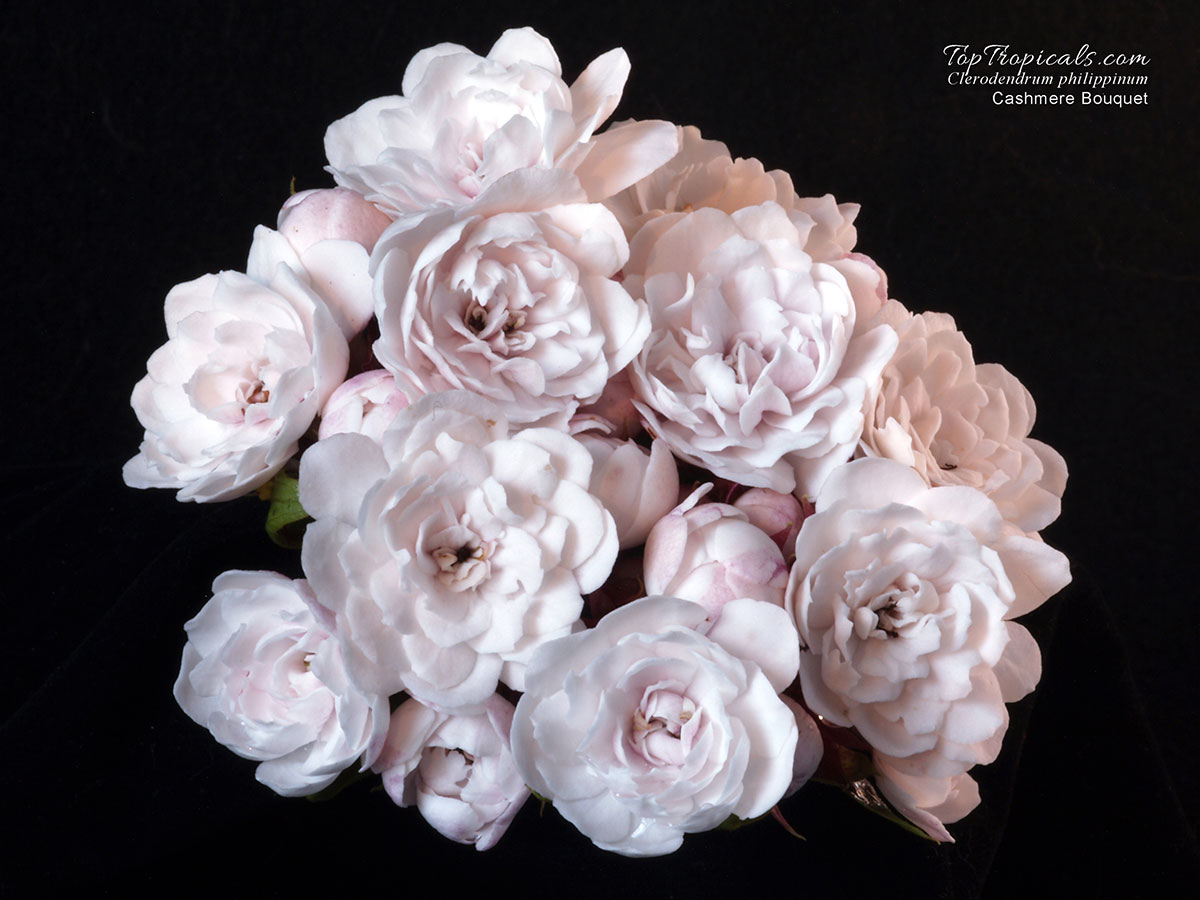
philippinum - Cashmere Bouquet: double fragrant flowers, shade-tolerant
- Clerodendrum
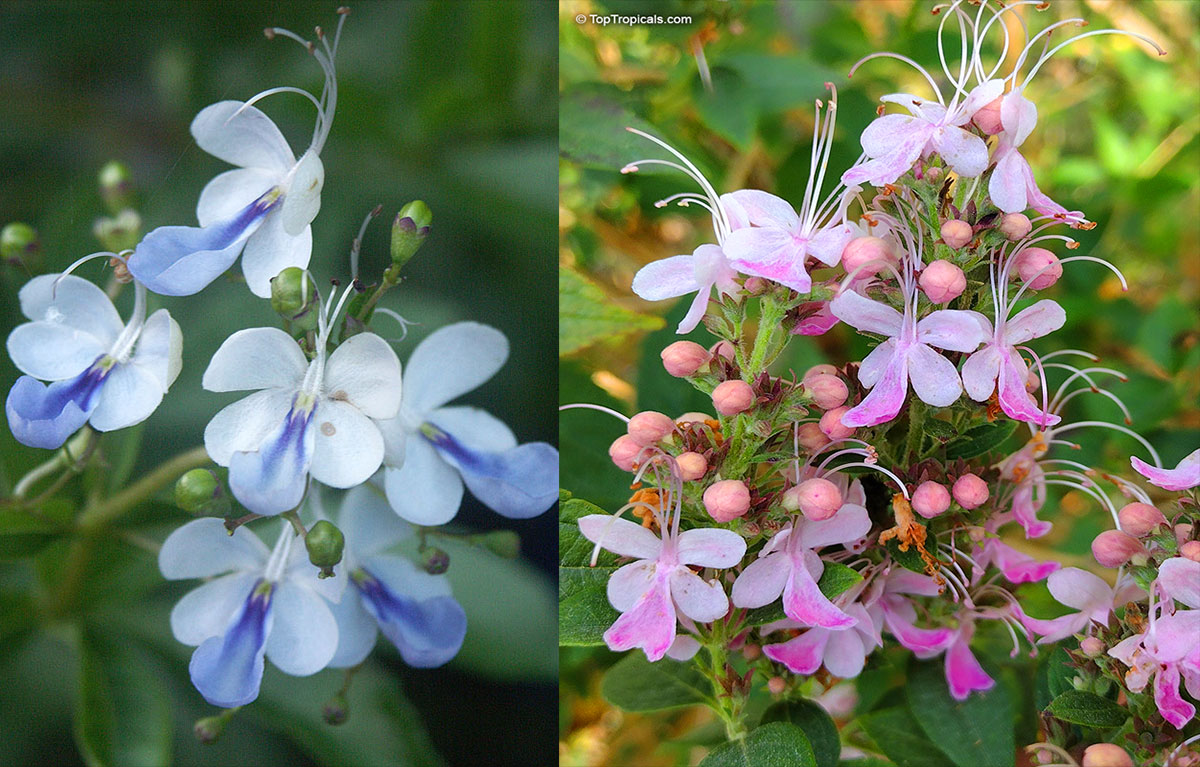
ugandense - Blue Butterfly: delicate blue blooms that attract pollinators
Clerodendrums as Vines
- Clerodendrum
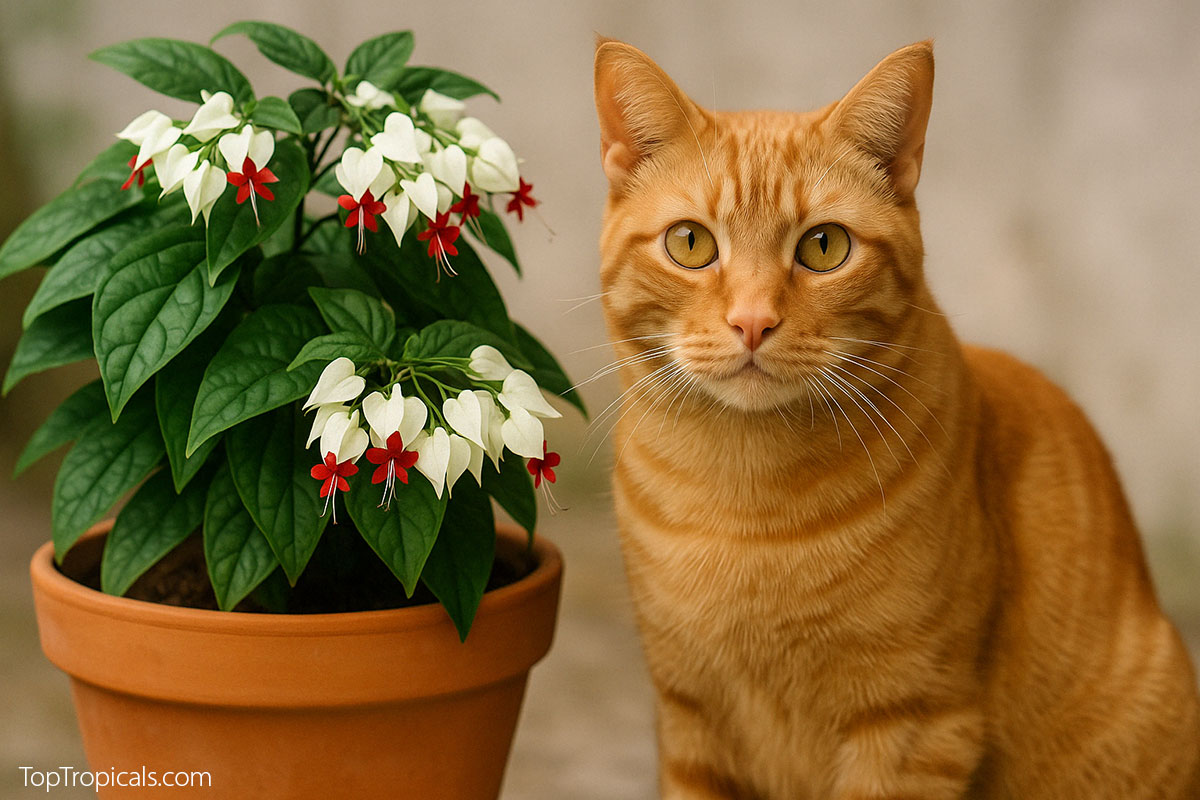
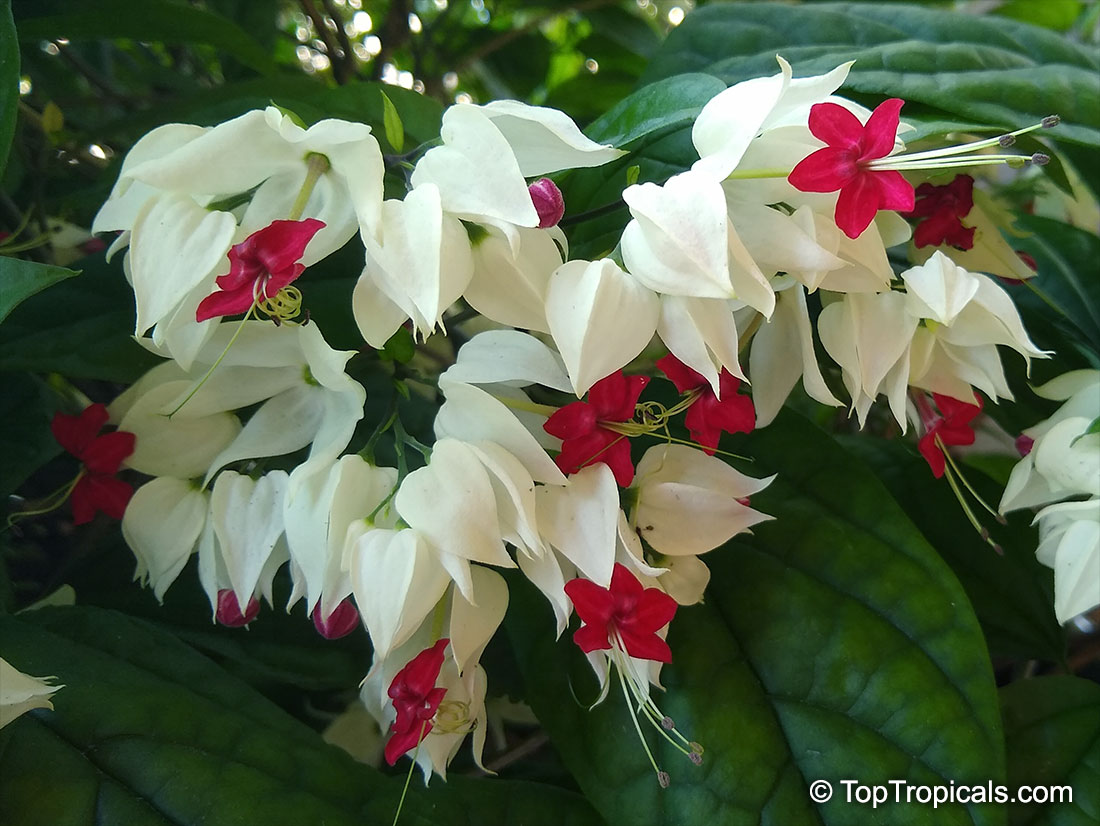
thomsoniae - Bleeding Heart: classic red-and-white contrast, climbs
easily
- Clerodendrum
speciosum - Red Bleeding Heart: vivid magenta blooms, great on trellises
Clerodendrums as Small Trees
- Clerodendrum minahassae - Fountain Clerodendrum: upright, white flower
sprays
- Clerodendrum
sahelangii - Champagne Clerodendrum: cascading white blooms
- Clerodendrum
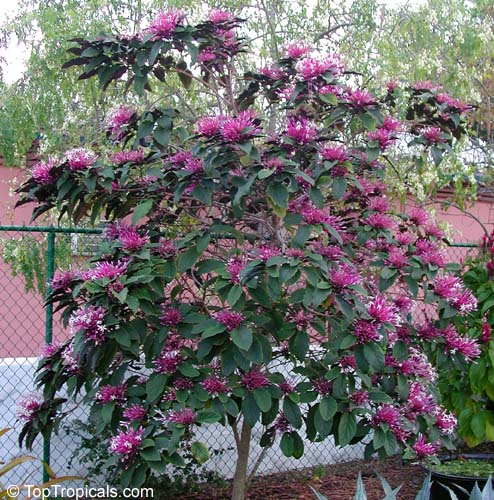
quadriloculare - Winter Starburst: purple leaves, late winter blooms
- Clerodendrum
schmitii - Chains of Glory: dangling flower clusters, unusual look
- Clerodendrum
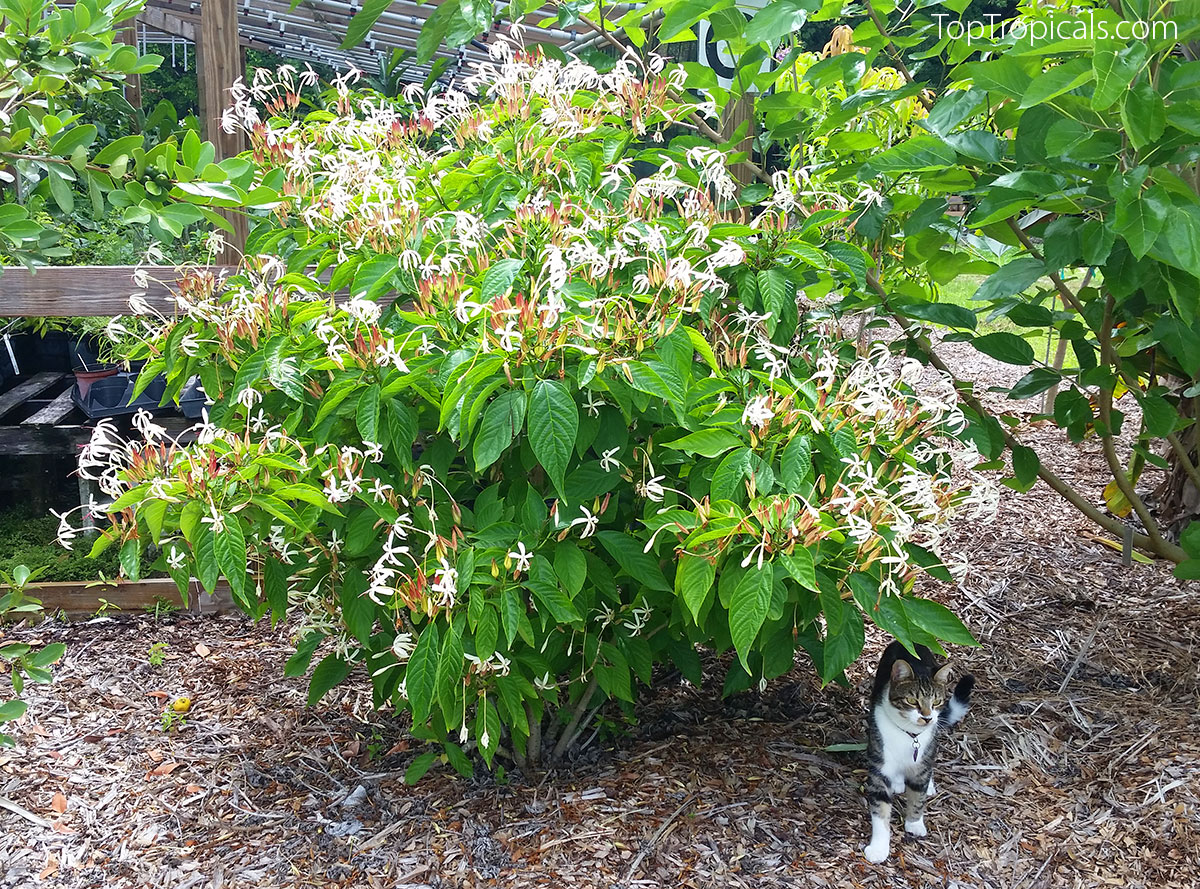
wallichii - Bridal Veil: long white flowers, graceful arching branches
Date: 12 Dec 2023
Easy compact bush for sandy soil
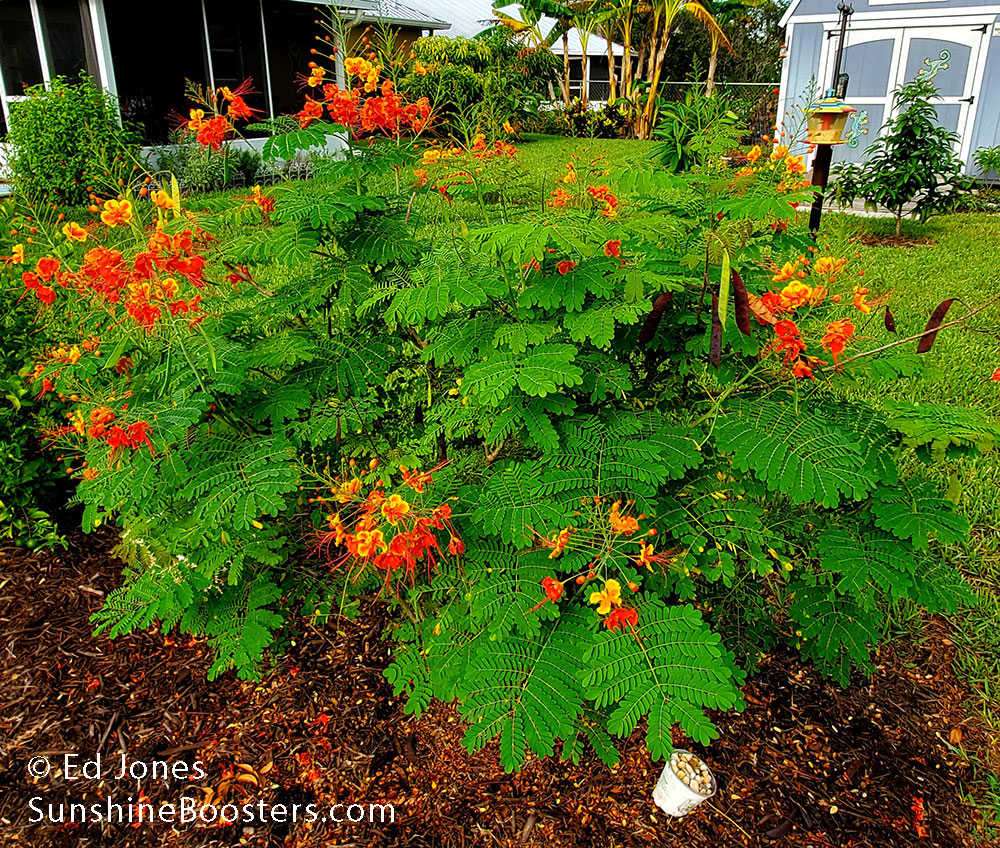
Caesalpinia pulcherrima - Red Dwarf Poinciana, Bird of Paradise.
Q: Can you recommend a flowering bush that will be in full sun and in sandy soil. I do not want it to exceed 10 feet.
A: For a garden specimen bush that is medium size and tolerates poor soils, we can recommend to choose from the plants below. These are all easy to grow, not fussy about soil and water, and stay compact and require minimal or no trimming at all.
Calliandra surinamensis - Powderpuff - 6-8 ft
Hibiscus
mutabilis Cotton Candy - Mallow Hibiscus - 5-6 ft
Dombeya seminole
- Tropical Rose Hydrangea 4-6 ft
Allamanda
schottii - Dwarf Allamanda Bush 3-4 ft
Brunfelsia
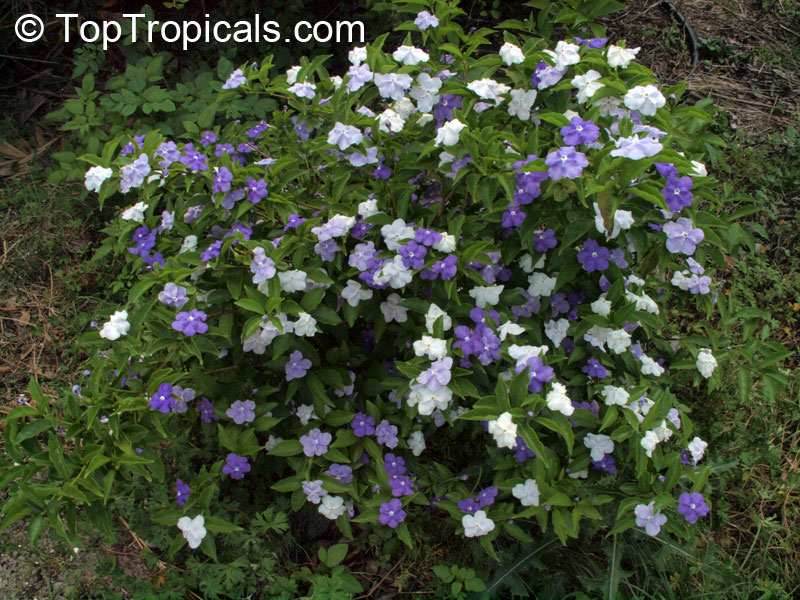
pauciflora Compacta - Dwarf Yesterday-Today-Tomorrow - 4-5 ft
Calliandra
schultzii - Dwarf calliandra - 4-5 ft
Plumbago
auriculata Imperial Blue
Caesalpinia
pulcherrima - Red Dwarf Poinciana, Bird of Paradise - 2-4 ft
Hibiscus
schizopetalus - Coral Hibiscus - 5-6 ft
Jatropha
integerrima compacta - 4-5 ft
Clerodendrum
bungei - Glory Bower - tolerates shade, 4-5 ft
Eranthemum
pulchellum - Blue Sage, Lead Flower (prefers shade) - 4-5 ft
Magnolia figo -
Banana Magnolia - small tree, 6-8 ft
Megaskepasma
erythrochlamys - Brazilian plume (tolerates shade) - 5-6 ft
Tibouchina
lepidota - Ecuador Princess, Jules Dwarf - 3-4 ft
Leonotis leonurus
- Lions Ears - 3-4 ft
Also, for your further reference, check out the reference chart Hedges with Benefits Chart to see different flowering bushes that are great for hedges as well as garden specimens, depending on your specific needs.
Megaskepasma erythrochlamys - Brazilian plume.
Brunfelsia pauciflora Compacta - Dwarf Yesterday-Today-Tomorrow.