Garden Blog - Top Tropicals

Date: 23 Feb 2026

❄️ The Hardiness Report: February 2026 ❄️

🐾 Smokey & Sunshine’s real-world survival data from our Sebring, Florida Research Gardens. Smokey analyzed the data. Sunshine just stayed happy. Here is what they found.
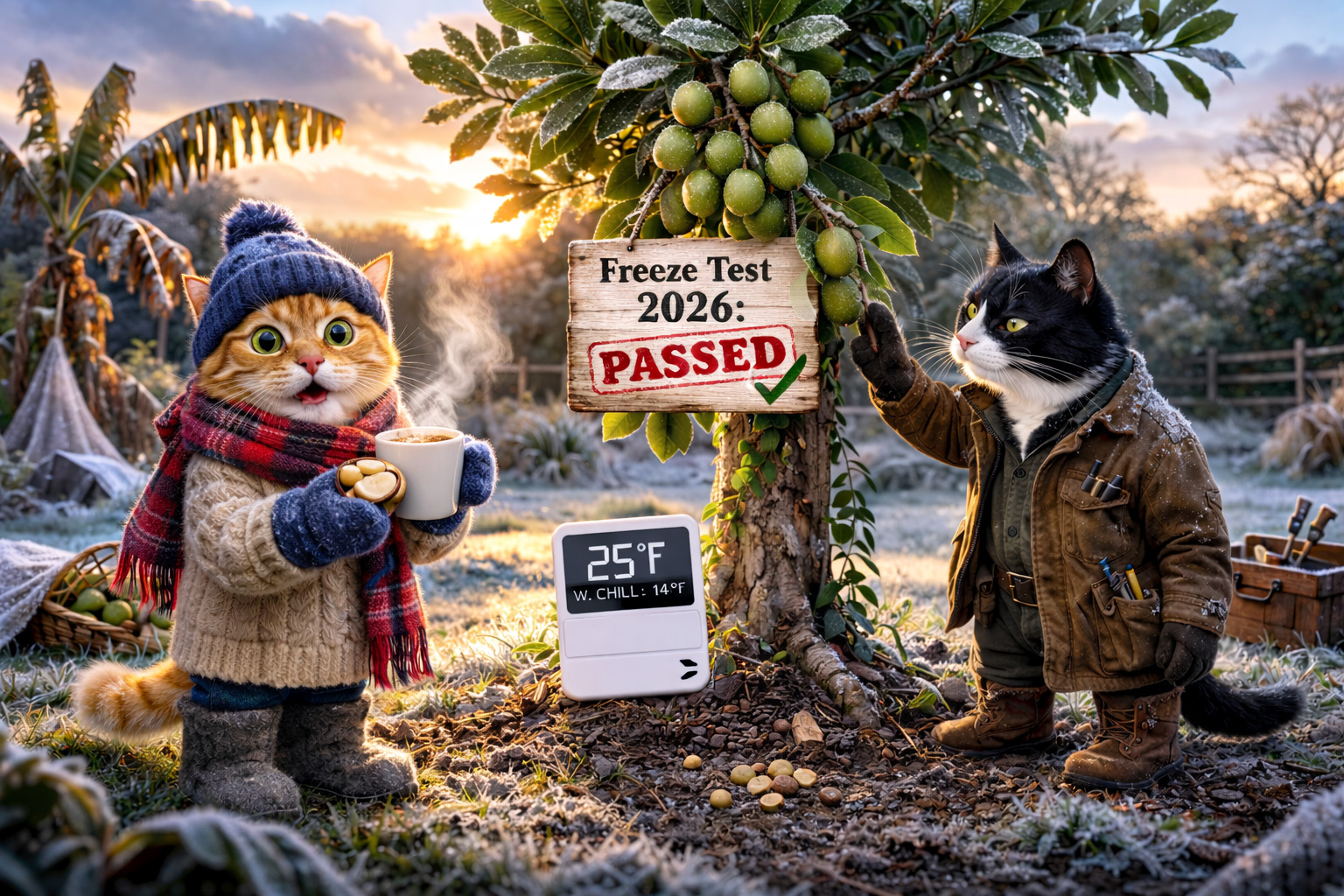
Macadamia  tree  surviving  25F  freeze  as  Smokey  inspects  leaves  and 
 Sunshine  holds  steaming  coffee  in  frosty  garden.
Sunshine: Twenty five degrees. Wind chill fourteen. And it is still standing... like nothing happened?
Smokey: This is macadamia strength.
Sunshine: I should put a macadamia nut in my coffee and borrow some of that strength.
Smokey: Do not get too nutty yet. It still needs curing and cracking.

📊 Weather Data – February 1–6, 2026

Sebring, Florida – 132 years of recorded observations
This was not a light frost. It was a prolonged, windy, penetrating hard freeze.

  • 🌡 Minimum temperature: 25F
  • ❄️ Wind chill: 14F
  • ⏳ Duration: 3 nights of 8–10 hour hard freeze
  • ☀️ Daytime temperatures: around 50F for 7 days
  • 🌀 Wind: sustained 20 mph, gusts 40–50 mph

While all our plants in pots were protected in greenhouses, our in-ground plantings faced the freeze outdoors. We covered what we could. Even so, some plants were damaged, some died, and some surprised us by surviving.

In the next few newsletters, we will share the real survivors - the plants that proved themselves in the ground, under real conditions. Smokey and Sunshine have been out in the fields assessing the damage from the February 1–6 freeze. While many plants struggled, the Macadamia proved to be a true standout. This is how we grow them to handle the tough years.

Why does this matter? Because we have gotten used to warm winters, and this freeze was a rude awakening. Not everyone lives in Miami. If you garden in places where a real cold event can happen, you have to be prepared - and you have to plant what can take it.

🌰 Macadamia: Freeze Tested and Standing
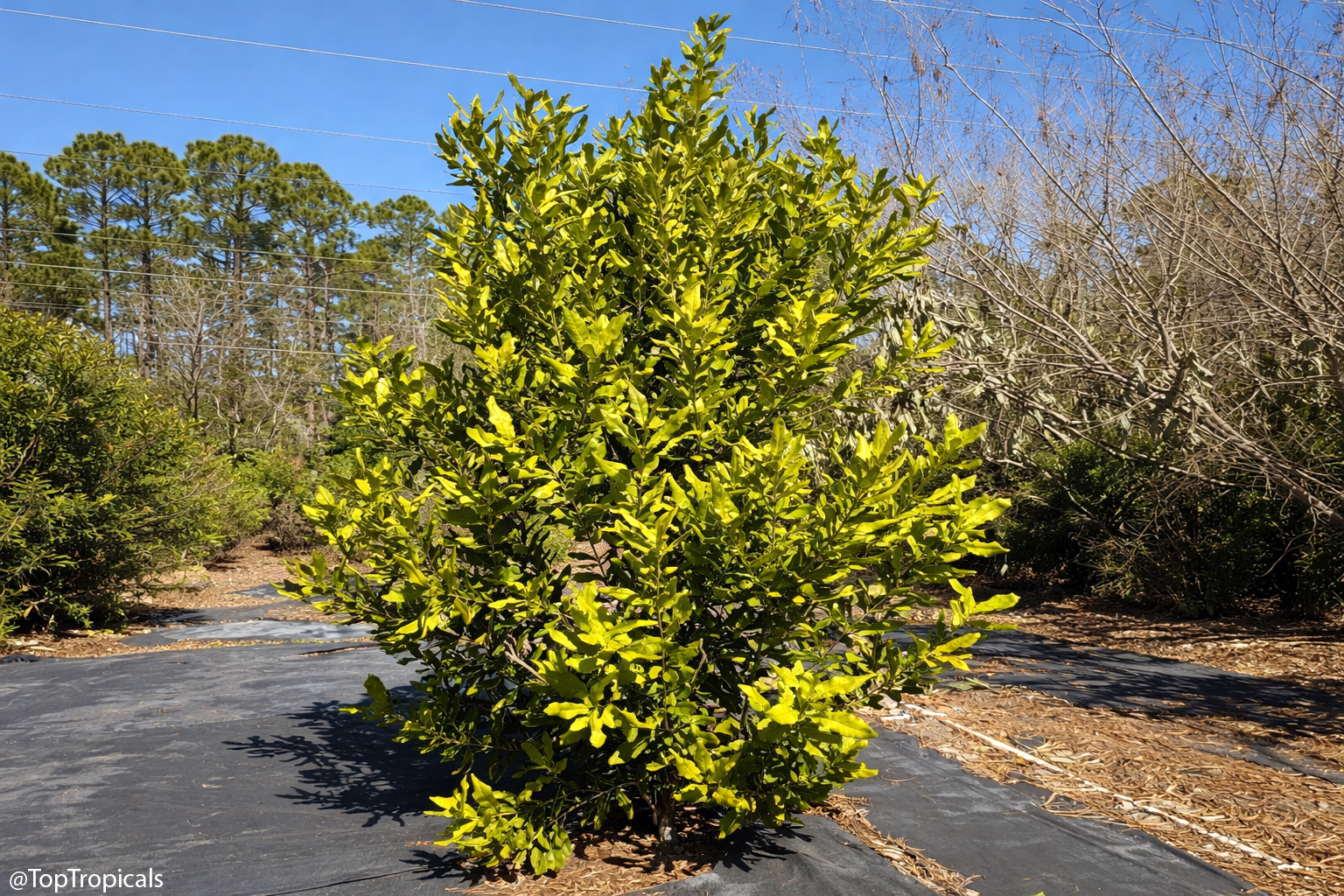
Three  year  old  macadamia  tree  after  three  nights  of  25F  hard  freeze  in 
 February  2026,  showing  healthy  foliage.

3 year old macadamia tree after 3 nights of hard freeze in February 2026 - standing strong.

When temperatures dropped to 25F with wind chill near 14F, our established macadamia trees remained upright, green, and structurally intact. Leaves held. Branches stayed firm. No collapse, no panic.

That is not luck. That is macadamia hardiness.

Often considered a "tropical luxury nut," macadamia proved it can handle more than many gardeners expect. In USDA Zones 9b-11, with proper drainage and site selection, it is not just ornamental - it is a long-term food tree with real resilience.

In a winter that reminded us not to take warmth for granted, macadamia earned its place on the survivor list.

The nut itself is famous for its strength. The shell is among the hardest in the nut world, requiring serious pressure to crack. Inside, the kernel is creamy, buttery, rich, and deeply satisfying. High in monounsaturated fats and naturally low in sugar, macadamias have long been valued both for flavor and for nutrition.

The tree is equally impressive. An evergreen with tough leaves and elegant spring flowers, it matures into a productive, manageable canopy. Nuts develop slowly over six to seven months. Production begins in a few years and increases steadily as the tree matures. Plant it once, and it can reward you for decades.
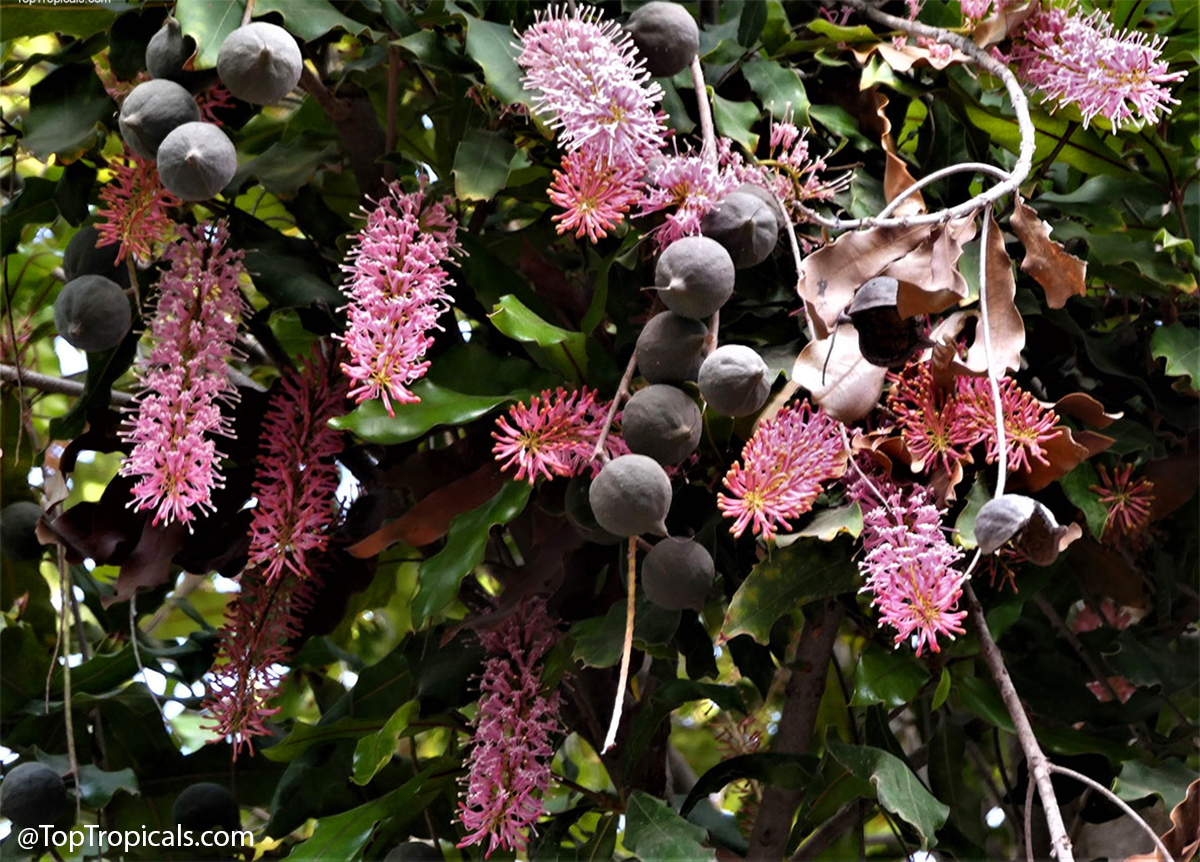
Macadamia  tree  with  pink  flower  racemes  and  developing  round  green  nuts
    on  branches.

Macadamia flowers and developing nuts on the tree.

Cold will come again. It always does. The question is not whether winter will test your garden. The question is whether your trees are ready. Macadamia proved it is. If you are building a garden that feeds you for decades, this is a tree worth planting.

🛒 Add Macadamia Tree to your garden
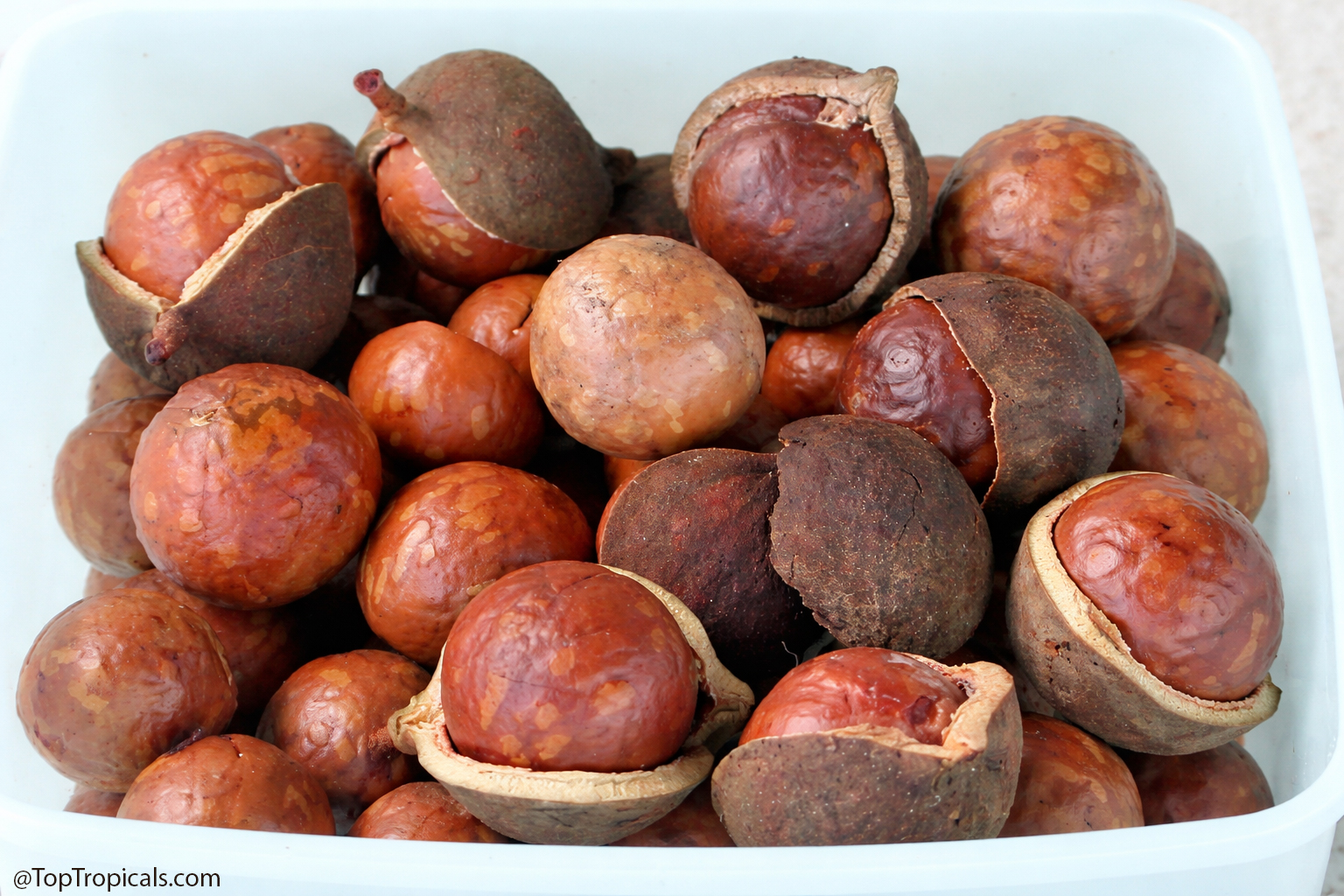
Fresh  macadamia  nuts  with  outer  husks  removed  and  hard  brown  shells 
 exposed  in  a  container.

Freshly harvested macadamia nuts with husk removed and hard shells visible.

Date: 24 Jun 2018

Cold hardy tropical fruit trees for Luisiana

Q: I've just moved to Louisiana and have been wondering whether it would make sense to plant some tropical fruit trees in our garden. Average lows in New Orleans are 41 deg F in January and February, although we did hit 25 once with the Arctic vortex. I'm interested in litchi, longan, rambutans, and persimmons. Do you have varieties that can tolerate Louisiana's temperature range? I'd love mangosteen but I don't suppose they will survive. Do you have any suggestions on tropical fruit trees that I could try?

A: Average temperatures are for statistics only; it is actual temperatures that may hurt your cold sensitive plant. This is what you should keep in mind when starting your tropical fruit collection:
1) Ultra-tropical plants like Rambutan can not survive winters below 45-50F. However, they can be successfully grown in containers in a greenhouse or moved indoors into a sun room during cold periods.
2) Tropical plants like Litchi and Longan may take some light frost once established. Still, for areas with freeze our advice is - keep them in pots and move inside in case of cold.
3) There is a number of subtropical fruit trees that are hardy enough to take some freeze. Persimmon, Feijoa, Fig, Cattley Guava, Jujube, Kiwi, some Eugenias and others. Please refer to our Tropical Fruit Sensitivity Chart.
4) Remember that plant's ability to survive winter depends on several factors, not only temperature itself. Important factors are: wind protection (chill wind kills rather than low temperature itself), exposure, how close the tree is planted to the house, plant maturity and its overall strength and health. If a plant had received good nutrients during summer, has well established root system, planted in enclosed area protected from winds and has plenty of bright sunlight - it has better chances to survive than a weak plant in warmer conditions.
5) Use SUNSHINE plant boosters for improving cold tolerance of your tropical plant. It only takes a few drops, and only costs $5!

Date: 6 Jan 2017

6 easiest fruit trees and 5 spices to grow in containers indoors

Q: This is why I want to move so that I can grow absolutely anything I want from your catalogue. Prefered Puerto Rico. Right now I live in New York and there is absolutely nothing I can grow there.

A: Of course living in Puerto Rico brings more opportunities to grow tropical species. However, you can create your unique tropical paradise even living in New York. We have many customers from up North who successfully grow tropical species (and get them to flower and fruit) in greenhouses, and even indoors.
Here are a few suggestions of tropical fruit trees that adapt well for container/indoor culture - for both beginners and advanced gardeners.

Top 6 fruit trees great for indoors / container culture / beginners
1. Mango (Mangifera indica). Select from one of smaller mango varieties
2. Sugar Apple (Annona squamosa)
3. Guanabana, Soursop (Annona muricata)
4. Miracle Fruit (Synsepalum dulcificum)
5. June Plum (Spondias cytherea)
6. Guava (Psidium guajava)

5 top spice plants (the spice will be with you right away, you don't have to wait for it to grow)
1. Allspice (Pimenta dioica)
2. Cinnamomon or Campor tree
3. Bay Leaf (Laurus nobilis)
4. Mint Tree (Satureja vimenea)
5. Vanilla orchid (Vanilla planifolia)

See a brief article of growing tropicals outside of tropics.

Don't forget to get some SUNSHINE boosters for your plant collection - for both successful indoor culture and cold protection!

See also our magazine Tropical Treasures) - Pushing the Limits of Tropical Gardening, with list of issues.

Date: 22 Mar 2021

The most rewarding hardy fruit trees

Q: Recently I started working remotely and I kinda like it, no need to commute, it saves me so much time so I can have life now! My friend got me involved into growing some small houseplants but I really want to take advantage of our Florida climate and sun. I want to plant some cool fruit trees since I have a decent size yard. But I live in Florida Panhandle and we do have some occasional freeze in winter, although not for too long. But it gets very hot in summer! Are there any tropical fruit trees that will be happy here? Or should I keep everything in pots? I am excited to have my own tropical plant collection!

A: There is a perfect plant for everyone, and a perfect tree for every climate. Many tropical and especially subtropical plants can be much hardier than they are believed to be, both flowering and fruiting trees among them. You may keep the most sensitive species in pots and bring them inside for winter, while there are so many trees that will be happy in your area. Start with these that are perfect for climates with hot summers and cool winters:

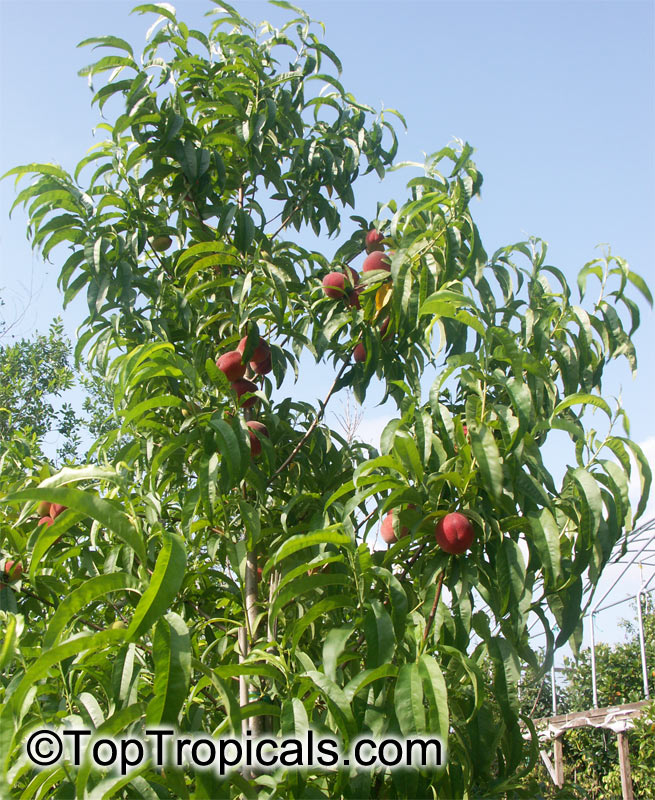
1. Peaches and Plums

Low-chill, Heat-tolerant Peaches, Nectarines, Plums are especially selected for Florida hot summers. They produce well and do not require many "chill" hours like temperate fruit trees. They only need 150 chill hours and grow well in even in Arizona, so you know they are taking the heat.

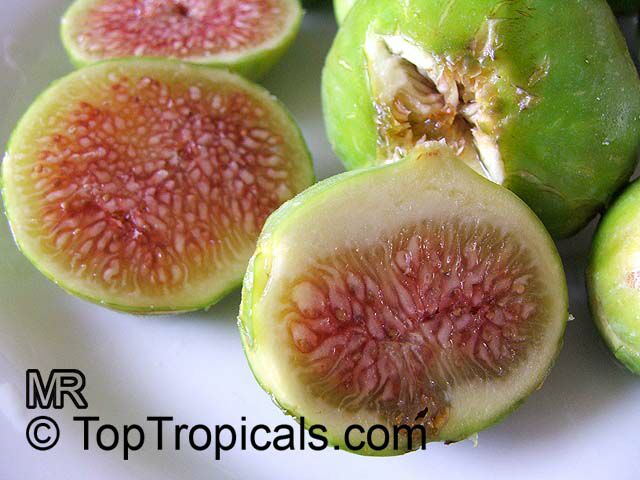
2. Figs

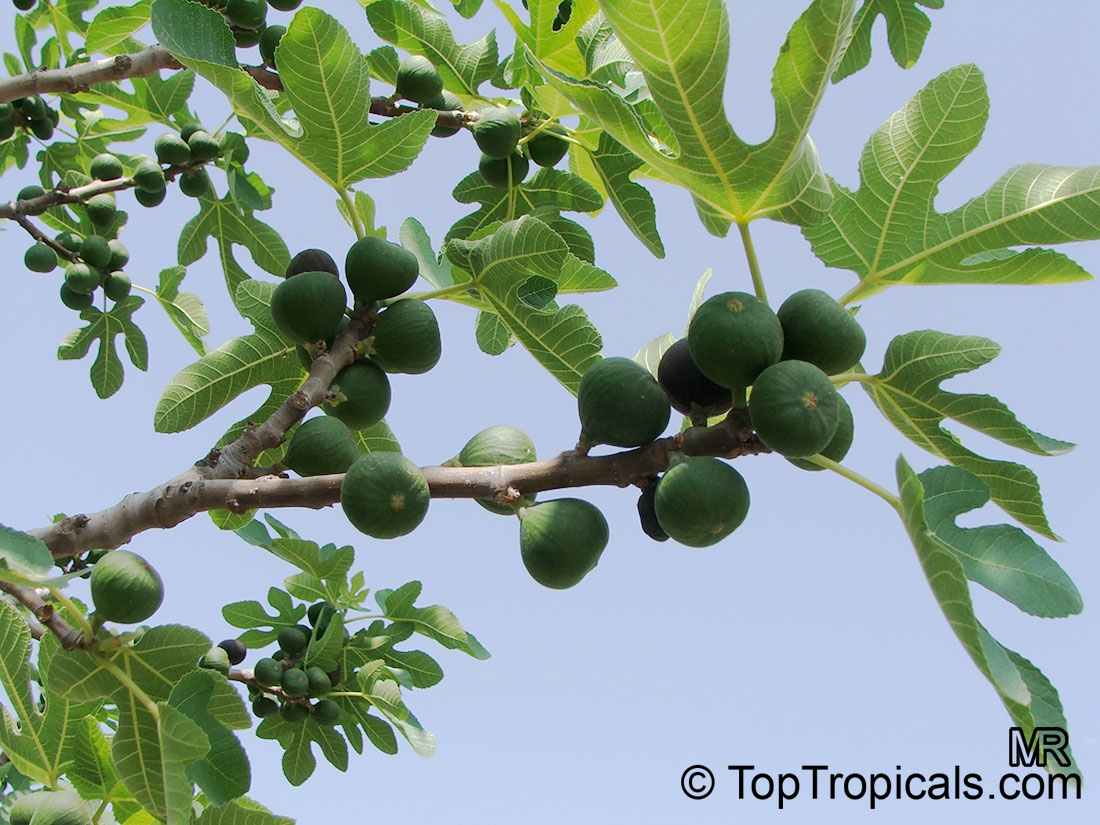
2) Fig trees - they are easy to grow, heat- and drought- resistant trees. They are prized for their delicious fruit, which can be one to three inches in length, violet, brown or black. There are even varieties with yellow fruit. Most fruits are borne from early summer to late fall on new growth, and the fruits generally mature very quickly. These trees are sensitive to frost only when actively growing, but can withstand 10F when dormant. Read more about Fig trees.

Date: 27 Jul 2023

Top varieties of pineapples

Pineapple

Q: I want to grow my own pineapples, which varieties do you recommend for the best production? Do I need any special organic fertilizer?

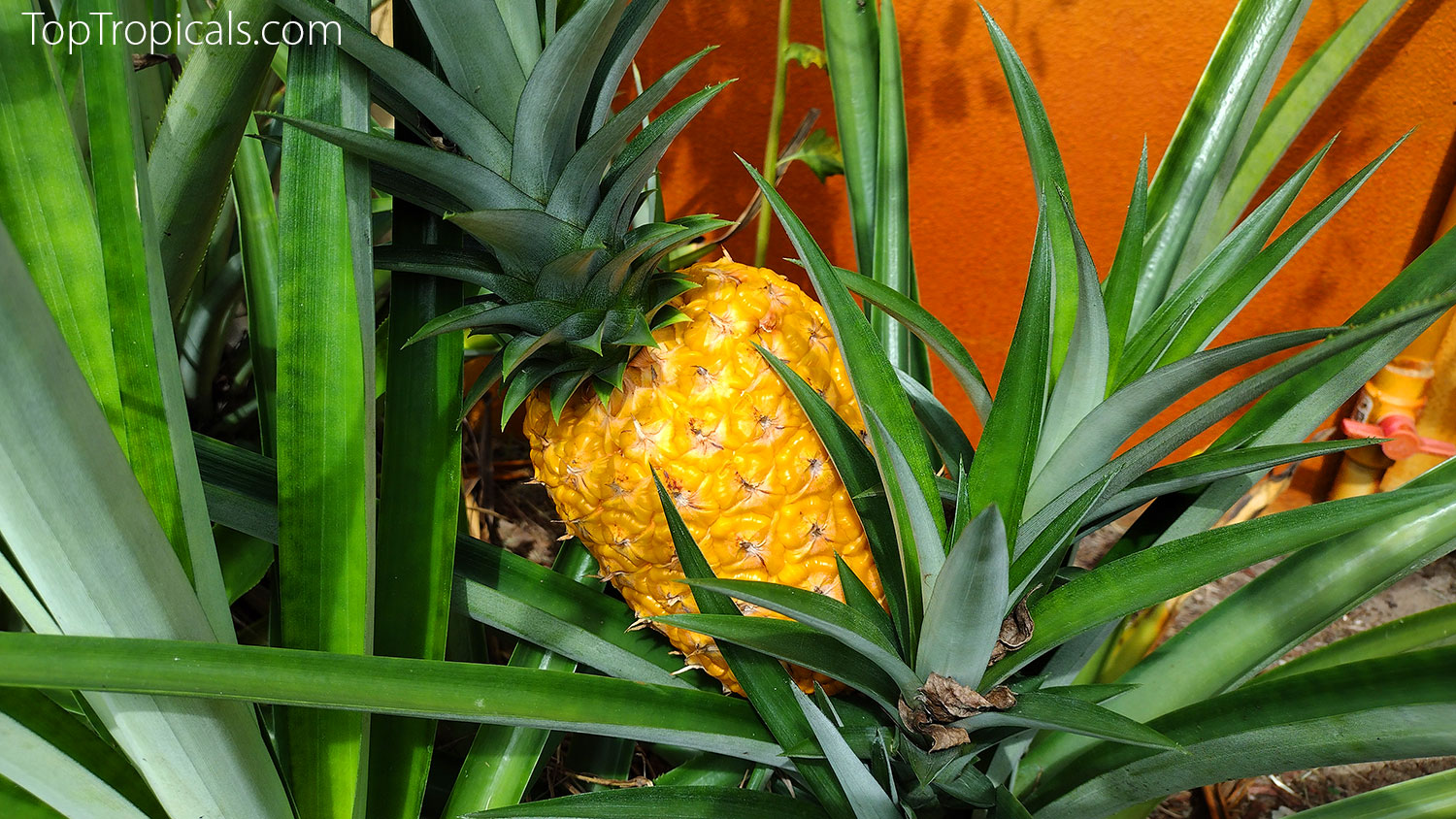
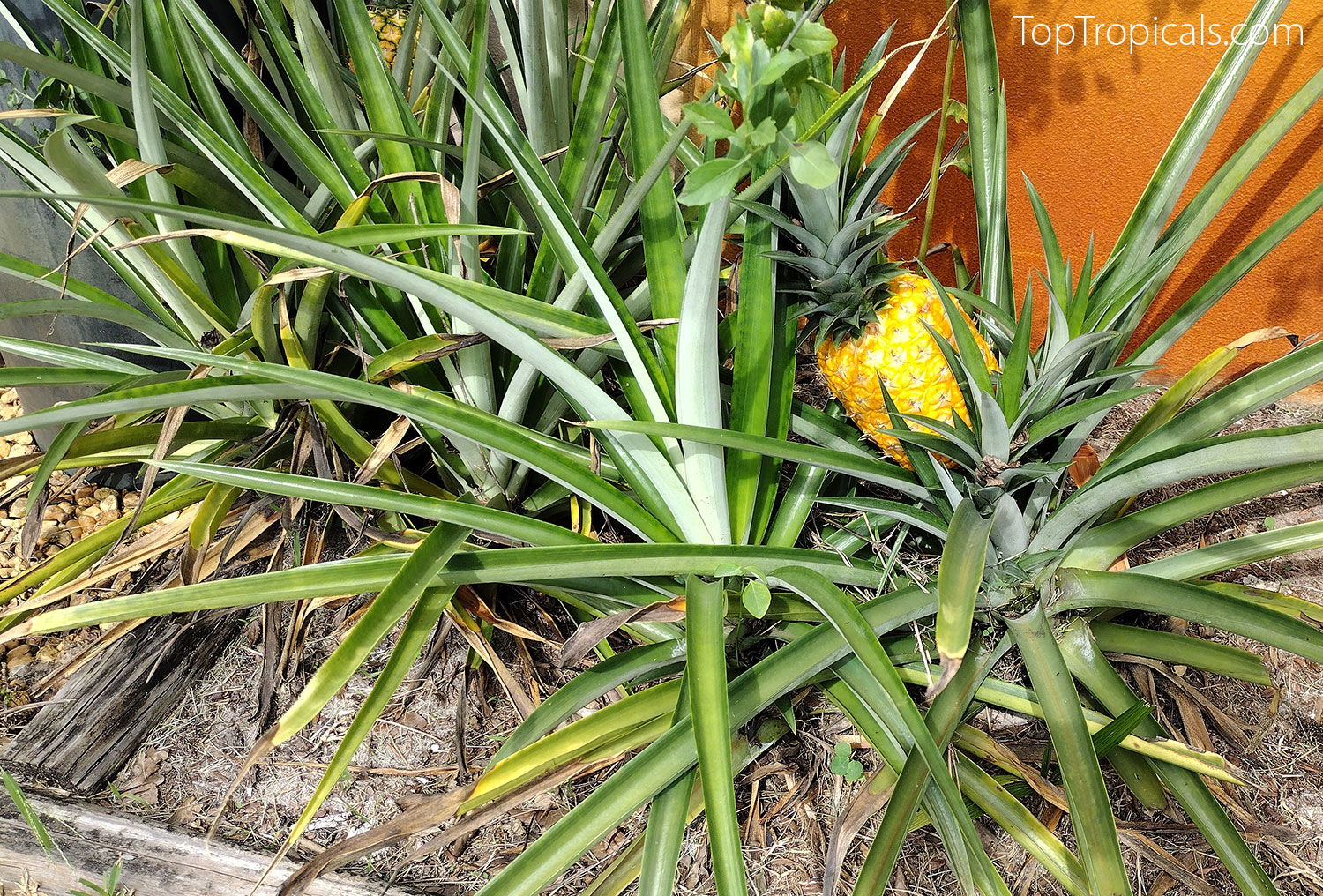
A: Growing your own pineapple is pure bliss. Watching the transformation from a small crown into a luscious fruit is immensely rewarding. Every tropical gardener should experience the joy of growing this tropical gem and relishing its sun-kissed sweetness straight from the garden. Pineapples are easy to grow and can fruit in containers too, so if you live in a colder climate, no problem! They will take very little space in your greenhouse or sunroom. Just remember to feed your pineapple plants with Sunshine Boosters so they will feed you the biggest and the sweetest fruit! Sunshine Boosters are natural, organic-amino-acid based plant nutrients that are perfect for any edibles.
There are several varieties of pineapples in commercial cultivation. Below are the most interesting cultivars. Discover the pineapple paradise!

Elite Gold: Bursting with tropical flavor and vibrant gold flesh, Elite Gold dazzles with its unique taste and ornamental beauty.

Florida Special: Perfectly balanced sweetness and acidity, this variety thrives in warmer climates, gifting you a taste of Florida's sunshine.

Sugar Loaf: Irresistibly sweet with a hint of citrus, Sugar Loaf's compact size makes it an ideal choice for container gardening.

White Jade (Spineless Sweet): Exceptionally sweet and without spines, White Jade pampers you with a delectable, thorn-free harvest.

Lava Burst (Burgundy Variegated Rainbow): This visually stunning ornamental pineapple variety boasts striking burgundy and green leaves, resembling a rainbow of colors. Its fruit edible but small; its exceptional beauty adds a touch of exotic elegance to any garden or indoor space. Lava Burst is a delightful conversation starter and a captivating addition to your plant collection, making it a favorite among pineapple enthusiasts for its aesthetic appeal.

Embrace the sense of accomplishment and the satisfaction of savoring homegrown, mouthwatering pineapples - nature's sweetest gift!

Read more about Pineapples: The most luscious Hospitality Fruit.

Pineapple