Date: 9 May 2017
Secrets of flowering of Jasmine Sambac
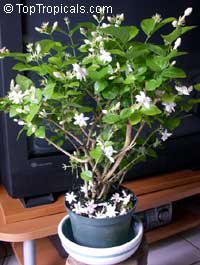
Q: Q: My Jasmine sambac Maid of Orleans is growing very fast and produced lots of branches and dark green leaves, when will I see flowers? I only saw 2 or 3 flowers since since Spring. I is planted by East wall of the house. Should I use some special fertilizer perhaps?
A: Jasmine sambac is a tropical bush or vine that enjoys hot summers. Since it
tolerates wide range of light conditions, it can be grown both in shade or sun; this is why it is highly recommended for indoor
culture where light level is limited. Remember though that profuse blooming directly depends on the light level. Your Eastern
exposure location may not be providing enough light for the flowering. Dark green leaves are also a sign of a filtered light
sitution. Extra fertilizing may not help to induce flowering if the light is low, although it is always beneficial for a plant
(it may just start producing even more leaves and branches). The ideal conditions for Sambac's flowering are - full sun all
day long, high temperatures (upper 80's-90's, even over 100F is fine), and very good drainage. Some gardeners call Jasmine
sambac "almost a succulent", referring to its low watering needs. To be exact, this plant requires regular watering, but will
produce lots of flowers only providing perfect drainage. You may never see flowers if the plant has wet feet or water-logging
occurs. If your summers are rainy (like in Florida), make sure your jasmine is planted with at least 4-5"elevation and not in a
low/wet spot.
See Top Tropicals Video about jasmine Sambac:
Date: 7 Oct 2018
Featured Plant. Jasminum sambac Belle of India
Lovely Jasmine Belle of India makes you feel pretty and loved!
This one is the most wanted variety with
elongated petals that are sweetly scented. Compact and
slow growing shrub, it makes a great houseplant and
flowers freely throughout the year. The most profuse
flowering is from Spring to Summer.
Called pikake in Hawaii, Jasmine sambac is the plant
used to flavor the jasmine tea and making perfumes.
Perfect houseplant takes both sun or shade, it is a
beautiful fragrant everbloomer for your home and garden.
Belle of India is a slow grower, with pale green pointed
leaves and double flowers with elongated narrow petals.
Prefers filtered light for a better look of the leaves,
but will tolerate full sun. In fact the more sun the
more flowers you get.
Secrets of successful culture:
1) use only well-drained potting soil
2) keep the plant a little bit on a dry side so roots
don't get too wet. Water again when the soil gets
slightly dry.
3) Use micro-element mix - SUNSHINE Superfood works
the best. It will keep leaves nice and green and induce
more profuse flowering.
Stay updated with TopTropicals Videos by subscribing to our channel at YouTube.com/TopTropicals and get our latest video news of what is fruiting and blooming!
Date: 4 Nov 2025
The secret Brain Food growing in my backyard (and it tastes like green peas!)
Tropical Asparagus (Sauropus androgynus)
🏆 The secret Brain Food growing in my backyard (and it tastes like green peas!)
- 🌿 Katuk, or Tropical Asparagus (Sauropus androgynus), is one of the most underrated edible plants you can grow. This leafy tropical shrub is a superfood in disguise. It grows fast, looks lush, and its tender young shoots taste just like green peas.
- 🌿 Native to Southeast Asia, Katuk is a kitchen staple in places like Vietnam, Malaysia, and Thailand. The leaves and shoots are used in soups, stews, and stir-fries with egg or seafood. It’s not only delicious but also incredibly nutritious - rich in nutrients linked to improved memory and reduced cognitive aging: folate, lutein, and especially vitamin K, which is rare in plants.
- 🌿 Katuk thrives in sun or partial shade, needs little care, and grows into a dense, bushy plant that gives you edible greens all year round. If you want something that feeds both your garden and your health, this one’s a winner!
🛒 Add Katuk Superfood to your Food Forest
Lean more:
🍴 Katuk egg stir-fry: Quick-n-Fun exotic recipes
✔️ Discover the health benefits of Katuk: a Superfood for your mind and body
📚 Tropical Asparagus, Katuk: Grow your own food
📱 How to cook with Katuk
#Food_Forest #Remedies #Discover
🟢 Join 👉 TopTropicals
Date: 3 Dec 2025
Can Poinsettia grow for years? 5 most common mistakes with new container plants
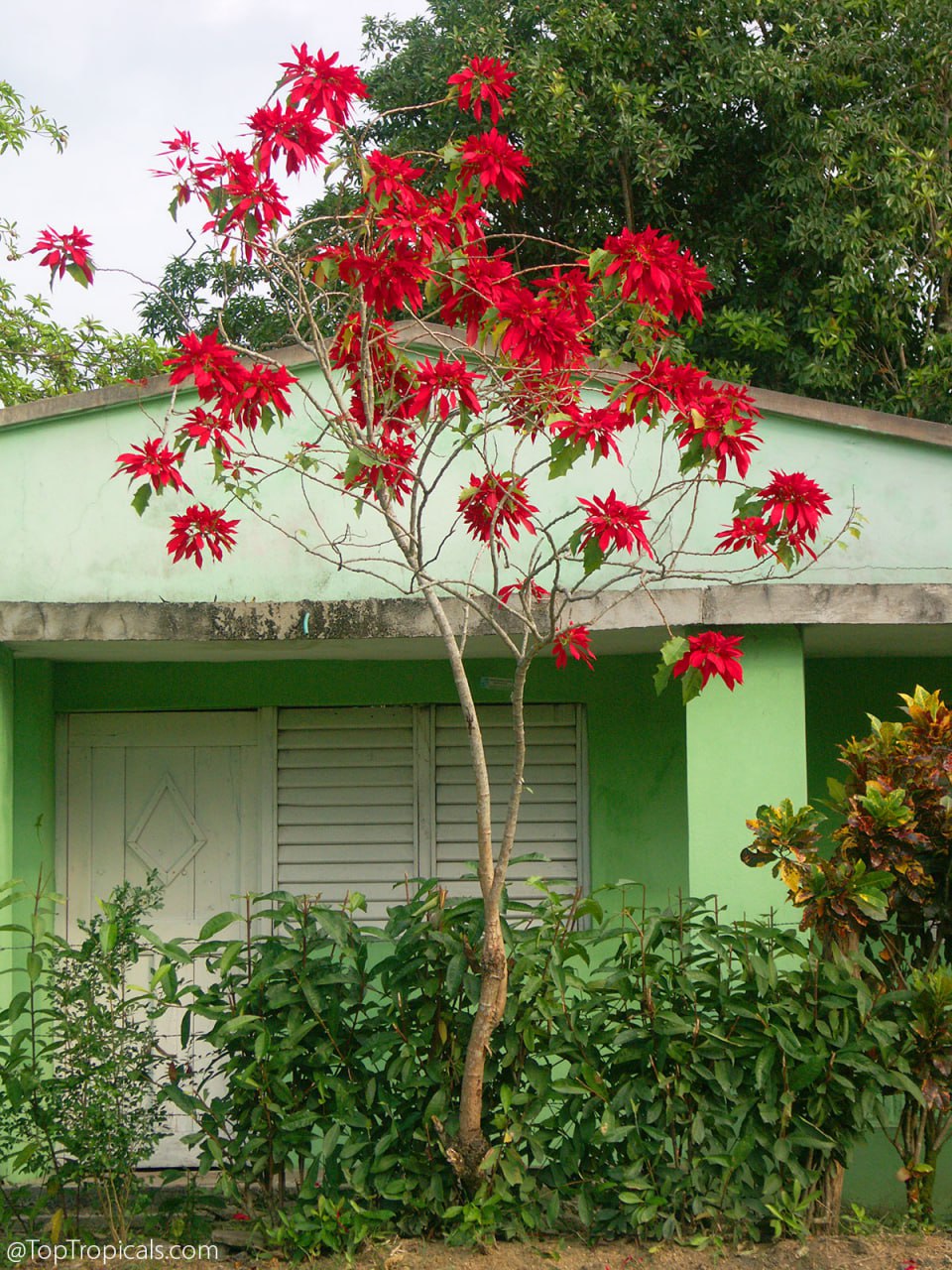
Poinsettia - Euphorbia pulcherrima tree
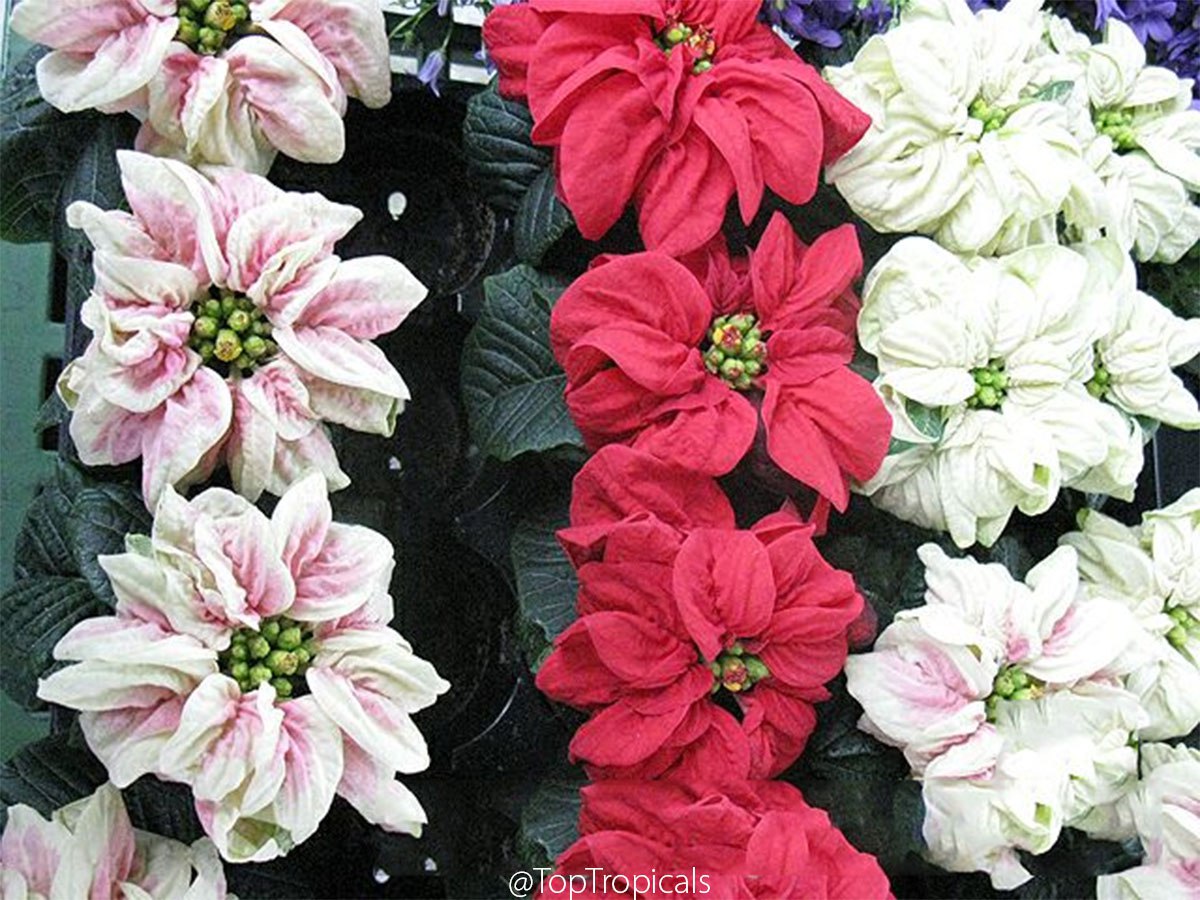
Poinsettia - Euphorbia pulcherrima colorful leaves
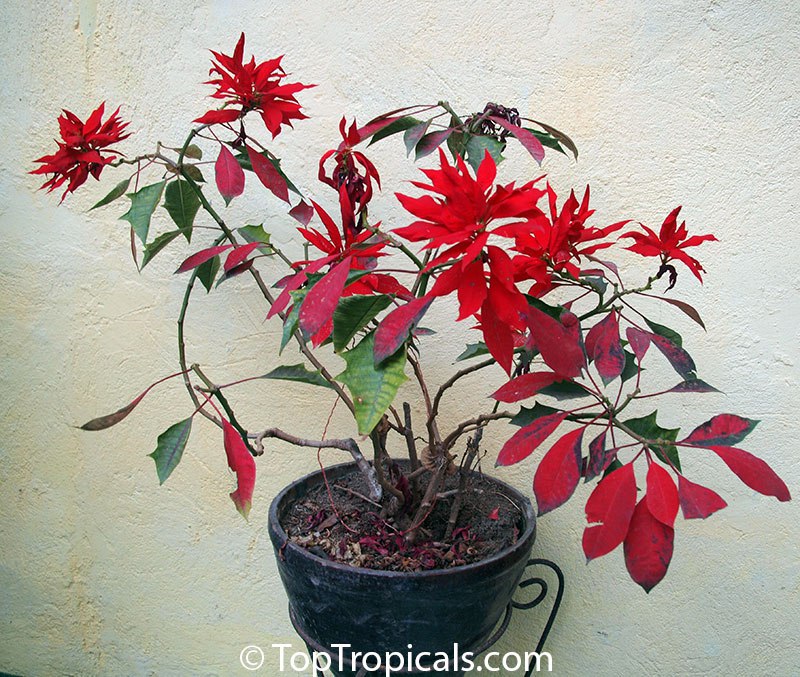
Poinsettia - Euphorbia pulcherrima in a pot
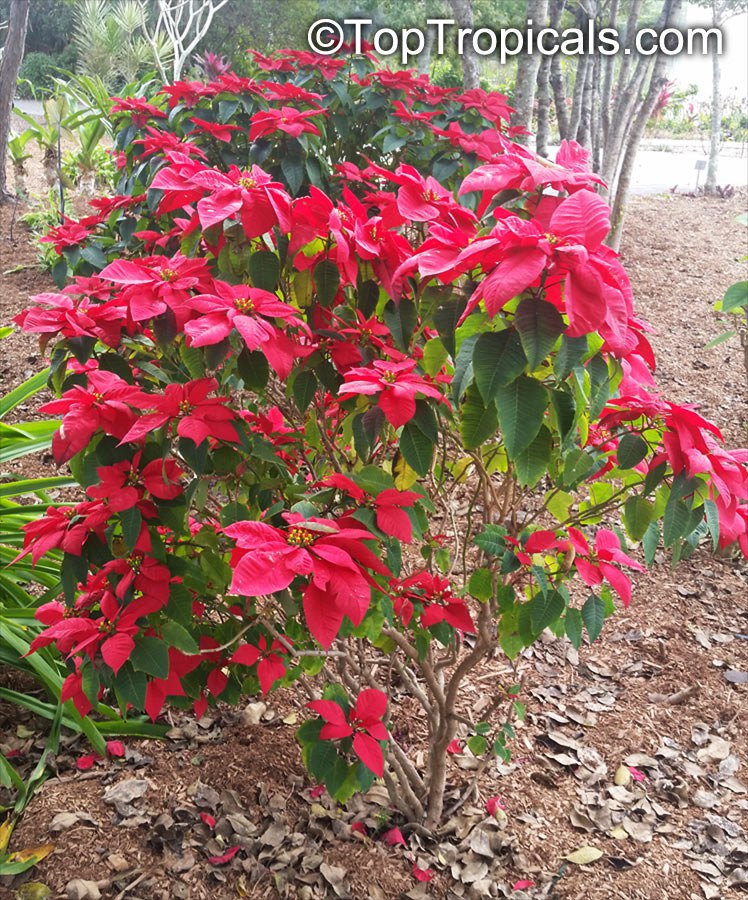
Poinsettia - Euphorbia pulcherrima bush
Can Poinsettia grow for years? 5 most common mistakes with new container plants.
You buy a beautiful plant from a big garden center, or maybe you received one as a holiday gift. It looks perfect - lush, bushy, colorful, spotless. But a few weeks later… what happened? It is dropping leaves, getting leggy, or simply dying. Think about poinsettias after Christmas - most end up in the trash like annuals. But poinsettias are actually perennial shrubs that live for many years in their native environment!
So what went wrong? Here are simple ways to avoid these disappointments and keep your new plants as happy as they were in the greenhouse - and even help them grow bigger and nicer for a long time.
- ❌ Do not skip checking the soil. Even plants from professional growers can hide surprises:
❌ Do not put a plant directly into hot, bright sun.
Most nursery plants are grown in filtered light under shade cloth, and sudden full sun can burn the leaves.
✅ Move sun-loving plants gradually into full sun.
❌ Do not rely on the original container.
Holiday and gift plants often come in decorative pots that have issues:
- no drainage holes
- glazed or heavy plastic that traps moisture and causes root rot
- dry, porous terra cotta that loses moisture too fast
- cone-shaped pots that hold water and create waterlogging
- pots that are simply too big or too small for the root system
✅ Use simple black nursery pots with straight sides.
They:
- hold moisture at the right level
- are made of safe professional-grade plastic
- make it easy to remove the root ball when stepping up
For a fancy display, place the black pot inside a decorative planter. It will also act as a saucer to collect excess water - no stress, no mess.
- soil type on top may be wrong. They may pack peat moss or sphagnum on top to keep stems tight for display.
- the entire soil media might be temporary. Many orchids in stores, for example, sit in glazed pots stuffed with soggy sphagnum - not how orchids should grow.
✅ Take the plant out of the pot and inspect the roots and soil.
Remove excess peat or sphagnum. Use a quality, well-drained mix like Abundance and repot into a container that matches the root size or is just slightly larger.
❌ Do not forget fertilizer.
Your plant came from a professional nursery where it likely received constant feeding through a liquid injection system - almost like being on life support. Once removed, it can decline within weeks.
✅ Put your plant on a regular fertilizer schedule.
When repotting, mix in Green Magic controlled-release fertilizer and refresh it every 6 months. Simple and easy! You can also apply liquid Sunshine Boosters - safe to use with each watering.
❌ Do not ignore individual plant needs.
✅ Take a moment to ask what the plant prefers and what to avoid, when buying from a nursery where you can talk to a grower, like Top Tropicals. The grower knows exactly how it was grown and what it likes. Getting a plant is like adopting a baby - knowing its habits makes all the difference!
🛒 Select plants for containers
#How_to #Container_Garden
🟢 Join 👉 TopTropicals
Date: 4 Jan 2026
Dont drink your coffee until you see this!
Coffea arabica - Coffee tree, fruit
☕️ Don't drink your coffee until you see this!
- Our coffee trees, Coffea arabica, are growing in 7-gallon pots, and after months of waiting, the cherries are fully ripe! They bloomed in May, set fruit in August, and now in winter the fruit has turned red and ready to harvest.
- Coffee is one of the easiest fruiting plants you can grow at home. It does well in containers, loves shade, and can be grown indoors or outdoors in warm climates. With regular watering and a little patience, you can grow, harvest, roast, and brew your own coffee right from your home garden.
- We are harvesting now, and the next video will show the full roasting process step by step.
- 👉 Coming up next: Roasting video coming soon - stay with us!
🛒 Start your own coffee harvest
📚 Learn more:
- • Coffea arabica in Plant Encyclopedia
- • Homegrown coffee - the journey begins!
- • How to make your own coffee from homegrown beans
- • Coffee trees in bloom
- • Brew Your Future: Grow Your Own Coffee
- • What is coffee made of?
- • Why Coffee tree is the best gift plant
- • Top 10 fruit you'll ever need for your health benefits: #2. Coffee Tree
- • What is the most popular and the easiest tropical fruit tree grown as a house plant?
🎥
#Food_Forest #Container_Garden #Shade_Garden
🟢 Join 👉 TopTropicals