Garden Blog - Top Tropicals

Date: 27 Oct 2025

🌳 Why Large Grafted Trees Are Better
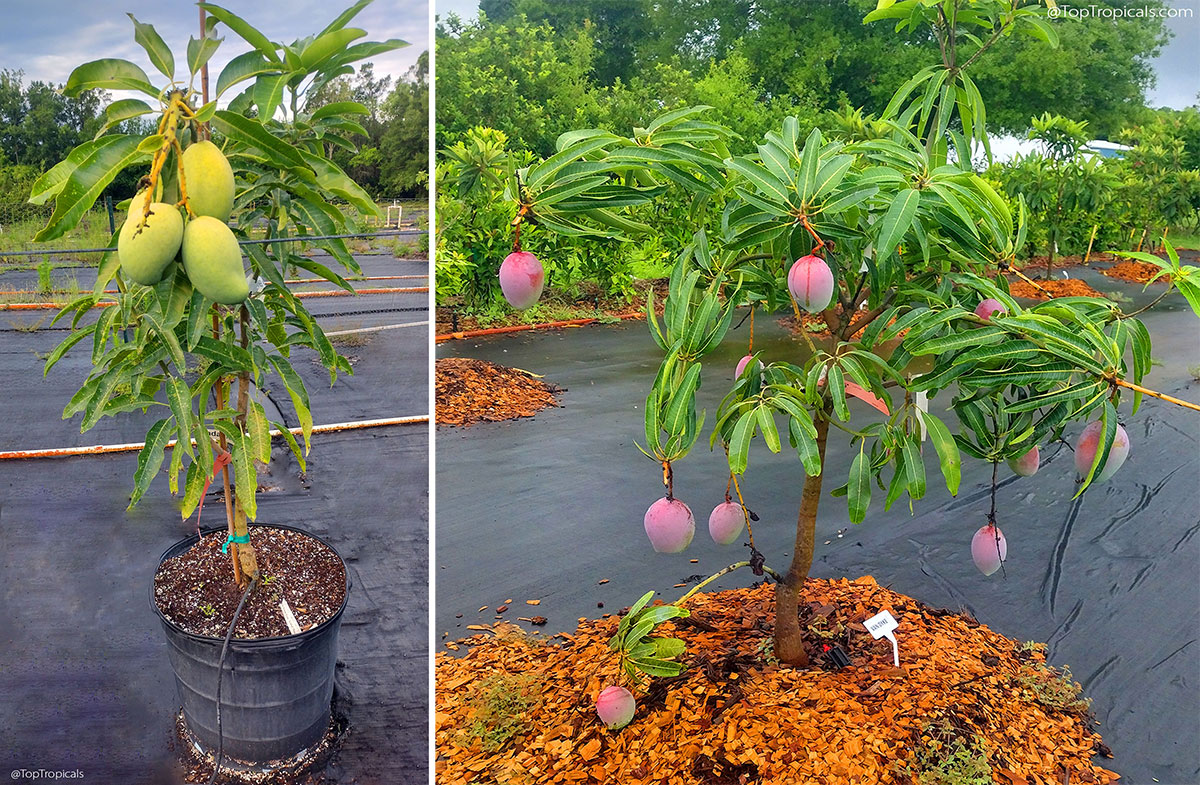
Comparison  of  Mango  trees  growing  in  container  and  in  ground  at  Top 
 Tropicals  nursery  -  potted  tree  with  large  green  fruit  and  in-ground  tree 
 with  ripe  purple  fruit  ready  for 
 harvest

These are not seedlings — they’re grafted trees, which means you get the true variety with known flavor, quality, and performance. Large grafted trees give you a real head start:

  • Already mature with a strong root system.
  • Handle transplanting and weather shifts with ease.
  • Can bloom and fruit in the first or second season.

No guessing, no waiting years — you’ll get the exact fruit you want, sooner.
👉 Learn more: How long does it take for a mango tree to bear fruit?

For Indoor and Patio Growers

No space for a full orchard? You can still grow your own tropical paradise! Our large grafted Condo Mango trees adapt beautifully to big containers on patios, balconies, and sunrooms. They stay compact, flower sooner, and can fruit even in pots when given good light and warmth.
👉 Learn more: What are the Condo Mangos?

Bring the tropics indoors — move your tree outside for summer sun, then back inside before frost. It’s the perfect way to enjoy homegrown fruit wherever you live.

Give your garden a smart start this season. Large grafted Mango trees are ready — but only for a short time before winter.

👉 Plant now, harvest sooner, and enjoy the true variety!
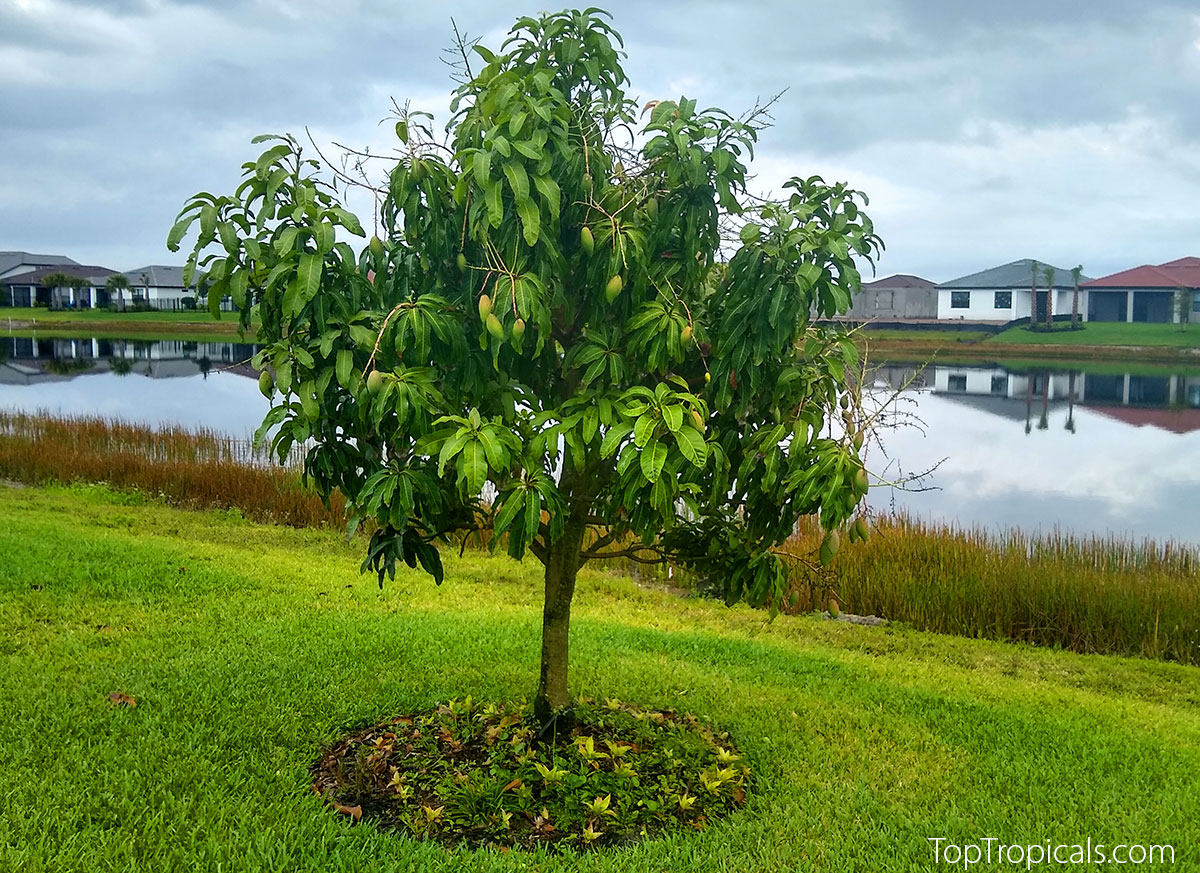
Mango  tree  growing  by  a  lake  in  a  Florida  backyard,  healthy  green 
 foliage  and  young  fruit  developing  on 
 branches

Plant Care Tips by Top Tropicals Plant Expert Tatiana Anderson

Large grafted Mango trees are easy to establish.

  • Soil: Well-drained, rich mix — avoid heavy clay.
  • Water: Deeply once or twice a week after the tree is established; keep soil evenly moist during the first few weeks after planting.
  • Light: Full sun or bright patio spot.
  • Feeding: Use balanced fertilizer Sunshine Boosters Mango Tango with every watering and Green Magic controlled release fertilizer every 6 months for steady growth.
  • Protection: Cover on cold nights for the first winter.
  • 👉 Learn more: How to take care of a mango tree in winter.

Plant once, care lightly, and your tree will reward you with fast growth and early fruit.

🌳 Big Trees, Local Pickup Only

For our local gardeners, we have something special. Extra-large 15- and 25-gallon Mango trees. These are full, mature specimens that simply can’t be shipped, but they’re perfect for local pickup or delivery.

Instant Impact and Faster Fruit

These trees already have strong trunks, big root systems, and start blooming next Spring. Plant one in your yard and it instantly looks like it’s been there for years.

Delivery and Installation

We offer local delivery and professional installation for large trees in the nearby area. Our team can bring the tree to your garden, position it correctly, and help with planting and setup.

👉 Contact us to arrange delivery and installation for your 15- or 25-gallon tree.

Limited Availability: Quantities are small, and these big trees go fast — once sold, they won’t be available again until next growing season.

"Large grafted trees give you a head start — they’re stronger, settle in faster, and can reward you with fruit the very next season," says Tatiana Anderson

🎥 Watch Short Videos:

🛒 Shop Mango trees

Date: 10 Nov 2025

♥️ Honoring Veterans Day with Garden Savings

Two  anthropomorphic  cats  in  a  tropical  garden  at  sunset.  Smokey,  a 
 black  and  white  tuxedo  cat  wearing  a  blue  cap,  holds  an  American  flag. 
 Sunshine,  a  fluffy  orange  tabby,  rests  one  paw  on  a  blue  flower  pot  with  a 
 Thank  You  Veterans  sign  and  white  plumeria  blooms,  surrounded  by  red 
 hibiscus  plants.

Veterans Day is a time to honor those who served and protected our country. To show our gratitude, we are offering special discounts on plants, fertilizers, and garden supplies. It’s the perfect chance to add something new to your collection while celebrating those who made it possible for all of us to enjoy the peace of our gardens.

Celebrate Veterans Day with 20% OFF your entire order – our way of saying thank you.

Get 15% OFF tropical plants with code

VETERANS2025

Min order $100 (excluding S/H), valid online only, cannot be combined with other offers and not applicable to existing or past orders.

Hurry, offer expires November 15 2025!

Start shopping

Date: 15 Jan 2026

When the Black Bat Lily decides to bloom

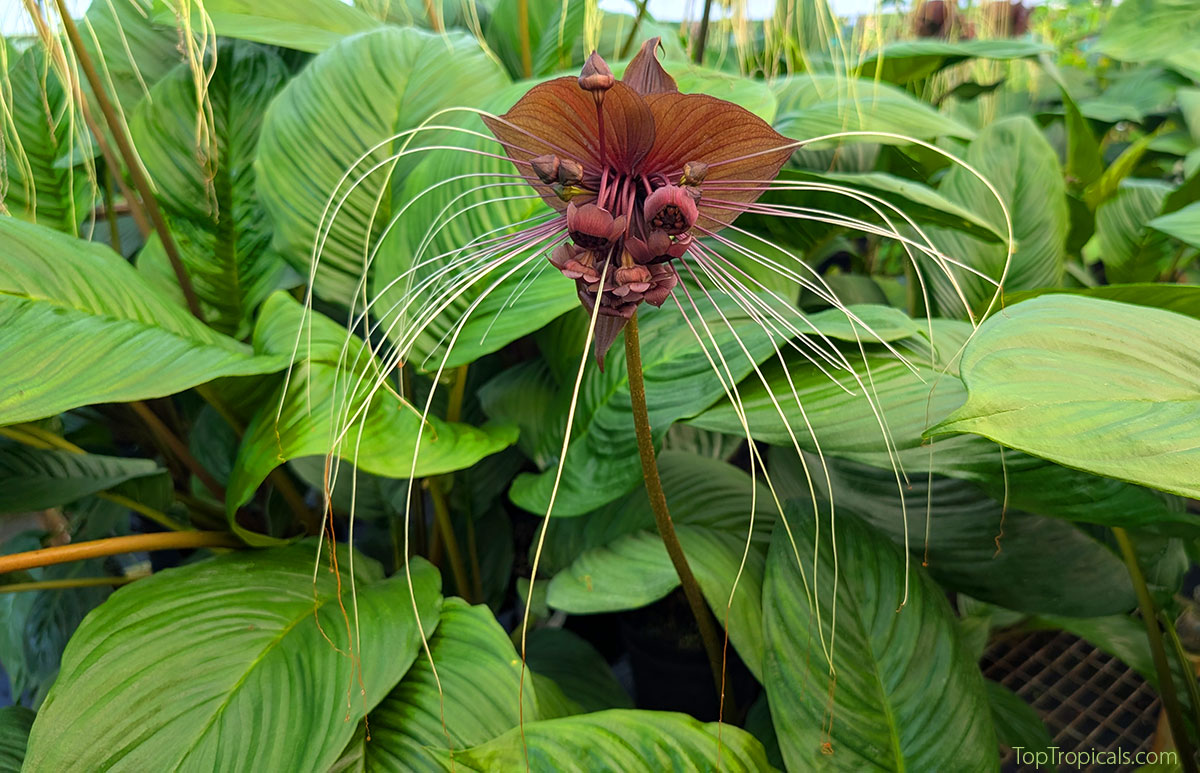
Blooming  Black  Bat  Lily  (Tacca  chantrieri)  with  dark  bat-shaped  flower 
 and  long  whisker-like  filaments  surrounded  by  green  leaves

Every so often a plant blooms and the whole greenhouse seems to slow down.

That is what happened this week with the Black Bat Lily, Tacca chantrieri. We have grown Taccas for years, but when the black ones open properly, it still feels special. The flowers are dark and quiet, almost unreal up close. They do not shout for attention. They make you lean in.

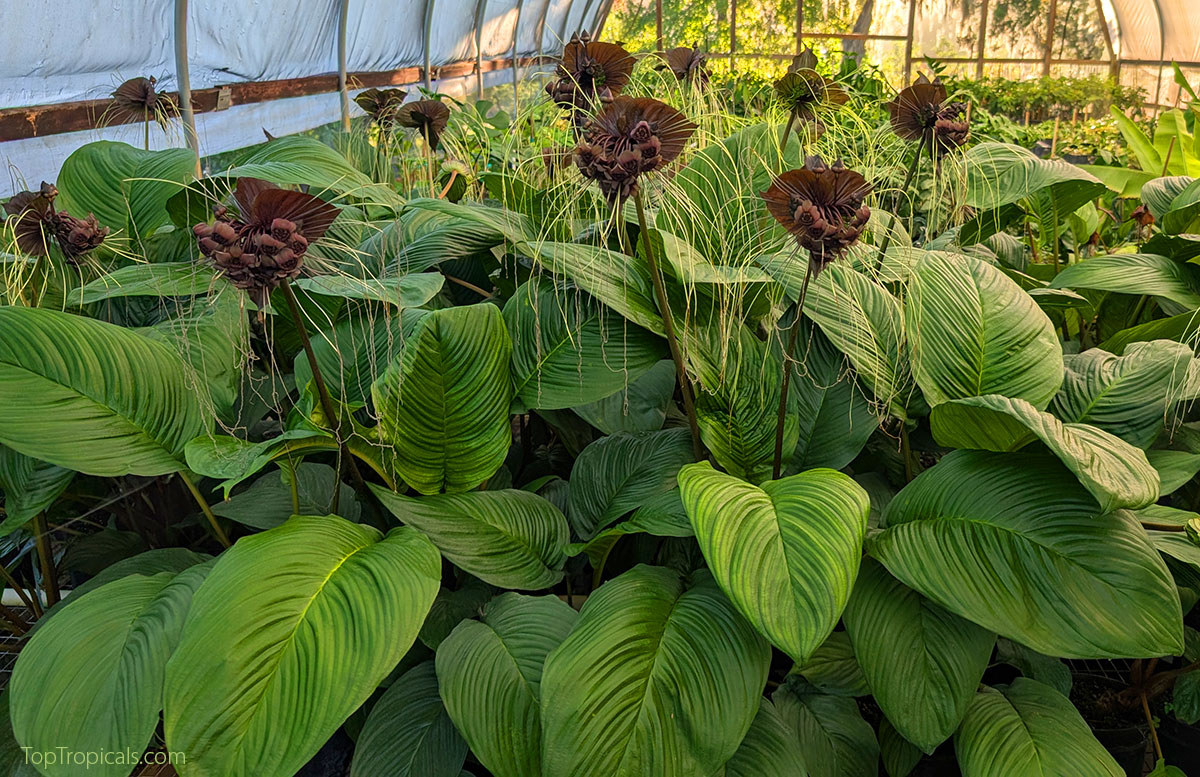
Right now, we have a lot of them blooming at the same time. If you have never seen one in person, photos only get you part of the way there. The wings are darker than you expect, and the whiskers seem to go on forever. People walk into the greenhouse, stop, stare, and usually ask the same question: "Is that real?" - Yes. It is.

Group  of  blooming  Black  Bat  Lily  plants  (Tacca  chantrieri)  with  dark 
 bat-shaped  flowers  and  long  whisker-like  filaments  in  a  greenhouse

A quick honest note, because this matters. The blooms themselves are delicate and may not travel well. That is just the nature of this plant. The plants, however, are strong, well established. With the right conditions, they bloom again. This is not a one-time trick.

Black Tacca is not a beginner houseplant, but it is also not impossible. It likes filtered light, steady warmth, and humidity. It does especially well in a greenhouse or a bright indoor spot where you already keep plants that enjoy moisture. It is the kind of plant you keep close, not one you forget in the corner.

We are offering them now simply because they are ready and looking their best. If you have been waiting for one, this is a good moment.

You can see the Black Bat Lily here: https://toptropicals.com/store/item/2345.htm

Just wanted to share something we are enjoying in the greenhouse right now. Some plants come and go. Some stay with you.

Tacca (Bat Lily) FAQ

What is Tacca?

Tacca, also known as Bat Lily or Devil Flower, is a tropical plant grown for its unusual bat-shaped flowers with long whisker-like filaments. The most popular species is Tacca chantrieri, the Black Bat Lily.

Is Tacca hard to grow?

Tacca is not a beginner plant, but it is not impossible. It does best with warmth, humidity, and filtered light. Gardeners who already grow orchids, calatheas, or other humidity-loving plants usually do well with Tacca.

Does Tacca need a greenhouse?

A greenhouse is ideal, but not required. Tacca can be grown indoors in a bright spot with indirect light and good humidity, such as near a humidifier or in a bright bathroom with a window or skylight.

Will my Tacca arrive in bloom?

Plants may be blooming in the greenhouse, but flowers are often removed before shipping because they are delicate and do not travel well. The plants are well established and capable of blooming again with proper care.

How often does Tacca bloom?

Tacca does not bloom constantly. It may take time to establish before flowering, but once settled, it can bloom seasonally and may produce multiple flowers in warm, humid conditions.

Does Tacca grow from a bulb?

Tacca grows from a rhizome, not a bulb. The rhizome stores energy and allows the plant to regrow and bloom again.

Why does Tacca have long whiskers?

The long filaments are thought to help attract pollinators such as flies by mimicking the look of decaying organic matter. While unusual, this is part of the plant's natural pollination strategy.

✍️ More about growing Tacca
🛒 Get your own Tacca plant
🎥Watch our videos about Tacca

Date: 22 Sep 2025

🐲 The taste you will never forget

Dragon  fruit  collage  -  yellow,  red,  purple,  white  varieties

If you only know dragon fruit from the grocery store, you probably think it looks pretty but tastes bland. That is because most commercial fruit is picked early, shipped far, and loses its sweetness. The truth? Homegrown dragon fruit is juicy, sweet, and full of flavor. The best of all is the yellow variety, Palora (Selenicereus megalanthus), a cactus fruit from Ecuador that bursts with tropical taste.

🌵 Pitaya or Dragon fruit – what is the difference?

Both names describe the same climbing cactus. In Latin America it is called Pitaya, while Asia and English speakers say Dragon fruit. There are three main kinds:

Some hybrids give purple or magenta flesh. All are beautiful, all are easy to grow at home.

⚡️ Do red, white, and yellow taste different?

Yes. White types are mild and refreshing. Reds are sweeter and juicier. Yellows are the sweetest of all.

⚡️ Flowers from a fairy tale

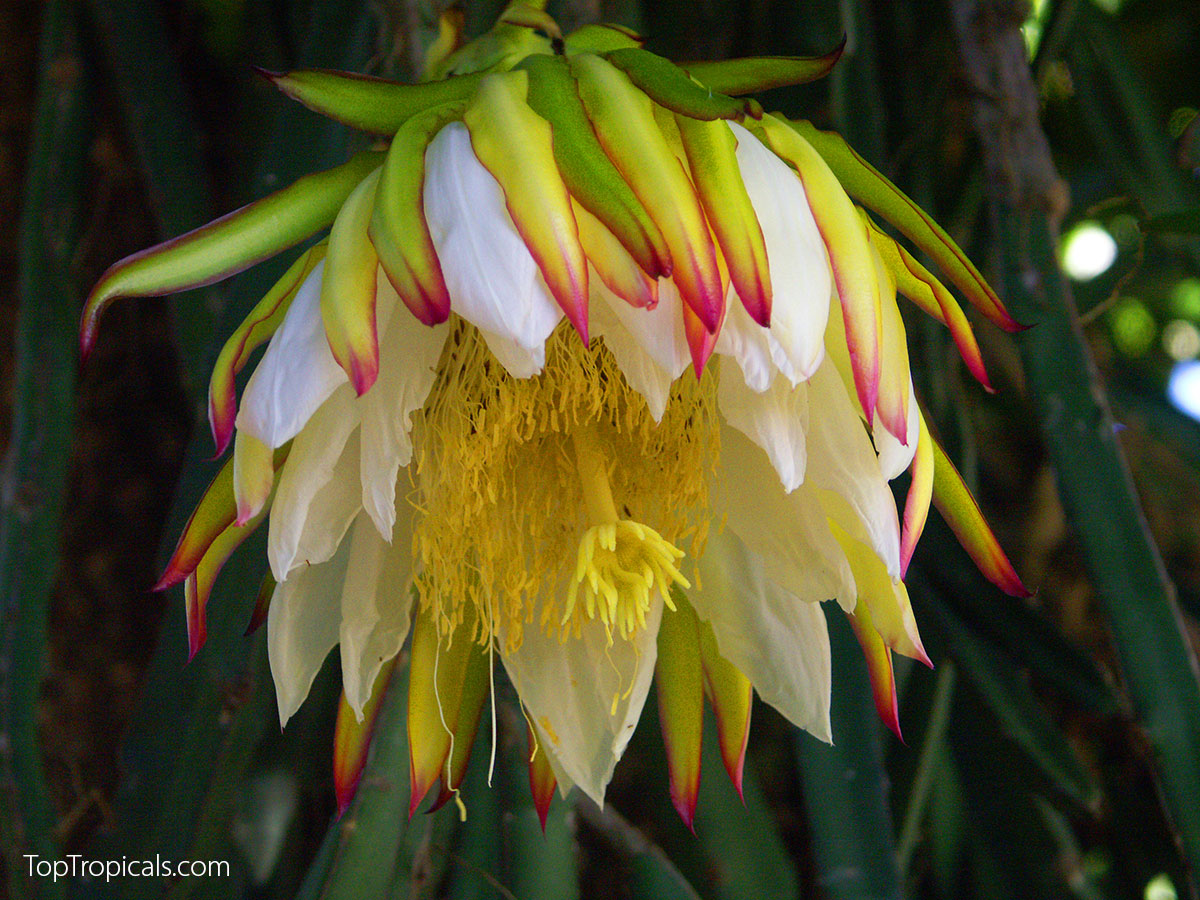
Close-up  of  a  blooming  dragon  fruit  pitaya  flower  with  white  petals  and
    yellow 
 center

Dragon fruit flowers are among the most spectacular in the plant world. They open at night, glowing under moonlight, with pale petals and a sweet fragrance. Each flower can be a foot wide. Seeing one bloom feels like stepping into another world.

⚡️ Top Dragon Fruit Health Benefits

  • High in fiber for digestion and gut health
  • Low in calories but full of vitamins
  • Great for weight management
  • Adds color and freshness to smoothies and salads

🍹 Dragon Fruit Smoothie recipe

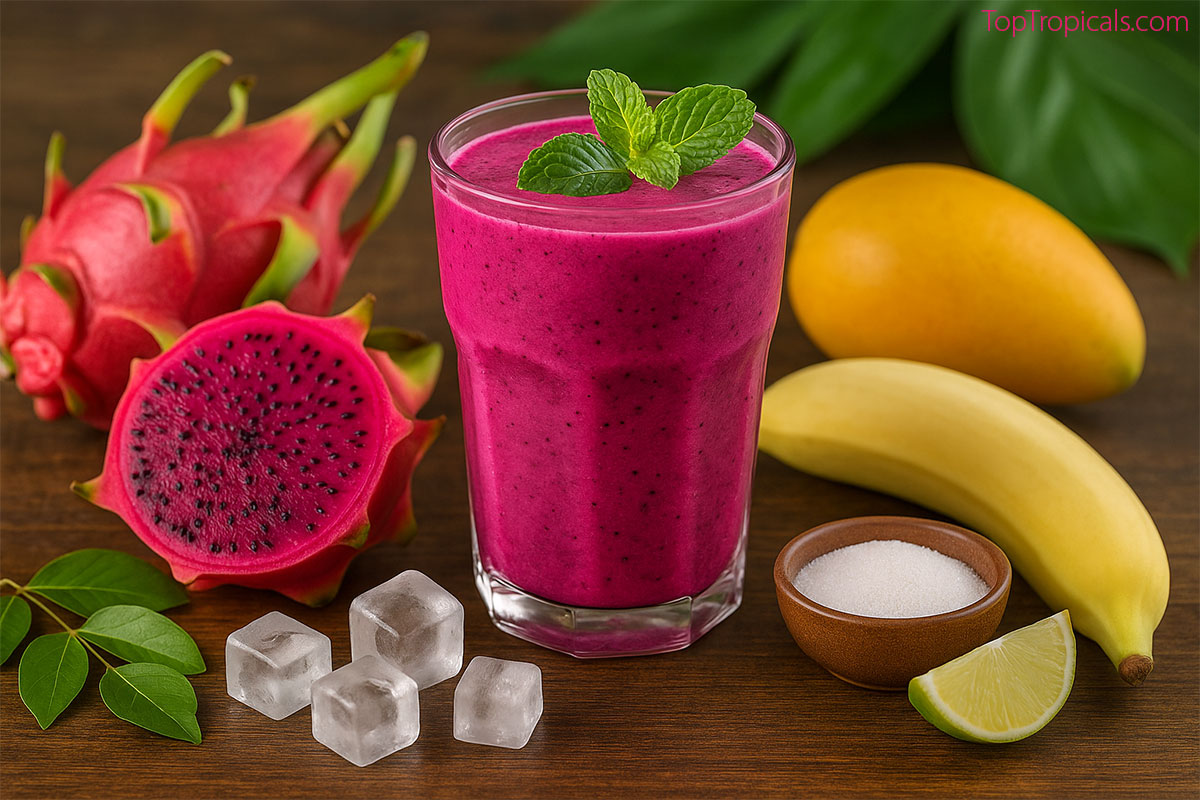
Glass  of  dragon  fruit  pitaya  smoothie  with  fresh  dragon  fruit,  banana, 
 mango,  lime,  sugar,  and  ice 
 cubes

Blend together:

  • 2 dragon fruits, peeled
  • 1/2 cup mango pulp
  • 1 banana
  • 1 cup milk of your choice
  • 2 tbsp sugar
  • 1/2 tsp lime juice
  • Ice cubes to taste

Top with mint for a refreshing tropical treat.

Watch Dragon Fruit short videos:

💲 Special Offer – 25% off Dragon Fruit Pitaya Plants!

Get 25% OFF Pitaya plants with code

DRAGON2025

Min order $100. Excluding S/H, valid online only, cannot be combined with other offers.

Hurry, offer expires September 29, 2025!

Explore Dragon Fruit varieties

Date: 28 Sep 2025

Guava: The Healthiest Fruit You Can Grow

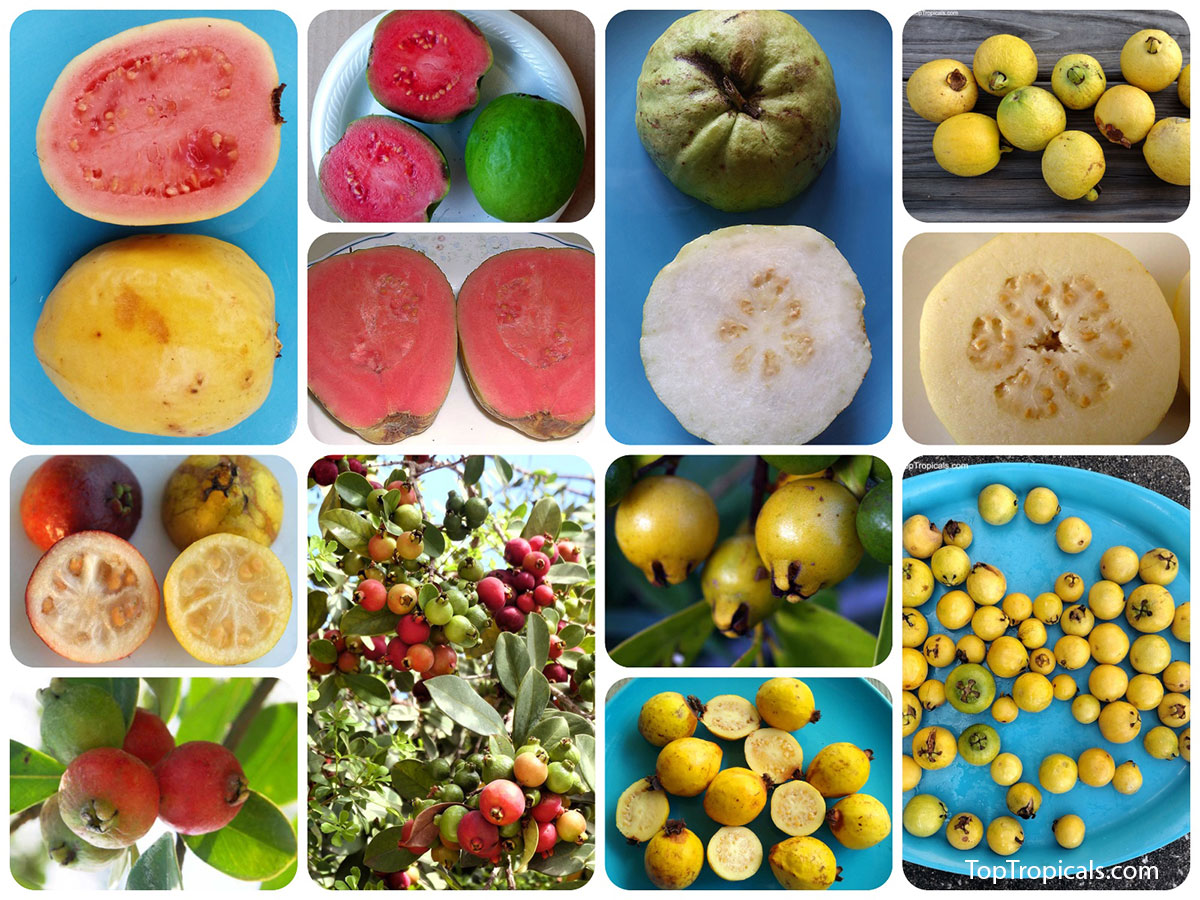
Collage  of  guava  varieties:  pink,  white,  Cas,  red  Cattley,  and  golden 
 Cattley  guavas,  shown  as  whole  fruits,  cut  sections,  and  clusters  on  the 
 tree.

Guava varieties: Pink flesh (upper left quarter), White flesh and Cas (upper right quarter), Red Cattley Guava (bottom left quarter) and Golden Cattley (bottom right quarter).

Let’s talk Guava. Few fruits check as many boxes: flavor, productivity, health, and adaptability. We’ve grown guava trees at Top Tropicals for years here in Florida, and it never fails to surprise people with how easy it is — and how quickly it rewards you.

🌿 Health Benefits

We know the first question:"Why guava in addition to all the other fruit trees I could plant?"Because guava is one of the healthiest tropical fruits you can eat and grow — and it produces faster than almost anything else.

  • Vitamin C powerhouse — guava has four times more vitamin C than oranges. One fruit covers your daily needs and then some.
  • Potassium and fiber — good for balancing blood pressure and keeping your heart strong.
  • Antioxidants like lycopene and vitamin C — these keep your skin glowing and help protect your cells from damage.
  • Dietary fiber — aids digestion and helps keep blood sugar steady.
  • Guava is a true"food as medicine"tree you can plant right in your backyard or in pot.

♥️ Our Favorite Varieties are Available Now

We currently have a DOZEN excellent guava varieties in stock selected by our plant expert Tatiana Anderson — something special for every garden. Our top picks are:

Pink Guavas

  • Barbie Pink – Yellow pear-shaped fruit with thick pink flesh, sweet and juicy. Cold hardy for a tropical fruit. The best seller.
  • Hong Kong – Large, round, smooth pink fruit. Sweet flavor, very few seeds, and very productive.
  • Tikal – Our top pick. Fast-growing, disease-resistant, and produces the sweetest pink guavas with very few seeds.

White Guavas

  • Indonesian White – Aromatic, classic white-fleshed guava with an excellent tropical flavor.
  • Kilo White – Giant fruit up to 2 lbs (1 kilo) each! Few seeds, creamy white flesh, and fruits even in containers.

Compact/Dwarf

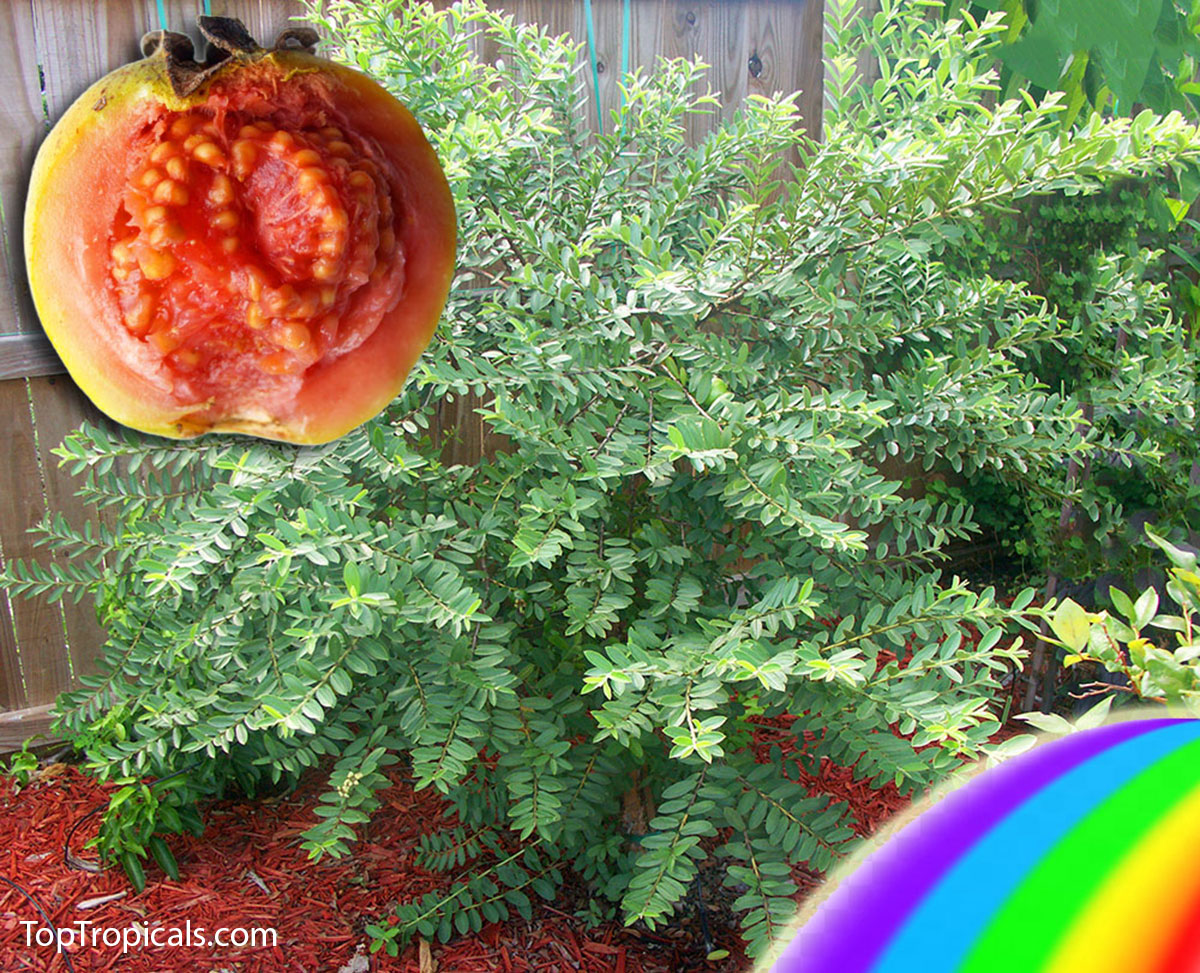
Dwarf  Guava  Hawaiian  Rainbow  tree  with  dense  green  foliage,  inset 
 showing  pink-fleshed  guava  fruit  with 
 seeds.

Dwarf Guava Hawaiian Rainbow

Specialty Varieties

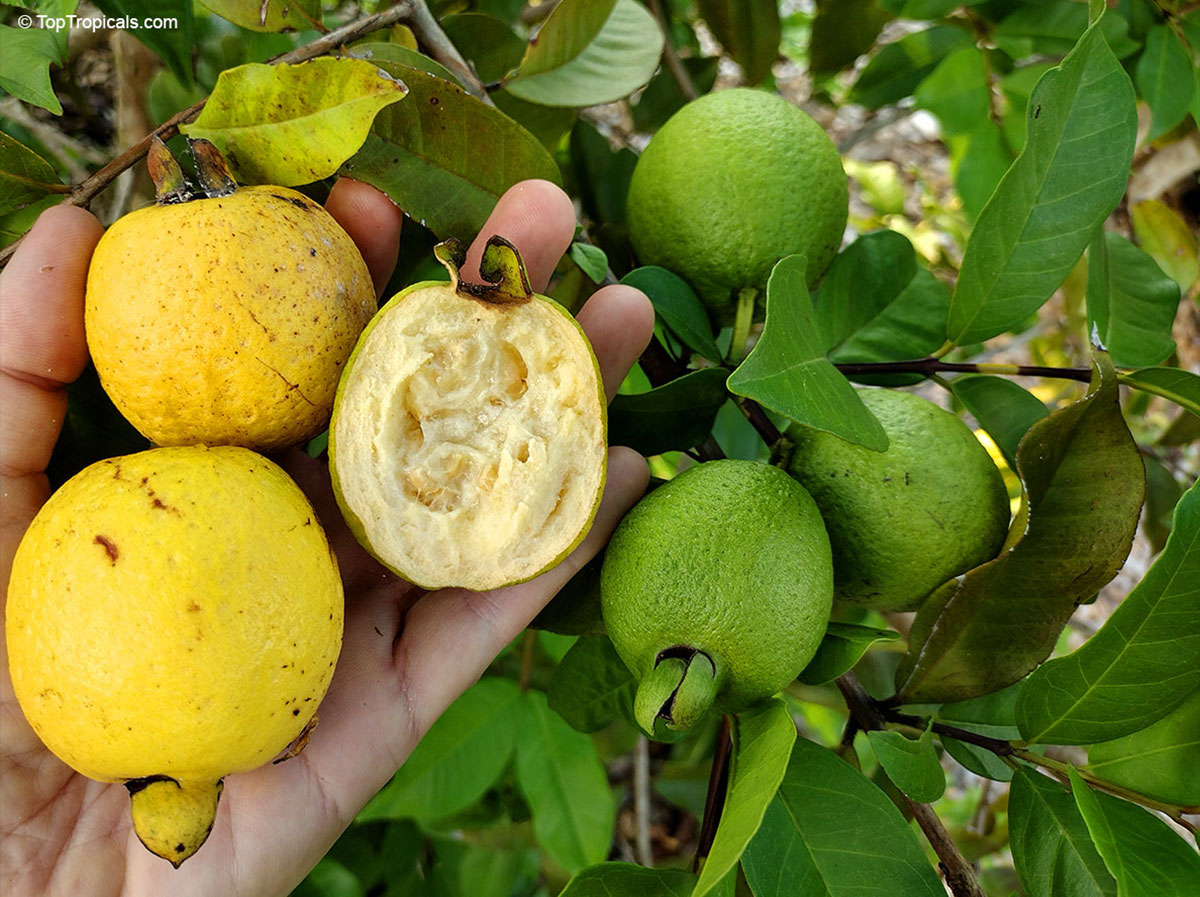
Cas  Guava  fruits  on  tree,  with  ripe  yellow  and  unripe  green  fruit,  one 
 cut  open  to  show  pale  flesh.  Traditional  Costa  Rican  Agua  de  Cas 
 fruit.

Cas Guava with zero sugar for Costa Rican Agua de Cas drink

  • Cas Guava – Bold, tangy, almost zero sugar. The traditional Costa Rican Agua de Cas drink comes from this fruit. Cold hardy.
  • Hawaiian Gold, Yellow Strawberry Guava – The sweetest Strawberry Guava, golden fruit, great for fresh eating and drinks.
  • Brazilian Araca Pera – Rare hybrid used for Guava Wine in Brazil. Tart, concentrated juice makes excellent wine, sorbet, or jelly. Learn more...
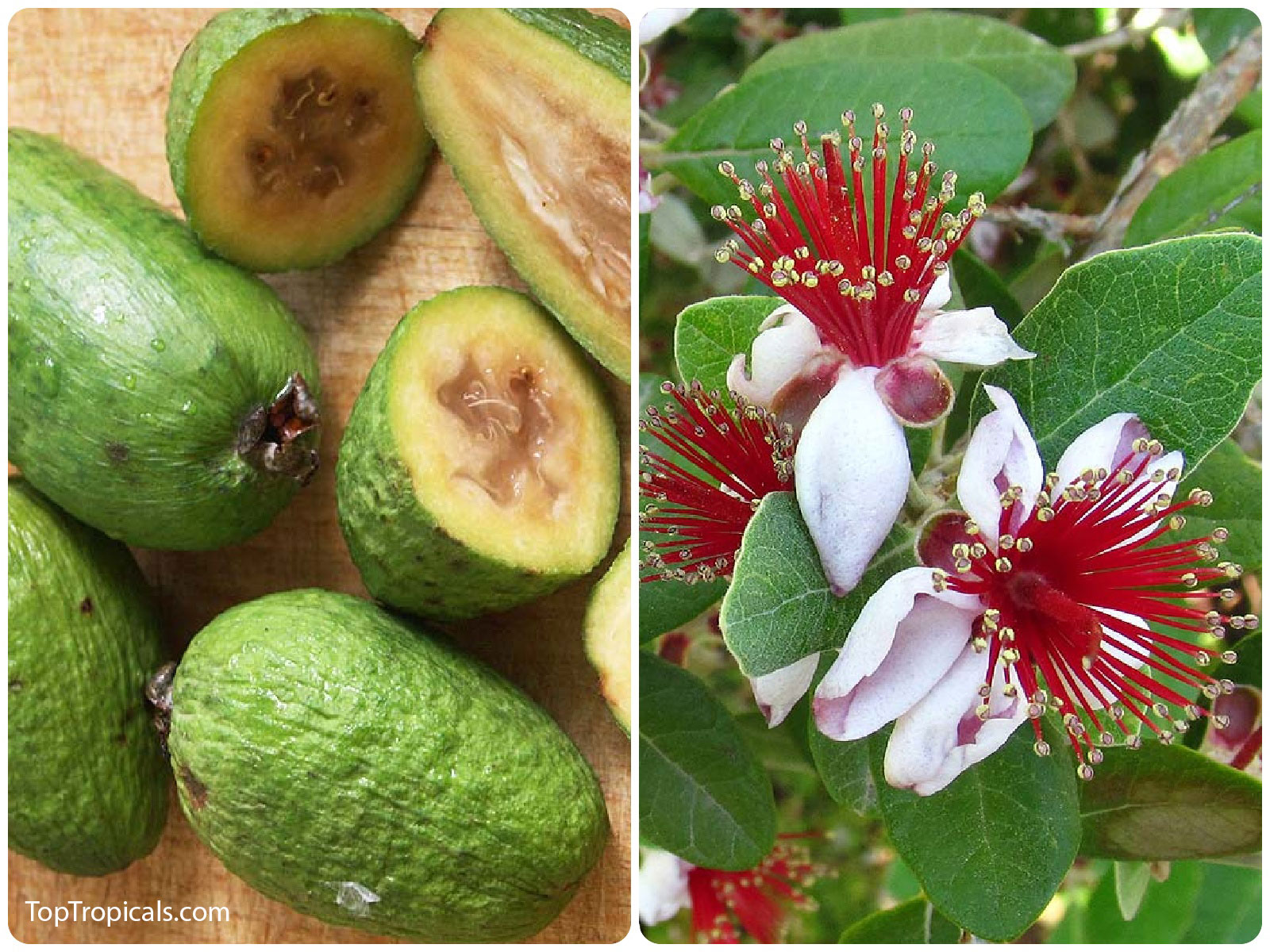
  • Pineapple Guava, Guavasteen – Feijoa sellowiana. Strongly perfumed fruit, best enjoyed when the pulp is mixed with sugar – like forest strawberries. Cold-hardy, tolerates freeze, and doubles as a great windbreak. Learn more...

Pineapple  Guava  (Feijoa  sellowiana)  fruit  and  flowers.  Green  oval  fruit
    with  soft  aromatic  flesh,  and  white-red  blossoms  with  long 
 stamens

Pineapple Guava, Guavasteen – Feijoa sellowiana

Every one of these thrives here in Florida or in warm climate. Some are better in pots, some as landscape trees, but all produce generously.

🎥 Watch short videos about Guava:

💲 Special Offer – 20% off Guava Fruit Plants!

Get 20% OFF already discounted Guava plants with code

GUAVA2025

Min order $100. Excluding S/H, valid online only, cannot be combined with other offers.

Hurry, offer expires October 02, 2025!

Explore Guava Fruit Plants