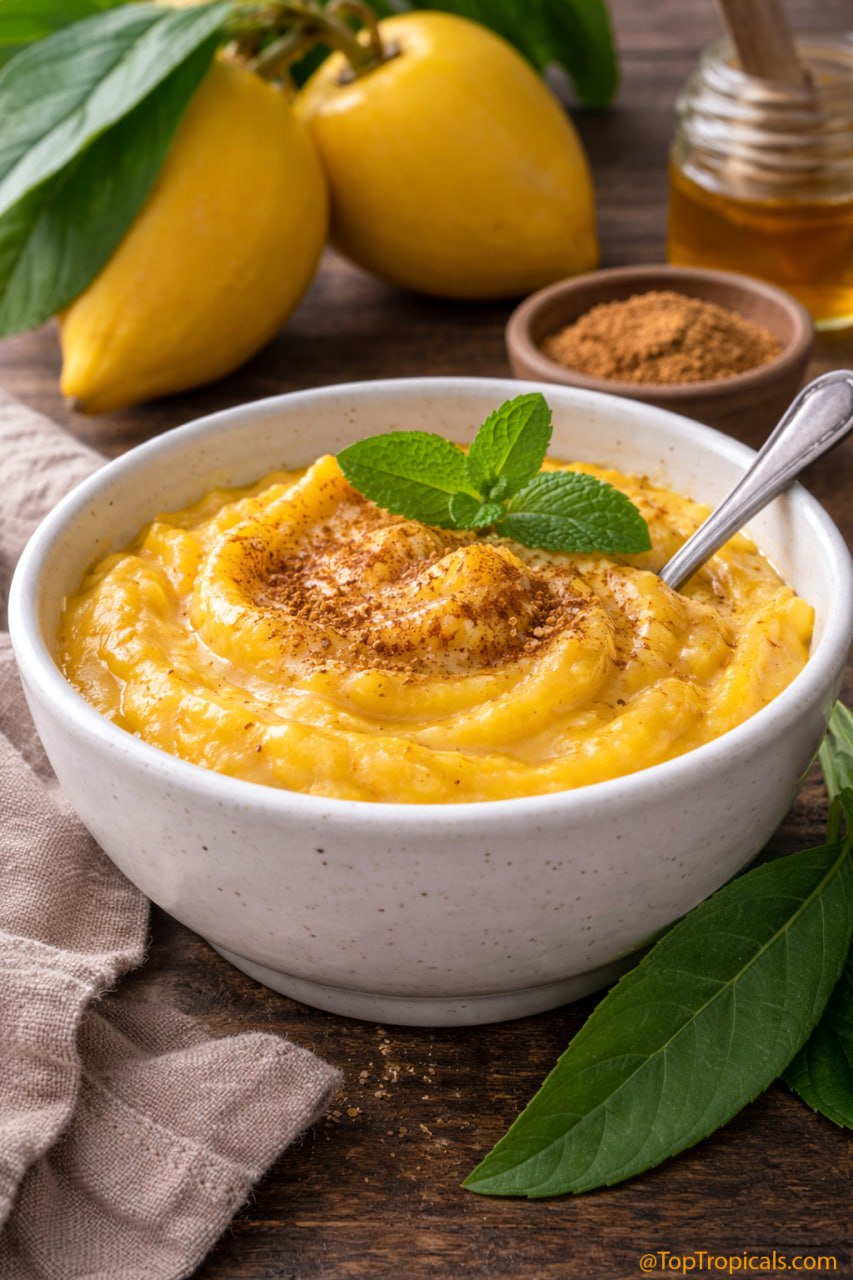
Mash thoroughly with a spoon, adding milk gradually until smooth and custard-like.
Serve immediately, topped with a light sprinkle of cinnamon.
🌿 About the plant:
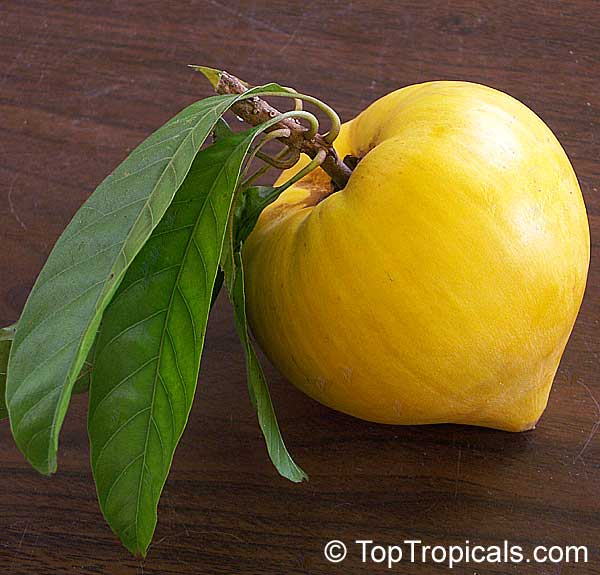
Canistel (Pouteria campechiana), often called Eggfruit, has dense yellow flesh with a flavor reminiscent of sweet potato, pumpkin, and custard. It is naturally rich and filling, which is why it is often used mashed, blended, or cooked.
🌱 In the garden:
Canistel is a tough, drought-tolerant tropical fruit tree that performs well in warm climates. It prefers full sun, well-drained soil, and minimal fuss once established. Compact growth and heavy production make it well suited for edible landscapes and container growing.
Cherry of the Rio Grande quick compote: quick-n-fun exotic recipes
Cherry of the Rio Grande quick compote over pancakes
Eugenia aggregata - Cherry of the Rio Grande fruit
🍴 Cherry of the Rio Grande Quick Compote
This fast cherry compote is made from Cherry of the Rio Grande
(Eugenia aggregata). It is tart, rich, and perfect over pancakes,
waffles, toast, or warm bread.
Ingredients
1 cup Cherry of the Rio Grande fruit, pitted
2 to 4 tablespoons water
Instructions
Place cherries and water in a small saucepan.
Simmer over medium heat until the cherries soften and release juice.
Mash lightly with a spoon for a chunky texture.
Spoon warm compote over pancakes or bread and serve immediately.
6 to 8 large fresh Root Beer leaves (Piper auritum)
1 lb ground meat or firm tofu
1 small onion, finely chopped
2 cloves garlic, minced
1 tbsp vegetable oil
Salt and pepper to taste
Optional: chili flakes, paprika, or cumin
Lemon wedges, for serving
Instructions
Rinse the Root Beer leaves and pat dry. Trim thick stems if needed.
In a bowl, mix ground meat or tofu with onion, garlic, oil, salt, pepper, and spices.
Place a portion of filling onto each leaf and roll tightly into wraps.
Grill over medium heat until the leaves are lightly charred and the filling is cooked through.
Serve warm with lemon wedges or dipping sauce.
☘️ About the plant:
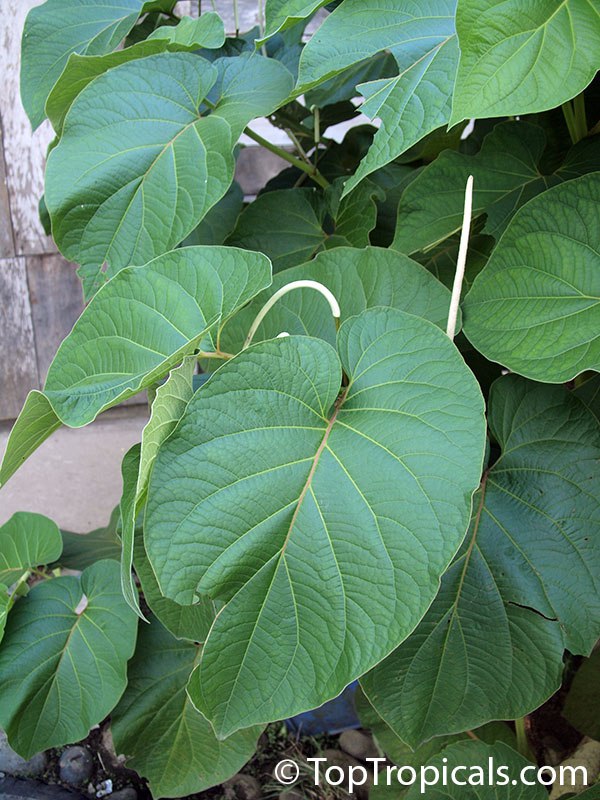
Piper auritum - Root beer plant, also known as Acuyo or false Kava-Kava, is a large-leaved tropical herb native to Central and South America and also grown in the South Pacific. It belongs to the same family as Kava-Kava and black pepper. The leaves are prized for their bold, aromatic flavor, often described as root beer, anise, or clove-like. Traditionally, the leaves are chopped for seasoning or used whole as natural wrappers for meats, fish, and tamales.
🌱 In the garden:
Piper auritum is easy to grow in warm climates and forms a lush, fast-growing perennial. Its huge, soft leaves - often over a foot long - make it both edible and ornamental. It prefers warmth, moisture, and partial shade and is often mistaken for Kava-Kava due to its similar appearance and close relation.
💕How would you like to give a Valentine plant gift?
Choose the plant
If you already know what feels right, choose the plant now.
Sweetheart Hoya is a favorite for a reason, and there are other Valentine
plants to explore if you want options.
A good choice when you feel confident, love plants, or are gifting something
meant to live indoors.
Let your Valentine choose
If timing, weather, or choice feels uncertain, a Gift Card keeps the moment simple. Your Valentine can choose the
perfect plant when the time is right.
Especially helpful for gardeners up north, or when you want the gift to
unfold later.
About shipping and timing
We ship live plants with care and pay close attention to weather along the
way.
If conditions are not right, we may hold a shipment briefly to keep plants
safe.
If timing or weather makes you hesitate, a Gift Card is an easy way to give a Valentine gift now and choose the
plant later, when conditions are perfect.
Valentine Day Gift Card Bonus
To make Valentines Day a little sweeter, we are offering a special gift
card bonus for a limited time.
When you purchase a gift card, we add 15% extra
value. Just add Valentine greeting in gift card message field.
For example, a $100 gift card becomes $115 to spend.
Offer valid through 02/15/2026.
The bonus value is not valid with other promotions or discounts. Gift
cards cannot be used to purchase other gift cards. Bonus value is added at
the
time of purchase.
By Tatiana Anderson, Horticulture Expert at Top
Tropicals
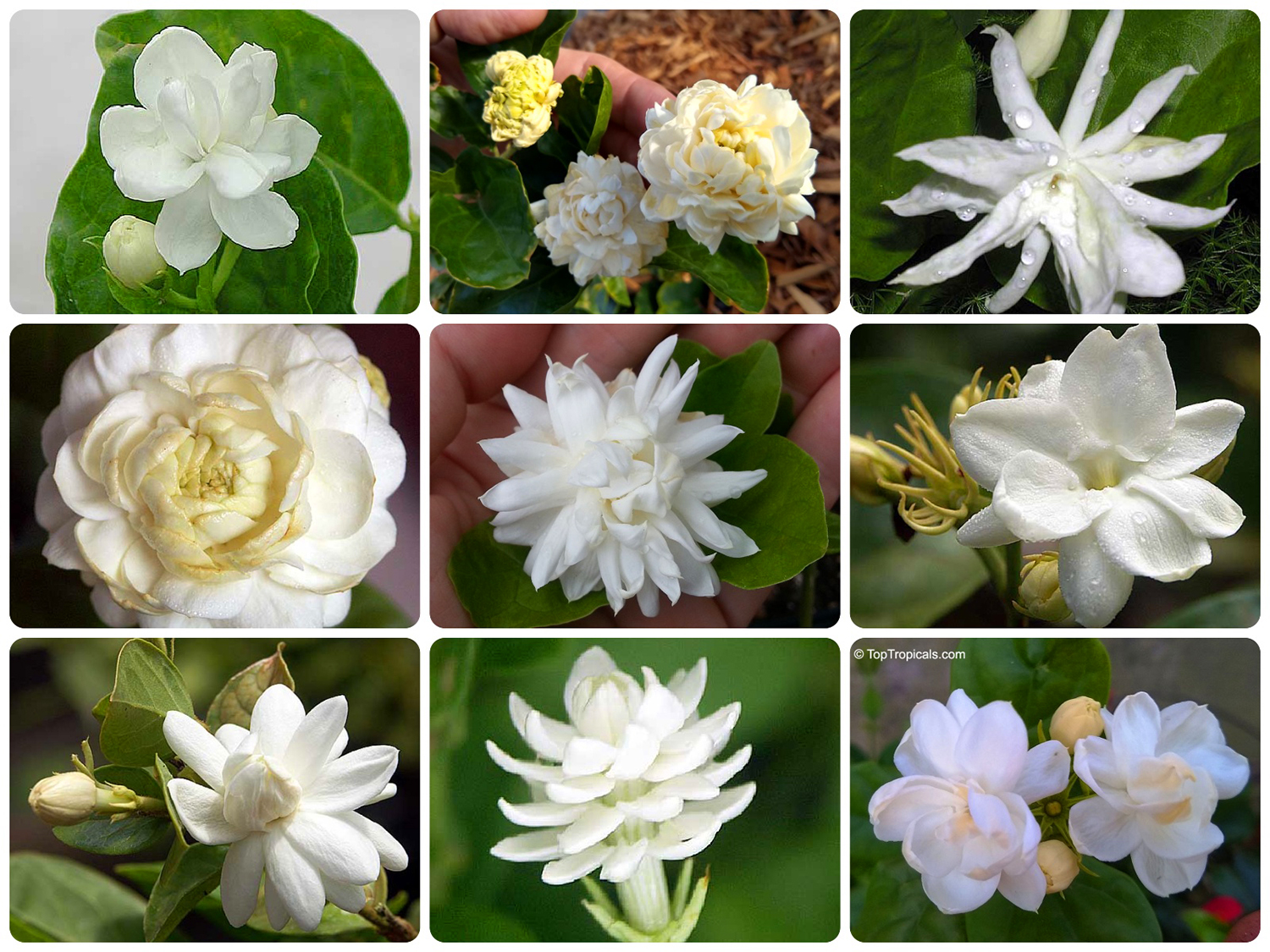
Jasmine Sambac varieties: Arabian
Nights, Little Duke, Belle of India, Grand Duke, Duke Supreme, Maid of
Orleans, Mysore Mulli, Malichat, Gundu Mallii
One of the reasons Jasmine Sambac is so fascinating is that it does not
come in just one form. Each variety has its own personality.
If you want a compact patio plant, Arabian Nights or Little
Duke are excellent choices. They stay tidy, bloom generously, and are
easy to manage in containers.
If you prefer elegant, elongated petals and a refined look, Belle of
India is a favorite. It can be grown as a small bush or trained lightly
as
a vine.
For those who love full, carnation-like double flowers, Grand Duke of
Tuscany and Grand Duke Supreme are classic
selections. They are vigorous and make impressive shrubs in warm
climates.
If you need a stronger climber for fences or hedges, Maid of
Orleans performs beautifully in full sun while Mysore Mulli
prefers semi-shade.
Collectors often enjoy rare forms like Mali Chat or newer hybrids
such as Gundu Malli, which combine traits from different lines.
How to Grow Jasmine Sambac Successfully
Sambac is not difficult, but it responds best to consistency.
Light: Full sun produces the most flowers. In very hot
climates, light
afternoon shade is acceptable. Indoors, place it in the brightest window
available.
Soil: Use a well-draining potting mix such as Sunshine
Abundance. Sambac does not
like heavy, constantly wet soil.
Water: Water thoroughly, then allow the top layer to dry
slightly before watering
again. Reduce watering during cooler months.
Pruning: Light trimming after a bloom cycle encourages
branching. More branches mean more flower buds.
Feeding: Sambac is a heavy bloomer, and fragrance takes
energy. During active growth, feed regularly with a balanced fertilizer that
supports flowering such as Green Magic (controlled release every 6 months) or liquid Sunshine
Boosters Pikake (formulated especially for fragrant flowers) - with
every watering. I prefer formulas slightly higher in potassium to encourage
stronger bud formation and richer bloom cycles. Consistent feeding during
warm months makes
a visible difference in both flower count and intensity of scent.
With proper care, Jasmine Sambac will reward you not just with flowers,
but with perfume that changes the atmosphere of your entire garden.
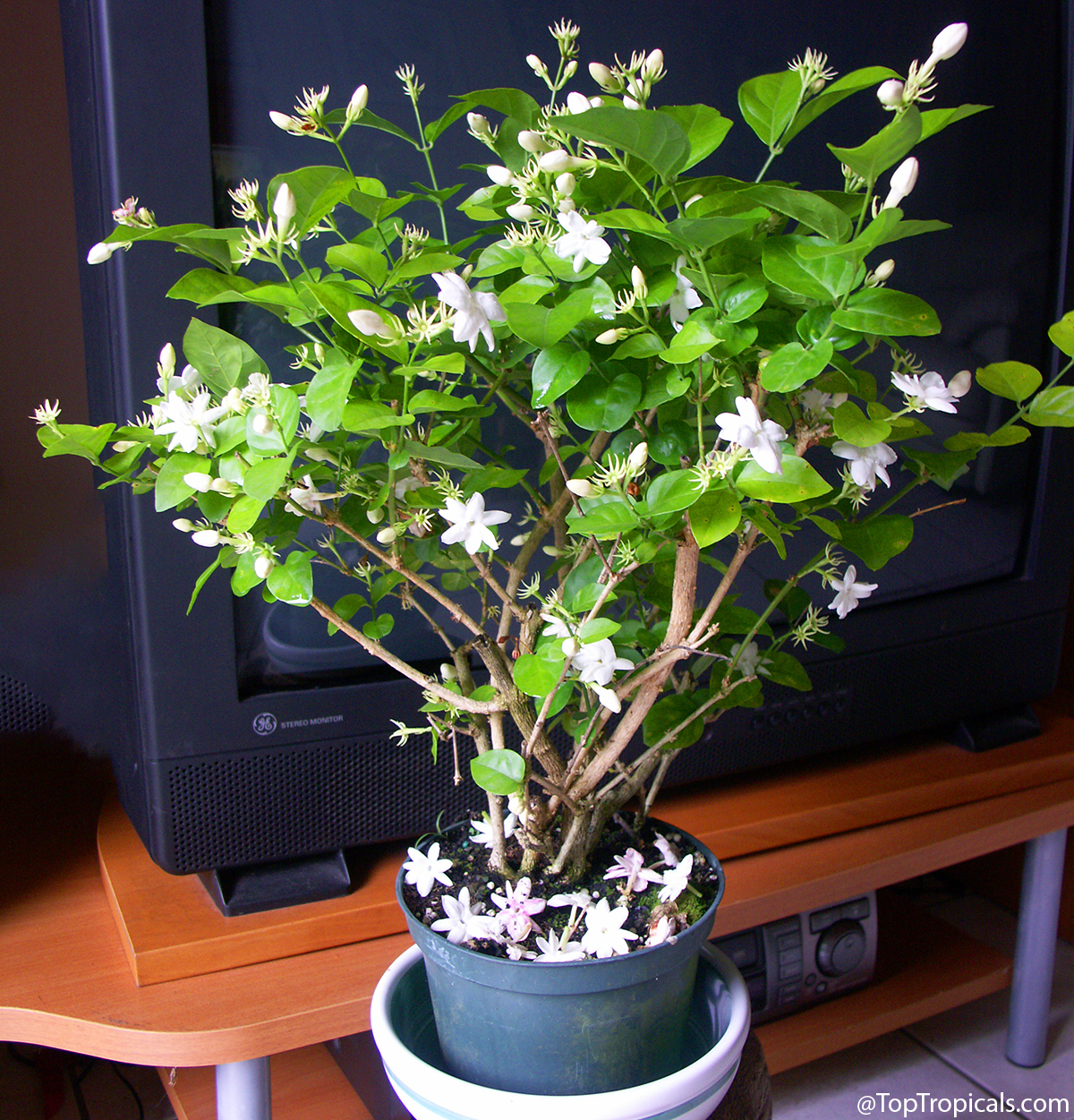
Jasmine Sambac Maid of
Orleans flowering indoors in a container under bright light.
❓Frequently Asked Questions About Jasmine Sambac
Does Jasmine Sambac need full sun?
It flowers best in full sun. In very hot climates, light afternoon shade
is acceptable. Indoors, give it the brightest window possible.
Can I grow it in a pot?
Yes. Sambac performs beautifully in containers. Many gardeners prefer pots
because it is easier to control size and move during cold weather.
How often does it bloom?
With proper light and feeding, it blooms in cycles throughout the warm
season. Consistency in care makes flowering more reliable.
Why is my plant not blooming?
The most common reasons are insufficient light or irregular feeding.
Increase light first, then review your fertilizing routine.
Is it difficult to grow indoors?
Not if you provide strong light and good air circulation. Compact varieties
adapt especially well.
Is it frost tolerant?
No. Jasmine Sambac is tropical. Protect it from temperatures below 40F and
bring it indoors before frost.
🌸 Year of
the Horse Special – Jasmine Bonus
Celebrate 2026 with the fragrance of Jasmine plants. For a limited time,
enjoy special savings when you grow one of
the most wanted perfume plants in cultivation.
Jasmine Sale - 15% Off
Save 15% on all Jasmine plants.
Discount is already applied in the online store - no code needed.








 How to Grow Jasmine Sambac Successfully