Garden Blog - Top Tropicals

Date: 29 Jun 2026

😾 When Orange Isn't a Good Thing

Smokey,  a  tuxedo  cat  dressed  as  a  rust  detective,  examines  a  plumeria 
 leaf  with  a  magnifying  glass  while  Sunshine,  a  relaxed  orange  tabby,  lounges
    with  a  coffee  mug  inside  a  greenhouse  filled  with  healthy  blooming 
 plumerias.  Outside  the  greenhouse,  rain  falls  on  rust-infected  plumeria 
 leaves,  illustrating  how  wet  foliage  promotes  plumeria 
 rust.
Smokey: Those orange spots are plumeria rust.
Sunshine: Orange is an excellent color.
Smokey: On cats, yes. On plumeria leaves, no.
Sunshine: I represent the good kind of orange.

🌸 Plumeria Rust in Humid Climates:
What Finally Worked for Us

By Tatiana Anderson, Plant Expert, Top Tropicals

Side-by-side  photos  of  healthy  plumeria  plants  with  lush  green  foliage 
 and  no  signs  of  rust,  growing  in  pots  inside  a  greenhouse  and  outdoors  at  a 
 tropical 
 nursery.

Healthy plumerias with clean, vibrant foliage after successful rust management. Good airflow, bright conditions, and effective fungicide treatment help keep plants growing strong through Florida's rainy season.

If you grow plumerias in Florida, you probably know what comes next. Around June, when the rainy season begins and afternoon thunderstorms become part of the daily routine, orange-yellow spots start appearing on the undersides of plumeria leaves. Plumeria rust arrives almost like clockwork. If you have ever tried to fight it, you know how frustrating that battle can be.
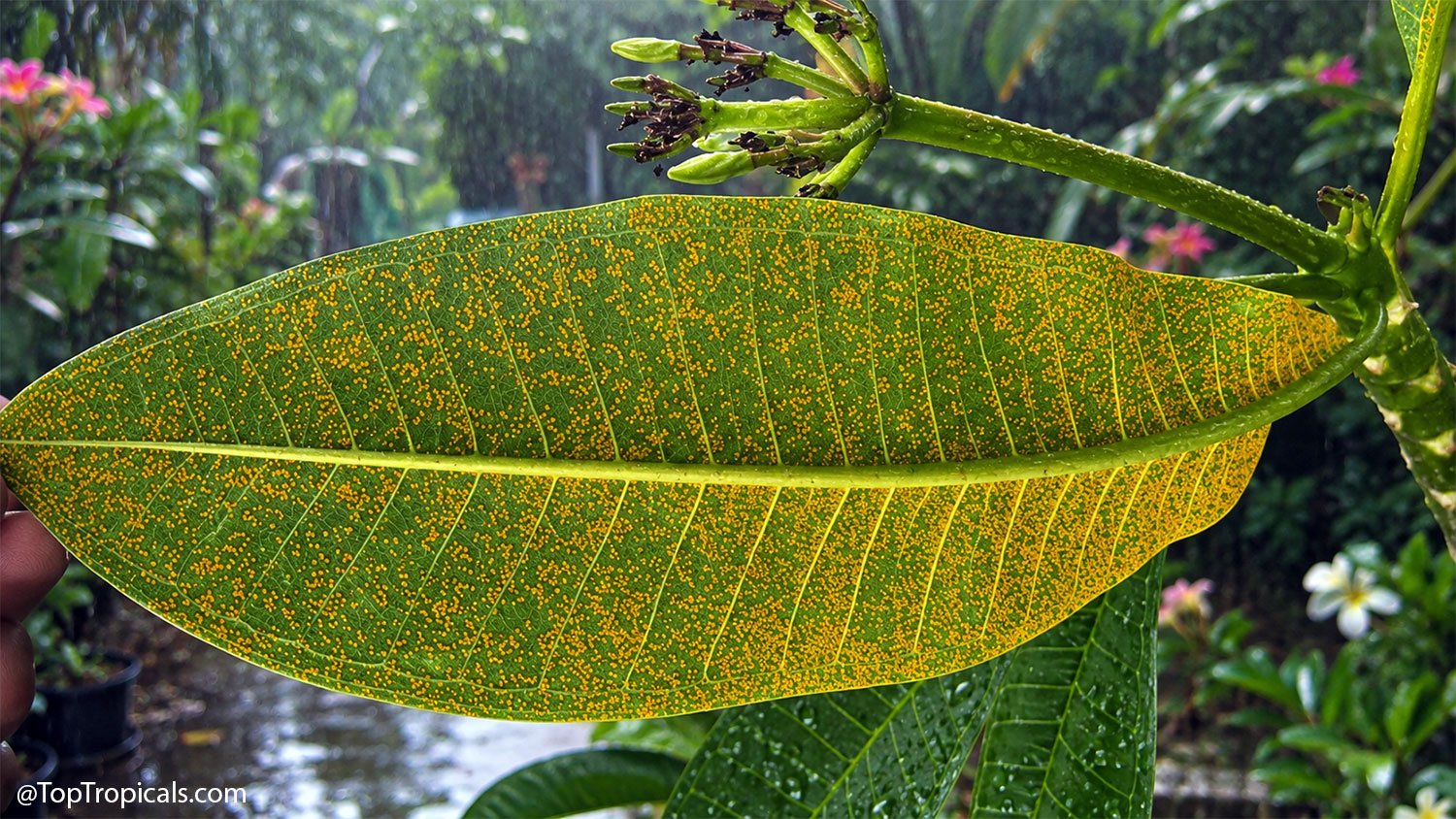
Close-up  of  the  underside  of  a  plumeria  leaf  covered  with  bright  orange
    plumeria  rust  spores  during  rainy  weather,  with  a  lush  tropical  garden 
 blurred  in  the 
 background.

Plumeria rust appears as bright orange powdery spores on the underside of leaves. Warm, humid, rainy conditions allow the fungus to spread quickly, making it a common sight in tropical and subtropical gardens.

Let me be clear about something right away: Plumeria rust is rarely fatal to an otherwise healthy plant.

In our experience, we have never lost a healthy plumeria to rust alone. The disease is mostly cosmetic, but it causes significant yellowing, triggers premature leaf drop, and can turn a beautiful specimen into something that looks ragged throughout the best months of the growing season. For a plant grown as much for its attractive foliage as its spectacular flowers, that matters.

At Top Tropicals, we have grown plumerias for many years and have tried most of the approaches gardeners typically recommend: sulfur-based fungicides, neem oil, copper sprays, improving drainage, and removing infected leaves before they hit the ground. Some of those things helped to varying degrees. None of them felt like a real breakthrough until recently.

The Fungicide That Actually Did Something

Comparison  image  showing  healthy  plumeria  leaves  after  treatment  with 
 Southern  Ag  Garden  Friendly  Fungicide,  alongside  an  inset  photo  of  a  leaf 
 covered  with  orange  plumeria  rust  spores  before  treatment.

Real-world results after treating plumeria rust with Southern Ag Garden Friendly Fungicide. The inset shows a leaf heavily infected with orange rust spores before treatment, while the main image shows clean, healthy new foliage after the fungus was brought under control.

A few seasons ago, on the recommendation of another grower, we tried Southern Ag Garden Friendly Fungicide . This biological fungicide contains the beneficial bacterium Bacillus sp, and I want to be careful here: I am not suggesting it is the best product for everyone or that it will produce the same results in every situation. What I can say is that, in our experience, it was the first fungicide that consistently produced visible improvement when applied according to the label directions.

We applied it at the first sign of rust, repeated applications according to the label, and actually saw the progression slow down while new infections became less severe. Whether that was the product, the timing, or some combination of factors, I cannot say with certainty. But after cycling through several options over the years, it was the one that felt like it was doing something real. If you are looking for a starting point, it is worth trying.

But the fungicide wasn't our main discovery. That came this past season, and it changed how we think about this disease.

☔️ What This Season Taught Us About Leaf Wetness

Healthy  plumeria  plants  with  lush,  dry  green  leaves  growing  inside  a 
 greenhouse.  The  foliage  is  clean  and  free  of  rust,  showing  vigorous  new 
 growth  under  bright  filtered  light.

Healthy, dry plumeria foliage is one of the best defenses against plumeria rust. Good airflow, bright light, and keeping leaves dry whenever possible help prevent the fungus from taking hold during the rainy season.

This season we moved our prized container plumerias under a covered growing area with a clear plastic roof and approximately 30 percent shade cloth overhead. The structure provides excellent light, warm temperatures, and very good air circulation while protecting the plants from Florida's frequent summer rains. It is not a climate-controlled greenhouse, but rather a protected outdoor growing area.

Here is the important part: these plants were still irrigated regularly, every two to four days, with overhead watering. The leaves did get wet. But because they were not sitting outside during Florida's daily summer downpours, the foliage dried within a reasonable amount of time instead of remaining wet for hours, which is common after a heavy rain followed by cloudy skies and still air.

The result? Not a single case of rust developed on those plants throughout the season. Considering how consistently plumeria rust appears each summer in our nursery, that result immediately caught our attention. The most significant difference was how long the foliage remained wet after watering or rain. Meanwhile, plumerias growing in the ground nearby, fully exposed to the weather, showed rust infection at the usual time.

💦 Ambient Humidity vs. Standing Water

That observation made us rethink what we believed was driving the disease. We had always assumed Florida's high humidity was the primary factor. Humidity certainly plays a role. But this experience suggested that prolonged leaf wetness may be a much more significant factor than ambient humidity by itself.

There is a real difference between air that feels humid and leaves that stay wet for four, six, or eight hours after a rain. Humid air means the moisture content of the atmosphere is high. Wet leaves means there is standing water on the leaf surface. Both conditions can occur together, but they are not the same thing. A leaf in a humid but breezy location can dry within an hour. A leaf in still, wet conditions after a heavy rain may stay wet most of the day. That difference may be far more important than many gardeners realize.

We are not plant pathologists, and we do not want to overstate what we learned from one growing season. But after many years of growing plumerias in Florida, the results were convincing enough that we now protect our best container specimens from prolonged summer rainfall whenever possible.

👉 What We Recommend

Based on many years of growing plumerias in Florida, here are the practices that have worked best for us:

  • Grow plumerias in full sun whenever conditions allow. Good light means faster drying after rain or irrigation, and plants grown in low light often seem to show rust symptoms more readily.
  • Keep your plumerias well-fed. Healthy, vigorously growing plants recover from stress and disease much better than weak ones. We apply Green Magic controlled-release fertilizer every six months for a steady supply of nutrients, and supplement with Sunshine Boosters Megaflor during the growing season. Because Megaflor is gentle, it can be safely applied with every watering, all year long.
  • During extended rainy periods, consider moving valuable container plants under cover if possible. Even a covered patio can make a difference if it keeps the leaves from remaining wet for most of the day.
  • Provide air circulation. Plants crowded together stay wet longer. Space them properly and position them where they receive good airflow.
  • Remove infected fallen leaves. They can continue serving as a source of spores. Pick them up and dispose of them rather than leaving them beneath the plants.
  • If rust begins to appear, start fungicide applications early. Slowing an infection at the beginning is much easier than trying to control one that is already well established.

💡 A Realistic Conclusion

Five  healthy  potted  plumeria  varieties  displaying  white,  pink,  yellow, 
 magenta,  and  multicolored  blooms,  arranged  in  a  row  with  lush  green  foliage 
 and  clean,  rust-free 
 leaves.

A parade of healthy plumerias in full color. Clean foliage, bright blooms, and vigorous growth show what plumerias can look like when rust is kept under control, letting each variety shine in its own unique colors.

Plumeria rust is mostly a cosmetic problem rather than a life-threatening one. Healthy plants usually recover well, but yellowing foliage and premature leaf drop can take much of the beauty out of an otherwise beautiful blooming season.

We cannot promise these methods will eliminate rust in every garden. Every growing environment is different. However, after years of battling this disease, reducing how long the leaves remain wet made a bigger difference than any other single change we have tried. If you grow plumerias in a humid climate and continue struggling with rust, it may be worth focusing not only on humidity itself, but also on how quickly the foliage dries after the rain stops.

📚 Plumerias in Top Tropicals Garden Blog

👉 Start your Plumeria collection
Plumeria Special
Buy 2 or More Plumerias, Save 25%
Mix and match your favorite varieties! Purchase 2 or more plumerias and receive 25% off all plumerias in your order. No coupon code required. Discount is applied automatically when qualifying items are added to your cart.
Valid through July 3, 2026
Offer applies to new orders only. Not valid on previous purchases, pending orders, gift certificates, shipping charges, or combined with other discounts or promotional offers.

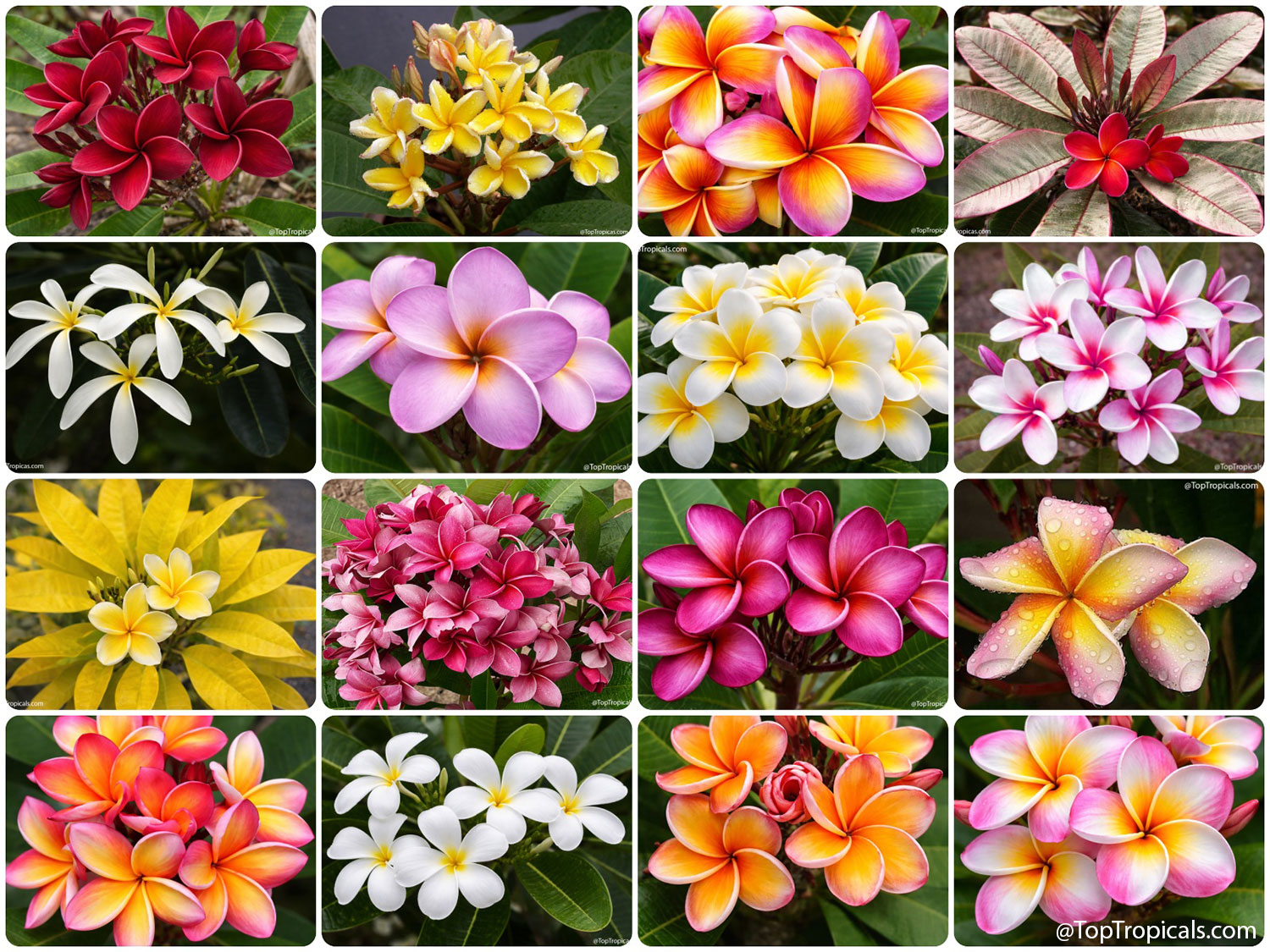
Collage  of  sixteen  plumeria  varieties  showcasing  an  extraordinary  range
    of  flower  colors,  including  white,  yellow,  pink,  red,  orange,  multicolored,
    and  variegated  foliage,  highlighting  the  remarkable  diversity  of  plumeria 
 blooms.

Plumerias come in an amazing spectrum of colors and forms. From pure white and buttery yellow to fiery reds, soft pinks, rainbow blends, and even variegated foliage, there is a plumeria to match every tropical garden and collector's taste.

Sunshine: Healthy plumerias need sunshine... that's me... good airflow, and dry leaves.
Smokey: That's a surprisingly accurate summary.
Sunshine:We can help with all of that. Donut worry. Coffee first.
Date: 28 Sep 2016

Helping plants to survive winter:
SUNSHINE BOOSTERS - FROM SUNSHINE STATE

A magic plant hormone so wanted by gardeners, is finally here! When people purchase plants and trees either on-line, or from their local nursery, expectation and anticipation for their new find is high. Many times, however, disappointment is encountered due to a variety of reasons. These reasons include changes in light, temperature, water, soil conditions and transportation; just to name a few. So how can the stress on newly transported and transplanted plants be mitigated? Easy! There are plant stimulators able to reduce the shock encountered.

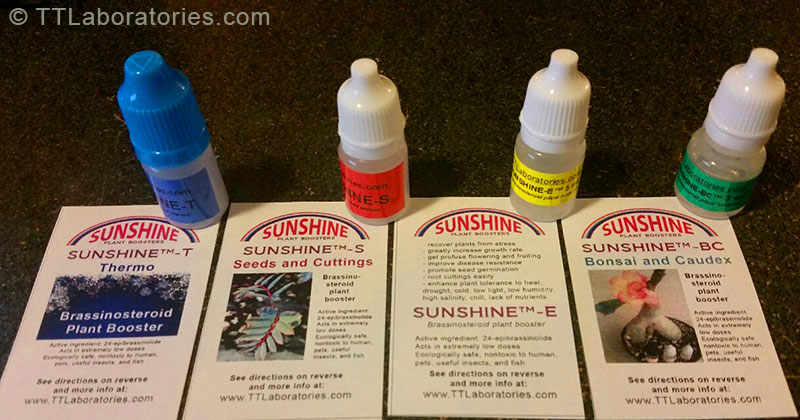
One such plant stimulator, produced at TT Laboratories is SUNSHINE, a revolutionary, broad spectrum, plant stress reliever. Extracted initially from plant pollen, SUNSHINE can bring back and keep the vigor to stressed plants in both the home and garden. Sunshine is indeed a plant stimulator on the cutting edge of plant care technology. Reasonably priced, and easy to use, SUNSHINE will be your plants' best friend, next to yourself, of course.

SUNSHINE will help your plants:
- recover from stress
- dramatically increase growth rate
- get profuse flowering and fruiting
- improve disease resistance, cold hardiness, and heat resistance
- promote seed germination and root cuttings easily

Great for indoor plants and improving cold tolerance!

Line of products:
SUNSHINE-E - general plant booster, growth stimulator and immune booster
SUNSHINE-BC - Bonsai and Caudex developer
SUNSHINE-S - seeds and cuttings pre-treatment
SUNSHINE-T - Thermo-protection for overwintering tropical plants
SUNSHINE-Micro - ultimate micro-element mix from TT Laboratories

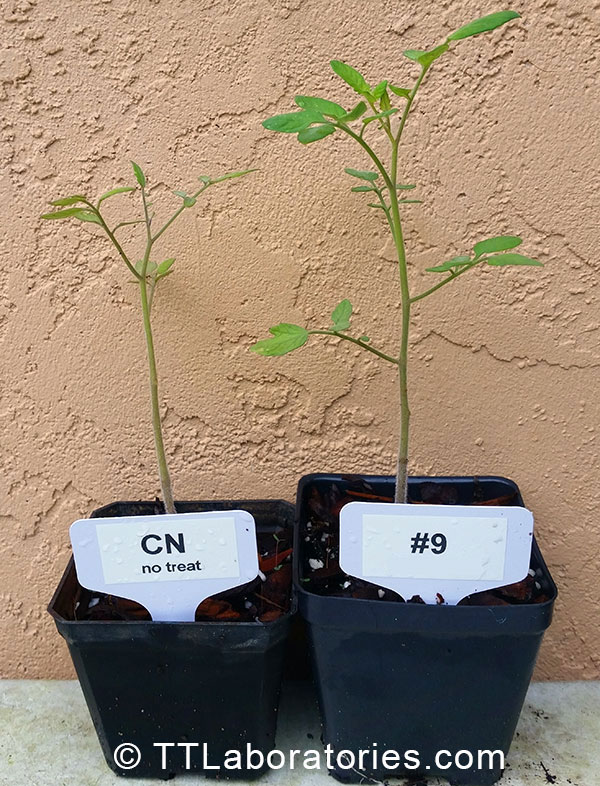
On the photo: Tomato seedlings, with and without Sunshine-E treatment; 1 week after treatment, 09-01-2016. Continue reading...

Order online

Date: 17 Nov 2025

❄️Cold Night Survival Guide

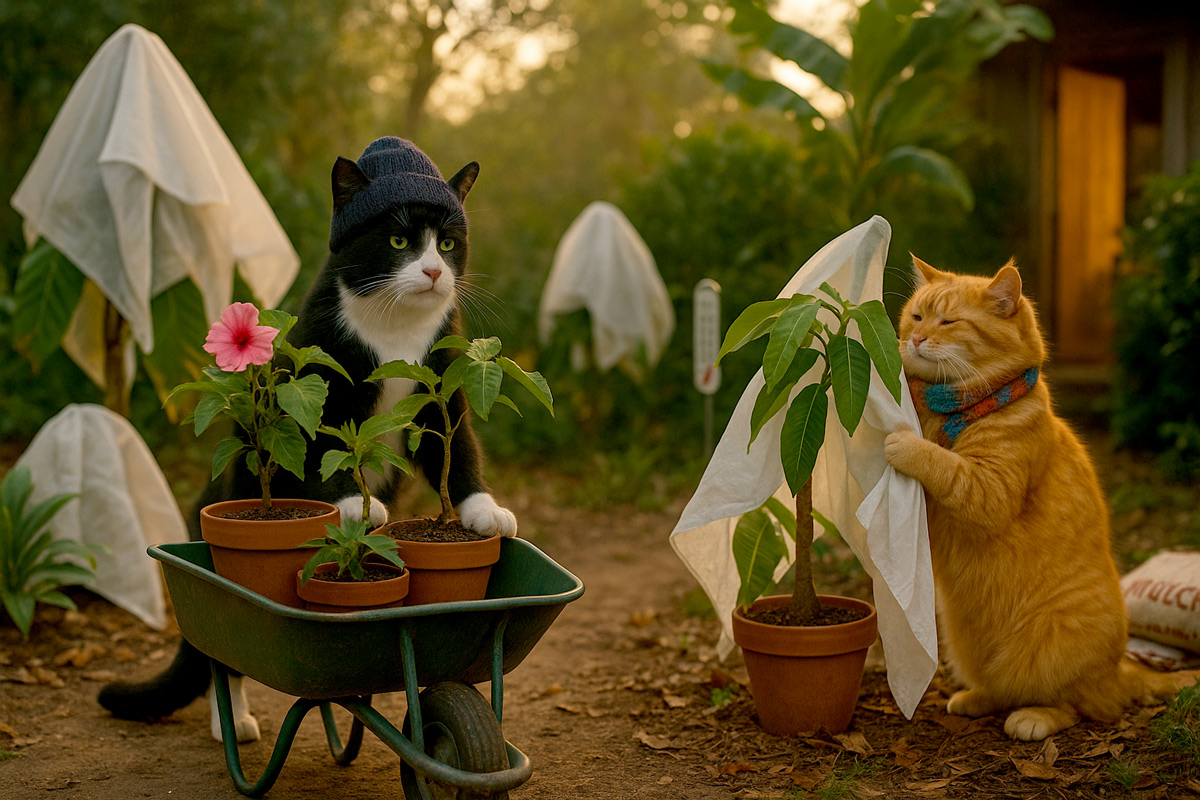
Smokey,  a  black-and-white  tuxedo  cat,  loads  a  wheelbarrow  with  potted 
 tropical  plants  while  Sunshine,  a  fluffy  orange  tabby,  pretends  to  cover  a 
 mango  tree  with  frost  cloth  as  evening  light  warms  the  tropical  garden.

Smokey and Sunshine Prepare Plants for the Cold Night.

Smokey: Come on, Sunshine, help me move these plants inside before it gets dark!
Sunshine: I am helping... see? I’m supervising the mango tree.
Smokey: You call that supervising? The frost cloth’s upside down!

When the forecast drops into the 30s, panic is not a plan. This is your simple, clear checklist to protect every tropical in your garden. Think of it as the quick emergency manual that goes hand in hand with the previous cold-weather newsletter.

"We all love our tropical flowers, mangoes, bananas, and rare fruit trees. A single cold night does not have to be a disaster. The key is knowing what to do, when to do it, and what mistakes to avoid." - Tatiana Anderson, Top Tropicals Plant Expert

🌡️ FROST AND FREEZE

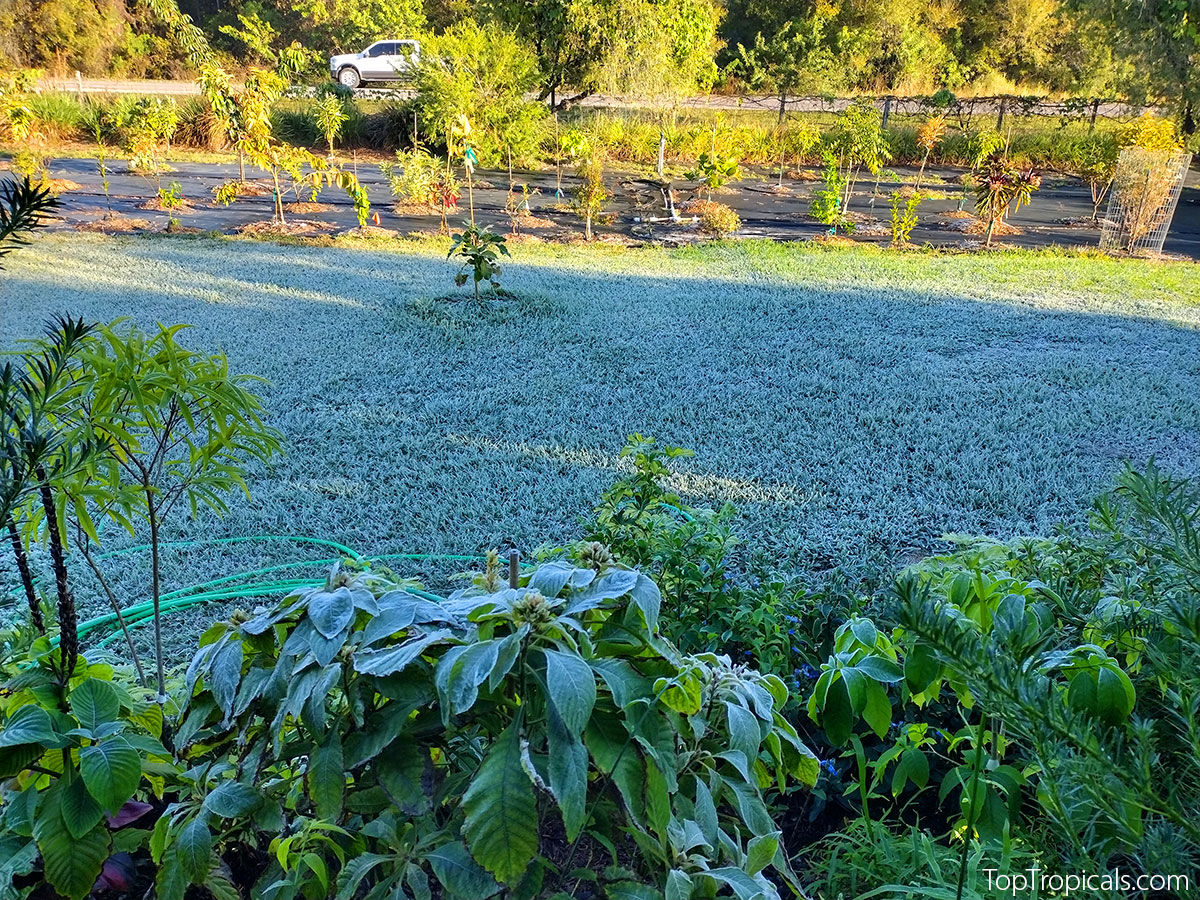
A frost and a freeze are not the same. A frost is when you see ice crystals on leaves or grass, while a freeze is when the air temperature drops below 32 F. The tricky part is that you can get frost even when the air is above freezing, and you can have a freeze with no frost at all. It all depends on humidity and the dew point. If the dew point is below freezing, the ground can cool faster than the air, letting frost form even when your thermometer reads 35 or 36 F. And once the air itself drops below 32 F, even for an hour, tender tropicals can be damaged. For plants, a freeze is far more dangerous, because freezing air pulls heat out of stems, branches, and roots. Frost usually burns leaves, but a true freeze can injure wood, kill buds, and damage the entire plant.

Frost  on  grass  and  leaves

Frost on the grass and leaves on Winter morning in Central Florida

WHAT TO DO AND NOT TO DO BEFORE A COLD SNAP

✔️ 5 THINGS TO DO:

  1. Water well. Hydrated plants tolerate cold better than dry, stressed ones.
  2. Add mulch. A thick layer around the base keeps roots warm.
  3. Block the wind. Move pots to a sheltered corner or patio.
  4. Cover at night, uncover in the morning. Let plants breathe and get light.
  5. Add gentle heat if needed. Non-LED Christmas lights or a small old style 15-20W light can raise temps a few degrees.

❌ 5 THINGS NOT TO DO:

  1. Do not prune or trim. Fresh cuts freeze first.
  2. Do not overwater. Wet, cold soil invites root rot.
  3. Do not let plants dry out either. Wilted plants freeze more easily.
  4. Do not use dry fertilizer. Gentle liquid feeds like Sunshine Boosters are safe to use with every watering: its intake naturally slows down as watering decreases.
  5. Do not look only at the thermometer. A long, windy night can be worse than a short freeze.

TEMPERATURE ACTION GUIDE (40 to 25 F)

  • 40 to 38 F: Move potted plants to shelter, water soil, and cover tender tropicals.
  • 37 to 33 F: Use frost cloth and anchor it down so the wind does not lift it.
  • 32 to 30 F: Add a heat source like non-LED lights.
  • 29 to 25 F: Double-cover sensitive plants, wrap trunks, and protect roots heavily.

COLD TOLERANCE BY PLANT TYPE

Before a cold night, it really helps to know your plant’s exact cold limits. Every species is different, and young plants are always more sensitive than mature ones. Take a few minutes to look up your varieties in our Tropical Plants Encyclopedia — it will tell you the safe temperature range, how much protection each plant needs, and which ones must be covered or moved before the next cold snap hits.

  • Bananas: leaf burn below 37 F
  • Mango, Annona: hurt around 32 F
  • Cold hardy avocados: Mature tree can take about 25 F. Young trees must be protected
  • Olives, Citrus, Guava, Jaboticaba: usually OK outside with mulch

QUICK-ACTION TABLE

Before the cold arrives, make yourself a quick list of every plant and what action each one needs. It saves time when temperatures start dropping and keeps you from scrambling in the dark. Check that you have enough frost cloth, blankets, and supplies on hand so you can cover everything without rushing. Planning ahead makes cold nights much less stressful.

  • Bring Indoors: Cacao, Bilimbi, Coffee. They need warm, bright light.
  • Cover Outdoors: Mango, Jackfruit, Banana, Annona. Use frost cloth, not plastic on leaves.
  • Leave Outside: Eugenias, Peaches, Persimmons, Longan, Lychee, Papaya, Citrus, Loquat, Hardy Avocado. Add mulch and monitor overnight lows.

🛒 Check out cold tolerant tropicals

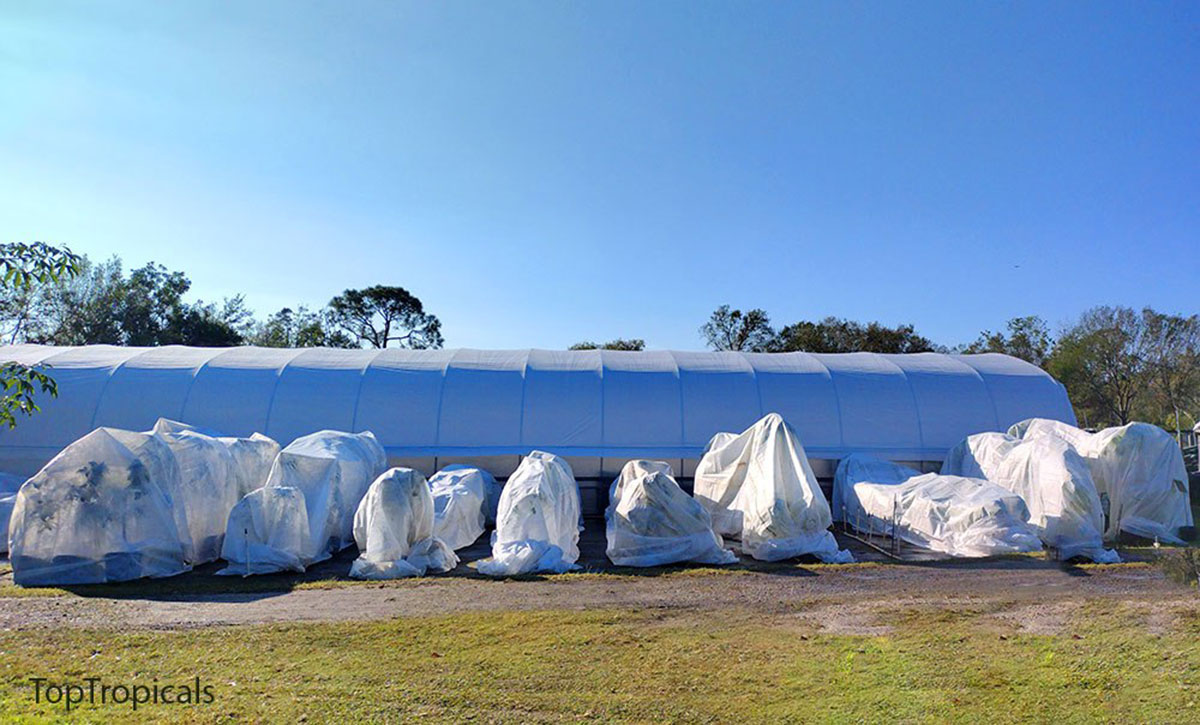
Covering  large  mango  and  avocado  trees  in  pots

Covering large mango and avocado trees in pots at TopTropicals during cold nights

GADGETS AND TOOLS THAT HELP

  • Indoor helpers: LED lights, small heaters, bottom-heat mats, timers.
  • Outdoor helpers: frost cloth rolls, mini greenhouses, non-LED Christmas lights or small incandescent lights, smart thermometers.

Always keep electrical safety in mind, especially if you are using extension cords outdoors. Use only weather-rated cords, keep all connections off the ground, and protect plugs from moisture. Make sure heaters and lights are stable, secured, and never touching fabric covers. A few minutes of safety check can prevent a dangerous situation on a cold, wet night.

And if you want to keep plants strong through winter, add Sunshine Boosters to your watering routine. It is gentle, safe in cold weather, and gives plants an extra edge.

AFTER THE COLD PASSES

In the morning, uncover plants. Leaving covers on during the day can trap heat and cook the tender new growth, especially under the sun. The only exception is true frost cloth designed for all-day use, which allows air, light, and moisture to pass through. Regular blankets, sheets, and plastic must come off as soon as the sun rises.

Do not cut anything yet. A plant can look completely dead after a freeze, but many branches are still alive under the bark. Cutting too soon removes wood that would recover on its own. Wait until new growth begins in spring. That is when you can see exactly which branches are truly dead.

Use the scratch test. Gently scratch the bark with your nail or a small knife. If the layer underneath is green, the branch is alive. If it is brown and dry, it is likely dead. But even then, wait until warm weather to be sure, because sometimes only the tips die back while the lower part of the branch survives.

Once the weather stabilizes, resume light feeding. Plants coming out of cold stress need gentle support, not heavy fertilizer. A mild liquid feed like Sunshine Boosters helps them rebuild roots and push new growth without burning tender tissue.

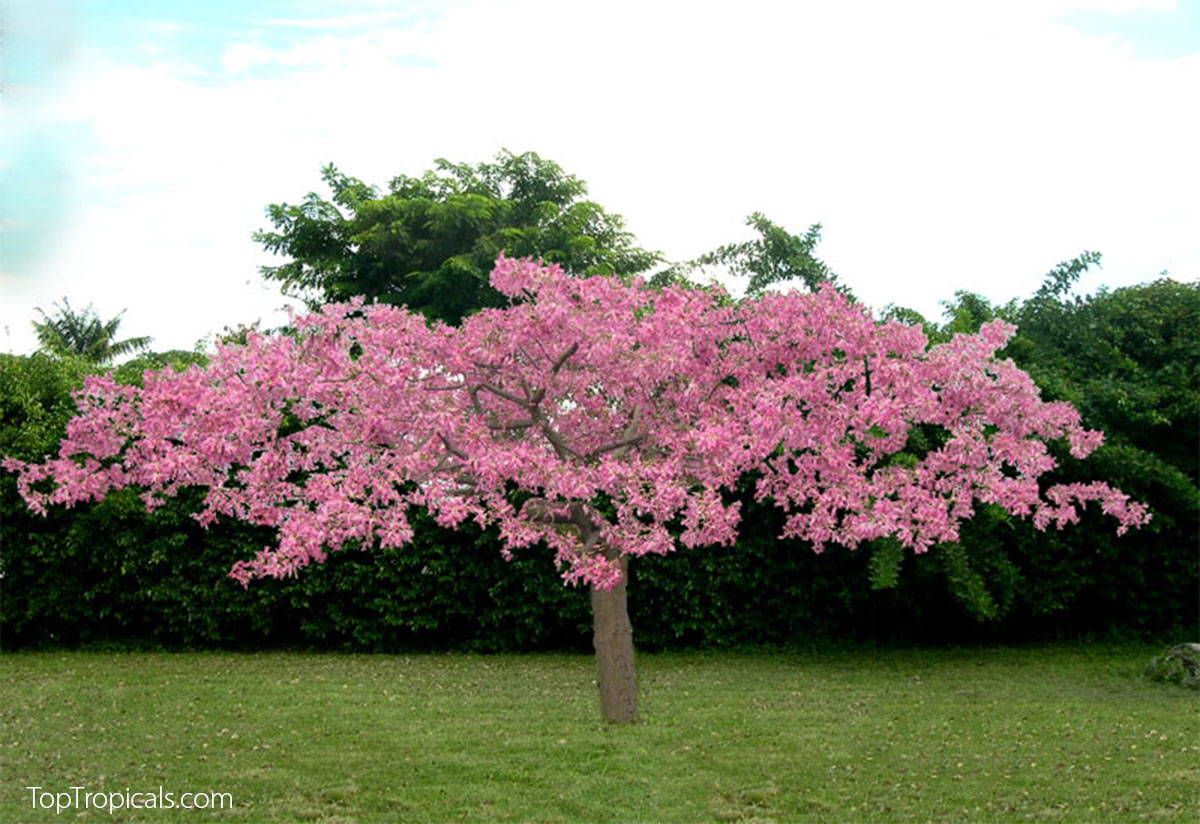
Dwarf  Ceiba  Pink  Princess  in  full  bloom

Dwarf Ceiba Pink Princess (Grafted) - a unique compact cultivar covered with pink flowers in Winter. Watch short video: How this breath-taking flowering tree stays so compact.

WHAT NOT TO DO

  • Do not prune right after a freeze.
  • Do not overwater cold soil.
  • Do not fertilize heavily until spring.
  • Do not leave covers on in full sun.

CLOSING THOUGHT

Your tropical garden can survive any cold night if you prepare right. Cold snaps always feel stressful in the moment, but once you know your plants, have the right supplies, and follow a simple plan, it becomes routine. A few minutes of preparation before dark can save months of growth and keep your collection healthy all winter.

Frost cloth is the true workhorse of cold protection: it keeps heat in, keeps frost off, and will not suffocate plants the way plastic or blankets can. Having a few rolls ready means you never have to scramble at the last minute. Sunshine Boosters give your plants gentle support during the colder months so they stay strong enough to bounce back quickly when warm weather returns.

A little planning now will pay off in spring, when your mango, banana, citrus, and all your favorite tropicals come back happy and ready to grow.

🛒 Shop Garden Supplies

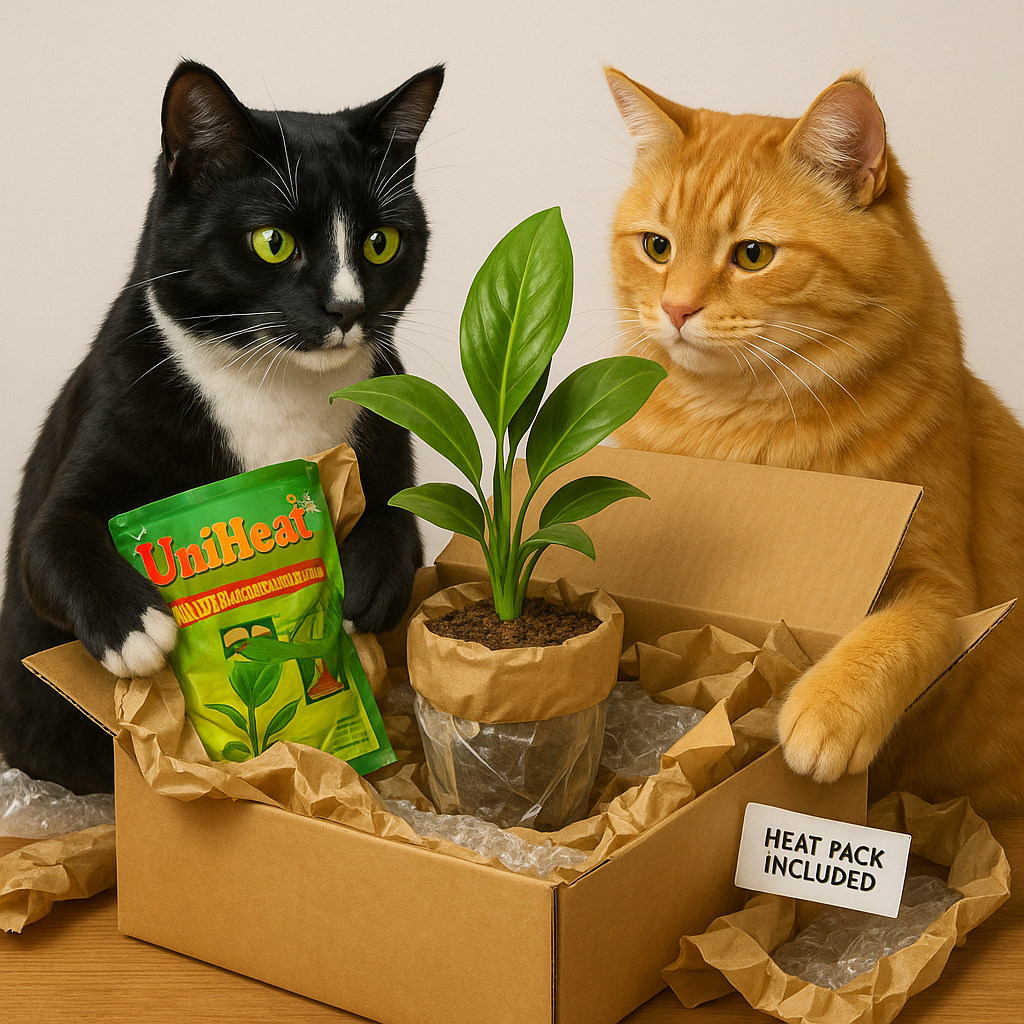
Add Heat Pack to your plant order

Cats  adding  heat  pack  to  plant  shipment

Date: 15 Aug 2021

How to grow Cerbera and make it flower

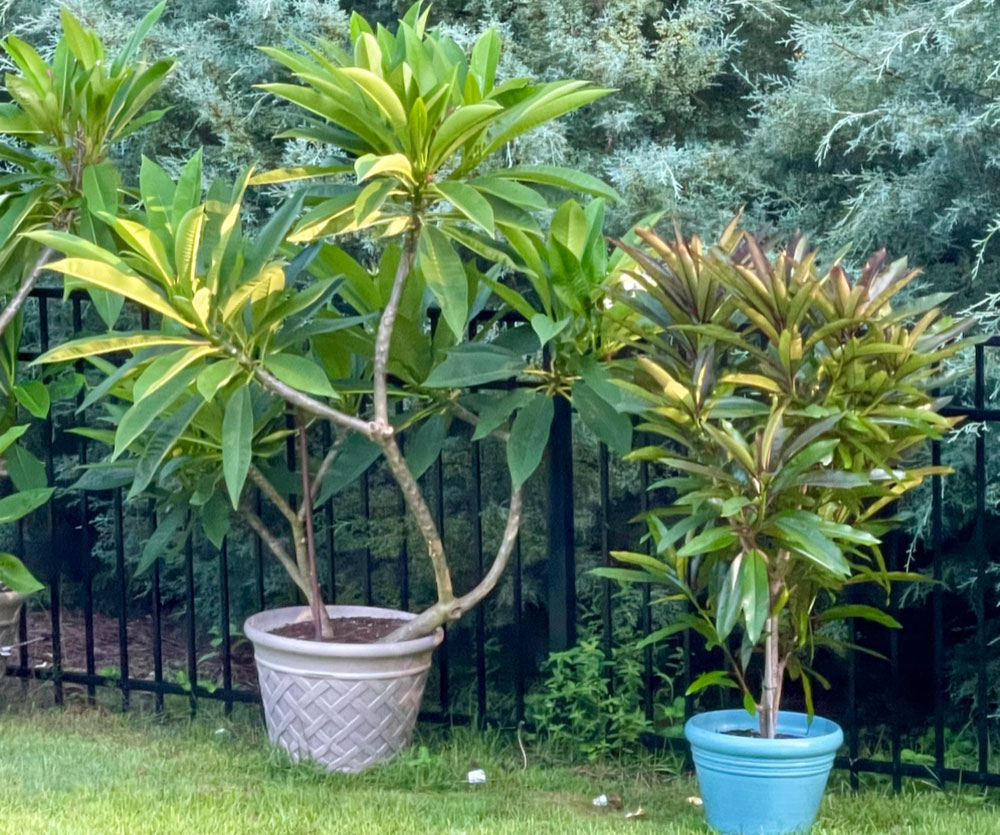
Q: I purchased Cerbera manghas - Enchanted Incense a year ago. As you see from the photo, it's doing great however, no blooms. I fertilize properly and very often and use worm castings for micronutrients. Yes it's not "your" fertilizer, but my plumerias, that are also in pots they are over 5 feet tall and blooming like crazy. I don't see any inflows coming on the Cerbera at all and it is hot and humid here in North Carolina, so it's happy but no sign of blooming. What is your advice?

A: Top Tropicals first brought Cerbera manghas into the US plant market a few years ago, it was recommended to us by our friend, plant taxonomist John Mood who visited Thailand, and among other exotic plants noted this fragrant beauty. Since then we've been successfully growing this plant, it has become one of everybody's favorites.

Generally speaking, Cerbera culture is very similar to Plumerias. These plants are closely related. So if you know how to grow Plumeria, you sure will succeed with Cerbera. Hot and sunny location, well-drained mix, moderate water and bloom boom fertilizer will do the trick. However, we have noticed a few distinctive features that make this plant somewhat challenging at times.

1) Flowers

For past years, we've been studying what triggers its flowering. Sometimes these plants start flowering in 1 gal pot, 1 ft tall. Other times a large developed tree 5-6 ft tall, in 5-7 gal pot, grows beautiful foliage with no signs of flowers. Eventually all of them bloom, no matter how stubborn they are, it's just some individual plants start flowering sooner than others, all grown in the same conditions.
One of our plants in the ground, a well-branched tree, was covered with flowers for a few months, but only on the 3d year after planting. Before that, it only produced a few random blooms. Others bloomed in pots at very young age.
The following factors benefit to Cerbera flowering:
- full sun at least 10 hours a day
- hot temperatures above 85F
- regular water but not heavy rains
- regular fertilizer - Bloom Booster type
- very good drainage and drying out before waterings. If root ball stays moist, the plant may look healthy but won't set flower buds. Keeping on a dry side will encourage flowering. Very similar to Jasmines: they bloom like crazy in April while it's hot and dry in Florida, but once our summer rainy season starts, they reduce blooming.

We highly recommend using Sunshine Megaflor bloom booster or SUNSHINE Pikake in combination with micro-element supplements Sunshine Honey (B-Mo) and Sunshine Superfood (complex micro) that induce flowering. Dry and granulated fertilizers may not supply exactly what a plant needs: certain elements that trigger flowering may be missing. Sunshine Boosters formulas are scientifically balanced, they contain precise amounts of nutrients needed for setting flowers. Besides, excessive salts from regular dry fertilizers create nutrient lock up that may retard plant metabolism; with liquid amino-acid based Sunshine boosters, plants consume the whole menu of elements without building them up in the soil.

2) Fruit

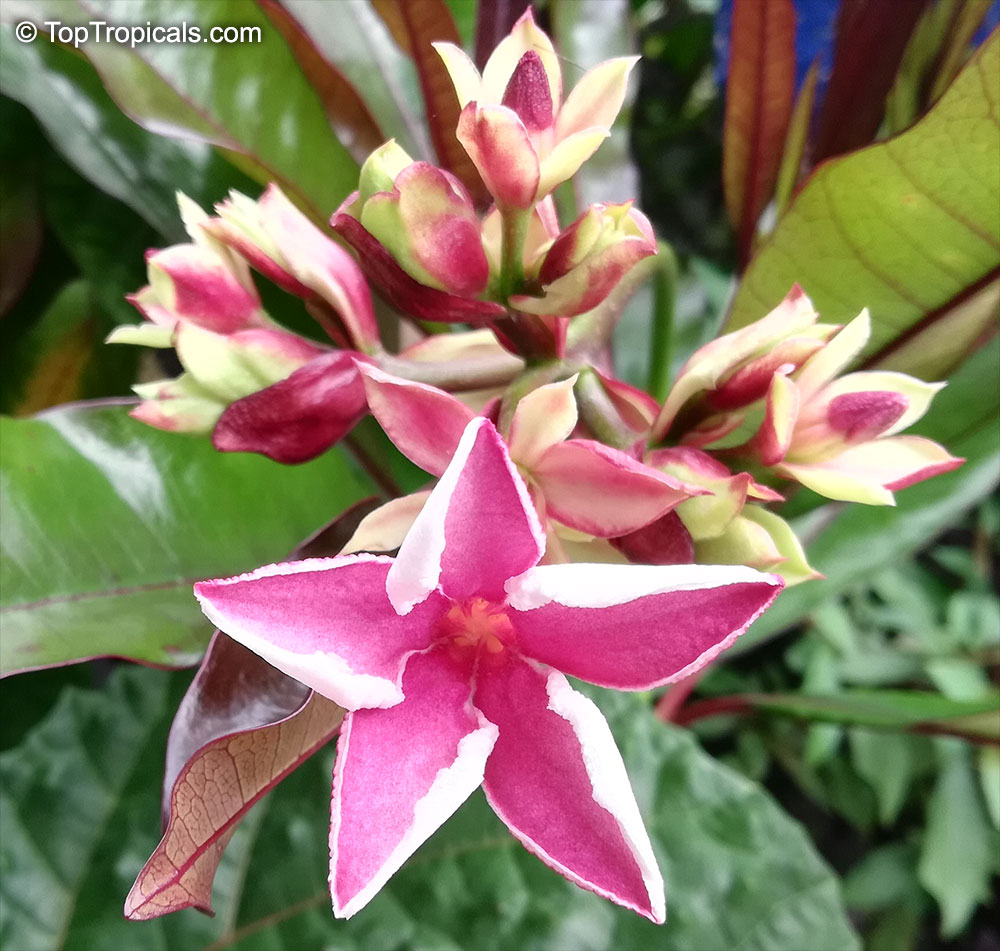
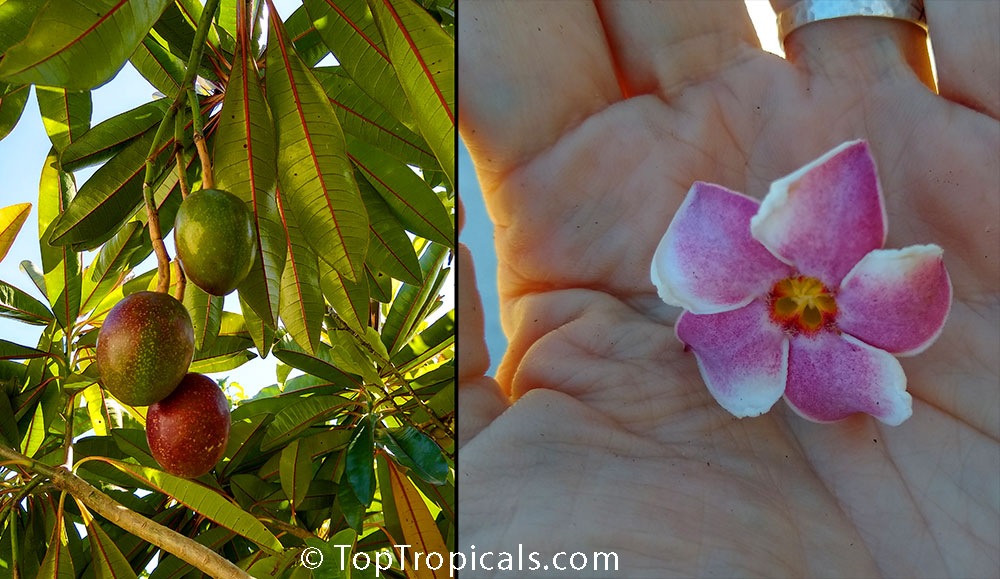
Fruit of Cerbera are very pretty and cover the tree after profuse flowering. To inexperienced eye they may look very much like small mango or avocado fruit - so make sure kids or visitors don't try to eat them! Cerbera seeds are extremely poisonous.

3) Leaves

If you ever grew Passiflora or Milkweed, you know how leaves can be eaten by caterpillars overnight. This may happen to Cerbera too, as we discovered. In Florida environment this exotic plant doesn't have natural predators for protection from certain insect species that may feed on it. So watch out and if noticed first signs of leaves damage - its time for insect control.
Other than that, Cerbera foliage is usually beautiful and colorful, here in Florida it looks much healthier than that of Plumerias often affected with rusty residue during high humidity months.

Hope this helps. The Cerbera fragrance is enchanting, it is worth the efforts and waiting!

Date: 1 May 2026

This changes how you feed your plants

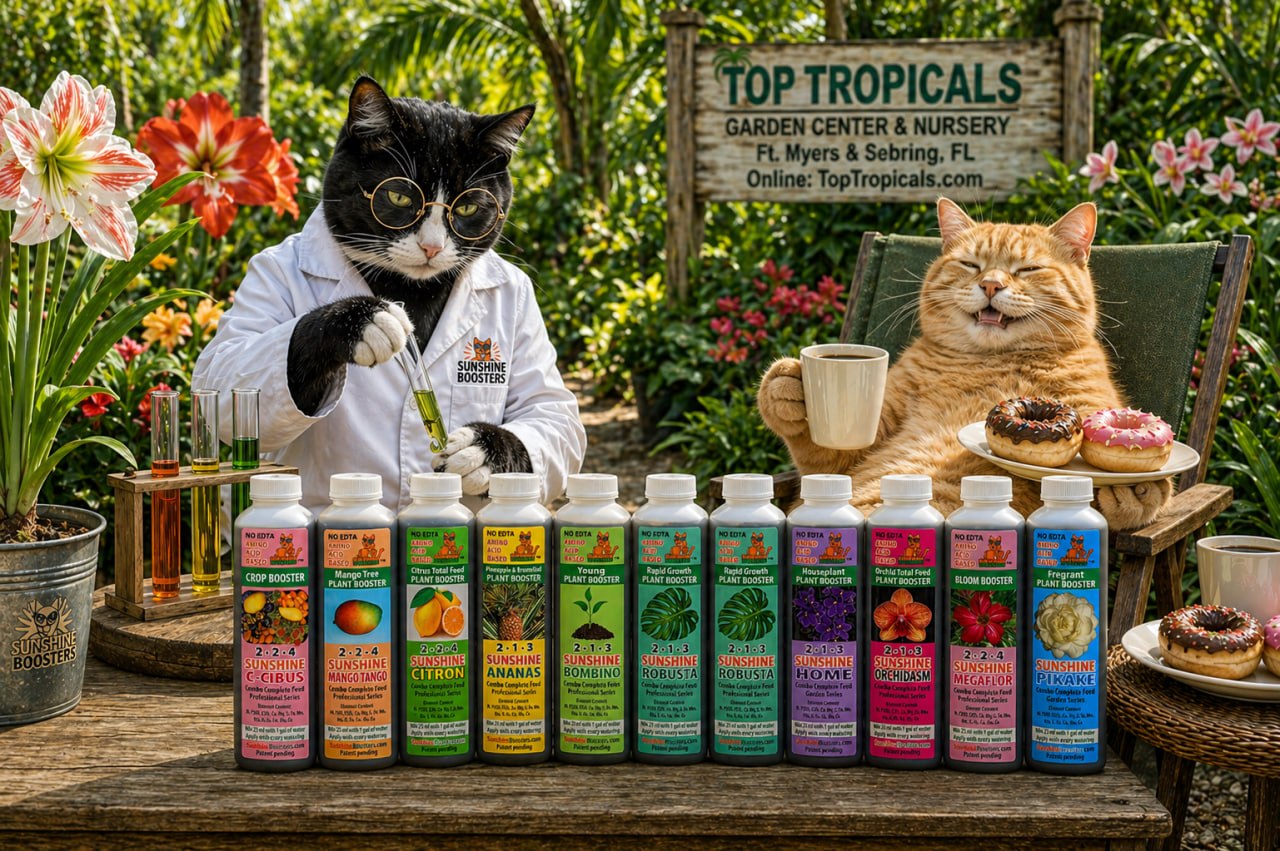
Smokey and Sunshine with Sunshine Boosters

Smokey and Sunshine with Sunshine Boosters

This changes how you feed your plants

Stop messing with fertilizers - you’re probably feeding your plants wrong. Keep it simple. Let your plants do the work.
Most gardeners don’t have a plant problem - they have a fertilizer problem. If feeding your plants feels confusing, expensive, or inconsistent, there’s a reason. The way most fertilizers are designed doesn’t match how plants actually grow today. Here’s what’s really going on - and why a simpler system works better.


A simple way to feed your plants right

Feeding plants shouldn’t feel like a chemistry class. But somehow it always does. Too many products. Too many formulas. Too many schedules. And somehow - still not sure if you’re doing it right.
The truth is, growing healthy plants is simple. Good soil. Enough light. Proper care. And the right nutrients.
That last part is where most people get stuck.

Sunshine Boosters were made to fix exactly that. It’s a complete nutrition system that gives your plants what they actually need - without all the extra steps and guesswork.

What Sunshine Boosters are and how they work

So what is it, really?
Sunshine Boosters is a new generation of plant nutrients based on amino acids. It includes the main nutrients plants need - nitrogen, phosphorus, and potassium - plus all the microelements, already balanced in one formula.

No extra bottles. No missing pieces.
It dissolves completely in water, so plants can take it in right away. No buildup in the soil, no leftovers sitting there doing nothing.
You just mix it with water and use it during regular watering. That’s it. It works through the roots, and even through the leaves if you spray it.
Instead of trying to manage a whole feeding system - you just feed and grow.
Less work, better plants.

Stay with us - this is just the start. We’ll break it down step by step so you really understand what your plants need and how to give it to them. More...

Get your plants real food

"
Learn more:
Secrets if Sunshine Boosters - Complete Plant Nutrition System
Frequently Asked Questions: Plant Nutrition & Fertilizer
Green Magic + SUNSHINE Boosters: A Complete System for Strong Plant Growth
Spring Nutrition Strategy: Is Your Garden Starving?
How to keep your house plants beautiful all year by feeding them right
Why do you need Sunshine Boosters?
Which dry fertilizer to use - slow release or controlled release?
Green Magic effect: before and after
The SECRET growers never tell you: simple trick how to bring plants back to life and keep green
" What are Sunshine Boosters

#Discover #Fertilizers #How_to

Join TopTropicals