Date: 22 Apr 2016
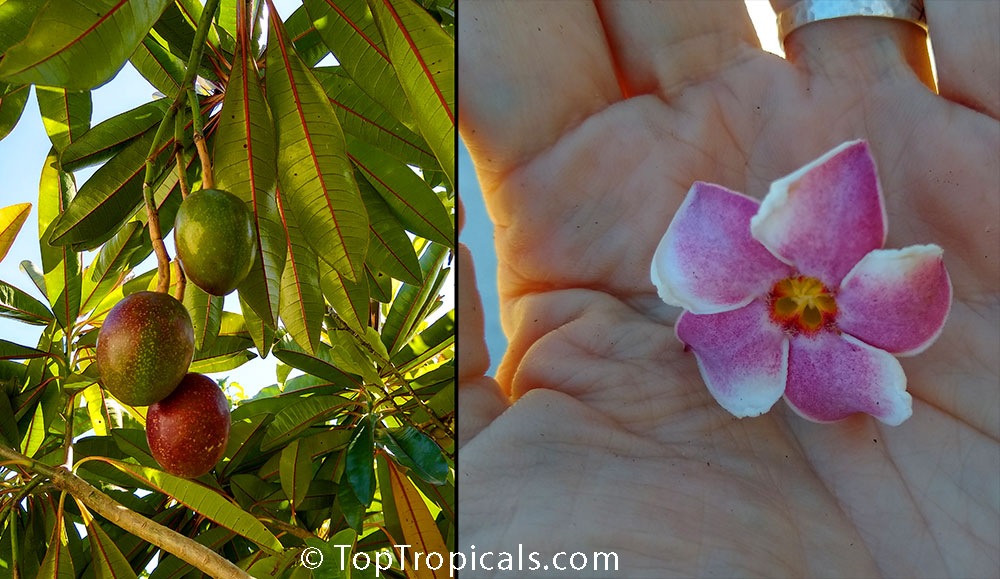
Plant Horoscope. Taurus Zodiac lucky plants: Fragrant Cananga odorata and Chonemorpha

Taurus - 4/20-5/20. Taurus is an EARTH sign ruled by the planet Venus.
Venus is the planet that represents desire and beauty, regarded as the female embodiment of sexual love and human appetite, so Taurus plants often have gorgeous flowers and enticing fragrances and, occasionally, red fruit. It rules the internal sexual organs, the nose and sense of smell.
Because Taurus rules the throat and ears, the best plants for the Bull are often soothing to the throat, or may calm the digestive system after overindulging in the finest foods. Taurus is related to those things we want and value. It harmonizes various body systems, and influences the complexion and facial appearance. Also under Venus's dominion are the abdomen, kidney, thymus, and breasts. Venus-governed herbs are soothing and help to regulate the body's metabolism through the endocrine system. Taurus herbs are traditionally used to attract money and resources. Earthy Taurus sign is all about building a stable and comfortable foundation and can help you generate greater abundance and prosperity in your life.
Taurus Zodiac lucky plants - Aglaia, Cananga odorata (Ylang-Ylang), Artabotrys (Climbing Ylang-Ylang), Cerbera, Night blooming jasmine, Chonemorpha, Erblichia, Euodia, Hiptage, Iboza (Musk Bush), Anise, Lavender, Lonchocarpus Lilac Tree, Nutmeg, Parijat, Camphor Basil, Osmanthus, Funeral tree, Quisqualis, Satureja (Kama Sutra Mint Tree), Viburnum, Carissa, Murraya, Curry Leaf, Bunchosia (Peanut butter fruit), Eucalyptus, Lily, Vitex agnus castus (Blue Chaste Tree), Alstonia scholaris (Sapthaparni), Papaya, Maple, Jasmine, Guaiacum, Camellia, Ephedra, Fuchsia, Geranium, Spider lily, Gardenia, Magnolia, Plumeria, Paeonia, Verbena, Clerodendrums, Apple, Pear, Apricot, Peach, Plantain, Olive, Grape, Pomegranate, Mango, Neem Tree, Cherry, Cypresses, all Berries, Raspberry, Asparagus, Mint, Clove, Roses, Stagshorn fern, Catnip.
For other signs information, see full Plant Horoscope.
April 22 Earth Day discount - 15% off fragrant plants! Earth Day is more than just a single day â€"April 22, 2016. It's bigger than attending a rally and taking a stand. Plant one tree at a time to make our Planet better! This Earth Day and beyond, let's make big stuff happen. - See more at: www.earthday.org
Check out our Fragrant Plants
Date: 25 Sep 2025
How do we ship plants? Part 1: prepare the plant
How do we ship plants? Part 1: prepare the plant.
🚚 How do we ship plants? Part 1: prepare the plant.
- 📦 We hear it all the time: "You guys ship plants? Wow! How do you ship a plant? It's... live!"
- 📦 Well, we've been doing it for almost 25 years now - that's a quarter of a century! Top Tropicals was one of the first nurseries to figure out plant shipping, long before Amazon and all the big online platforms where today you can order just about anything.
- 📦 After so many years, our Team worked it to perfection. Want to see how it's done?
- 📦 Like they say, it's better to see once than hear a hundred times. In this video, we'll show you the tricks that keep plants safe on their journey from our nursery to your doorstep.
🎥 Part 1 covers how we prepare the plant before it goes into the box.
❗️Stay tuned for the next step in our upcoming video!
🛒 Shop plants online
📚 Learn more:
Shipping information page
#How_to
🟢 Join 👉 TopTropicals
Date: 8 Jun 2023
Repotting tropical plants
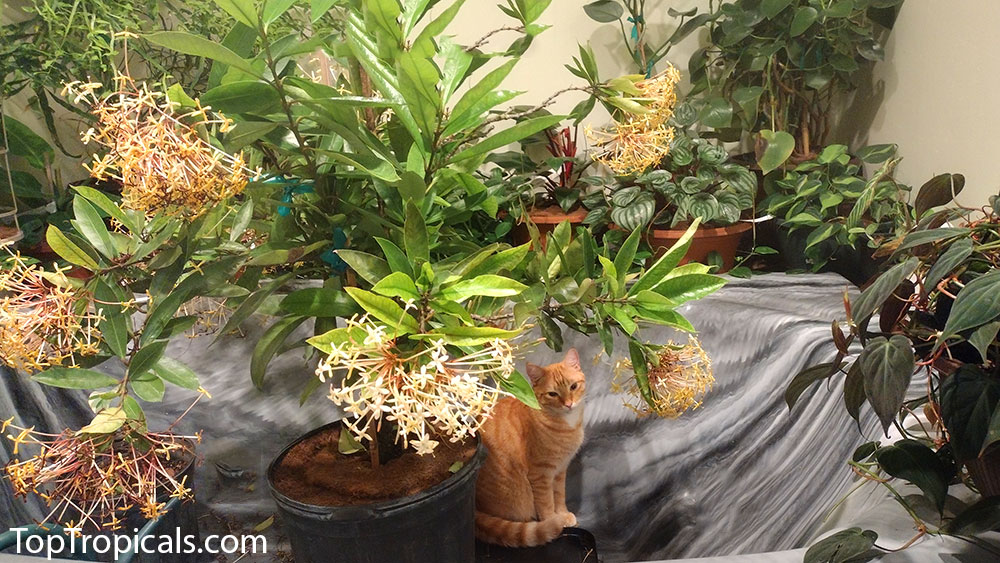
By Alex Butova, the Witch of Herbs and Cats
Q: When is the best time to repot tropical plants?
A: Repotting tropical plants is vital for their overall health and growth. The best time to repot them is during the Spring through early Summer, when they start active growth.
Start by selecting a well-draining soil mix that consists of equal parts potting soil, peat moss, and perlite. Gather the necessary supplies, including a slightly larger pot, the soil mix, and a good fertilizer
Carefully remove the plant from its current pot, trim any damaged branches, and place it in the new pot with fresh soil mix. Be sure to position the plant with the growth point slightly above the soil level. Water the plant thoroughly but avoid overwatering. After repotting, find an appropriate location with suitable lighting conditions for your plant. Monitor the moisture levels and water when the top inch of the soil feels dry.
Additionally, apply the appropriate Sunshine Boosters fertilizer according to the instructions on the packaging. Use Sunshine Boosters fertilizers for specific plant needs (Robusta for foliage, Megaflor for flowering, Ananas for pineapples, etc.). It is safe to apply Sunshine Boosters all year around. Keep a close eye on the plant for any signs of stress or issues and adjust your care routine as needed. Help the plant to cope with stress by spraying with solution of Sunshine Epi.
Enjoy the beauty of your thriving indoor tropical garden!
Date: 24 Nov 2021
Winter is coming tips

Reminder from Kristi, the Tropical Flower Girl
As the weather gets cooler, many of you move your potted tropical plants
indoors. Please remember:
1. Leaf drop. Lower air humidity, lower light and short day may
cause some leaf drop. This is normal for seasonal environment change.
2. Reduce watering as it gets cooler and darker. Under lower light
and in cooler temperature, plants won't need much water; some plants go dormant and only need minimum water (so soil doesn't completely dry out). Excess water may damage roots and kill a plant in winter.
3. No dry fertilizer in winter. Active growth stops. Let the plant
to go into dormancy or simply have a rest. You can continue liquid Sunshine Boosters according to regular dosage chart with every
watering. Since the watering is reduced, the plants will get only as much food as
needed for getting through the winter.
4. Watch for insects by inspecting leaves regularly. They may attack
plants more likely in the indoor conditions. You may use organic NoBug insecticide especially for your indoor plants.
Stay Warm!
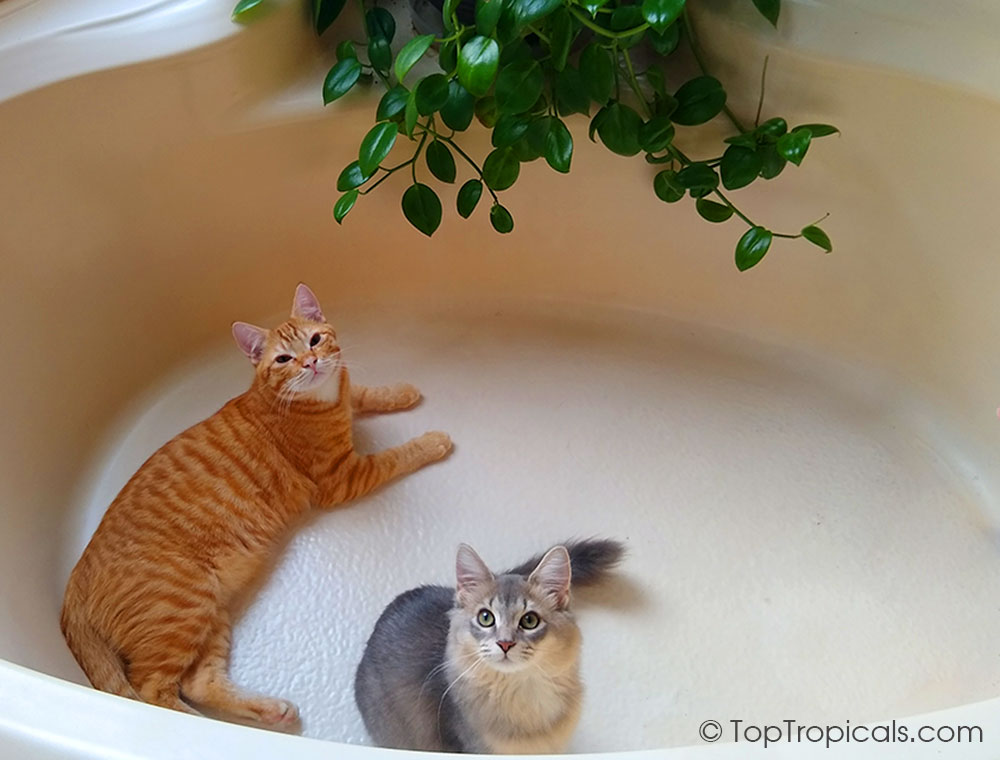
In the photo: Mr Big and Zoe-the-Scooby-Doo sharing a warm tub with Emerald Peperonia
Date: 15 Aug 2021
How to grow Cerbera and make it flower
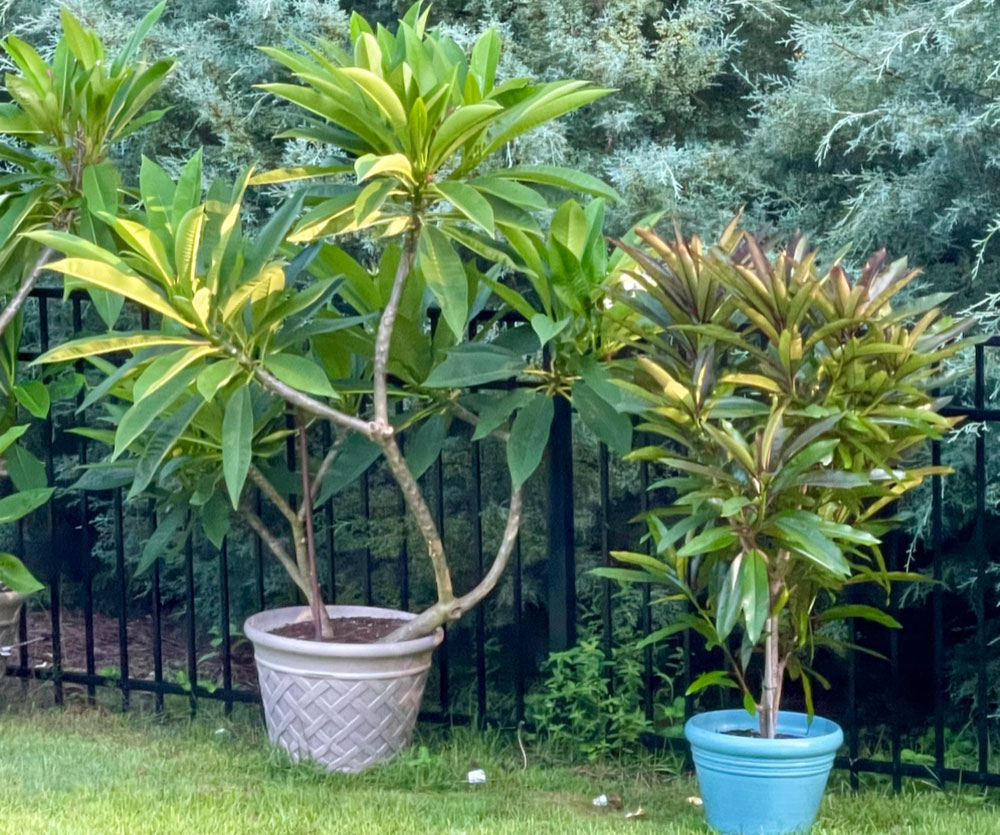
Q: I purchased Cerbera manghas - Enchanted Incense a year ago. As you see from the photo, it's doing great however, no blooms. I fertilize properly and very often and use worm castings for micronutrients. Yes it's not "your" fertilizer, but my plumerias, that are also in pots they are over 5 feet tall and blooming like crazy. I don't see any inflows coming on the Cerbera at all and it is hot and humid here in North Carolina, so it's happy but no sign of blooming. What is your advice?
A: Top Tropicals first brought Cerbera manghas into the US plant market a few years ago, it was recommended to us by our friend, plant taxonomist John Mood who visited Thailand, and among other exotic plants noted this fragrant beauty. Since then we've been successfully growing this plant, it has become one of everybody's favorites.
Generally speaking, Cerbera culture is very similar to Plumerias. These plants are closely related. So if you know how to grow Plumeria, you sure will succeed with Cerbera. Hot and sunny location, well-drained mix, moderate water and bloom boom fertilizer will do the trick. However, we have noticed a few distinctive features that make this plant somewhat challenging at times.
1) Flowers
For past years, we've been studying what triggers its flowering.
Sometimes these plants start flowering in 1 gal pot, 1 ft tall. Other times a large
developed tree 5-6 ft tall, in 5-7 gal pot, grows beautiful foliage with no
signs of flowers. Eventually all of them bloom, no matter how stubborn they
are, it's just some individual plants start flowering sooner than others, all
grown in the same conditions.
One of our plants in the ground, a well-branched tree, was covered with
flowers for a few months, but only on the 3d year after planting. Before that,
it only produced a few random blooms. Others bloomed in pots at very young
age.
The following factors benefit to Cerbera flowering:
- full sun at least 10 hours a day
- hot temperatures above 85F
- regular water but not heavy rains
- regular fertilizer - Bloom Booster type
- very good drainage and drying out before waterings. If root ball stays
moist, the plant may look healthy but won't set flower buds. Keeping on a dry
side will encourage flowering. Very similar to Jasmines: they bloom like crazy
in April while it's hot and dry in Florida, but once our summer rainy season
starts, they reduce blooming.
We highly recommend using Sunshine Megaflor bloom booster or SUNSHINE Pikake in combination with micro-element supplements Sunshine Honey (B-Mo) and Sunshine Superfood (complex micro) that induce flowering. Dry and granulated fertilizers may not supply exactly what a plant needs: certain elements that trigger flowering may be missing. Sunshine Boosters formulas are scientifically balanced, they contain precise amounts of nutrients needed for setting flowers. Besides, excessive salts from regular dry fertilizers create nutrient lock up that may retard plant metabolism; with liquid amino-acid based Sunshine boosters, plants consume the whole menu of elements without building them up in the soil.
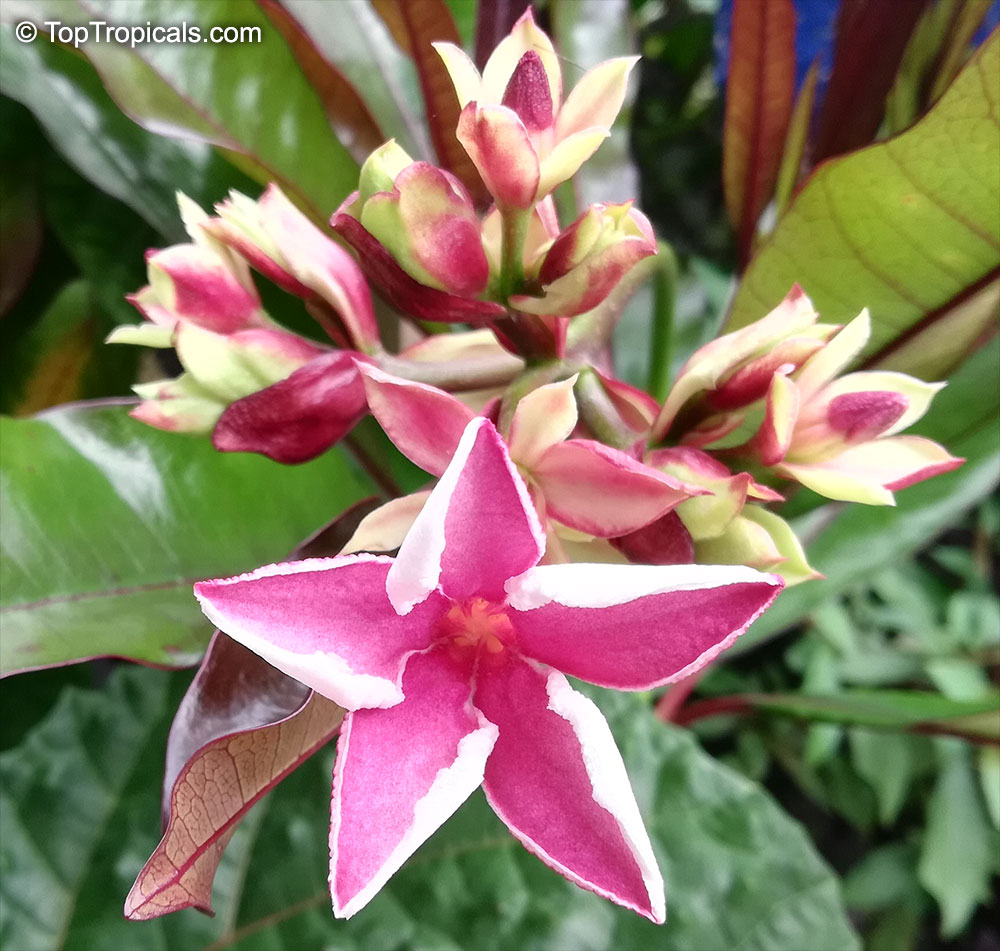
2) Fruit
Fruit of Cerbera are very pretty and cover the tree after profuse flowering. To inexperienced eye they may look very much like small mango or avocado fruit - so make sure kids or visitors don't try to eat them! Cerbera seeds are extremely poisonous.
3) Leaves
If you ever grew Passiflora or Milkweed, you know how leaves can be
eaten by caterpillars overnight. This may happen to Cerbera too, as we
discovered. In Florida environment this exotic plant doesn't have natural predators for
protection from certain insect species that may feed on it. So watch out and
if noticed first signs of leaves damage - its time for insect control.
Other than that, Cerbera foliage is usually beautiful and colorful, here in
Florida it looks much healthier than that of Plumerias often affected with
rusty residue during high humidity months.
Hope this helps. The Cerbera fragrance is enchanting, it is worth the efforts and waiting!