Garden Blog - Top Tropicals

Date: 7 Sep 2018

6 reasons to buy tropical plants in Fall

TopTropicals

1) Easy planting. No sweat. Enjoy your gardening fun during cooler weather!

2) Easy shipping. With cooler weather, there are less chances for the mail order plants to get overheated in transit or at your doorstep in case you miss the delivery. But don't wait too long, another few weeks and too much cold will put another restriction for deliveries up North.

3) Easy establishing. Stress-free roots = stress-free plants = happy gardeners. Cooler weather is always better for planting and quick establishing.

4) Easy maintenance. Plant growth rate slows down during cool period, so your garden maintenance will be minimal.

5) Winter bloomers will brighten your days! Look at these winter-flowering plants that create a spectacular show during Fall-Winter in subtropical climates. If you grow them as houseplants, this is your chance to have flowers in Winter!

6) House plants Many tropical species suitable for indoor cultivation are available year round, but when you buy them in Fall - they are in their fullest and best shape after Summer vigorous growth.

One the photo: Barleria cristata Striped Lavender Lace.
Date: 27 Jun 2018

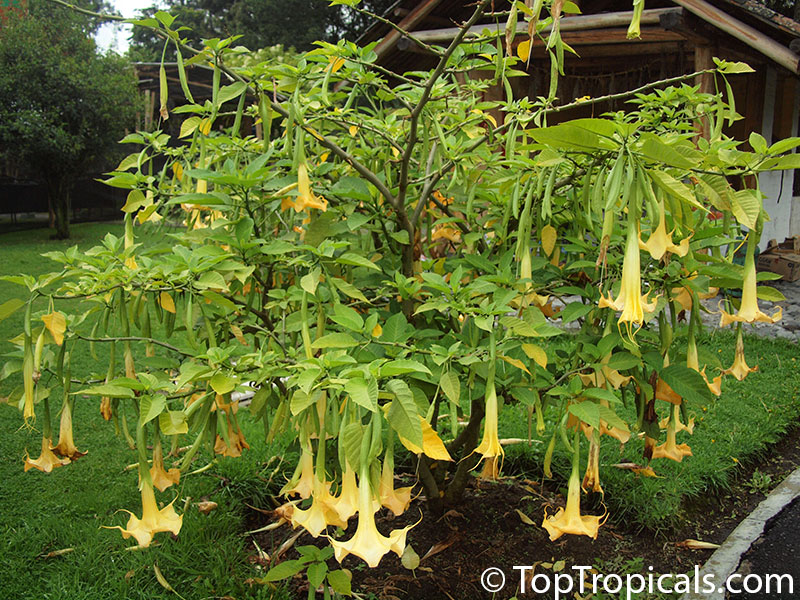
TROPICAL GARDENING: How to grow Brugmansia (Angel Trumpet) in the ground outside.

TopTropicals

Q: I recently moved from New Jersey to Florida and I brought with me my Brugmansia that I used to have as a house plant. Can I plant it in the ground now?

A: Angel Trumpet - Brugmansia - is a very popular container plant valued for its large, stunning fragrant flowers. Originated from South America, it will be happy to grow in tropical to subtropical climate outdoors. These are a few useful tips to get the most out of this beautiful plant:
1) Light. Plant it in full sun - the more sun, the more flowers you get, although Brugmansias tolerate shade. If the plant was previously grown in container indoors, to avoid leaf burn, keep it protected with a shade cloth or simply white sheet for a while and gradually open to adjust to full sun.
2) Soil and fertilizer. Use fertile soil with lots of organic matter (add compost to existing soil). It must be very well drained, Angel Trumpet won't tolerate waterlogged conditions. Plant it on a little "hill" elevated 3-4"above the surrounding area. Brugmansias are very heavy feeders. Once the plant is established, fertilize on regular basis with Slow Release Fertilizer - a handful once a month.
3) Water. Water daily until established. Once the root system is well developed, the plant is drought tolerant and won't require too much care. But at the beginning, watch the leaves - the lush foliage droops quickly if the plant is thirsty.
4) Plan space. Brugmansia is a short tree, but it needs a lot of room to spread branches with its heavy hanging flowers. Think 12" wide and maybe almost as much tall.
5) Support. Being widespread plant, Brugmansia can be blown with strong winds. Stake with strong support until established.
6) Propagation. Brugmansia is one of the few plants that propagates with semi-woody cuttings; soft green cuttings usually have little success. Other than that, it is pretty easy!

Check out our Brugmansia collection and... collect them all!

Date: 24 Jun 2018

Tropical Planting Breaks the Rules. Should I plant in the ground before Winter?

Q: Winter is coming and I still have a few plants I want to plant in the ground. Should I keep them in pots and wait till spring?

A: In subtropical areas, if temperatures don't drop below freezing, you can continue planting in the ground. In fact winter planting has some unique advantages - less heat stress on a plant and root system, mild environment - help the plant to establish better. Besides, no-sweat garden work is much more enjoyable, and you can get done a lot!

To learn more about winter planting, see article Tropical Planting Breaks the Rules by Murray Corman (Garden Of Delights).

Date: 24 Jun 2018

TopTropicals

Florida winters and gardening

From Anna Banana, our Garden Center customer advisor.
Cool weather - no sweat. Here in Florida we are blessed to have warm winters. We just went to the beach for Christmas! Winter time is not only a good beach time, but also the best planting time here. Why? I always refer my customers to Murray Corman's article Tropical Planting Breaks the Rules. "...Wintertime does not just mean hard work for tropical gardeners. It is also a time to enjoy the fruits of our labor. Winter-blooming plants and the visitors they attract - birds, bats and butterflies - make the garden as enjoyable in winter as any other time of year. Tasks performed during the spring and summer up north have to be done during the fall and winter here. Why? The answer is elementary: It's too hot! Taking advantage of the coolest months of the subtropical year for heavy chores like planting trees has a twofold benefit: The gardener can make hay while the sun shines without getting heat stroke and the plants appreciate the moderate temperatures, enjoying a break from the stress of 93 degrees in the shade..."
Continue reading...

Winter flowering plants - are a blessing for a tropical gardener. See below what's blooming now! See our recommendations for winter flowering and fruiting plants (PDF).

Date: 24 Jun 2018

Overwintering tropicals indoors and air humidity

Q: My rainforest plant collection thrived outdoors in our humid summer (I live in Maryland) but of course I had to bring them indoors for winter and now with snow outside they are suffering. Some leaves dried and fell of. Please advise how not to lose my babies over winter!

A: When overwintering tropical plants indoors, think about 3 factors: light, temperature, and humidity.
Light. Providing bright light is obvious, and all indoor gardeners are doing their best to have as much well-lit spots for their plants as possible.
TemperatureTropical plants, especially those from rainforest, do not enjoy significant fluctuations in temperature, so avoid following places: - neat hear register (or air conditioning vent) - in drafts - on a windowsill behind curtains at night
Humidity. Most tropical plants need more humidity than is available in the average, centrally heated home, but some rooms, such as bathrooms and kitchens, are more humid than others. To created humidity, fill a tray that is the same width as a plant, with pebbles or gravel. Pour in water, keeping the level at just below the top of the pebbles, then place your plant on top. The water will produce humidity as it evaporates. Alternatively, mist the leaves using a hand mister in the morning, so leaves dry before night. If you have hard water, use distilled or rain water. Grouping plants together will also increase humidity.