Date: 29 Dec 2019
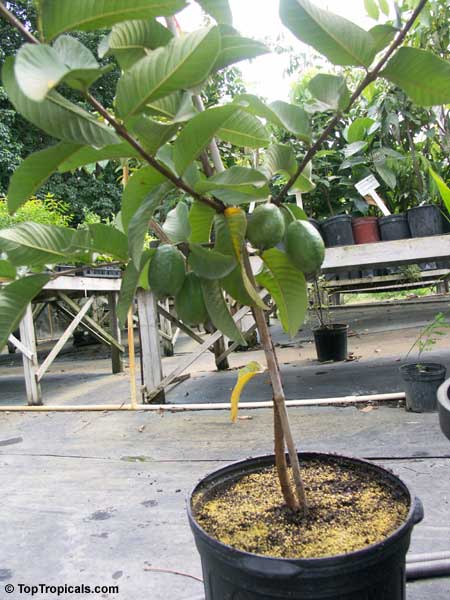
Kwai Muk: the Ugly Delicious Fruit
By Onika Amell, tropical plant specialist
Q: I have been hunting for a rare and exotic edible to grow on my property here in South Florida for some time now. I found an interesting tree called Kwai Muk while browsing your website. I do not have a lot of space left to plant but this tree seems to be smaller in size and also somewhat cold and wind tolerant which is a bonus as far as I am concerned. It also sounds like the fruit is exceptional. I would love to grow one. It is similar to Jackfruit?
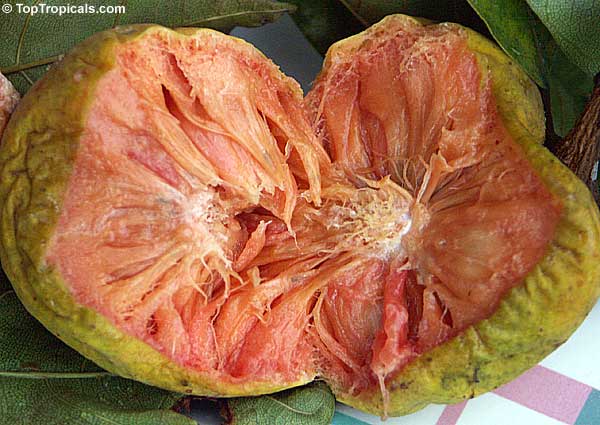
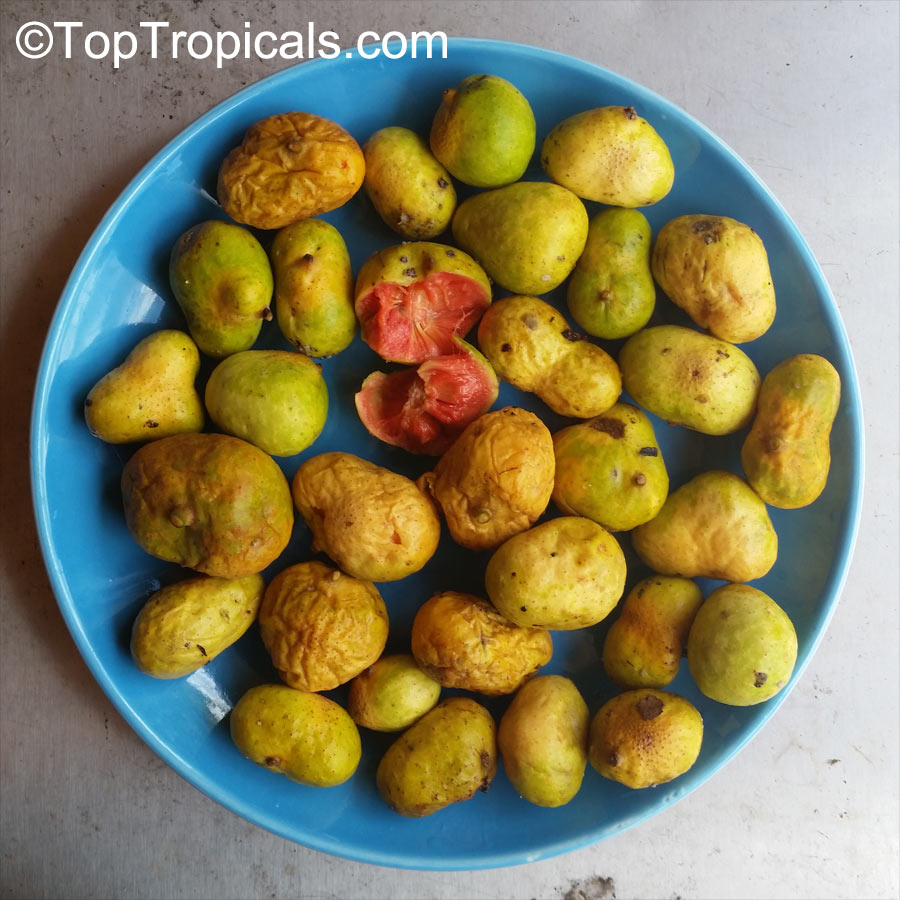
A: ...The piece de resistance of Kwai Muk is the excellent fruit it produces. Some people seem to think it is some of the weirdest looking fruit out there! This may be true, but what it lacks in appearance, it certainly makes up for in taste. It is called sometimes "the ugliest and yet the best tasting fruit". The creamy pulp is absolutely delicious and mostly eaten fresh. I have heard people say the flavor reminds them of mango, apricot, jackfruit, fig, quava and strawberry. Sweet and tangy loveliness with a hint of sherbet. The fruit looks like mini jackfruit on the inside but is about the size of a fig. The flesh inside also closely resembles jackfruit....
CONTINUE READING >>

Date: 9 Nov 2019
Saving Fallen Papaya Tree
Q: Hope there is help for my beautiful amazing papaya tree! There where a loooooooot of fruits on it, but it broke! First of all, it was leaning and friends tried to straight my beautiful tree. What can I do? Will it get fruits again?
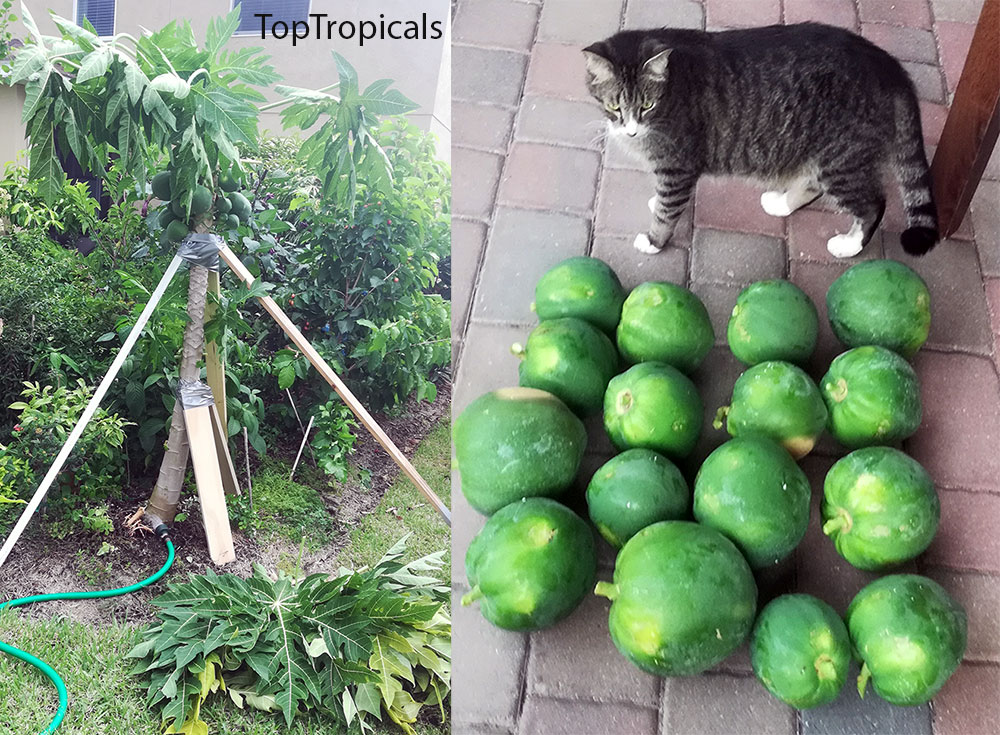
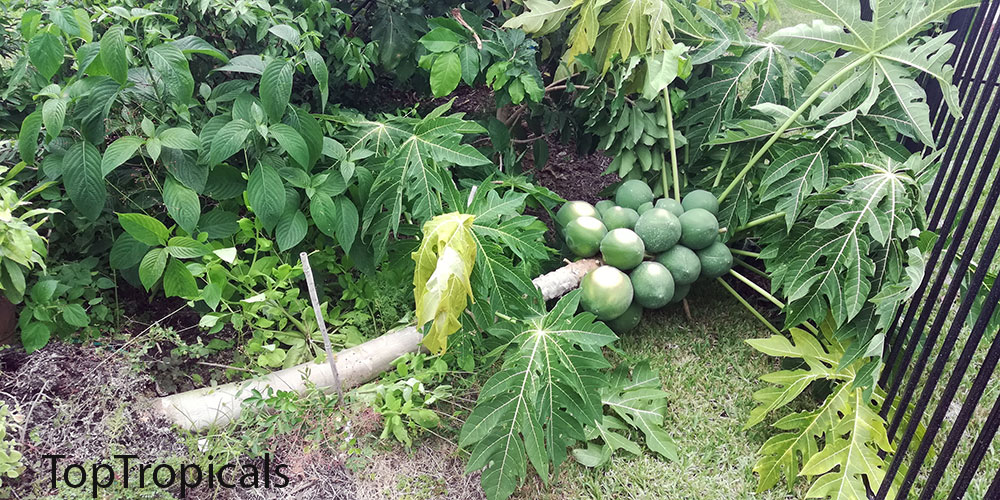
A: A couple months ago we also had a Papaya tree loaded with
fruit that fell down (see photos). It was heart-breaking. We secured it and it
continued growing for a couple of weeks but unfortunately, at the end the tree
still died, leaving us a million fruit.
The Papaya tree has a very sensitive root system and is hard to
re-establish once the roots are damaged.
However, if it just has a broken top, it has a good chance to grow back
from the side shoots.
Of course, remove all the fruit so they don't take energy from the
recovering tree.
When a tree is loaded with fruit, it is important to provide support for
heavy branches and for the trunk if needed. Always support the fruiting tree to
prevent from possible falling BEFORE it starts leaning down and may become
broken by even a light wind.
In the photo, you can see how we fixed boards around, but it was already
after the tree fell. Unfortunately, it was too late since the roots got
damaged. Always need to stake the tree up before the branches get too heavy!
RECOMMENDED FERTILIZERS:
Fruit Festival Plant Food - Super Crop Booster
Mango-Food - Smart Release Fruit Tree Booster
SUNSHINE-Honey - sugar booster
Maradol Papaya $10 Hot Sale
Only local pick up from our
Garden Center
Hurry up, while supply lasts!

Date: 13 Aug 2019
Caring of Soursop in container
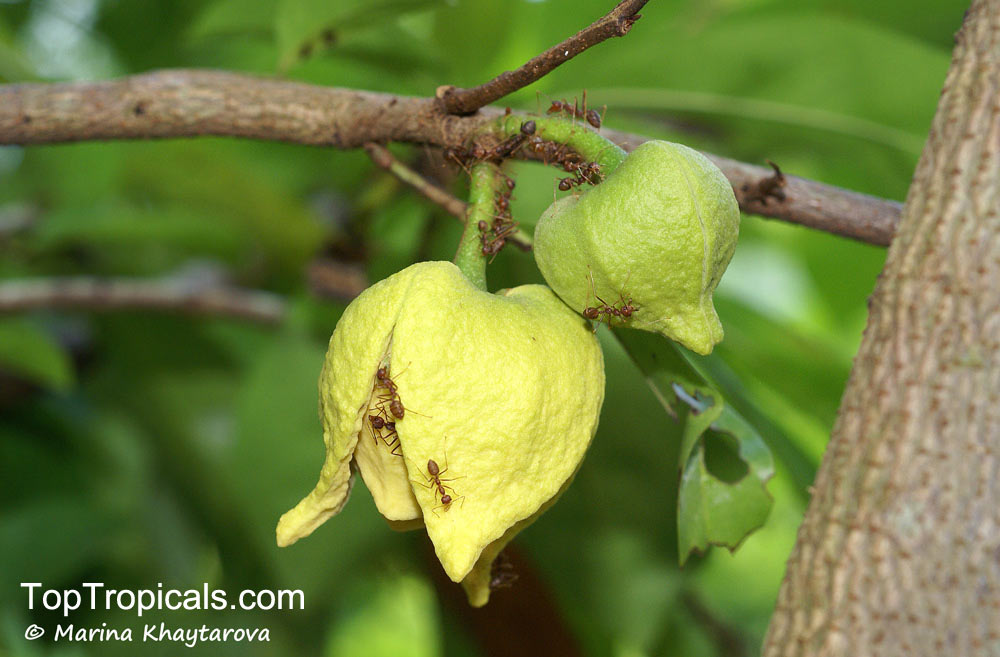
Q: I have ordered dozens of trees from you and have a question about Soursop. I have a Soursop in a container and ants and aphids are under new leaves. Do Soursop like little water? I water almost everyday living in southern Los Angeles it's been around 76-80F. I spray the aphids and ants off with a mist setting on my hose. They come back every day. They're only on new leaves...
A: First of all, you don't have to remove the ants iа they
don't bother you. Ants are good insects, they do not harm plants; most likely
they are attracted by a sweet sap - aphid by-product. Ants clean up a plant,
and they may even take care of some bad insects.
It is not difficult to get rid of aphids. Use a safe treatment: in a
small spray bottle, mix 1 cup of warm water, 1 teaspoon of dish soap and 2
tablespoons of any cooking oil (if you have Neem oil or Horticultural oil - even
better, but prepare, they are pretty stinky). Spray the leaves with this
solution to a dripping point. Repeat in a few days if needed. This simple remedy
will take care of the aphids.
Daily water may be ok for the plant during hot weather, as long as the
soil is not constantly moist. Let the surface of the soil get a little dry
between waterings.
Recommended fertilizers for fruit trees:
Fruit Festival Plant Food - Super Crop Booster
Mango-Food - Smart Release Fruit Tree Booster
SUNSHINE-Honey - for sweeter fruit
SUNSHINE SuperFood - microelement supplement

Date: 24 Jul 2019
Plants that are not for eating
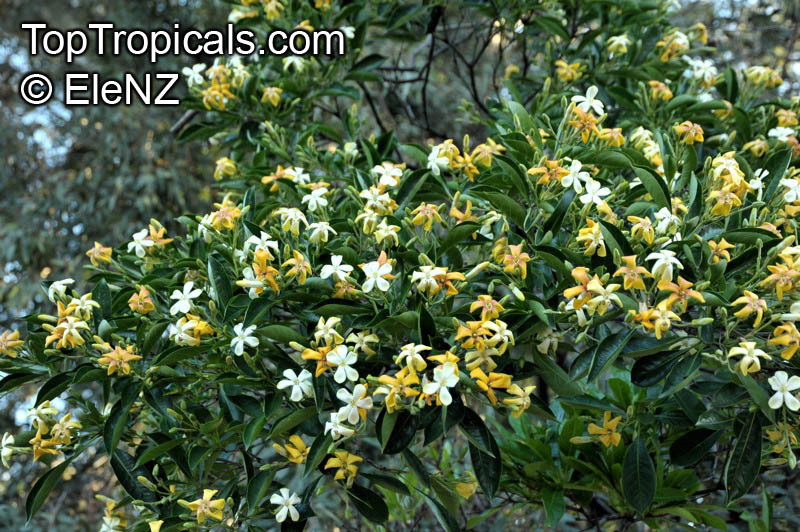
Q: On the website, it says that the pua keni keni tree is toxic. Do you know how toxic? Is it mild irritation or can someone die from ingesting any part of the plant?
A: Pua Keni Keni, Fagraea - seeds (and especially flesh of the fruit) are toxic, so we recommend to always wash your hands after handling them. Obviously, nobody in our team ever tried to eat them to check how toxic they are and if they are deadly.
In general, one must be careful when using plants for purposes other than ornamental growing, especially for consumption. While some obvious edibles (cultivated fruit, vegetables, herbs) are generally safe, but some individuals may have severe reactions - for example, many people are allergic to mangoes; other people may be sensitive to only mango leaves.
A number of plants that have parts commonly consumed for food, have other parts toxic or poisonous. Example: Potato - Solanum tuberosum - has edible tubers feeding the whole planet population, but this plant's fruit is highly toxic and even deadly if eaten. Fruit from a Potato plant look like tiny little green tomatoes since Potato belongs to the same family as Tomato - Nightshade, but it is super poisonous, while Tomato fruit is perfectly edible. So one must watch out and especially educate little children about not tasting anything directly from the garden.
As far as animals concern, in Nature they know what is poisonous and what is edible. Have you ever seen dead birds around a tree with poisonous fruit/seeds? Animals have their own sense for it. So if your concern is for pets, it is normally safe to have pets around plants with irritating or even poisonous parts. However, if your dog has a bad habit of chewing on stuff, you may use extra caution there.
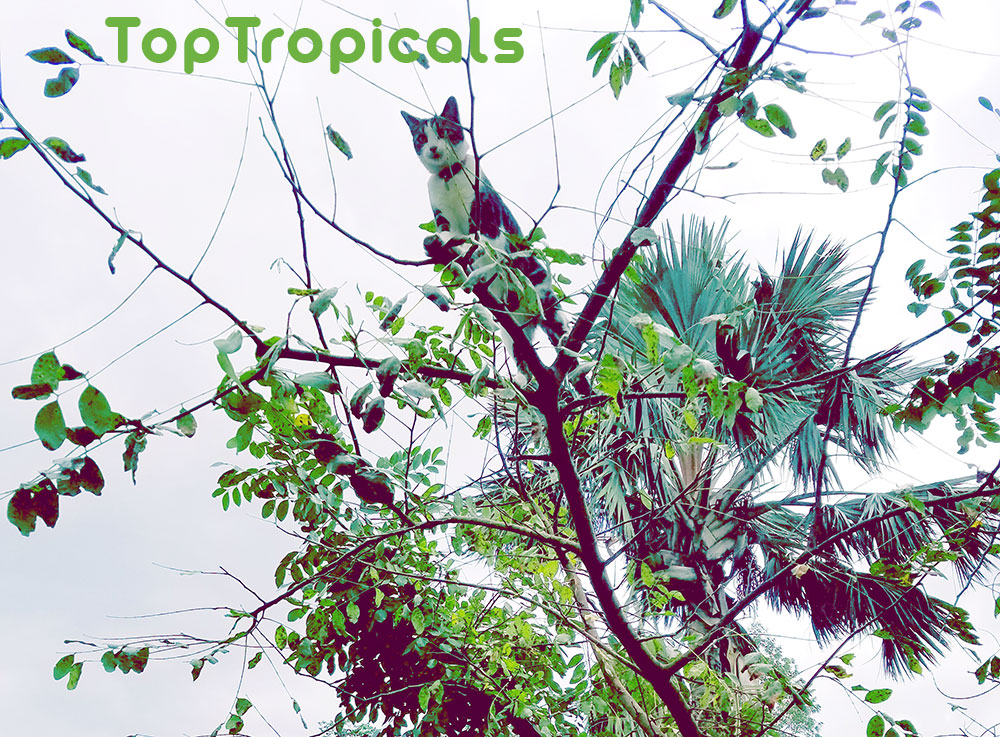
Photo below:
Riki-Tiki-Tavi exploring TopTropicals Gardens.
Date: 25 Jun 2019
How soon will Guava tree fruit?
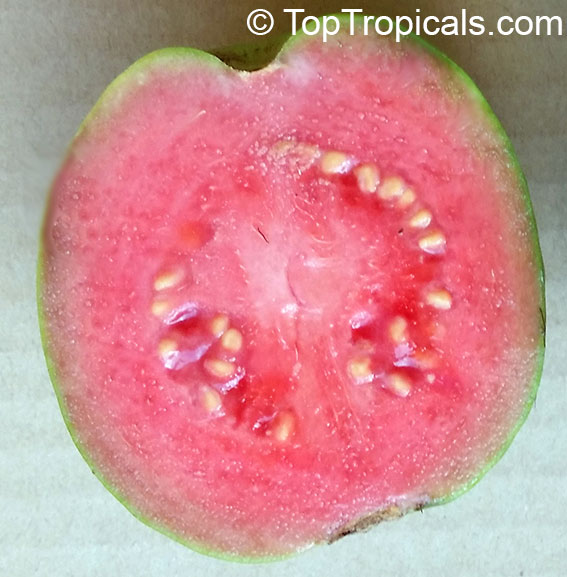
Q: Can you tell me how your Guava trees are propagated? Grown from seed vs. air grafted, etc.? I'm interested especially in the Barbie variety. In particular, I'd like to know how long it takes them to bear fruit - I live in Southern California zone 10b, with good sunlight.
A: Guavas can be propagated by seed, air layers, or grafting.
Propagation method depends on the species.
Cattley guavas - Psidium littorale - are usually grown from seeds and start flowering
and producing as early as in 2-3 years from seed. Tropical guavas, Psidium guajava - especially named varieties, are propagated usually by
air layers, and the rarest varieties like Variegated Honey Moon are often grafted, although they will come true
from seed (it's just takes them longer to fruit). Both air-layered and grafted
plants start producing right away, usually on the same year of planting or
next year, depending on growing conditions.
Barbie Pink is a superior variety, very popular among fruit lovers. It
produces large aromatic fruit with a bright pink pulp and very few seeds. This
variety is air-layered; in our nursery, these plants start flowering and
setting fruit in 3 gal containers.
Plant this tree in full sun and provide regular watering, guavas don't
like to dry out. Use fertile soil, with at least 50% of compost, and add some
soil conditioning components for better drainage: bark, sand, perlite, etc.
Mulch well, just make sure to keep mulch 2-3"away from the trunk. Follow our
detailed planting instructions that come with every plant, and you are good
to go!
Recommended fertilizers:
Fruit Festival Plant Food - Super Crop Booster
Mango-Food - Smart Release Fruit Tree Booster