Garden Blog - Top Tropicals

Date: 22 Mar 2017

Condo Mango

Q: I was curious about indoor fruiting mango trees. I live in upstate New York and was thinking about trying to grow an indoor tree for fruit. I have a small heated greenhouse. Is there a variety that can be grown from seed that would suit my purposes and if not what is the most economical way I could obtain a cutting or small grafted plant? I keep my greenhouse around 60F in the winter and have no supplemental lighting. Are there any varieties that may work in a sunroom or other well lit indoor location?

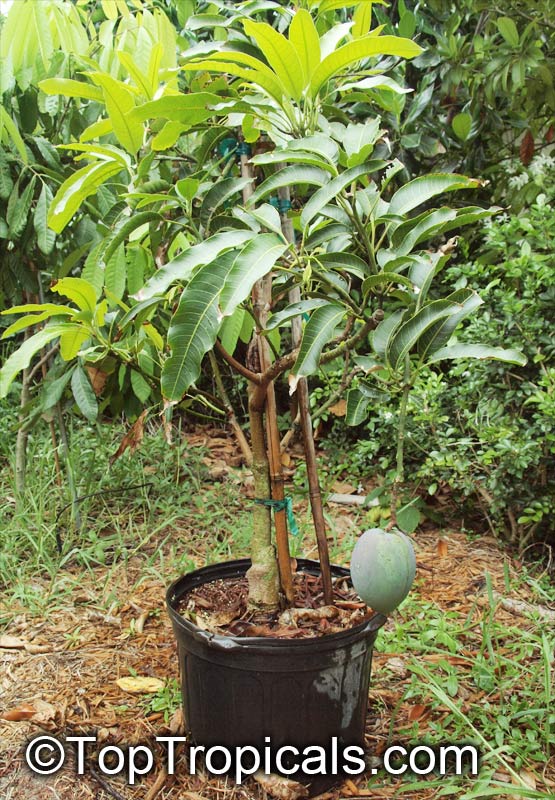
A: There are many dwarf varieties of mango suitable for container culture. They are called "condo mangoes".
The most popular condo varieties are: Carrie, Cogshall, Cushman, Fairchild, Graham, Ice Cream, Julie , Mallika, Nam Doc Mai, Pickering. You may read more about them in our online catalog. You may also look into variety Lancetilla which is also a compact tree, and produces one of the biggest size fruit, up to 5 pounds. If you want some rare variety that hardly anyone else has - try Baptiste, an exotic Haitian dessert mango.

Your greenhouse should work for the winter time. Mango trees can take as low as mid 40s during winter and even lower as long as that cold is occasional. If you keep the temperature around 60, this should work well for over wintering. Just make sure to reduce watering to a minimum, because cool temperatures, low light and wet soil - is a bad combination for tropical plants, especially for mango trees which prefer to be kept on a dry side.

Many indoor gardeners have fruiting mango trees in their collection. However, keep in mind that the most important requirement for a mango is full sun. While you may over winter the plant for a few months in a low light conditions, in order for it to flower and produce fruit it needs lots of light. If moving the tree into full sun your yard during the summer is possible, this would be the best solution.

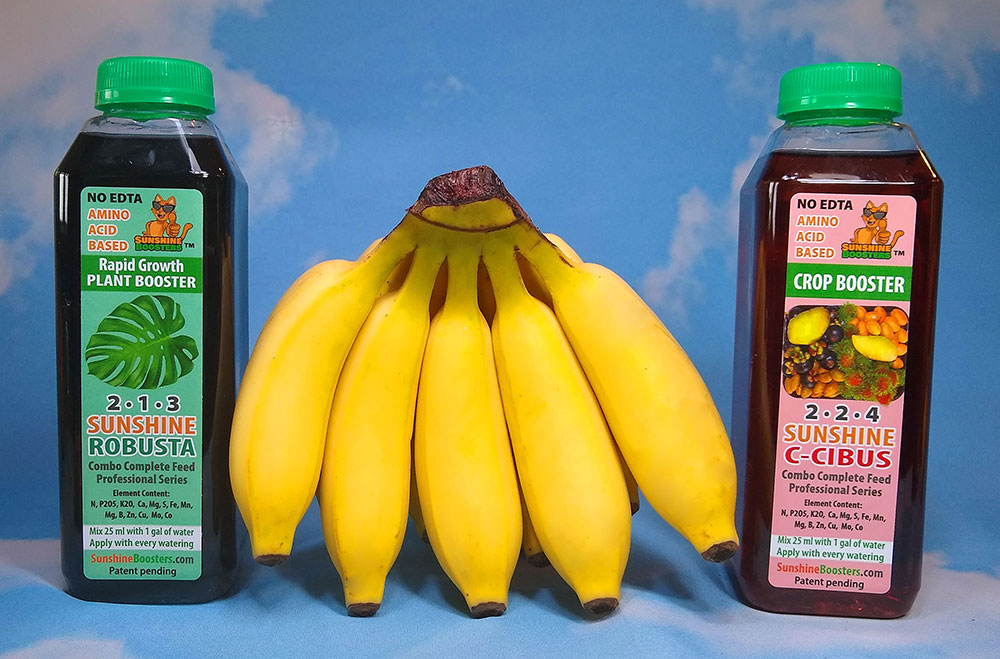
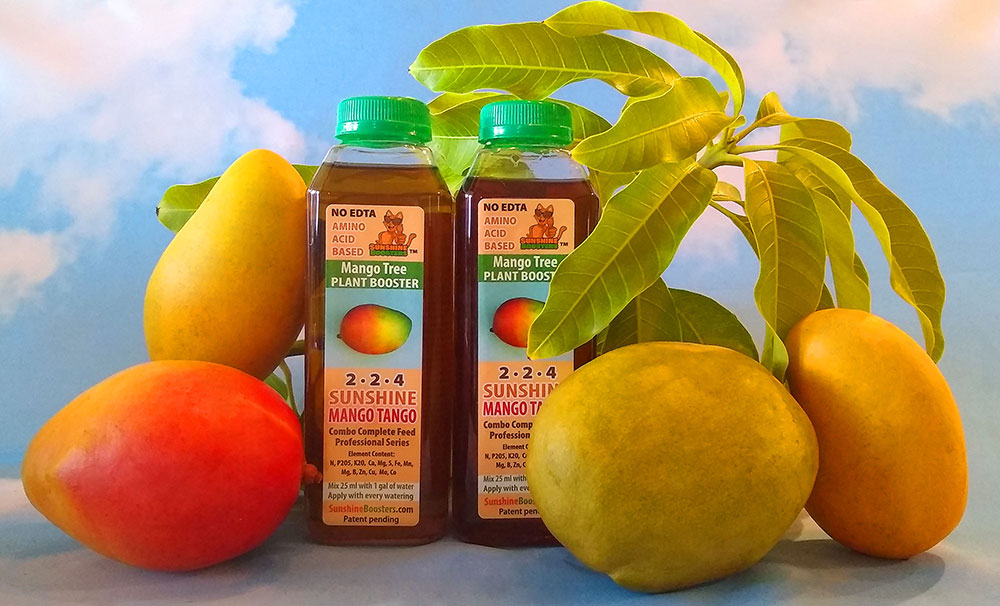
We always recommend SUNSHINE boosters for both over wintering tropical plants in colder climates, and for indoor gardening. SUNSHINE applications will help your tree to cope with cool temperatures and low light conditions. This will also dramatically increase flowering and fruiting performance. Another important factor for keeping your container plant healthy is quality of your potting soil. We offer a special professional mix that contains lots of good stuff: coconut fiber, peat moss, pine bark, and perlite. Fertilizing potted plants is also very important during the warm season, because this is the only way for them to get nutrients (which in the ground can be reached by spreading root system).

As far as seedlings vs. grafting - the only way to have a nicely fruiting mango tree is to plant a grafted variety. Seedlings start producing only after 8-15 years, and the quality of such fruit may be questionable. Only grafted plants can guarantee the desired taste of a variety. Besides, grafted mangoes start producing immediately - you may see fruit forming on plants as small as 3 ft, in 3 gal containers. However, during the first 1-2 years you will need to remove extra fruit and leave only 1-2 fruit so the plant doesn't get exhausted and has enough energy to establish strong root system.

For fun stories about growing mango, check out our Radio Show recording YO Tango Mango!

Date: 25 Sep 2022

Guava, the easiest container fruit tree

Guava  fruit  on  a  branch

Grow Your Own Food

Guava is one of the most popular and well-known tropical fruit because it is so tasty, sweet, juicy and flavorful! Many people are familiar with it because of the large number of products made from this aromatic fruit. But very few people know that Guava tree culture is very easy and this plant can fruit in a pot right away. Guava tree start blooming and producing fruit as small as 1 gal pot size. It can be kept in compact shape, responds well to pruning, stays bushy and grows very fast. It is a perfect container fruit tree or a specimen for a tropical garden of any size.
Upon ripening, the fruit becomes soft and juicy. It may be eaten fresh, made into a juice or nectar contain fruit pulp, or made into preserves, jam, jelly, or paste. A distinctive, savory-fresh aroma of fruit is thermo-stable, thus survives processing. The guava is an excellent source of vitamins C and A.
The plant is relatively cold hardy. Our young trees, 3 months after being planted in the ground were exposed to a short period of freeze last winter (mid-20's) but they grew back without significant damage. Try to keep Guava cold-protected for the first winter, then it will be much hardier once established.
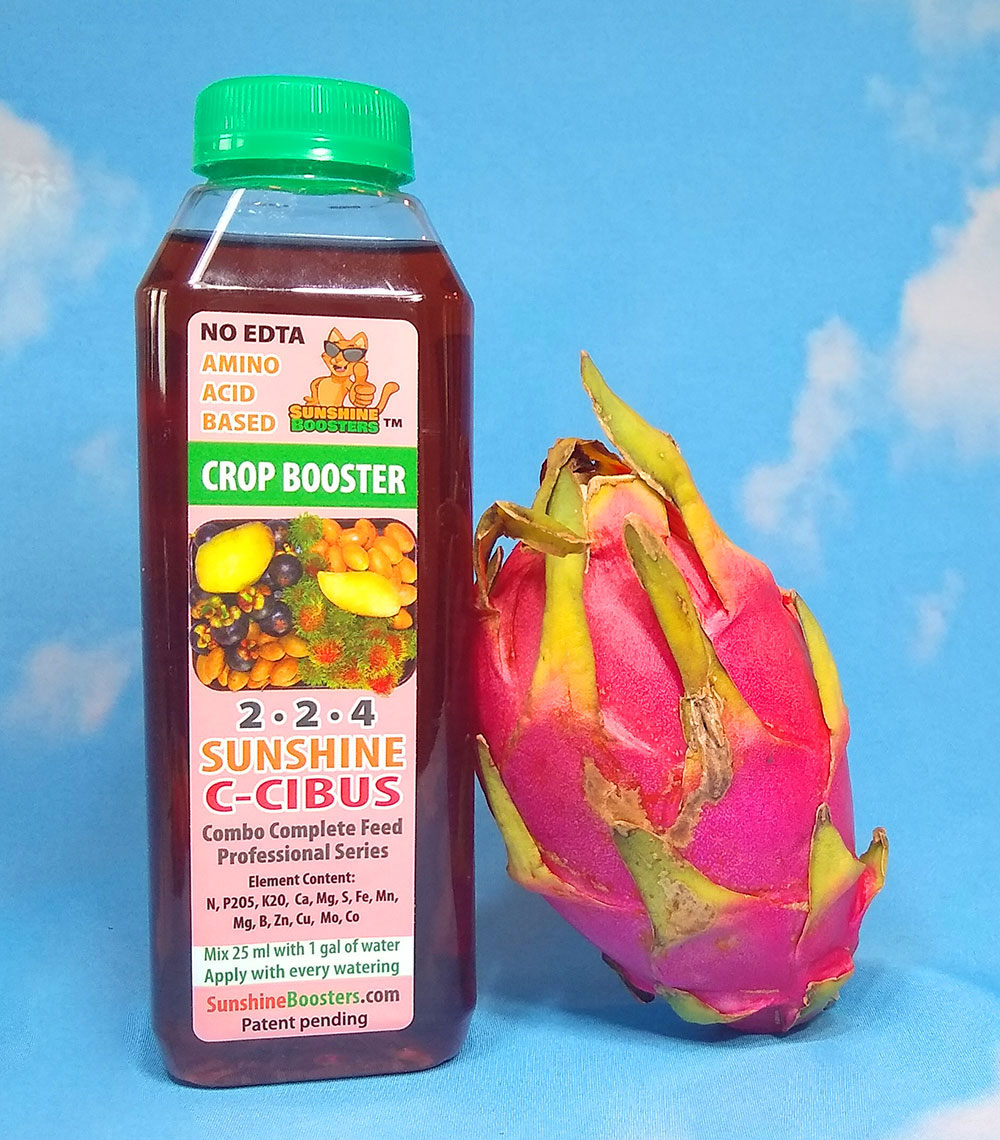
Guavas are fast growers and heavy feeders, and benefit from regular applications of fertilizer. Make sure to get some Sunshine Boosters fertilizer: Sunshine C-Cibus - Crop Booster, and feed them your round.

Guava  tree  fruiting  in  container

Guava  fruit

Date: 22 Aug 2022

What tree will fruit indoors?

Fruit  trees  for  indoor  containers

Q: I love your tropical fruit selection and I wish I lived in a warmer climate. Is there any fruit tree that can be happy indoors during winter and have fruit? I am not expecting a big crop but it would be fun to have a small piece of tropics at home. I don't have much gardening experience, can you suggest something easy for a start?

A: Several tropical fruit trees can be grown indoors, in pots, providing bright light that is necessary for flowering and setting fruit. Among them are many varieties of Bananas, Guavas, Annonas and tropical Cherries - these can be easily maintained in containers. Even dwarf varieties of Avocado and Mango are good candidates for indoor culture. You can bring containers indoors for winter and take outside into full sun during warm months so your plants can store lots of energy in Summer.
The easiest fruit tree for indoor culture that doesn't require bright light and can be grown indoors year around is a Coffee tree. Start with it, it is on sale today! Once you gain some experience, you can upgrade to a Chocolate tree!
Remember, all container grown plants need balanced nutrition program. It can be easily provided with Sunshine Boosters your around. For fruit trees, just add some Sunshine C-Cibus Crop Booster to your cart.

Coffee  video

Buy Coffee Tree

Date: 23 Oct 2020

Cashew Nut tricks and challenges

Q: I bought a cashew plant in May of this year it has been slow-growing well then all of a sudden it started dying. I have cut it back halfway down. So a plant that was close to 3 ft tall is now 1 1/2 feet. I see new leaves trying to spring closer to the root. Help! It's in a huge 18"wide pot, I have not put it in the ground yet. I am in the Orlando area.

A: Generally speaking, Cashew is not the easiest plant to grow. Cutting it down added more stress to the plant. A few thoughts:

1) Chances are, the tree was over-watered (possibly summer rains, we had pretty wet summer this year in FL). Cashew trees are very sensitive to over-watering while young. Considering it sits in pretty large pot, this may have created soggy conditions. Don't bother repotting the plant now, just try to reduce watering. We have less rains now. If you have automatic sprinklers, move it away from sprinkler so you can control moisture manually. Even better - move it under roof (lanai, etc) where it still can get lots of bright light, but you can control water.

2) In Orlando, winters are too cold for this tree. Make sure to protect it from cold - bring inside when temperature drops below 65F, especially considering that the plant is still struggling.

3) Keep in mind that Cashew is semi-deciduous tree, meaning it looses leaves during cooler period. If all leaves are gone but the stem still green (after nail scratch) - just give it time, it may start growing vigorously in Spring.

4) You may apply Sunshine Boosters with every watering (which should be once a week, or even less frequent if the soil is still moist) - SUNSHINE C-Cibus - Crop Nutrition Booster

Keep the plant in full sun or at least very bright filtered light. It must be always warm. Bring inside if below 65F.

Date: 15 May 2020

Harvesting from a young mango tree

Q: About a year ago we bought a mango tree from you folks and planted it in our backyard in Estero. It has done well. It now has several mangoes and I am wondering if the tree is strong enough to support the fruit or if I should just cut off the fruit and wait until next year when the tree is a bit stronger. I am attaching some pictures. I am most concerned about the branch on the right which seems to be sagging. If you do not suggest that I cut off the fruit, can I wait until they ripen on the tree and eat them. They seem to be a bit on the small side for eating.

A: Your mango tree looks very healthy and happy, congratulation with a great job! For young mango trees, it is always recommended to minimize a number of fruit to 2-3 so the tree has enough energy for vegetative growth rather than fruiting. In your case, as we can see from the pictures, your tree is very well established, has a strong root system, nice symmetrical shape, and vigorous new growth. In our opinion, you can save all these fruit and let them ripen on the tree. To support the plant's energy, make sure to fertilize it during summer with slow-release Mango Food, and year around - with Mango Tango booster. Use Sunshine Honey supplement for sweeter fruit.
Secure the heavy fruit branch with a v-shape stake (a big branch may work), it can definitely use the support otherwise may break under strong Florida winds. You are all set to enjoy your first crop and be rewarded with fruit of your excellent work!

In the photo above: Mr B is harvesting Mango Pim Seng Mun after his successful Sunshine Boosters