Date: 11 Sep 2020
The best Loquat varieties with big, sweet fruit
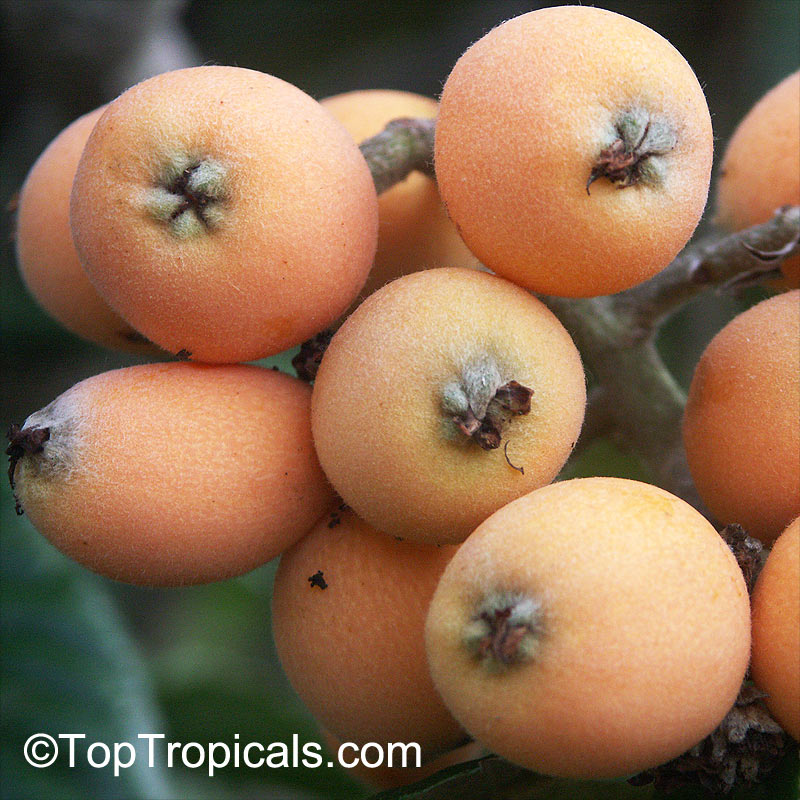
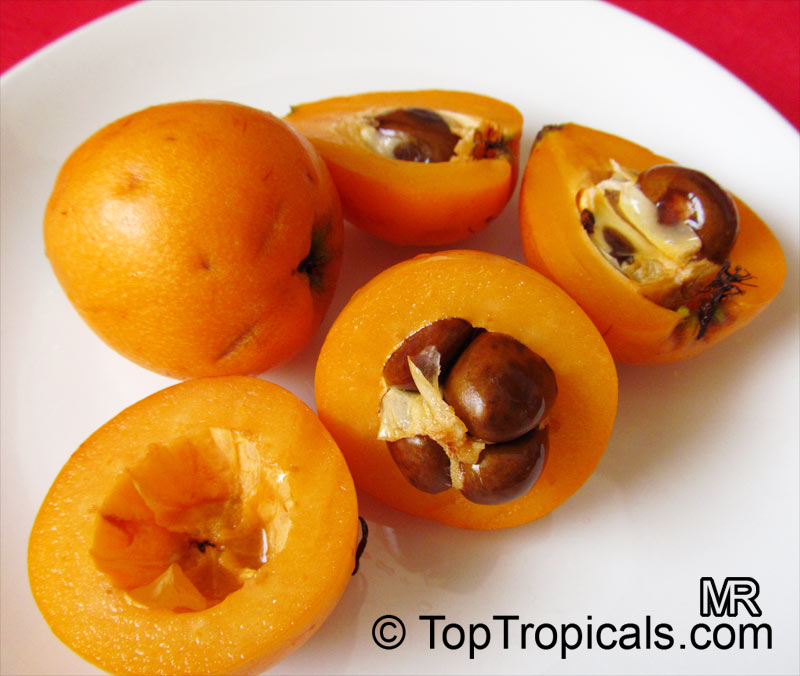
Q: I'm interested in loquat and read through the varieties you offer but wanted your recommendation. I'm looking for a variety that is big, sweet (not tart) with 1 seed. Of the varieties you offer... Which variety would you recommend?
A: From our experience, the most popular Loquat variety is Christmas.
It is an early ripening type hence the name Christmas. Fruits are very large
for a loquat, they are bright yellow with a tangy apricot flavor.
Another good variety we recommend is Yehuda - it has a large fruit and very small seed
Also, variety Oliver for many years has been considered the best loquat for South
Florida. The fruiting season is March to May. It has medium to large fruit. The
fruit is very sweet with only one-two seeds.
Loquats are very cold hardy tropical fruit trees, easy to grow, drought
tolerant, fast growing. Fruit is great for eating fresh or making jam.
Check them out while they are on sale!

Date: 25 Jun 2020
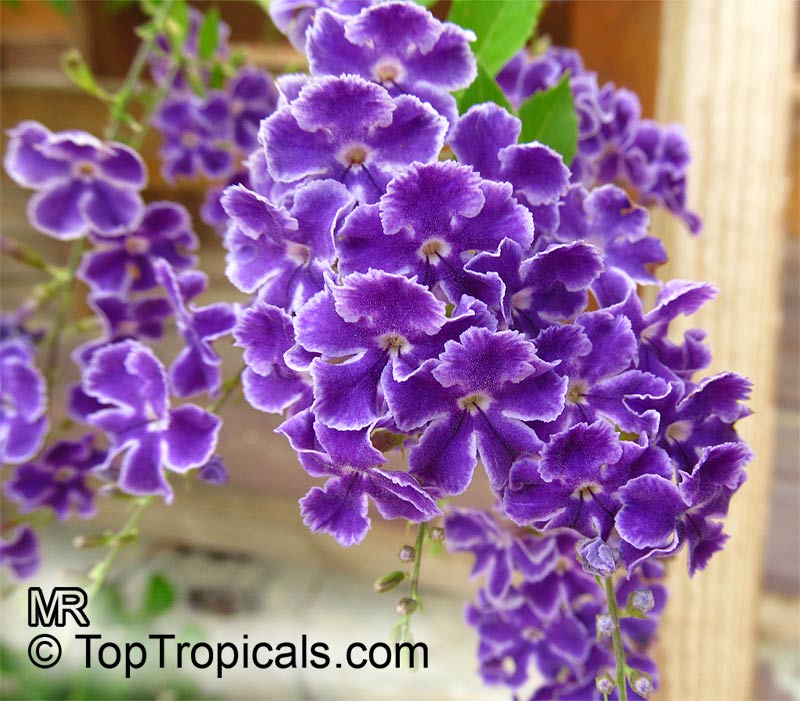
Plant of the Month: Golden Dewdrop - Duranta erecta
Stevie's Pick: what's in bloom?
Our exotic plant grower Steven Gowdy is featuring the most interesting plants he discovers and recommends today while working in TopTropicals greenhouses.
Duranta - Golden Dewdrop - is simply stunning with cascading flowers in
abundance. Either it has lavender, blue, or solid white flowers, it is a
sight to behold. The popular name Golden Dewdrop is inspired by the clusters of
bright orange-yellow berries that follow the flowers, in such quantities that
they often cause the slender branches to droop gracefully.
Duranta erecta blooms off and on all year and can be pruned to size as a
bush or a standard tree. If let go, it can grow up to 20 feet tall and wide.
Durantas are excellent butterfly and hummingbird attractors. They will
complement your tropical garden or a stand alone in your Southern landscape.
Great for providing a color contrast in the landscape, they are especially
well-suited as a bright-colored background or screening.
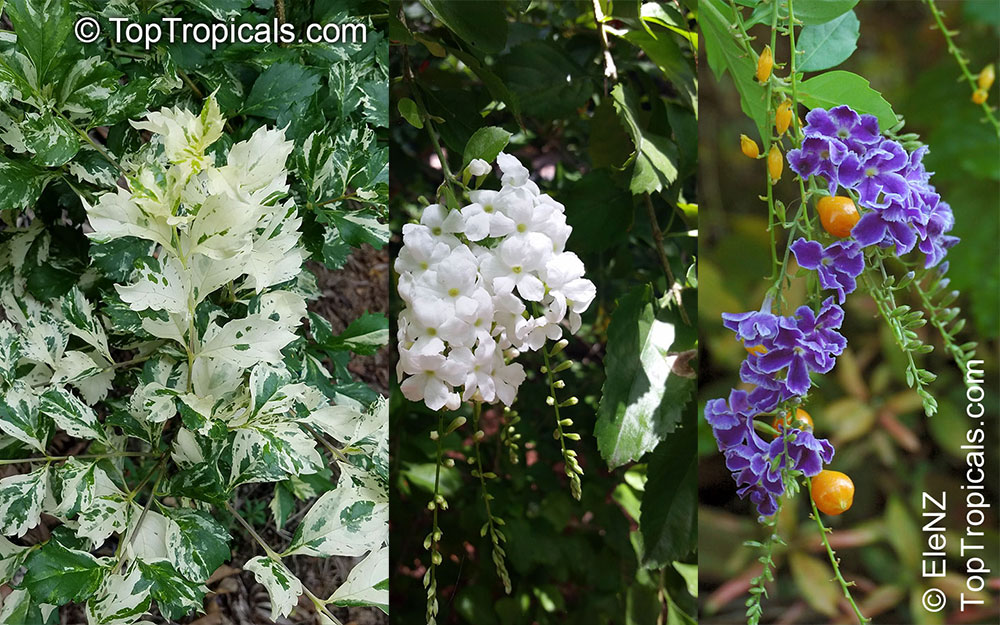
White
Golden Dewdrop has pure white flowers that appear in loose clusters, and
both berries and blossoms are often seen on a plant. This evergreen fast
growing shrub spreads and arches to 10 feet tall and wide and is great for live
hedges and covering fences and corners.
Variegated variety, also called Variegated Sky Flower, is grown for its summer flowers, and very showy
leaves that are dark green with bright white variegation and creamy-yellow
margins around the one inch long serrated leaves.. In the summer, cascading
clusters of blue tubular flowers appear followed by wonderfully contrasting
orange-yellow berries.
In mild climates, Durantas can be in flower nearly year round with flowers
and fruit appearing at the same time. It does best in full sun with frequent
deep watering and is pretty hardy, to about 20-25F. It is a good choice for
espaliers, as a small tree or large bush; all forms benefit from frequent
selective pruning. Prune back in late-winter to encourage a more compact shape
and strong flush of fresh spring foliage. Requires moderate watering in a
well-drained soil.
Date: 20 Dec 2019
Plumeria cold protection
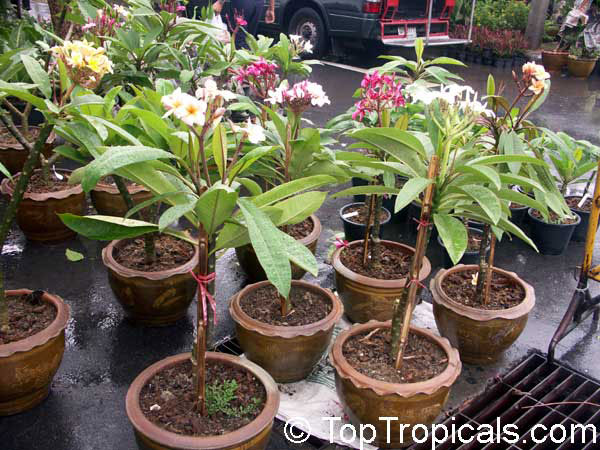
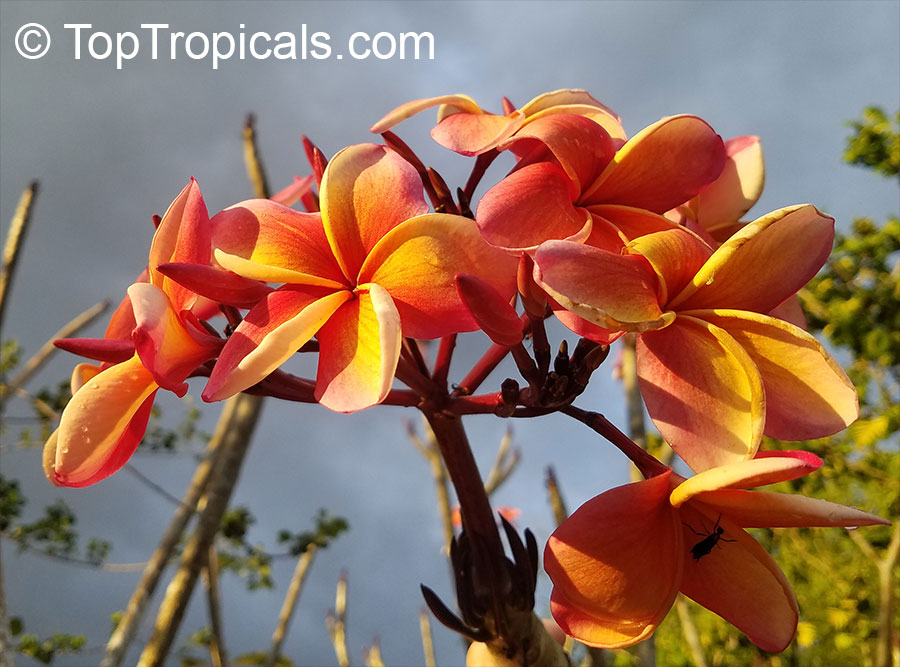
Q: We have a purple-flowering plumeria which resides on our sunny deck during the warm months and then Winter vacations on our back porch where we can close the plastic film windows and where it stays above 50 degrees (overnite) until it can get moved outside again. We live in zone 8+ in South Carolina and I would love to plant it outside. Do you think if we ghost-covered it when alerted that we would have an overnite freeze, that it would survive being planted in the ground and recover to flower when warm? I don't believe the soil in our yard has ever frozen below the top 1/2 inch or so, and never for more than a few hours at a time. What do you think?
A: Plumerias are tropical plants, which means, they need frost-free environment. Even if the ground is frozen only on "the top ½" or so"- this may be enough to kill the plant. From our experience, plumerias can withstand a few hours of windchill frost (not frozen soil), but even if they survive, they may get some branches damage, and recovery may take so long that the plant may not even bloom the next year. So I wouldn't take that risk even with a ghost-cover cold protection. We have customers who grow tropical plants in the ground in colder areas, but they have greenhouse protection: this means, the soil is warm and the air temperature is maintained above 45-50F. For example, this Greenhouse in Virginia.
We recommend to continue growing your rare plumeria in container and
move it inside when temperatures drop below 50F (recommended) and for sure when
they drop below freezing. Plumeria can take a cold night (a few hours of
upper 30's) as long as it is followed by a nice warm sunny afternoon with at
least upper 50s. Otherwise, keep it indoors. The good news is, since plumerias
are deciduous and have no leaves in winter, low light level won't affect the
plant.
Just make sure to minimize watering and keep the plant on a dry side
until it starts growing new leaves in Spring. You may continue fertilizing once
a week with half-doze of Sunshine boosters - Sunshine TotalFeed. This will maintain the plant healthy and prepare
for the blooming season in Spring.
Date: 17 May 2019
Grafted Guanabana - what is the trick?
Q:Should I buy grafted Guanabana or a seedling? It is a big price difference. I have heard that Annonas fruit within 3 years from seed, why do I need a grafted tree?
A: Annona muricata - Guanabana, or Soursop - is known as the best tasting
Annona fruit. Many fruit lovers and gardeners want to have this tree in their
plant collection, and the first question they always ask is: "How soon will
it fruit? I can't wait to enjoy its deliciousness!"
Most Annonas start flowering and fruiting at a young age, 3-4 years from
seed. Annona muricata seedling takes longer. You may read more information on
how to grow Guanabanas from seed, even in a pot, even indoors - in Tropical Treasures Magazine issue # 7. Although it may take up to 15
years to see the fruit...
Now we have a solution to get this fruit sooner - a grafted tree! It
will fruit within a year after planting. The secret of grafting Guanabana was
almost lost (it's a tricky one to graft) and grafted plants were nearly
impossible to find. Now we have them! Quantities are limited.
Keep in mind that Guanabana is very cold sensitive and won't tolerate
even light freeze. However it is still relatively easy to grow even in
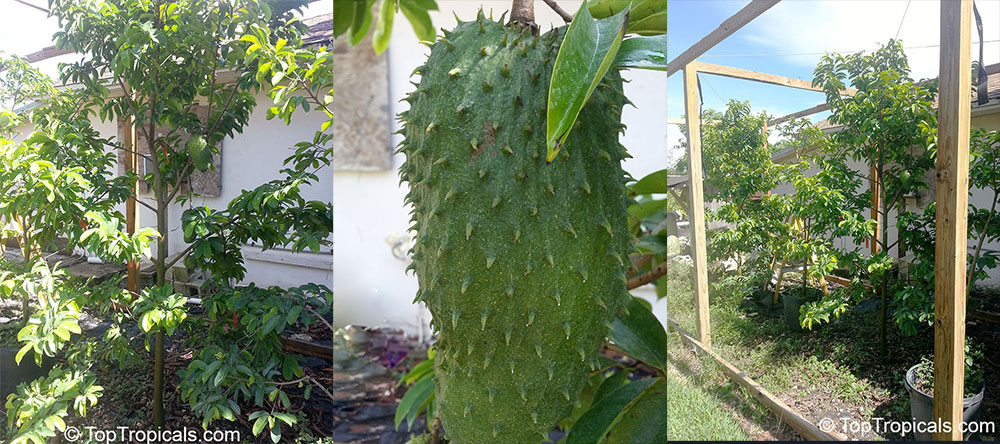
subtropical areas: the tree is small, and if tree grown in ground, a simple cold
protection structure can be built around it using basic wood or pipes (metal or
PVC) and covered with plastic for a few weeks of cold weather. Grafted
Guanabana is also a perfect choice for container culture (hand-pollinating maybe
required).
Photo: This grafted tree was planted less than a year ago, and was covered in winter with cold protection for about 8 weeks. Within a year, it has 4 large fruit on it!

Date: 16 Jan 2019
Climate change is wiping out the Baobab, Africa's tree of life...
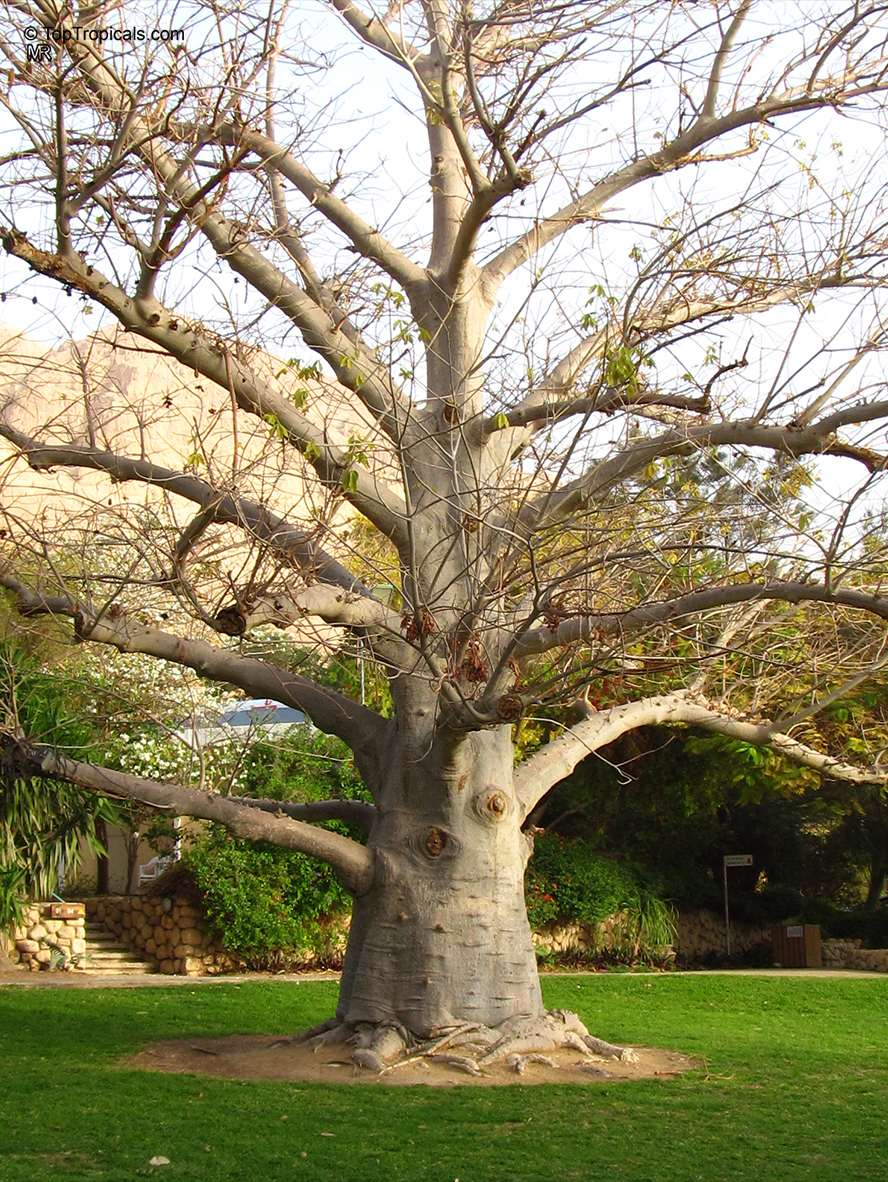
According to The Guardian News and Media, Africa's "tree of life" may not have much
longer left... These highly important species are threatened with
extinction, due to climate change and human development. Some species may not survive
the next century. While plants have generally adapted to extended droughts,
climate change is different, and with the Anthropocene, we are already
witnessing the loss of these impressive trees. Africa's largest, oldest inhabitants,
that have played silent witness to numerous generations, are already paying a
heavy price for the environmental crimes of foreign lands.
Baobab forms an integral part in people's livelihoods. In West Africa,
it is also called the "palaver tree" because of its social functions: when
there is a problem in the community, meeting under the Baobab tree with the
chief or the tribesmen would be synonymous with trying to find a solution to
that problem; it reinforces trust and respect among members of the community.
Its extinction would not simply be an environmental tragedy...
Every tropical gardener should have a Baobab to help to save this amazing species for the planet!