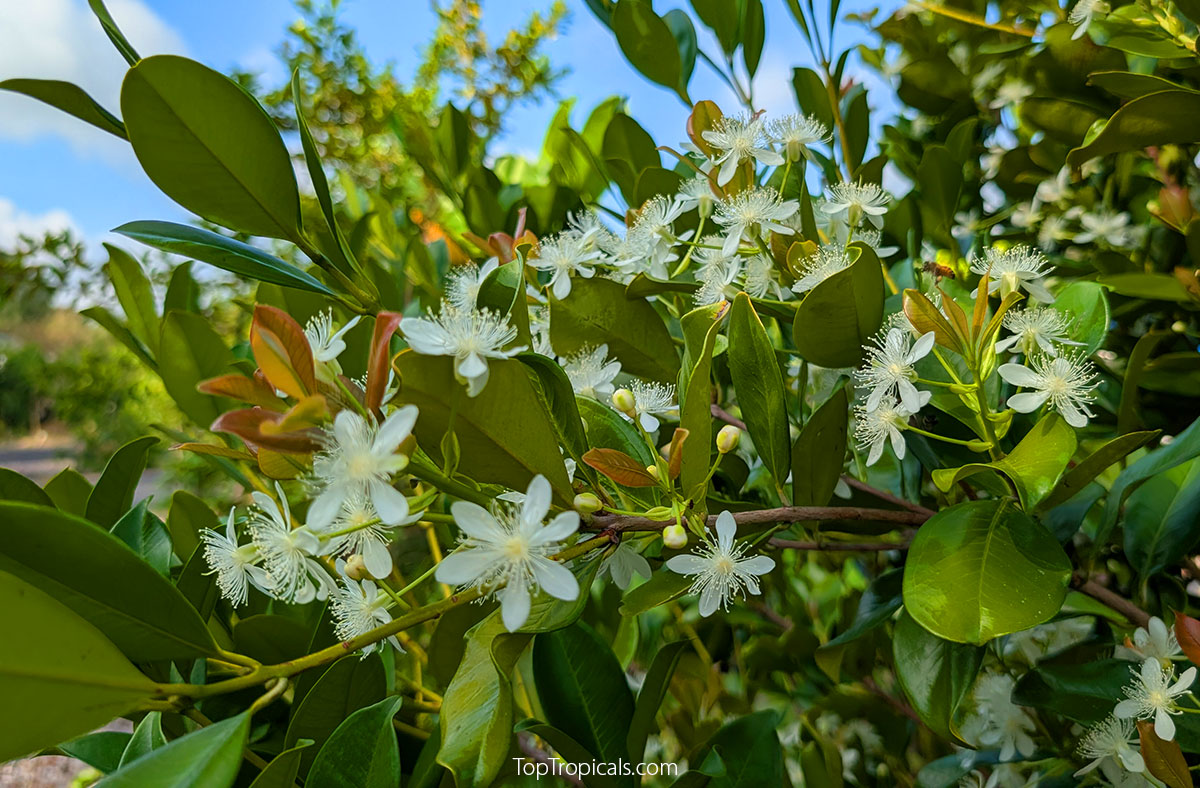
If you're looking for a fruit tree that does it all - gorgeous looks,
amazing flavor, and nonstop production - meet Grumichama - Eugenia brasiliensis, the tropical cherry you'll fall in
love with! The cherries are glossy, deep purple-black, and unbelievably juicy.
One bite and you're hooked - sweet, smooth, with hints of cherry, grape, and
plum.
Grumichama is our favorite tropical cherry at Top Tropicals. So good,
you'll eat one… then a handful… then half the tree! Grumichama is
perfect for beginners - tough, forgiving, and super productive. Cold hardy to
the upper 20s. It takes heat, partial shade, even salt spray. It thrives in a
pot or in the ground and can produce up to 500 fruits per tree!
Start your food forest with Grumichama. It's easy. It's beautiful. The
most addictive fruit!
Stay updated with TopTropicals Videos by subscribing to our channel at
YouTube.com/TopTropicals
and get our latest video news of what is fruiting and blooming!
If you only know dragon fruit from the grocery store, you probably think
it looks pretty but tastes bland. That is because most commercial fruit is
picked early, shipped far, and loses its sweetness. The truth? Homegrown
dragon fruit is juicy, sweet, and full of flavor. The best of all is the
yellow
variety, Palora
(Selenicereus megalanthus), a cactus fruit from Ecuador that bursts
with tropical taste.
🌵 Pitaya or Dragon fruit – what is the difference?
Both names describe the same climbing cactus. In Latin America it is
called Pitaya, while Asia and English speakers say Dragon fruit. There are
three
main kinds:
Some hybrids give purple or magenta flesh. All are beautiful, all are
easy to grow at home.
⚡️ Do
red, white, and yellow taste different?
Yes. White types are mild and refreshing. Reds are sweeter and juicier.
Yellows are the sweetest of all.
⚡️
Flowers from a fairy tale
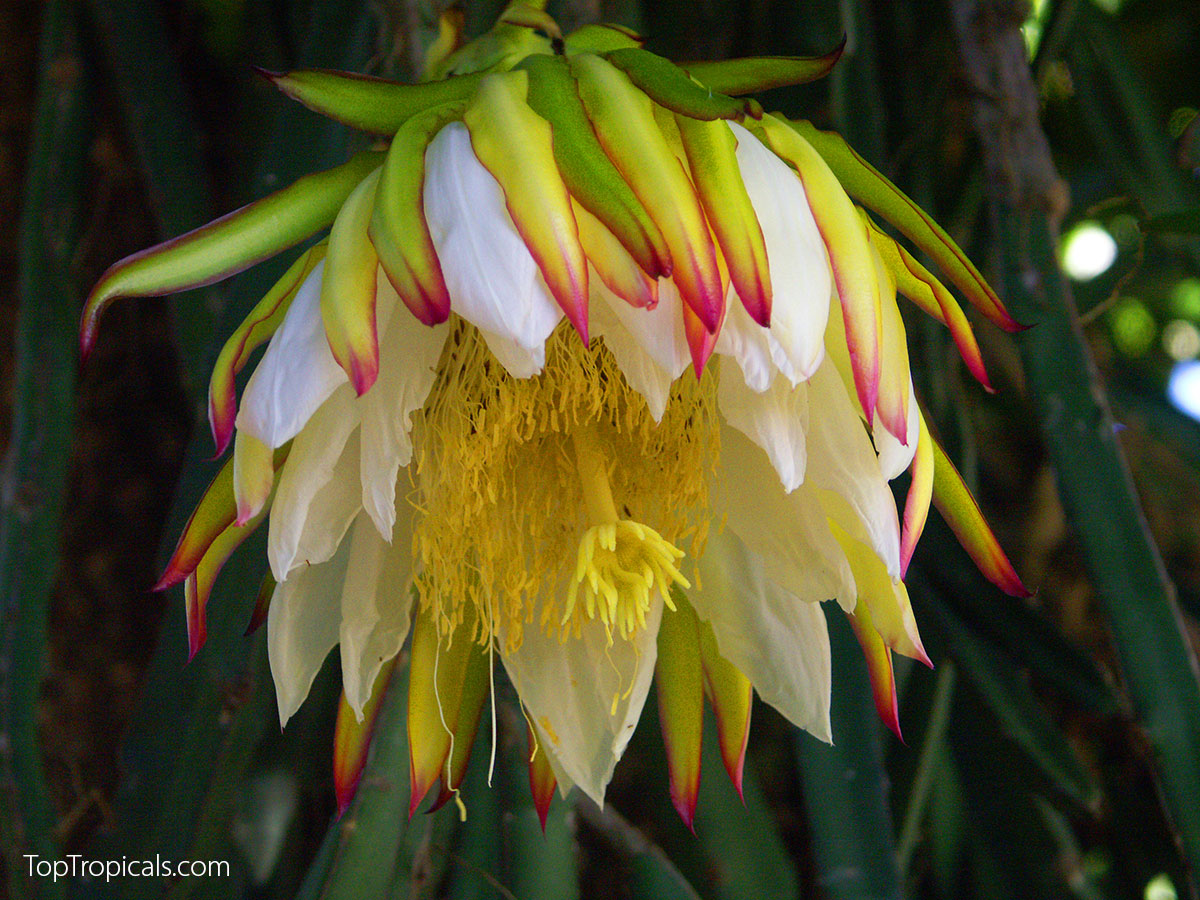
Dragon fruit flowers are among the most spectacular in the plant world.
They open at night, glowing under moonlight, with pale petals and a sweet
fragrance. Each flower can be a foot wide. Seeing one bloom feels like
stepping
into another world.
⚡️ Top
Dragon Fruit Health Benefits
High in fiber for digestion and gut health
Low in calories but full of vitamins
Great for weight management
Adds color and freshness to smoothies and salads
🍹
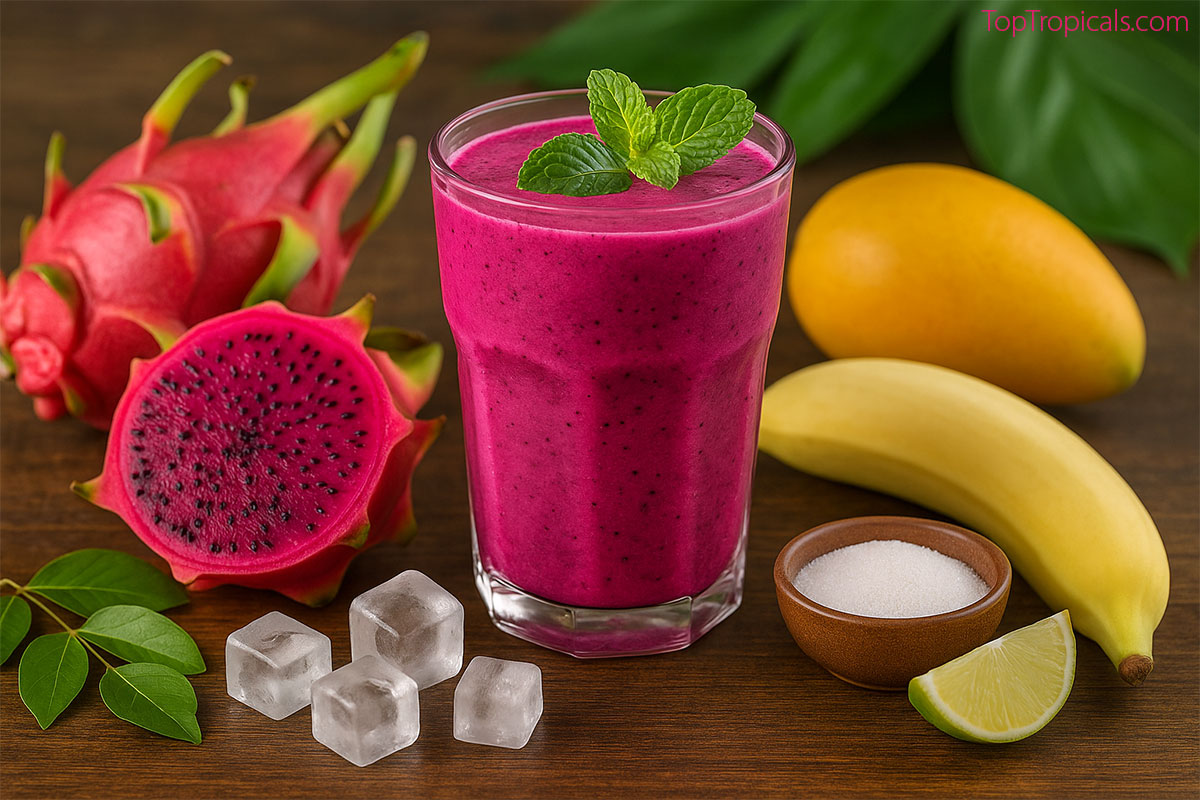
Dragon Fruit Smoothie recipe
Blend together:
2 dragon fruits, peeled
1/2 cup mango pulp
1 banana
1 cup milk of your choice
2 tbsp sugar
1/2 tsp lime juice
Ice cubes to taste
Top with mint for a refreshing tropical treat.
Watch
Dragon Fruit short videos:
💲
Special Offer – 25% off Dragon Fruit Pitaya Plants!
Get 25% OFF Pitaya plants with code
DRAGON2025
Min order $100. Excluding S/H, valid online only,
cannot be combined with other offers.
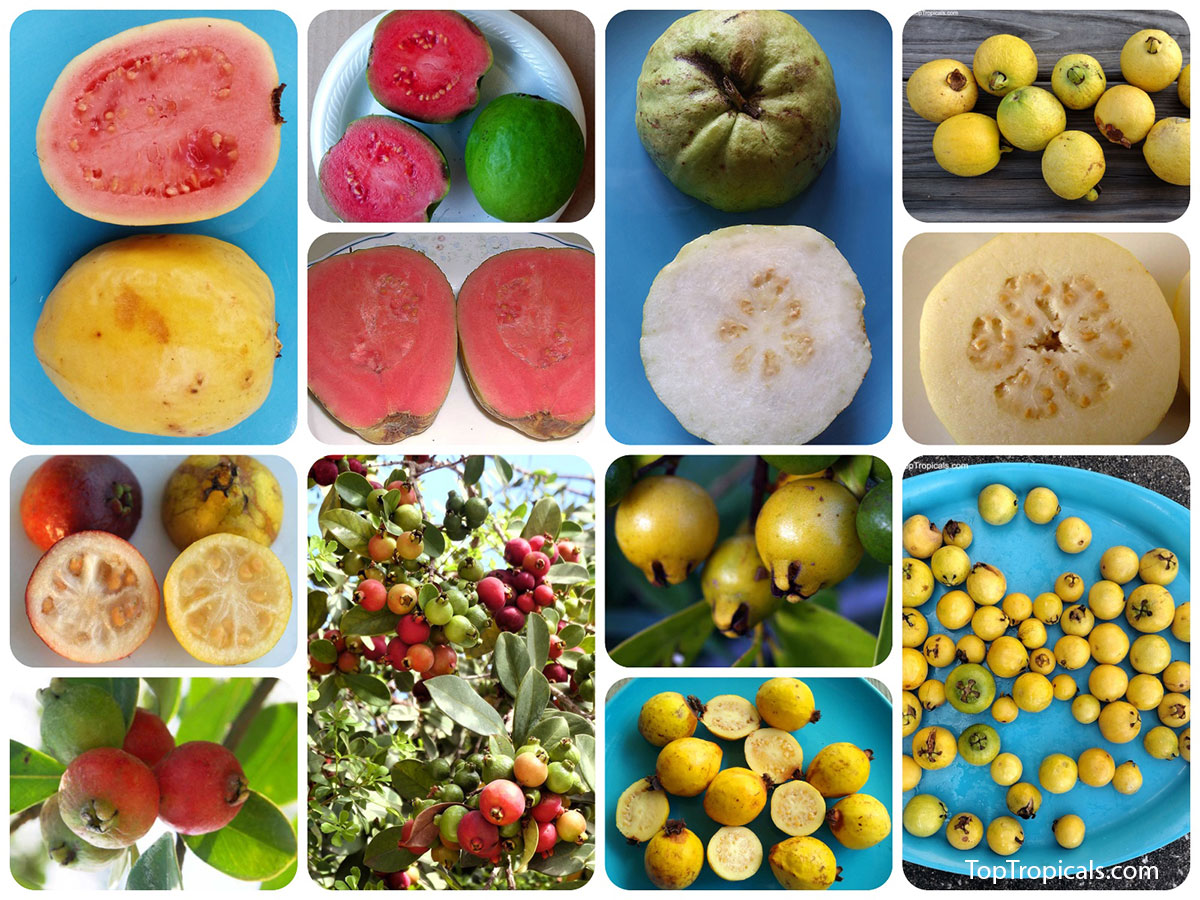
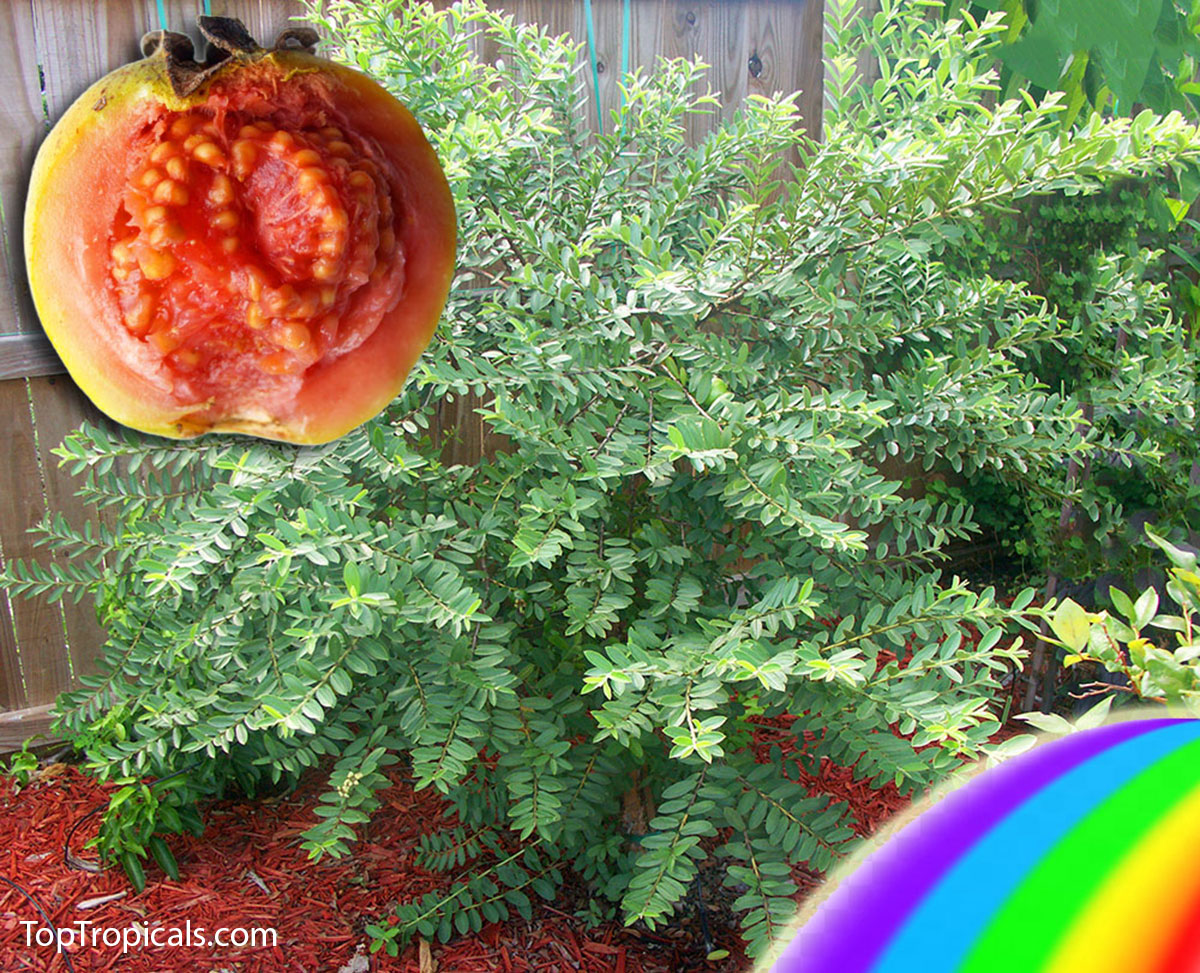
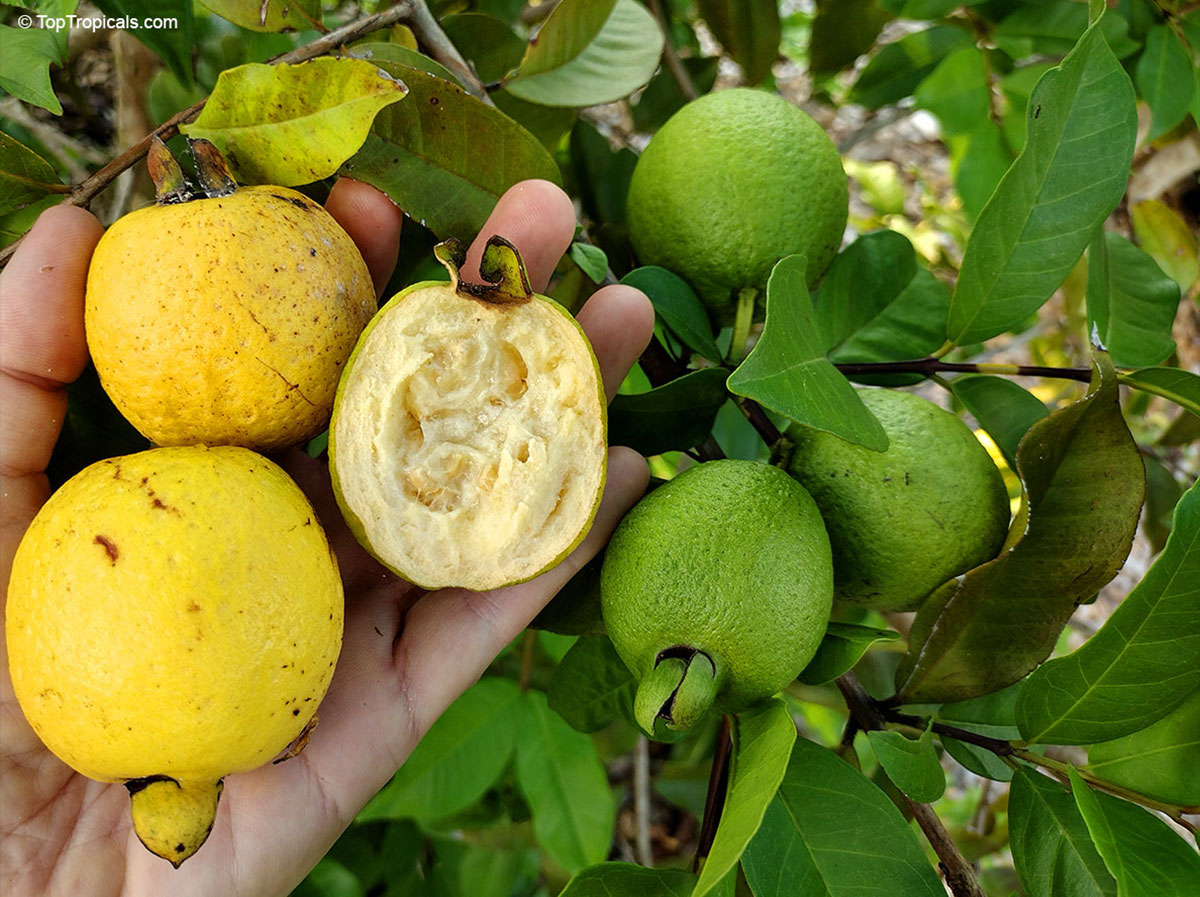
Guava varieties: Pink flesh (upper left quarter), White flesh and Cas
(upper right quarter), Red Cattley Guava (bottom left quarter) and Golden
Cattley (bottom right quarter).
Let’s talk Guava. Few fruits check as many boxes: flavor,
productivity, health, and adaptability. We’ve grown guava trees at Top
Tropicals for years here in Florida, and it never fails to surprise people
with how
easy it is — and how quickly it rewards you.
🌿 Health Benefits
We know the first question:"Why guava in addition to all the other
fruit trees I could plant?"Because guava is one of the healthiest tropical
fruits you can eat and grow — and it produces faster than almost
anything
else.
Vitamin C powerhouse — guava has four times more vitamin C than
oranges. One fruit covers your daily needs and then some.
Potassium and fiber — good for balancing blood pressure and
keeping your heart strong.
Antioxidants like lycopene and vitamin C — these keep your skin
glowing and help protect your cells from damage.
Dietary fiber — aids digestion and helps keep blood sugar
steady.
Guava is a true"food as medicine"tree you can plant right in your
backyard or in pot.
♥️ Our Favorite Varieties are Available Now
We currently have a DOZEN excellent guava varieties in stock selected by
our plant expert Tatiana Anderson — something special for every
garden. Our top picks are:
Pink Guavas
Barbie Pink
– Yellow pear-shaped fruit with thick pink flesh, sweet and juicy.
Cold
hardy for a tropical fruit. The best seller.
Hong Kong
– Large, round, smooth pink fruit. Sweet flavor, very few seeds, and
very
productive.
Tikal
– Our top pick. Fast-growing, disease-resistant, and produces the
sweetest
pink guavas with very few seeds.
White Guavas
Indonesian White
– Aromatic, classic white-fleshed guava with an excellent
tropical flavor.
Kilo White
– Giant fruit up to 2 lbs (1 kilo) each! Few seeds, creamy white
flesh,
and fruits even in containers.
Brazilian Araca
Pera – Rare hybrid used for Guava Wine in Brazil. Tart,
concentrated juice makes excellent wine, sorbet, or jelly. Learn more...
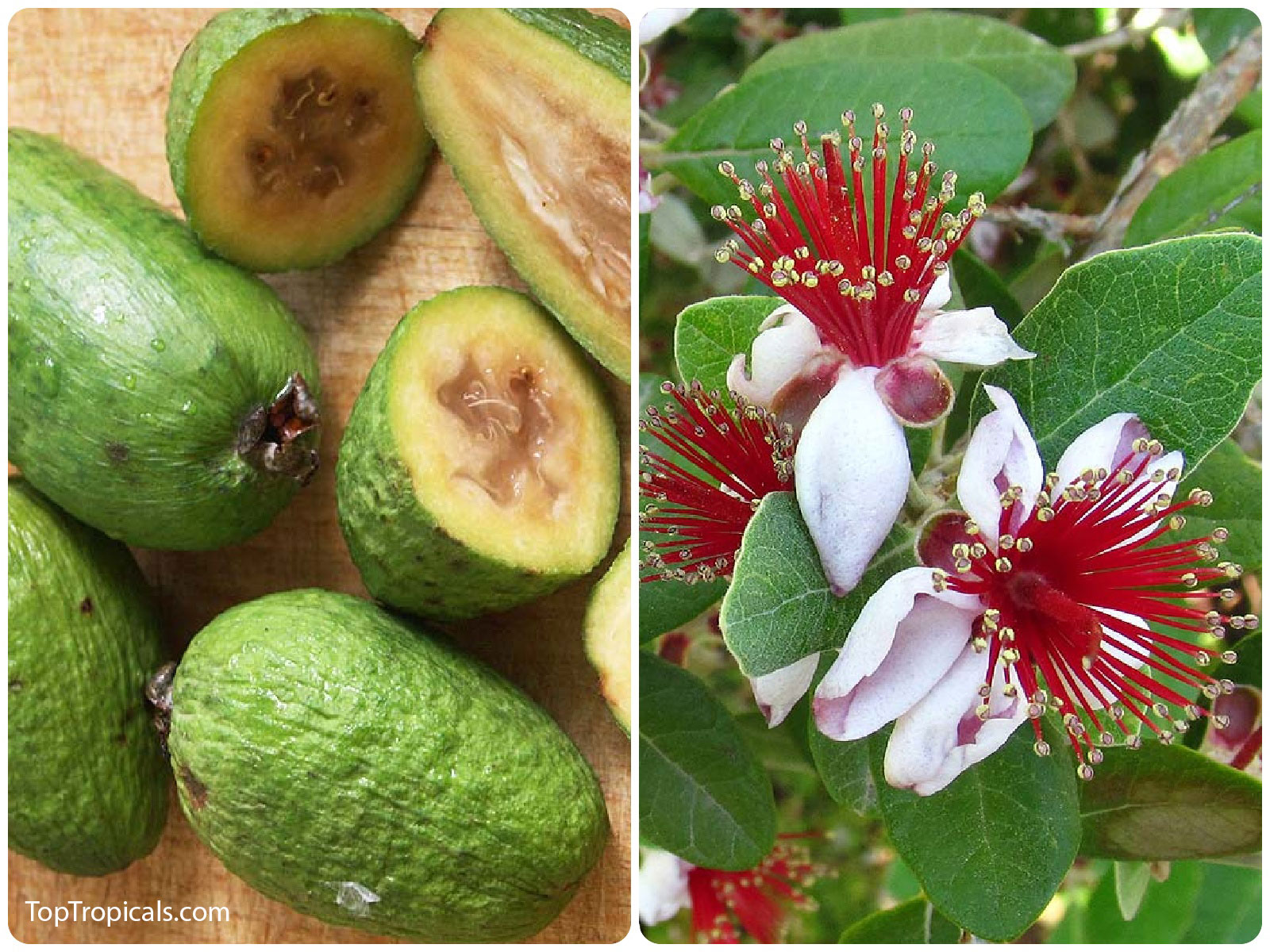
Pineapple Guava,
Guavasteen – Feijoa sellowiana. Strongly perfumed fruit, best
enjoyed when the pulp is mixed with sugar – like forest strawberries.
Cold-hardy, tolerates freeze, and doubles as a great windbreak. Learn more...
Why starting tropicals from seed indoors is better than outside?
Q: I am in
Texas, it is getting cold, but I bought these seeds the last two packs, as I
didn't want to miss them, was looking for a long time and found you had
them. Should I wait until spring to plant them?
A: You can
grow tropical plants from seed year round and don't have to wait until warm
weather outside. It is, in fact, beneficial to start tropicals indoors in a
controlled temperature, moisture and humidity. Seeds of some species are very
sensitive to excess water and/or require a certain range of temperature for
germination... Besides, it's so much fun!
First, read the basics: Happy Hobby: growing tropicals from seeds
Advantages of indoor growing from seed
It is easier to keep under control indoors:
1) Temperature and Light. Although many tropical seeds require
higher temperature and bright light for germination (hot sun may help), it may
be hard to avoid overheating and drying out when you put trays in full sun.
Using heat pads and additional lighting indoors makes germination smooth, even
may take a little longer than in hot sun.
2) Soil moisture. If you ever lost your seeds or tiny seedlings
to a heavy summer rain, you sure will appreciate your own moisture-controlled
environment! Just make sure to use the right soil mix.
3) Air humidity. Indoor air is drier than outside. It may not be
best for some tropical plants, but definitely perfect for seed health - they
will never get moldy considering you keep your eye on the plantings.
4) Pre-treatment. Some seeds require scarification (sanding down
hard shell), others stratification (cold treatment), but all seeds will
benefit from
SUNSHINE-S soak before planting. It is easier to do in your home lab.
Based on our experience, using Sunshine pre-treatment reduces the risk of
fungal damage and improves germination from 30 to 65%.
5) After germination culture. Watching seedlings closely in your
home environment and giving them all that is needed for healthy, fast growth
- miscroelements and first fertilizer - will help to establish young plants just in time before
planting them out in Spring-Summer.
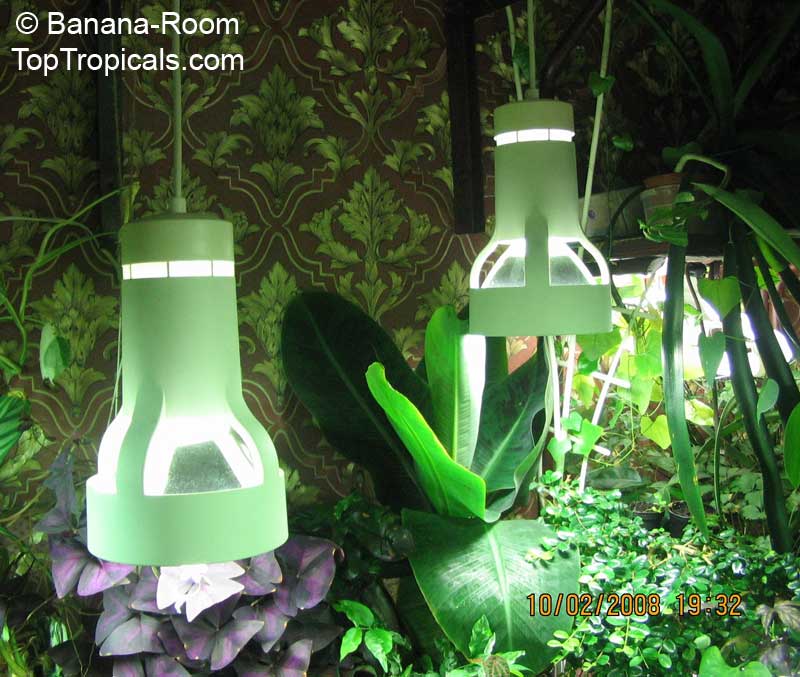
Lighting for overwintering tropical plants indoors
Q: Days
are getting shorter and darker... I brought my tropical plants indoors for
overwintering (I live in Atlanta, GA). Could you give me some advice on what
lamps should I use for additional lighting of my plants?
A: Indoor
plants are very unlucky: they have to grow in"caves,"and everybody knows
that plants don't grow in the caves. The luckiest plants win sunny windowsills,
but even there they dwell rather like in underbrush under tall trees, where
the sun illuminate them only early in the morning or in the evening, and its
light is diffused by foliage.
Usually domestic plants are in desperate lack of illumination not only
in winter, but also in summer. No light - no growth, no flowering. So, plants
need extra light to compensate the lack of illumination in the"room-cave"
conditions.
Before you will start any practical actions to help your plants, you
need first to decide whether you are going to set an additional illumination,
or provide full lamplight. In the case of just additional illumination, rather
inexpensive luminescent lamps will do, and you don't have to think about
their spectrum. Continue reading...