Garden Blog - Top Tropicals

Date: 16 Sep 2019

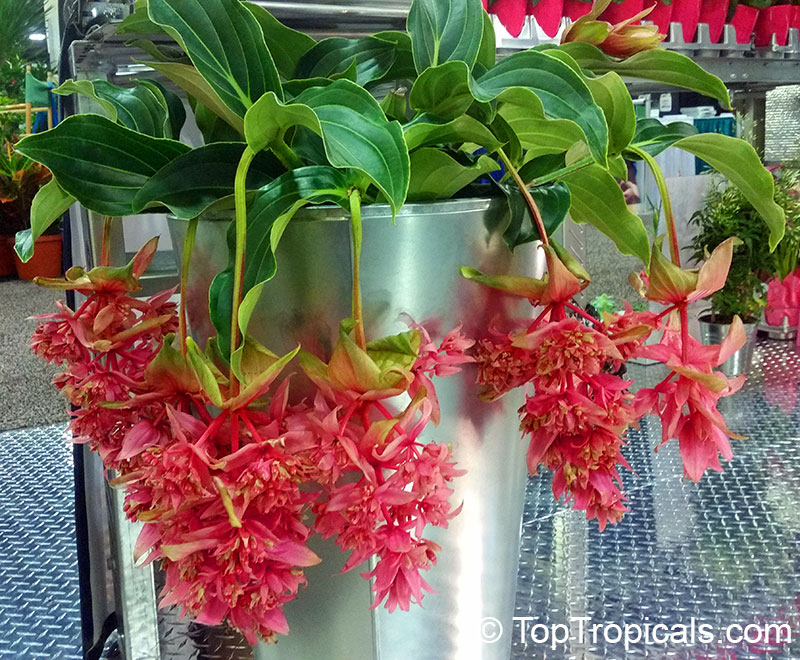
What pot is good for Medinilla?

Q: I just acquired a Medinilla plant. I have a cylindrical tall clay pot that I would like to repot this beauty into. Would like to know if a deep pot is good for this type of tropical plants even if the medium is lightweight with bark and perlite allowing adequate drainage. Would appreciate your advice.

A: Medinillas are very close to epiphytes, meaning they like high air humidity and very good soil drainage characteristics. Clay pots usually provide good air circulation, as long as they are not glazed. If you add a lot of soil conditioner into your mix, like orchid mix and perlite, the tall pot will provide a good drainage. Tall pot is also great for displaying the beautiful pendulous blooms!

Plastic pots work well too, as long as you provide a well-drained soil for the plant. If a nursery plastic pot is not pretty enough, you may place it in a fancy planter; however, make sure never let the pot sit in water, Medinillas do not like wet feet.

Date: 12 Sep 2019

Shipping live plants
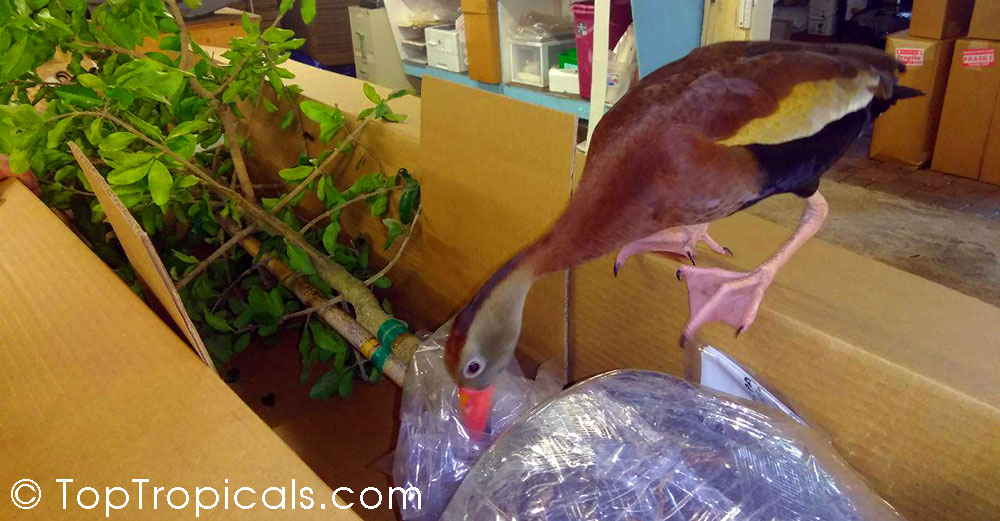
Q: I am a rare plant collector and very impressed with your plants selection that I can not find in our local nurseries in California. I have never ordered plants online before and wonder how they make it through the trip and do you suggest any special care to help plants with recovery?

A: Shipping live plant in a box for several days is definitely a challenge both for a plant and for a grower. After many years of experience packing/shipping plants we learned how to make that trip a success. Thanks to our special packing techniques, breaking during shipping happens very rarely. However, in order for the plant to recover well from normal shipping stress, some special attention required from a customer too. You will receive care instructions with your order. Make sure to follow them thoroughly, otherwise you may put your plants at risk. These are a few factors to consider that affect your plant during transit. They may cause the following symptoms of shipping stress:

1. Lack of light. Complete darkness in a box is opposite to a bright light that the plant was used to. After 2-3 days it may cause leaf drop. If this happens, make sure to reduce watering. Less leaves means less evaporation, and a plant can't use excessive water which may cause root rot.

2. Extreme temperature. Hot summer or cold winter temperatures may put a tender tropical plant into serious shock. Usually the only time when temperature may affect the package is when it is left outside on your doorstep. Watch out for delivery by tracking the package with a number we provide in shipping confirmation email.

3. Dry air and lack of water. When packing plants, we saturate root ball and then wrap it tightly in plastic so normally your plant will have enough water supply for a 3-4 day trip unless there are unexpected delays. In a special package, the plant usually has enough of humid environment around the leaves, especially if there are several plants together. However if the box was exposed to heat it may dry out, and this will cause yellowing and/or drying leaves. In most cases this is not critical; cut damaged leaves and new growth will appear soon.

The shipping stress symptoms are normal and once you apply some extra attention and love, your plants will recover sooner than you think. Be patient, don't push with too much water or light, keep warm, in bright shade, and do not fertilize until the plant shows new growth.

Remember to always use SUNSHINE Epi - a natural bio-stimulant that helps stressed plants to recover quickly!

Date: 13 Aug 2019

Caring of Soursop in container

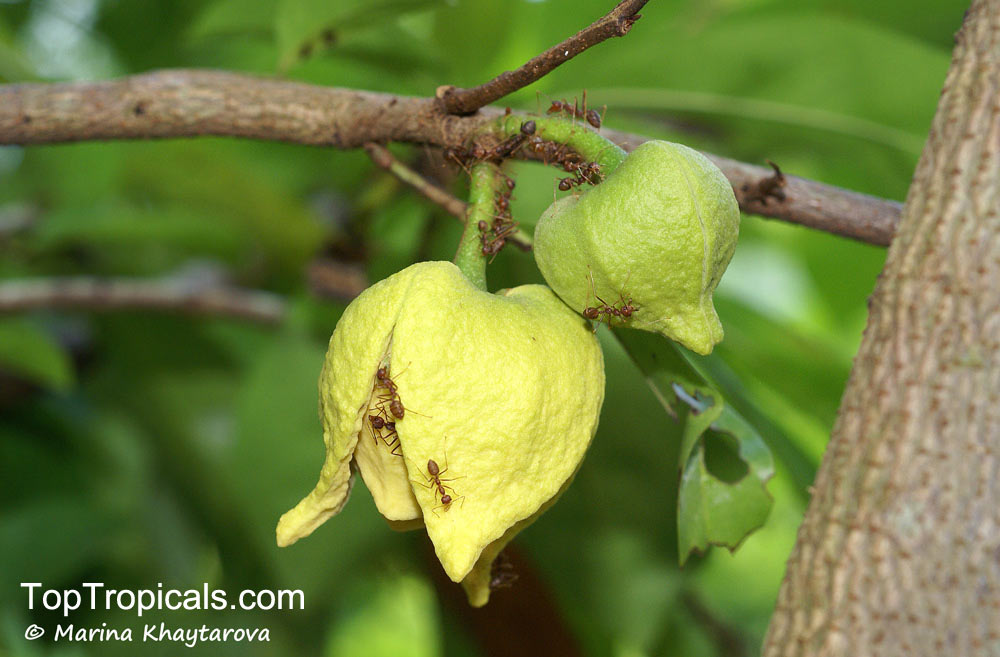
Q: I have ordered dozens of trees from you and have a question about Soursop. I have a Soursop in a container and ants and aphids are under new leaves. Do Soursop like little water? I water almost everyday living in southern Los Angeles it's been around 76-80F. I spray the aphids and ants off with a mist setting on my hose. They come back every day. They're only on new leaves...

A: First of all, you don't have to remove the ants iа they don't bother you. Ants are good insects, they do not harm plants; most likely they are attracted by a sweet sap - aphid by-product. Ants clean up a plant, and they may even take care of some bad insects.
It is not difficult to get rid of aphids. Use a safe treatment: in a small spray bottle, mix 1 cup of warm water, 1 teaspoon of dish soap and 2 tablespoons of any cooking oil (if you have Neem oil or Horticultural oil - even better, but prepare, they are pretty stinky). Spray the leaves with this solution to a dripping point. Repeat in a few days if needed. This simple remedy will take care of the aphids.
Daily water may be ok for the plant during hot weather, as long as the soil is not constantly moist. Let the surface of the soil get a little dry between waterings.

Recommended fertilizers for fruit trees:

Fruit Festival Plant Food - Super Crop Booster
Mango-Food - Smart Release Fruit Tree Booster
SUNSHINE-Honey - for sweeter fruit
SUNSHINE SuperFood - microelement supplement

Date: 8 Aug 2019

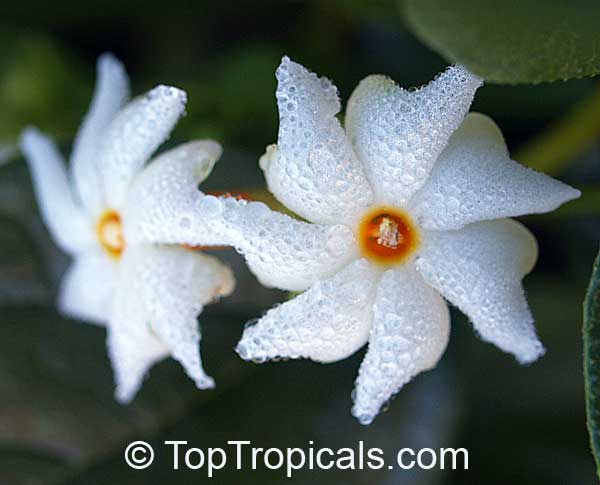
How to grow Parijat indoors in winter

Q: I purchased Parijat plant last year spring. It had good growth in Summer, after that I kept the plant inside the house in winter. A couple of weeks it was ok, after that the plant lost leaves. What is a better idea for growing Parijat plant indoors in Winter?

A: Nyctanthes arbor-tristis, Parijat - is a semi-deciduous plant, which means, it may lose its leaves during unfavorable conditions such as drought, cold, low light and/or humidity. In your case, the plant dropped leaves because of the stress of moving indoors that includes reducing light and humidity levels. When a tropical plant loses leaves during winter, this means it goes into a dormant stage. If this happens, you need to reduce watering and keep the plant on a dry side, water in only when the top level of the soil feels dry to touch. Do not fertilize.
Try to place the plant in a well-lit spot such as a windowsill. If the windowsill and the window glass feel too cold for touch during wintertime, you may place a sheet of a Styrofoam underneath the pot, and a sheet of a bubble-wrap between the plant and the window glass, to create an extra barrier from cold. The plant may re-leaf during wintertime; if not, it may wait until spring, be patient.
Bring it back into outdoor light when minimum temperatures rise above 65F and resume fertilizing.

Recommended fertilizers for fragrant plants:

Pink N Good Daily Plant Food - Flower Booster
Plumeria Top Dress - Smart-Release Booster
SUNSHINE SuperFood - microelement supplement

Date: 24 Jul 2019

Plants that are not for eating

Q: On the website, it says that the pua keni keni tree is toxic. Do you know how toxic? Is it mild irritation or can someone die from ingesting any part of the plant?

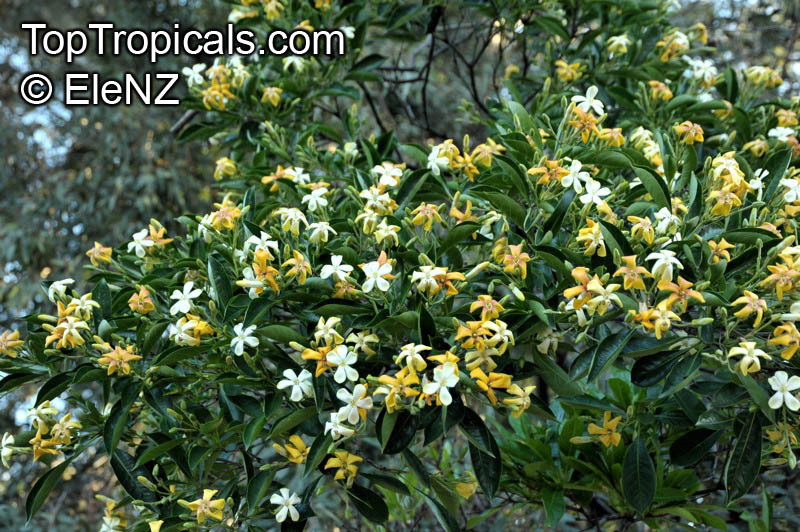
A: Pua Keni Keni, Fagraea - seeds (and especially flesh of the fruit) are toxic, so we recommend to always wash your hands after handling them. Obviously, nobody in our team ever tried to eat them to check how toxic they are and if they are deadly.

In general, one must be careful when using plants for purposes other than ornamental growing, especially for consumption. While some obvious edibles (cultivated fruit, vegetables, herbs) are generally safe, but some individuals may have severe reactions - for example, many people are allergic to mangoes; other people may be sensitive to only mango leaves.

A number of plants that have parts commonly consumed for food, have other parts toxic or poisonous. Example: Potato - Solanum tuberosum - has edible tubers feeding the whole planet population, but this plant's fruit is highly toxic and even deadly if eaten. Fruit from a Potato plant look like tiny little green tomatoes since Potato belongs to the same family as Tomato - Nightshade, but it is super poisonous, while Tomato fruit is perfectly edible. So one must watch out and especially educate little children about not tasting anything directly from the garden.

As far as animals concern, in Nature they know what is poisonous and what is edible. Have you ever seen dead birds around a tree with poisonous fruit/seeds? Animals have their own sense for it. So if your concern is for pets, it is normally safe to have pets around plants with irritating or even poisonous parts. However, if your dog has a bad habit of chewing on stuff, you may use extra caution there.

Photo below:

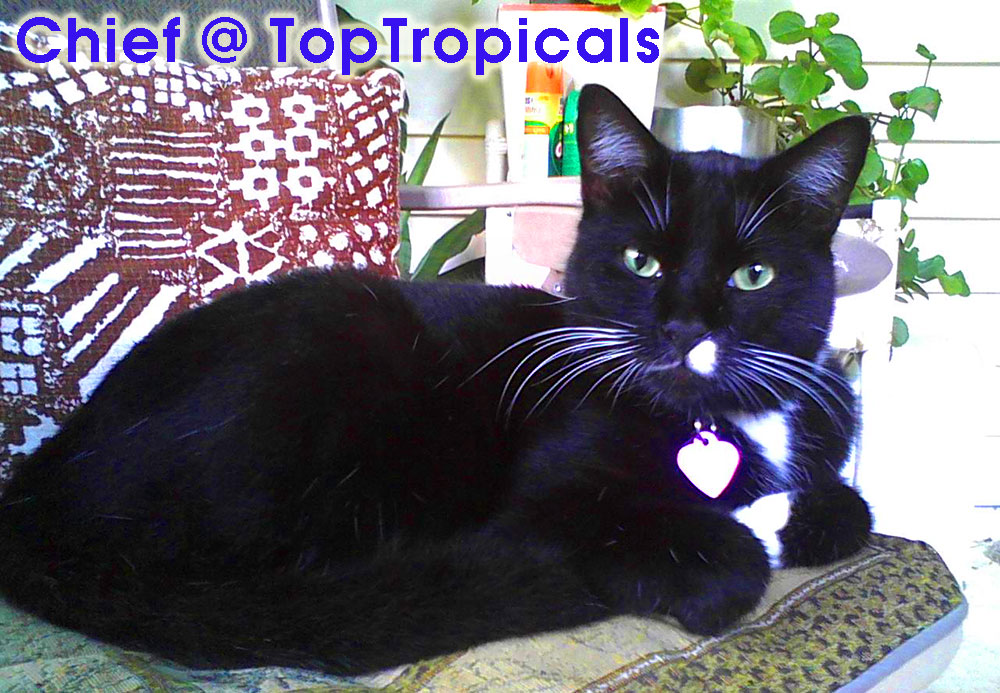
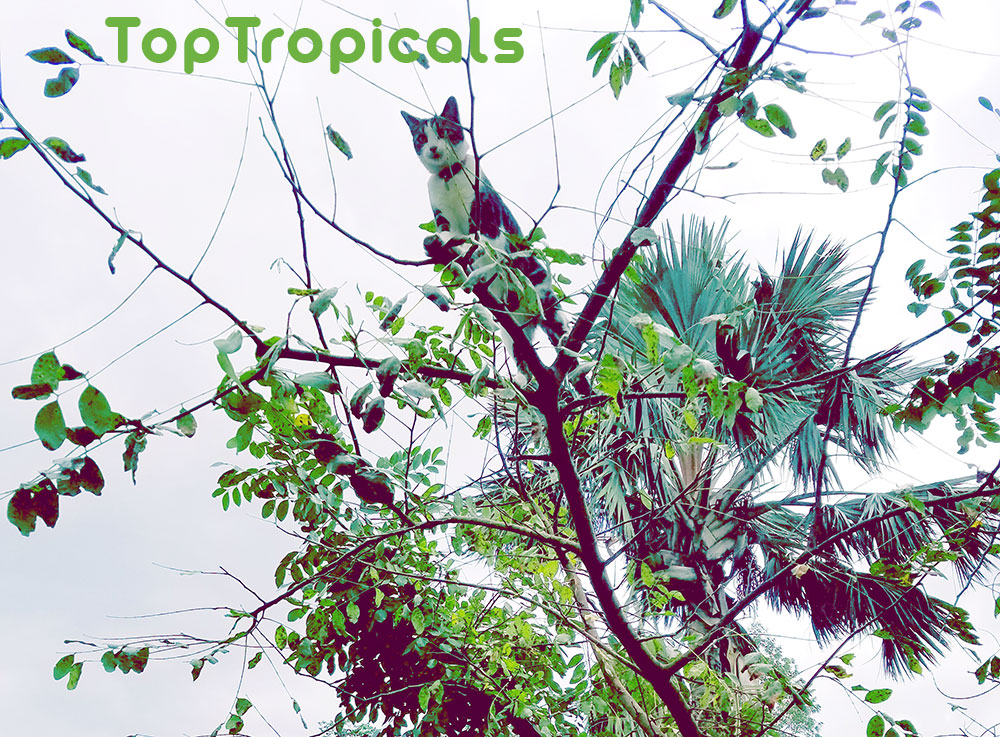
Riki-Tiki-Tavi exploring TopTropicals Gardens.