Garden Blog - Top Tropicals

Date: 20 Dec 2019

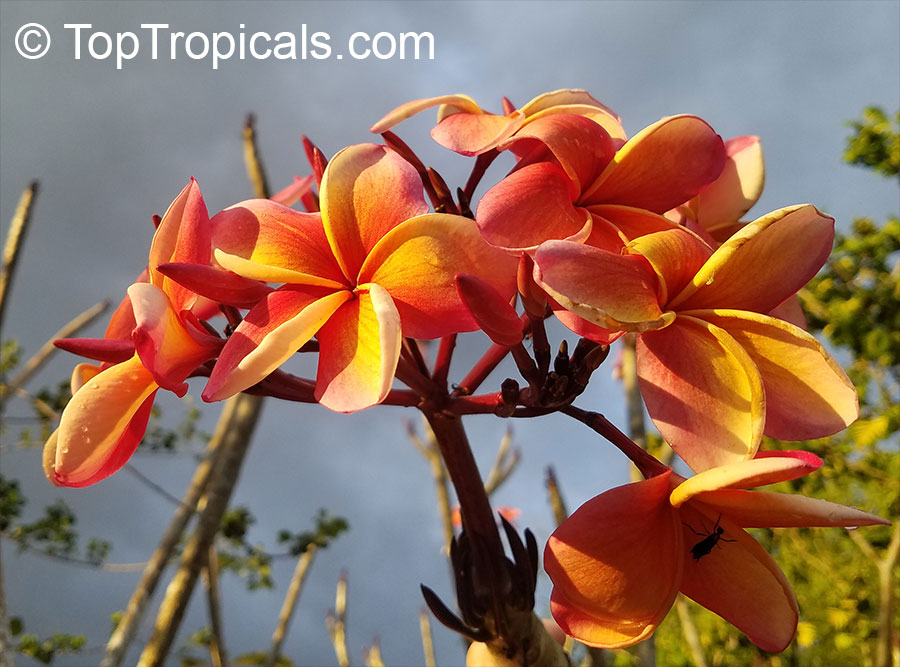
Plumeria cold protection
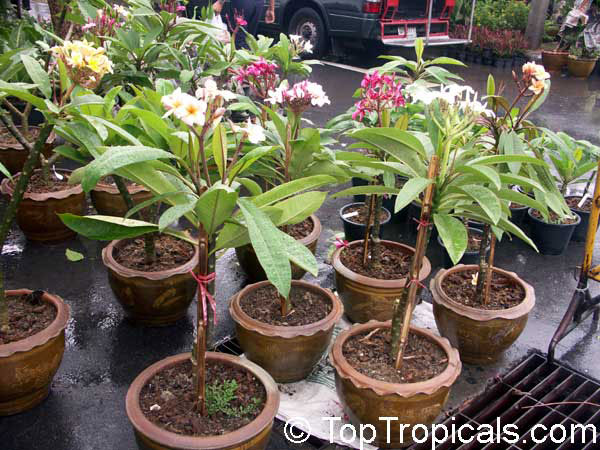
Q: We have a purple-flowering plumeria which resides on our sunny deck during the warm months and then Winter vacations on our back porch where we can close the plastic film windows and where it stays above 50 degrees (overnite) until it can get moved outside again. We live in zone 8+ in South Carolina and I would love to plant it outside. Do you think if we ghost-covered it when alerted that we would have an overnite freeze, that it would survive being planted in the ground and recover to flower when warm? I don't believe the soil in our yard has ever frozen below the top 1/2 inch or so, and never for more than a few hours at a time. What do you think?

A: Plumerias are tropical plants, which means, they need frost-free environment. Even if the ground is frozen only on "the top ½" or so"- this may be enough to kill the plant. From our experience, plumerias can withstand a few hours of windchill frost (not frozen soil), but even if they survive, they may get some branches damage, and recovery may take so long that the plant may not even bloom the next year. So I wouldn't take that risk even with a ghost-cover cold protection. We have customers who grow tropical plants in the ground in colder areas, but they have greenhouse protection: this means, the soil is warm and the air temperature is maintained above 45-50F. For example, this Greenhouse in Virginia.

We recommend to continue growing your rare plumeria in container and move it inside when temperatures drop below 50F (recommended) and for sure when they drop below freezing. Plumeria can take a cold night (a few hours of upper 30's) as long as it is followed by a nice warm sunny afternoon with at least upper 50s. Otherwise, keep it indoors. The good news is, since plumerias are deciduous and have no leaves in winter, low light level won't affect the plant.
Just make sure to minimize watering and keep the plant on a dry side until it starts growing new leaves in Spring. You may continue fertilizing once a week with half-doze of Sunshine boosters - Sunshine TotalFeed. This will maintain the plant healthy and prepare for the blooming season in Spring.

Date: 30 May 2019

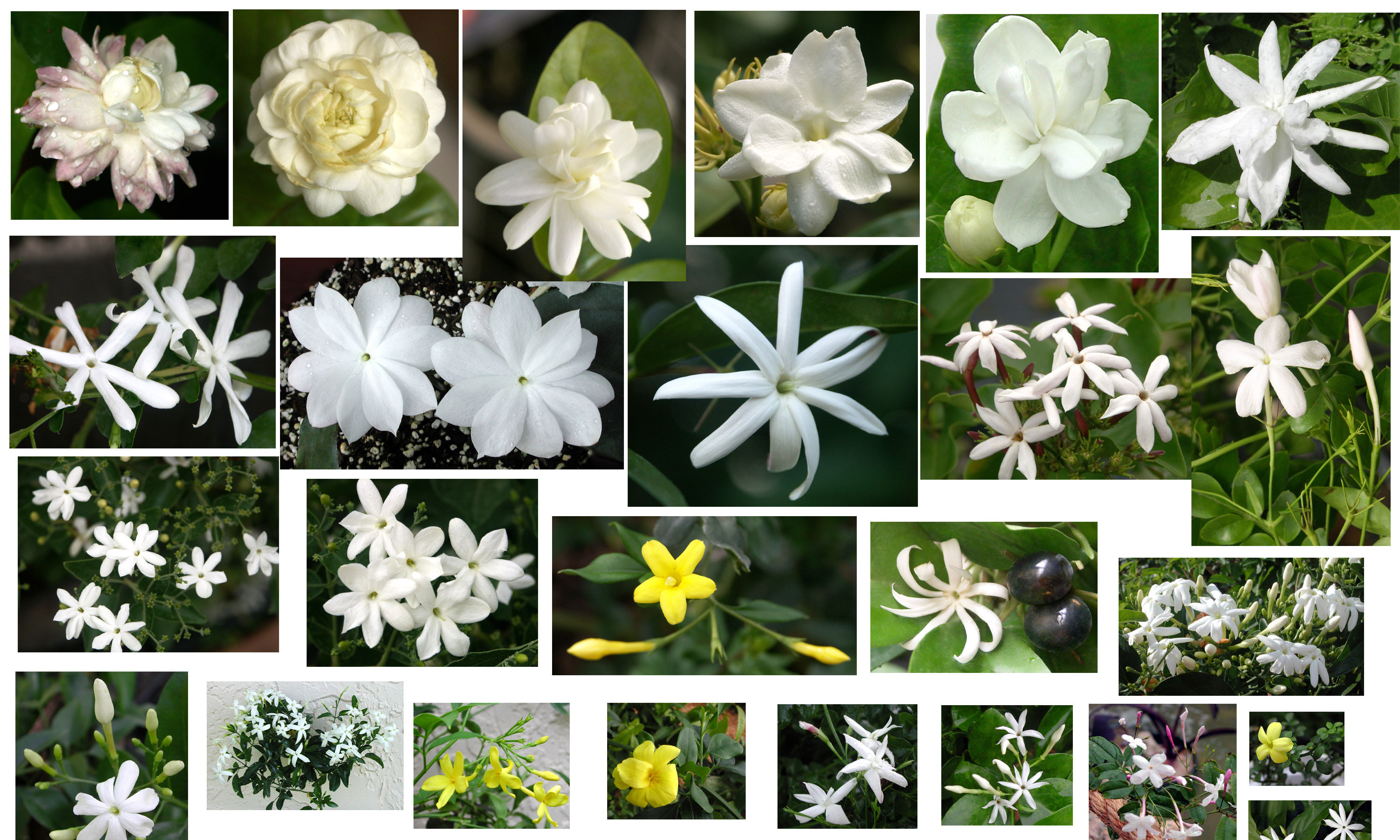
Selecting the right jasmine

TopTropicals.com

Q: Would you please help me select the right jasmine? I want to find a jasmine that smells like lily of the valley or honeysuckle or roses, not the one that smells like gardenia. I'm in Missouri, zone 6, so I want a jasmine for my deck for the summer, so I want it to bloom this season.

A: There are 3 major types of tropical flower fragrances - Sweet, Fresh, and Fruity (including Lemony). Below are the most interesting fragrant tropical flowers, excluding Gardenias (which are sweet type). These are all same-year bloomers, so you can enjoy the fragrance this year assuming proper care and bloom booster feeding.

* - The fastest growers that can be treated as annuals. Others can be grown in a pot and brought inside for winter, and be enjoyed every year.

Sweet

* Aloysia virgata - Almond Bush
* Cestrum diurnum - White Chocolate Jasmine, Day Blooming Jasmine
* Cestrum nocturnum - Night blooming jasmine
* Heliotropium peruviana - Turnsole, Cherry Pie
Portlandia Cubanola domingensis - Cubanola (Warm white Chocolate)
Portlandia grandiflora - Glorious Flower of Cuba (Warm white Chocolate)

Fresh

Beaumontia grandiflora - Easter Lily Vine
* Brugmansia Jean Pasco - Yellow Angels Trumpet
* Brugmansia Variegated Orange Angel Trumpet
* Brunfelsia americana - Lady of the night
* Brunfelsia lactea - Lady of the night
* Brunfelsia nitida - Lady of the night
Crinum Queen Emma - Spider lily
* Eucharis grandiflora - Amazon Lily
* Hedychium coronarium - Butterfly Ginger
Hiptage benghalensis - Helicopter Flower
Hoya odorata - Fragrant Hoya
Ixora hybrid Sea Green
Ixora odorata - Fragrant Ixora
* Jasminum azoricum - River Jasmine
* Jasminum Molle - Indian Jui
Jasminum nitidum - Star Jasmine
* Jasminum officinale Flore Pleno - French Perfume Jasmine
* Jasminum polyanthum - Pink Winter Jasmine
* Jasminum sambac Belle of India
* Jasminum sambac Grand Duke
* Jasminum sambac Maid of Orleans
* Polianthes tuberosa - Tuberose
*Sclerochiton harveyanus - Blue Lips, Mazabuka (Lavender-violet-like)

Fruity

Aglaia odorata - Chinese Perfume Plant (Lemony)
Artabotrys siamensis - Climbing Ylang-Ylang (Lemony)
Cananga fruticosa - Dwarf Ylang-Ylang
Carissa grandiflora - Natal Plum
Cerbera x manghas hybrid - Enchanted Incense
* Jasminum dichotomum - Rose Bud Jasmine
* Lonicera japonica - Japanese Honeysuckle
Magnolia figo - Banana Magnolia (Banana-like)
Magnolia x Alba grafted (Bubble-gum-like)
* Mirabilis jalapa - Four oclock plant
Oxyceros horridus, Randia siamensis
* Quisqualis - Rangoon Creeper
* Radermachera Kunming - Dwarf Tree Jasmine
* Stephanotis floribunda - Bridal Bouquet
Strophanthus gratus - Climbing Oleander
Telosoma cordata - Pakalana vine (Lemony)

Fertilizers for profuse flowering:

Pink N Good Daily Plant Food - Flower Booster
Tropical Allure - Smart-Release Booster
SUNSHINE-Superfood micro-elements

Date: 10 Sep 2016

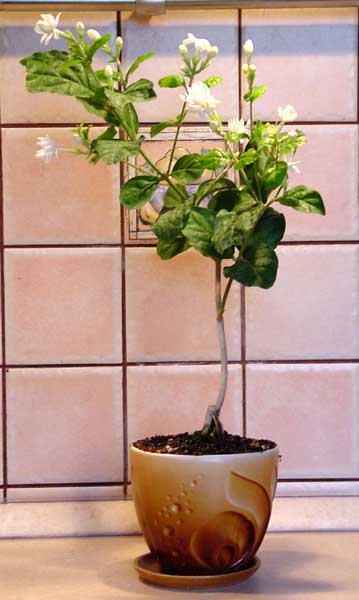
Organic remedy for indoor plants insect protection

Q: Winter is coming and I moved my collection of fragrant plants inside the house about a week ago. Today I noticed some aphids on my jasmine. I guess they sneaked in with the plant from the garden where it was a week ago. I don't want them to spread around and get to the nearby gardenia. What should I do to protect my plants from insects indoors?

A: Sometimes bugs attack indoor plants more than those outside in the garden. The main reason is lack of air circulation, lack of sunlight, lack of bug natural predators, and lack of plant's immune resistance due to winter dormancy. So, you need to pay extra attention at your plants health during colder months they spend indoors. Inspect leaves, especially underneath, at least on weekly basis.

If noticed first signs of insect attacks (insects and/or leaf damage such as holes, chewed edges, discoloration, dark or sticky coating), use a simple organic remedy that is handy in every house. Mix in a cup of hot water two tablespoons of any cooking oil: Canola, Vegetable, Sunflower, Olive; Neem oil is the best for this purpose, but it does have a pungent odor (bugs don't like it as well as some people). Add a few drops of dish-soap for better mixing oil in the water. You may add a clove of pressed fresh garlic - bugs hate it! Clean leaves with this solution using cloth, paper towel, and/or spray bottle.

If insects are persistent or your treatment arrived too late when a plant is excessively infested, after cleaning with the oil solution, you may use additionally systemic insecticide sprays sold in garden centers, with active ingredients of pyrethrin, imidacloprid or similar. Make sure to read product label and follow instructions.

However try the organic recipe first, it really works! You may repeat it as needed, as often as you want! See target=_blank>TopTropicals Video on Safe and Easy Pest Control.

Date: 13 Apr 2021

Healthy Plants: Q&A from Mr Booster

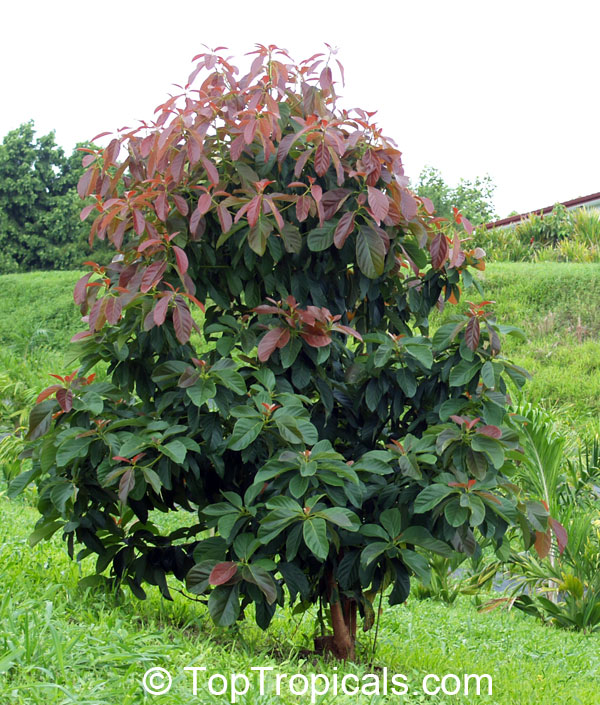
Why my Avocado is not flowering?

Q: I have 5 avocados. Three of your cold hardy varieties and two others that have all flowered and set fruit in the past. The last two years including this year, not a single one of them has put out any flowers. I am getting lots of new growth like one would expect on a tree too young to flower. The last two years have been very mild with out any damaging frost where in previous years they lost all their leaves due to frost yet started putting out flowers once winter was over. I am confused because they have all flowered and set fruit previous years. Any ideas would be appreciated.

A: From information you provided, and considering the trees get lots of full sun and cold was not an issue, the only explanation is - lack of nutrients. Here is an example.
Very common situation: you get a small 2-3 ft Avocado or Mango tree in 3 gal pot (or even smaller) from a nursery, full of flowers, and sometimes even a small fruit. You bring it home, plant it in the ground or a bigger pot, it looks happy and grows like crazy. Then next year - oops, no fruit, sometimes not even flowers. What happened?
When the tree lived in a nursery, it was provided with all necessary nutrients through the injector systems (continuous feed); or some nurseries may use top dress smart release on regular schedule. Regardless of fertilizer type, professional grower's set up delivers plant food non-stop, on regular basis, with balanced formulas. Plants are not only growing fast but also ready to produce, since nutrients are always available for a full growth cycle.
When you plant a tree in the ground (or larger pot), conditions change. They may be beneficial for the plant: lots of room for roots to establish, hence lots of vegetative growth. Even if you planted it using good quality fertile soil, this soil may contain mostly nutrients responsible for vegetative growth (branches and leaves). Chances are, your soil may be rich in Nitrogen (good for green growth), but poor in other elements responsible for flowering and fruiting (Phosphorous, Potassium, and many important micro-elements such as Molybdenum, Boron, Iron, etc.). Besides, existing soil gets exhausted quickly, and within a year a two, if you don't add fertilizer, flowering and fruiting may be reduced or even stopped. This is why fertilizing program is very important for fruit trees that are expected to bring a crop soon.

We recommend:

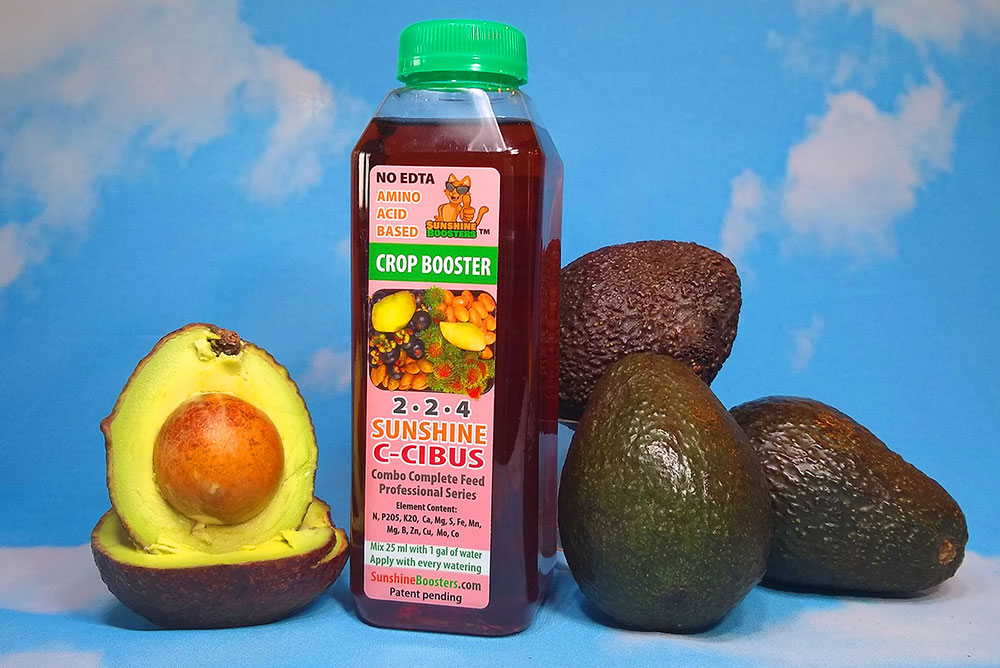
- SUNSHINE C-Cibus - Crop Nutrition Booster - balanced food for fruit trees
- SUNSHINE-Honey - sugar booster - promotes more efficient blossoming and pollination, makes flowers bigger and reduces bud drop
- SUNSHINE SuperFood - for improving fruit trees production

Also keep in mind that some fruit trees have a habit of "skipping" a year and may either produce less or not produce at all every other year. In any case, balanced nutrition program can help to fix this "bad habit".

Date: 7 Jul 2025

Learn more:

Chonemorpha fragrans - Frangipani vine

💎 What is better than Plumeria? Only climbing Plumeria!

💮 It's in bloom again at Top Tropicals Garden! Over and over, from Spring through Winter! Almost year around non stop. What a vigorous vine, and the perfume flowers never stop coming.

💮 Imagine Plumeria's wild cousin climbing your fence: Chonemorpha fragrans, the Frangipani vine, is a tropical liana with jumbo 12-inch leaves and creamy white flowers that fill the air with that unmistakable Plumeria scent.

💮 This beauty doesn’t grow like a tree - it climbs! Perfect for fences, trellises, or pergolas, it brings vertical drama and sweet, Plumeria-like fragrance to sunny or lightly shaded spots.

💮 Give it some support and a little fertilizer, and your garden will bloom into a lush, fragrant escape that smells like a Hawaii vacation!

🛒 Grow your own wall of perfume

📚 Learn more:


A Plumeria you can train to climb
Plant this vine over a fence to bring fragrance into your garden
Can Frangipani be a vine? How to bring fragrance into your garden

#Perfume_Plants #Hedges_with_benefits

🟢 Join 👉 TopTropicals