Garden Blog - Top Tropicals

Date: 21 May 2024

Who wants a cold hardy, dramatic looking tropical fruit tree with a sweet fruit? Or, who doesnt?

Persimmon (Diospyros sp.)

Persimmon (Diospyros sp.)

Persimmon (Diospyros sp.)

Persimmon (Diospyros sp.)

Persimmon (Diospyros sp.)

Persimmon (Diospyros sp.)

Persimmon (Diospyros sp.)

Persimmon (Diospyros sp.)

Persimmon (Diospyros sp.)

Persimmon (Diospyros sp.)

Persimmon (Diospyros sp.)

Persimmon (Diospyros sp.)

🍯 Who wants a cold hardy, dramatic looking tropical fruit tree with a sweet fruit? Or, who doesn't?
  • 🍑 Persimmon (Diospyros sp.) is a graceful, small, subtropical fruit tree from China, with multitrunked or single-stemmed structure and drooping leaves and branches, turning dramatic shades in autumn.
  • 🍑 People love Persimmon fruit for its sweet and unique flavor, often described as a blend of honey and apricot.
  • 🍑 The tree thrives in deep, well-drained loam soil, tolerating alkaline conditions.
  • 🍑 The fruit classified into astringent (soft, sweeter pulp) and non-astringent (crunchy) cultivars.
  • 🍑 Best Varieties for Container Culture:
  • Non-Astringent: Fuyu, Giant Fuyu, Matsumoto-Wase, Jiro, Maekawa, Izu.
    Astringent: Chocolate, Guang Yang, Hachiya, Meader, Saijo, Tanenashi, Winterset.
  • 🍑 Hardy to USDA zones 7-10, may need protection in colder regions.


📚 How to grow Persimmon tree


🛒Order Persimmon Tree

#Food_Forest #Container_Garden

🏵 TopTropicals

Date: 10 May 2024

What is Jaboticaba? It sounds so cool!

Jaboticaba (Myrciaria cauliflora) fruit

Jaboticaba (Myrciaria cauliflora) fruit

Jaboticaba (Myrciaria cauliflora) fruit

Jaboticaba (Myrciaria cauliflora) fruit on a tree

Jaboticaba (Myrciaria cauliflora) fruit on a tree

Jaboticaba (Myrciaria cauliflora) fruit

Jaboticaba (Myrciaria cauliflora) fruit

🍇 What is Jaboticaba? It sounds so cool!

Jaboticaba (Myrciaria cauliflora) is the most popular native fruit of Brazil that famous Brazilian Vine La Vino Tinto is made of!🍷
  • 🟣 Grape-like purple fruit with a thick skin and delicious melting pulp somewhat resembling Northern Black Currant in flavor.
  • 🟣 Trees grow very slowly and due to small leaves and dwarfish growth habit are often used as bonsai. Some old bonsai specimens can fruit.
  • 🟣 Larger specimens are very valuable because it takes Jaboticaba up to 7 years from seed to start fruiting.
  • 🟣 Similar to Mamey, Jaboticaba has cauliflorous fruit - that grow on main stems or woody trunks.
  • 🟣 Jaboticaba is relatively cold hardy, mature trees are taking down to 23 F for short periods without serious damage.


🛒 Shop Jaboticaba trees

#Food_Forest #Nature_Wonders #Container_Garden

🏵 TopTropicals

Date: 24 Apr 2024

How June plum can fruit itself to death: look at this heavy load!

DWARF June plum, Ambarella (Spondias cytherea)

🍈 How June plum can "fruit itself to death": look at this heavy load!

This exciting fruit tree will amaze you with its ability to fruit abundantly at a young age and small size. This is a DWARF variety of June plum, or Ambarella (Spondias cytherea).
  • ✳️ Grows as a compact 6-7 ft tree.
  • ✳️ Very aromatic fruit, Its feel and juiciness resembles that of a mango (it's Mango's close relative) but with completely different, delicious flavor.
  • ✳️ Expect heavy fruit production within a year. Starts fruiting in winter and holds the fruit up to 6-8 months and more.
  • ✳️ Perfect containerDWARF variety of June plum, or Ambarella (Spondias cytherea). fruit tree.


🛒Order online

#Food_Forest #Nature_Wonders #Container_Garden

🏵 TopTropicals

Date: 19 Jun 2024

What is the largest tree-borne fruit in the world?

Jackfruit (Artocarpus heterophyllus)

👀 What is the largest tree-borne fruit in the world?


🍈 Jackfruit (Artocarpus heterophyllus) reaches 80 pounds in weight and up to 36 inches long! It is one of the most fascinating fruit in the world.
  • ✳️ The fruit consists of large edible bulbs of yellow, sweet, banana-flavored aromatic flesh. 
  • ✳️ The fruit is so large and heavy that the tree has a smart feature to produce only at the base of the trunk.  So the tree can be (and should be) pruned annually to 7-12' producing as much as 200 lbs. of fruit per year!
  • ✳️ Seedlings start fruiting within 3-4 years.  Fruit ripen pretty quickly, 4-6 months from flower to maturity. 


📚 Learn more about Jackfruit

#Food_Forest #Jackfruit

👉 Subscribe for more amazing fruit and plant facts: @TopTropicals

Date: 12 Feb 2025

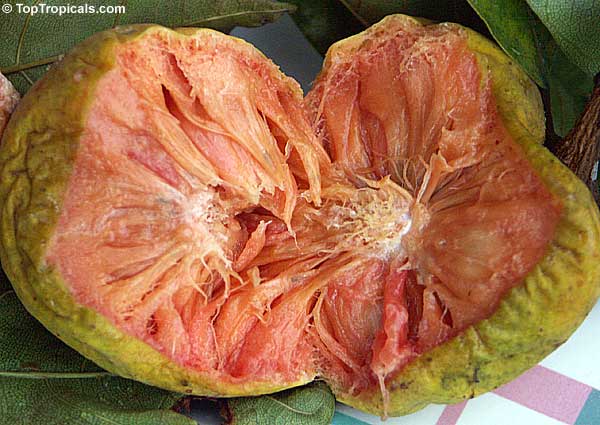
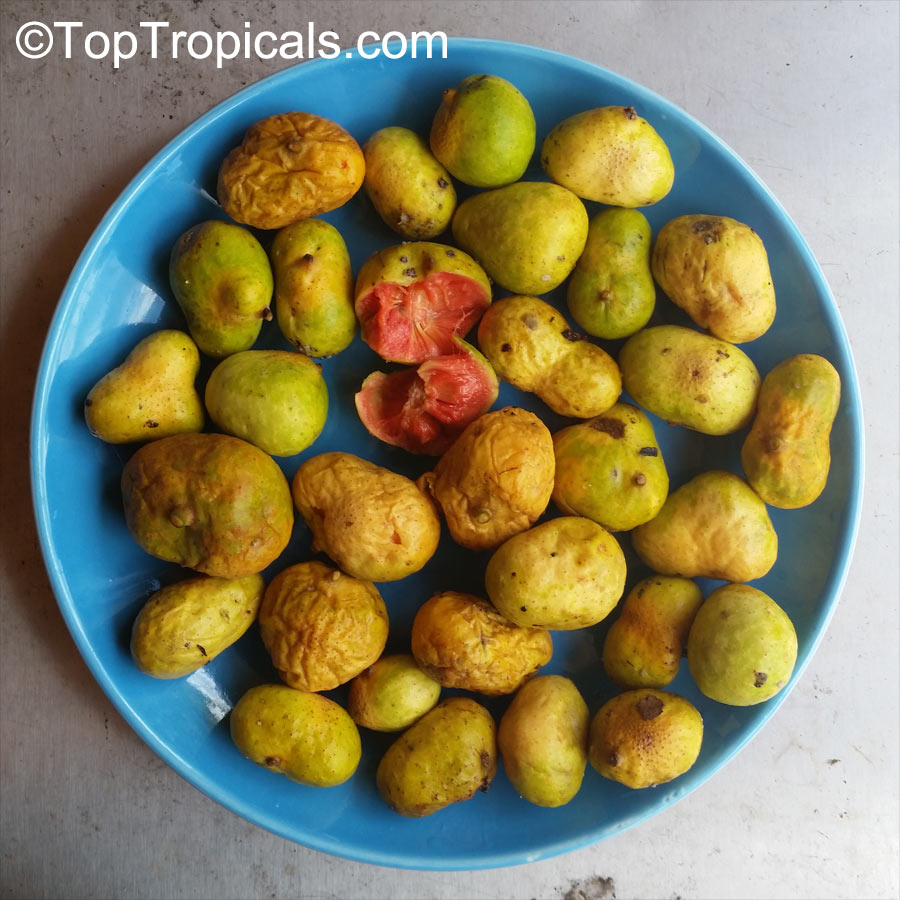
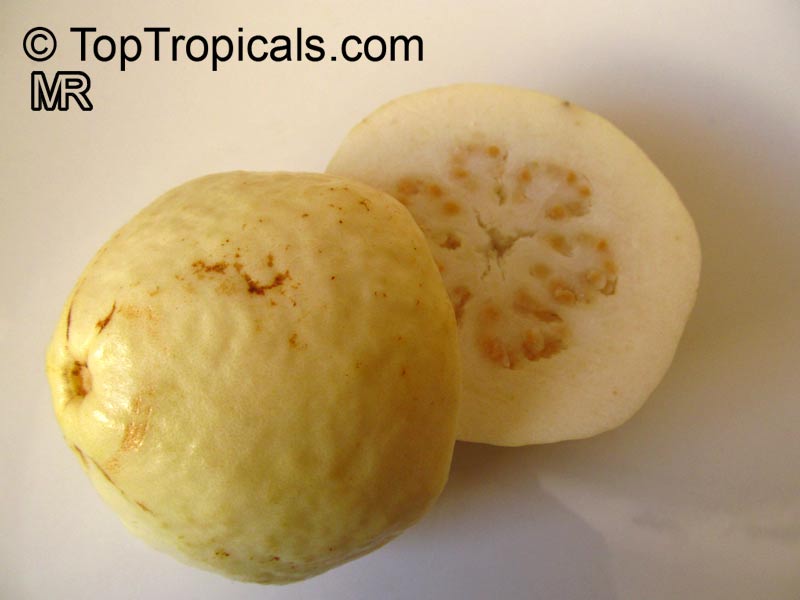
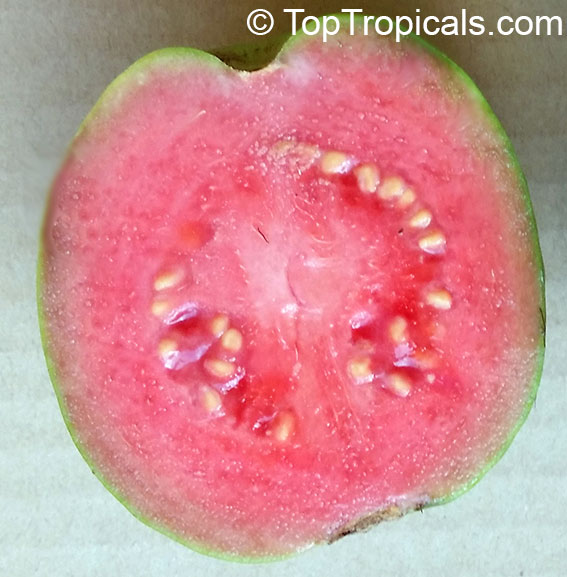
How to grow a Guava Tree: Practical Guide to Growing Guava

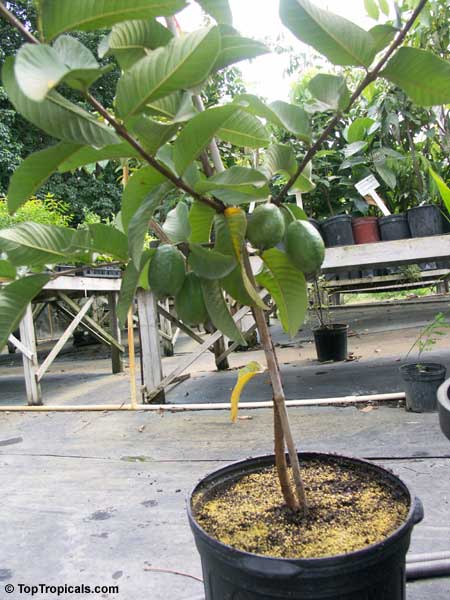
Guava (Psidium sp.)

🍉 How to grow a Guava Tree: Practical Guide to Growing Guava

  • 🍑 Guava Trees (Psidium sp.) are beloved for their flavorful fruit and easy-growing nature. These fast-growing trees are reliable producers and can thrive in a variety of climates, making them a favorite among home gardeners. Guavas are compact and can be grown in containers, making them suitable for small spaces and urban gardens.
  • 🍑 Light and Soil


    Guava trees thrive in full sun, requiring at least 6-8 hours of direct sunlight daily to produce the best fruit. They prefer well-draining soils rich in organic matter but are adaptable to a range of soil types, including sandy or loamy soils. Slightly acidic to neutral soil is ideal. While guavas tolerate poor soils, enriching the soil with compost or manure will improve growth and yield.
  • 🍑 Pruning tips


    Pruning is essential for maintaining the shape, size, and productivity of guava trees.

· Frequency: Prune guavas annually, ideally after the fruiting season, to encourage new growth and improve airflow.
  • · Remove dead, diseased, or crossing branches to maintain tree health.
  • · Shape the tree to allow sunlight to penetrate the canopy, which enhances fruit production.
  • · For container-grown guavas, keep the tree compact by trimming back vigorous shoots regularly.


🍑 Guava in containers


Guavas are well-suited to container growing. Compact varieties like the "Nana" guava are ideal for pots. Use a large container (at least 15-20 gallons) with good drainage. Fill it with a high-quality potting mix enriched with organic matter. Place the container in a sunny location and water consistently. Regular pruning helps maintain a manageable size and promotes fruiting in container-grown guavas.
  • 🍑 Watering


· Guava trees require consistent watering, especially during dry periods and the fruiting season. While they can tolerate short periods of flooding, ensure the soil is not waterlogged. Water deeply once or twice a week, depending on your climate.
  • · Fertilize guavas 3-4 times a year during the growing season with a balanced fertilizer rich in potassium and phosphorus to promote flowering and fruiting. Adding organic matter like compost or manure annually boosts soil fertility and improves yields.


🍑 Harvesting

  • · Guava trees are quick to fruit, often producing their first harvest within a year of planting. For container-grown trees, fruiting can start in even smaller pots, such as 1-gallon containers.
  • · Signs of ripe guava fruit include:
  • - A change in color from green to yellow (depending on the variety).
    - A sweet, fruity aroma.
    - Slight softness when gently pressed.
  • · Harvest ripe guavas by hand or with pruning shears. Consume fresh or use them to make juices, jams, or desserts.


🍑 Health Benefits of Guava

  • · Guava is a nutrient powerhouse, offering numerous health benefits:
  • · Vitamin C: Boosts the immune system and helps protect against colds and infections.
  • · Potassium: Supports healthy blood pressure levels.
  • · Antioxidants: Contribute to glowing skin and may reduce the risk of cancer.
  • · Fiber: Aids digestion and helps regulate blood sugar levels.


🍑 Popular Varieties of Guava

  • · Tropical Guava (Psidium guajava): Sweet and aromatic, suitable for warmer climates.
  • · Cattley Guava (Psidium littorale): Cold-hardy with a slightly tart flavor.
  • · Cas Guava (Psidium friedrichsthalianum): Known for its sour taste, perfect for juices like Costa Rica’s traditional "Agua de Cas." Cold hardy, disease resistant and vigorous, productive variety.
  • · Pineapple Guava (Feijoa sellowiana): Fruity and floral, thriving in cooler climates.


🍑 Additional Tips

  • · Guava trees are relatively pest-resistant but may require monitoring in humid climates for mealybugs. Use neem oil if needed.
  • · Planting multiple guava varieties ensures a continuous supply of fruit.
  • · With their fast growth, compact size, and delicious fruit, guava trees are a fantastic addition to tropical garden, greenhouse or patio.


📚 More from previous posts about #Guava

🛒 Shop Guava Trees

#Food_Forest #Guava

🔴 Join 👉 TopTropicals