Date: 25 Jun 2021
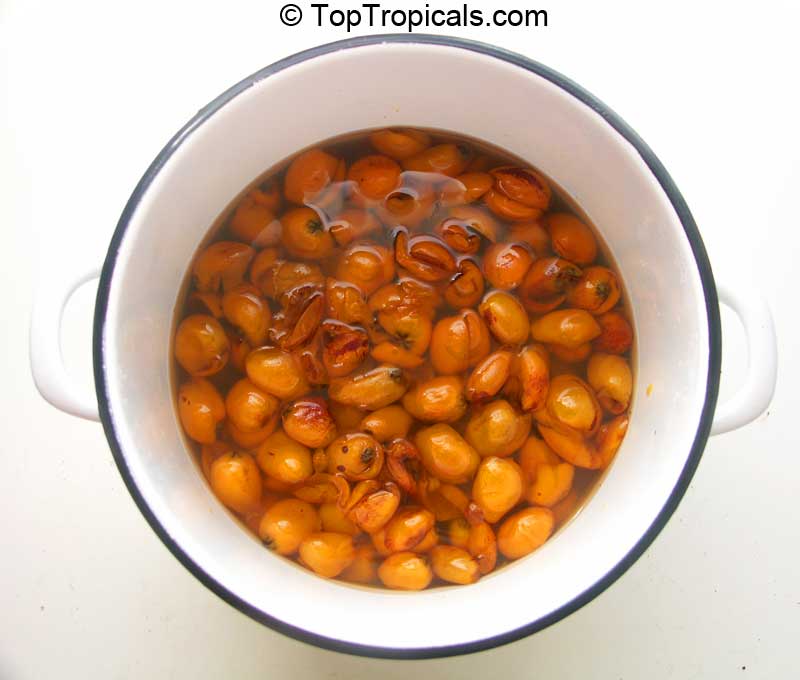
Kristi's Loquat Tropical BBQ sauce
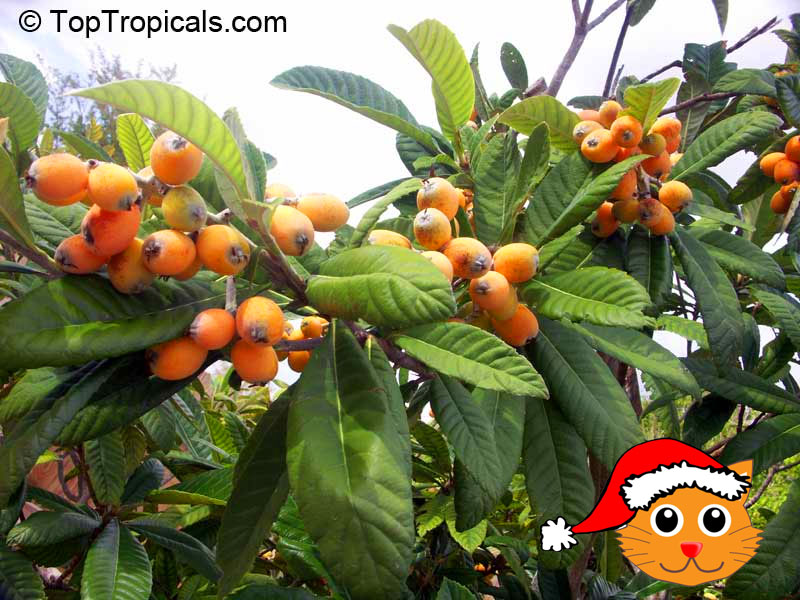
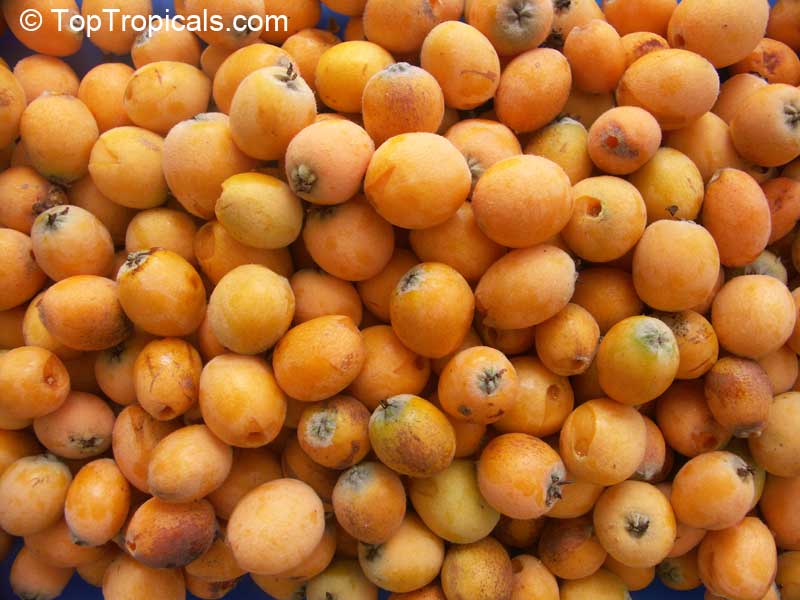
Loquat trees are famous for their abundant fruit production. Many customers who purchased this tree from us, soon end up with some serious crops and start asking if we have any special recipes for loquat fruit - because you can only eat so much out of hand! Here is our manager Kristi's favorite Loquat recipe - not only delicious and tropically-aromatic, but also good for you. Happy Tropical Meal!
Ingredients
2 lbs loquat fruit
- cup soft brown sugar
- cups malt vinegar
1 onion chopped - cloves garlic
1/2 tsp salt
1/2 tsp black pepper
1/4 tsp cayenne pepper
6 cloves whole or 1/2 tsp ground cloves
Instructions
Wash the fruit, cut them in half and remove stones. The loquats will
lose about a third of their weight once stoned (3 lbs of whole fruit = 2 lbs of fruit, stones removed). Add loquats and all remaining
ingredients to a large saucepan. Bring to a low boil, then simmer for about an hour, stirring occasionally. The liquid will have reduced quite a bit and the fruit
will be collapsed and very soft. Allow to cool slightly, then liquidize the sauce in a blender or a food processor. Be careful, hot sauce really
burns!
This delicious tropical sauce is great for any BBQ - with meats or fish. Enjoy!

Date: 4 Mar 2021

Healthy Plants: Q&A from Mr Booster
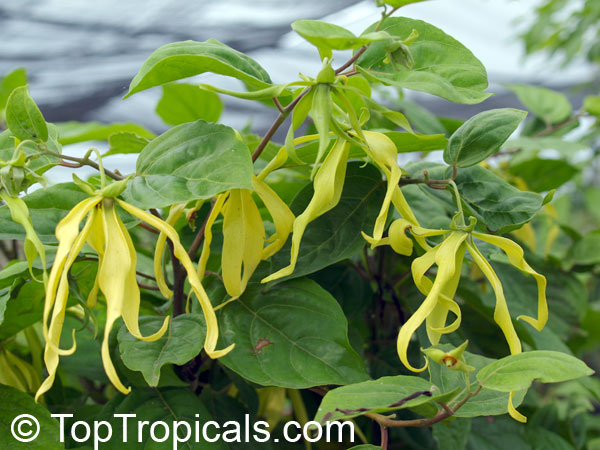
Ylang Ylang leaves after winter
Q: Hi, I purchased ylang ylang tree a couple of years ago. It's grown quite well in my Greenhouse but I'm having some trouble figuring out if I'm watering it too much not enough or if it has an insect. Can you please take a look at my photos and maybe give me a suggestion of what my problem might be?
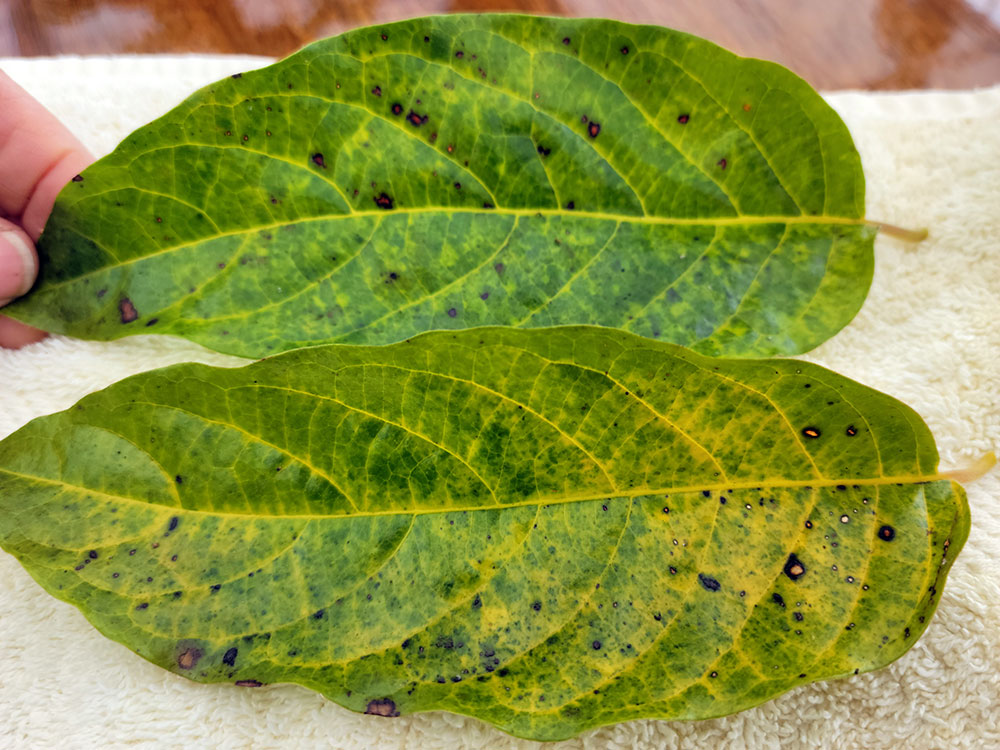
A: It is normal for Ylang Ylang tree to get dark spots during
winter time. Sometimes Cananga gets whole branches darkened (especially dwarf variety fruiticosa), some may even fall off. But they will be replaced
with new growth in Spring-Summer. There is nothing wrong with your plant, it is
just a reaction to cold and short day light when you keep this plant indoors. These leaves eventually will fall
off as the weather warms up, and will be replaced with a new fresh green growth.
Luckily, Cananga is not susceptible to insects and diseases, but its leaves
can look unattractive in winter.
Make sure to keep watering at minimum until temperatures raise to 80's.
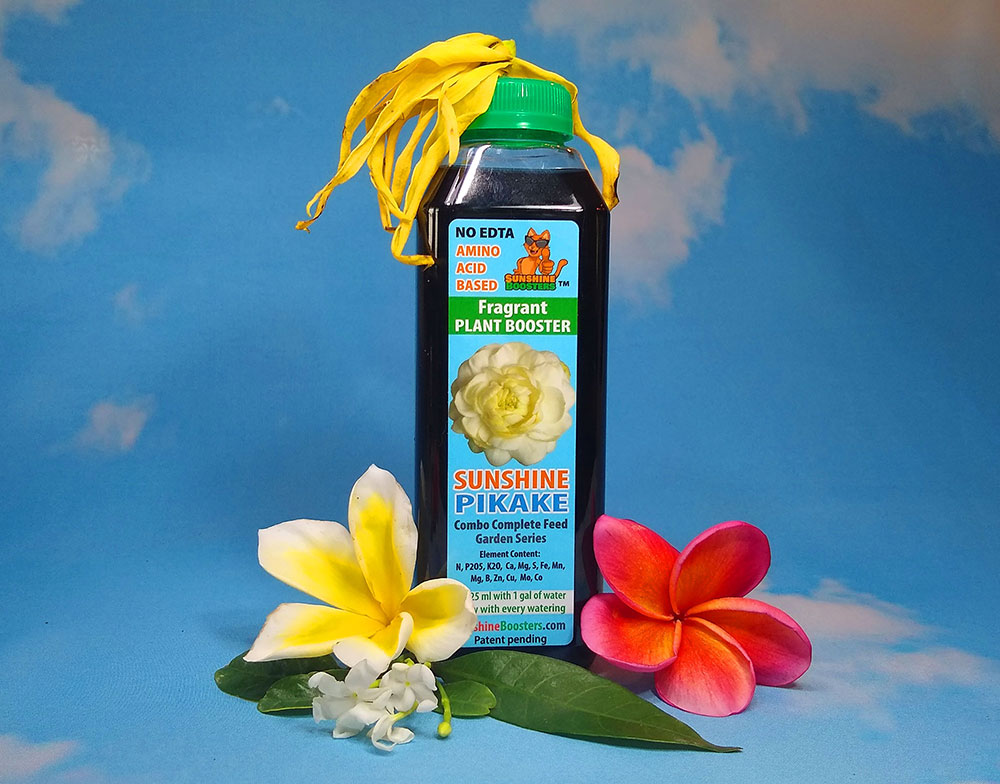
Start fertilizing as soon as new growth appears. We recommend SUNSHINE Pikake
- Fragrant Flower Booster, an ultimate fertilizer for fragrant plants.
Date: 19 Jan 2021
Healthy Plants: Q&A from Mr Booster
Fertilizing in Winter
Q: I have many tropical plants in my garden, both in the ground and in pots. I realize it is wintertime and some of them, the Hydrangea, Hibiscuses, and roses are in bloom but the rest of them seem wilty and droopy. Is it alright to fertilize them now, or should I wait for a few days? I have an all purpose tropical fertilizer and a 20-20-20 also. Please advise what to do.
A: During wintertime, tropicals may suffer from low temperatures
and lack of sunshine which causes droopy leaves, and leaf loss.
Regardless of the cause and plant condition, you should NEVER apply
traditional dry fertilizers during cool months. When cold, dry fertilizers
(EDTA-chelated) may create nutrient lock up in soil and damage the roots. Dry
fertilizers (both granulated and water-soluble) can be used only during hot season -
when min temperatures stay above 65F for at least a week in a row, and
daytime temperatures are over 75-80F. During hot, active growth season plant
metabolism increases. This provides less chance for a chemical root burn, as the
nutrients are used up quickly.
However, liquid fertilizers, as long as they are amino-acid based, can
be used year round. From our own experience last winter, we discovered that
fertilizing sickly looking plants (with signs of cold damage and root issues)
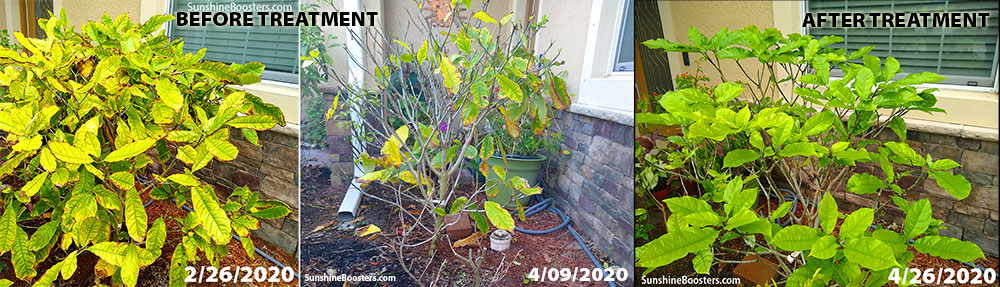
with Sunshine Boosters actually revived those plants. Sunshine Boosters even
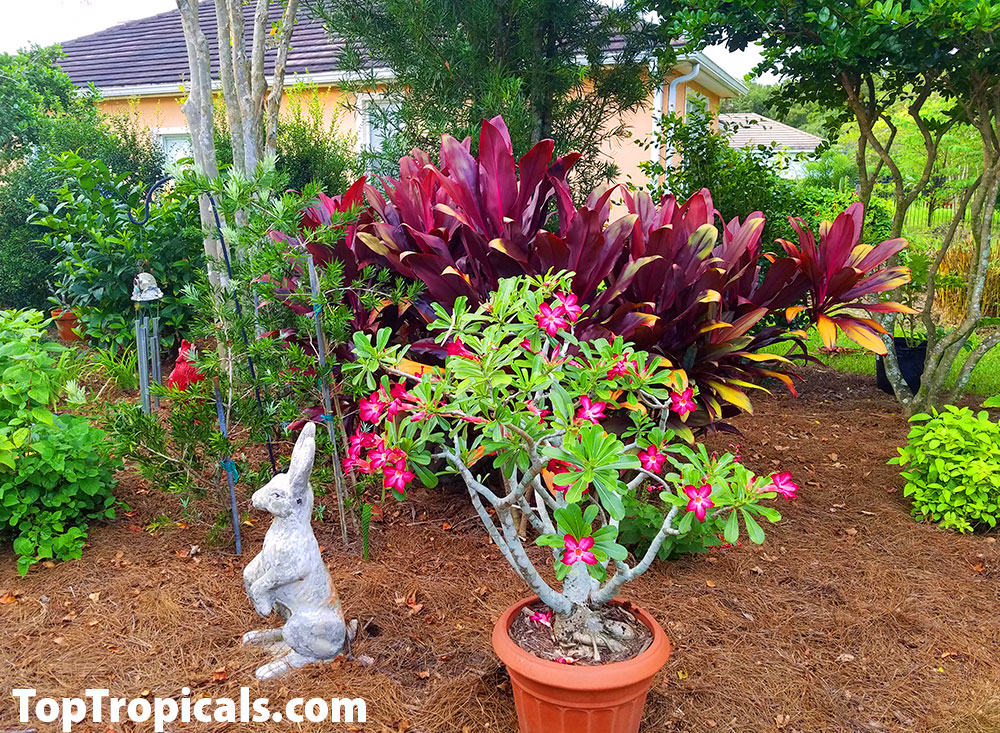
brought back to life some hopeless specimens. Take a look at this gardenia
that grows in our garden (picture above). See full article.
In your case, it would be beneficial to use a mild formula of liquid
boosters in combination with Sunshine Epi -a natural plant hormone that boost their growth and helps
to cope with cold-, temperature- and low-light-related stress.
These are the products we recommend:
- Sunshine Bombino - add to every watering
- Sunshine Epi - twice a month as foliage spray
Since you grow plants in pots, feeding program is especially essential,
because plants are limited with a container size where roots can't reach out to more food in the outer soil.
In professional nursery set up with injector irrigation systems, container plants are fed daily (depending on season, more than once a day) with every watering. This is why greenhouse plants are so healthy looking.
So feel free to give your plants Sunshine boosters with every watering,
dozing according to the label. During cold period, plants need less frequent
watering, so fertilizer input will be balanced accordingly, it will depend on
temperature and plant metabolism.
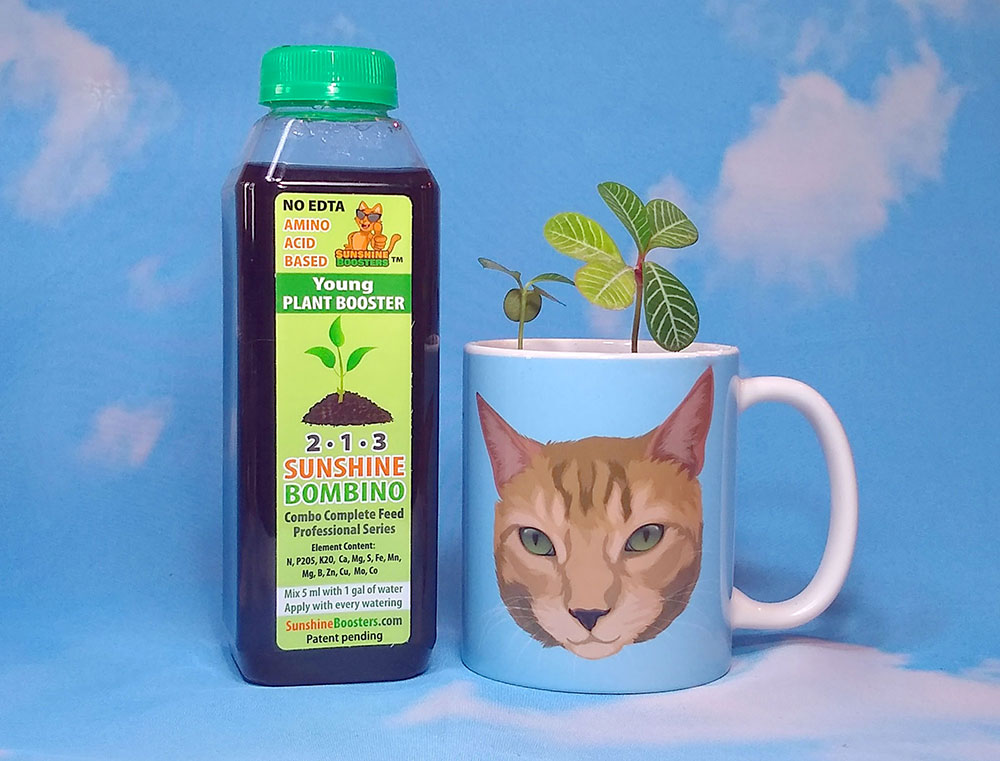
Sunshine Bombino - mild, "pampering" formula for young and tender plants, as well as plants recovering from stress and/or winter damage.
Date: 22 Dec 2020
Growing Stephanotis and cold protection
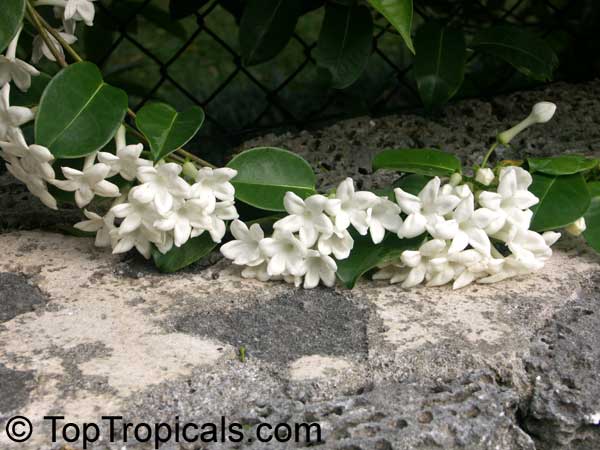
Q: I bought from you 3 plants Stephanotis How do I protect them from this low temperature now? I live in Ft Myers Beach.
A: In Ft Myers Beach, you have frost-free winters. You don't have to worry about cold protection for the Stephanotis. It is pretty cold hardy plant in spite of being a true tropical (it enjoys Hawaii environment for example). From our own experience, Stephanotis can even take a light frost for a short period of time without any damage.
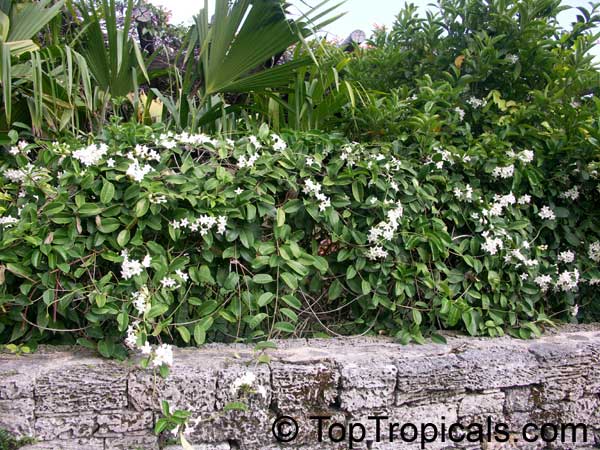
You can keep this plant either in a pot or plant in the ground in a nice
sunny location for more profuse flowering. It can climb a tree, a fence, or a pagoda.
However, keep in mind that during cool weather you need to reduce amount of watering. Wet + cold is a bad combination for plants. Water
again only when the soil gets slightly dry. In summer time, extra water is not critical because it evaporates quickly with high temperatures.
Date: 15 Dec 2020
Healthy Plants: Q&A from Mr Booster
What is an ideal potting mix?
Q: A few years ago, I purchased a Barbie Loquat from you, and I'm pleased to say it's been growing very well. I now have several loquat seedlings. I have read that a well-draining medium should be used, and I have found that the various formulations provided on the web for such medium seem vaguely reminiscent of the recipe provided in your transplanting instructions. Therefore, I would like to retrieve your recipe, unless you could recommend an even better one?
A: The main requirements for a good potting mix are:
- perfect drainage, allowing air circulation that is so necessary for
healthy roots; oxygen circulation helps to avoid root rot
- water retention: to keep nutrients in soil
- low pH (soil acidity) which is important for most tropical plants
- adequate amount of organic matter in the mix, in combination with proper
fertilizer program
In our nursery we experimented with many different potting mixes for the past couple decades. We ended up with an ultimate mix for tropical container plants that we designed ourselves. This custom mix is called -
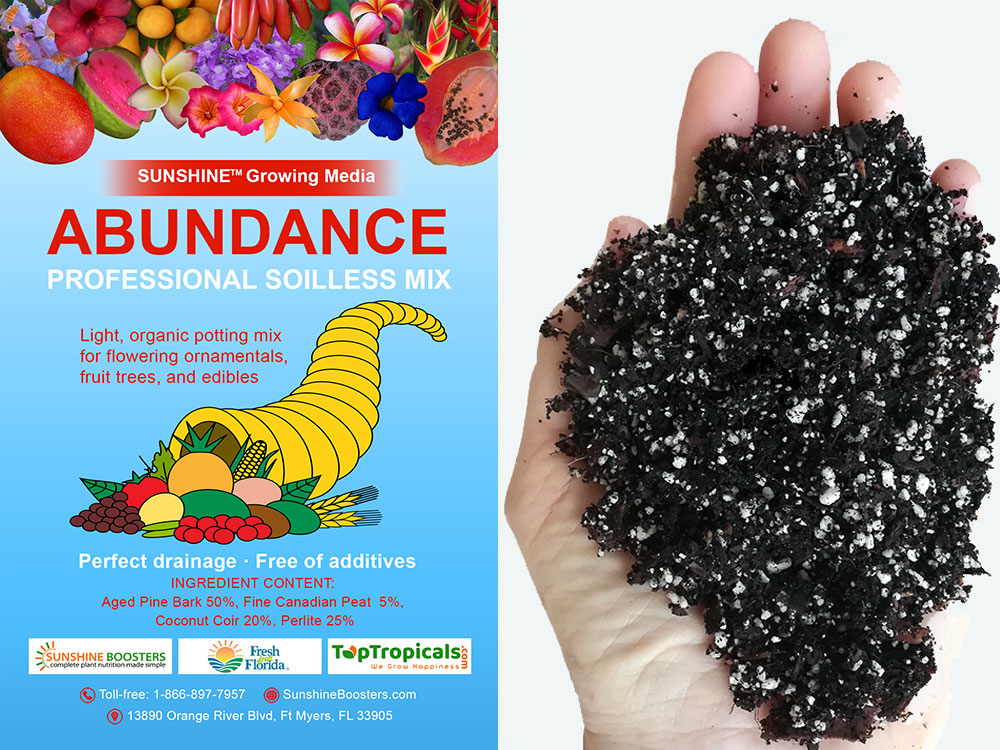
Abundance - TopTropicals professional soilless potting mix
It meets all the requirements above which makes it a perfect mix. All
our plants are happy with it.
Abundance is a professional quality (nursery-grade) potting mix with great
drainage characteristics, ideal for any tropical plants. It is organically
derived soil-less mix, free of any additives.
Ingredients are:
- fine Canadian peat moss
- coconut coir
- perlite
- aged pine bark (soil conditioner).
See more info on
soil mixes.
We have this mix available for purchase in different packaging sizes - 2, 3, and 7 gal
bags.
Besides proper potting mix, all container plants require regular
fertilizing. We recommend the newest, scientifically balanced fertilizers Sunshine Boosters that are natural, eco-safe, great for all edibles and
organic gardening. They are safe to use with every watering, provide all
necessary elements for plant daily needs, and won't burn the roots.
For your loquat tree, consider Sunshine C-Cibus, it boosts both flowering and fruit production. Loquat
is Winter-Spring bloomer, hopefully you will get some crop soon!
See more information about potting mix science