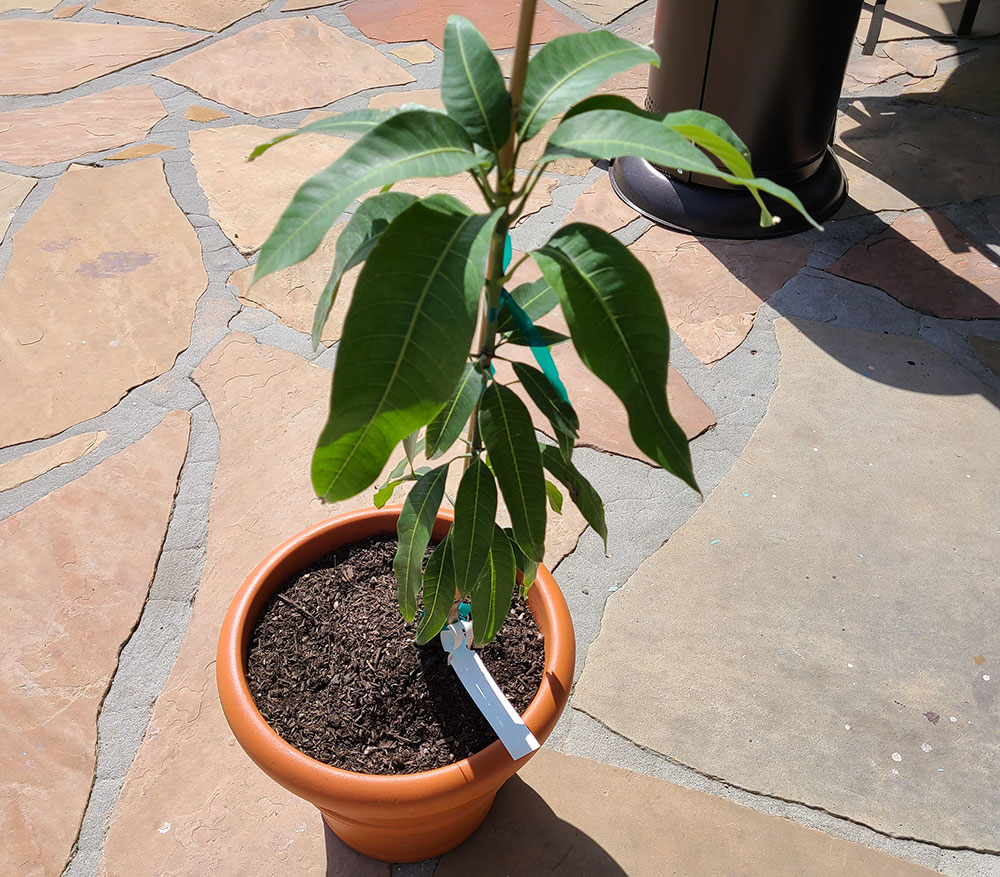
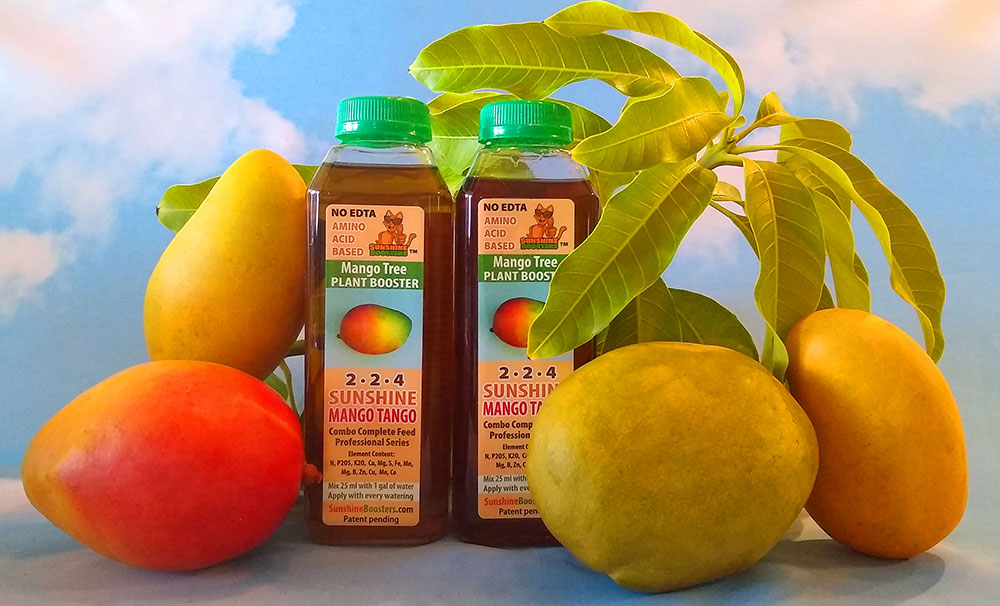
Q: I received a mango tree we ordered last week (I am in
California) and am trying to make sure we take care of it properly. I noticed the
corners of some leaves have began drying out. I wanted to see if there was
anything else we should be doing or if it is something normal. Overall the tree
looks good and the leaves have perked up, but I noticed the dry tips on a
handful of leaves. Any help is appreciated! I have not fertilized in the pot yet
or applied the mango sunshine booster.
A:Your mango tree looks pretty healthy, and these dry leaf tips
may be caused by overall shipping stress. You have dry air in California, and
temperatures may be getting up, this may cause additional drying effect. You
may start fertilizing with a liquid fertilizer, it will help the plant to get stronger and grow
faster - then heat and dry air won't be a problem as soon as the plant becomes
better established and hopefully go into a bigger pot soon, or in the ground.
Make sure to provide regular water if you have hot dry summers.
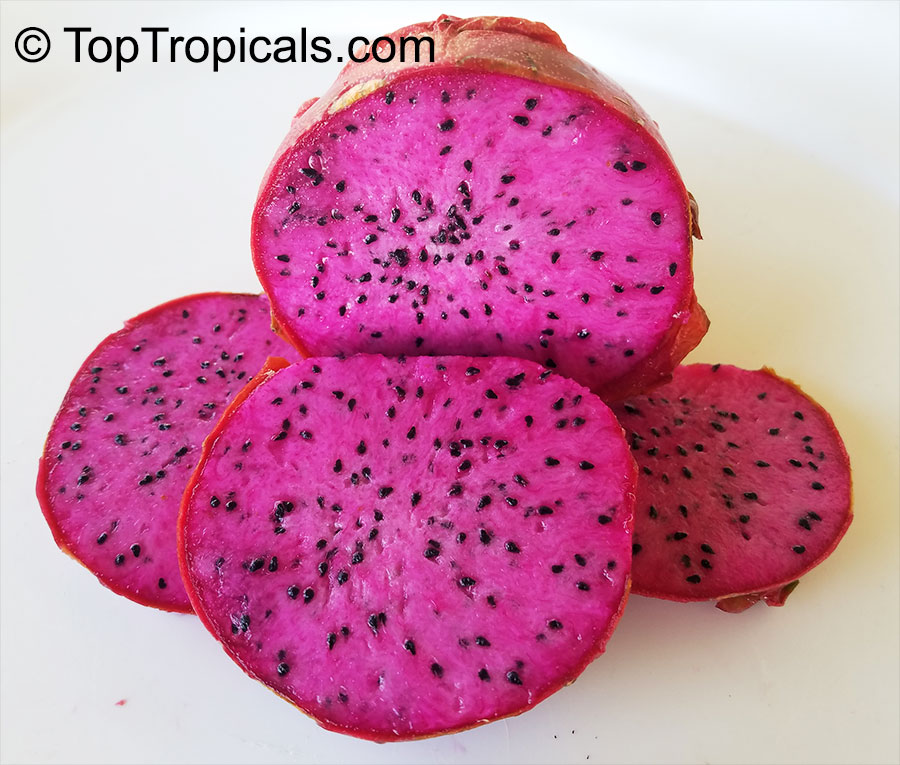
Q: I purchased two sweet red pitayas, that arrived and were
planted on May 28, 2020, they were damaged but not serious. my question is this
one pitaya is a beautiful green, and has grown 6or 8 "already, the other is
bigger and is a grayish green and has not shown any sign of growth at all in
six weeks, how long do I wait before I throw it out and buy another?
A: Being a cactus, sometimes Pitaya slows down its growth waiting
for more favorable conditions. If one of your plants doesn't show any new
growth, just give a it some more time and make sure the plant stays happy. To
make pitaya happy, provide the following: - Water. Unlike most cacti, Pitaya prefers regular watering (but not
a wet soil). Make sure it is planted in well-drained media. Do not water
again if soil remains moist, wait until it dries out on the surface. During hot
weather, Pitaya enjoys light daily watering. - Light. Unlike most cacti, Pitaya benefits from a filtered light
especially while establishing. Try to create a temporary shade over the plant
until it starts active growth (if grown in the ground), or move the pot in
filtered light. Dull color or dry spots are signs of sun burn. Once the plant
shows new growth, you may remove sun protection, or move the pot gradually into
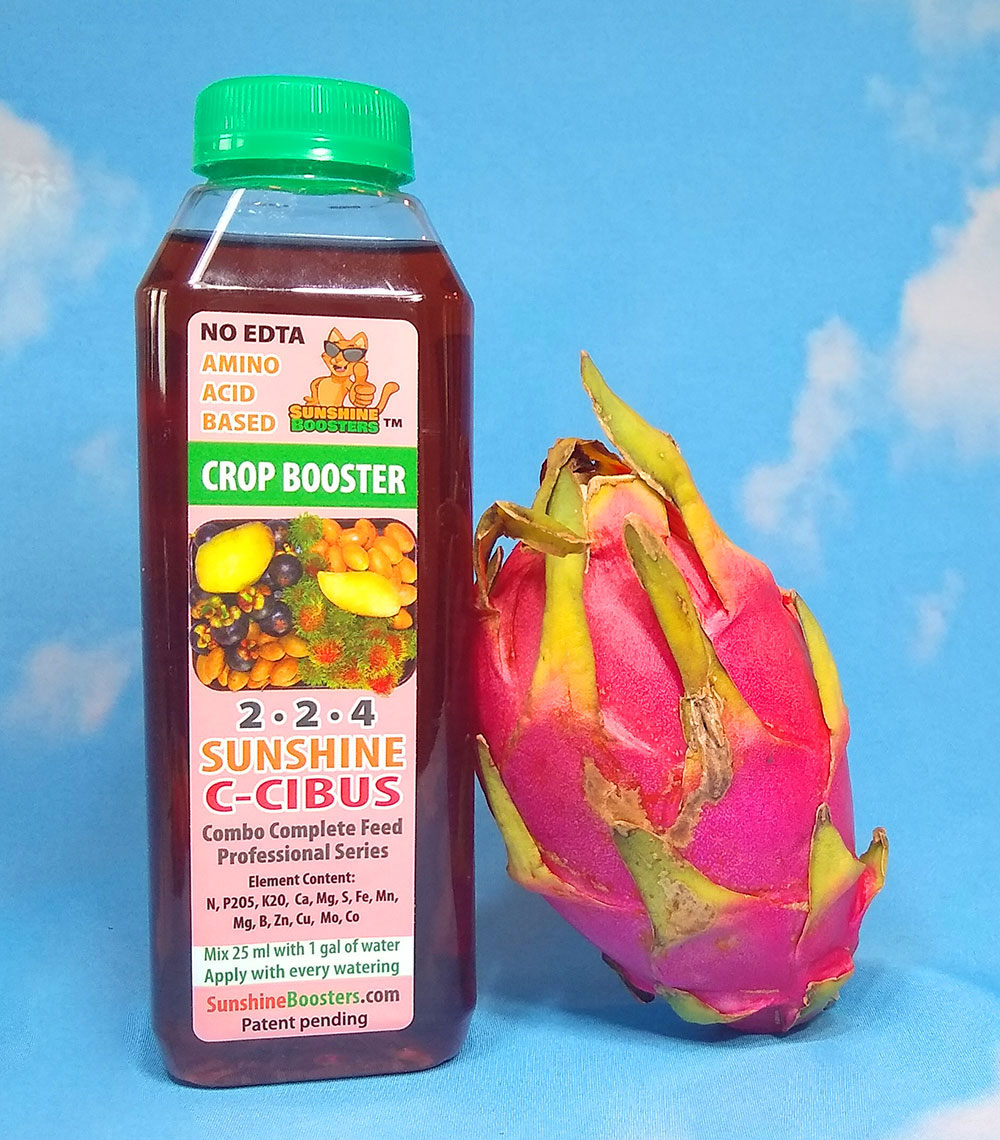
the full sun. - Food. Pitayas are heavy feeders. Use the following fertilizer: SUNSHINE C-Cibus - Crop Nutrition Booster
Q: I've been growing dragon fruit cuttings from Okinawa, Thailand
and Vietnam for several years in pots and cannot get them to fruit. Any
fertilizer suggestions? I live in Northern Virginia so I bring the massive pots
in the garage under lights and a heater for the winter but back outside once
the temperature warms up.
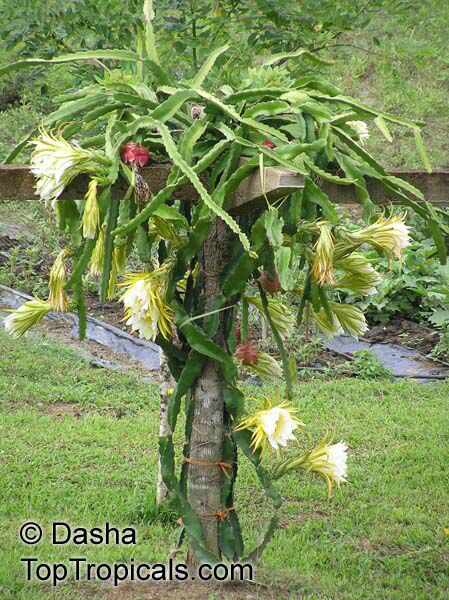
A: There is a little trick to get Dragon fruit to flowering and
fruiting. This plant likes flowering when it is attached to a strong support.
In commercial plantations, they use special trellises/frames made out of
logs, but you can make one yourself using simple materials.
See article: Do-It-Yourself Support Structure for Dragon Fruit.
And of course, don't forget a special plant food for tropical fruit - Sunshine C-Cibus.
You can successfully get your Dragon fruits to fruit in pots, providing
bright light in Summer. In Winter, keep the plants on a dry side to give them
some rest and a chance to hibernate before the next fruiting season.
Date: 20 Dec 2020
PeopleCats of TopTropicals. Cat of the Day: Abu, the Quiet Fighter
The Story of Abu, a brother of poor little Raja, is also challenging, but has a happy ending!
...Abu started out a quiet reserved little man. From the beginning you would find him in the
quarantine room snuggled under his thick blanket sleeping. Abu did not like to ask for help but was grateful when you gave it. We tried to help him use a toilet while his
leg was casted and getting into the letterbox was a challenge for him... However, he was too orthodox in his views to believe he needed help...
...Abu was the worse off of the two found kittens. Dr didn't sugar coat the
outlook. He gave him a thirty percent chance of walking again. The morning after the first medication, I woke up
like a kid on Christmas morning... Dressing quickly, I went to the kitten's room to see if there was any change... Abu was still laying down, not getting up on his
own. As I looked over his little body, I made my way to his swollen little wrist to see if there was any change...
Thank you for supporting us in helping PeopleCat Community! Make
your kind donation today and receive a surprise gift from us! Every little
bit helps. Thank you and God bless you and your pets!
Date: 6 Nov 2020
The truth about Sensational Monstera Thai
Constellation
"Nothing's making sense anymore. It's gotten out of control"
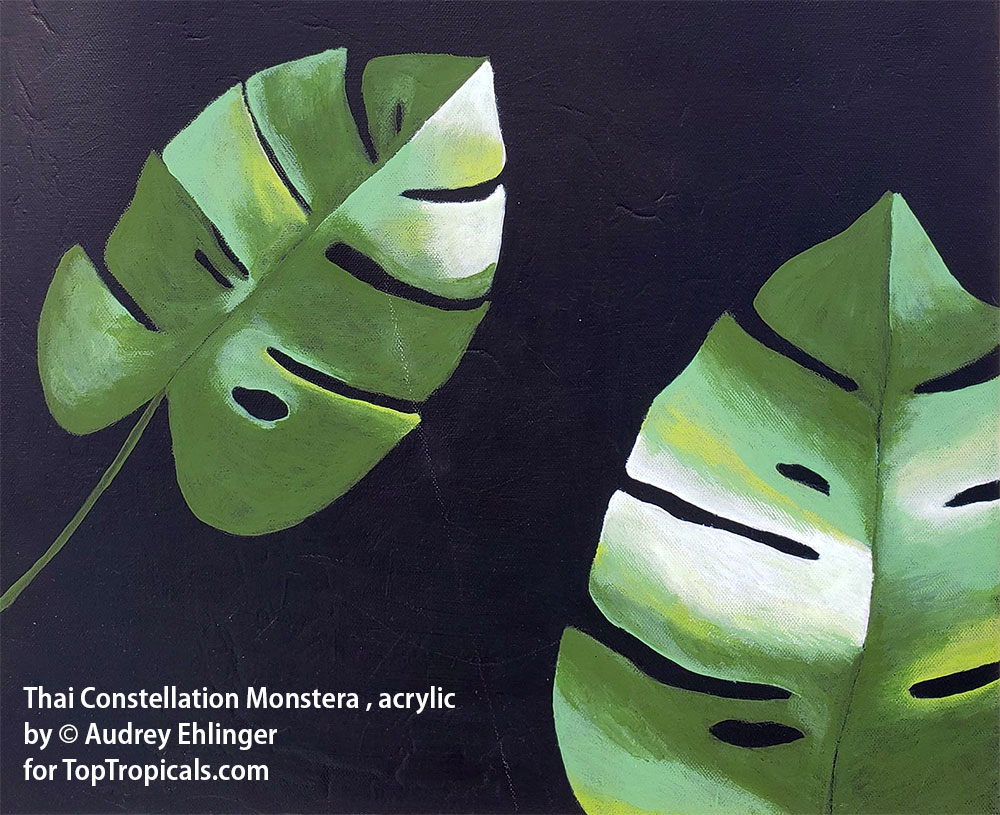
Painting above: "Thai Constellation Monstera deliciosa" with acrylic paint on textured background by Audrey Ehlinger - participant of the
2020 Tropical Plant Art Contest
Variegated Monstera... Now that this Sensational plant deserves even its
own works of art, it is time to admit: this beauty is probably one of the
most surprising phenomena in the history of rare plant industry.
Many plant collectors noticed the craziness around this unusual
variegated cultivar of Monstera deliciosa - Thai Constellatio. Top Tropicals was the first
plant nursery that originally introduced this variety into the US tropical plant
market a few years ago. Since then, popularity of this plant went above and
beyond any expectations. Everybody wants this plant! Yet it is nearly
impossible to propagate, with the only somewhat successful method as Tissue Culture.
Besides, in order to create a viable batch, one must use cells from the stem
only. Considering this plant grows about 2 inches a year (in favorable
conditions), this leaves us with very limited propagation material... Who can
sacrifice their unique mature plant for a knife of a propagator? Let us know if
you have any extra you can share ;)
No wonder very quickly Thai Constellation had become a commodity plant,
or even better - an asset compared by some people to a real estate bubble...
Some collectors sell cuttings for $2,000 each. People pay up to $250 per leaf
of this plant... Crazy? Maybe. But being rare plant collectors, we all know
the feeling! Check out this article:
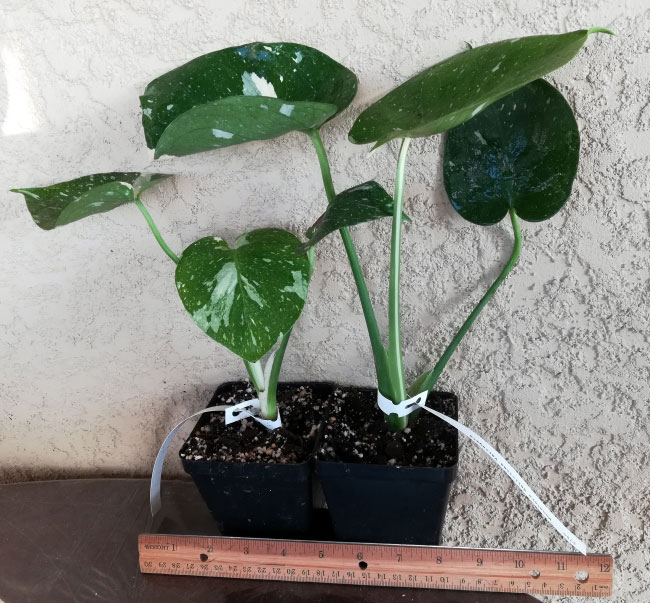
The good news is - we have a few plants. They are in 4"pots. Small, but well-established. The price is not cheap. It is what it is - this is what it costs us to obtain these plants from Thailand. This is the last batch for a long while, no more available even at this price, since the growers can't find enough propagation material to satisfy the market. Next batch expected from tissue culture is probably 2022. We have over 400 customers on
wish list for this plant.If you really NEED IT, order right now!
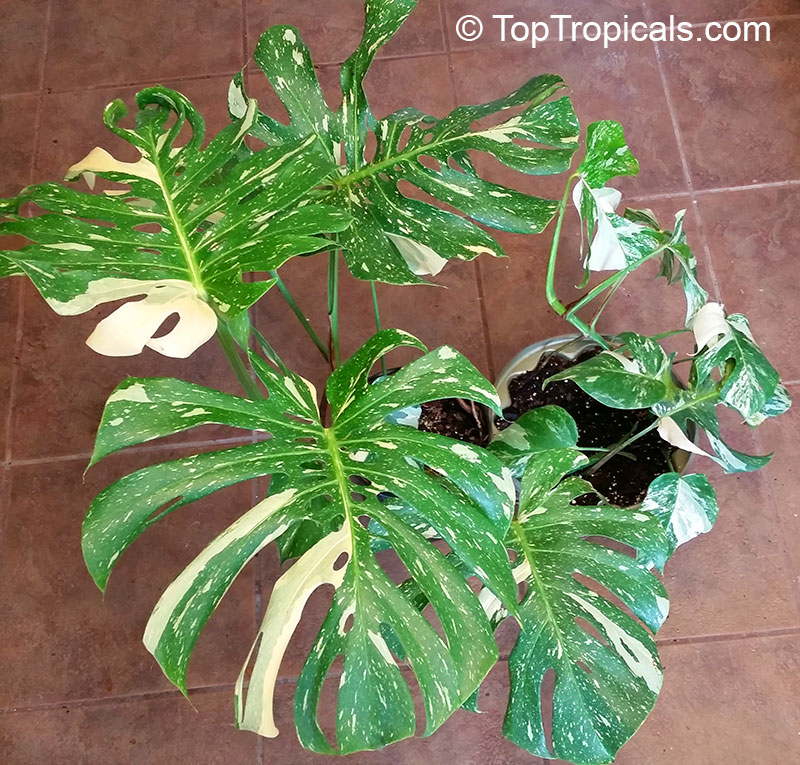
3-years old Monstera Thai Constelation from Top
Tropicals personal collection