Date: 26 Oct 2018
Improving cold hardiness before winter: fertilizer and micro-elements
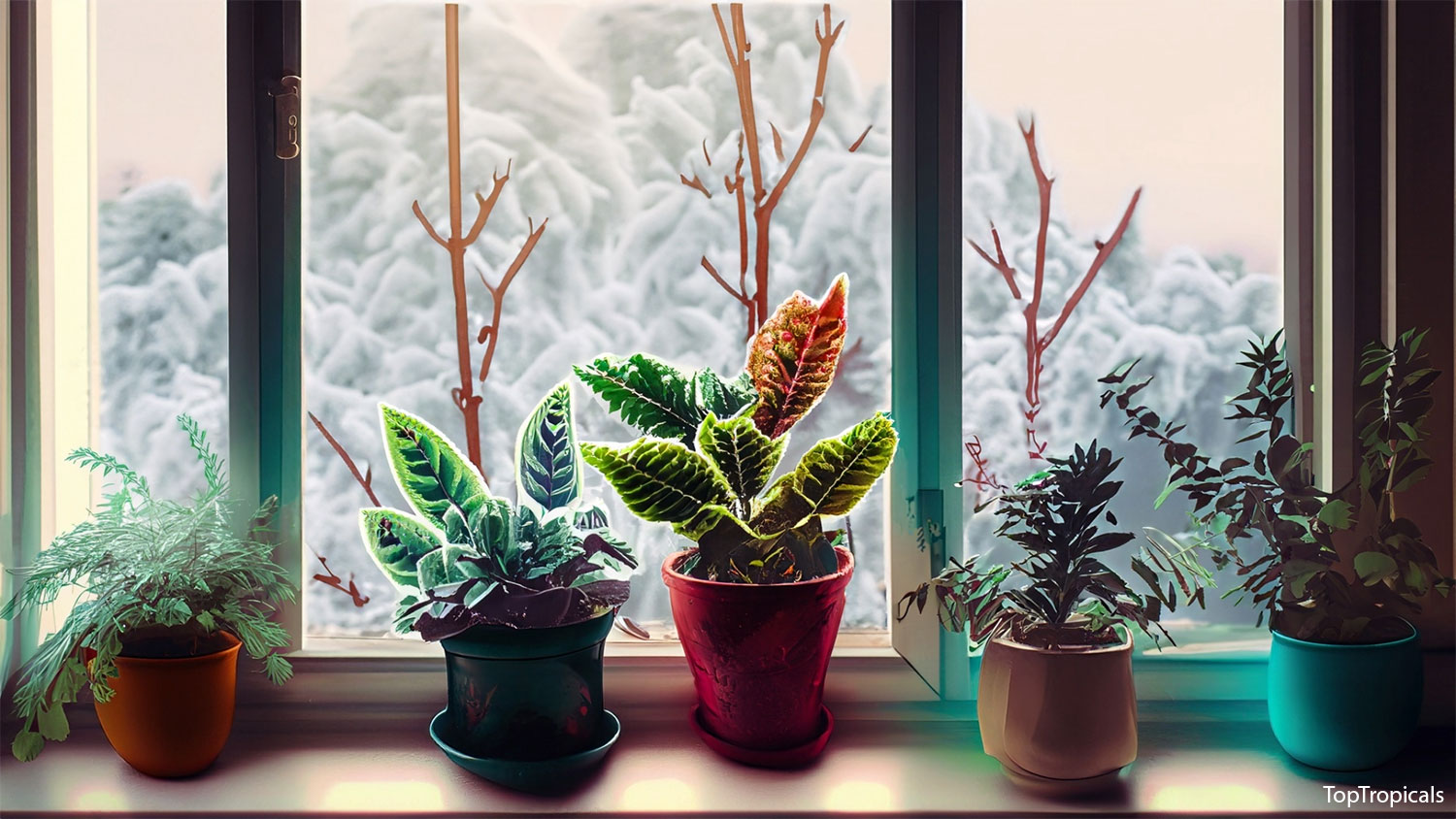
Q: I live in New Jersey and it is getting cool here, with temperatures in the upper 40s, but my tropical plant collection is in a heated sunroom (still around 70s). Should I continue fertilizing my plants? And if yes, my second question about deciduous Sugar Apple tree. Should I continue fertilizing it until it drops leaves?
A:
First of all, even though you live outside tropical
climate, your plants enjoy warm temperatures year round,
and can be treated like if they were in a Southern
garden.
Plant nutrients, both macro-elements (regular
fertilizer) and micro-elements (such as iron, manganese,
magnesium, copper, and other elements) play an important
role not only in overall plant health but also in plant
hardiness.
The rule of thumb is, even in warm climates we cut off
any fertilizer by the end of October. You still have
time for the last treatment this year (next will be in
March, or when your plants start showing new growth).
You may apply just a bit of slow-release granulated
fertilizer, or water-soluble by foliar spray, diluted
1/2 of label strength, to all evergreen species in your
collection.
The most important application before winter is
micro-elements and other plant boosters that will help
you plant collection survive winter months with a
shorter daylight and cooler temperatures. Now it is a
perfect time to make these simple steps:
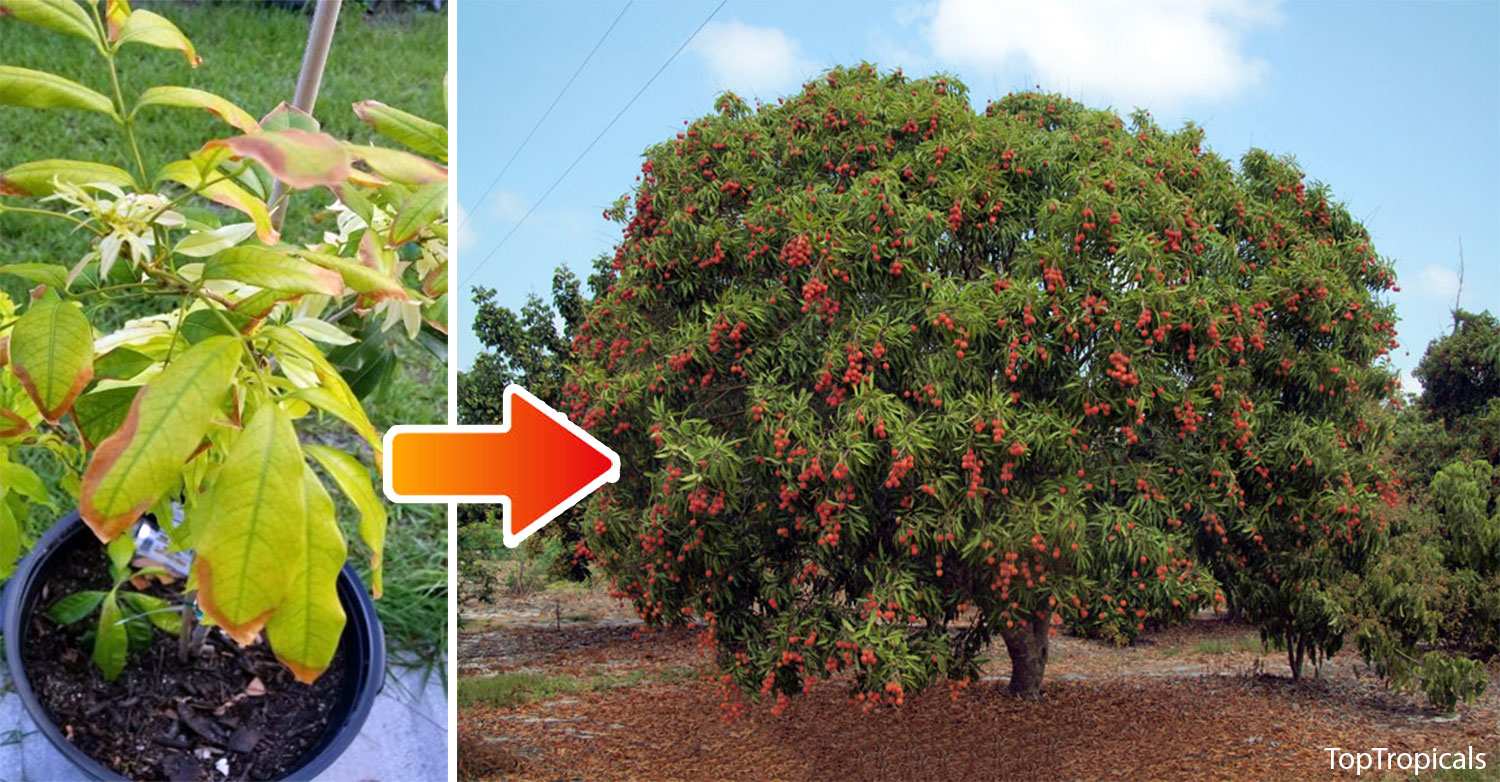
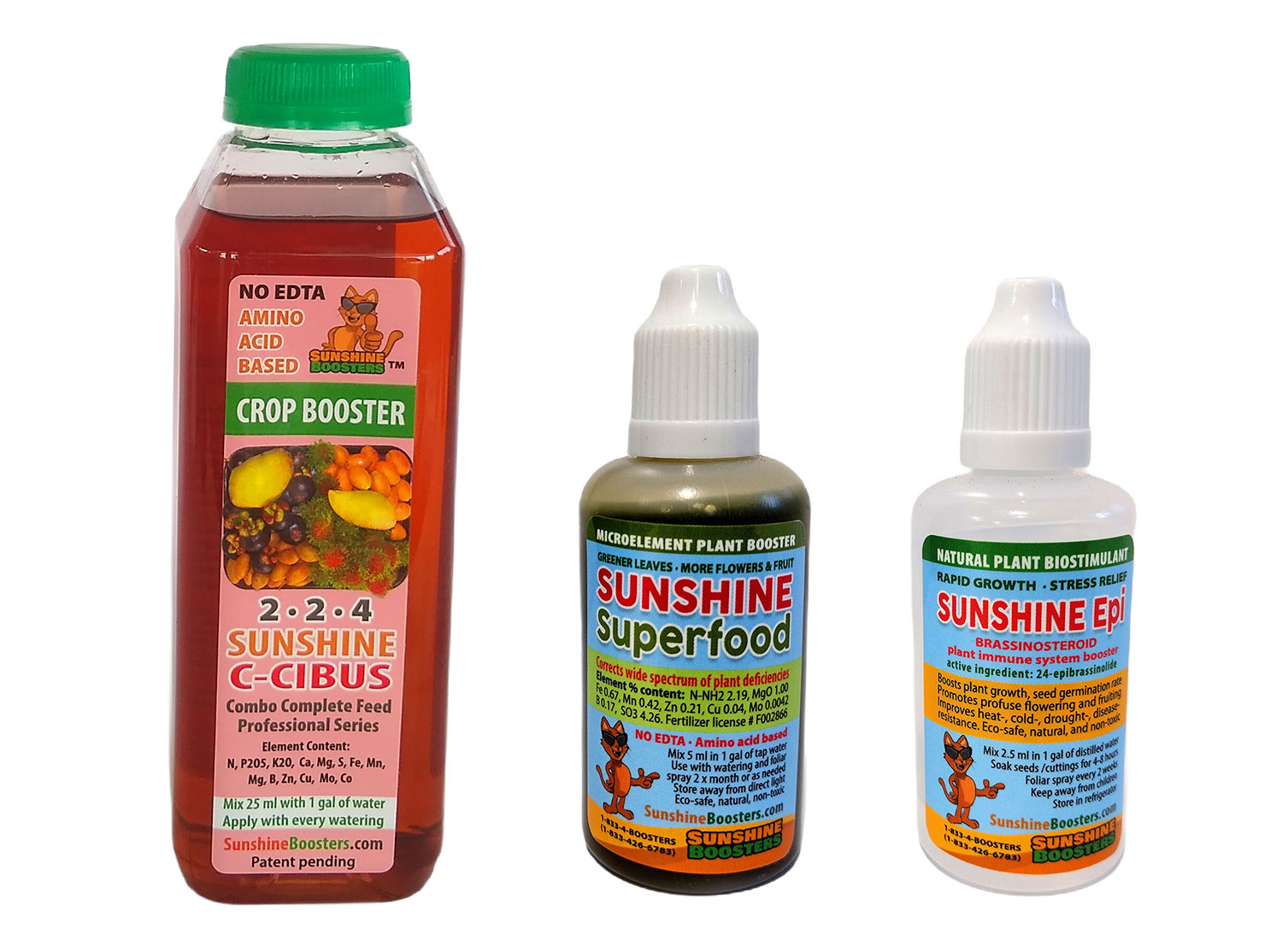
1) Miscro-element applications, any one of: Superfood, Iron Supplement, Greenleaf.
2) Sunshine-T application: for
improving cold hardiness, plus immune system resistance
to insects and deceases.
3)
Sunshine-Honey application for all fruit trees to
encourage bigger and sweeter fruit next year.
Regarding your second question. Deciduous tropical plants like Annonas, Adeniums, Plumerias, etc - do not need regular fertilizer at this time, however, go ahead and apply microelements Superfood complex, as well as Sunshine-Honey, while leaves are still green. These two will give a kick-start to provide better flowering in spring, and production of sweeter fruit later.
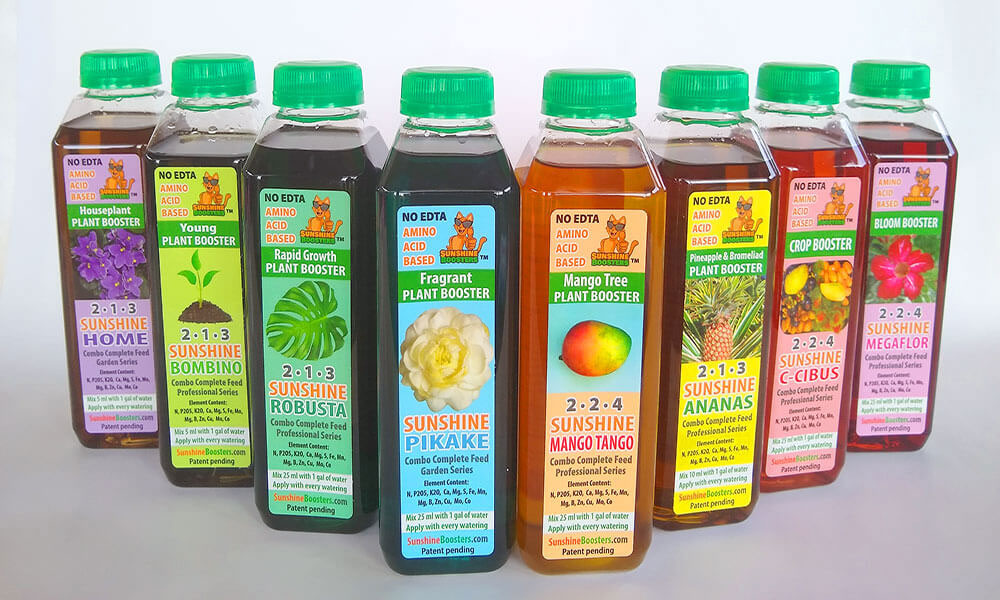
Check out SUNSHINE boosters - all with free shipping!
Date: 30 Dec 2022
Cold protection for tropical plants
Pushing the limits of tropical gardening
The year is almost over but the winter is not. This Christmas weekend at our Sebring B-farm we had it down to 30F. As a tropical gardener, winter can be challenging, especially if you grow plants outside of tropical zones.
To protect your garden from the cold, consider the following:
1. Monitor freeze watches and be prepared to take action if
necessary.
2. Create temporary structures like mini-greenhouses using PVC pipes,
carport frames, or bamboo sticks to support covers.
3. Use covers such as frost cloth, cardboard boxes, blankets, and bed
sheets.
4. Use Christmas lights and other heating elements, including propane
heaters, to keep plants warm.
5. Add a layer of heavy mulch around plant trunks to protect them from the
cold.
6. Apply plant boosters that improve cold hardiness, such as Sunshine Epi,
Sunshine-Si, and Sunshine Superfood.
At TopTropicals B-Farm, we sprayed our plants with a special cold hardiness treatment Sunshine-Si and covered and wrapped everything we could. We also moved cold sensitive species inside greenhouses. All of our plants are looking great and happy!
Photo above: Mulching mango trunks and using Christmas lights for cold protection
Read more about this special treatment plan: Cold Hardiness Improvement Kit.
Photo above: Temporary wrapping of a section of a greenhouse with a plastic or frost cloth protects from a windchill. It may also win you a few degrees even without a heater. In this particular case, according to our temp sensors, it was 30F outside, and 41F inside this "dome", no heaters used.
Sunshine Boosters:
Last chance to stock up
at a lower price!
Sunshine Boosters are natural, amino acid-based liquid fertilizers made with only the highest quality ingredients. Starting in 2023, the pricing for Sunshine Boosters will be adjusting to reflect the increasing cost of supplies. This is your last chance to stock up on Sunshine Boosters before the end of the year! Sunshine Boosters are safe to use year around, with every watering.
Don't miss out on this opportunity to get the best value for your money!
Use discount for even better deal:
22FOR22
for 22% off orders $220+
Min order $220. Offer expires 12-31-22
Date: 27 Oct 2022
Add a little Sunshine
to keep your plants looking their best
By Ed Jones, the Booster Guy
...Just like people, a little sunshine goes a long way in keeping them
happy. It is usually easier to keep a plant healthy than it is to fix it when
it is not well. Proper plant nutrition is often times the issue. The good
news is that it is easy to keep your plants looking good by following proper
nutrition practices...
...Feeding your plants with micronutrients that they just don't get in
regular fertilizers can prevent deficiencies. Let's get started on a regular
program of using foliar sprays to help keep your plants looking their best...
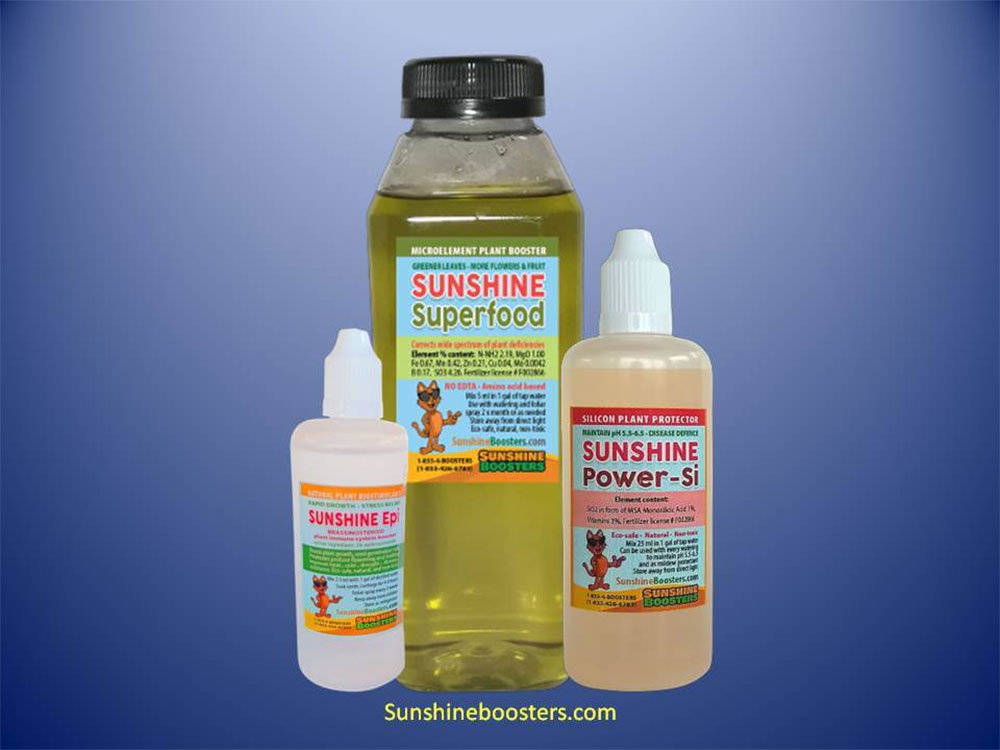
We recommend using three products in combination - the Complete SUNSHINE Microelement Supplement Kit that consists of:
- Sunshine Superfood
- Sunshine Epi
- Sunshine Power-Si
How often do I need to treat my plants?
We are recommending a foliar spray once per week to maintain optimal
health conditions. This is based on recent studies done in Ukraine by the scientist who invented Sunshine Boosters products...
Continue reading to see an easy treatment schedule that will provide
your plants with:
- Increased photosynthetic activity
- Increased insect and disease resistance
- Reduced mineral toxicity
- Improvement of nutrient imbalance
- Enhanced drought and frost tolerance
- Enhanced plant growth
Read more about these wonderful products and what they do >>
Sunshine Boosters are developed in Ukraine and manufactured in the USA. We support Ukraine fight for freedom. All profits from these fertilizers will be donated to support our Team in Ukraine.
Date: 24 May 2019
Synergy of SUNSHINE, biostimulants, and macro-micro
Q: I've heard that plants grow better and bigger with SUNSHINE boosters and when using Myco-Mix instead of regular soil mix. Do they work like fertilizers? If I use a Myco-mix, do I still need a fertilizer?
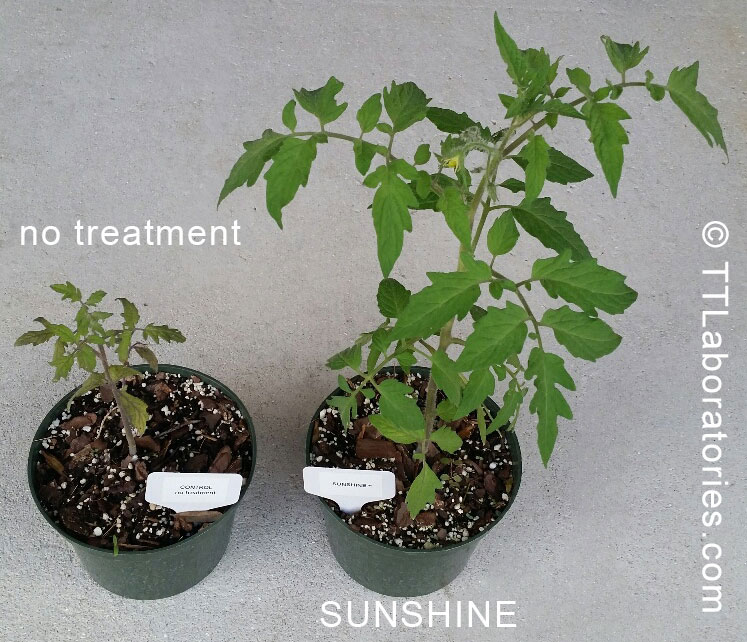
A: SUNSHINE boosters are not fertilizers, they are natural plant hormones, or biostimulants, as well as Myco-Mix which is a naturally occurring compound or microbes. Biostimulants are becoming increasingly attractive to folks interested in sustainable agriculture, and very popular for plant growth or pest resistance. A plant biostimulant is not a fertilizer because it provides no nutritional value to the plants. But, it can promote greater nutrient and water use efficiency, increase resistance to pests and diseases, reduce abiotic stresses, and in turn, lead to plant growth and health.
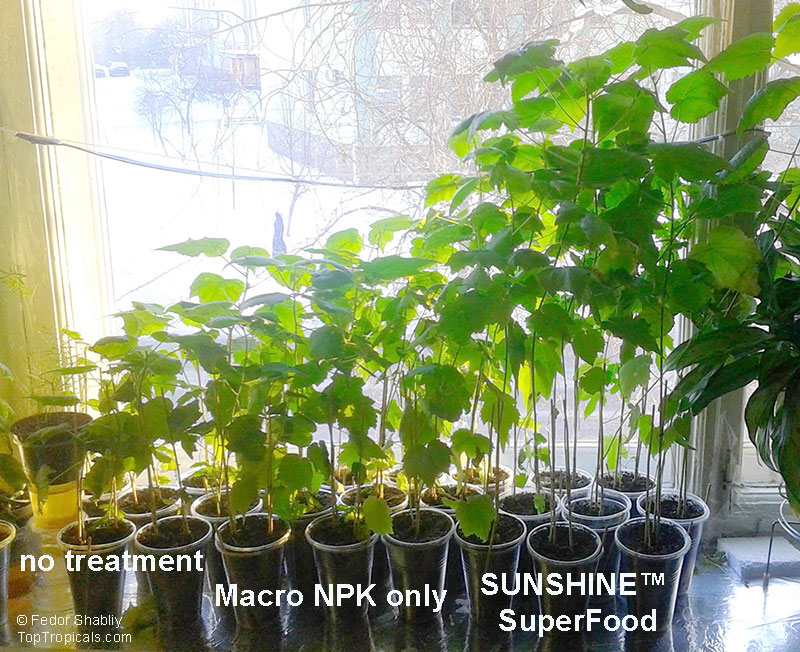
To answer your question, you can not replace regular fertilizers (NPK) and micro-elements with plant boosters and stimulants. However, fertilizers and microelements will work more efficiently when used in combination with biostimulants. Together they create a synergy, so plants use the most of fertilizer's potential, and will grow a lot better, faster, and healthier.
4 components for the best growing results
1. SUNSHINE boosters. They are a must during the juvenile stage of plant
development - seedlings and cuttings. They are especially important for
recovery of weak or stressed plants (boosting their immune system).
2. SuperFood microelements
3. NPK fertilizers. Select from water-soluble and smart-release types and
make sure do not exceed the recommended concentration. Lower dose and more
frequent use is always better for a plant.
4. Specialized soilless mixes: Myco-Mix (with biostimulant Mycorrhiza) for exclusive growing projects
and special/unique plants, Professional potting mix for potted plants, and Propagation mix for seeds and cuttings.
Date: 2 Mar 2026
Eugenia Cherries 🍒
By Tatiana Anderson, Horticulture Expert at Top Tropicals with Smokey & Sunshine help
Growing Eugenia Cherries (Cherry of the Rio Grande & Grumichama)
Cherry of the Rio Grande and Grumichama are compact, adaptable tropical fruit trees well suited to Southern landscapes. While forgiving, they perform best when planted correctly from the beginning.
Site and Planting
- Drainage is essential. Avoid low areas where water collects. Plant on a slight mound if soil is heavy or clay-like.
- Choose full sun for best flowering and fruit production. Partial shade is tolerated.
- A south or southeast exposure near a wall improves cold resilience and reduces wind stress.
- Dig a hole twice as wide as the container, but no deeper than the root ball.
- Set the tree level with surrounding soil. Do not bury the trunk.
Water and Feeding
- Water regularly during the first few months while roots establish.
- Once established, trees tolerate short dry periods but fruit best with moderate, consistent moisture.
- Feed lightly and consistenly. SUNSHINE Boosters Robusta liquid fertilizer is safe to use with with every watering. During hot season you may add controlled release Green Magic every 6 months. It is essential to apply micro elements: Sunshine Superfood micro nutrients complex
Cold Tolerance
- Protect young trees during hard freezes.
- Established Cherry of the Rio Grande can tolerate brief drops into the low 20s.
- Established Grumichama tolerates temperatures into the upper 20s.
Harvest and Production
- Cherry of the Rio Grande fruits from late spring into summer. Pick when fully dark and slightly soft.
- Grumichama ripens quickly, often within four weeks after flowering. Pick when glossy and deep purple-black.
- Both trees often begin fruiting within 2–3 years and increase production steadily with maturity.
Growing in Containers
- Use at least a 10–20 gallon pot for long-term growth.
- Ensure multiple drainage holes.
- Use a high-quality, well-draining container mix. Avoid heavy garden soil. Top Tropicals Abundance soil-less mix is specially formulated for pot growing
- Place in full sun for best fruiting.
- Water deeply, then allow the top layer to dry slightly before watering again.
- Move containers to a protected area during hard freezes.
- Prune lightly to maintain shape and airflow.
Common Mistakes
- Planting in poorly drained soil.
- Overwatering and keeping soil constantly saturated.
- Over-fertilizing with excessive nitrogen.
- Planting too deep and burying the trunk.
- Expecting heavy crops immediately instead of allowing time for maturity.
- Skipping cold protection for young plants.
Learn more: Tropical Cherries – Eugenias
❓Frequently Asked Questions: Eugenia cherries (FAQ)
-
Which one tastes better – Cherry of the Rio Grande or
Grumichama?
Cherry of the Rio Grande has a deeper, classic “sweet cherry” flavor with slight richness. Grumichama is softer, juicier, and often described as cherry with hints of grape and plum. Both are excellent fresh; Grumichama is especially popular for jam. -
Which tree produces more fruit?
Grumichama typically produces heavier crops once mature and can carry hundreds of fruits in a season. Cherry of the Rio Grande produces consistently but in slightly smaller volumes. -
Do birds take all the fruit?
Birds are attracted to both trees, especially Grumichama. Netting during peak ripening or harvesting promptly usually solves the issue. -
Are these true "tropical" trees or subtropical?
They are best described as subtropical tropicals. Unlike ultra-tender tropical fruits, Eugenia cherries tolerate occasional frost once established, making them more reliable in Southern landscapes. -
Do they drop fruit messily?
Fruit will fall if overripe, but the trees are compact and manageable. Regular harvesting prevents ground drop and keeps the area clean. -
Can they be used for hedging or screening?
Yes. Their dense evergreen foliage and upright growth make them suitable for edible hedges or privacy screens while still producing fruit.
Choosing between them is not about survival — both have proven resilient. It is about flavor preference, crop volume, and how you want to use the fruit in your kitchen and landscape.