Garden Blog - Top Tropicals

Date: 20 Aug 2025

What is your favorite variety of Jasmine Sambac?

Jasminum Sambac varieties

💮 What is your favorite variety of Jasmine Sambac?


💮 Jasminum Sambac is hands-down the queen of fragrant flowers. The scent is heavenly - so much so that it's the key to jasmine perfume and the secret behind authentic jasmine tea.

💮 Jasmine sambac comes in all shapes and sizes - from neat little shrubs to big, vigorous bushes and even climbing vines. Every variety shows off a different flower form. It’s happy in sun or shade, perfect for pots, and loved as an indoor plant.

💮 At TopTropicals we love them all, but these three are our favorites:
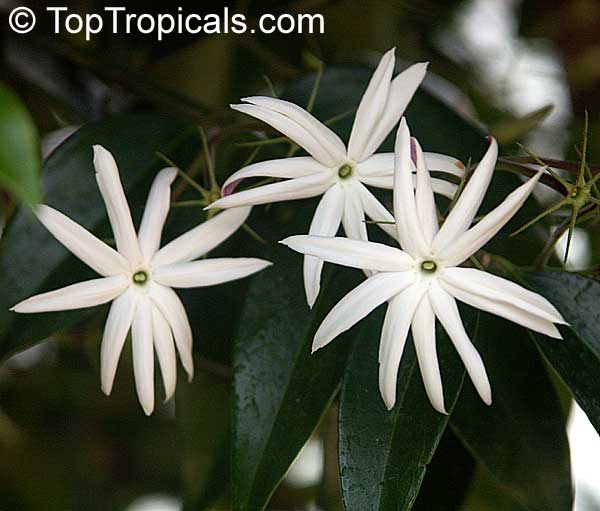
- Belle of India - with elegant long petals
- Arabian Nights - vigorous yet compact, always covered in blooms
- Little Duke - same big carnation-like flowers as Grand Duke, but in a smaller, tidy package

👉 At Top Tropicals, we grow every known variety of Jasminum sambac in cultivation:


Which one would you choose for your garden?

✔️ Arabian Nights - compact slow growing shrub with small delicate flowers
✔️ Belle of India - compact vine with long elegant petals, shade lover
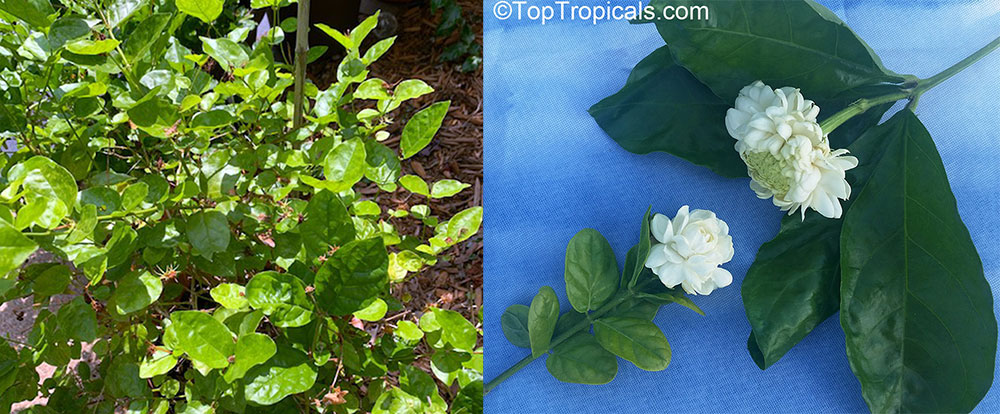
✔️ Grand Duke of Tuscany - the most popular, vigorous bush with carnation-like flowers
✔️ Grand Duke Supreme - bigger, more vigorous version of Grand Duke with larger flowers
✔️ Gundu Malli - new hybrid between Arabian Nights and Grand Duke
✔️ Little Duke - more compact version of the Grand Duke
✔️ Maid of Orleans - vigorous full sun climber, great for hedges and fences
✔️ Mali Chat - very delicate, rare variety, with miniature 3-tier flowers, not easy to establish, shade lover
✔️ Mysore Mulli - vigorous vining shrub for sunny or semi-shade locations

👉 To get more flowers, just use Sunshine Pikake plant booster and enjoy the perfume all day long!

🛒 Smell the Difference – collect Sambac varieties

📚 Learn more:


The most wanted fragrant plant
How to tell the difference between Jasmine Sambac Varieties
Jasmine Sambac in bloom
📚 Jasminum Sambac Absolute Flower - book download
📱 Jasminum Sambac - Absolute Flower
📱 Jasminum Sambac Page

#Perfume_Plants #Hedges_with_benefits

🟢 Join 👉 TopTropicals
Date: 20 May 2026

Why in Thailand Wrightia religiosa is near all temples and homes

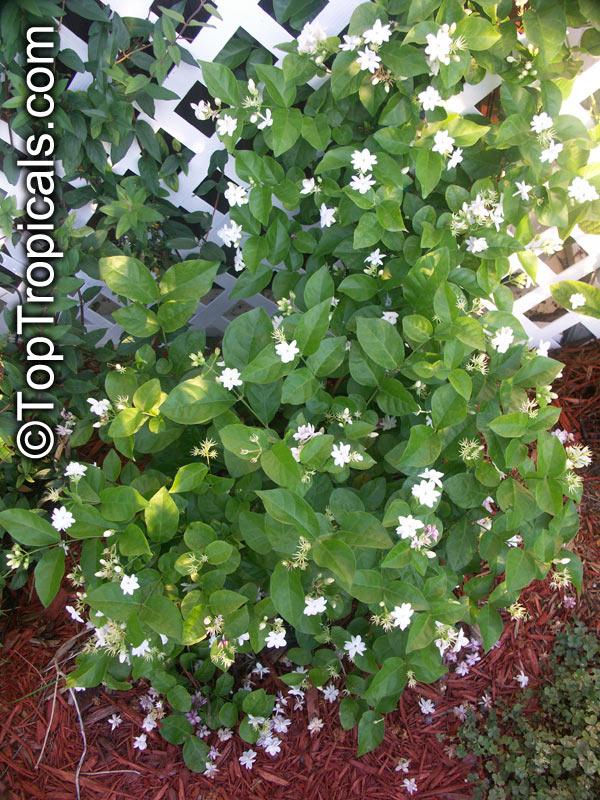
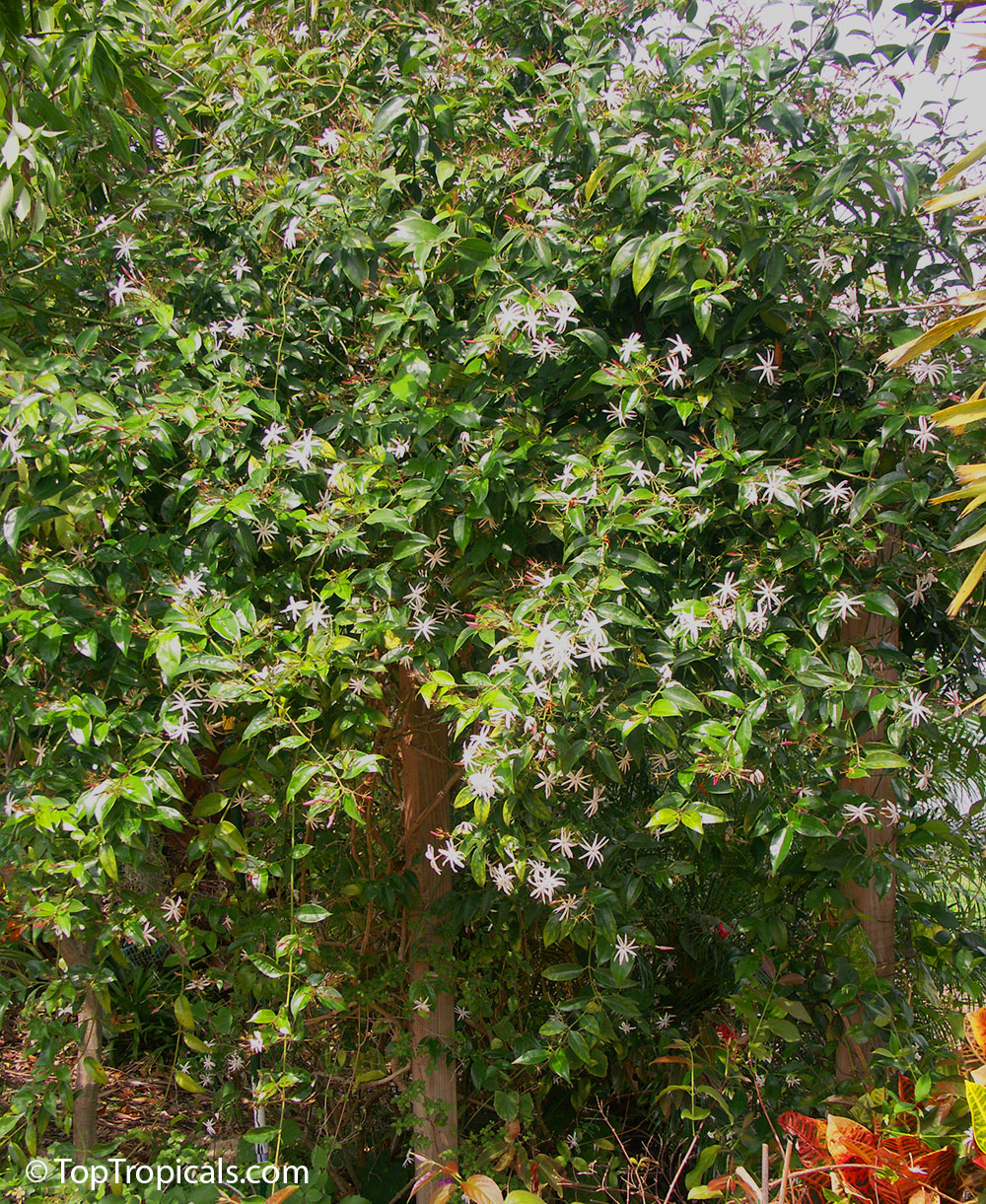
Wrightia religiosa - Sacred Buddhist, plant

Wrightia religiosa - Sacred Buddhist, plant

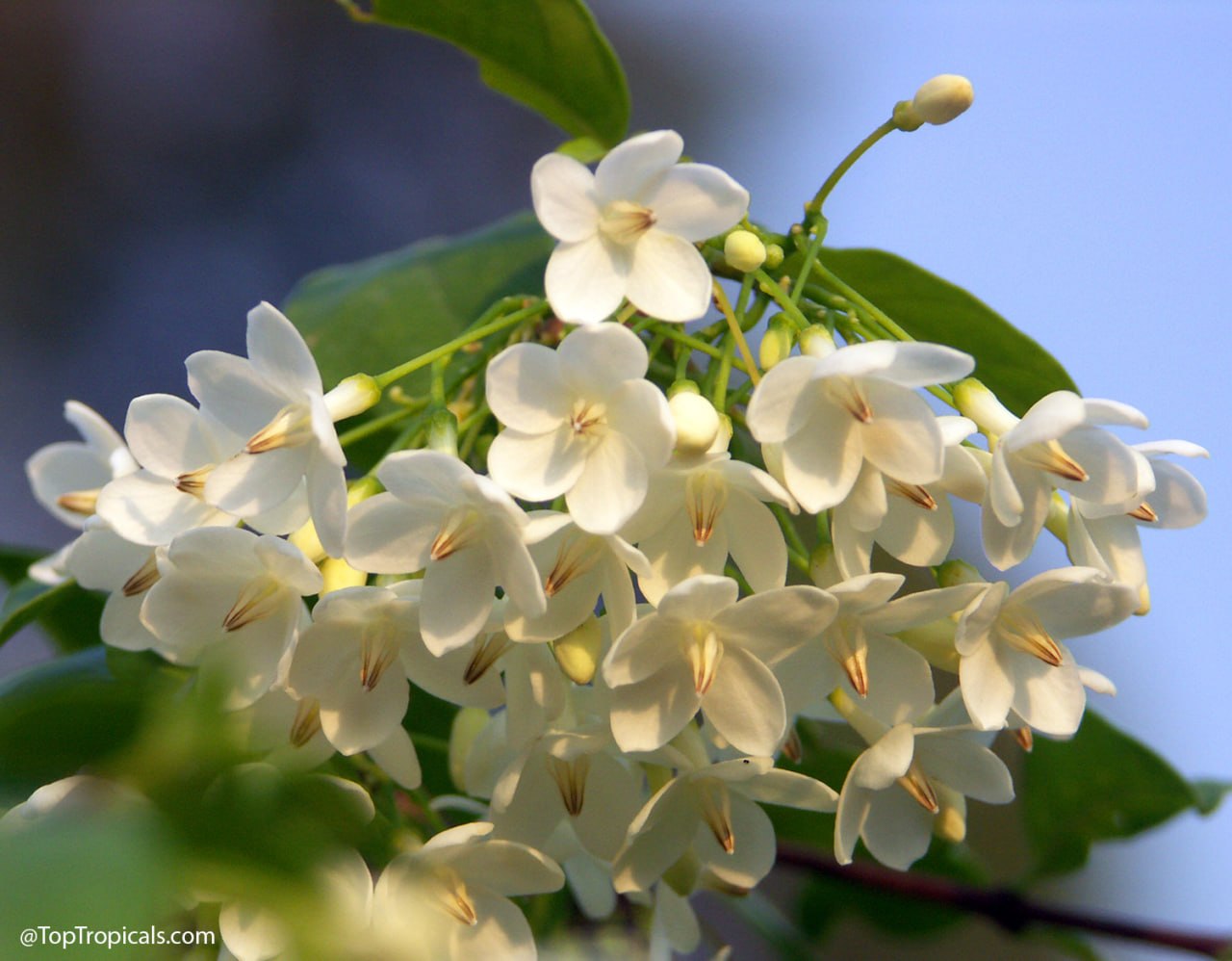
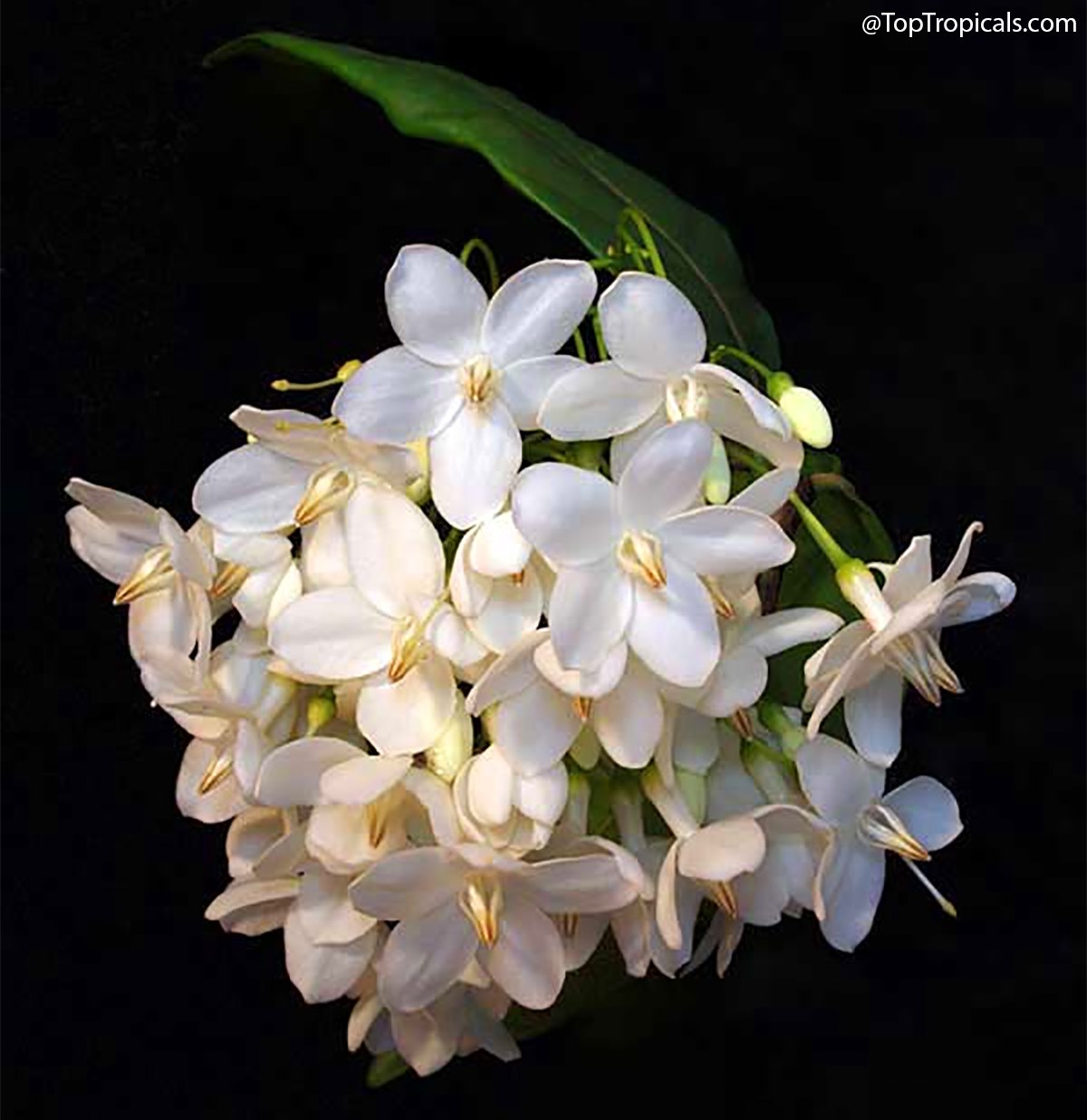
Wrightia religiosa - Sacred Buddhist, flowers

Wrightia religiosa - Sacred Buddhist, flowers

Wrightia religiosa - Sacred Buddhist, flower close up

Wrightia religiosa - Sacred Buddhist, flower close up

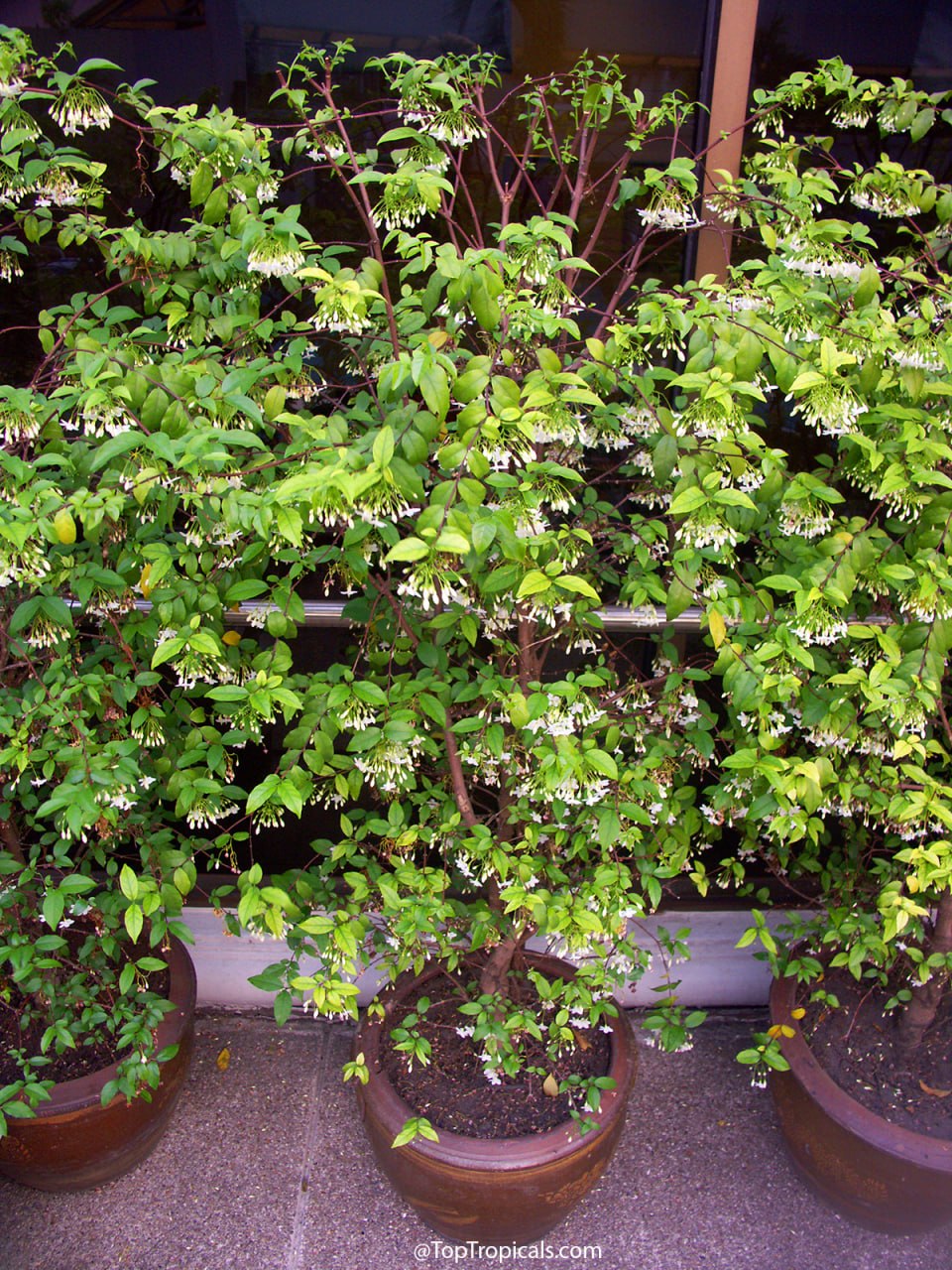
🏯 Why in Thailand Wrightia religiosa is near all temples and homes


In Thailand, you will smell the Water Jasmine before you see it. Trace that soft, fruity, jasmine-like fragrance and you'll find Wrightia religiosa - an unassuming tropical shrub with tiny white flowers hanging like pendants. Also called Sacred Buddhist, this beloved plant is everywhere in Southeast Asia, cherished for its rich cultural history and old-world charm rather than loud colors.

Sacred Buddhist Plant Facts

Botanical name: Wrightia religiosa, Echites religiosa
Also known as: Sacred Buddhist, Wondrous Wrightia, Wild Water Plum, Water Jasmine
USDA Zone: 9 - 10
Highligths Plant used for bonsaiLarge shrub 5-10 ft tallSmall tree 10-20 ftSmall plant 2-5 ftSemi-shadeFull sunWatering: Regular. Let topsoil dry slightlyWhite, off-white flowersPlant attracts butterflies, hummingbirdsEthnomedical plant.
Plants marked as ethnomedical and/or described as medicinal, are not offered as medicine but rather as ornamentals or plant collectibles.
Ethnomedical statements / products have not been evaluated by the FDA and are not intended to diagnose, treat, cure, or prevent any disease. We urge all customers to consult a physician before using any supplements, herbals or medicines advertised here or elsewhere.Fragrant plantSubtropical plant. Mature plant cold hardy at least to 30s F for a short timeFlood tolerant plantSeaside, salt tolerant plant
Get personalized tips for your region


💮 The Shrub of Buddhist Symbolism that Thai Temples Have Been Planting for Centuries

The species name religiosa is no accident. It literally refers to the plant’s long association with religious, spiritual, and cultural traditions across Thailand, Vietnam, Malaysia, and Singapore.

While the flowers themselves are visually simple, their unique growth habit has inspired generations of Buddhist symbolism. Unlike many flowers that point proudly toward the sky, the blooms of the Water Jasmine hang downward. In Thai culture, this downward-facing habit became a beautiful symbol of modesty and humility - a physical representation of bowing down rather than standing in pride.

Furthermore, many gardeners and monks associate the flower’s five distinct petals with foundational Buddhist virtues: wisdom, compassion, patience, kindness, and generosity. Whether ancient legend or folk interpretation, this cultural meaning has earned the plant a reputation as something sacred, making it a staple near homes and temple grounds.

💮 The Fragrance People Fall in Love With


Visually, Wrightia religiosa does not try to dazzle you with giant petals or wild, neon colors. Instead, its magic lies entirely in its scent.

The perfume it throws into the air is the real reason people become obsessed with it. It is a clean, intoxicating fragrance that drifts gracefully through the evening air. For anyone living in a warm climate, the best part is that the Water Jasmine is not a "one-and-done" bloomer. When the plant is happy, it flowers repeatedly and almost continuously throughout the year, meaning that incredible scent becomes a permanent fixture in your garden.

💮 From Temple Gardens to Bonsai Pots


Part of what makes Wrightia religiosa so widespread is its sheer versatility. It is an incredibly agreeable plant that adapts beautifully to whatever form a gardener desires. In Southeast Asia, you will see it styled as:
· A standalone specimen shrub
· A dense, fragrant privacy hedge
· A patio accent in containers
· A small, sculptural tree

It has also become an absolute classic in the tropical bonsai world. Because its branches are flexible, fast-growing, and highly responsive to pruning, even beginners can easily wire and shape young plants into twisted, artistic forms. Left to grow naturally, older plants develop a graceful, twiggy, and airy structure that looks naturally sculptural.

💮 The Fake-Dead Winter Quirk


Wrightia is easy to care for with standard sun and water, but it hates the cold (although survives it well). Below 65F, it abruptly drops all its leaves and looks completely dead. Many gardeners panic and throw it away - but it’s just resting. Simply bring container plants indoors for the winter. Once the warmth returns, it wakes up, flushes green, and resumes blooming.

💮 Subtle Beauty with Deep Roots


Some tropical plants impress with sheer size, but Wrightia religiosa does the opposite. Its beauty is quiet - thin branches, dangling white pendants, light green foliage, and a fragrance that gently fills a yard.

It is a plant with a few centuries of cultural history carried in its branches, and it is one of those rare garden gems you cannot truly appreciate until you experience its scent in person.

🛒 Plant the Sacred Buddhist and enjoy the magical aroma

📚 Learn more:


Wrightia religiosa and other wrightias in Plant Encyclopedia

#Discover #Perfume_Plants

🟢 Join 👉 TopTropicals

Date: 26 May 2021

Jasmine for a fence

In the photo: Jasmine Maid of Orleans

Q:We are looking for a jasmine variety without thorns that we can grow on a wire fence...

A: All true jasmines (Jasminum spp.) are thornless. So you are safe to get anyone you like. The most vigorous, fast growing jasmines that grow into a vine, are:
Jasminum dichotomum
Jasminum pubescens
Jasminum nitidum
Jasminum officinale
Jasminum sambac Maid of Orleans - the most fragrant!

In the photos: Jasminum nitidum (Star Jasmine)

Date: 5 Sep 2019

How to get Jasmines to flower

Q: On the picture, these are a few of the jasmine plants that I have from Top Tropicals. I have bought so many plants from you over the years, not just jasmine. I have several varieties of jasmine. They were all doing very well. However this year I didn't get a single flower. There are a lot of buds... But before the buds open they become brown and withered. I bought fertilizer from you. Fertilized the plants once a month like I always do. I water the plants once a week. I repotted the plants hoping that would take care of this problem. Some of the jasmine plants I pruned... the plants came back vigorous growth with a lot of buds... BUT it is the same problem! Please help.

A: One of the possible reasons why they have flower issues is - maybe they don't have enough sunlight. They need to be in full sun all day long for profuse blooming and proper flower forming. However since the buds are forming, there may be just enough light. In this case, dropping buds may be a sign of overwatering.

Important steps - how to make Jasmine Sambac flower:

1. Soil. Use only well-drained soil

2. Water. Keep plants on a dry side and never over water. If the top of the soil is still moist, do not water.

3. Sun. Keep in full sun all day long. The more sun, the more flowers.

4. Bloom booster. Use Flower booster fertilizers:
Pink N Good Daily Plant Food - Flower Booster
Fragrant Plant Special booster, this 90-day Smart-Release container plant food:
Plumeria Top Dress - Smart-Release Booster
Do not use fertilizers with high Nitrogen (1st number in NPK formula) - those will promote more leaves instead of flowers.

5. Micro-elements. Use Apply micro-elements, they will help the plant to develop healthy and long-lasting flowers:
SUNSHINE SuperFood - plant booster

Here is more information on growing Jasmine

Date: 3 May 2024

Best picks of the Season

Special SALE deals - from our horticulturist

These plants are large, developed and beautiful NOW!

Hibiscus  schizopetalus  -  Coral  Hibiscus

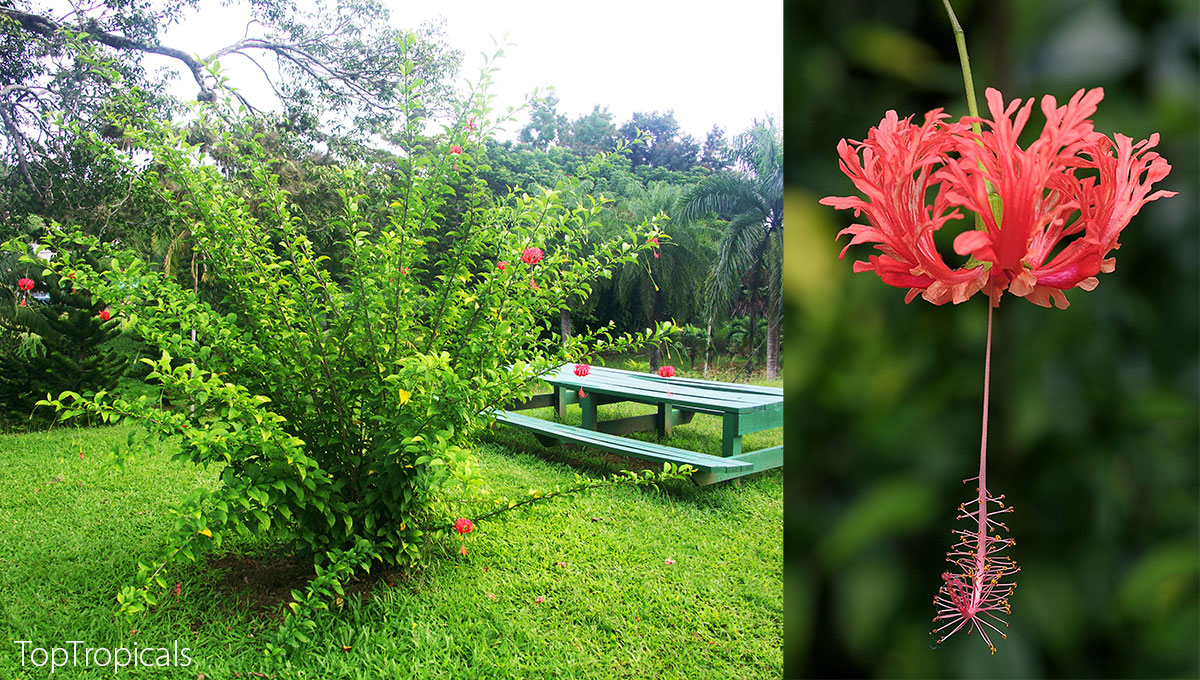
Hibiscus schizopetalus - Coral Hibiscus. Spectacular weeping tree hibiscus, rare and hard to find. Grows rapidly and blooms freely. Flowers look like parachutes and can be recognized by the fringed and lacy petals which are bent backward. It has slender and gracefully curved stems. Can be trained into a showy standard.


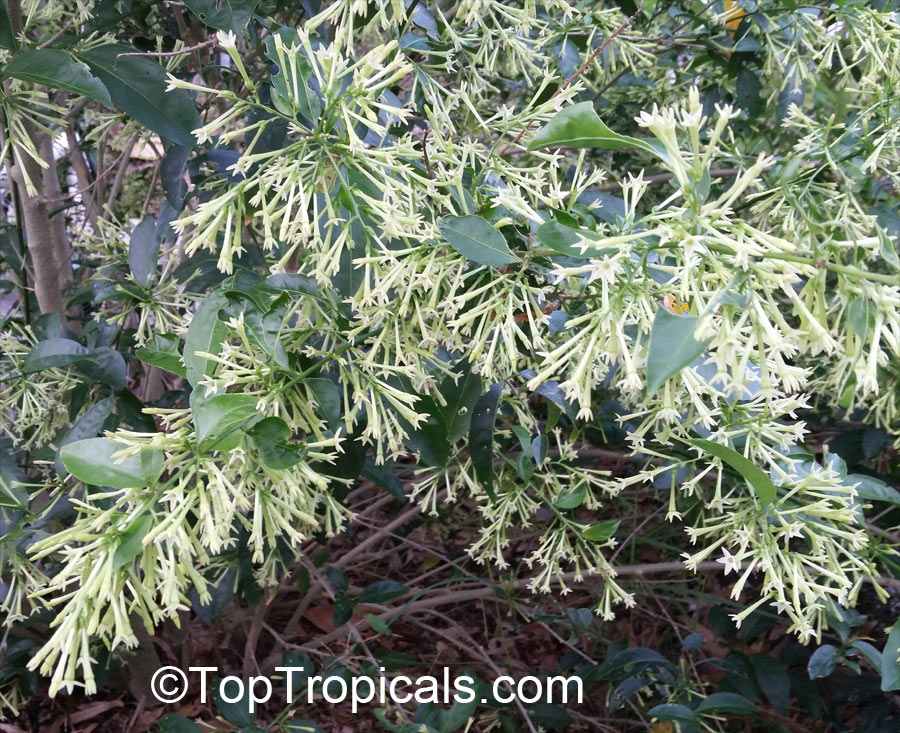
Cestrum  nocturnum  -  Night  blooming  jasmine

Cestrum nocturnum - Night blooming jasmine. Garden favorite - the sweetest fragrance at night is intoxicating. One of the most famous and desirable fragrant plants. Flowers are pale yellow to white, open at night and stay extremely fragrant until sunrise. These flowers are widely used in India and other countries of South Asia for perfumery, medicinal applications and in religious ceremonies. Best location will be near driveway, window or entrance, where the magic fragrance can be appreciated.


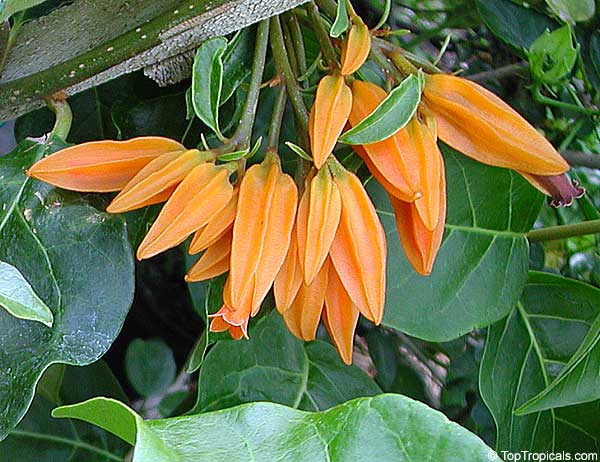
Juanulloa  aurantiaca  -  Gold  Finger  plant,  Mexican  Spoon  Flower

Juanulloa aurantiaca - Gold Finger plant, Mexican Spoon Flower - this one is soooo pretty! Unusual looking vine or shrub with yellow-orange fleshy flowers, everblooming and a VERY fast growing. Rare, collectible plant.


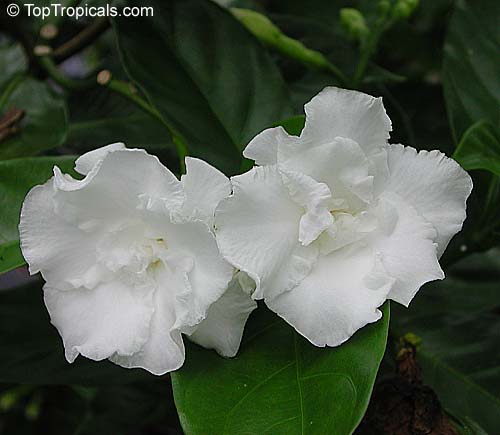
Tabernaemontana  Flore  Pleno,  Crape  Jasmine

Tabernaemontana Flore Pleno - Crape Jasmine, Carnation of India, Florida Gardenia - this fast growing bush with waxy leaves and beautiful fragrant flowers is a must in tropical garden. Easy to grow and free flowering, dense bush.


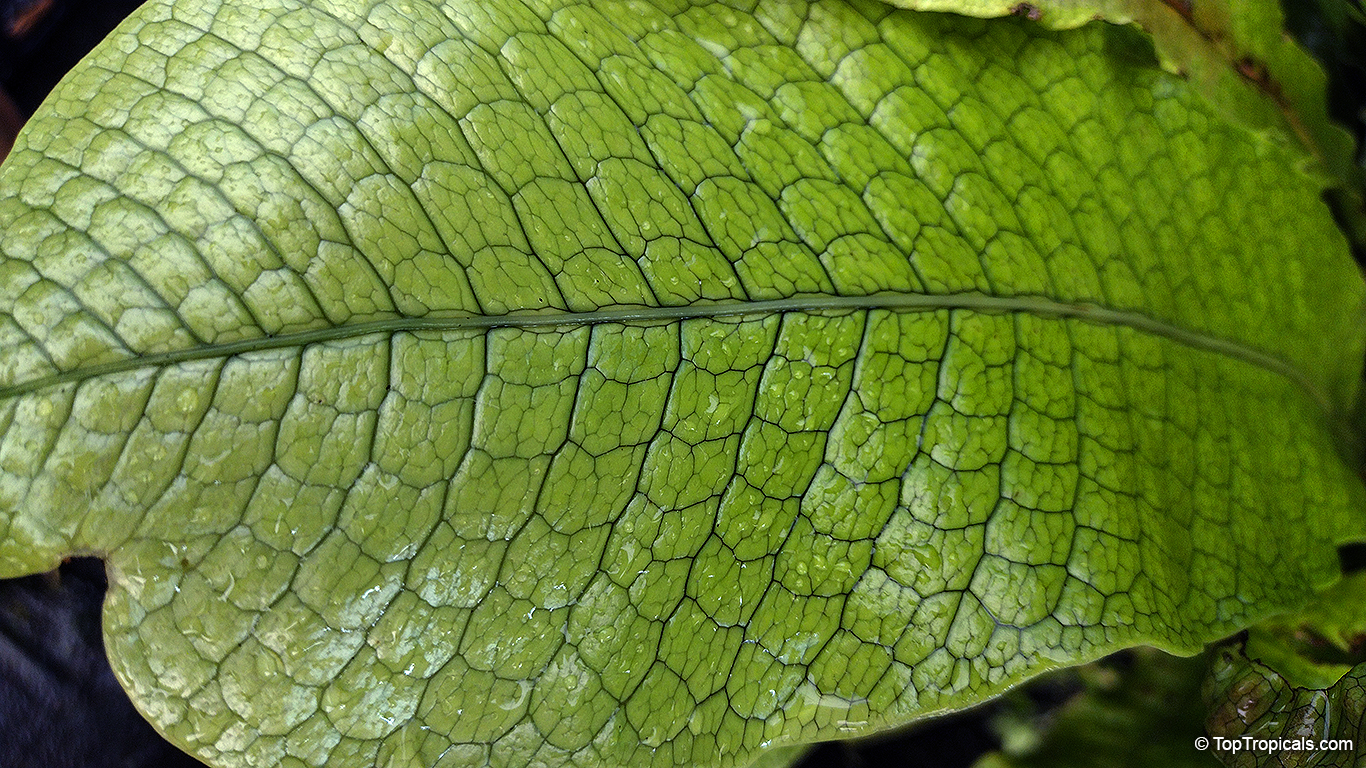
Microsorum  musifolium  -  Alligator  (Crocodile)  Fern

Microsorum musifolium - Alligator Fern, Crocodile Fern from Australasia. Perfect for shade! An epiphytic fern with cool alligator-skin looking leaves. The strikingly shaped, light green fronds of the fern form a lovely backdrop to its stunning stiff, leathery, dark green alligator-skin foliage. Perfect as a houseplant, or planted under a tree. Grows to 2-3 ft in height and likes a sheltered, semi-shaded location, no direct sunlight.