Garden Blog - Top Tropicals

Date: 29 Nov 2025

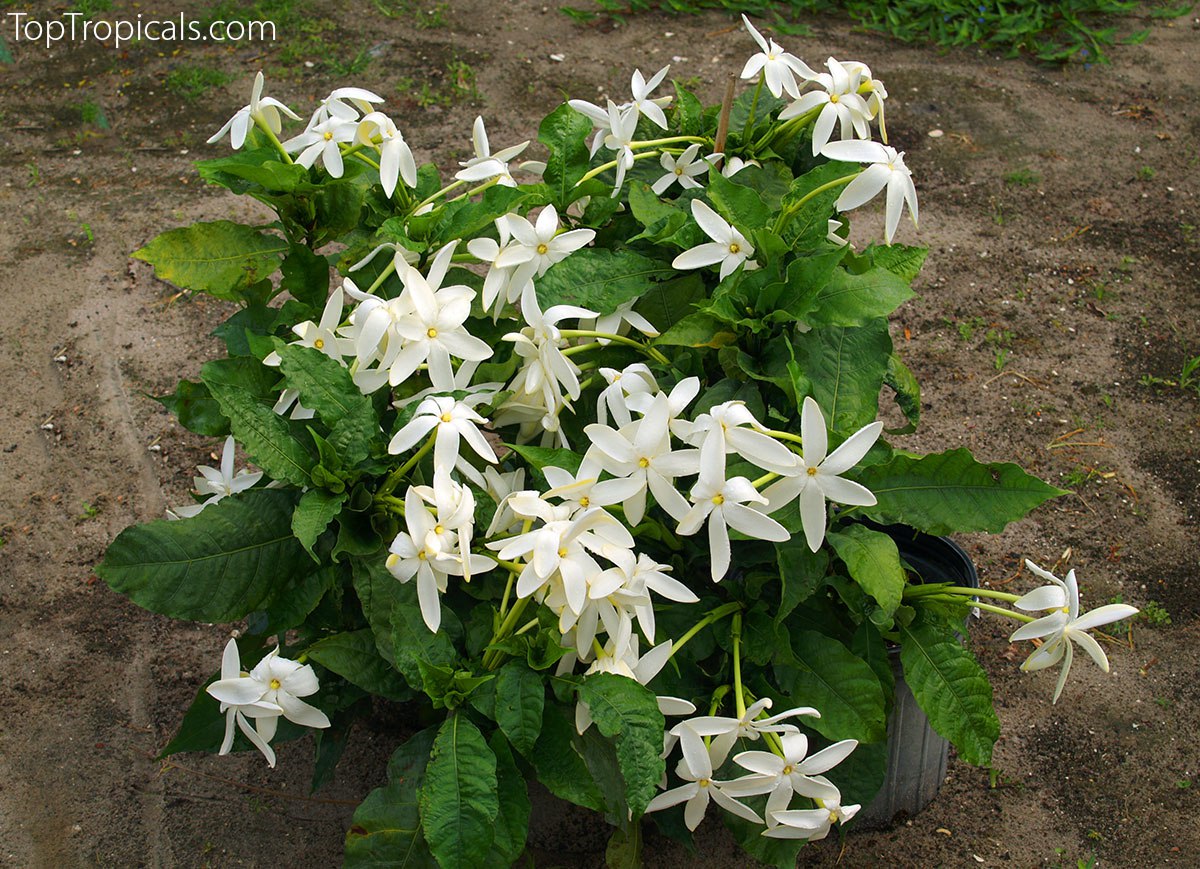
What will bloom for you in November: Gardenia nitida - Shooting Star
Gardenia nitida - Shooting Star
Gardenia nitida - Shooting Star

Gardenia nitida - Shooting Star

Gardenia nitida - Shooting Star

⭐️ What will bloom for you in November: Gardenia nitida - Shooting Star

  • ⭐️ It's end of November and let's see what's in bloom today.
  • Gardenia nitida - the Shooting Star Gardenia - is looking absolutely perfect right now. This is one of the most unusual gardenias you’ll ever run into. Native to tropical Africa, slow-growing, elegant, and honestly… it doesn’t even look like the regular gardenias people are used to.
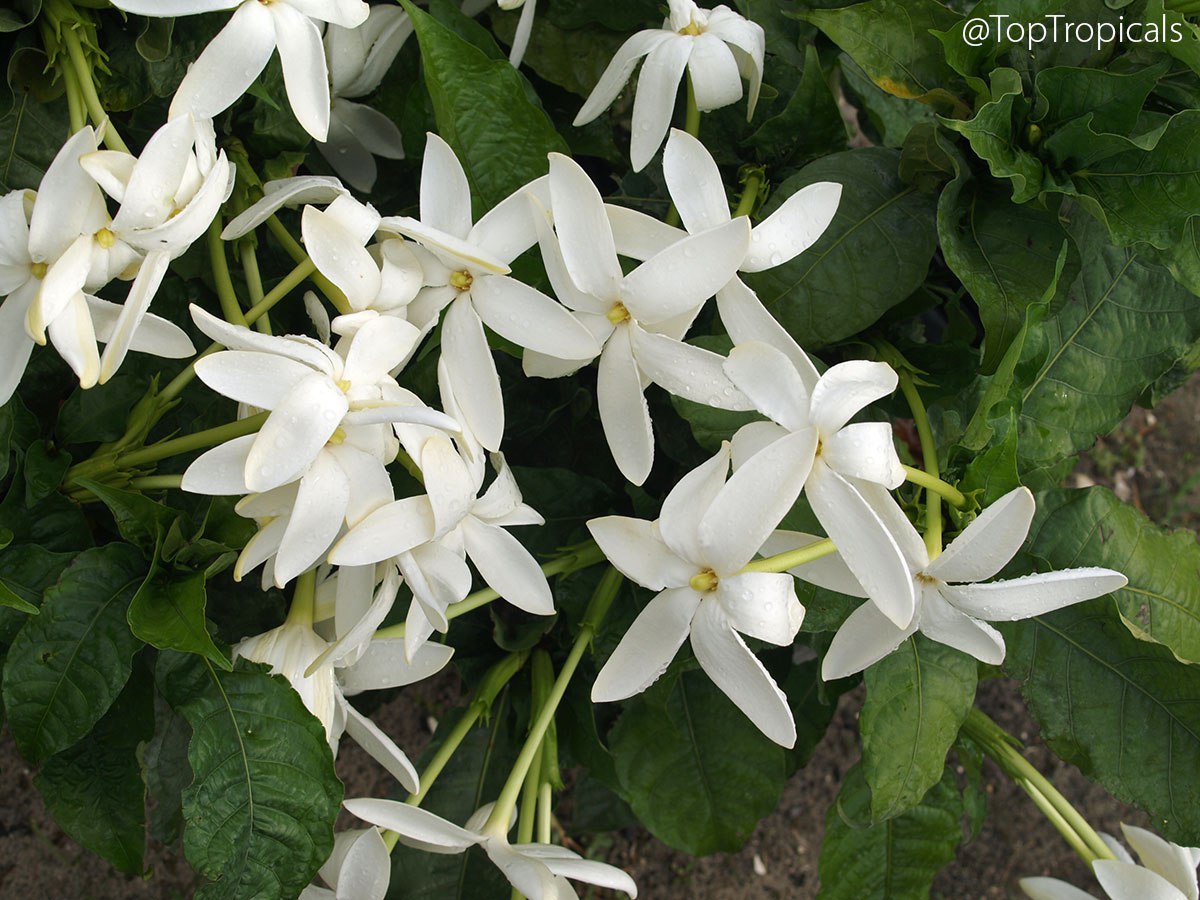
  • ⭐️ The leaves are the first giveaway. Instead of the thick, waxy look of common gardenias, this one has big, soft, diamond-shaped leaves that give the whole plant a delicate, almost tropical-orchid vibe. The shrubs grow into neat, rounded shapes, so they do great in containers or smaller garden spaces.
  • ⭐️ And the blooms… they’re happening right now! Long, skinny white tubes that flare open into bright little starbursts. They show up in clusters, and when the sun hits them, they really do look like tiny shooting stars across the plant. The fragrance is sweet, rich, and drifting all over the walkway even before you get close.
  • ⭐️ It blooms several times a year, but this moment - right now, heading into winter - is one of its best. If you like rare fragrant plants, this is one of those collector pieces you don’t see every day, especially looking this full and this fresh.


🛒 Get the Shooting Star to light up your garden in Winter

📚 Learn more:

Plant Facts

Gardenia nitida, Gardenia posoqueria
Gardenia
USDA Zone: 9-11
Large shrub 5-10 ft tallFull sunRegular waterWhite, off-white flowersPlant attracts butterflies, hummingbirdsFragrant plant

More about Gardenia nitida from Plant Encyclopedia

📱 Watch YouTube short videos:


#Perfume_Plants #Hedges_with_benefits

🟢 Join 👉 TopTropicals
Date: 30 Dec 2025

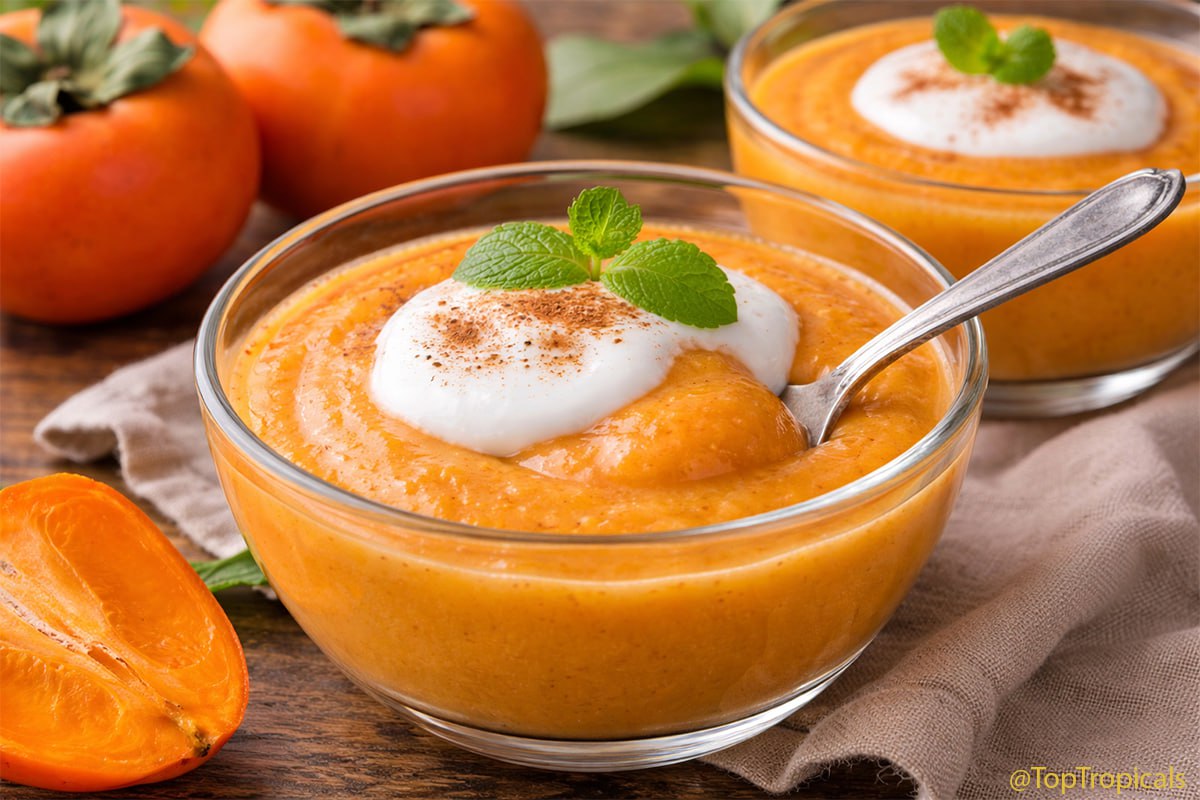
Persimmon spoon pudding: quick-n-fun exotic recipes

Persimmon spoon pudding

Persimmon spoon pudding

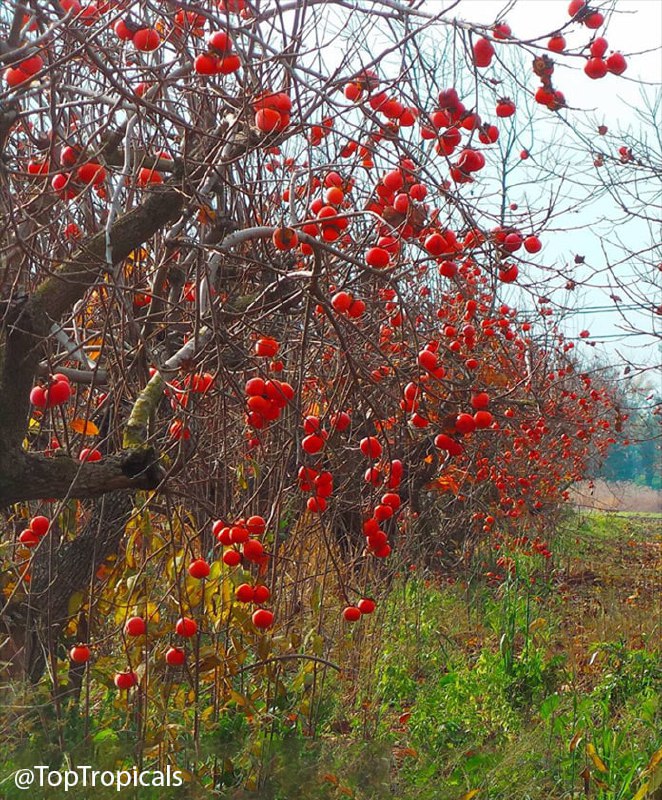
Persimmon tree (Diospyros sp)

Persimmon tree (Diospyros sp)

🍴 Persimmon spoon pudding


Ingredients

  • 2 very ripe persimmons (astringent type, fully soft)
  • 2 tablespoons plain yogurt
  • Optional: pinch of cinnamon

Instructions

  1. Scoop the soft persimmon flesh into a blender and puree until smooth.
  2. Chill the puree in the refrigerator for 15 to 30 minutes.
  3. Spoon into a bowl and top with plain yogurt.
  4. Sprinkle lightly with cinnamon if desired and serve.

🍑 About the fruit:


Persimmon (Diospyros spp.) is a graceful, cold-hardy subtropical fruit tree native to China and widely grown across temperate and warm regions. The fruit is loved for its rich sweetness, often compared to honey and apricot. Persimmons are divided into astringent types, which must soften fully before eating, and non-astringent types, which can be enjoyed firm. The fruit is nutritious and commonly eaten fresh or used in desserts.

🌱 In the garden:


Persimmon trees are highly ornamental, with drooping branches, lush summer foliage, and dramatic fall color. They thrive in well-drained soils, tolerate alkaline conditions, and are hardy in USDA zones 7-10. Many varieties perform well in containers, making persimmon a beautiful and productive choice for both edible landscapes and patio gardens.

🛒 Plant Persimmon Tree for sweet fruit and deserts

📚 Learn more:

Plant Facts

Diospyros blancoi, Diospyros discolor
Velvet Apple, Mabolo
USDA Zone: 9-11
Large tree taller than 20 ftFull sunRegular waterEdible plant
  • Explore Persimmon trees (Diospyros spp) in Plant Encyclopedia
  • How soon will Persimmon tree fruit?
  • Why so many gardeners this year planted Native American Persimmon
  • Hardy, dramatic looking tropical fruit tree with a sweet fruit

  • #Food_Forest #Recipes

    🟢 Join 👉 TopTropicals

    Date: 18 Feb 2026

    🔥 Blazing into the 2026 with hot jasmines

    Sunshine  the  orange  tabby  wearing  a  red,  white,  and  blue  wristband  sits
    laughing  on  a  jasmine-covered  horse  topiary  during  the  2026  Year  of  the 
 Horse,  while  Smokey  the  tuxedo  cat  trims  the  greenery  at 
 sunset.
    Sunshine: I'm blazing into the 2026 Year of the Horse! Call me Mister Fahrenheit. Don't stop me now! 'Cause I'm having a good time — I'm a shooting star, leaping through the sky like a tiger, defying the laws of gravity!
    Smokey: It's jasmine, Tiger. A shrub. Not Wembley. Calm down.

    💮 2026 Year of the Horse - and the Plant I Trust Most

    By Tatiana Anderson, Horticulture Expert at Top Tropicals

    Every new year carries its own energy.

    2026 is the Year of the Horse - a year of movement, fire, momentum, and bold decisions. It is not a quiet year. It pushes us forward.

    When fellow gardeners ask me what to grow in a year like this, my answer is simple:
    Grow something that balances strength with grace.

    For me, that plant is Jasmine Sambac.

    In many cultures, Sambac represents devotion, purity, and deep affection. In the Philippines it is the national flower - Sampaguita - woven into garlands for weddings and sacred ceremonies. In Hawaii, it becomes leis - a symbol of welcome and connection - Pikake. In India, it perfumes temples and homes.

    This is not just a fragrant shrub.
    It is a plant tied to love, loyalty, and continuity.

    The Horse runs forward.
    Jasmine anchors the heart.

    In a fiery year like 2026, I believe we need both.

    And that is why I always return to Jasminum sambac.

    🛒 Explore Jasmine varieties

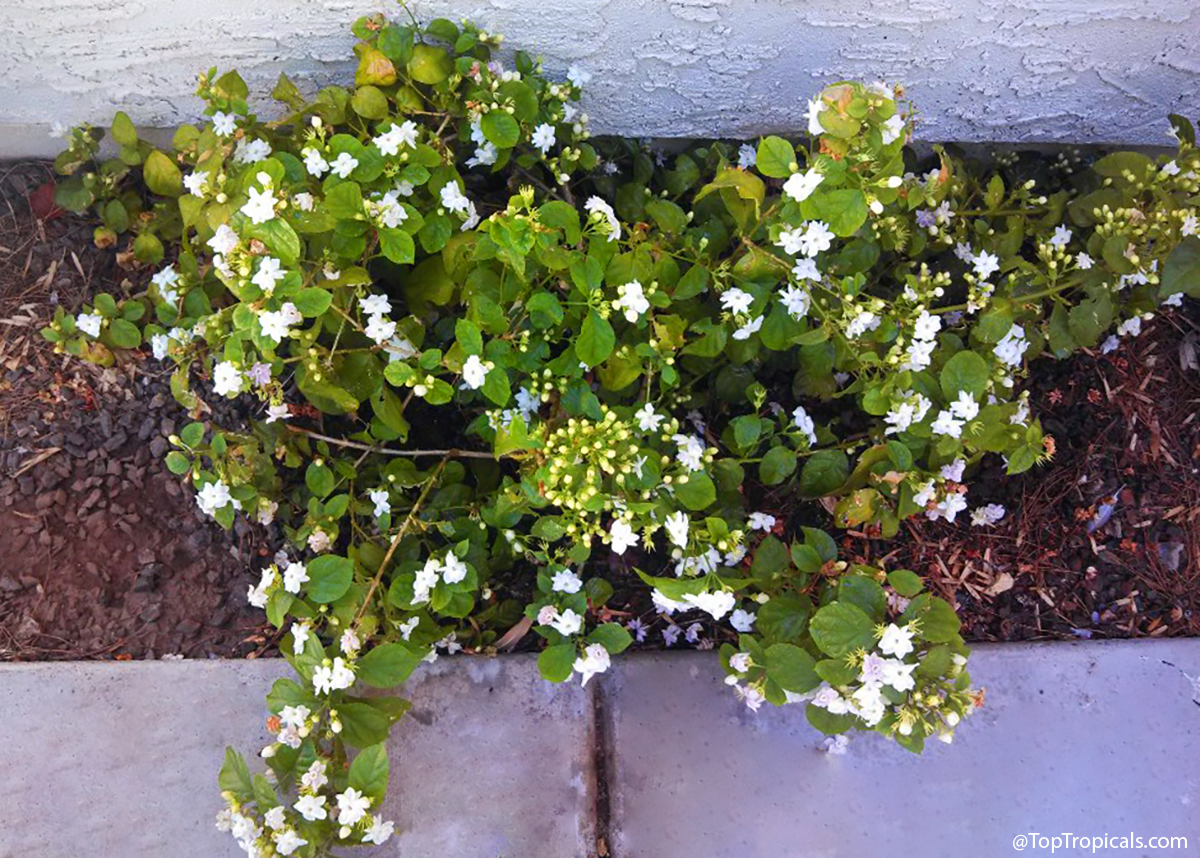
    Jasmine  Sambac  Maid  of  Orleans  plant  growing  along  a  wall  with  clusters
    of  white  fragrant  flowers  in  bloom.

    Jasmine Sambac thrives in hot, sunny locations

    ✅ Why Jasmine Sambac?

    Over the years I have grown thousands of plants, but very few have the staying power of Jasmine Sambac.

    It is not just fragrant. It is intensely, unmistakably fragrant. One open flower can perfume an entire patio. In the evening, the scent becomes deeper and richer.

    But what makes Sambac truly special is its adaptability.

    It can grow as a compact patio shrub, a flowering hedge, or a climbing vine. It performs beautifully in containers. It tolerates both full sun and partial shade. The more light you give it, the more flowers it rewards you with.

    And unlike many tropicals, Sambac does not bloom just once. With proper care, it flowers in cycles throughout the warm season.

    For gardeners, that combination is rare: beauty, perfume, flexibility, and repeat bloom.

    That is why it has remained one of the most wanted fragrant plants in cultivation.

    ✍️ More About Jasmines from Blog

    🛒 Explore Jasmine plants

    Date: 23 Feb 2026

    Macadamia Tree Care

    By Tatiana Anderson, Horticulture Expert at Top Tropicals with Smokey & Sunshine help

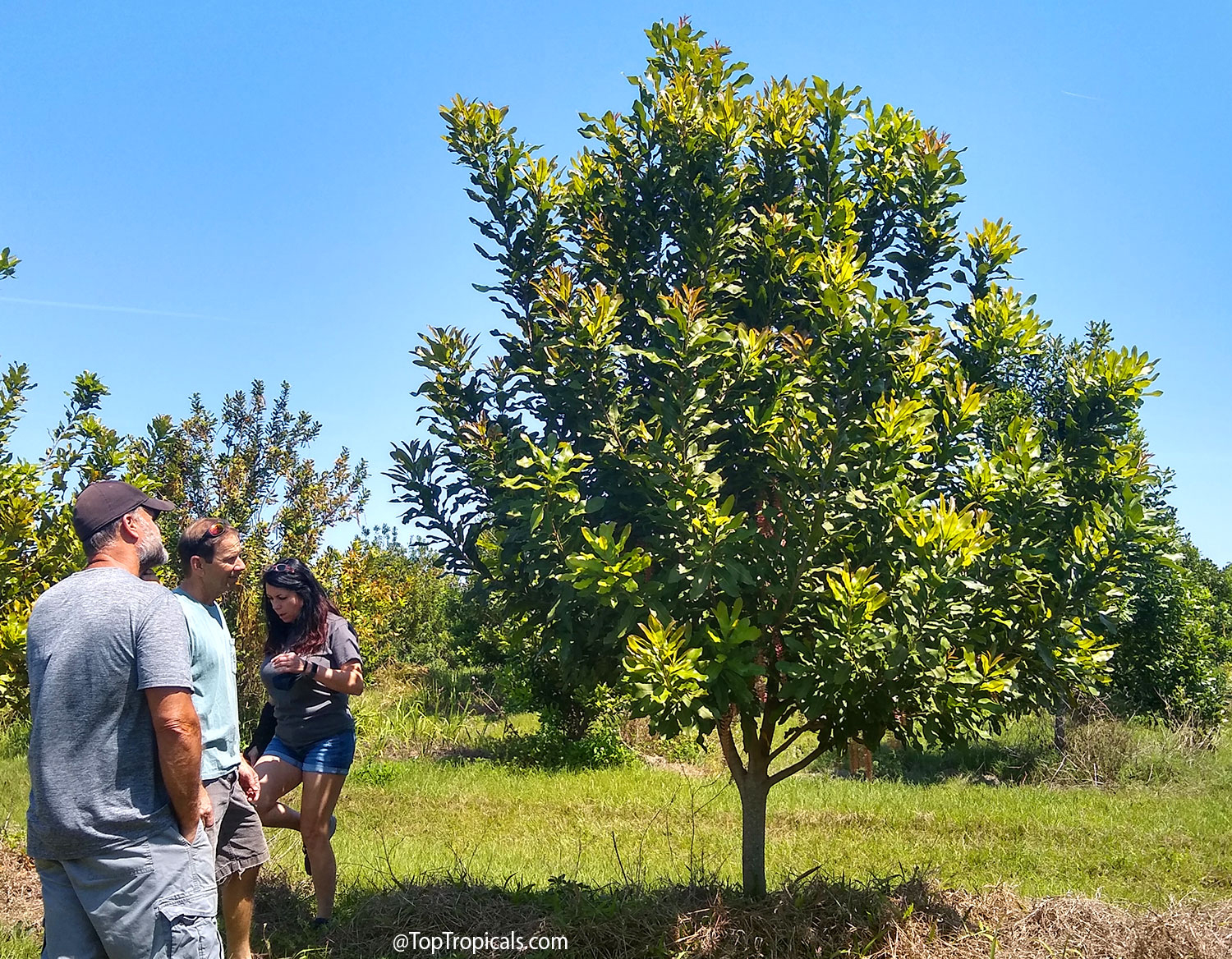
    Mature  macadamia  tree  with  well-shaped  canopy  growing  in  Florida 
 orchard.

    Macadamia tree maturing into a productive, manageable canopy.

    🌳 Growing Macadamia Tree

    Macadamia is not a fragile tree, but it does have preferences. If you respect them from the beginning, the tree rewards you for decades.

    • Start with the site. Drainage is everything. Macadamia will tolerate cool weather better if planted in a well-drained area. Avoid low spots where water sits after rain. If your soil is dense or clay-like, build a mound or improve drainage before planting.
    • Choose full sun whenever possible for the best nut production.
    • Planting location matters. A south or southeast exposure near a wall can create a warmer microclimate that buffers cold nights. Freeze plus wind is more damaging than temperature alone. Macadamia handles cold better when protected from winter wind.
    • Dig a hole about twice as wide as the container, but no deeper than the root ball. Set the tree level with the surrounding soil. Do not bury the trunk.
    • Water regularly during the first three months while the tree establishes roots.
    • Fertilize lightly. Macadamia does not respond well to over-fertilizing. Macadamias prefer mild liquid fertilizers, SUNSHINE Boosters Robusta is ideal for it. You may also use controlled release Green Magic every 6 months, it is especially formulated for hot climate. To keep leaves healthy deep green without yellowing, micro elements must be applied on regular basis, we recommend to always have handy Sunshine Superfood micro nutrients complex.
    • Young trees should be protected if temperatures drop below freezing. Once established, they become far more resilient.
    • Harvest timing: Nuts mature 6-7 months after flowering. Husk splits naturally when ready. Fallen nuts should be collected quickly.
    • Flower and Nut Drop: Many gardeners panic when they see flowers or small nuts drop, but Macadamia naturally sheds excess fruit. It does not mean failure; the tree simply keeps what it can afford to feed.
    • Macadamia is relatively low-maintenance, but watch for squirrels and rats. They love the rich nuts as much as humans do, so be sure to collect fallen nuts quickly.
    • Root Sensitivity: Macadamia roots dislike disturbance. Transplant carefully. Avoid root damage.
    • Macadamia is not a fast-return crop. It begins producing a few years and increases gradually. But once mature, it becomes a steady, reliable part of your garden.

    Learn more: Macadamia - Hard Sweet Nut and Hardy Tree

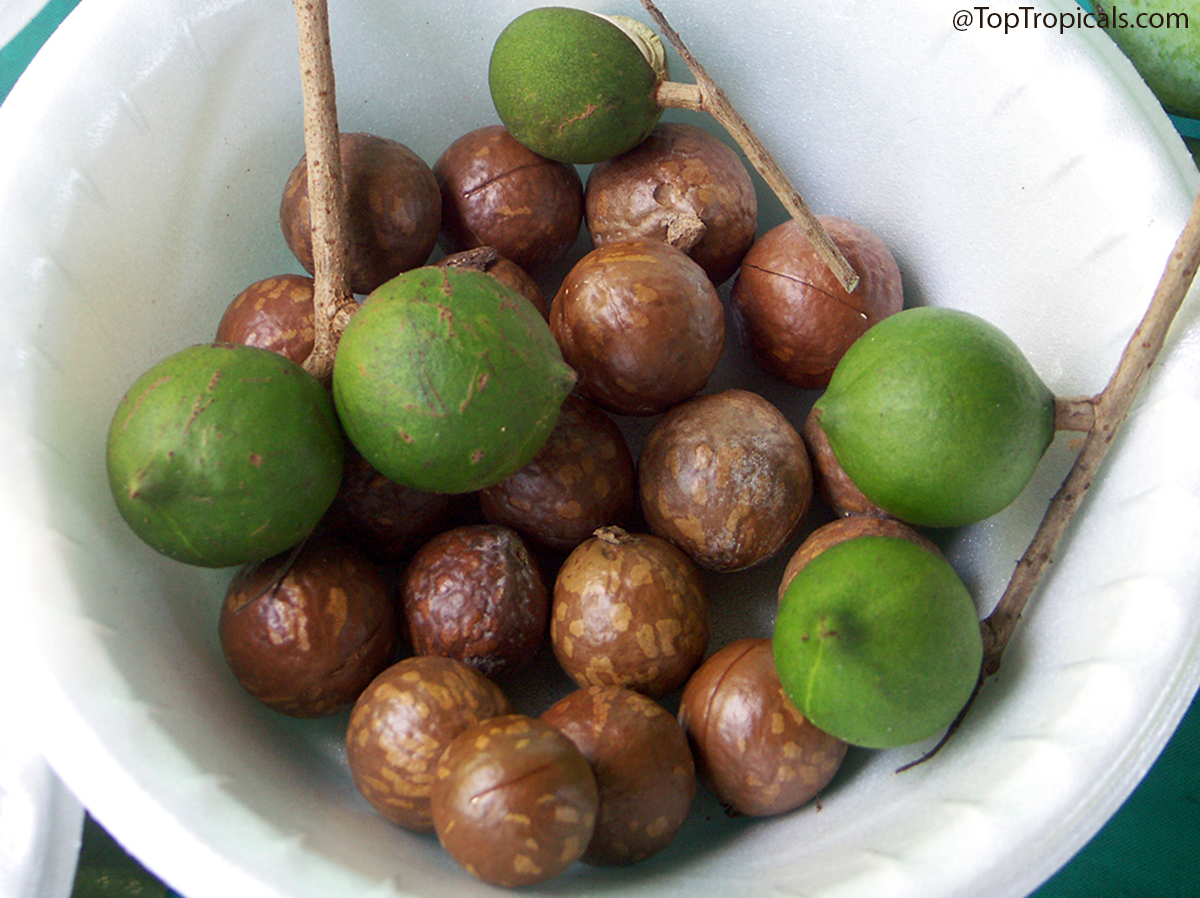
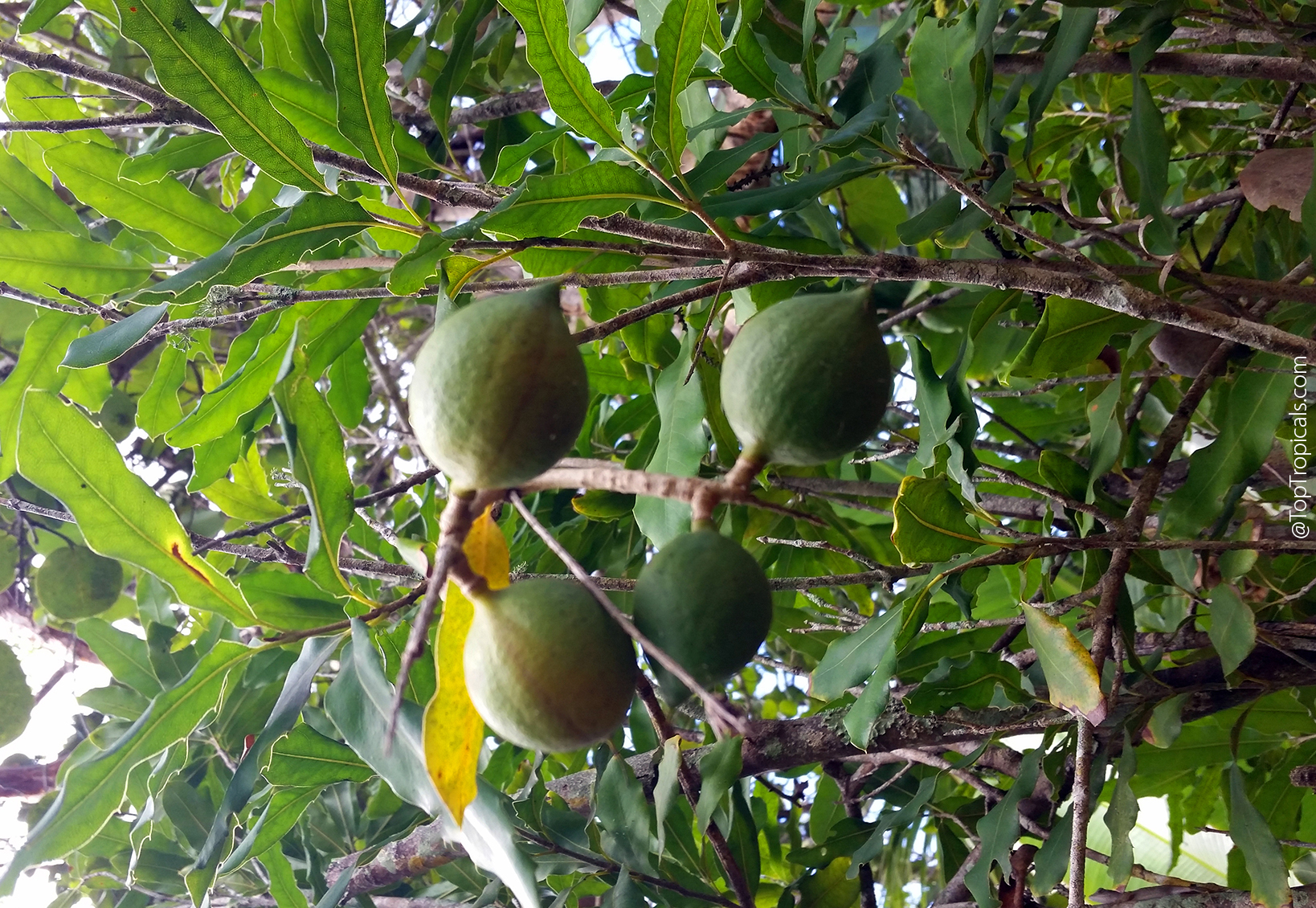
    Fresh  green  macadamia  fruit  and  brown  hard-shelled  nuts  collected  in  a 
 bowl.

    Macadamia fruit showing green outer husk and mature brown shell inside.

    🌱 Growing Macadamia in a Pot

    • Container size: Start large. A 15-25 gallon pot is ideal for long-term growth.
    • Drainage: Critical. Use a container with multiple drainage holes.
    • Soil mix: Use a high-quality, well-draining container mix. Avoid heavy garden soil. Top Tropicals Abundance soil-less mix is specially formulated for pot growing
    • Light: Full sun is best. Strong light improves flowering and nut production.
    • Watering: Water deeply, then allow the top layer to dry slightly before watering again. Avoid constant saturation.
    • Feed lightly and consistenly. SUNSHINE Boosters Robusta liquid fertilizer is safe to use with with every watering. During hot season you may add controlled release Green Magic every 6 months. It is essential to apply micro elements on Macadamias: Sunshine Superfood micro nutrients complex.
    • Cold protection: If temperatures drop below freezing, move the container to a protected area such as a garage or greenhouse.
    • Pruning: Prune lightly to control size and maintain airflow within the canopy.
    • Expectations: Container trees may produce fewer nuts than in-ground trees, but they offer mobility and climate control.
    • Smokey says: Container trees offer mobility and climate control so you never have to worry about a freeze!

    ✍️ More About Macadamia from Garden Blog

    Green  macadamia  nuts  developing  on  tree  branch  among  glossy  leaves.

    Macadamia nuts developing on the tree before the husk splits.

    🚫 Common Mistakes When Growing Macadamia

    • Planting in poorly drained soil:
      The most common mistake. Macadamia will decline quickly in heavy, waterlogged ground. If drainage is questionable, plant on a mound.
    • Overwatering young trees:
      Newly planted trees need consistent moisture, not constant saturation. Wet roots lead to root problems.
    • Over-fertilizing:
      Too much fertilizer causes weak growth and nutrient imbalance. Feed lightly and avoid heavy nitrogen applications.
    • Planting too deep:
      The top of the root ball should sit level with or slightly above the surrounding soil. Do not bury the trunk.
    • Ignoring micronutrients:
      Macadamia is very prone to iron, zinc, and copper deficiencies. Yellowing leaves may signal a micronutrient issue. Applly Sunshine Superfood on regular basis.
    • Expecting instant production:
      Macadamia takes time. Early years build structure. Patience is part of success.
    • Skipping cold protection for young trees:
      Established trees are tougher, but young plants should be protected below freezing.

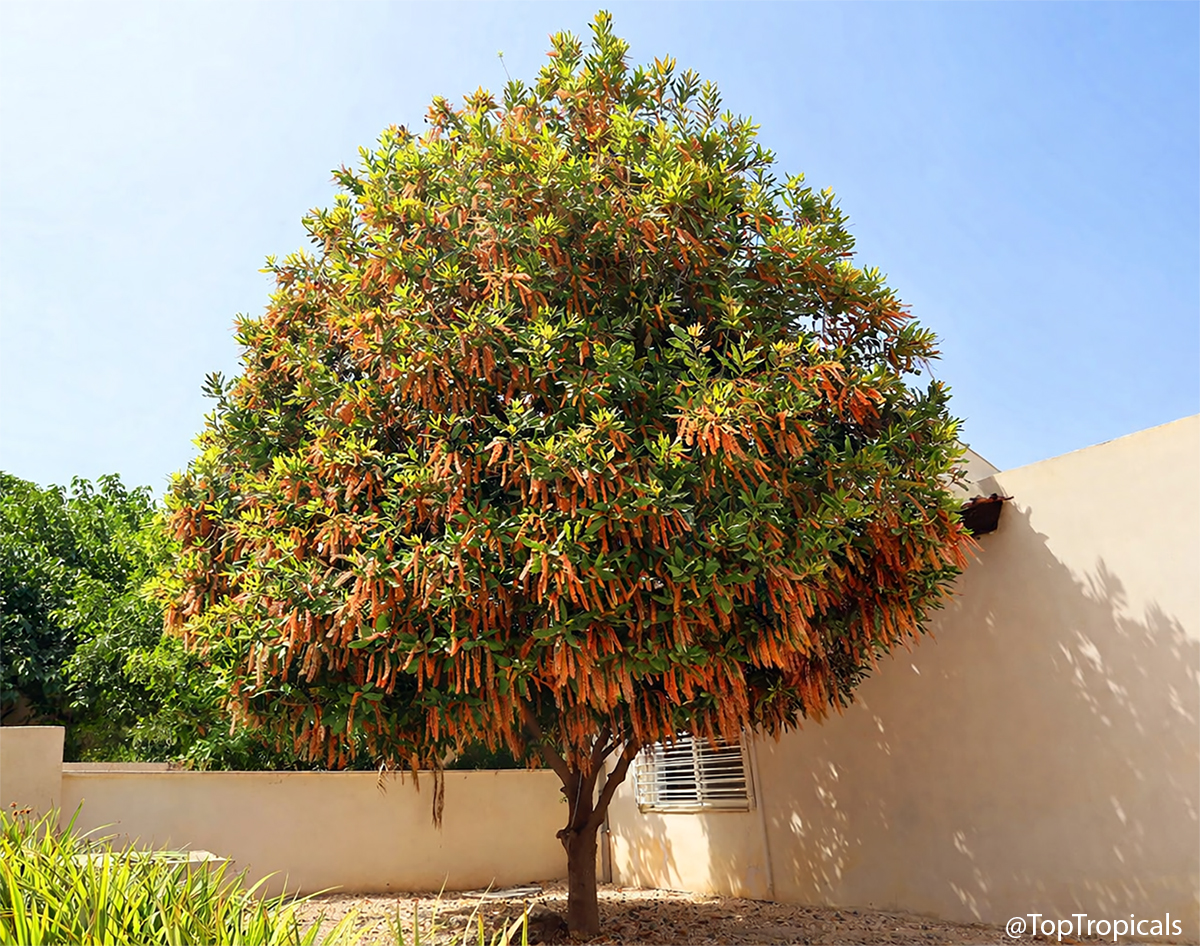
    Macadamia  tree  in  full  bloom  covered  with  long  orange  flower  racemes.

    Macadamia tree in full bloom with abundant flower clusters.

    ❓Frequently Asked Questions (FAQ)

    • Is Macadamia toxic to pets? While the nuts are a superfood for humans, they are toxic to dogs. If you have a dog that tends to forage in the garden, ensure you harvest fallen nuts promptly or fence the base of the tree during the drop season.
    • Which varieties are best for the "Survivor" garden? Look for Macadamia integrifolia (smooth-shell) or hybrids like 'Beaumont' (M. tetraphylla x M. integrifolia). Hybrids often show slightly better cold tolerance and more consistent "home garden" production.
    • How tall will my tree get? In the ground, an unpruned Macadamia can reach 20–30 feet. However, they respond very well to "heading back" (pruning the top) to keep them at a manageable 12–15 feet for easy harvesting.
    • Do I need two trees for cross-pollination? Macadamias are self-fertile, meaning one tree will produce nuts. However, planting two varieties near each other often results in a significantly heavier "nut set" due to cross-pollination.
    • Why are the leaves on my Macadamia prickly? Don't panic—this is normal! Some species, particularly M. tetraphylla, have serrated, holly-like leaves. This actually makes them a great "defensive" hedge against intruders or deer.
    • When exactly should I harvest? The tree tells you when it's ready. Don't shake the tree; wait for the nuts to fall naturally. In Florida, this usually happens between August and November. If the green outer husk hasn't split yet, let them sit in a shaded, dry spot until they do.
    • My tree has "clusters" of flowers but no nuts. What happened? Macadamias produce long racemes (flower spikes) with hundreds of tiny blooms. It is normal for 90% of these to fall off. The tree only keeps what it can afford to "feed." Boost your success by using a combination of Sunshine C-Cibus liquid fertilizer and SUNSHINE Superfood micro element supplement during the flowering stage to help the tree retain more fruit.
    • Can I grow them from a nut I bought at the store? Unlikely. Commercial nuts are usually roasted or dried at high heat, killing the embryo. Even if a raw nut sprouts, it may take 10–12 years to fruit and the quality is a gamble. Buying a grafted tree saves you a decade of waiting.

    We don’t just sell plants; we test them. The data from this February freeze proves that with the right selection and proper drainage, 'tropical' doesn’t have to mean 'fragile.' Don’t wait for the next cold front to find out what in your garden is vulnerable. It is time to replace those empty spots with proven survivors that offer both beauty and a premium harvest. If it can stand up to 25F in our fields, it’s ready for your backyard.

    Coming in Part 2...

    Smokey is already crunching the numbers on our next survivor, and Sunshine found another tree that stayed perfectly green in the wind. Stay tuned to see which fruit tree made the cut!

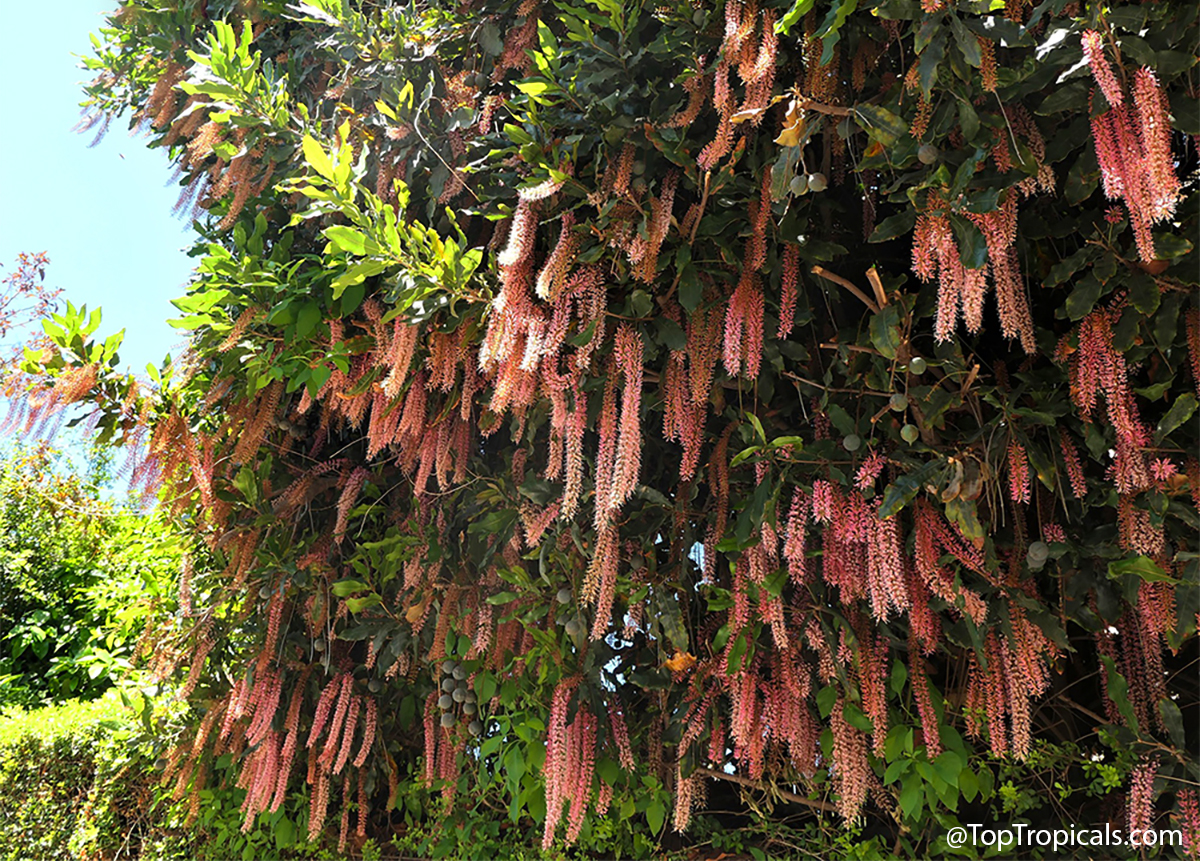
    Macadamia  tree  covered  in  long  pink  flower  racemes  during  peak  bloom.

    Macadamia flowers forming long cascading racemes before nut set.

    🎥 More Macadamia videos from our channel

    🛒 Add Macadamia Tree to your garden

    Date: 16 Mar 2026

    🌱 💪 Green Magic + SUNSHINE Boosters: A Complete System for Strong Plant Growth

    By Tatiana Anderson, Horticulture Expert at Top Tropicals with Smokey & Sunshine help

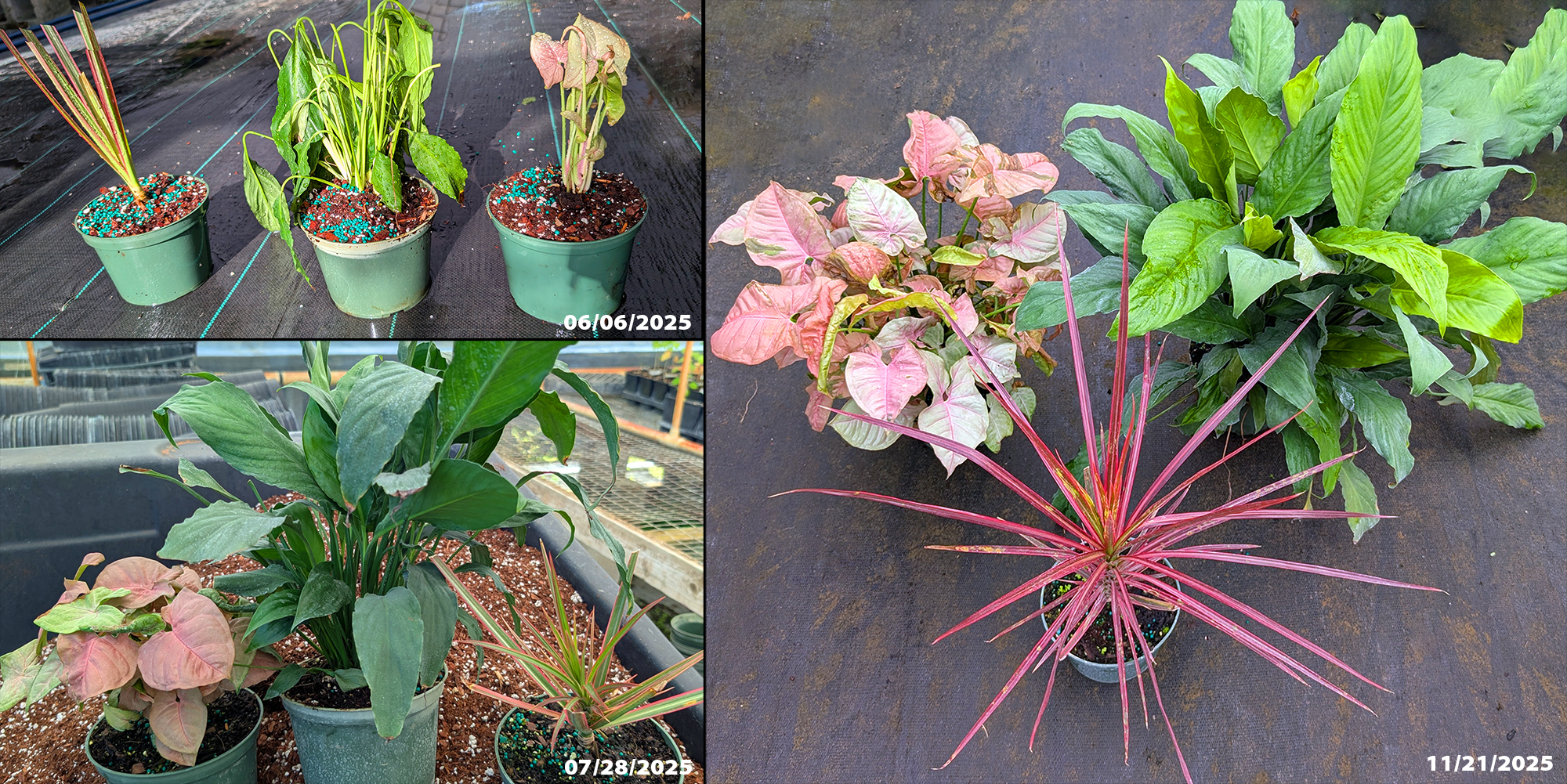
    Nearly  dead  houseplants  (Dracaena,  Syngonium,  and  Spathiphyllum) 
 recovering  and  growing  vigorously  after  treatment  with  Green  Magic 
 fertilizer  and  Sunshine  Robusta  plant 
 booster.

    Green Magic recovery test with SUNSHINE Robusta support: Dracaena, Syngonium, and Spathiphyllum revived from severe stress and growing vigorously.

    ☀️🌱 Sunshine Boosters: Complete Plant Nutrition

    Sunshine Boosters provide complete plant nutrition, including Calcium and micronutrients that plants need for strong growth. Because nutrients are delivered in liquid form, plants can absorb them quickly and respond almost immediately.

    The Practical Problem

    Liquid feeding works well, but it requires frequent application. In real gardens, many growers simply do not have time to add liquid fertilizer with every watering.

    Green Magic: The Foundation

    Green Magic solves this problem by providing steady background nutrition through controlled-release fertilizer. It feeds plants gradually, so they continue receiving nutrients even between liquid feedings.

    Why This Combination Works

    Together, this system provides both complete nutrition and steady feeding. Sunshine Boosters supply fast nutrients and Calcium, while Green Magic maintains a stable nutrient supply between feedings.

    ✍️ How to Feed Your Plants

    📅 Step 1 – Start of the Growing Season

    • Apply Green Magic around the root zone every 6 months.

      In ground:
      • Small Shrubs (1–3 feet): Use approximately 1/4 to 1/2 cup per plant
      • Established Trees: Use 1/2 lb to 1 lb of product per 1 inch of trunk diameter.
      • Small In-Ground Ornamentals: A common "spoon" rate is roughly 1 teaspoon per gallon of estimated root volume (or per sq. ft. of surface area).
      • Spread evenly around the dripline. Avoid piling the granules against the base or trunk of the plant. For best results, lightly rake the granules into the top 1–2 inches of soil.
      Container plants:
      • Apply 1 tea spoon per 1 gal of soil (mix in with soil) every 6 months during active growth period, or with every re-potting.
    • Water normally after application.
    • Adjustment for Temperature. Because Green Magic is temperature-controlled, adjust your rate if your local climate is extreme:
      • Cooler Climates (<60°F average): Increase the rate by 20% to ensure enough nutrients are released.
      • Hot Climates (> 80°F average): Decrease the rate by 20% to prevent over-releasing as the heat speeds up the process.

    ☀️🌿 Step 2 – Active Growing Season

    • Apply Sunshine Boosters during the growing season.
    • Regular feeding (maintenance): Mix with tap water according to the ratio on the label. For SUNSHINE Robusta use 25 ml (5 tsp)per gallon of water and spray leaves every 5-7 days during active growth.
    • Correction feeding ("medicine" dose): if plants show visible nutrient deficiencies, combine SUNSHINE Robusta with SUNSHINE Superfood and spray every 5–7 days until new growth appears healthy. All SUNSHINE Boosters products are compatible and can be mixed with water in the same sprayer.
    • Best time to spray: early morning or evening when temperatures are cooler and leaves can absorb nutrients efficiently.
    • Important: spray both the top and underside of leaves for maximum absorption.

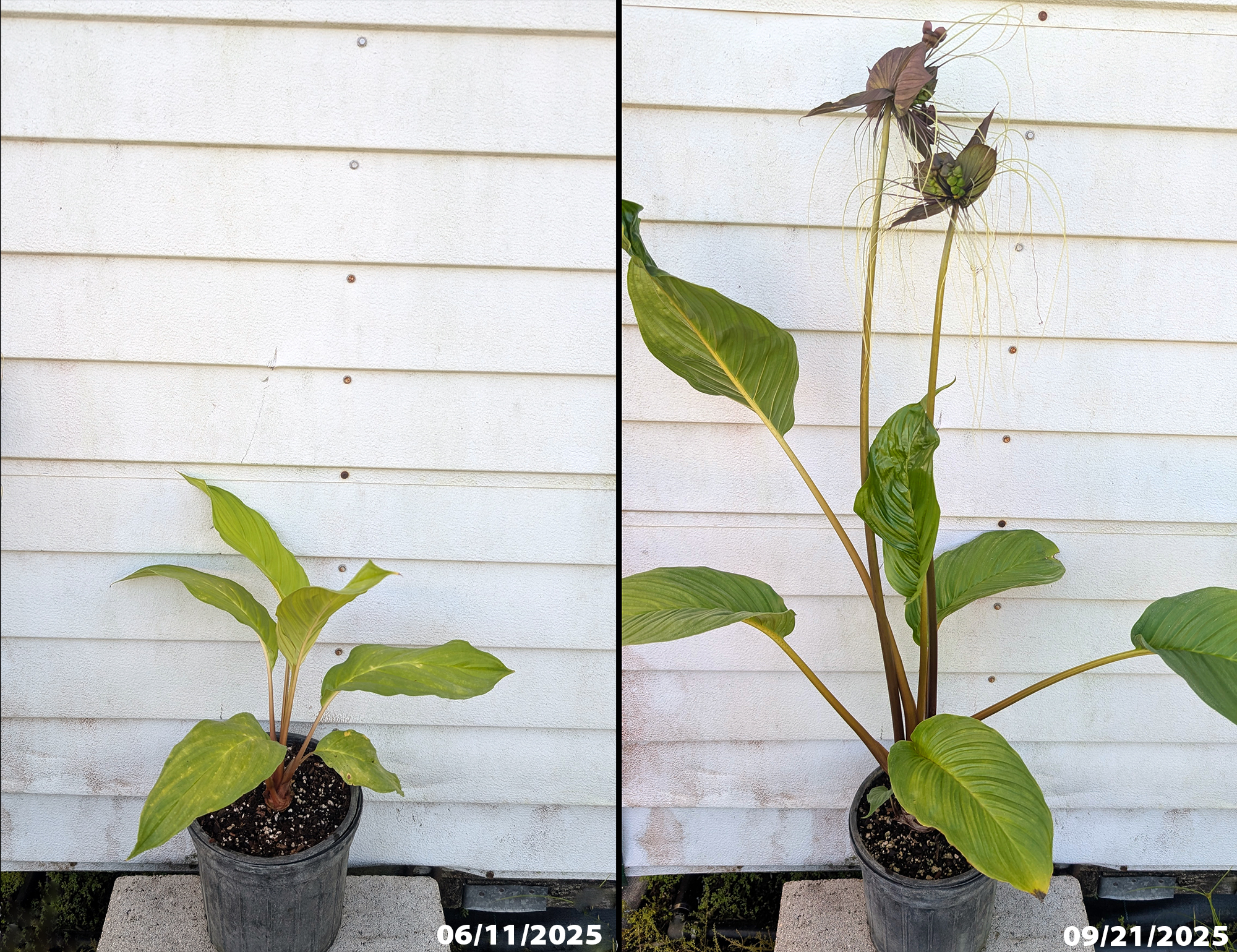
    Tacca  plant  (bat  flower)  showing  strong  vegetative  growth  and  flower 
 bud  development  in  the  same  season  after  feeding  with  Green  Magic 
 fertilizer.

    Tacca (bat flower) showing vigorous growth and producing flower buds in the same season after feeding with Green Magic.
    Swipe left/right to see all data ↔️

    📊 Seasonal feeding schedule with Green Magic and Sunshine Boosters.

    Season Product Method Goal
    Spring (March) Green Magic Soil Surface 6-month steady nutrient base.
    Growing Season Sunshine Boosters Foliar (Every 5-7 days) Calcium & Bio-available growth power.
    Late Summer Green Magic Soil Surface Replenish foundation for Fall.
    Winter Sunshine Epi Foliar/Drench Cold tolerance and shipping recovery.

    Quick Dose Reference

    • Green Magic: 1 teaspoon per 1 gallon of soil volume.
    • Sunshine Boosters: 25 ml (5 tsp) per 1 gallon of water.
    • Pro Tip: Always spray in the early morning or late evening to prevent leaf scorch and ensure maximum absorption through the stomata.

    ❓Frequently Asked Questions: Plant Nutrition & Fertilizer

    General Fertilizer Concepts

    Why is the"Spring Fertilizer Rush"a problem?
    Most gardeners apply a large amount of traditional fertilizer once in March. This creates a"roller coaster"effect where plants get a sudden spike of nutrients followed by weeks of starvation. This leads to inconsistent growth and potential"fertilizer burn."

    What is"fertilizer burn"?
    Traditional fertilizers are made of soluble salts. When too many salts accumulate around the roots, they actually pull water out of the plant tissues (osmosis), dehydrating the plant and damaging sensitive root tips and leaf edges.

    Is there a difference between"Slow-Release"and "Controlled-Release"?
    Yes.

    • Slow-Release: Relies on natural factors like moisture and soil microbes to break down. It is often unpredictable.
    • Controlled-Release: Uses engineered polymer membranes (like Polyon) to release nutrients at a specific, predictable rate based primarily on temperature.

    Green Magic & Temperature

    How does temperature affect my fertilizer?
    Most fertilizers are lab-tested at 75°F. In hot climates (90°F+), the nutrients release much faster. A"6-month"fertilizer might only last 3 months in the summer heat.

    How should I adjust Green Magic for my local weather?

    • Cooler Climates (<60°F): Increase the application rate by 20%.
    • Hot Climates (> 80°F): Decrease the application rate by 20% to prevent over-releasing.

    The Calcium Gap

    Why doesn't Green Magic contain Calcium?
    Calcium salts are highly soluble and can destabilize the polymer coating used in controlled-release granules. Therefore, most high-quality granules leave Calcium out. You can provide Calcium by using SUNSHINE Boosters

    Why is Calcium so important for new growth?
    Calcium is the"bone"of the plant, building strong cell walls. Unlike other nutrients, it is immobile—the plant cannot move it from old leaves to new ones. If you don't provide a constant supply, new leaves and fruit will emerge distorted or weak.

    Advanced Science & Troubleshooting

    What makes Sunshine Boosters"Bioavailable"?
    Unlike most liquid fertilizers that use EDTA chelators, Sunshine Boosters are amino-acid based. They use organic acids and glycine to escort minerals into the plant, allowing it to incorporate nutrients into its proteins almost immediately.

    Will these fertilizers affect the taste of my fruit?
    No. Sunshine Boosters are made from pharmaceutical-grade components and contain no urea or harmful salts, ensuring your harvest (like Mangoes or Avocados) has a pure, natural flavor without a chemical aftertaste.

    ✨ Green Magic - 15% Off This Week

    Give Your Plants a Strong Start This Spring
    Green Magic - 15% OFF.

    Build the foundation for the entire growing season with a steady, long-lasting nutrient base.

    No coupon needed. The discount is automatically applied at checkout.
    Offer valid through 03/21/2026. Discount applies to Green Magic products only. Not valid on previous purchases and cannot be combined with other promotions or discounts. Offer subject to change without notice.
    Sunshine: So Green Magic feeds the plant for months. Does that mean I can forget about Sunshine Boosters?

    Smokey: Not quite. Green Magic is the steady base diet. Sunshine Boosters are the weekly power drink during active growth.

    Sunshine: Ah. Like my regular meals and donuts on top.

    Smokey: Exactly. Plants eat slowly from Green Magic, and once a week they get a fresh boost.

    Sunshine: Sprinkle once, then boosters every week. The plant grows, I drink coffee, and nobody forgets anything important.

    Smokey: Except where you left the donuts.

    Sunshine: Smokey... nobody forgets donuts. Ever

    🛒 Feed your plants

    ✍️ Learn more about fertilizers