Garden Blog - Top Tropicals

Date: 6 Nov 2023

How to grow a happy Moringa Tree
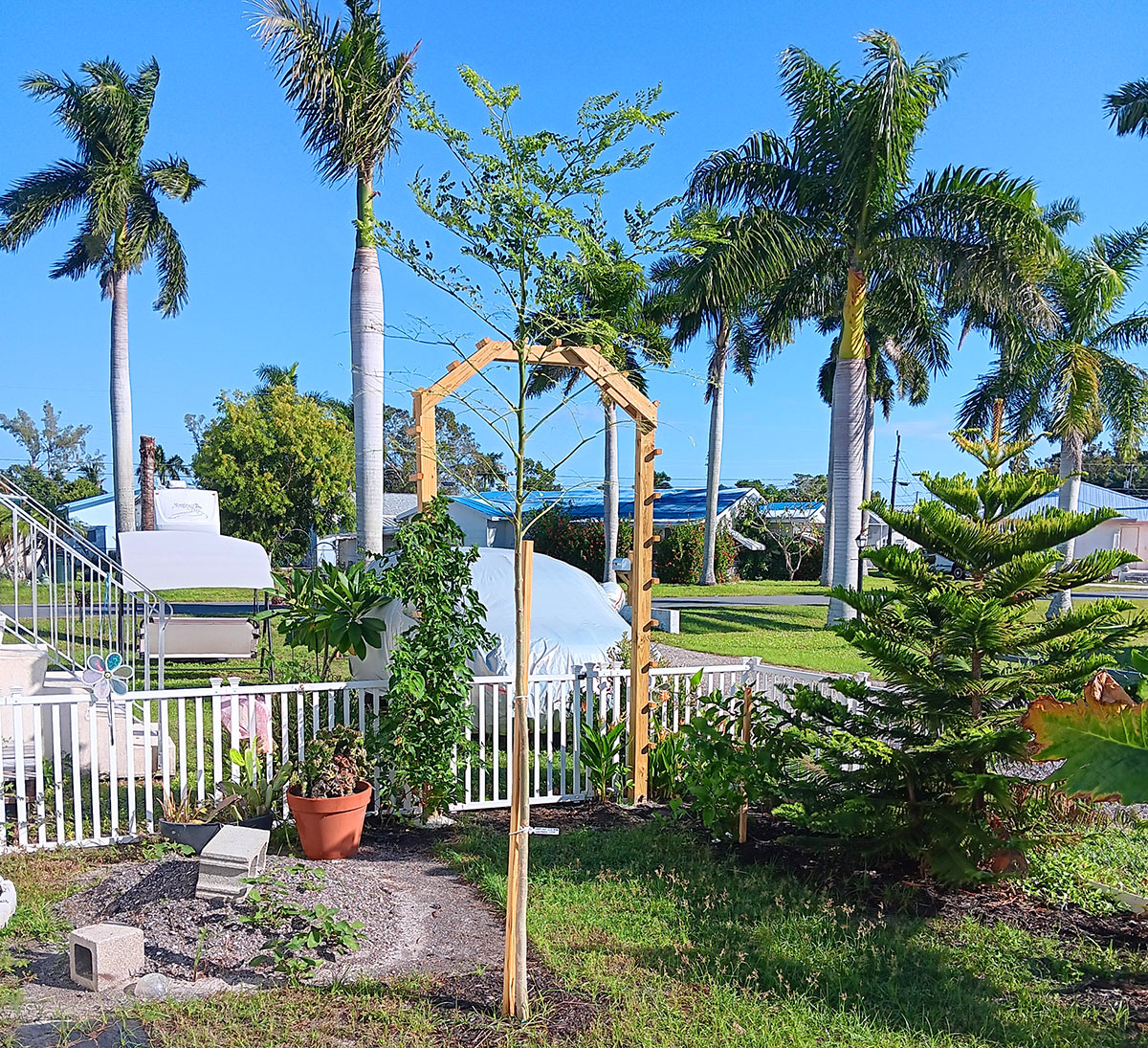
Moringa  tree  in  the  garden

Q: We purchased some tropical edible and medicinal plants from you in August this year. I have a question pertaining to our Moringa tree. When we purchased it, it was about two foot tall. It has put on tremendous growth and is now a little under ten foot tall. My question is, should a Moringa be losing lower leaves at this point? The bare limbs are still green and the top looks to have healthy green leaves.

A: Thank you for choosing our Moringa tree, and sharing the picture. It's great to see that your tree appears healthy and happy - it's a resilient plant. Given the relatively dry Fall we've experienced this year, a little extra water can make a significant difference.

Here are some suggestions to ensure your Moringa thrives:
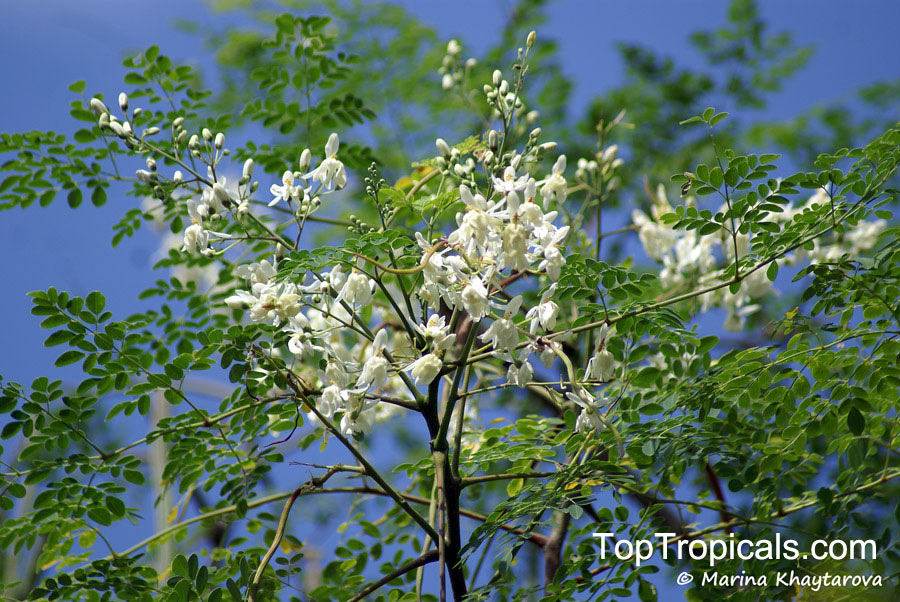
Moringa  branch  with  flowers

Watering: While Moringa is generally drought-tolerant, during dry periods, in addition to relying on your lawn sprinkler system, add some extra water with a hose. Adequate moisture is crucial for maintaining healthy foliage.

Pest Control: Moringa is not only a nutritious plant for humans but also attracts pests that appreciate its medicinal properties :) If you notice insect damage on the leaves, consider spraying with Neem oil or using an over-the-counter systemic insecticide containing imidacloprid or a similar ingredient.

Seasonal Behavior: Moringa trees are semi-deciduous to deciduous, and their leaf-shedding behavior can vary depending on the climate. In Florida, for instance, it's common for Moringa trees to shed leaves in the Fall. However, this is a natural process, and you can expect new growth in the Spring.

Fertilizing for Vigorous Growth: To promote the most vigorous growth of your Moringa tree and other plants in your garden, consider implementing a fertilizing program. If using dry, slow-release fertilizers, apply them only during the active growth season: from March through November. If you're looking for a year-round solution, liquid amino acid-based formulas like Sunshine Boosters can be a great option. You can easily add them to your watering routine or use injectors like The Robuster for convenient and consistent feeding. If you're planning to expand your garden with other medicinal plants or an edible forest, The Robuster smart fertilizing system is an excellent choice, offering the most efficient, care-free way to nourish your plants with natural nutrients throughout the year.
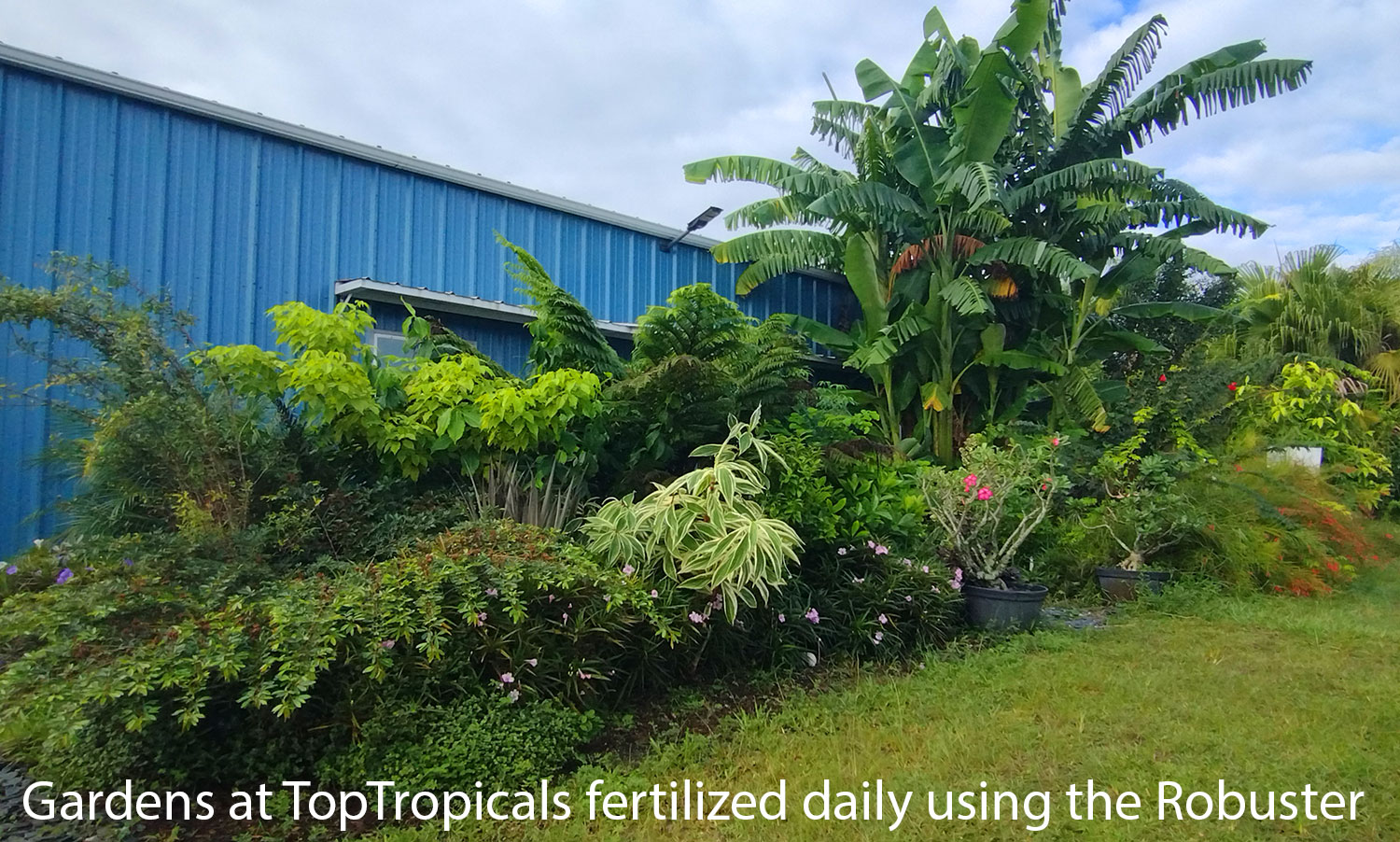
The  Robuster

This garden doubled the size during just one season under the Robuster care.

Date: 4 Nov 2025

The secret Brain Food growing in my backyard (and it tastes like green peas!)

Tropical Asparagus (Sauropus androgynus)

🏆 The secret Brain Food growing in my backyard (and it tastes like green peas!)

  • 🌿 Katuk, or Tropical Asparagus (Sauropus androgynus), is one of the most underrated edible plants you can grow. This leafy tropical shrub is a superfood in disguise. It grows fast, looks lush, and its tender young shoots taste just like green peas.
  • 🌿 Native to Southeast Asia, Katuk is a kitchen staple in places like Vietnam, Malaysia, and Thailand. The leaves and shoots are used in soups, stews, and stir-fries with egg or seafood. It’s not only delicious but also incredibly nutritious - rich in nutrients linked to improved memory and reduced cognitive aging: folate, lutein, and especially vitamin K, which is rare in plants.
  • 🌿 Katuk thrives in sun or partial shade, needs little care, and grows into a dense, bushy plant that gives you edible greens all year round. If you want something that feeds both your garden and your health, this one’s a winner!


🛒 Add Katuk Superfood to your Food Forest

Lean more:
🍴 Katuk egg stir-fry: Quick-n-Fun exotic recipes
✔️ Discover the health benefits of Katuk: a Superfood for your mind and body
📚 Tropical Asparagus, Katuk: Grow your own food
📱 How to cook with Katuk

#Food_Forest #Remedies #Discover

🟢 Join 👉 TopTropicals

Date: 7 Aug 2024

Does Red Passion flower produce edible fruit?

Passiflora coccinea - Red Passion Flower

💃 Does Red Passion flower produce edible fruit?

  • ♥️ Passiflora coccinea, or Red Passion Flower, is a spectacular, passion-red variety!
  • ♥️ It is tropical, evergreen vine from South America known for its stunning scarlet-red flowers and edible passion fruit. Yes, the fruit are edible, but they are very rarely seen.
  • ♥️ It thrives in full sun or part shade with fertile, well-drained soils and can grow up to 10-12 feet long.
  • ♥️ This easy-to-grow plant is perfect for trellises, walls, and containers. Minimal pruning is needed, and it blooms primarily in summer and fall.
  • ♥️ Attracting butterflies and hummingbirds 🐝


💻 Do you grow Passion vines? Share yours in comments👇

📚 From previous post: The truth about Passion flower and Passion fruit.

🛒 Shop Passiflora plants

#Food_Forest #Butterfly_Plants

🔴 Join 👉 TopTropicals

Date: 2 May 2025

A Beautiful and Edible Delight: Taro or Elephant Ear?

Colocasia antiquorum Illustris

🍀 A Beautiful and Edible Delight: Taro or Elephant Ear?

  • Colocasia antiquorum Illustris, commonly known as the Imperial Taro or Elephant Ear, is a striking ornamental plant prized for its dramatic, dark purple and green heart-shaped leaves. While it is primarily cultivated for aesthetic purposes in gardens, ponds, and containers, it does have edible potential.​
  • Young Leaves: The young leaves of Colocasia antiquorum can be consumed when thoroughly cooked.
  • Tuber (Corm): The corms, or underground stems, of this species are edible but must be cooked properly (may cause irritation if consumed raw). ​
  • This cultivar thrives in moist, shaded environments, making it ideal for bog gardens, water features, and shaded landscapes. It prefers consistently moist or boggy soil and can tolerate dappled sunlight.
  • The plant is fast-growing and can reach heights of 5–6 feet, adding a tropical flair to your garden. ​


🛒
Start growing your Colocasia Illustris

#Food_Forest #Remedies

🔴 Join 👉 TopTropicals

Date: 18 Feb 2025

What cactus vine produces gooseberries?

Perescia aculeata - Barbados Gooseberry

🐰 What cactus vine produces gooseberries? Barbados Gooseberry!

  • 🙂 Perescia aculeata - Barbados Gooseberry - unique cactus with edible leaves and edible fruit, fast-growing vine. It is a tropical treasure that combines beauty with edible delights.
  • 🙂 The fruit is yellow with a juicy, subacid pulp, and has a flavor that closely resembles a gooseberry. The fruits can be enjoyed fresh, stewed, or made into jams and jellies.
  • 🙂 The young leaves are also edible, making them a nutritious addition to your meals.
  • 🙂 A fast growing vining cactus, the Barbados Gooseberry prefers good drainage but likes its soil to remain moist during the summer, while being kept drier in the winter.
  • 🙂 Can be grown in container on a trellis.


📚 Learn more from previous posts:


What is Barbados Gooseberry?
A vine, a cactus, a tasty fruit, and a pretty flower

🛍Plant Barbados Gooseberry

#Food_Forest #Hedges_with_benefits

🔴 Join 👉 TopTropicals🙂