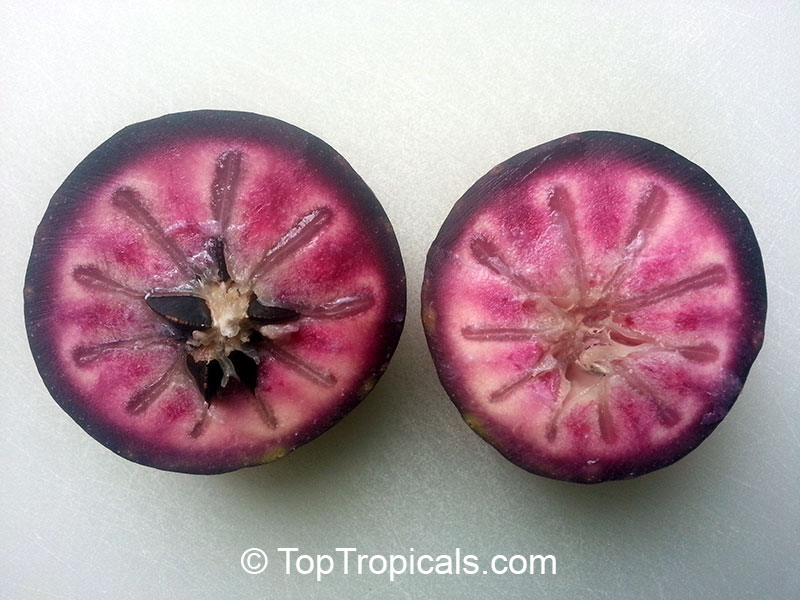
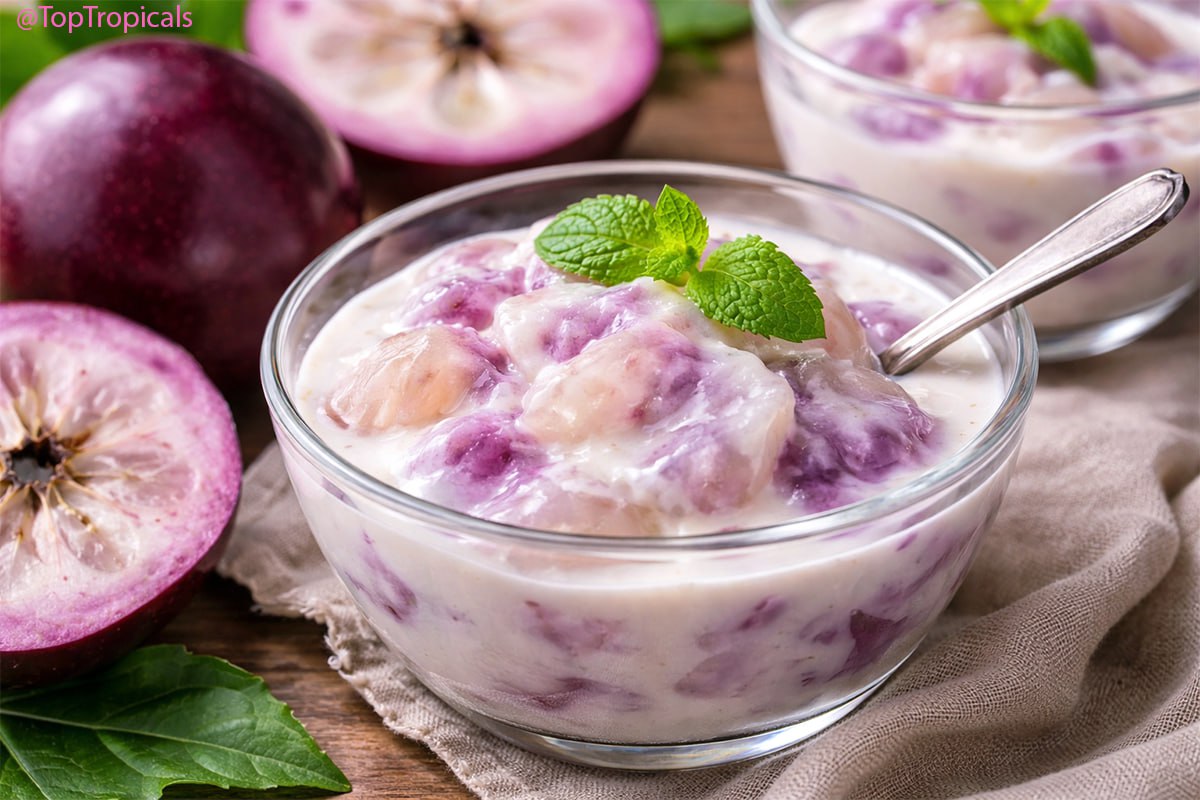
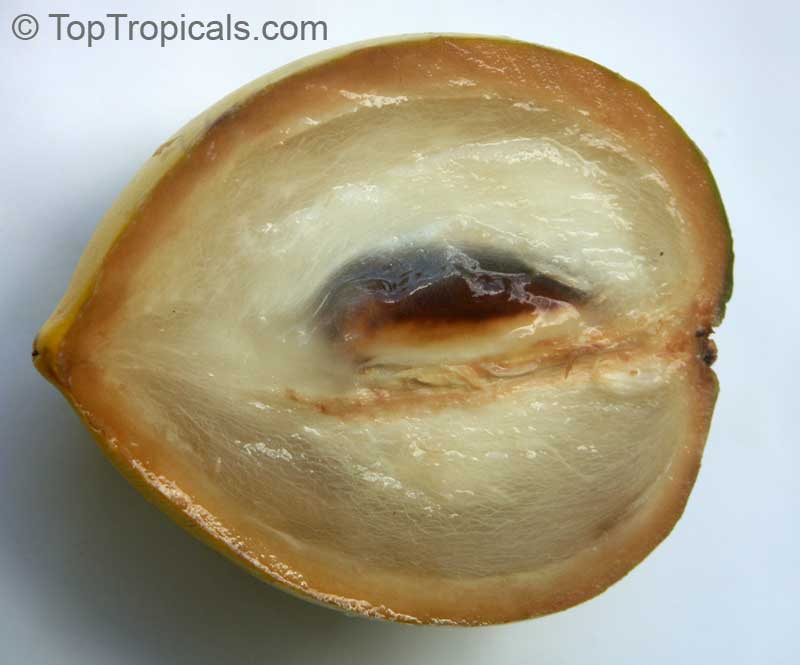
🔴Chill star apple halves, then scoop out the jelly-soft pulp.
🔴Stir gently with cold sweet cream for a tropical dessert cup.
⭐️ About the fruit:
Caimito, also known as star apple, is a classic tropical fruit tree native to the West Indies and widely grown throughout the Caribbean, Central America, and other warm regions. It thrives in USDA zones 10-11 and can handle brief dips into the low 30s. The fruit has a mild, grape-like flavor and a soft, jelly texture, and is a good source of vitamin C and minerals. Traditionally eaten fresh, caimito is also used in desserts, drinks, and preserves.
🌱 In the garden:
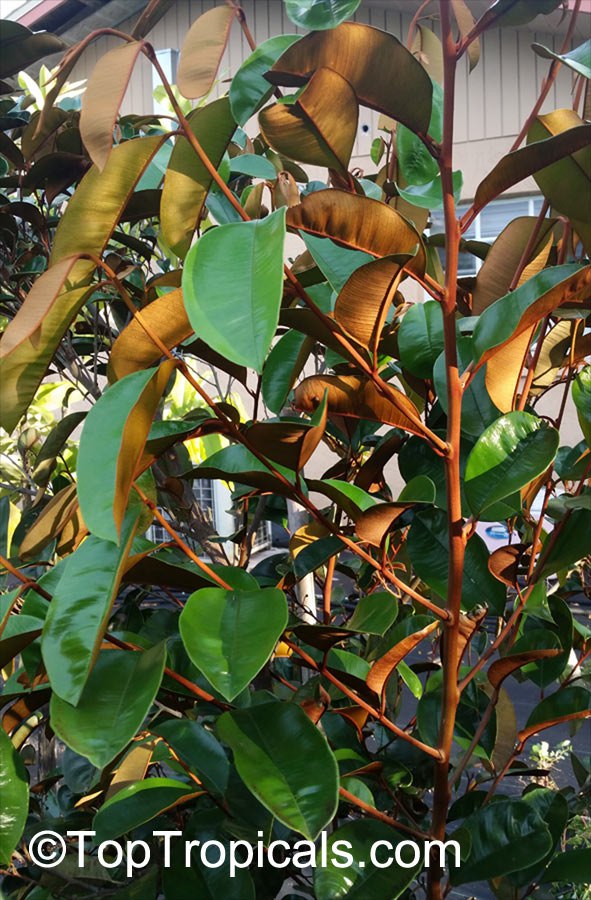
Beyond its fruit, caimito is highly ornamental. Its large, glossy green leaves have a striking coppery-rust colored underside, giving the tree a dramatic two-tone effect when stirred by wind. It prefers full sun and regular watering and grows well in the ground or large containers. In cooler climates, container-grown trees can be moved indoors for winter protection, making caimito both a productive and visually stunning addition to the garden.
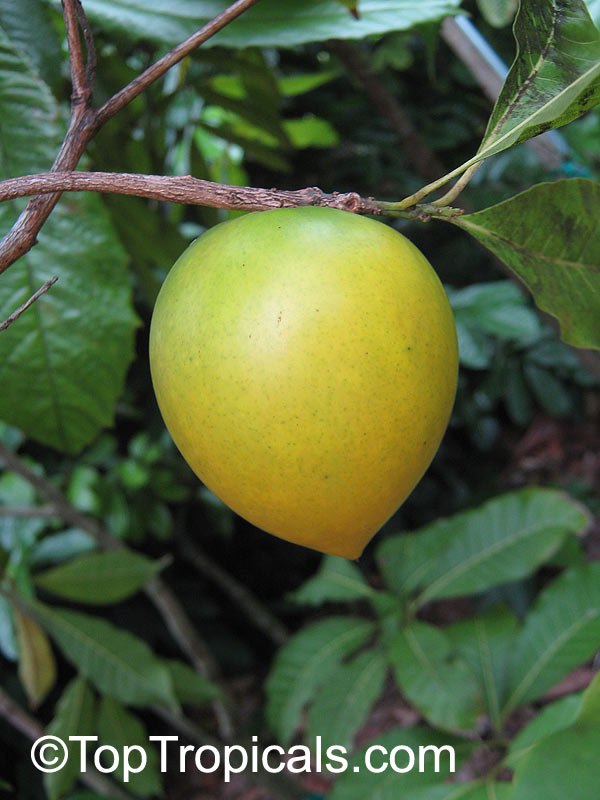
⭐️ The Star Apple tree - Chrysophyllum cainito, also known as Caimito, is a tropical treasure admired for both its fruit and foliage. It is related to Sapote and Sapodilla and produces round, glossy fruit that comes in stunning purple and green varieties.
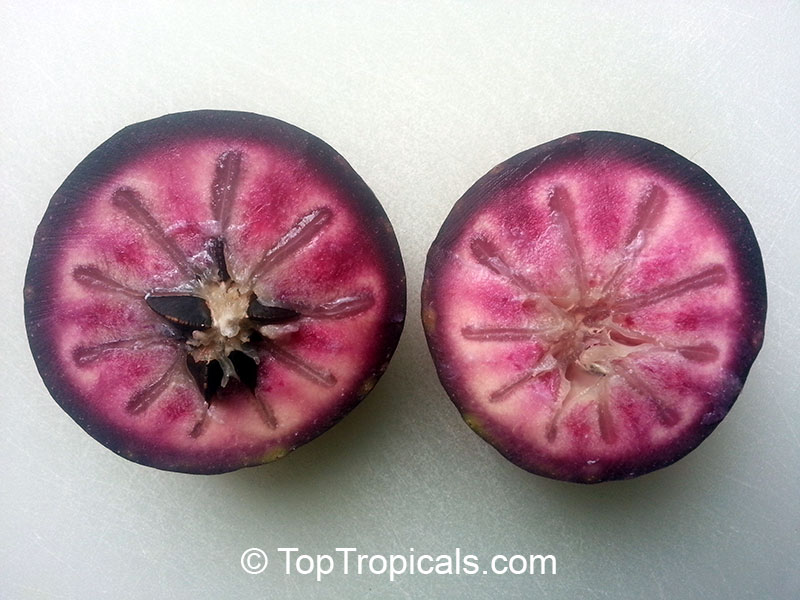
⭐️ When sliced open, the juicy flesh reveals a star-shaped pattern - hence the name "Star Apple"!
⭐️ The flavor is mildly sweet, often described as a mix of grape, lychee, and apple with a hint of caramel.
⭐️ The tree also features lush green leaves with a striking rusty-red underside, making it as beautiful as it is bountiful.
⭐️ Caimito thrives in warm climates and is popular in the Caribbean, Central America, and Southeast Asia.
Where can I try a rare Abiu fruit and what does it taste like?
Abiu tree (Pouteria caimito), Harvest Moon Sapote
Abiu tree (Pouteria caimito), Harvest Moon Sapote
Where can I try a rare Abiu fruit and what does it taste like?
🍋 Abiu tree (Pouteria caimito), or Harvest Moon Sapote - is a must-try rare tropical fruit with a striking appearance and incredible flavor.
🍋 About the size of a medium apple, Abiu ripens to a bright, sunny yellow that hints at the deliciousness inside. Beneath its somewhat thick, sturdy skin, which contains a bit of sticky latex when cut, lies a jelly-like, ultra-juicy flesh that's sweet, smooth, and completely acid-free.
🍋 Its flavor is often compared to the luscious taste of Chrysophyllum cainito (Star Apple that we mentioned earlier), making it a favorite among tropical fruit lovers.
🍋 Each fruit typically has one elongated seed nestled within, and Abiu is often grown from seed.
🍋 Abiu is very hard to find tropical fruit tree, and you won't find this fruit in supermarkets. So the only way to taste it - to grow your own!
🍋 With its vibrant color, unique texture, and tropical sweetness, Abiu is a fantastic choice for anyone looking to add a touch of the exotic to their rare fruit collection!
Q:
What is the best time to start tropical plants from seeds?
Should I wait till summer?
A:
Traditionally, people prefer sowing seeds in
spring, especially temperate species for vegetable garden:
tomatoes, peppers, cucumbers...
When dealing with tropical plants, you may want to start
your babies indoors, providing additional heating when
needed. If you keep your living space around 75F (ideal
for many species), this is a perfect temperature to get
your seeds started. Tropical plants are not like annual
tomatoes that try to grow through the season as fast as
possible. They may take time. So the sooner you start, the
more chances to get small seedlings just in time when
spring air outside is warm enough - at least in 70's F.
A great advantage of starting tropical seeds indoors is
controlled temperature and moisture. In the plant world,
environment extremes are not good for germination process.
Mild conditions of your home or a greenhouse create better
chances for successful growth. Seeds won't get overheated
in hot summer sun, and won't get rotten because of a
sudden heavy rain. Just keep in mind that some species
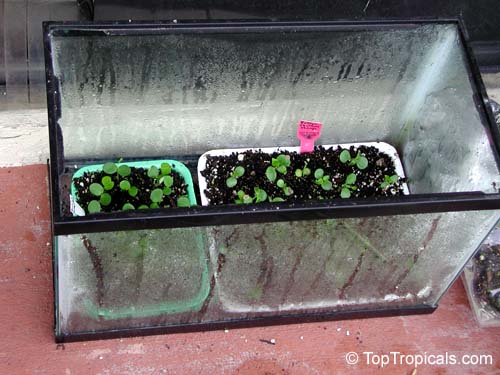
require light for good germination. Using an old fish tank
or covering with plastic wrap will help to keep constant
humidity.