Garden Blog - Top Tropicals

Date: 24 Aug 2018

When and How Much to Water?
TopTropicals

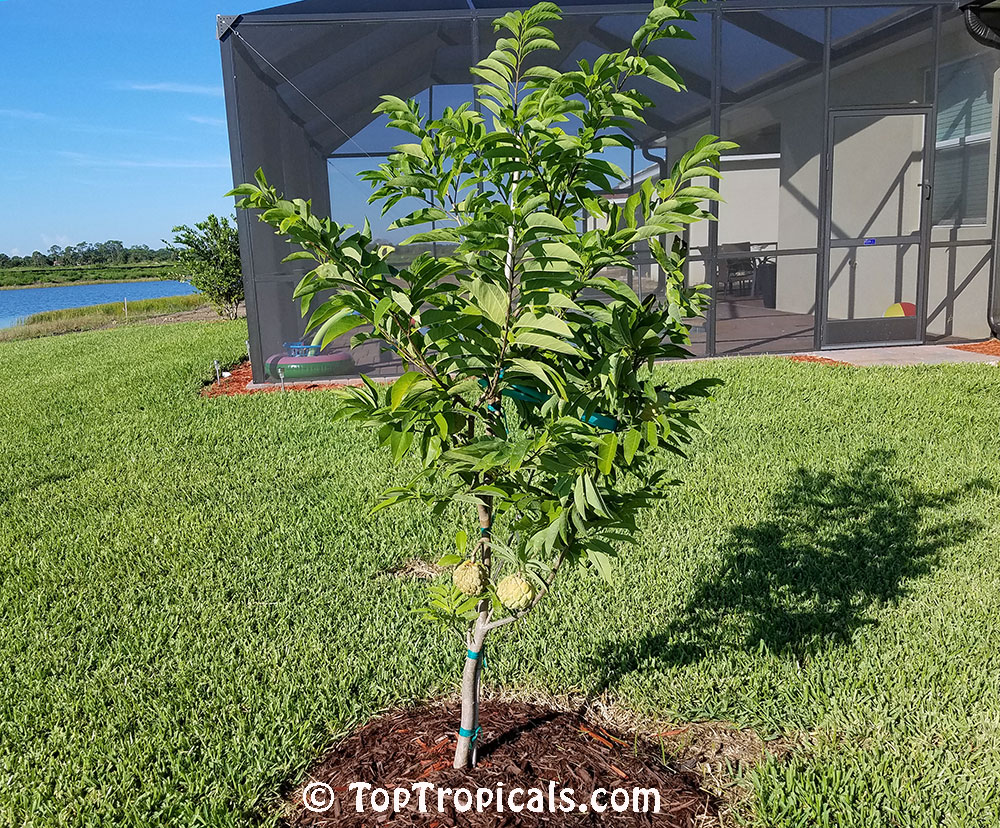
Q: I have an automatic sprinkler system that waters my lawn. I purchased a tree from you and want to plant it in the middle of the back yard where sprinklers cover that area very well. Will it be enough water? Is there any specific time of the day I should set up the sprinklers and for how long?

A: Do not rely on sprinkler system until the tree is established and starts growing. Right after planting, saturate the soil around the root ball really well. If the weather is hot, water with a garden house daily for at least a week. Once the tree starts new growth, you may rely on sprinkler system.
Twice a day usually is enough, with 10-15 min of zone duration. As far as start times of your irrigation system, water first time in early morning (as early as 4-5 am in Summer time), and second time in late afternoon, when it cools down a little bit. It is important to give leaves a chance to dry before plants go to bed. This will help to eliminate fungus problems as fungus develops in dark moist environment. Usually 4-5 p.m. is a good time for second watering in Summer. As days get shorter, reschedule second watering time to earlier hours.

Date: 11 Aug 2018

From Anna Banana: Shipping and planting during hot weather

TopTropicals

Q: I received email notification that my order was delayed due to hot weather. Why? And do I need to do anything special if I plant when it is hot?

A: When plants are shipped via FedEx Ground, it is hot in the truck! According to our FedEx area manager information, if outside temperature is 100 degrees, inside the truck it can be 130! We don't want to put your plants through that much stress. We monitor the weather at destination, and as soon as it cools down a little bit, your order will be shipped.

Planting during hot weather:
1. For a mail-ordered plant follow planting instructions and never plant it from the box directly into the ground. Keep it in a pot the size of a root ball until the plant recovers from shipping stress, re-grows root system and adjusts from several days of darkness to a bright light. Move the pot gradually into brighter light, eventually into a spot of its permanent home. Do not over water the pot. Once you see new growth - the plant is ready to be transplanted into the ground.
2. Use only quality soil, containing lots of organic matter (compost, peat moss); soil conditioner is beneficial (pine bark). Plant it on a little hill, so growing point is elevated 1-1.5"above the rest of the surface.
3. Put a good layer of mulch around the plant, at least 1-2" thick, and not too close to the trunk as it may cause stem rot on contact.
4. Water daily with a garden hose until the plant shows active growth - then watering may be reduced every other day or less, or you may rely on sprinklers and/or rains.
5. If the sun is too hot, use shade cloth (or simply a white bed sheet) to cover the plant for the first few days (use bamboo sticks for support). It will help the plant to establish without heat stress. If leaves start dropping - this may be a sign of excessive light and heat. Shading is the way to reduce it.
6. Use SUNSHINE booster to help plants overcome heat stress, and shipping stress. It really works!

Remember that a plant has a very slow nature, unlike creatures from animal world. Give it some time and never rush it into new conditions. Go slowly and patiently - this is the only way to get a reward of a fruit crop or a beautiful flower.

Date: 24 Jun 2018

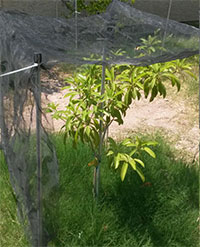
Tip of the Month: dealing with heat waves

Q: I live in California and this summer has been super hot, with temperature above 100 degrees. This heat wave is killing my plants! Please help!

A: If you live in Southwest, then you are familiar with heat waves, when temperature raises above 110F and up to 120F, while humidity is below 10%. Scorching heat can damage and kill unprotected young plants. Especially if they're recently planted.

Most tropical plants came from humid tropics and they don't easily tolerate high temperatures and low humidity. You can tell such plants immediately. Desert plants have small, waxy succulent leaves, which are capable to reduce evaporation. (See list of plants tolerant to hot and dry conditions). Tropical plants have large soft leaves and need high humidity.

These steps will help to protect them... Continue reading...

Date: 24 Jun 2018

We can ID plants for you! Even Mango Elephant...

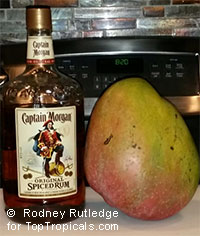
Q: I had a mango tree, the fruit was very large and no one knew the name of it. Can you please tell me the name of it or something about it? I have never seen this variety before. It weighed in at 7 lbs, it smells a little like bubble gum, its flesh is fiberless and the taste is watery with a little sweet. And do you have it for sale? I don't have the tree anymore. My pictures are about a year or two old, lighting struck the tree and it died so I have been trying ever since then to find another tree but I don't know what kind it is. I originally bought the tree on side of the road cause I always wanted a mango tree so I didn't care at the time what kind it was so I bought it but I was shocked at how big the mango was. However I collected rotten mangoes off the ground and planted the seeds. Only one germinated.

A: This mango is called Elephant. We will try to find this grafted variety and let you know when we have it. Unfortunately seedlings take many years to fruit (8-15 for mango) and usually do not come trues to seed.
The closest variety by fruit size is Lancetilla, it is a giant 5 lb fruit, of a very good quality. And the best tasting and the most popular - Nam Doc Mai!

Remember at Top Tropicals, we can help you to identify plants for you! Just send us a picture. Close up of leaves and/or flowers/fruit will be always helpful. Top Tropicals plant experts are always here to help!

Date: 24 Jun 2018

Plant Horoscope. Virgo Zodiac lucky plants: Crape Myrtle and Laurus nobilis

Virgo - 8/23-9/22. Virgo is an EARTH sign ruled by the planet Mercury, which also rules Gemini. Virgo is traditionally the Goddess of the Grain, and is associated with autumn. Her plants often have finely divided leaves or stems, subtle odors, or small, brightly-colored flowers. The most beneficial plants for Virgo are high in potassium and help to calm the nerves. In its rulership of Virgo, Mercury governs the abdomen and the lower intestinal tract and the entire digestive process. Herbs associated with Virgo assist in digestion (as do Cancer herbs) and help to reduce flatulence. The relaxing, calming scents help Virgo release stress and worries.

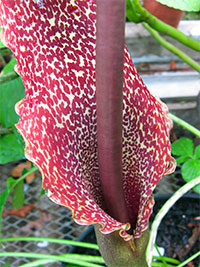
Virgo Zodiac lucky plants: Amorphophallus, Dill, Barringtonia, Bolusanthus, Dioscorea, Grewia asiatica (Falsa), Hibiscus Karkade, Iboza riparia, Lagerstroemia Queens Crape Myrtle, Laurus nobilis (Bay Leaf), Lippia, Melissa, Catnip, Mint, Arugula, Piper betle, Piper sarmentosum, Psychotria, Clove, Banisteriopsis, Papaya, Mesua ferrea (Ironwood), Assai Palm, Jacaranda, Pimenta dioica (Allspice), Petrea, Plumbago, Clitoria, Eranthemum, Litchi, Cashew, Pecan, Nut trees, Cherries, Lavender, Sansiveria, Aloe vera, Blackberry, Honey suckle, Satureja, Vitex, Mulberry, Elaeocarpus, Feronia elephantum (Bel Fruit). On the photo: Sauromatum venosum - Voodoo Lily.

For links to these plants and other signs information, see full Plant Horoscope.