Date: 17 Sep 2025
🍇Mulberries – the hidden gems of every garden
Picture this: it’s July, the sun is warm, and you step outside to a tree dripping with berries. You reach up, and your fingers come away stained purple. The taste? Like blackberries kissed with raspberry — sweet, juicy, unforgettable.
That’s what a Mulberry gives you. And the best part? You don’t wait years. Many trees fruit the very next season. Dwarf types can even fruit nearly year-round in pots — fresh berries on your patio, without leaving home.
🌟 Varieties gardeners swear by:
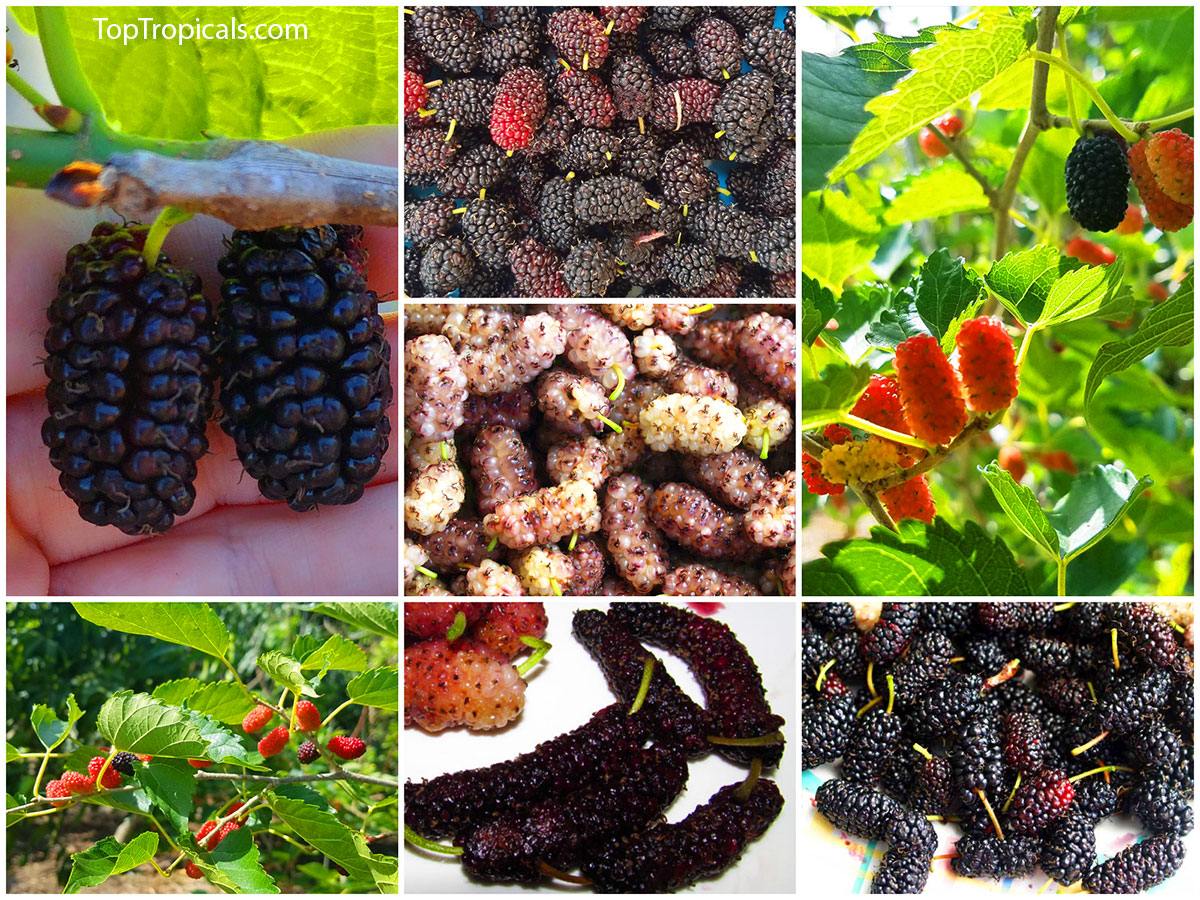
In the photo above: mulberry varieties - Illinois Everbearing, Dwarf Everbearing, Shangri-LA, White Mulberry, Pakistani Giant, Issai, Florida Giant
- Illinois Everbearing – legendary flavor, harvests all summer.
- Dwarf Everbearing & Issai – perfect for patios, nonstop fruit.
- Florida Giant – big tree, big berries, big flavor.
- Shangri-La – thrives in heat, huge leaves, steady crops.
- Pakistani Giant – 2-3"long fruit, very juicy.
- Tise – sweet, large flavorful fruit, early season.
- White Mulberry – sweet and clean, no stains.
Mulberries aren’t just delicious — they’re loaded with antioxidants, help balance blood sugar, and make your garden come alive with birds and shade. Don’t wait another season. Plant your Mulberry now and taste the difference by next summer.
Watch short videos:
💲 Special Offer – 20% off Mulberry Trees!
Get 20% OFF already discounted Mulberry Trees with code
MULBERRY2025
Min order $100. Excluding S/H, valid online only, cannot be combined with other offers.
Hurry, offer expires September 23, 2025!
Date: 6 Dec 2018
Seven rules of cold protection for tropicals
Q: I was always wondering how you guys manage to grow true tropical trees in Florida? I live in Puerto Rico and we have Breadfruit trees growing here in a wild... but my sister lives not far away from you, in Orlando, which is much colder, and I wonder if I can get her a Breadfruit tree for Christmas?
A: Your
sister can grow a Breadfruit tree in Orlando either in a pot (and bring it indoors during
cold periods) or in the ground inside a structure (an elclosed conservatory
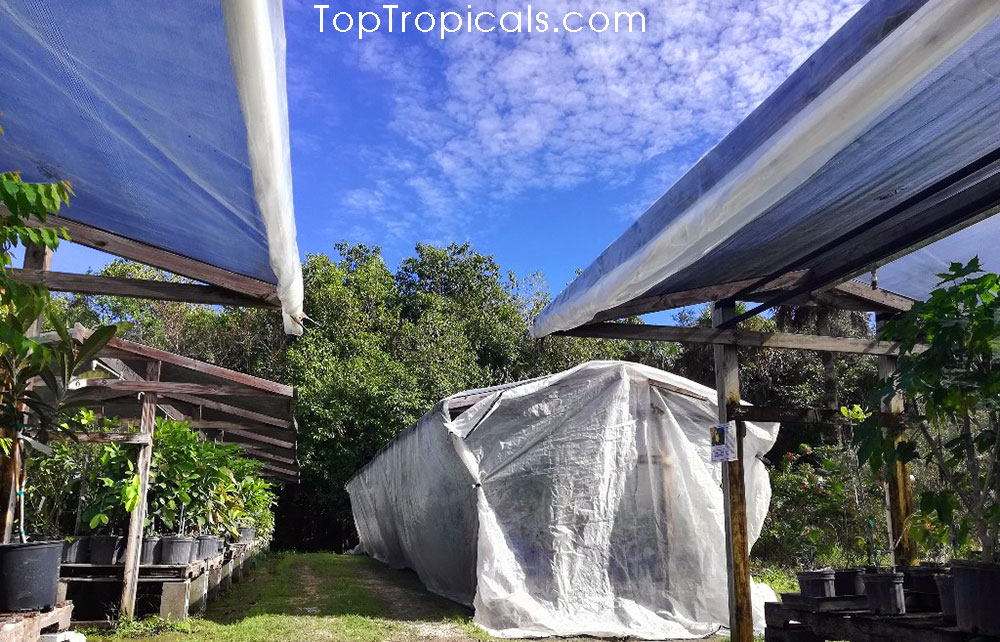
with heating system). See our customer's Greenhouse in Virginia. Cold protection of tropical plants is a lengthy
subject and we have many interesting publications about it in our managine
Tropical
Treasures and on the website. In a nutshell, when growing tropicals outside of
tropical climate, you need to follow these 7 rules:
1. Cut watering to a minimum. Cold+wet kills tropical roots.
2. Water thirsty plants before a cold night. Jucy leaves have fewer
chances to be cold-zapped.
3. Wind protection is more important than a temperature drop. Plant
tropicals close to a house or surrounded by other trees.
4. Duration of a cold period is more critical than the cold itself. If
expecting long cold hours, bring up all available protection resources.
Christmas lights or propane heaters - as long as there is a heat source,
everything helps!
5. Remove plastic covers during the daytime so plants don't get
"cooked" in the sun. Fabric covers are better than plastic.
6. Grow ultra-tropicals in containers and bring them inside the garage
or even indoors during the cold.
7. Use SUNSHINE plant boosters and feed your plants well during Summer to improve cold hardiness.
Related topics:
About Cold Protection
Cold protection - winter action for your plant collection
Improving cold hardiness before winter: fertilizer and micro-elements
Cold hardy tropical fruit trees
Date: 24 Jun 2018
Our honest advise on Holiday Gift Plants
Q: Any suggestions on gift plants? With Holidays around the corner, I've been thinking of getting a present for my grandma, she lives in FL and is an experienced gardener. I also have a friend that lives in CA, also warm climate, but she doesn't have a green thumb. Any "easy" plants I can try for her?
A:
Live plant is a perfect gift, as we all know. However when
ordering a plant online as a present, for a happy
experience, you should have three things to consider:
1) Gardener's experience. Planting instructions are
included with every order, and usually success is there if
you follow them. But all plants go through shipping stress
(some more, others less) and need time, patience and love
to recover. Also, a plant will need a new home after
shipping: a pot and a good soil mix. It would be wise if
you add potting mix with a gift
order; the plant should be planted in a permanent pot as
soon as possible, but normally can wait a day in a packing
bag until its new owner gets a pot, if it is not ready
yet.
2) How easy the plant is? If buying a plant for a
beginner, chose something easy, as well as showy. Adeniums - Desert Roses, Jasmines, Clerodendrums, Cordylines are always a good
choice. Calatheas, Gingers and
Heliconias are always showy, even when not in bloom.
Spice trees and herbs are
fun, easy to grow and one can enjoy their aroma right away
without waiting on them growing bigger. Miracle Fruit is an awesome
present, it comes with detailed instructions how to grow
the Miracle!
3) How easy the plant ships? Some plants can be
easy in cultivation, but they don't take shipping well.
After being in a dark box for a few days, most plants
usually recover well in experienced hands. When making a
present, you want something showy, not just a stick to
arrive. Besides Adeniums and Jasmines, many fruit trees
usually take shipping without a problem - such as Mango or Sapote trees. You may not
want to start with Avocado, Papaya, Carambola, or Cacao - unless they go to
an experienced grower - these may take some time and skill
to etanblish. Fig trees are super easy in
shipping, but figs may drop leaves in Winter - for this
same reason, you may think twice about deciduous plants
like Sugar Apples, Grapes, Mulberries or Persimmons to be sent as
gifts. On the other hand, if you are sending a deciduous
tree to a gardener who can appreciate the variety, this
may be a good choice - dormant plants take shipping with
less stress!
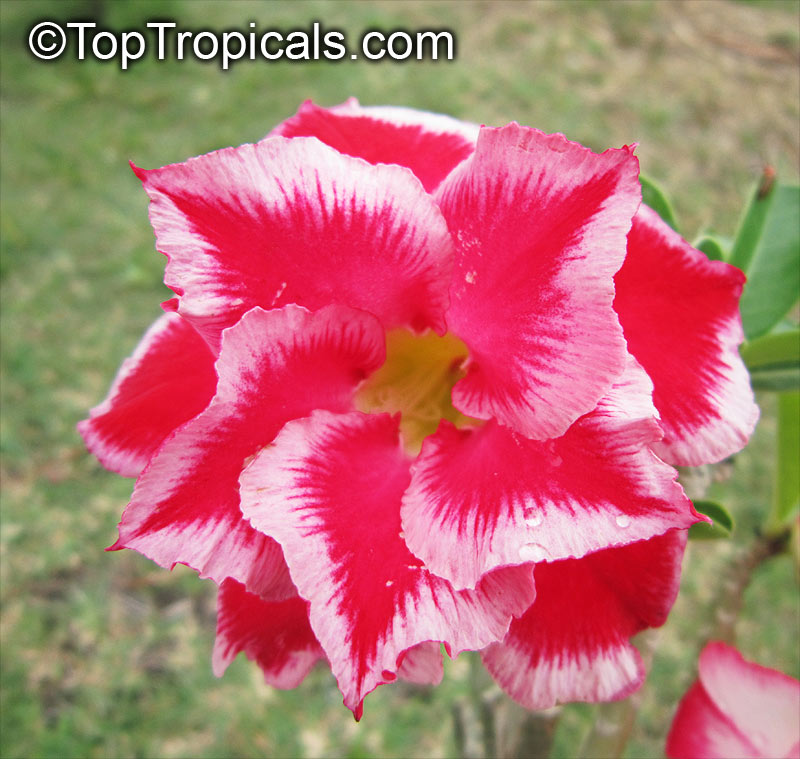
Holiday special: On the picture: Adenium Xmas Santa. A Holiday Special Desert Rose with Christmas-colored flowers - deep-red and white.
Still not sure which plant to choose? You may buy a Top Tropicals Gift Certificate
Date: 24 Jun 2018
Full Sun Garden vs Shade Garden
"Someone is sitting in the shade today because someone planted a tree a long time ago." (Warren Buffett)
Q: I live in California and I have a large area of my garden in full shade. Are there any plants that will be happy there? I am looking for something colorful. I also have a smaller area in front of the house that has full sun almost all day long, but I am afraid this can be too hot for flowering plants? Can you recommend something?
A:
Full sun gardens have a strong, bright look while shade
gardens have cooler, subdued appearance. Both types of
gardens are fun to design and maintain as long as you pick
the right plants.
Full Sun Garden is the easiest to grow. Depending
on exposure, it may require some plants that can tolerate
the hottest summer days and the dry conditions in your
area. The good news is, the majority of tropical and
subtropical plants prefer full sun, so you have a large
selection to pick from - fruit trees, flowering trees,
shrubs, vines, and small perennials. The more sun, the
more flowers and fruit you will get! However, keep in mind
that sun gardens require more water, but generous mulching
will help to minimize watering.
Shade Garden is much more restful in appearance,
but sometimes may be a little more difficult to work with.
As shade trees grow bigger and thicker, it may become too
dark; nothing will grow in total darkness. In this case
you need to prune back some branches to let more light in.
Filtered sunlight or dappled light coming through the
leaves of the trees is beneficial and considered light
shade, which would be the best light conditions for shade
loving plants to thrive. Although shady cooler spaces
attract more insects and will require more attention to
control them, they also have some advantages over sun
gardens. You can enjoy working in cooler conditions, and
your garden will require less water. Many foliage plants
look more deeply colored and healthier than in full sun;
white flowers shine instead of looking washed out!
Our favorite shade plants are fragrant brunfelsias , clerodendrums, and of course
colorful gingers and heliconias. You
may also consider ornamental foliage of Calatheas, lush Alocasias, Colocasias, and colorful Cordylines. Check out our shade loving plant list for
more colorful suggestions. These are also great for indoor
gardens!
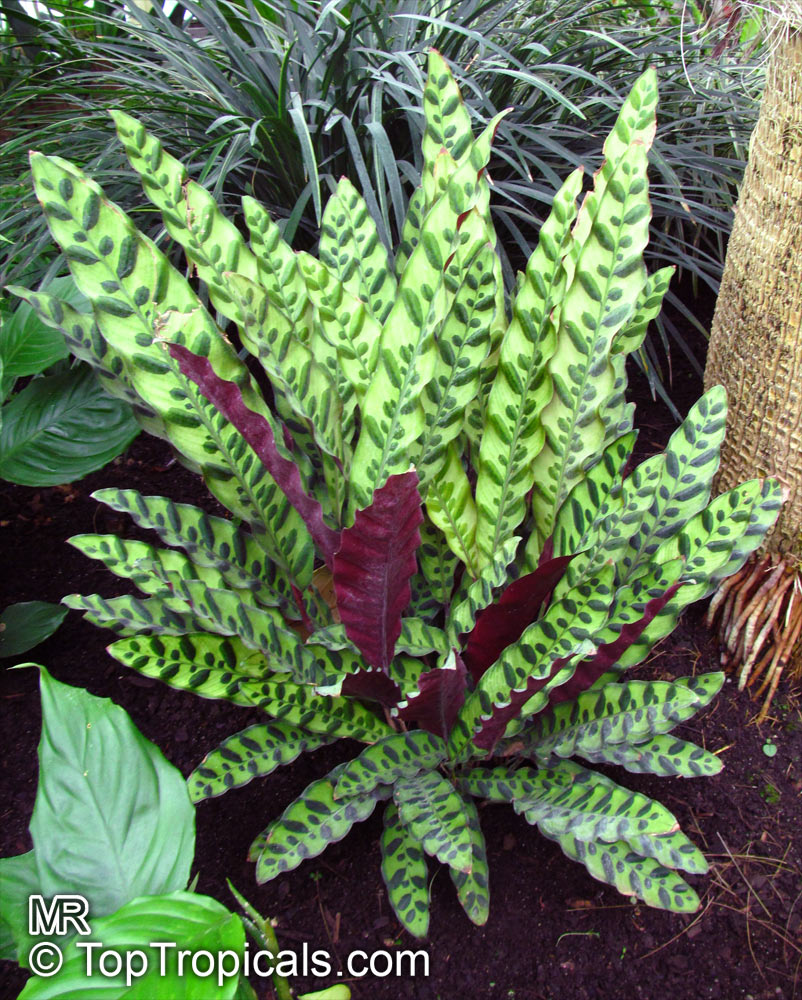
On the photo: Calathea lancifolia Rattlesnake

Date: 19 Jan 2022
Avocado Q & A
Sensation: Avocado 2.5 y.o seedling just bloomed!
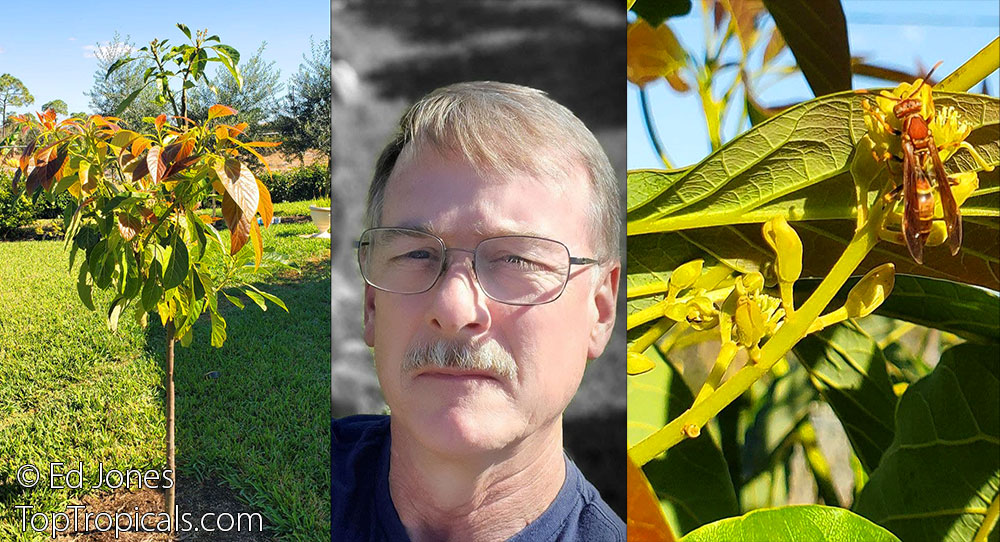
Ed's Avocado seedling blooming at age 2.5 years old... Go figure!
Q: Can I plant a seed from a store bought avocado and expect it to bear fruit?
A: Avocados grown from seed do not always come true, meaning being the same as the avocado that produced the seed being planted. Also, avocados grown from
seed will take upwards of 8 years to flower and bear fruit unless grown by Ed Jones and his witchcraft. Ed Jones, the Avocado Guy... Yes,
he is also the Mango Guy, and the Booster Guy... We don't know how he does it. He grows the most beautiful fruit trees, many of them from seed and they all
seem to flower within two years! (See his blogs about his Star Fruit, Olive trees, and video about Shaping Mango Trees). All we know for sure, he uses
Sunshine Boosters for all his plant experiments.
As far as Avocado
, we recommend a grafted variety, where a scion, or branch tip, of a known cultivar is grafted to good rootstock. These trees will usually flower right away and bear good amount of fruit within a couple
of years of being planted in the ground.
It's a good chance now to get a good grafted Avocado on our special Happy Value Sale