NEW VIDEO:
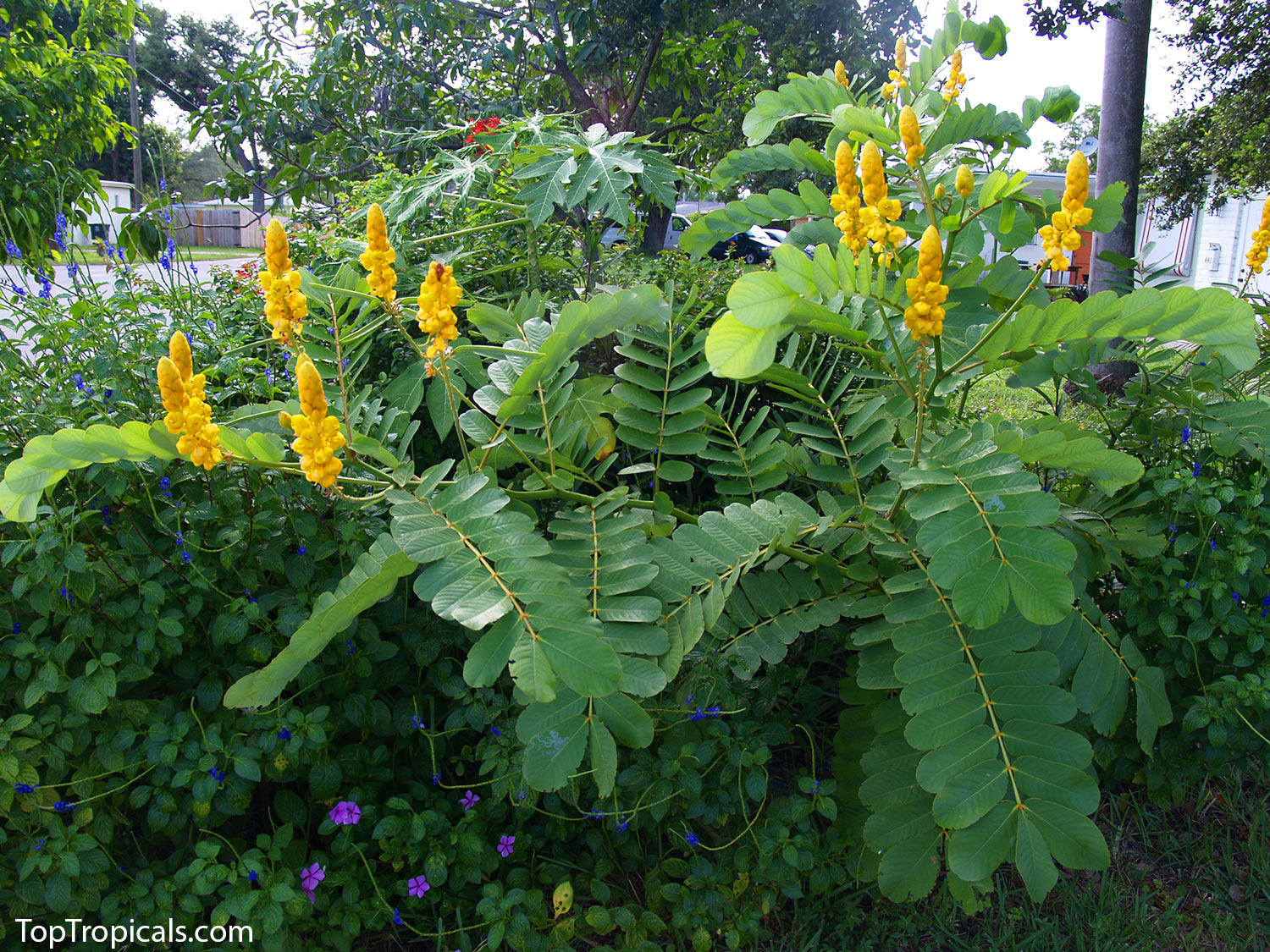
Senna alata - Empress Candle, Candelabra Plant
Need a fast growing, colorful, exotic looking solution for your garden?
Here it is! Empress Candle, or
Candelabra Plant - is a true garden wonder. Imagine a plant that grows
fast, almost always in bloom, and covers large spaces with its lush leaves...
Empress Candle has beautiful golden flowers resembling candles. The huge
leaves create nice cool shade for many feet around it which keeps weeds away.
Providing full sun and regular water Empress Candle grows up to 10 ft wide and
6-8 ft tall just in one or two seasons!
Stay updated with TopTropicals Videos by subscribing to our channel at
YouTube.com/TopTropicals
and get our latest video news of what is fruiting and blooming!
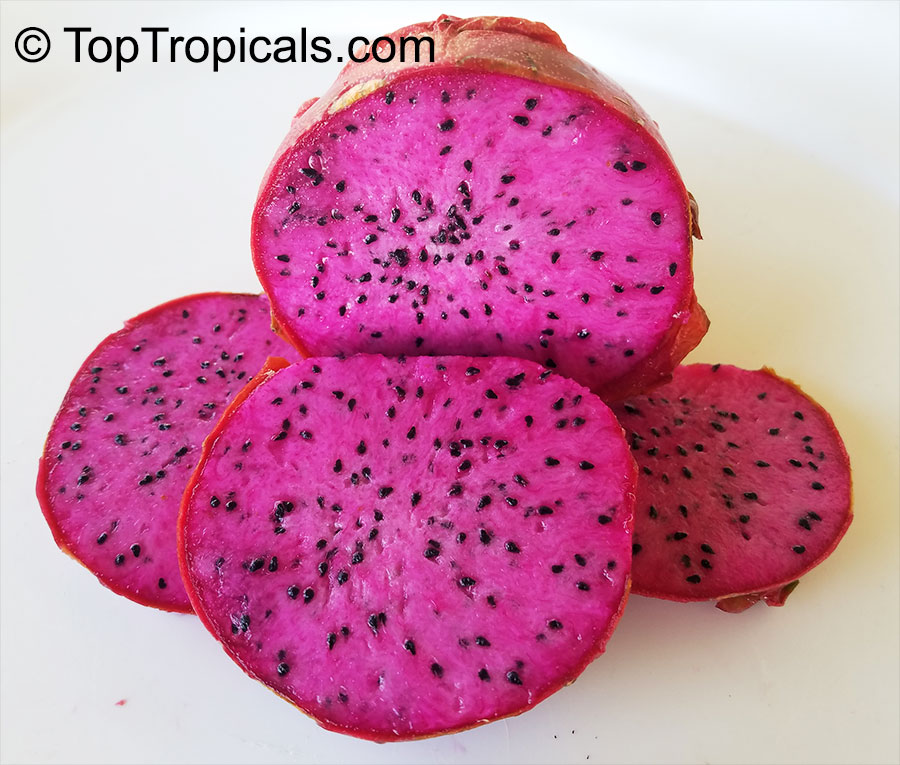
Q: I purchased two sweet red pitayas, that arrived and were
planted on May 28, 2020, they were damaged but not serious. my question is this
one pitaya is a beautiful green, and has grown 6or 8 "already, the other is
bigger and is a grayish green and has not shown any sign of growth at all in
six weeks, how long do I wait before I throw it out and buy another?
A: Being a cactus, sometimes Pitaya slows down its growth waiting
for more favorable conditions. If one of your plants doesn't show any new
growth, just give a it some more time and make sure the plant stays happy. To
make pitaya happy, provide the following: - Water. Unlike most cacti, Pitaya prefers regular watering (but not
a wet soil). Make sure it is planted in well-drained media. Do not water
again if soil remains moist, wait until it dries out on the surface. During hot
weather, Pitaya enjoys light daily watering. - Light. Unlike most cacti, Pitaya benefits from a filtered light
especially while establishing. Try to create a temporary shade over the plant
until it starts active growth (if grown in the ground), or move the pot in
filtered light. Dull color or dry spots are signs of sun burn. Once the plant
shows new growth, you may remove sun protection, or move the pot gradually into
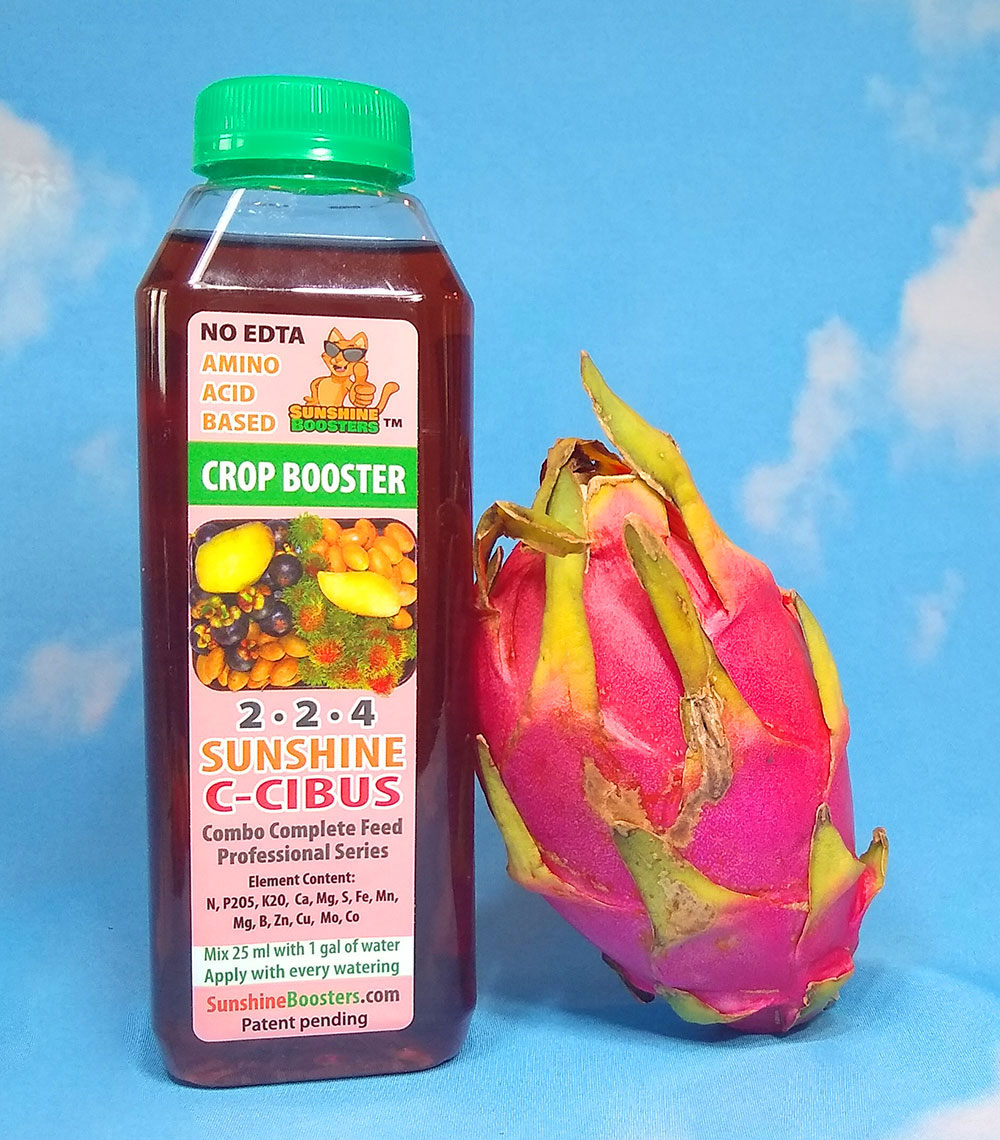
the full sun. - Food. Pitayas are heavy feeders. Use the following fertilizer: SUNSHINE C-Cibus - Crop Nutrition Booster
Q: I've been growing dragon fruit cuttings from Okinawa, Thailand
and Vietnam for several years in pots and cannot get them to fruit. Any
fertilizer suggestions? I live in Northern Virginia so I bring the massive pots
in the garage under lights and a heater for the winter but back outside once
the temperature warms up.
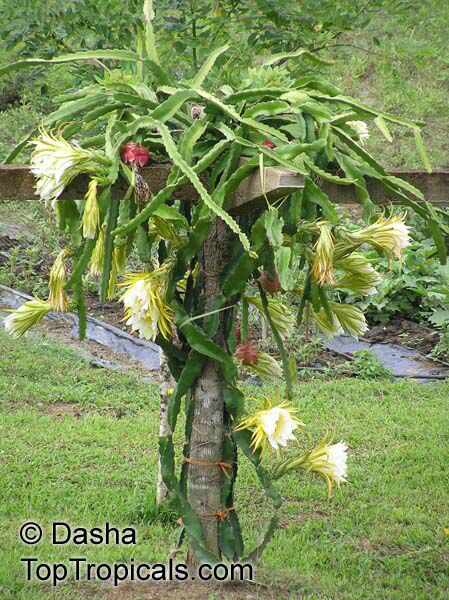
A: There is a little trick to get Dragon fruit to flowering and
fruiting. This plant likes flowering when it is attached to a strong support.
In commercial plantations, they use special trellises/frames made out of
logs, but you can make one yourself using simple materials.
See article: Do-It-Yourself Support Structure for Dragon Fruit.
And of course, don't forget a special plant food for tropical fruit - Sunshine C-Cibus.
You can successfully get your Dragon fruits to fruit in pots, providing
bright light in Summer. In Winter, keep the plants on a dry side to give them
some rest and a chance to hibernate before the next fruiting season.
Date: 13 Jun 2019
Millingtonia hortensis - Tree Jasmine
By Onika Amell, tropical plant specialist
Q: Q: How fragrant is the Tree Jasmine (Millingtonia) and how
tall does it grow?
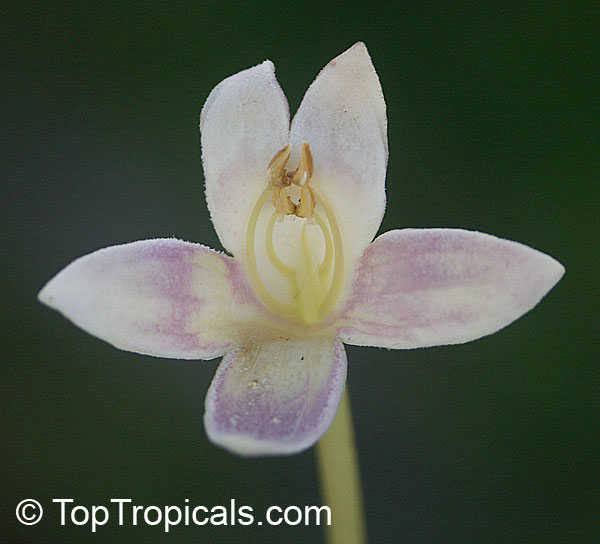
A:Millingtonia hortensis, or Tree Jasmine, is such a beautiful flowering
tree with long, white, slender and trumpet-shaped flowers with a perfume that
wafts through the air. These trees are very sought after because they are so
highly fragrant. They are fast-growing trees that in Nature (Burma) can
easily reach a height of 40-50 feet, however here in SW Florida we have them
growing about 20-25 ft. The tree flowers
at night and then shed the flowers in the morning. The flowers are waxy and
stay fresh for a long time. In India the flowers are picked up and braided
for rituals. It flowers from October until the end of December. The tree is
also known as the Cork Tree, as an inferior cork is processed from the corky
bark. It is a fast growing, tall, straight tree with few branches and its
popularity lies in its ornamental value and not in its shade-giving properties.
Yet, once you've witnessed the profusion of white flowers, you will understand
why. It is a sight to behold! Cork tree is very easy and can grow in a
variety of soils. It requires full sunlight.
Date: 20 Apr 2019
Growing mango tree in California
Q: I just ordered a mango tree. I live in Southern California and
was wondering if you have any tips on how to acclimate the mango to our
climate. I know it is coming from hot and humid Florida to hot and dry Southern
California and don't want to kill it because of the differences in climate.
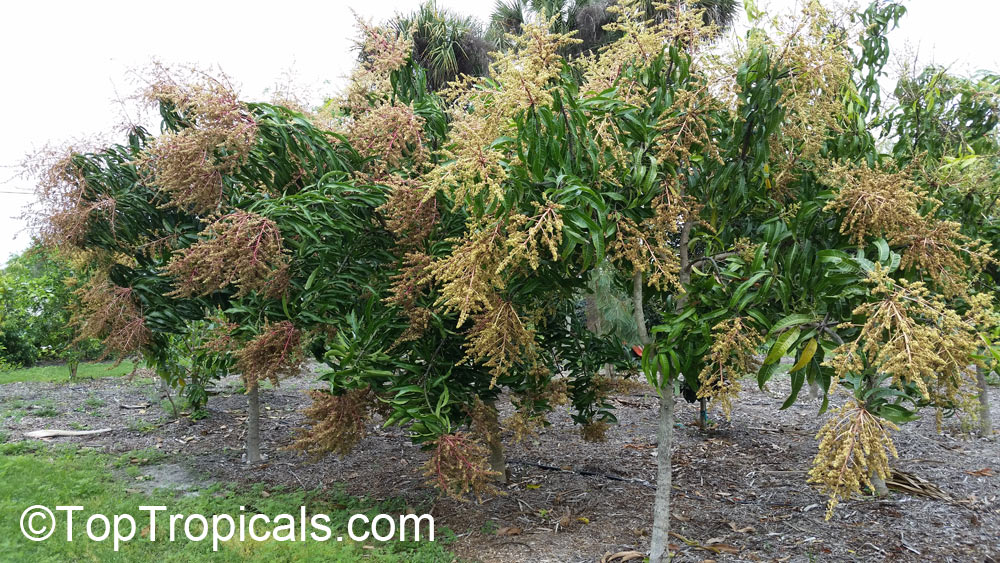
A: Mangos in fact prefer dry conditions rather then humid. It may
be perfect conditions for a mango tree at your place. Plant your tree in a
pot size of the root ball; give it ample water and then let the soil surface
slightly dry before watering again. Keep the plant in bright shade and
gradually move into full sun. Once the tree is recovered from shipping stress, you
may plant it in the ground and make sure to protect from freezing temperatures
in winter. Use Mango Food for quick establishing and better fruit production. More to
read:
Mango boosters How to grow Mango in hot climates Growing Mango in Arizona.
Date: 17 Apr 2019
Secrets of Happy Bougainvilleas
Q: When I visited Hawaii I saw their everblooming bougainvilles,
flowering non-stop! How come our bougainvilles in Florida are not flowering
as much? Is there any special secret to make them bloom?
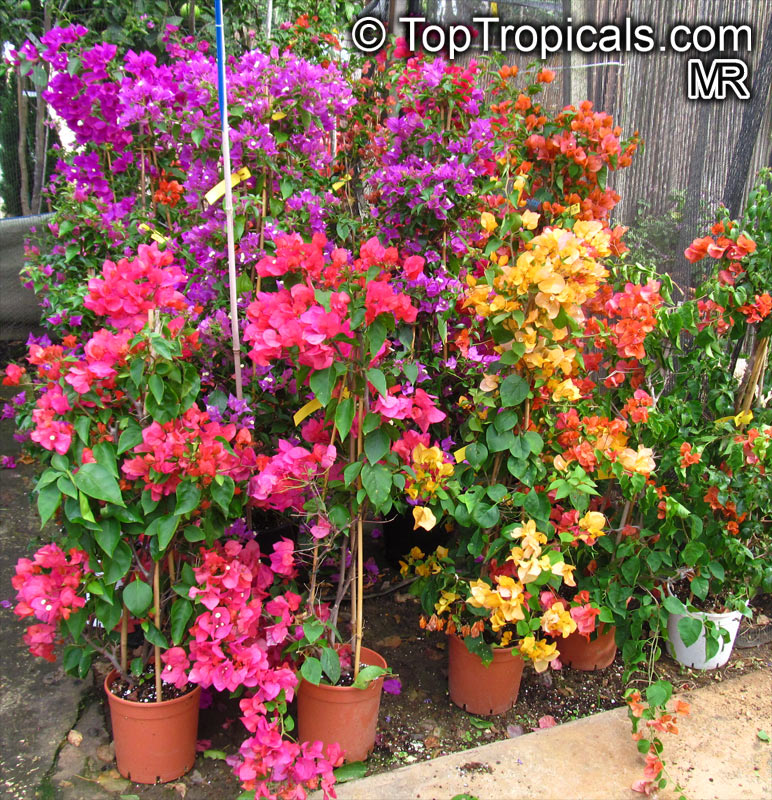
A: Bougainvilleas prefer drier climate and especially drier
summers. Florida summers are rainy and humid. The steaming greenhouse conditions
are favorable for most tropical plants (except desert plants like most cacti).
Bougainvilleas also grow vigorously in Florida heat and frequent rains, but
most cultivars prefer dryer conditions for profuse flowering. These are a few
tips that can help you grow happy Bougainvilleas and enjoy their showy
flowers even in humid climates:
- In Florida, Bougainvilleas bloom mostly in Winter. If you are a
snowbird, this plant is definitely for you!
- Choose sunny, dry, and elevated location for Bougainvilleas, never a
low spot and never a shade spot. Give it as many hours of sun as possible.
- Use only well-draining soil. Usually, sandy soils work well when
mixed with some compost. If your soil is too heavy, add soil conditioners like
perlite, bark, sand.
- Take advantage of cultivars that are well adapted to humid climates:
Dwarf
Everblooming Pixie, Thornless B. arborea.
- Remember Bougainvilleas are the easiest and the most rewarding potted
plants.
- Use bloom boosters along with well-balanced slow release plant food.
We recommend these: Pink-N-Good flower booster and smart-release granulated Tropical Allure.
- Do not overwater and keep the plant on a dry side.