Date: 16 Mar 2024
Monarch Butterflies Are In Trouble
You Can Help By Planting Milkweed
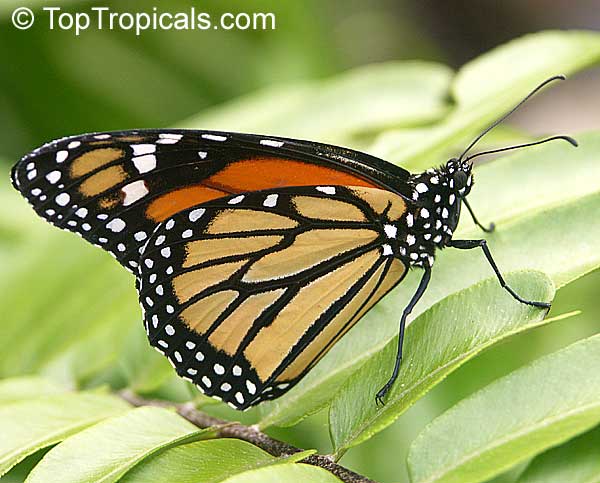
Do you want to save butterflies from extinction? This is all you need - embrace the allure of butterfly plants and become a hero for monarchs!
...Ecologists and other scientists have been warning about an 80 percent
decline in monarch populations due to habitat loss, pesticides and climate
change over the past two decades, but 2024 is a critical year. A recently
released annual survey on monarch populations reported a 59.3 percent decrease in
population from 2022.
Milkweed plants are one of the best butterfly attractors and they can grow
pretty much anywhere. It is a favorite of monarchs, according to Monarch
Watch.... (Source: blockclubchicago.org)
Join us in combating the decline of monarch populations by welcoming these graceful creatures into your garden! Discover the beauty of butterfly plants today and help preserve their habitat.
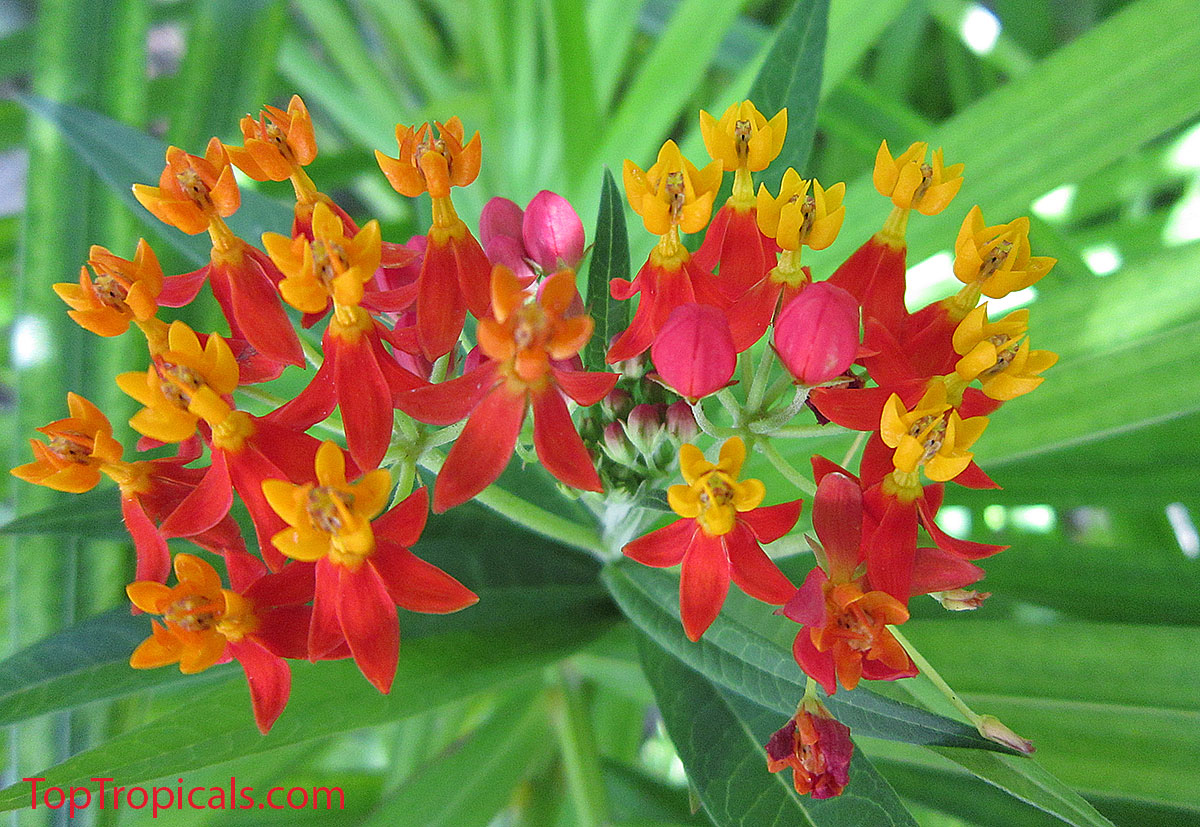
In the photo: Asclepias - favorite plant of all butterflies.
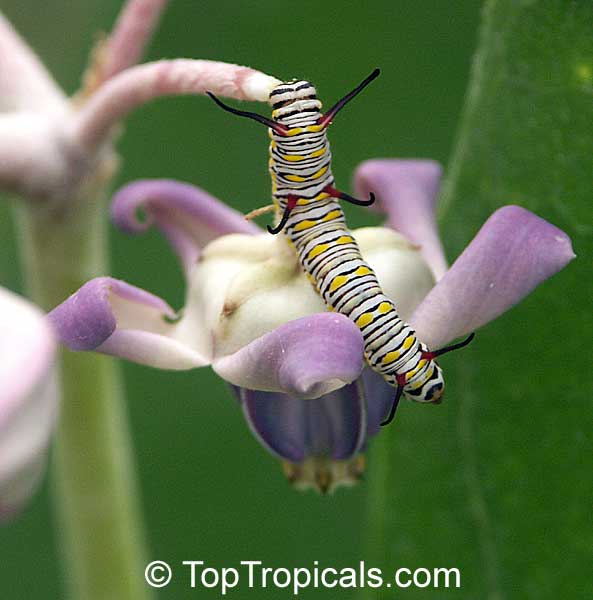
In the photo: a caterpillar of a future Monarch butterfly climbing up the Calotropis gigantea
Date: 4 Feb 2025
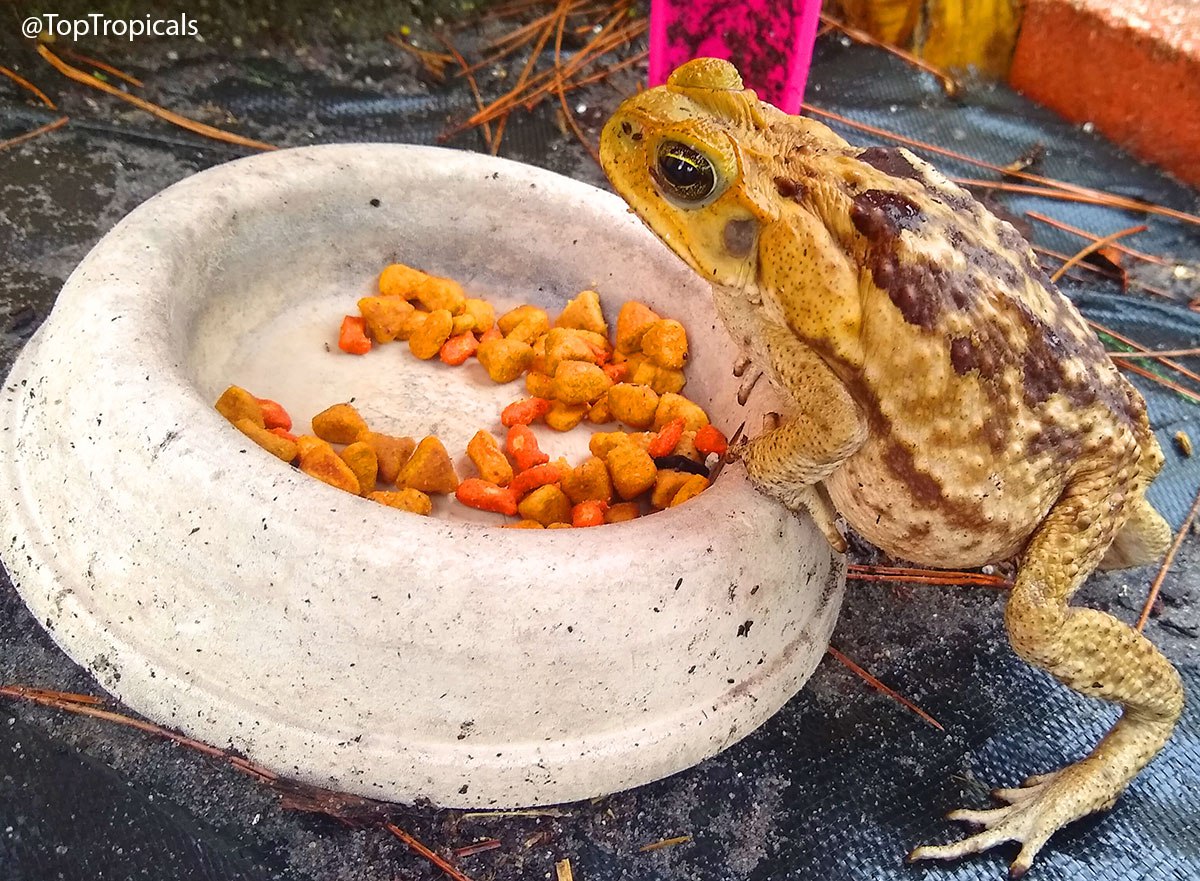
Frog Princess
Frog Princess
"What can turn a frog into a princess?"
"A five-star dinner, because who needs a kiss when you’re well-fed?"
🔴 Join 👉 TopTropicals
Date: 5 May 2025
🎀 Five plant gifts she'll love this Mother's Day
Q: My mother loves gardening and I am thinking to buy her a live plant to make her happy. What plant do you recommend?
A: At Top Tropicals, we have a big selection of wonderful gift plants . Below are a few suggestions for you, these plants are large, developed and ready to bloom or fruit!
1. Joy Perfume Tree
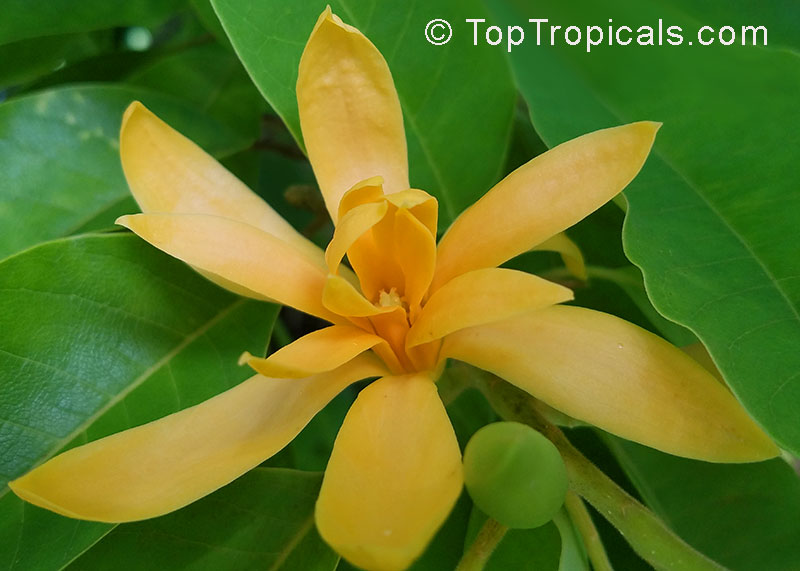
The
Champaka or Joy Perfume Tree (Magnolia champaca) - is a top choice for
Southern landscapes, prized for its striking columnar shape and fragrant,
fruity bubble gum-scented blooms - you won't be able to stop sticking your nose
in this flower! A signature plant at Top Tropicals, it's known for producing
the world's most expensive perfume, Joy. The Joy Perfume Tree blooms on and
off year-round and is currently in full bloom at our farm in Sebring, FL,
filling the air around with fantastic sweet scent. This tree thrives in both pots
and the ground, growing bushy and full as it matures. At Top Tropicals, we
have beautiful Champaka trees in all sizes, from 3-4 ft tall (ready to bloom in a year) to 6-10 ft tall (already
bloomed) for local pick up or delivery.
Learn more, with a short video.
2. Tropical Raspberry Mysore
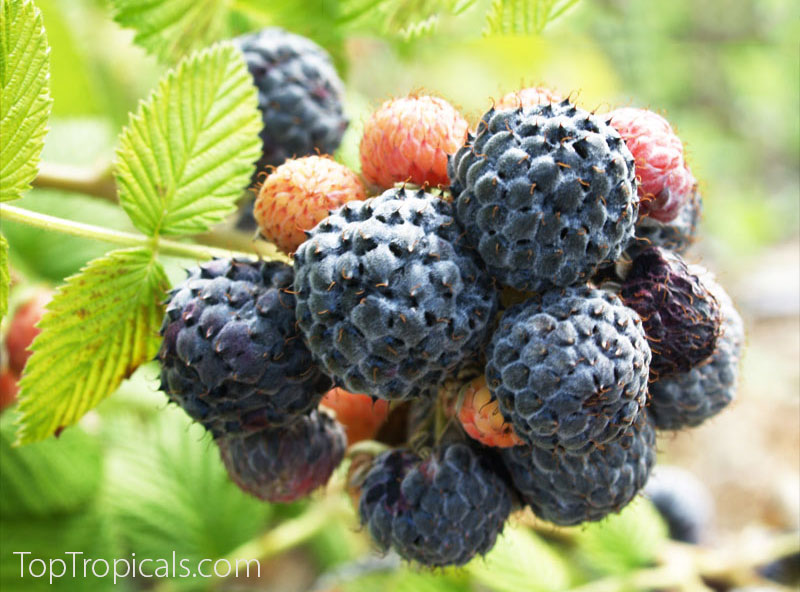
Tropical
Raspberry Mysore (Rubus albescens) - is the perfect solution for those missing
Northern fruit in hot climates. Unlike traditional raspberries that can't
handle the heat, this fast-growing Raspberry from India thrives in humid, hot
conditions and produces juicy, sweet fruit almost year-round! The clusters of
purple-black fruit are packed with flavor, and the plant is perfect for large
containers, producing plenty of fruit in no time. Cold-hardy to the upper 20s
F, it's an easy-to-grow, fast producer. We have beautiful, fruit-ready 3 gal Raspberry
bushes, ready to add a burst of sweetness to your garden!
Learn more, with a short
video.
3. Fragrant Jasmine Sambac
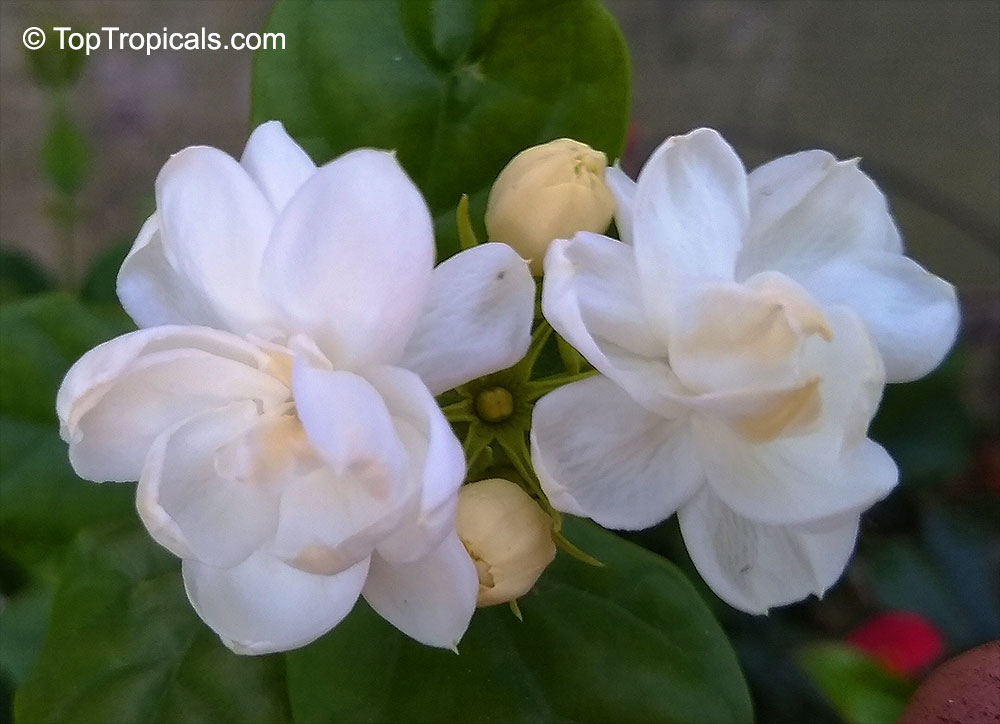
Jasminum
Sambac is widely regarded as the most fragrant jasmine, cherished by
tropical gardeners and plant collectors alike. Native to India, this jasmine is the
source of jasmine perfume oil and the signature ingredient in jasmine tea.
With various varieties offering unique flower sizes, shapes, and growth
habits, it’' perfect for both sun and shade, thriving as a container plant or
indoor favorite. Its delightful fragrance fills the air, and with the help
of
Sunshine Pikake plant booster, you can enjoy even more blooms. Jasmine Sambac,
along with Champaka, is another signature plant of Top Tropicals. Through the decades, we've collected all the available varieties in cultivation - check them out!
Learn more about Jasmine Sambac
varieties, with a short video.
4. Everbearing mulberry
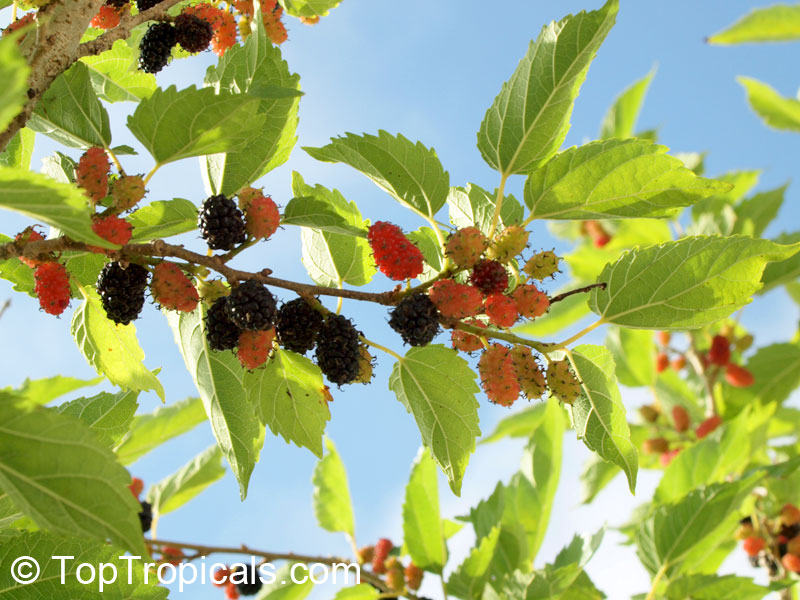
The Dwarf
Everbearing Mulberry (Morus sp.) - is the perfect way to enjoy fruit
year-round! This beautiful, cold hardy bush produces sweet, juicy mulberries starting
from the very first year - often the same season you plant it. With its dwarf
habit (easily maintained at 4-6 ft), it's perfect for containers and small
spaces. Cold-hardy and drought-resistant, this productive plant thrives in
various climates, from USDA zones 5 to 10! The fast-growing Mulberry will provide
fruit year-round, and with minimal care, it will flourish in almost any soil. Our
Everbearing Mulberry bushes produce enough fruit for both birds and breakfast - we pick a handful every day!
Learn more, with a
short video.
5. Medinilla Coral Spike
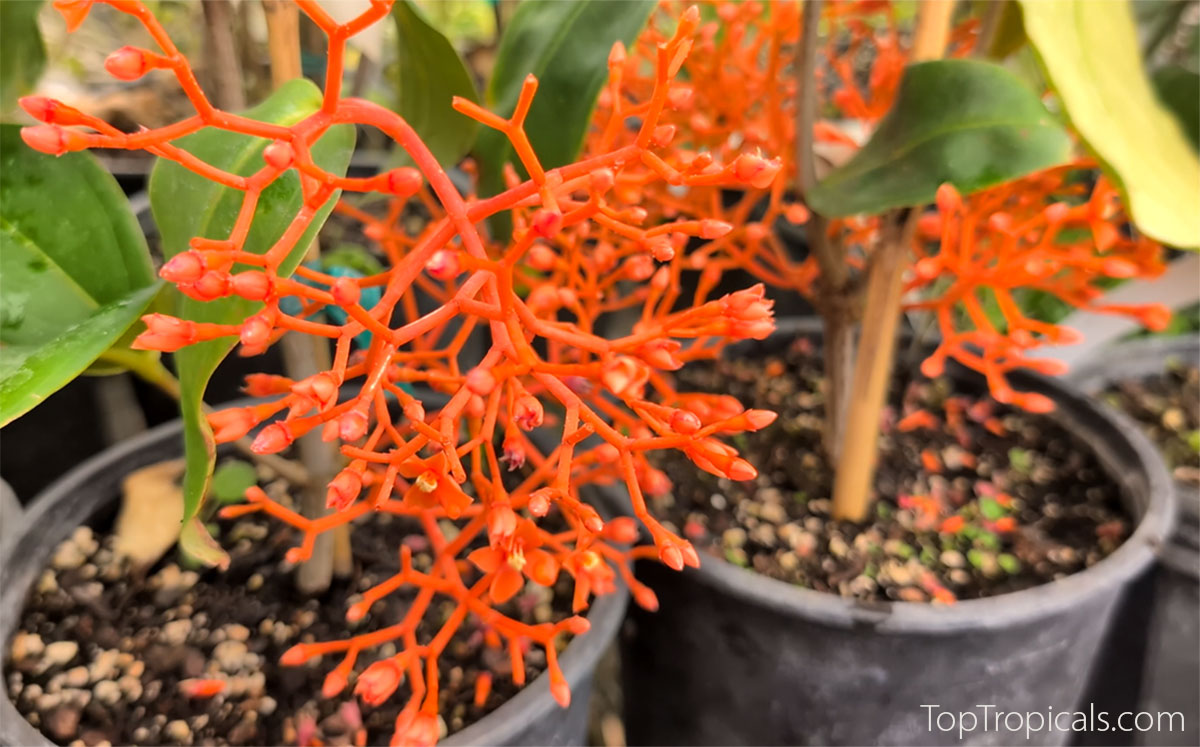
Rare Medinilla
scortechinii - Orange Coral Spike - is a rare gem that brings a touch of
the ocean to your garden! With bright orange stems bursting into star-shaped
blooms, it looks like something straight from a coral reef. Compact and easy to
grow, this plant stays under 2-3 ft tall, making it perfect for pots,
hanging baskets, or as an epiphytic accent. The glossy dark leaves contrast
beautifully with the vibrant orange panicles, and it thrives in bright shade. A must-have for collectors of unusual
tropical plants, this coral spike adds a bold pop of orange wherever it grows - but hurry, it doesn't stay in stock for long!
Learn more, with a short video.
Date: 13 Apr 2025
Why do the Chinese drink tea?

🌱 Why do the Chinese drink tea?
🍃 It actually has to do with the Chinese theory of the five elements - wood, metal, fire, water, and earth:
木 金 火 水 土
🍃 Tea comes from a plant - Camellia sinensis - the Tea Leaf Tree - that is used to make all true teas: green, black, white, and oolong. The Tea Tree contains the element of wood (木) 🌳
🍃 When it's roasted in a cast-iron pan, it gains the element of metal (金)
🍃 Then it's dried over fire, adding the element of fire (火) 🔥
🍃 When it's brewed with boiling water, the element of water enters (水) 💦
🍃 Finally, tea is poured into a clay vessel, symbolizing the element of earth (土) 🍯
🍃 In this way, all five elements - wood, metal, fire, water, and earth - come together in a single cup.
🍃 The plant grows slowly and can thrive in containers or frost-free gardens with sun to semi-shade.
🛒 Grow your own tea
📚 Learn more from previous posts:
Tea facts
How to grow your own tea?
Where does the tea come from?
Instructions how to make tea from tea leaves (PDF)
#Food_Forest #Remedies #Fun_facts
🔴 Join 👉 TopTropicals
Date: 19 Jul 2025
☀️ When tropical plant takes a Summer break
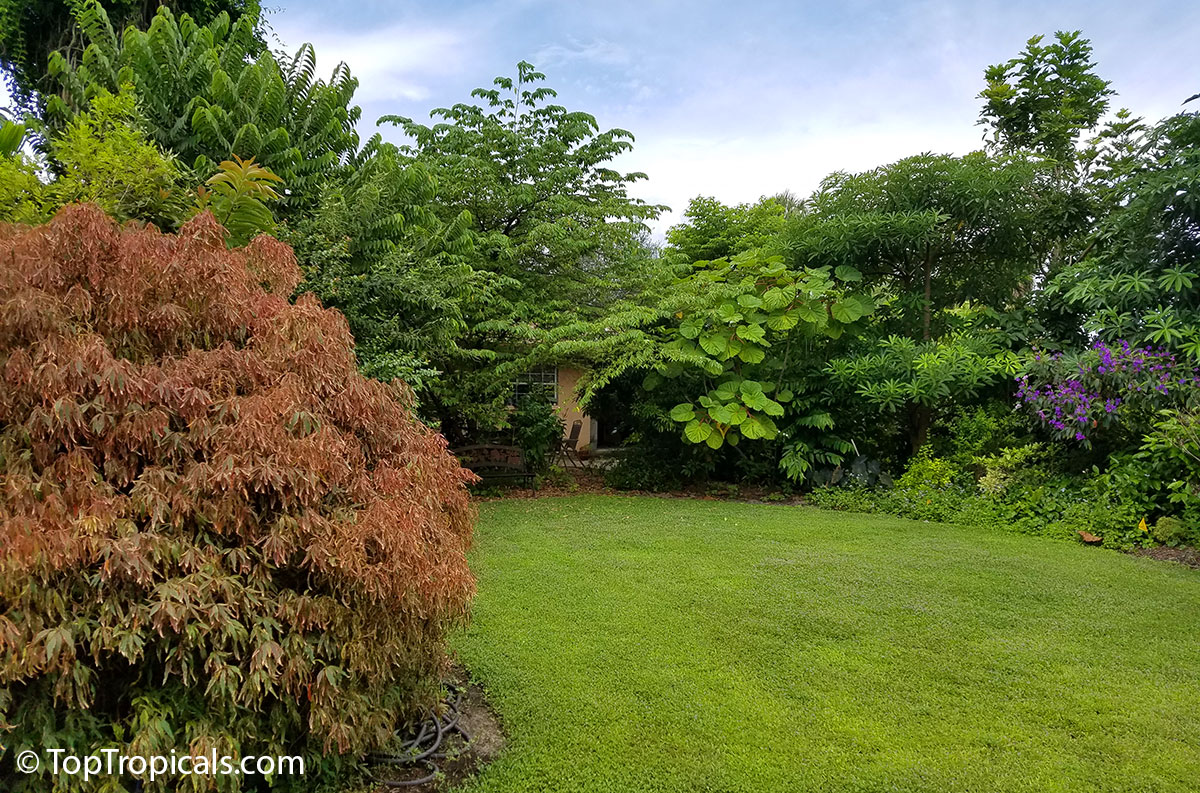
Why your plants might stop growing in mid-Summer
and what to do about it
You've been watching your tropical tree thrive all spring. New leaves, steady growth, maybe even a flower or two. Then July hits, and… nothing. The heat cranks up, and your once-busy plant just sits there. No new shoots, no blooms, not even a twitch. If it feels like your plant ghosted you - but don't worry! It's not dying. It's just hot!
When the heat hits, plants hit pause. In the peak of summer, especially with temperatures above 90F, many tropical and subtropical plants go into heat survival mode. Growth above ground may slow down or stop entirely. It's not because you forgot to water or skipped a fertilizer dose - it's just too hot. The plant's energy shifts underground, where roots may still be growing. Think of it like a tropical version of a siesta - less margarita, more mulch. This stage might last a few weeks or longer, depending on how intense the heat gets. But the important thing is: it's normal.
- Don't drown it in extra water. That leads to root rot.
- Don't dump dry fertilizer on it. That can burn the roots or just get flushed away. Use controlled release or liquid fertilizer dozed proportionaly to the plant's water usage.
- Don't prune aggressively, hoping to jolt it awake.
None of that helps - in fact, it can make things worse.
- Water deeply in the early morning, and let the soil dry a bit between waterings.
- Add mulch to help keep the root zone cool and reduce evaporation.
- Provide temporary shade for potted plants or young trees.
- Hold off on pruning or heavy feeding until you see new growth.
Just like you wouldn't run a marathon in a heatwave, your plant needs a break too.
Fertilizing seems like the obvious solution when a plant stalls, but in the heat of summer, it can backfire. When temperatures soar, roots slow down, and absorption becomes inefficient. You might pour in nutrients, but your plant can't use them - and what's worse, any tender new growth that does emerge can get scorched or sunburned before it has a chance to harden.
Feeding a plant with strong fertilizers during a heatwave is like telling someone to sprint in a sauna. It's not just unhelpful - it's risky. That's why you need a fertilizer that’s engineered for hot weather - not just any slow-release formula.
Liquid Sunshine Boosters mild formulas are safe to use year around. Controlled release fertilizer like Green Magic are safe as well, just make sure to follow directions and dosage.
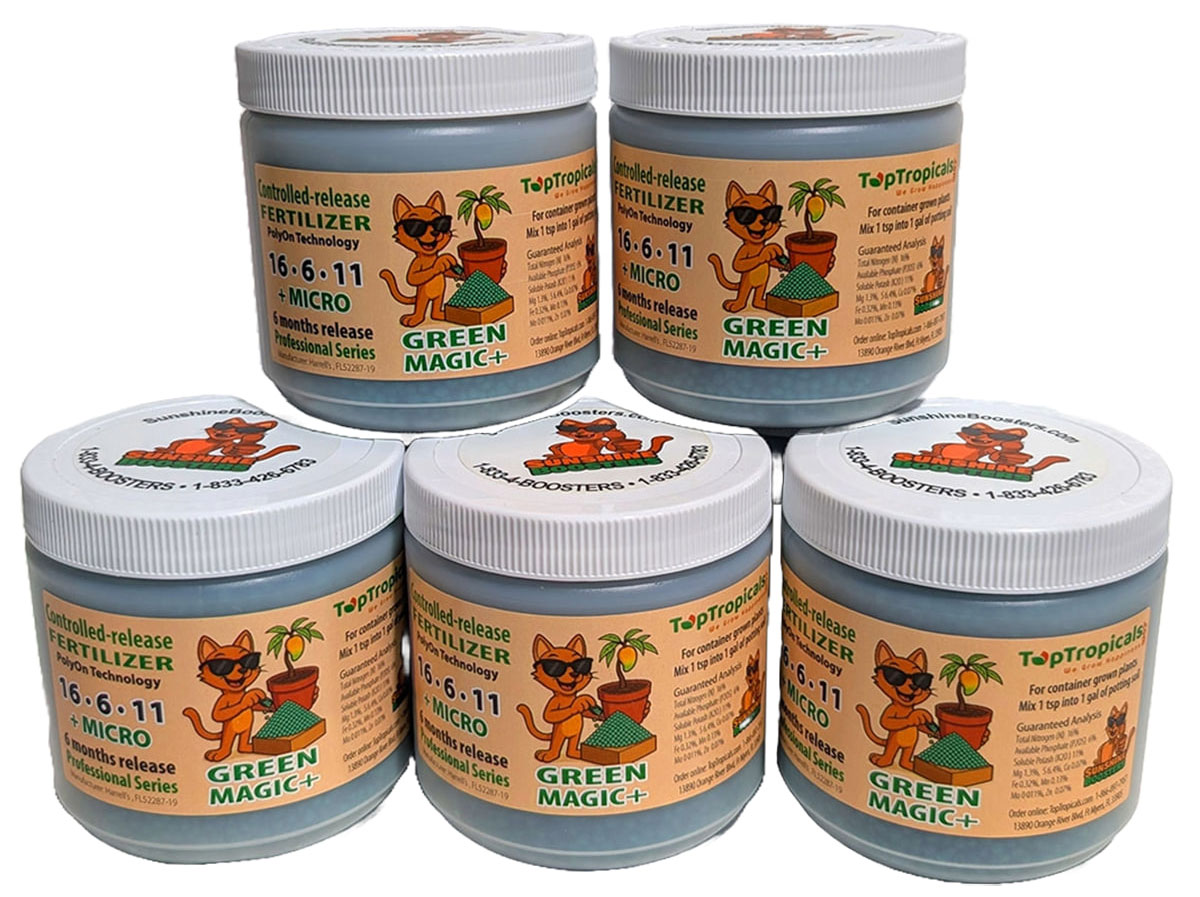
Not all slow-release fertilizers are built for hot summer. Some popular brands might seem like a good choice - but they’re optimized for soil temperatures around 70-75F. That's a mild Spring day in the South, but in real-world Florida or Arizona heat? Not even close.
Here's the problem: Osmocote releases nutrients based on moisture, not temperature. When it's hot and humid - or worse, when you water heavily - it can dump too many nutrients at once. That nutrient surge can:
- Burn your plant's roots
- Force tender new growth that gets fried in the heat
- Leach straight out of the pot, wasting both fertilizer and money
It's unpredictable, especially in containers that heat up faster than ground soil. What you think is "slow-release" can behave more like a fertilizer bomb.
Green-Magic, by contrast, uses a temperature-sensitive polyurethane coating that responds gradually and consistently as the soil warms. That means:
- No sudden nutrient spikes
- No wasted runoff
- And no risk of heat-triggered burn
It's designed to feed steadily and predictably - even when temps hit 90F and stay there. For potted tropical plants, that kind of control is the difference between stressed and thriving.
Once your plant begins to show signs of life again - maybe a new bud, or evening perkiness - it's safe to resume feeding. But skip the salts, and reach for something gentler: Sunshine Boosters.
These amino-acid based liquid fertilizers are designed for daily use, even in containers during the hottest days. They enhance nutrient uptake, even when roots are stressed or sluggish. Unlike synthetic chelators like EDTA, Sunshine Boosters won't bind nutrients or burn root system. They stay gentle, available, and effective. Learn more from this short video.
Use SUNSHINE Robusta for foliage support, or Ca-Support PRO for strong structure and recovery. It's like hydration and nutrition in one - perfect for tropical plants fighting through summer heat.
Don't fight the heat - work with it. If your tree looks stalled this summer, don't panic. It's following a rhythm older than all of us. Support it with smart watering, the right fertilizer combo, and a little patience. Before long, you'll see buds again - and know your plant made it through the heat.
Shop fertilizers and garden supplies
Read more plant care tips in Garden Blog