Date: 16 Jun 2023
NEW VIDEO:
ABC7 Fort Myers News:
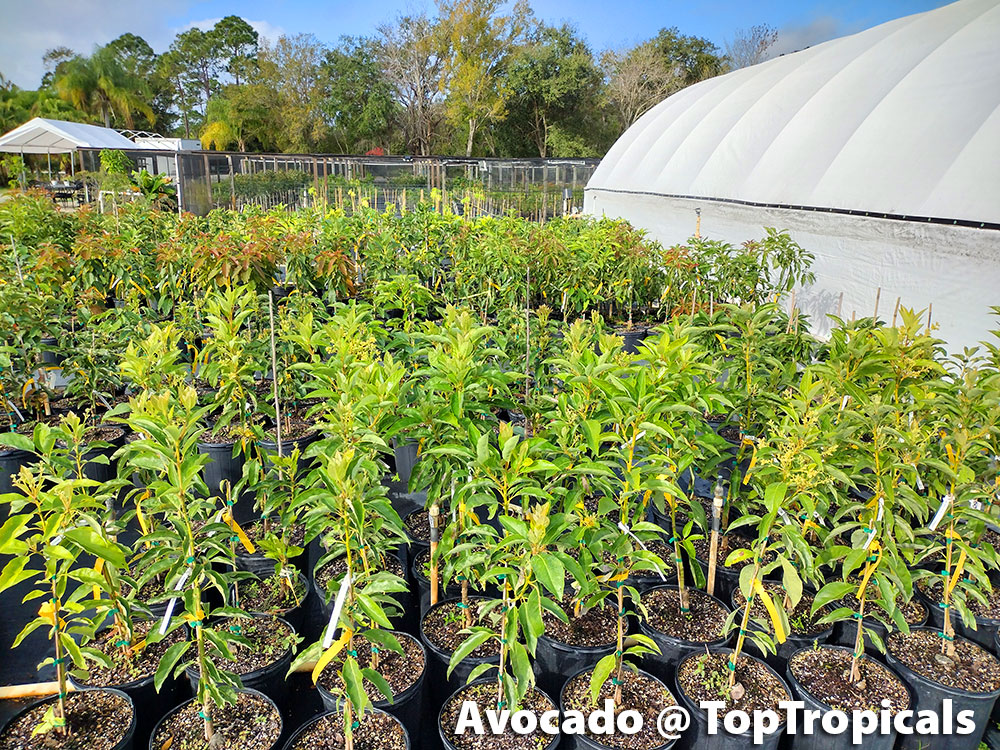
Avocado Varieties at Top Tropicals
We continue the series of ABC-7 News on Top Tropicals selections. Previously, we showed you segments about Butterfly Plants, Rare Fruit Trees, and Mango varieties. Today's video is about growing an Avocado tree in your home garden.
Growing your own avocado tree has many benefits. You can enjoy fresh, delicious avocados right from your garden. Avocado trees are attractive, provide shade, and enhance your landscape. There are many avocado varieties to choose from, offering unique flavors, sizes, and ripening times. You will find Avocado trees for sale online right here at TopTropicals.com. Our trees can be shipped to you!
Watch the news segment by Rachel Anderson for ABC-7:
Avocado Varieties at Top Tropicals.
Subscribe to our Channel:
Stay updated with TopTropicals Videos by subscribing to our channel at YouTube.com/TopTropicals and get our latest video news of what is fruiting and blooming!
Date: 29 Jul 2019
When to fertilize and prune tropical fruit trees?
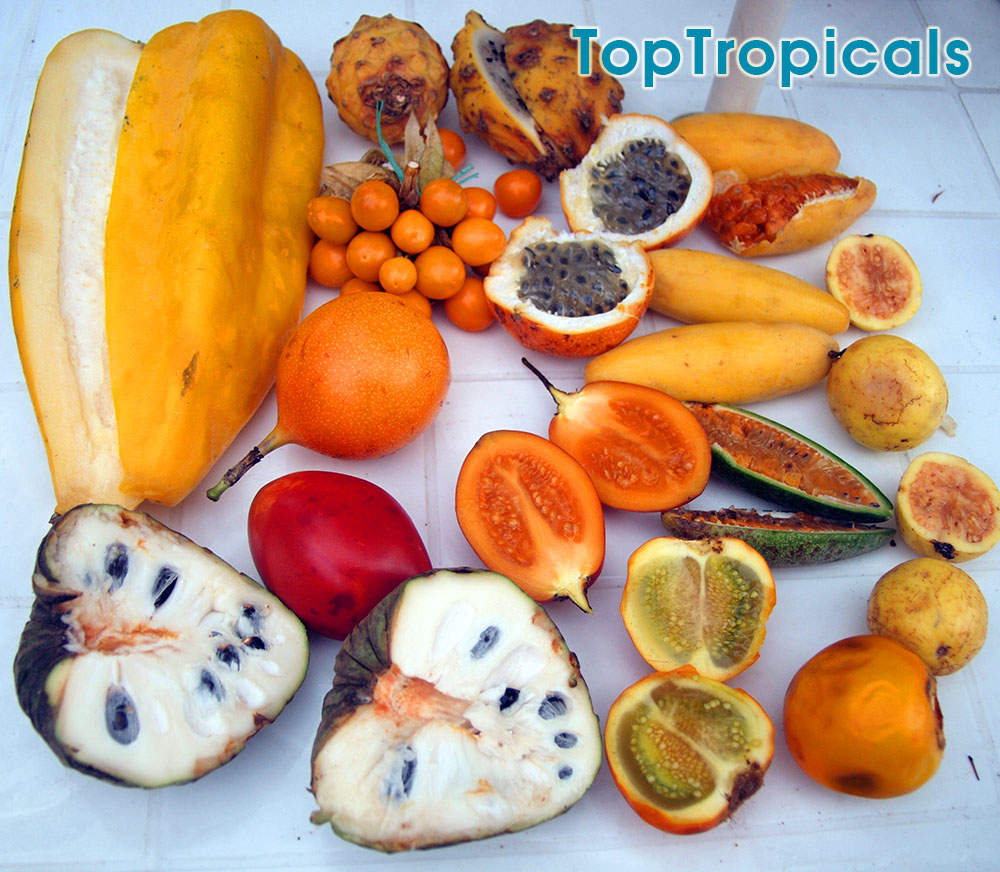
Q: Can tropical fruit trees (Soursop, Mango, Star fruit, etc) be given plant food any time of year? Also can they be trimmed this time of year/summer?
A: True tropical plants (including fruit trees) need plant food most of the year in real Tropics, where temperatures have very little fluctuations, and active growth season is close to 12 months a year. In subtropical areas when temperatures in winter drop below 65F, plant metabolism slows down, so it is recommended to fertilize only during the warmest period (March through November). So yes, Summer is the perfect time for fertilizing your trees; their metabolism is at the highest point and they can use more food!
Trim your fruit trees right after harvesting. Obviously, you don't want to prune branches before or during flowering or fruiting. The specific time of the year for pruning depends on the plant - every tree has its own flowering/fruiting season. However, avoid pruning right before winter: young shoots promoted by pruning are tender and can be cold damaged.
Recommended fertilizers for fruit trees:
Fruit Festival Plant Food - Super Crop Booster
Mango-Food - Smart Release Fruit Tree Booster
SUNSHINE-Honey - for sweeter fruit
SUNSHINE SuperFood - microelement supplement

Date: 23 May 2024
The Magic of 3
top tropical trees
from the legends of Caribbean
Yellow Poinciana, Jacaranda, and Royal Poinciana:
Three happy colors of the Tropics

While traveling through the vibrant and diverse Caribbean, we acquired three exquisite local paintings. Two of these are masterfully rendered on jacaranda wood plates, and the third is beautifully crafted on a calabash. These stunning pieces of art celebrate the three most spectacular and revered flowering trees of the Tropics: Yellow Poinciana, Jacaranda, and Royal Poinciana.
These trees are not only visually stunning but also deeply embedded in Caribbean culture, legends, and folk remedies.
The Yellow
Poinciana, with its bright golden blossoms, is often associated with joy and
sunlight, symbolizing the warmth of the Caribbean spirit.
The Jacaranda,
known for its striking lavender-blue flowers, is a symbol of wisdom and
rebirth, often blooming in a breathtaking display that signals the change of
seasons.
The Royal
Poinciana, with its fiery red and orange flowers, is a symbol of passion and
energy, often referred to as the "Flamboyant" tree due to its bold and dramatic
appearance.
These trees hold a special place in the hearts of the Caribbean people. They are featured in numerous local stories and songs, and their flowers and leaves are used in traditional remedies and rituals. Owning these paintings feels like possessing a piece of the Caribbean's soul and its natural beauty.
Now, we are fortunate to have not only the paintings but also the actual trees. Watching them grow and bloom in our garden brings a piece of the Caribbean to our home, a constant reminder of our travels and the vibrant culture we experienced. These trees and their representations in art are a testament to the region's rich heritage and its enduring connection to nature.
Get them now while we have them. No need to go too far into Caribbean!
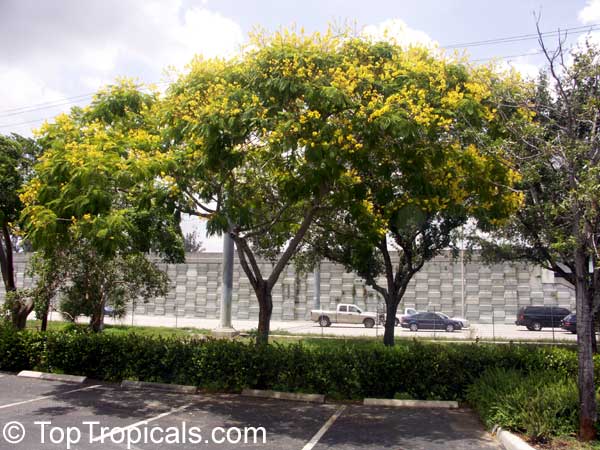
Peltophorum africanum - Golden Flamboyant, Yellow Poinciana. An excellent garden shade tree, beautiful in flower. This variety starts flowering at young age, in 3 gal pot.
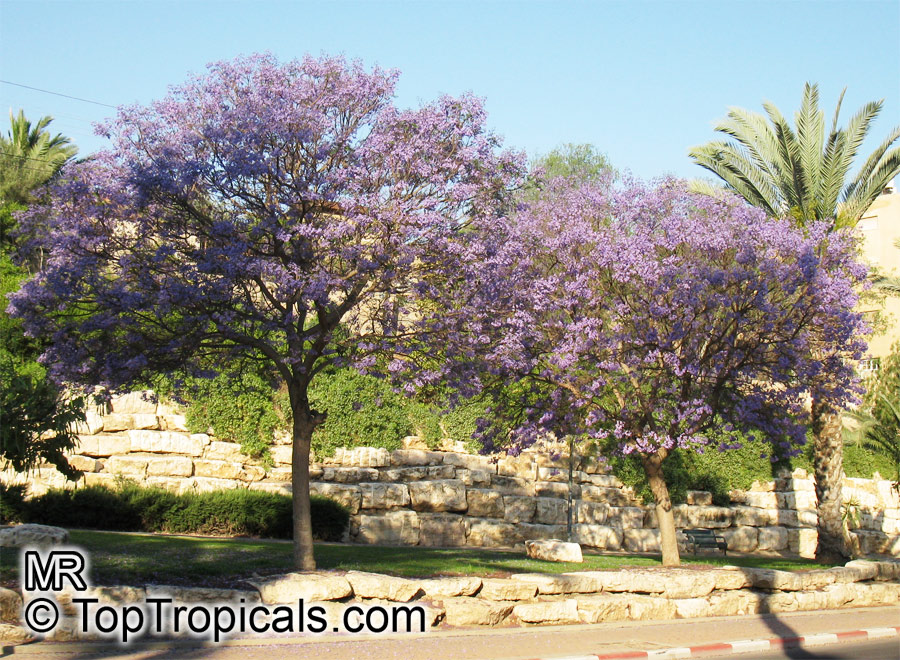
Jacaranda mimosifolia - Hypnotizing bluish-purple, trumpet-like flowers create the magical image of the tree. Incredible, long-lasting purple blooms. When the trumpet-shaped blooms finally fall, they form a lilac carpet beneath the awe-inspiring Jacaranda for luxuriant curb appeal...
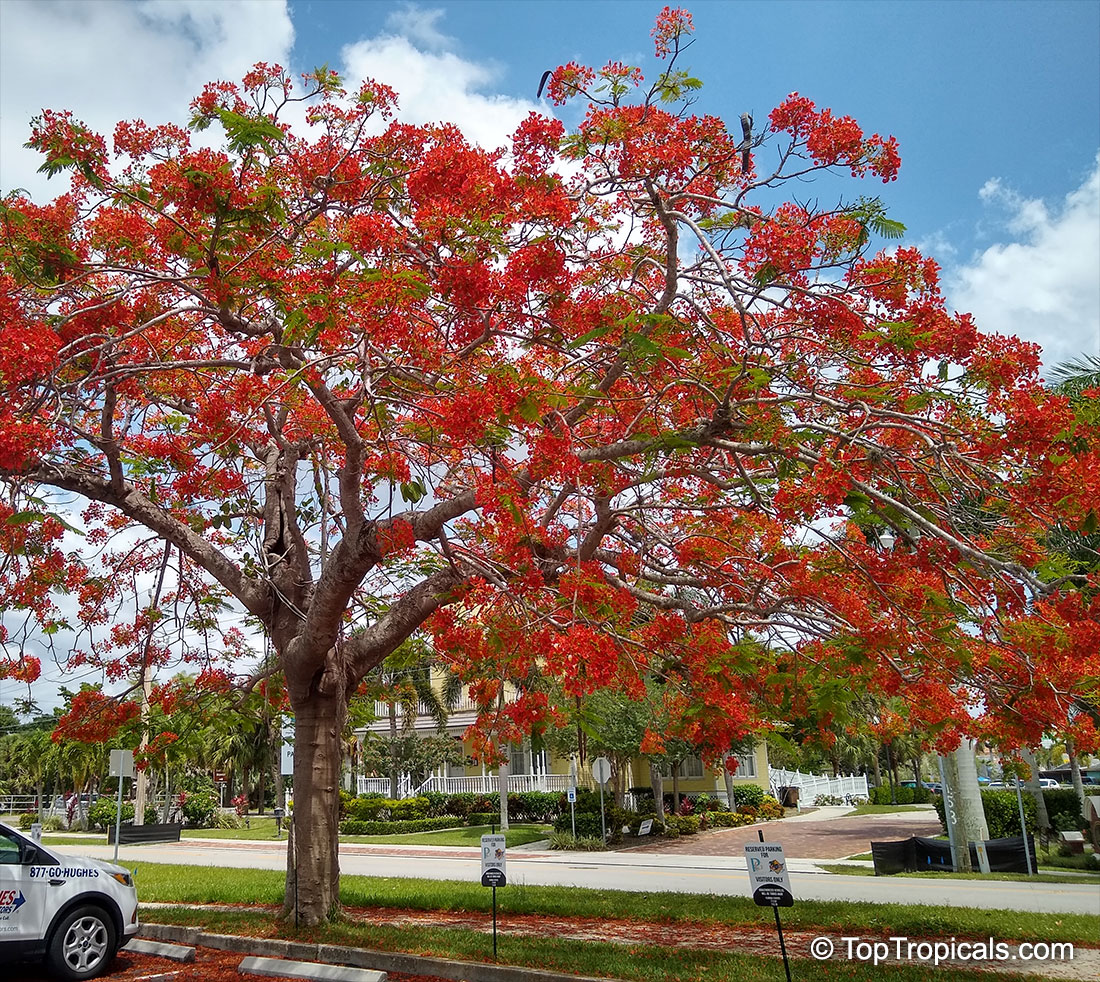
Royal poinciana, Flamboyant tree, Delonix regia - "One of the most spectacular flowering trees in the USA, and probably among the top 10 on this planet. In full bloom, it is like a regal elephant caparisoned in red and yellow brilliance." (Larry M. Schokman, The Kampong, National Tropical Botanic Garden)
Date: 27 Aug 2024
What trees will fruit quickly? Top 10 fast-fruiting trees

🥭 What trees will fruit quickly? Top 10 fast-fruiting trees
Q: I would like to plant several fruit trees... I am 85 years old and hope to see them fruiting soon. What fruit trees can you recommend that will fruit quickly?
A: Most grafted fruit trees, such as Mango, Avocado, and Peaches, will fruit quickly - often within the same year or the next. There are also many wonderful tropical fruits that will produce for you within a year or two, even without the need for grafting.
⚠️ In our next posts we will introduce to you the top 10 of most popular, most rewarding and easy to grow fast fruiting tropical trees...
📚 Discover 10 fast-fruiting trees in the following posts:
1. Annona - Sugar Apple, Custard Apple
2. Guava (Psidium sp.): Cattley and Tropical guava
3. Eugenias - Tropical Cherries
4. Barbados Cherry (Malpighia glabra)
5. Loquat (Eriobotrya japonica)
6. Papaya (Carica papaya)
7. Mulberry (Morus hybrids)
8. Carambola - Starfruit (Averrhoa carambola)
9. Blackberry Jam Fruit (Randia formosa)
10. Peanut Butter Tree (Bunchosia argentea)
Stay with us and make sure to subscribe! ⬇️
🛒 Shop fast fruiting tropical trees
#Food_Forest
🔴 Join 👉 TopTropicals
Date: 16 Jan 2025
How to grow a Lychee tree and have a reliable crop
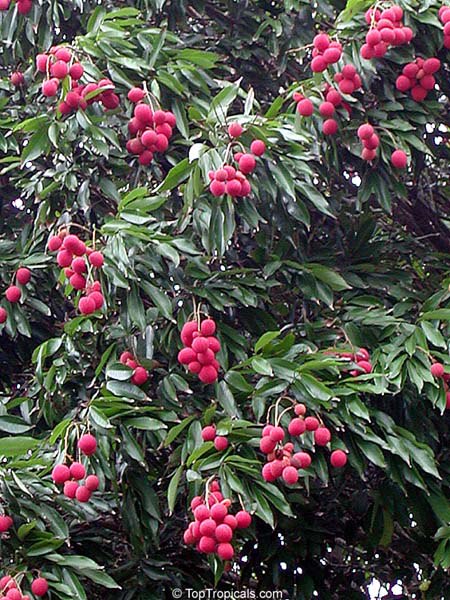
Lychee fruit on a tree, Litchi chinensis
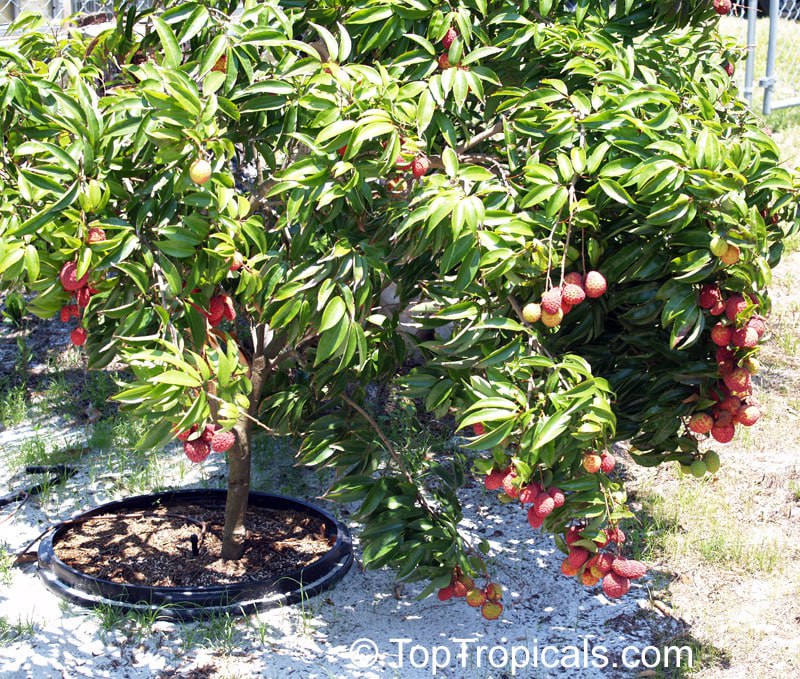
Lychee tree in a pot with fruit, Litchi chinensis
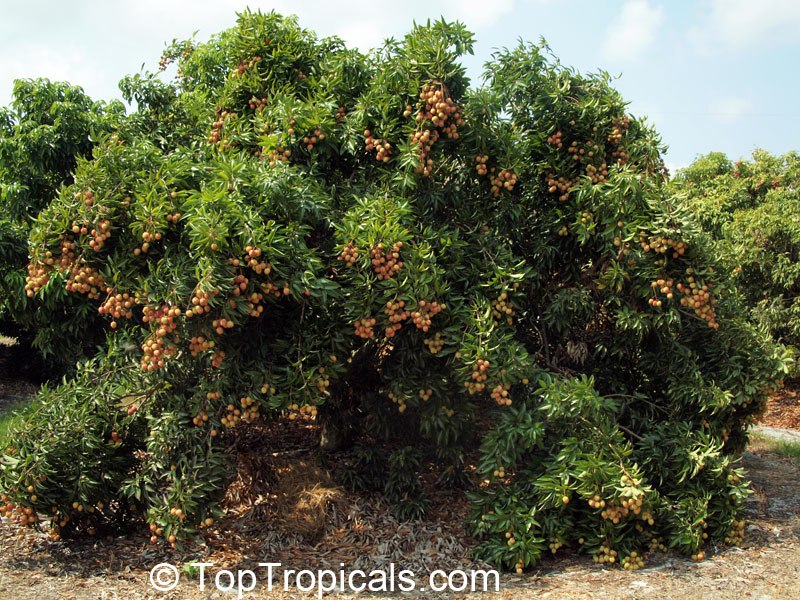
Lychee tree with fruit, Litchi chinensis
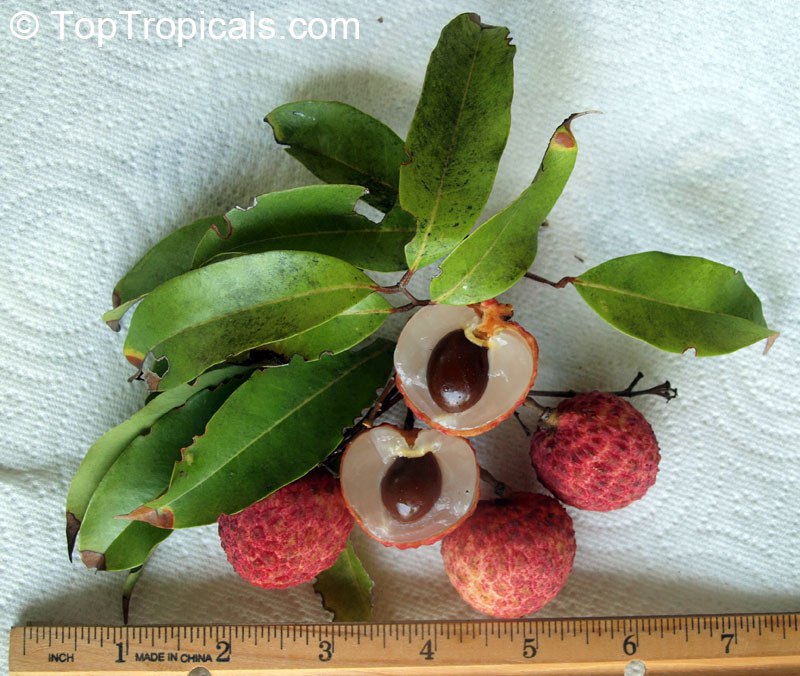
Lychee fruit, Litchi chinensis
- 🍑 Lychee (Litchi chinensis) is a tropical evergreen tree renowned for its delicious, aromatic fruit. Native to southern China, lychee trees can reach heights of up to 40 feet and are prized for their attractive foliage and bountiful fruit clusters.
🍑 Important factors to consider when planting a Lychee tree
- 💋Climate: Lychee trees thrive in tropical and subtropical climates with warm, humid summers and cool, dry winters. They require a period of winter chilling (100-200 hours between 32F and 45F) to induce flowering. Mature trees can tolerate temperatures as low as 25F, but young trees are susceptible to frost damage.
- 💋Sunlight: Plant lychee trees in full sun to ensure vigorous growth and optimal fruit production. They require at least six to eight hours of direct sunlight daily.
- 💋Soil: Well-drained, slightly acidic soils rich in organic matter are ideal. Avoid heavy clay soils or areas prone to waterlogging, as lychee trees are susceptible to root rot.
- 💋Spacing: Ensure adequate space for the tree's mature size by planting at least 20 feet away from other trees or structures.
🍑 When and how do you harvest lychee fruit?
- 💋Lychee trees typically begin to produce reliably after 3-5 years, with the fruit ripening in early summer.
- 💋Timing: Wait until the fruit's skin turns bright red or pink, indicating full ripeness. Lychees do not ripen off the tree, so it's essential to harvest at the right time.
- 💋Method: Use pruning shears to cut entire clusters, leaving a short stem attached to each fruit to prolong freshness. Handle the fruit gently to avoid bruising.
- 💋Post-Harvest: Consume fresh lychees within a few days or store them in the refrigerator to extend shelf life. The skin may darken when refrigerated, but the fruit's quality remains unaffected.
🍑 How to grow a Lychee tree?
- 💋Watering: Provide consistent moisture, especially during dry periods. However, avoid overwatering, as lychee trees are sensitive to waterlogged conditions. Mulching around the base helps retain moisture and regulate soil temperature.
- 💋Fertilization: Apply a balanced fertilizer during the growing season to support healthy growth and fruit development. Avoid excessive nitrogen, which can inhibit flowering. Sunshine Boosters C-Cibus - natural liquid fertilizer - is the best choice, and is safe to use with every watering year around.
- 💋Pruning: Minimal pruning is required. Remove dead or diseased branches and shape the tree to maintain its structure. Pruning after harvest can encourage new growth.
🍑 More practical advice on propagation and harvest in next post 👇
🛒 Shop Lychee trees
#Food_Forest #How_to
🔴 Join 👉 TopTropicals