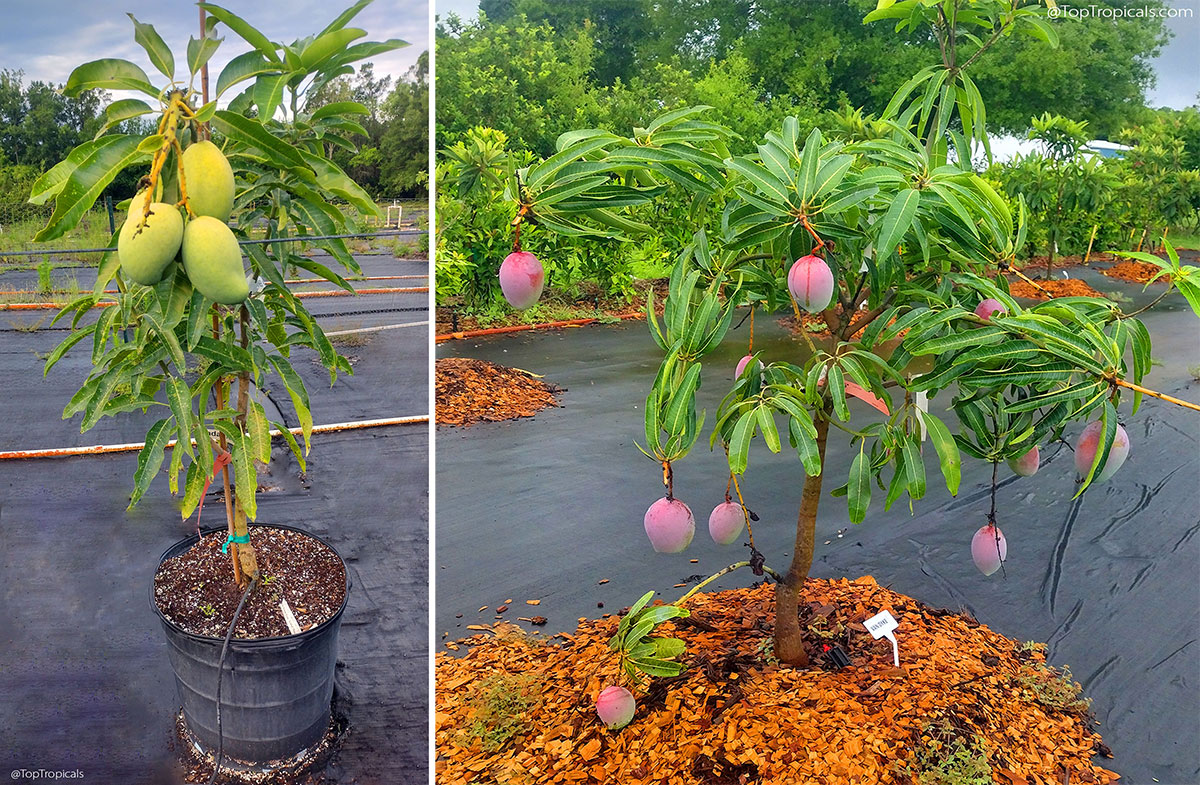
These are not seedlings — they’re grafted trees, which means
you get the true variety with known flavor, quality, and performance. Large
grafted trees give you a real head start:
Already mature with a strong root system.
Handle transplanting and weather shifts with ease.
Can bloom and fruit in the first or second season.
No space for a full orchard? You can still grow your own tropical
paradise!
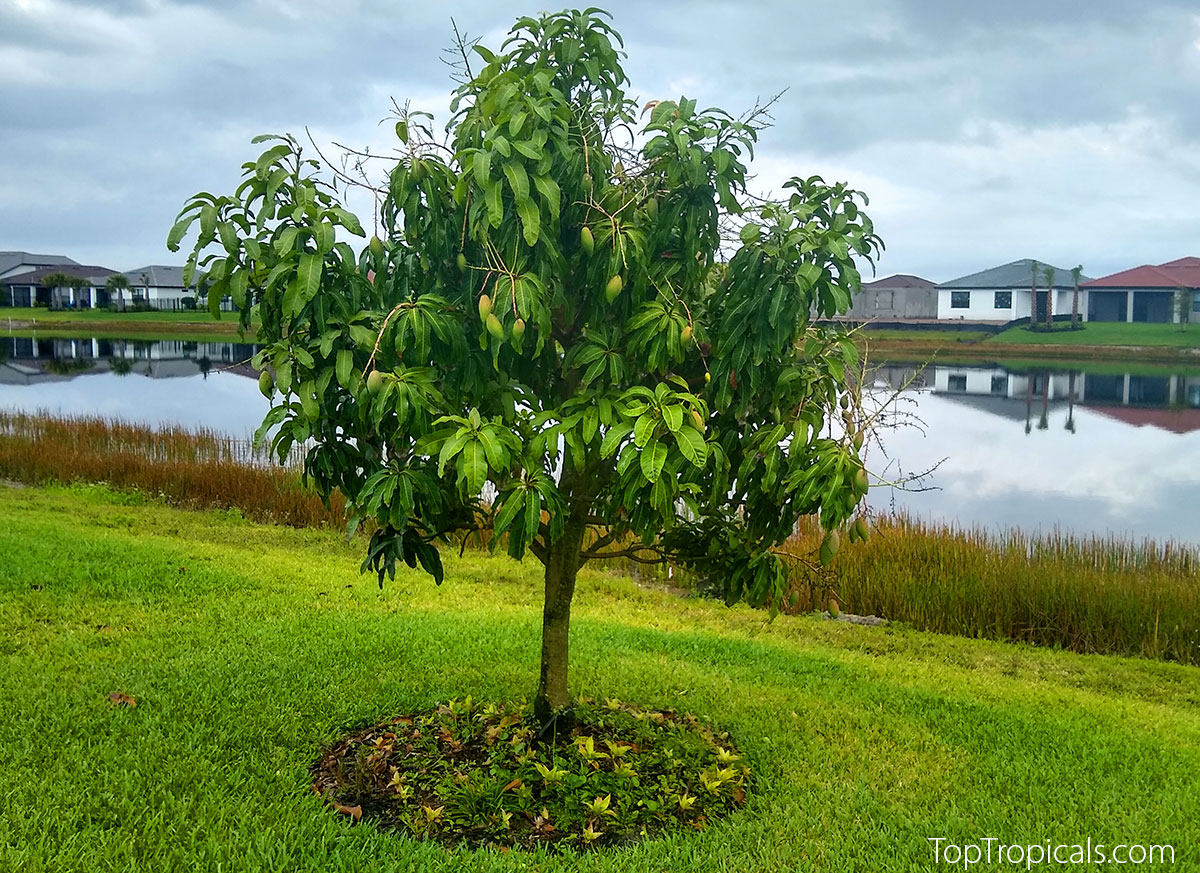
Our large grafted Condo Mango
trees adapt beautifully to big containers on patios,
balconies, and sunrooms. They stay compact, flower sooner, and can fruit
even in
pots when given good light and warmth. 👉 Learn more: What are the Condo Mangos?
Bring the tropics indoors — move your tree outside for summer sun,
then back inside before frost. It’s the perfect way to enjoy homegrown
fruit wherever you live.
Give your garden a smart start this season. Large grafted Mango trees
are ready — but only for a short time before winter.
👉 Plant now, harvest sooner, and enjoy the true
variety!
Plant Care Tips by Top Tropicals Plant
Expert Tatiana Anderson
Large grafted Mango trees are easy to establish.
Soil: Well-drained, rich mix — avoid heavy clay.
Water: Deeply once or twice a week after the tree is established; keep soil
evenly moist during the first few weeks after planting.
Light: Full sun or bright patio spot.
Feeding: Use balanced fertilizer Sunshine
Boosters Mango Tango with every watering and Green
Magic controlled release fertilizer every 6 months for steady
growth.
Protection: Cover on cold nights for the first winter.
Plant once, care lightly, and your tree will reward you with fast growth
and early fruit.
🌳
Big Trees, Local Pickup Only
For our local gardeners, we have something special. Extra-large 15- and
25-gallon Mango trees. These are full, mature specimens that simply
can’t be shipped, but they’re perfect for local pickup or
delivery.
Instant Impact and Faster Fruit
These trees already have strong trunks, big root systems, and start
blooming next Spring. Plant one in your yard and it instantly looks like
it’s been there for years.
Delivery and Installation
We offer local delivery and professional installation for large
trees in the nearby area. Our team can bring the tree to your garden,
position
it correctly, and help with planting and setup.
Limited Availability: Quantities are small, and these big trees
go fast — once sold, they won’t be available again until next
growing season.
"Large grafted trees give you a head start — they’re stronger,
settle in faster, and can reward you with fruit the very next season," says
Tatiana Anderson
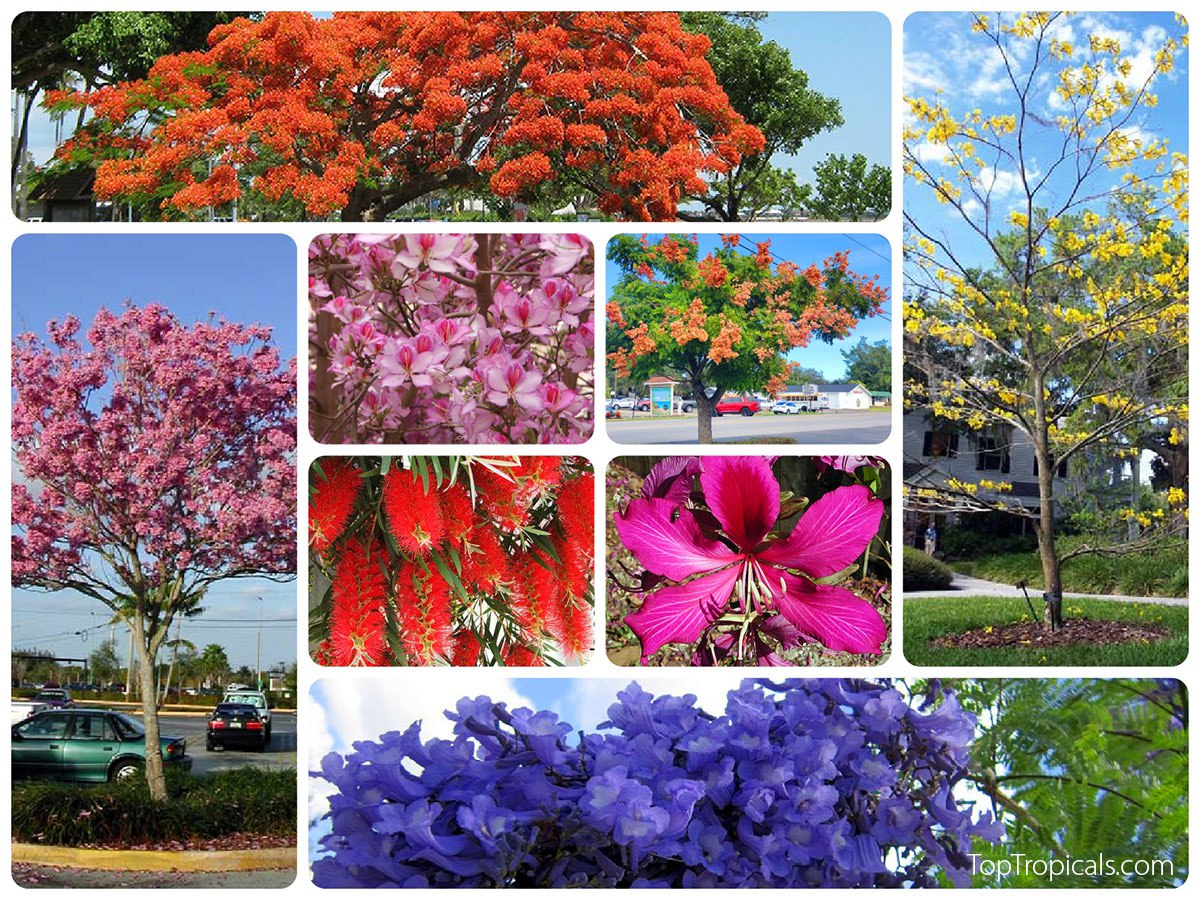
The diva of tropical trees. Huge red-orange flowers blanket the branches
from late winter through summer. If you’ve ever seen one in full
bloom, you know — it stops traffic.
Best in large yards or open spaces, but young ones do great in big pots for
a few years.
🛒 Shop Tatiana: “If you want a tree that makes
people
say ‘wow,’ this is it.”
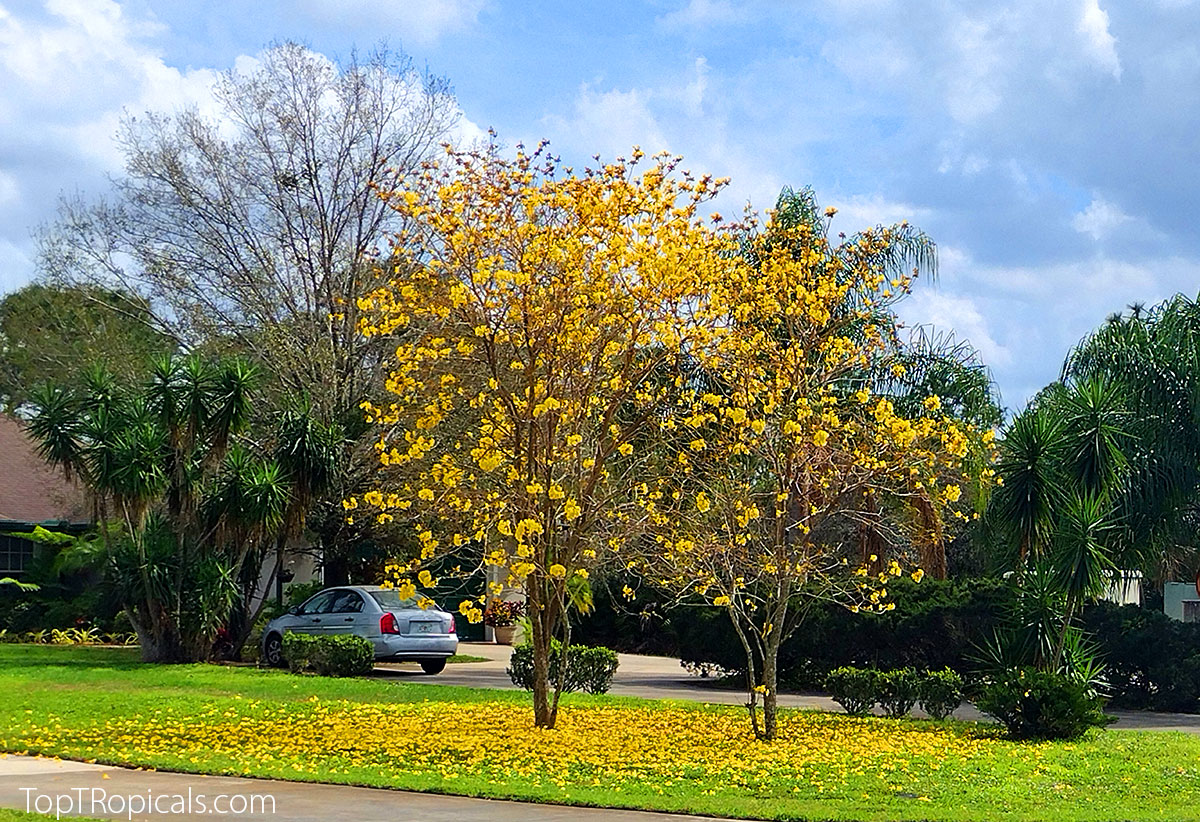
Tabebuia chrysotricha – Dwarf Golden Tabebuia
Small tree, big drama. It turns solid gold just before new leaves
appear.
Blooms while completely bare — a stunning contrast of yellow on brown
wood.
Perfect for patios, courtyards, and containers. Handles cool nights down to
the mid-20s F.
Bright, cheerful, and forgiving — the kind of tree that always looks
like it’s celebrating. 🛒
Shop
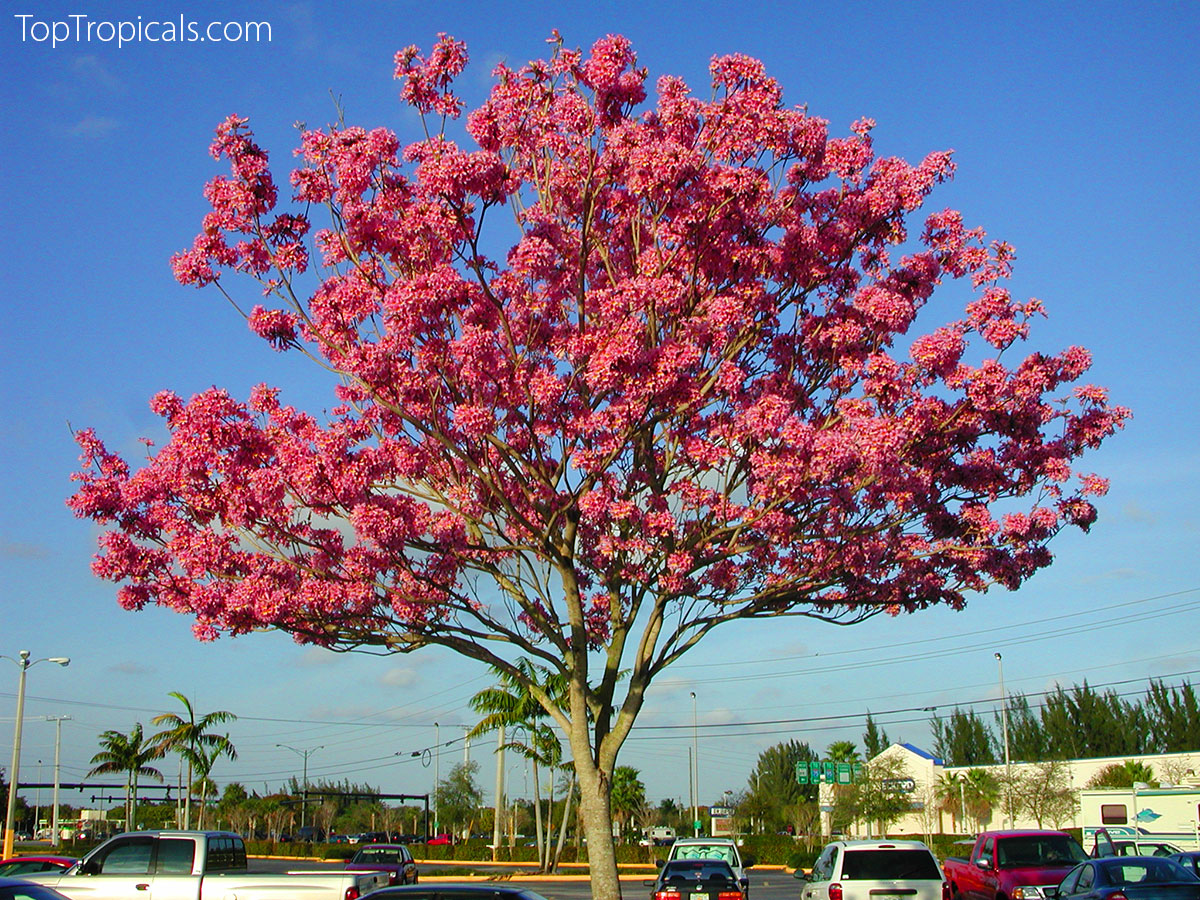
The Florida “cherry blossom.” Pink-lavender flowers smother
the branches each winter, often before any leaves return.
Thrives in sandy soil, tolerates drought, and grows beautifully in large
planters or pots indoors near a sunny window.
Ideal for seasonal residents or anyone who wants color when everything else
is asleep. 🛒
Shop
Jacaranda mimosifolia
If color had music, this would be jazz.
Soft, fern-like leaves and cascades of violet-blue trumpet flowers —
airy, elegant, unforgettable.
Outdoors, it makes a graceful shade tree; in containers, it stays compact
with regular pruning.
Jacarandas reward patience — they bloom bigger each year. 🛒
Shop
Koelreuteria paniculata – Golden Rain Tree
A favorite for its surprises — golden blooms in summer, pink paper
lantern pods in fall, and bronze leaves before rest.
Fast-growing, tough, and easy. Loves full sun and moderate water.
Great for open lawns or patio tubs. The kind of tree that gives you
something new to look at every month. 🛒
Shop
Callistemon citrinus – Bottlebrush Tree
The hummingbird magnet.
Bright red, brush-shaped flowers bloom several times a year —
sometimes even in cool weather.
The dwarf form, ‘Little John,’ stays about 4 feet tall, perfect
for pots or small borders.
Trim lightly after flowering to keep it compact and colorful. 🛒
Shop Tatiana: “If you’ve never grown a
tropical tree before — start here. It’s the friendliest
one.”
Bauhinia variegata – Pink Butterfly Tree
Graceful, fragrant, and forgiving.
Its pink-lavender orchid-like flowers open from late winter through spring,
filling the garden with color and pollinators.
It’s fast-growing, drought-tolerant, and excellent for both ground
and pots.
Even the buds are edible — a fun bonus for adventurous gardeners. 🛒
Shop
Bauhinia blakeana – Hong Kong Orchid Tree
The queen of them all.
Huge magenta-purple blooms that last for months, from fall through spring.
Fragrant, clean (no messy seed pods), and perfect for patios or large
decorative containers.
Give it sun, a little water, and it will reward you with bloom after bloom.
🛒 Shop Tatiana: “It’s the one tree that never lets winter
win.”
A note on grafted Hong Kong Orchid Trees:
Most Hong Kong Orchid Trees are grafted, and that’s actually a big
advantage.
Because they don’t grow from seed, grafted plants mature faster and
begin blooming while still small — sometimes within the first year.
That makes them perfect for patio pots or small gardens where space is
limited.
Bringing the Tropics Home
Whether your garden faces the Gulf or your window faces the snow, these
trees let you live in color year-round.
Plant them outdoors in warm zones or grow them in pots indoors — they
adapt, they bloom, they brighten every corner.
Gardening isn’t about waiting for spring — it’s about
finding joy in every season.
And when a tree blooms in January, that joy feels twice as sweet.
Yes! Smaller species like Bottlebrush ‘Little John,’ Dwarf
Tabebuias,
and many
Bauhinias bloom beautifully in pots with bright light or grow lamps.
Q: Do they lose their leaves in winter?
Some, like Tabebuias
and Jacarandas,
drop leaves right before blooming — it’s normal
and part of their charm. Others, like Bottlebrush,
stay evergreen.
Q: What fertilizer works best?
We use Sunshine
Boosters — gentle, balanced, and perfect for tropicals.
Feed every 2–3 weeks during active growth.
Q: How do I know when to water?
Touch the soil! If it’s dry an inch or two down, water deeply.
Overwatering is the main mistake with tropicals.
Q: Can they handle frost?
A quick dip into the upper 20s F is fine for most mature trees. Cover
young ones or move containers under shelter if colder.
Q: Which are best for beginners?
Start with Bottlebrush ‘Little John’ or Golden Tabebuia
— compact, colorful, and nearly foolproof.
Q: When will they bloom?
Usually within few years if they get enough sun and warmth. Grafted
plants blooms much sooner
Q: Which of these trees are best for pot
growing?
For patios, balconies, or indoor sunrooms, choose the compact or grafted
types:
Q: What tropical trees are fruiting and flowering
in March?
A: There's always something blooming and
fruiting, especially with spring on the way! Our garden is buzzing with bees and
butterflies, and in the nursery, you'll always find plants in bloom or bearing
fruit. Here are a few standout winners of the season.
Orchid Trees
Orchid
trees are among the most spectacular trees in Florida, flowering from late
winter through spring. They are fast-growing, not fussy about soil or water,
and bloom for several weeks in a stunning display of white, purple, pink, or
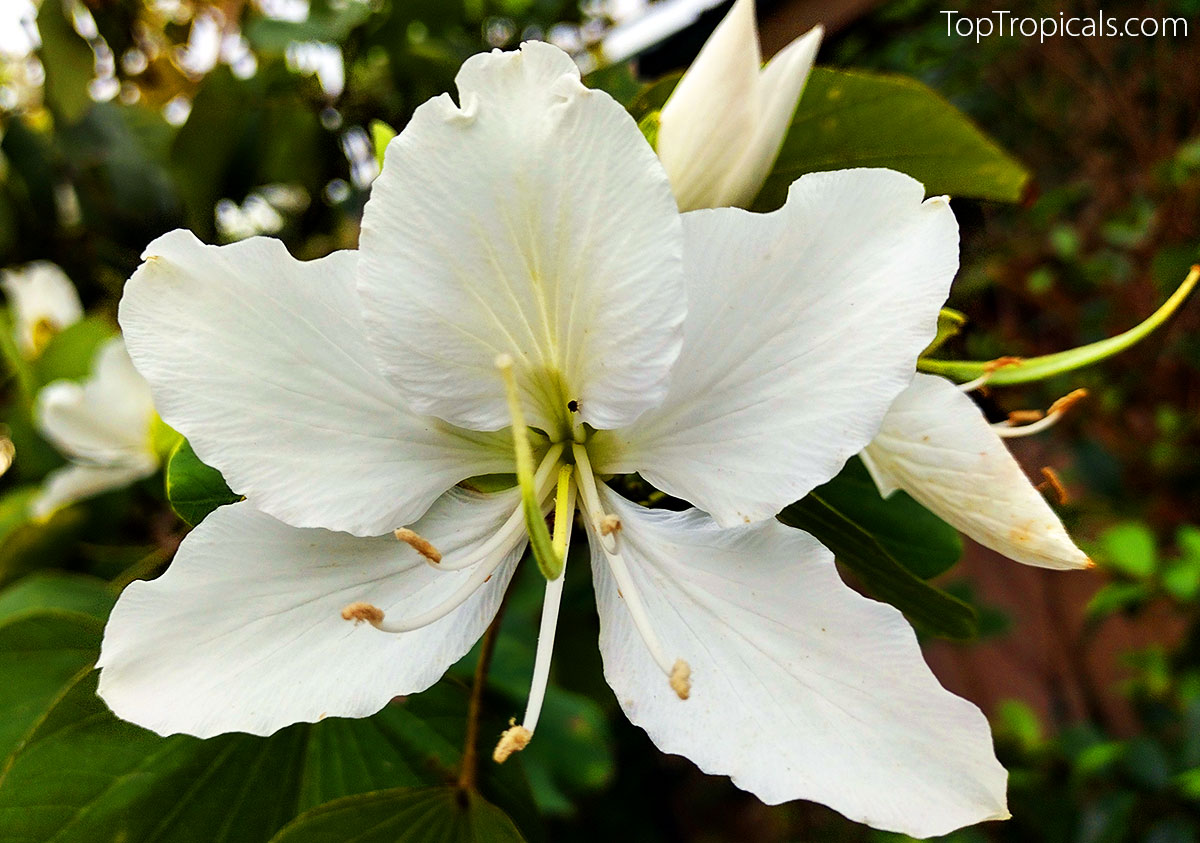
red flowers. In the photo: Bauhinia alba (candida) - White Orchid Tree - the most cold-hardy of
all Bauhinias, tolerating temperatures as low as 26F. You can see them in full
bloom across Florida right now!
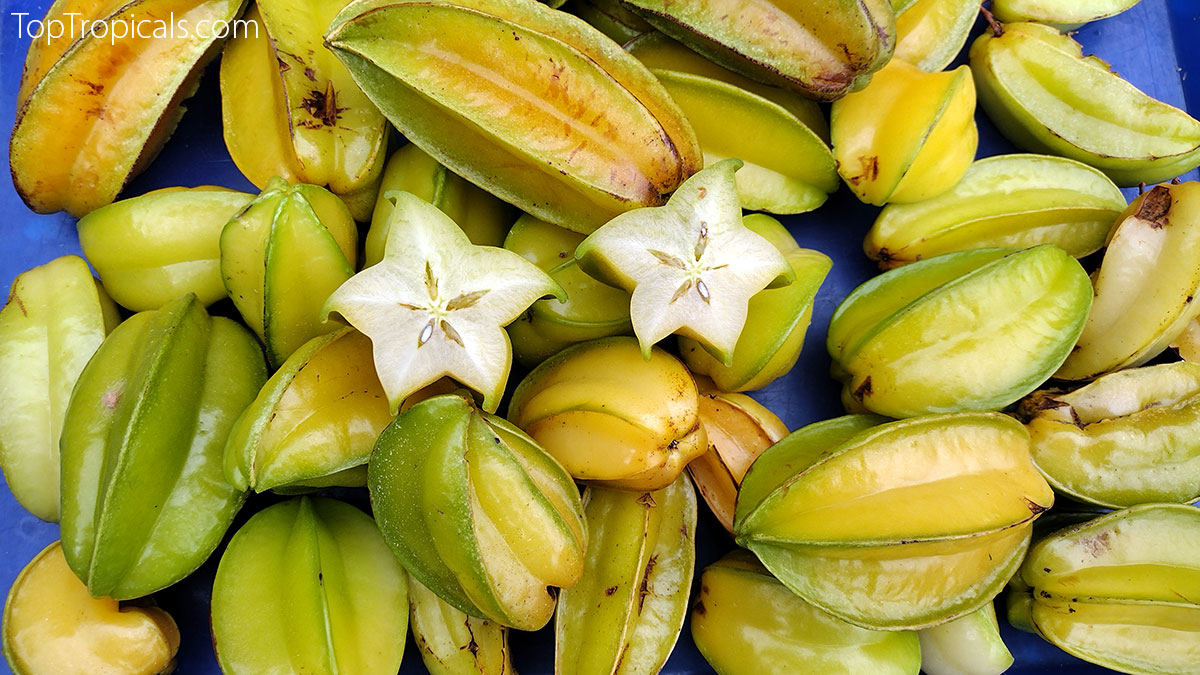
Starfruit trees (Averrhoa carambola) have been fruiting in our garden since fall,
and they just keep producing! We've had so many starfruits that we ended up
making lots of jam.
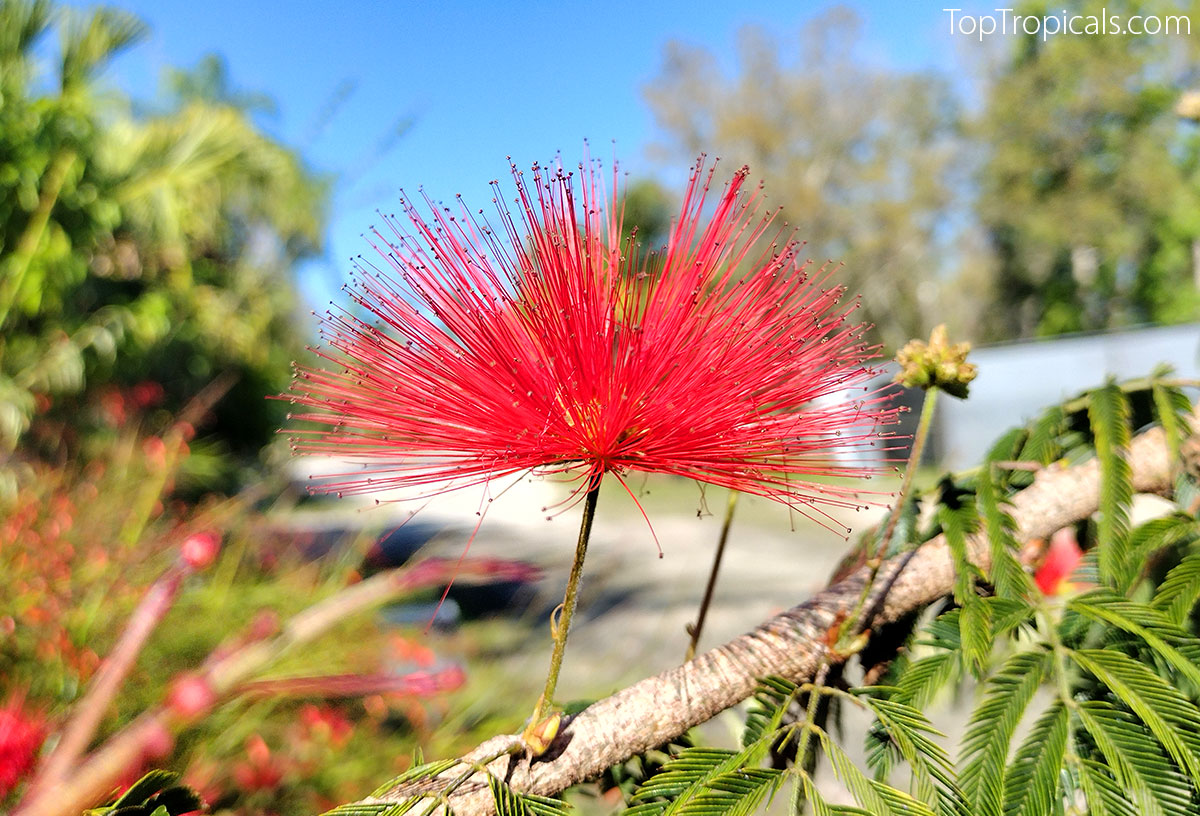
Calliandras are known to be spectacular winter bloomers, but in our garden, they
seem to flower year-round. They make fantastic ever-blooming hedges or
striking small specimen trees.
In the photo: red-flowering Calliandra tweedii "With Love" - Red Tassel Flower, yright now, this
beautiful bush is covered in red blooms in front of our office at Sebring
Farm.
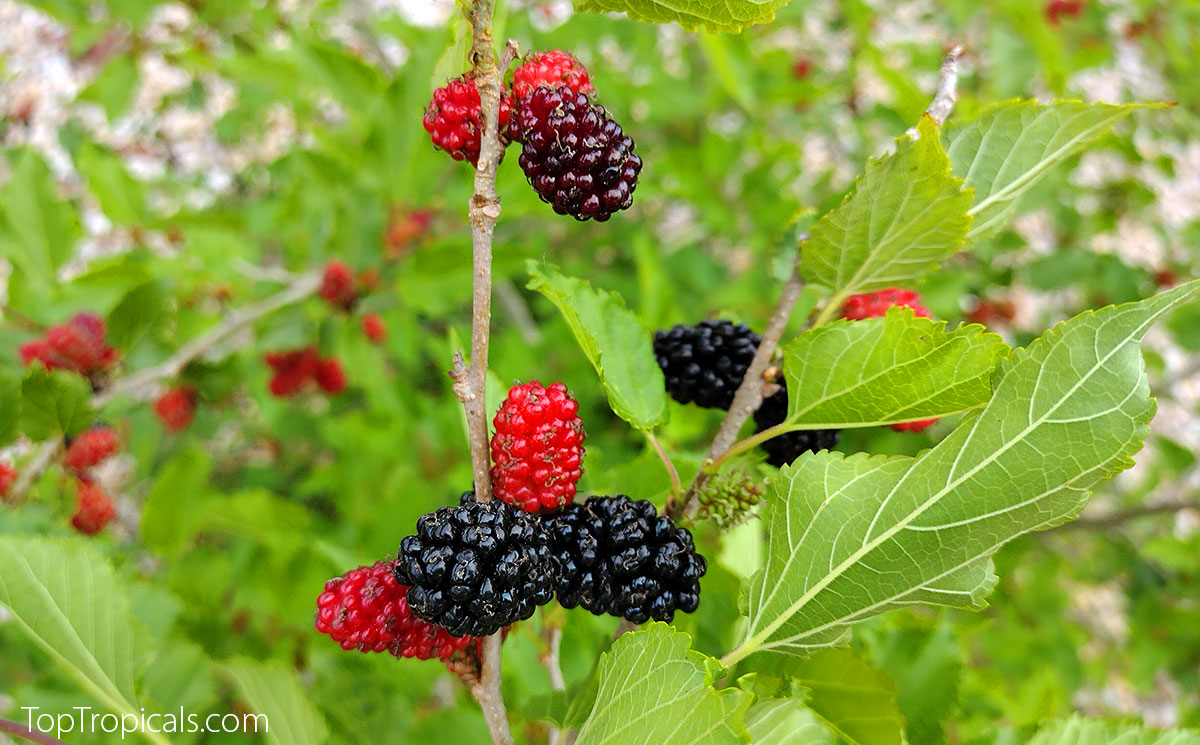
Yes, it's
Mulberry season! Some varieties have already ripened, while others are just
about to. We're competing with the birds to see who gets the first fruit,
but honestly, there's plenty for everyone! These trees are very cold hardy and
highly productive.
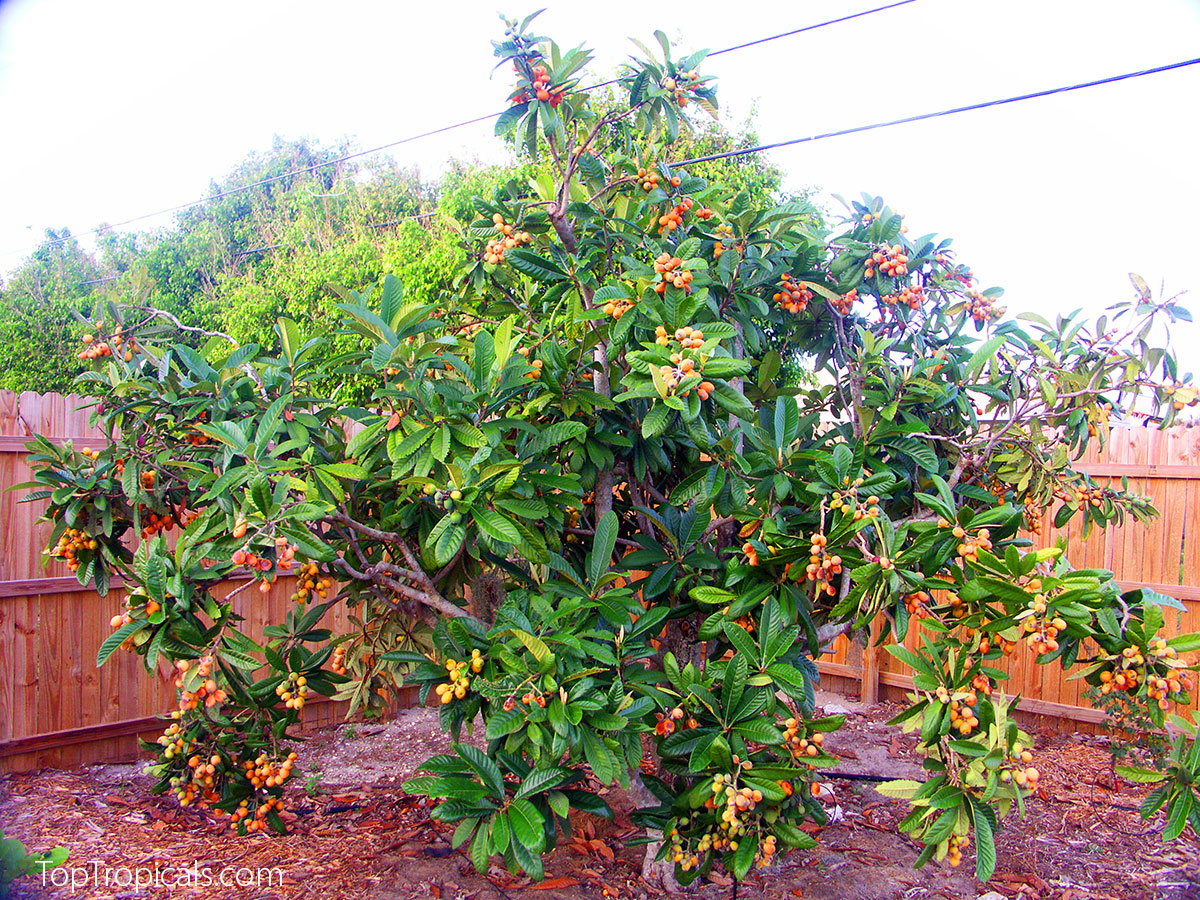
Loquat
trees (Eriobotrya japonica) are loaded with fruit right now! We've started
picking them and have already made some delicious preserves - you can only eat
so many fresh. Loquats continue fruiting through April and May, making them
one of the most rewarding, easy-to-grow, and productive fruit trees.
By Tatiana Anderson, Horticulture Expert at Top
Tropicals with Smokey & Sunshine help
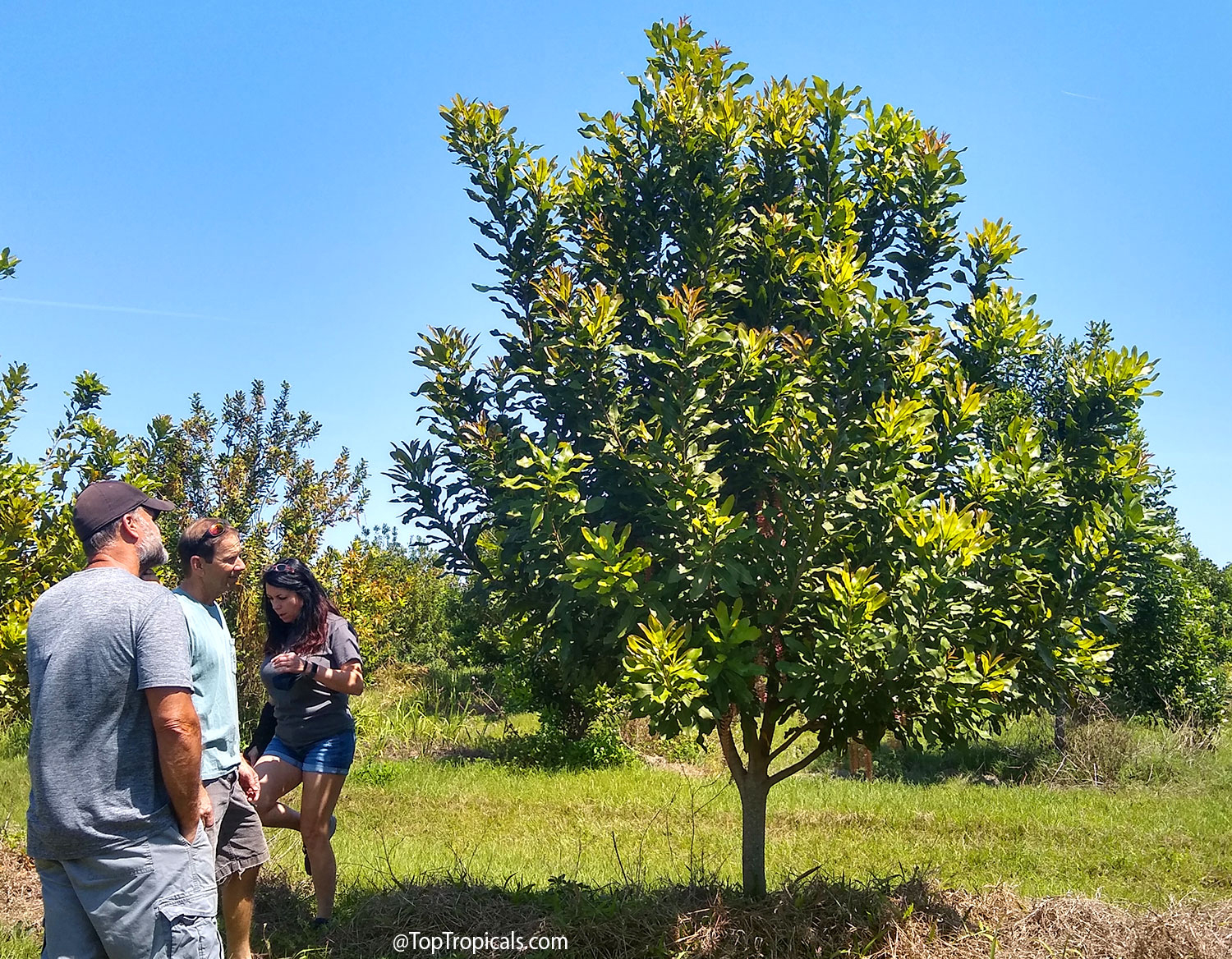
Macadamia
tree maturing into a productive, manageable canopy.
🌳 Growing Macadamia Tree
Macadamia is not a fragile tree, but it does have preferences. If you
respect them from the beginning, the tree rewards you for decades.
Start with the site. Drainage is everything. Macadamia will tolerate
cool weather better if planted in a well-drained area. Avoid low spots where
water sits after rain. If your soil is dense or clay-like, build a mound or
improve drainage before planting.
Choose full sun whenever possible for the best nut production.
Planting location matters. A south or southeast exposure near a wall can
create a warmer microclimate that buffers cold nights. Freeze plus wind is
more damaging than temperature alone. Macadamia handles cold better when
protected from winter wind.
Dig a hole about twice as wide as the container, but no deeper than the
root ball. Set the tree level with the surrounding soil. Do not bury the
trunk.
Water regularly during the first three months while the tree establishes
roots.
Fertilize lightly. Macadamia does not respond well to over-fertilizing.
Macadamias prefer mild liquid fertilizers, SUNSHINE
Boosters Robusta is ideal for it. You may also use controlled release Green
Magic every
6 months, it is especially formulated for hot climate. To keep leaves
healthy deep green without yellowing, micro elements must be applied on
regular basis, we recommend to always have handy Sunshine
Superfood micro nutrients complex.
Young trees should be protected if temperatures drop below freezing.
Once established, they become far more resilient.
Harvest timing: Nuts mature 6-7 months after flowering. Husk splits
naturally when ready. Fallen nuts should be collected quickly.
Flower and Nut Drop: Many gardeners panic when they see flowers or small
nuts drop, but Macadamia naturally sheds excess fruit. It does not mean
failure; the tree simply keeps what it
can afford to feed.
Macadamia is relatively low-maintenance, but watch for squirrels and rats.
They love the rich nuts as much as humans do, so be sure to collect fallen
nuts quickly.
Macadamia is not a fast-return crop. It begins producing a few years and
increases gradually. But once mature, it becomes a steady, reliable part of
your garden.
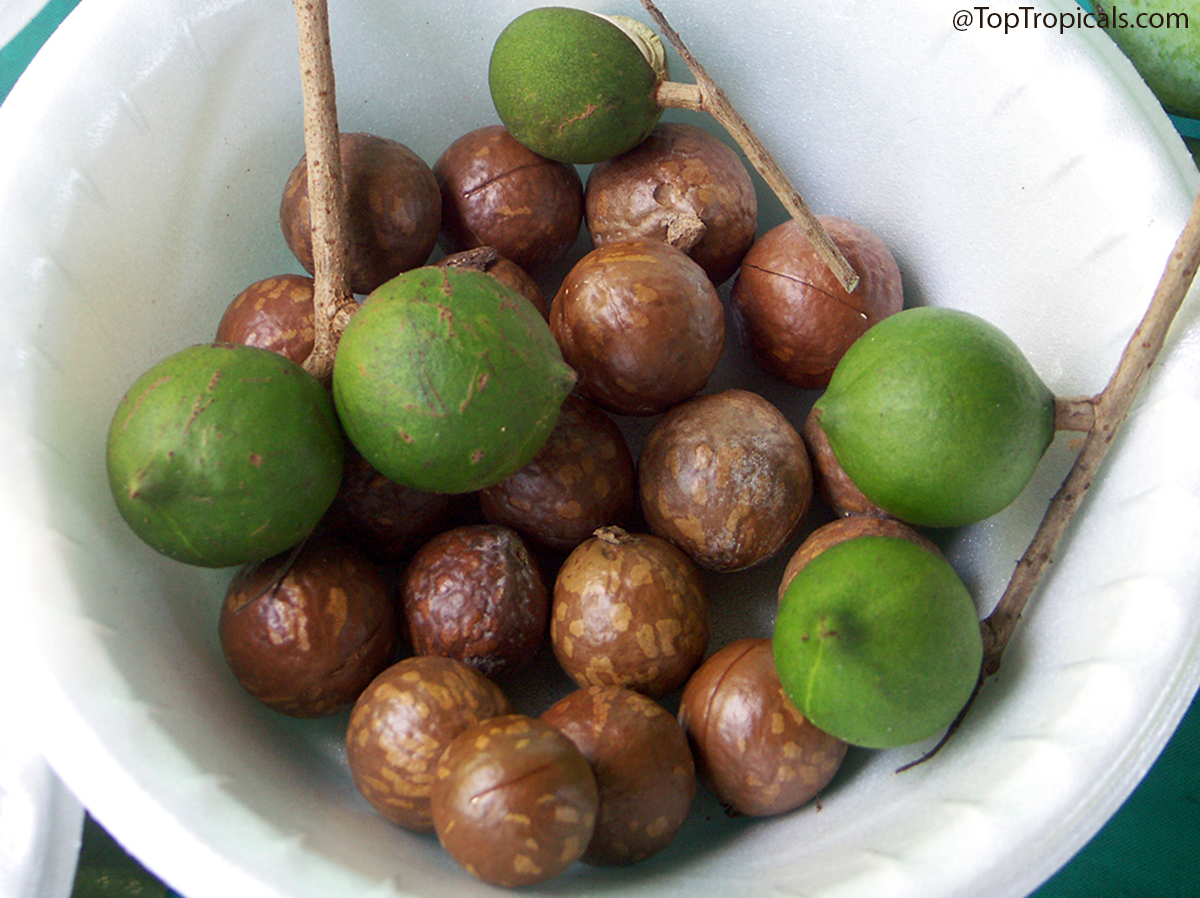
Macadamia fruit showing green outer husk and mature
brown shell inside.
🌱 Growing Macadamia in a Pot
Container size: Start large. A 15-25 gallon pot is ideal for long-term
growth.
Drainage: Critical. Use a container with multiple drainage holes.
Soil mix: Use a high-quality, well-draining container mix. Avoid heavy
garden soil. Top
Tropicals Abundance soil-less mix is specially formulated for pot
growing
Light: Full sun is best. Strong light improves flowering and nut
production.
Watering: Water deeply, then allow the top layer to dry slightly before
watering again. Avoid constant saturation.
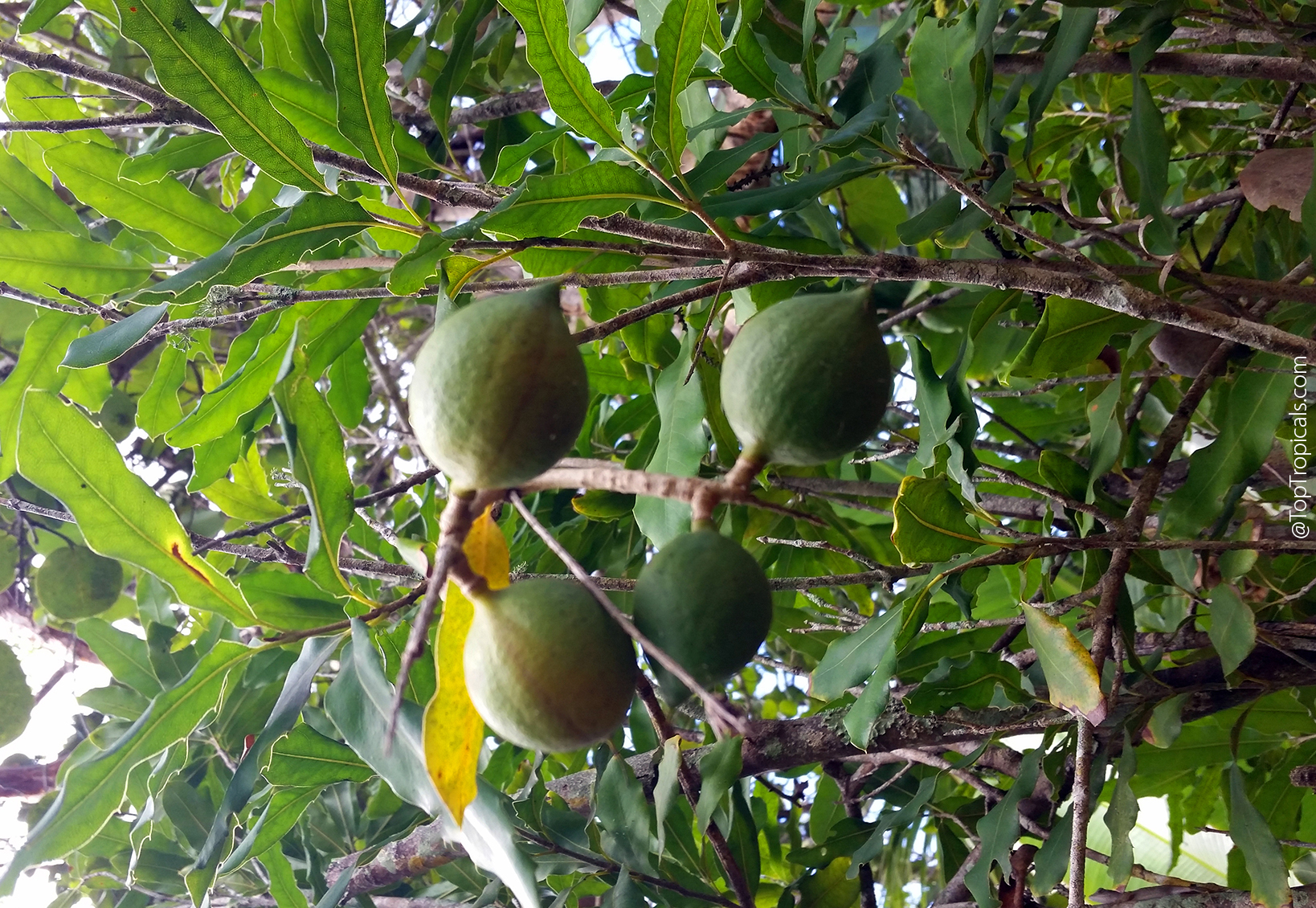
Macadamia nuts developing on the tree before the husk
splits.
🚫 Common Mistakes When Growing Macadamia
Planting in poorly drained soil:
The most common mistake. Macadamia will decline quickly in heavy,
waterlogged ground. If
drainage is questionable, plant on a mound.
Overwatering young trees:
Newly planted trees need consistent moisture, not constant saturation. Wet
roots lead to root problems.
Over-fertilizing:
Too much fertilizer causes weak growth and nutrient imbalance. Feed lightly
and avoid heavy nitrogen applications.
Planting too deep:
The top of the root ball should sit level with or slightly above the
surrounding soil. Do not bury the trunk.
Ignoring micronutrients:
Macadamia is very prone to iron, zinc, and copper deficiencies. Yellowing
leaves may signal a micronutrient issue. Applly Sunshine
Superfood on regular
basis.
Expecting instant production:
Macadamia takes time. Early years build structure. Patience is part of
success.
Skipping cold protection for young trees:
Established trees are tougher, but young plants should be protected below
freezing.
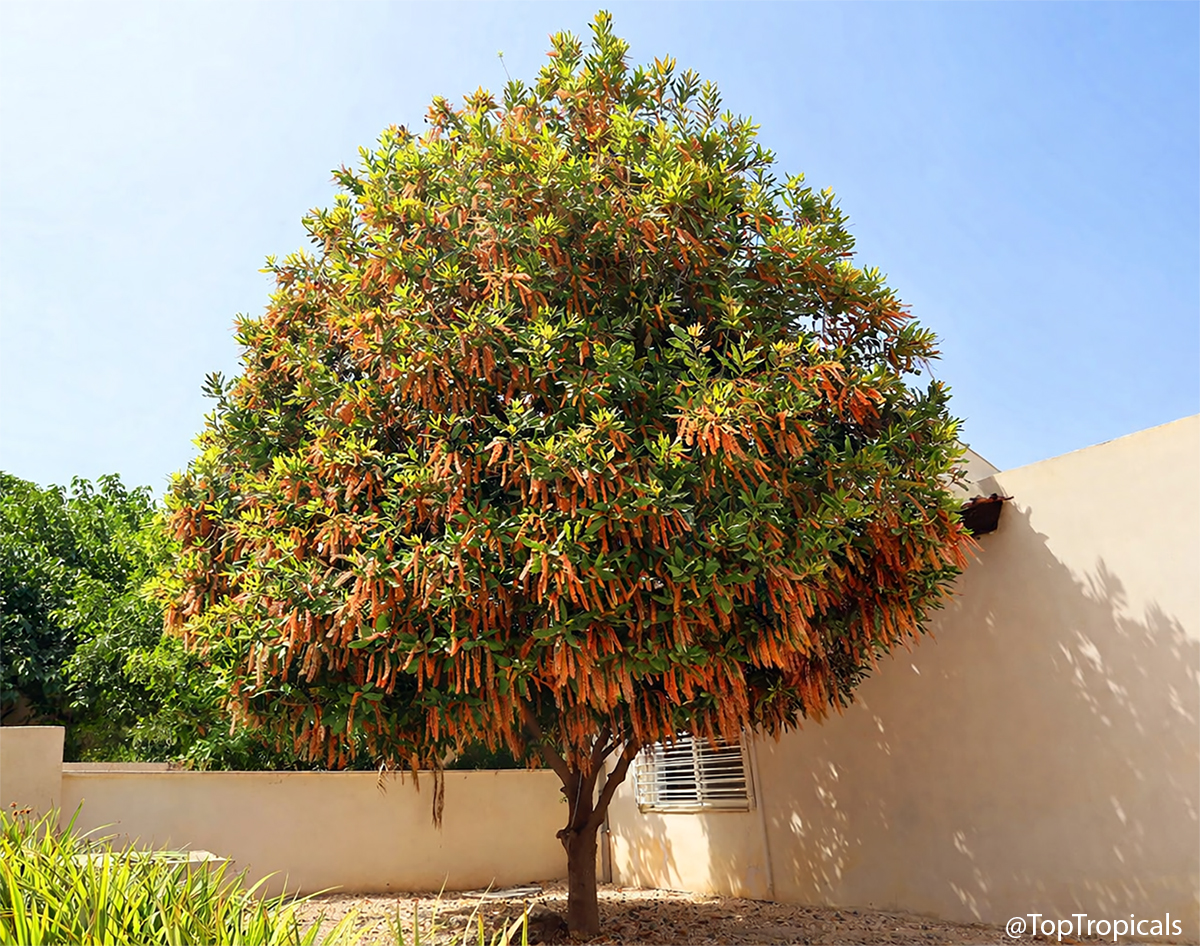
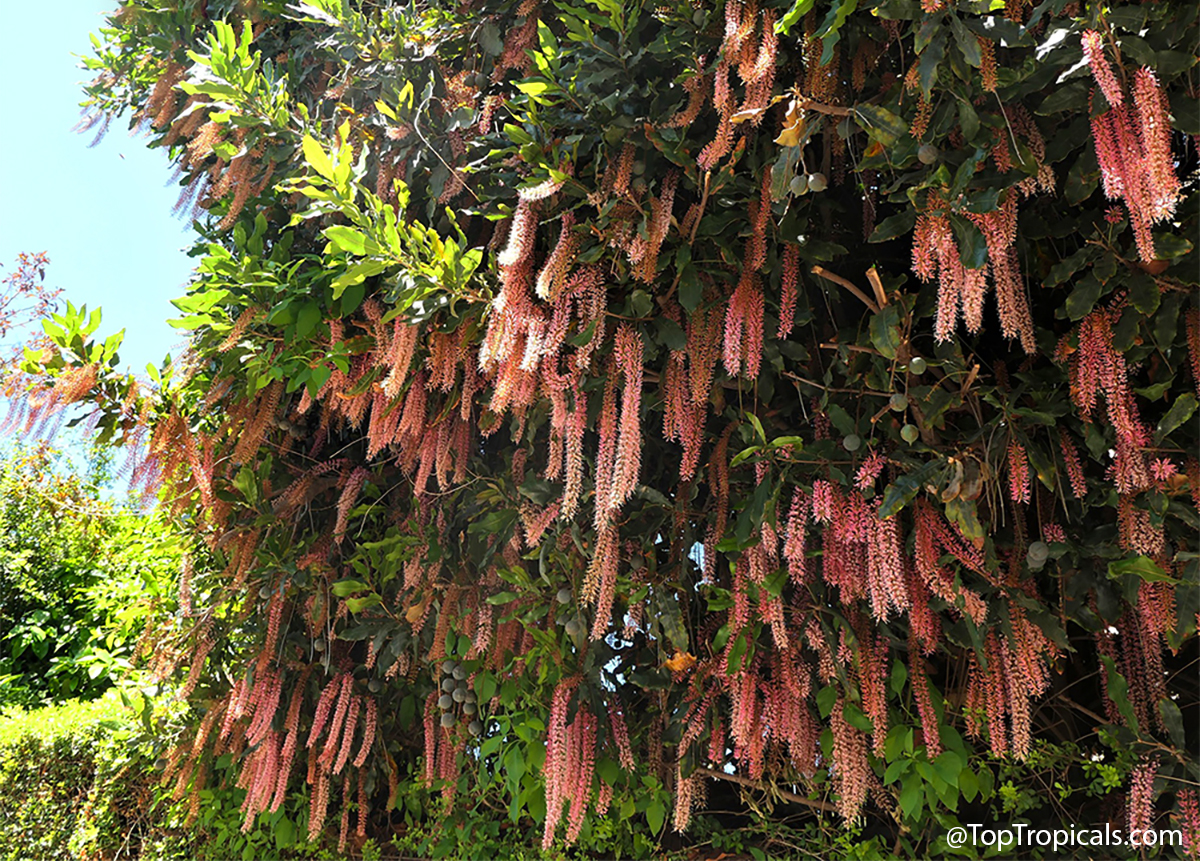
Macadamia tree in full bloom with abundant flower
clusters.
❓Frequently Asked Questions (FAQ)
Is Macadamia toxic to pets?
While the nuts are a superfood for humans, they are toxic to dogs. If
you have a dog that tends to forage in the garden, ensure you harvest
fallen nuts promptly or fence the base of the tree during the drop season.
Which varieties are best for the "Survivor" garden?
Look for Macadamia integrifolia (smooth-shell) or hybrids like
'Beaumont' (M.
tetraphylla x M. integrifolia). Hybrids often show slightly better cold
tolerance and more
consistent "home garden" production.
How tall will my tree get?
In the ground, an unpruned Macadamia can reach 20–30 feet. However,
they respond very well to "heading back" (pruning the top) to keep them at a
manageable 12–15 feet for easy harvesting.
Do I need two trees for cross-pollination?
Macadamias are self-fertile, meaning one tree will produce nuts. However,
planting two varieties near each other often results in a significantly
heavier "nut
set" due to cross-pollination.
Why are the leaves on my Macadamia prickly?
Don't panic—this is normal! Some species, particularly M.
tetraphylla, have serrated, holly-like leaves. This actually makes them
a great "defensive" hedge against intruders or deer.
When exactly should I harvest?
The tree tells you when it's ready. Don't shake the tree; wait for the nuts
to fall naturally. In Florida, this usually happens between August and
November. If the green outer husk hasn't split yet, let them sit in a
shaded, dry spot until they do.
My tree has "clusters" of flowers but no nuts. What happened?
Macadamias produce long racemes (flower spikes) with hundreds of tiny
blooms. It is normal for 90% of these to fall off. The tree only keeps what
it can afford to "feed." Boost your
success by using a combination of Sunshine
C-Cibus liquid
fertilizer and SUNSHINE
Superfood micro element supplement during the flowering stage to help
the tree retain more fruit.
Can I grow them from a nut I bought at the store?
Unlikely. Commercial nuts are usually roasted or dried at high heat, killing
the embryo. Even if a raw nut sprouts, it may take 10–12 years to
fruit and the quality is a gamble. Buying a grafted tree saves you a decade
of waiting.
We don’t just sell plants; we test them. The data from this
February freeze proves that with the right selection and proper drainage,
'tropical' doesn’t have to mean 'fragile.' Don’t wait for the
next cold front to find out what in your garden is
vulnerable. It is time to replace those empty spots with proven survivors
that offer both beauty and a premium harvest. If it can stand up to 25F in
our fields, it’s
ready for your backyard.
Coming in Part 2...
Smokey is already crunching the numbers on our next survivor, and Sunshine
found another tree that stayed perfectly green in the wind. Stay tuned to
see which fruit tree made the cut!
Macadamia
flowers forming long cascading racemes before nut set.
What tropical plants survived Floridas historic freeze without protection
Florida historic freeze
What tropical plants survived Florida's historic freeze without protection
In the first week of February 2026, arctic air pushed deep into Florida. For many areas, this was the coldest event in over a century.
We received one question over and over: How did your gardens do?
Top Tropicals Farm in Sebring, Florida is up and running - and this freeze became a real-world hardiness test for tropical and subtropical plants. Below is our initial field report after inspecting established plantings.
📊 Weather data - February 1-6, 2026
Sebring, Florida - 132 years of recorded observations
This was not a light frost. It was prolonged, windy, penetrating hard freeze.
🌡 Minimum temperature: 25F ❄️ Wind chill: 14F ⏳ Duration: 3 nights of 8-10 hour hard freeze ☀️ Daytime temperatures: around 50F for 7 days 🌀 Wind: sustained 20 mph, gusts 40-50 mph
Cold protection
In-ground trees: selected plants covered with frost cloth, especially
Mango Plant Facts
Botanical name: Mangifera indica Also known as: Mango
USDA Zone: 9 - 11
Highligths
mango and young
Avocado Plant Facts
Botanical name: Persea americana, Persea gratissima Also known as: Avocado, Alligator Pear, Aguacate, Abacate
USDA Zone: 9 - 11
Highligths
avocado trees. Tender container plants: moved into greenhouses with propane heat above 34F. Hardy container plants: frost cloth and wind protection only - no plastic Nutrition support: plants fertilized regularly during the growing season with Green Magic and Sunshine Boosters to maintain vigor and hardiness.
However, the plants listed below had no protection at all.
All were established trees 2-3 years in the ground.
The plants below had NO PROTECTION, established trees 2-3 years old
Botanical name: Psidium cattleyanum, Psidium littorale Also known as: Cattley Guava, Sand Plum, Strawberry Guava
USDA Zone: 9 - 11
Highligths
Eugenias (Grumichama, Rio Grande, Surinam and more)
Olive trees
Bay Leaf (Laurus nobilis)
Fig trees (Ficus carica)
Prunus sp - Peaches, Plums, Nectarines
Persimmons
Rubus (Blackberries) including Tropical Mysore Raspberry
Elderberry (Sambucus)
Yerba Mate - Ilex paraguariensis
Opuntia - Nopal Cactus, Prickly Pear
🌸 Flowering Trees and Shrubs:
Beaucarnea recurvata - Pony Tail
Ponytail Palm Plant Facts
Botanical name: Beaucarnea recurvata, Nolina recurvata Also known as: Ponytail Palm, Pony Tail, Bottle Palm, Nolina, Elephant-foot Tree
USDA Zone: 10 - 11
Highligths
Callistemon - Bottlebrush
Yucca
Tabebuias
Magnolia figo and Little Gem
Banana Magnolia Plant Facts
Botanical name: Magnolia figo, Michelia figo, Magnolia fuscata Also known as: Banana Magnolia, Banana Shrub, Port Wine Magnolia
USDA Zone: 7 - 10
Highligths
Calliandra tweedii - Red Powderpuff
Sophora tomentosa
Yellow Necklace Pod Plant Facts
Botanical name: Sophora tomentosa Also known as: Yellow Necklace Pod, Silverbush
USDA Zone: 8 - 11
Highligths
Galphimia gracillis - Thriallis
Thriallis Plant Facts
Botanical name: Galphimia gracillis, Galphimia gracilis, Galphimia glauca Also known as: Thriallis, Rain of Gold, Spray of Gold
USDA Zone: 9 - 11
Highligths
Acacia trees
Osmanthus fragrans
Tea Olive Plant Facts
Botanical name: Osmanthus fragrans, Olea fragrans, Olea ovalis, Osmanthus longibracteatus, Osmanthus macrocarpus Also known as: Tea Olive, Fragrant Olive, Sweet Olive, Kinmokusei in Japan
USDA Zone: 8 - 11
Highligths
Abutilon trees
Erythrina - several species
Monkey Ear tree - Enterolobium cyclocarpum
Bauhinia Orchid Trees - several species
Pseudobombax ellipticum - Shaving Brush Tree
Shaving Brush Tree Plant Facts
Botanical name: Pseudobombax ellipticum, Bombax ellipticum Also known as: Shaving Brush Tree
USDA Zone: 9 - 11
Highligths
Bulnesia arborea- Vera Wood
Vera Plant Facts
Botanical name: Bulnesia arborea Also known as: Vera, Verawood, Vera Wood, Maracaibo Lignum Vitae
USDA Zone: 10 - 12
Highligths
Caesalpinia mexicana, Mexican Bird of Paradise
Mexican Bird of Paradise Plant Facts
Botanical name: Caesalpinia mexicana Also known as: Mexican Bird of Paradise, Dwarf Poinciana
USDA Zone: 9 - 11
Highligths
Sansevieria - Snake Plant
Foxtail fern - Asparagus densiflorus
Lonicera - several varieties
Jacaranda tree
Eucalyptus
Plumbago Imperial Blue
Philodendron bipinnatum
Gardenias
Gingers (dormant rhizomes)
✳️ Minimal leaf damage only:
(These plants showed light cosmetic damage but no structural injury)
🍑 Tropical Fruit Trees and Edibles:
Glycosmis pentaphylla - Gin Berry
Ash sheora Plant Facts
Botanical name: Glycosmis pentaphylla, Limonia pentaphylla Also known as: Ash sheora, Orangeberry, Rum Berry, Gin Berry
USDA Zone: 9 - 10
Highligths
Black sapote tree
Tamarind tree
Syzygiums: Rose Apple and Java Plum
🌸 Flowering Trees and Shrubs:
Pandora vine
Jasminum - several species
Stenocarpus sinuatus - Firewheel Tree
Firewheel Tree Plant Facts
Botanical name: Stenocarpus sinuatus Also known as: Firewheel Tree
USDA Zone: 9 - 11
Highligths
Xanthostemon
Quisqualis indica
Rangoon Creeper Plant Facts
Botanical name: Combretum indicum, Quisqualis indica Also known as: Rangoon Creeper, Burma Creeper, Chinese Honeysuckle
USDA Zone: 10 - 11
Highligths
Schotia tree
Eranthemum pulchellum - Blue Sage
Blue sage Plant Facts
Botanical name: Eranthemum pulchellum, Eranthemum nervosum Also known as: Blue sage, Blue eranthemum, Lead Flower
USDA Zone: 9 - 11
Highligths
Hiptage benghalensis - Helicopter Flower
Hiptage Plant Facts
Botanical name: Hiptage benghalensis, Hyptage bengalensis Also known as: Hiptage, Helicopter Flower
USDA Zone: 9 - 10
Highligths
🏡 What this means for Florida gardeners
This freeze was a stress test few gardens are prepared for. Yet many species handled 25F, wind, and multi-night freeze conditions without protection.
Choosing proven survivors, planting in smart microclimates, and maintaining strong plant health during the growing season makes a measurable difference.
More updates will follow as full recovery continues - but these early results already help define a stronger plant palette for future winters.
 Plant Care Tips by Top Tropicals Plant
Expert Tatiana Anderson
Plant Care Tips by Top Tropicals Plant
Expert Tatiana Anderson