Garden Blog - Top Tropicals

Date: 14 Feb 2026

🍧Vanilla does not come from a bottle

Tuxedo  cat  training  a  vanilla  vine  on  a  wooden  trellis  while  orange  cat
    drinks  coffee  beside  jar  labeled  Sunshine  Vanilla  Creamer.
Sunshine: What are you doing?
Smokey: Growing vanilla for your creamer. It needs support to climb.
Sunshine: I can provide moral support and donuts. Count on me, my friend.

🍨 The orchid behind the worlds favorite flavor

Vanilla does not come from a bottle. It comes from a climbing orchid. Vanilla planifolia is the plant that produces real vanilla beans - and yes, you can grow it at home. It starts simply. A potted orchid with glossy leaves. Then it begins to reach. Vanilla is a climber. It wants something solid to attach to. This is where most people go wrong. They keep it in a pot and wait. Vanilla needs support - a log, a trellis, a wooden board. Once its aerial roots attach firmly and the plant matures, flowering becomes possible.

It is not instant. You need patience. The pods form green and only develop their aroma after curing. That slow process is part of what makes vanilla so valuable. For gardeners who enjoy growing something meaningful - something edible and beautiful - vanilla is worth it. Vanilla is not a novelty plant. It is a long conversation with your garden.

🎁 Shop Vanilla Orchids

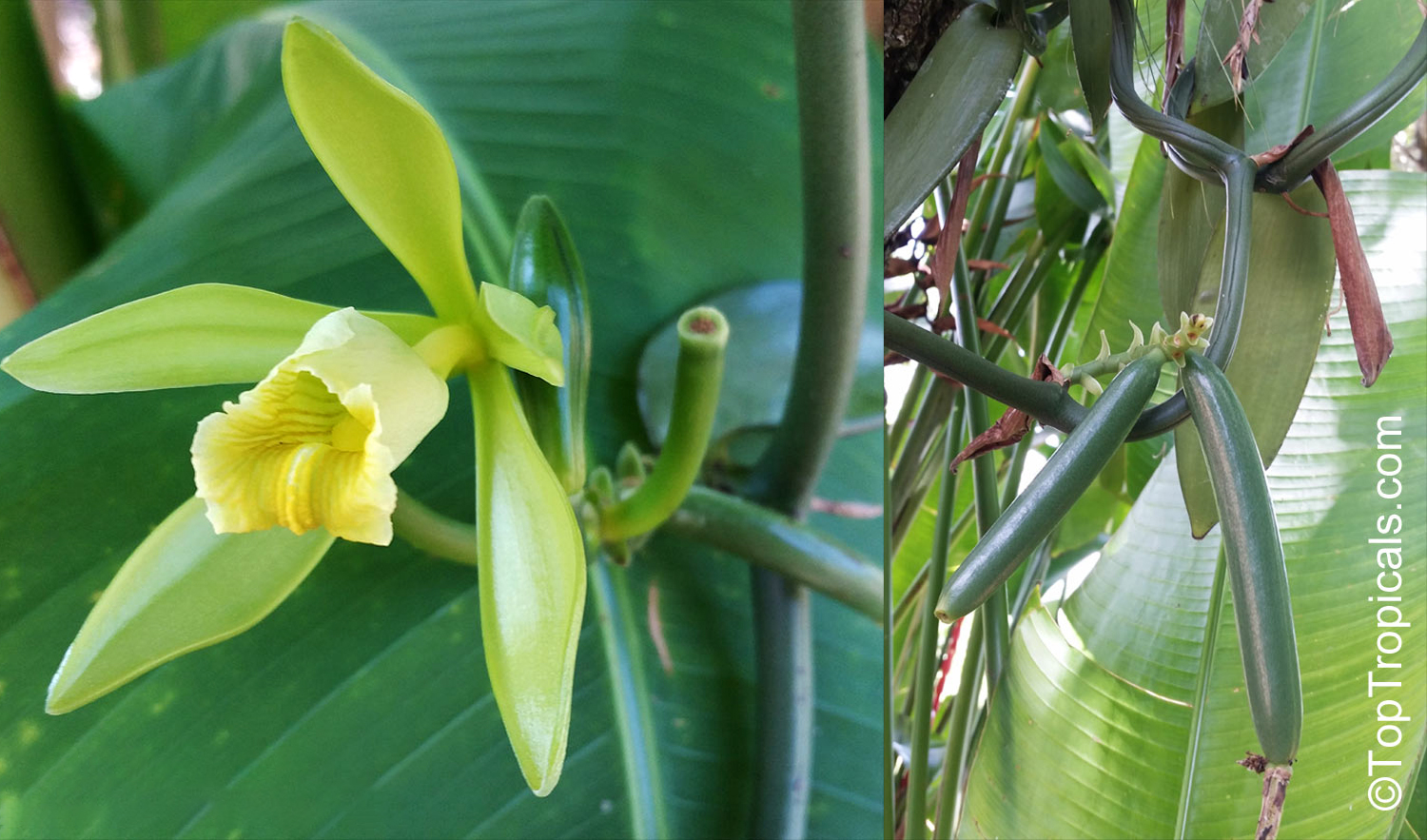
Close-up  of  Vanilla  planifolia  flower  with  yellow  throat  and  green 
 vanilla  bean  pods  developing  on  climbing  vine

Vanilla planifolia Flower and Developing Vanilla Pods

Date: 12 Apr 2026

Easter morning with Smokey and Sunshine

Easter morning with Smokey and Sunshine

Easter morning with Smokey and Sunshine

Easter morning with Smokey and Sunshine


Happy Easter to all who celebrate today - especially across Eastern Europe and Orthodox communities around the world.

Smokey and Sunshine are taking a well-earned break with coffee, sweet Easter bread, and a table full of spring color. Wishing you a day filled with peace, renewal, and quiet joy. And of course - the perfect time to plant flowers and fruit and bring new life into your garden.

🛒 Shop tropical flowers and plants

#PeopleCats

🟢 Join 👉 TopTropicals

Date: 1 Apr 2026

Happy Passover!

Cats Smokey and Sunshine celebrating Passover

Cats Smokey and Sunshine celebrating Passover

Happy Passover!

Sunshine: I fixed the donut problem. And I brought mango.
Smokey: Non-traditional. Compliant. Happy Passover.
  • 🥭 Some traditions stay exactly as they are. Others - adapt. On our patio this Passover, Smokey kept things properly grounded (wine in hand), watching closely as the table filled with familiar symbols. Sunshine, meanwhile, solved a practical problem the only way he knows how: creatively. No leavened donuts allowed? Fine. Matzah donuts it is. And since no celebration should be short on sweetness, a plate of fresh mango quietly found its place at the table.
  • 🥭 That is gardening in a nutshell. You respect the rules, but you work with what grows, what thrives, and what brings joy. A tropical garden teaches the same lesson every day: conditions change, but abundance is always possible if you choose the right plants.
  • 🥭 This season, whether you are planting something new or enjoying the fruits already within reach, take a note from Smokey and Sunshine. Stay within the rules - but do not be afraid to make them work for you.


🛒 Explore Mango varieties · Shop fruit trees

#Mango #Food_Forest

🟢 Join 👉 TopTropicals

Date: 6 Feb 2023

How to make your Olive tree grow faster

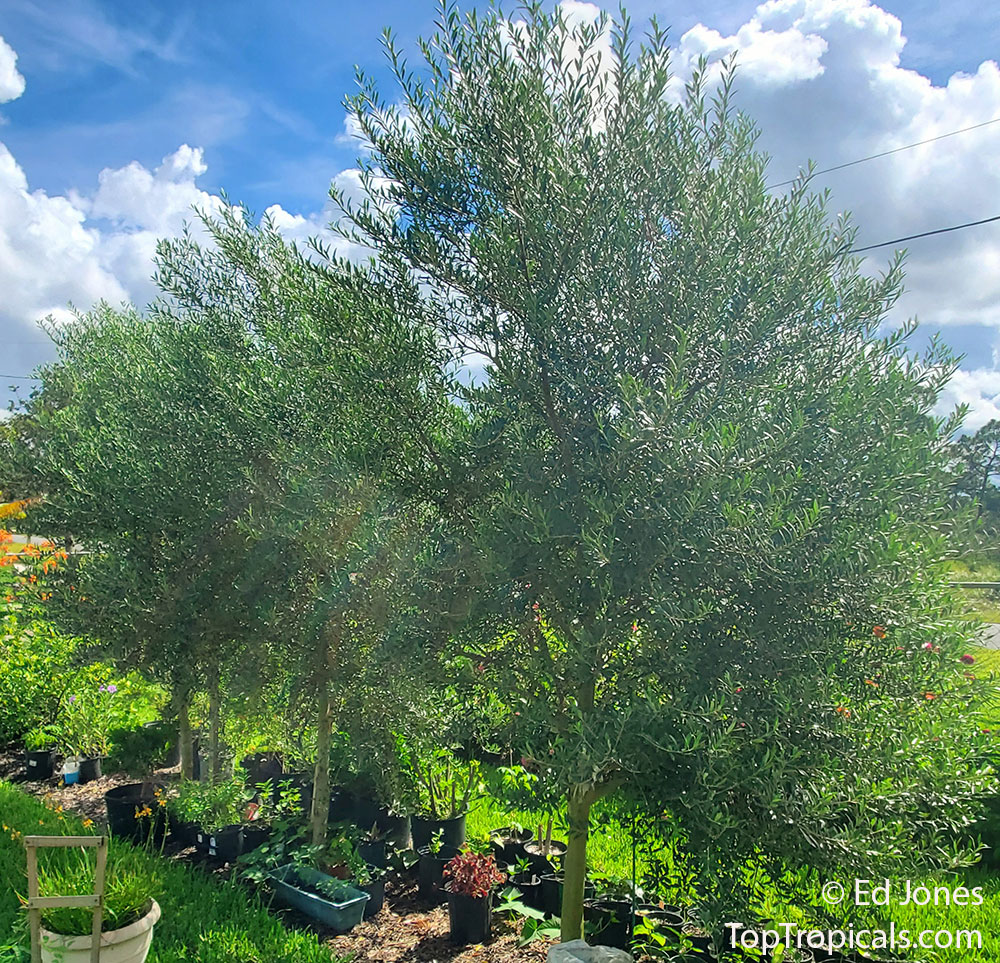
Ed's  Olive  trees  in  the  garden

In past blog posts, Ed Jones shared his insights on cultivating olives in Central Florida using Sunshine Boosters. Despite olives having a reputation for slow growth and being uncommon in Florida gardens, Ed has successfully grown not only productive but also aesthetically pleasing trees in just two years. As seen in this winter photo, the trees are thriving!
Encouraged by Ed's success, we have decided to plant olive trees as well. They are low maintenance and tolerant to cold temperatures. Simply heed Ed's advice, and you too can have a beautiful tree that produces your own olives in the future.

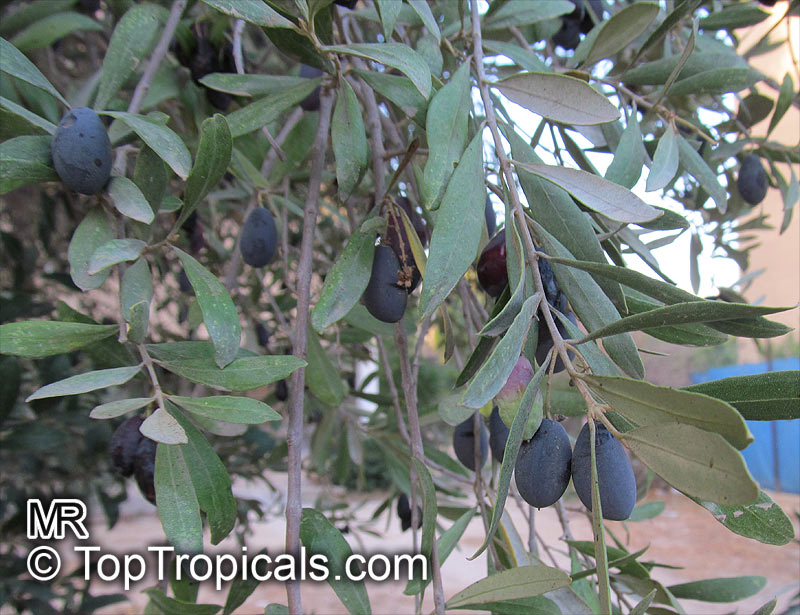
Olive  branch  with  fruit

Date: 22 Oct 2025

Detailed Cassia and Bauhinia Care Guide
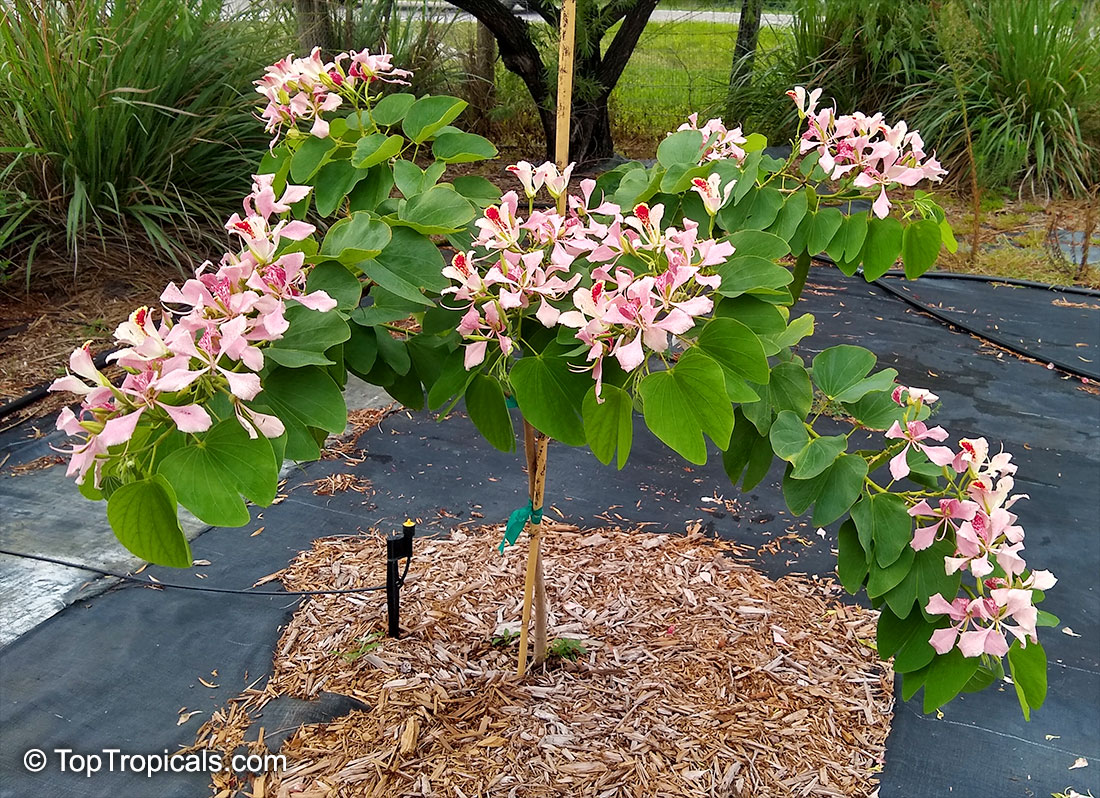
Young  Bauhinia  monandra  tree  blooming  with  clusters  of  pink  and  white 
 orchid-like  flowers,  growing  at  Top  Tropicals  nursery  with  fresh  mulch  and 
 drip  irrigation 
 setup

Outdoor Cassia and Bauhinia Care

  • Light: Both Cassia and Bauhinia need at least 6 hours of direct sunlight daily. Cassias handle intense heat; Bauhinias can take light afternoon shade.
  • Soil: Use loose, fast-draining soil. Mix equal parts garden soil, coarse sand, and compost.
  • Watering: Keep evenly moist but never soggy. Cassias tolerate dry spells once established; Bauhinias prefer steady moisture. Water when the top inch feels dry.
  • Feeding: For profuse flowering, feed with liquid Sunshine Boosters Megaflor that is safe to use with every watering, year around. You may also apply Green Magic controlled release fertilizer every 6 months. Bauhinias and Cassias respond quickly to feeding.
  • Pruning: After flowering, prune lightly to shape and remove dead tips. Cassias can be trimmed to shrub form; Bauhinias stay bushy with pinching.
  • Mulch: Add a 2-inch mulch layer around the base to conserve moisture and prevent weeds, but keep mulch off the trunk.
  • Cold protection: Most Cassias handle brief frost; some Bauhinias like B. acuminata and B. monandra must be sheltered below freezing. For cold nights, cover with frost cloth or move containers into shelter.
  • Dormancy: Outside of tropics, most Bauhinias drop leaves in winter for a short period of time, right before flowering and are called "semi-deciduous". Cassias stay evergreen.

Indoor or Porch Care (cool-climate growers)

  • Container: Choose a sturdy pot with several drainage holes, one size larger than the root ball. Unglazed clay or thick plastic pots work best for heat regulation. Use a light, well-drained mix such as professional soilless mix Abundance. Both Cassias and Bauhinias dislike soggy roots. Add a thin layer of coarse gravel at the bottom to improve drainage. Repot every 1–2 years in spring
  • Light: Brightest spot possible - south-facing window or heated sunroom. Supplement with a grow light if sunlight is weak.
  • Temperature: Keep potted trees in warm environment for best results. The optimum temperature for Cassias and Bauhinias is between 60–85 F, although many species can tolerate cooler temperatures. Avoid cold drafts and sudden drops.
  • Humidity: Average indoor humidity is fine; occasional misting keeps foliage glossy.
  • Watering: Water sparingly in winter when growth slows; allow the top inch to dry between waterings. Do not let roots sit in water.
  • Fertilizing: Feed with Sunshine Boosters Megaflor that is safe to use with every watering, year around, to maintain flowering indoors. You may also apply Green Magic controlled release fertilizer every 6 months.
  • Pest watch: Check undersides of leaves for aphids or whitefly. A light spray of neem oil or insecticidal soap clears them fast.

"Whether you crave golden summer fireworks or soft orchid blooms that last nearly all year, both Cassia and Bauhinia bring pure joy to the garden. 💖 Bring color that never quits."

Did you know: Fall is the best planting season — roots grow faster and you’ll have flowers by spring!

✔️ Fall Planting Guide

🛒 Shop Tropical Flowering trees