Garden Blog - Top Tropicals

Date: 7 Feb 2026

How to grow an Avocado tree on your patio

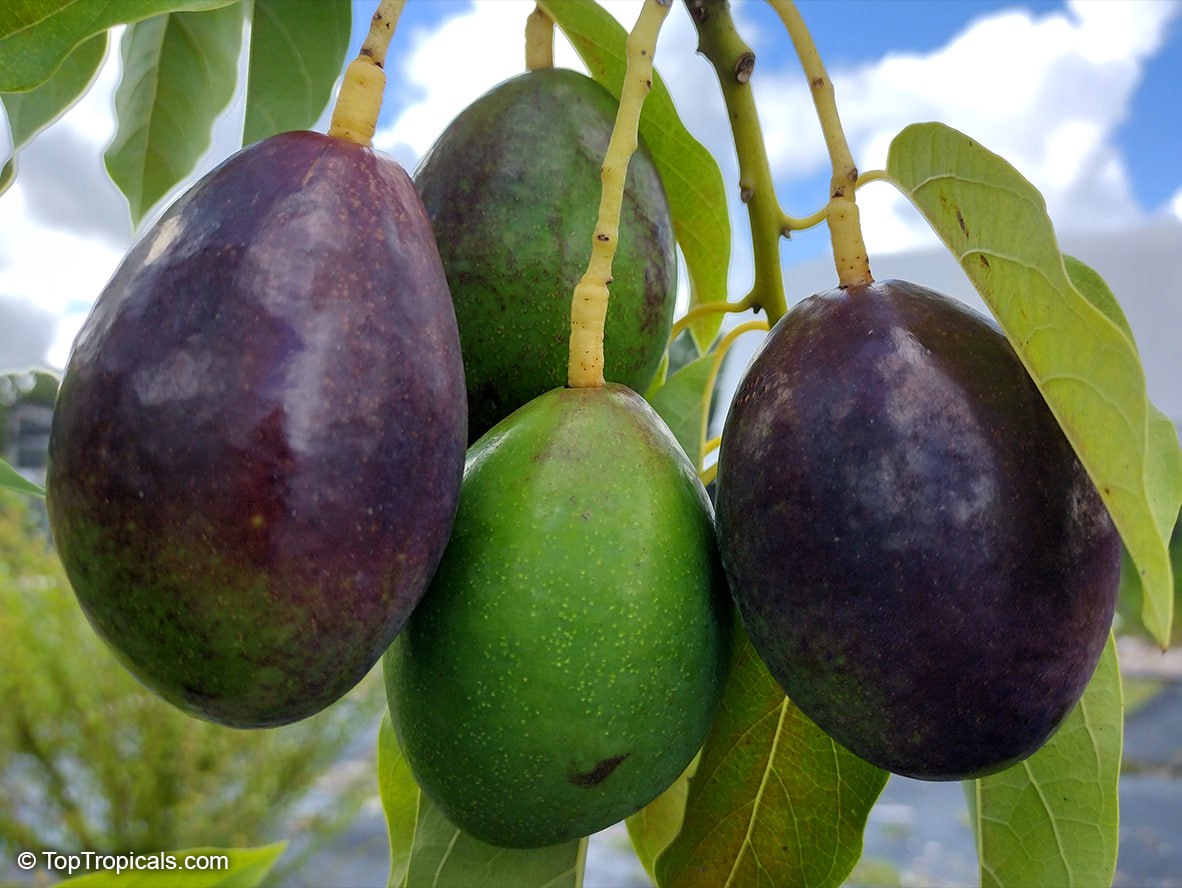
Avocado tree fruiting

Avocado tree fruiting

Yes, you can grow an Avocado tree on your patio - here is how to do it right

  • If you would love to grow your own avocado but don’t have a big yard, good news - avocado trees can grow very well in containers. Compact or dwarf varieties, often called condo avocados, are especially suited for pots, patios, balconies, and even indoor growing near a sunny window.
Growing avocados in pots is also a smart choice in cooler climates, since you can move the tree indoors when temperatures drop. With the right variety and basic care, potted avocado trees are easy to manage.
  • Pick a compact avocado variety


    Choosing the right variety is the most important step. Standard avocado trees grow very large, but condo or compact varieties stay much smaller and adapt well to containers.
    Good choices for pots include:

· Wurtz (Little Cado) - a true dwarf, perfect for containers
  • · Fuerte - a semi-dwarf that stays manageable with pruning
  • · Joey - naturally compact and easy to keep smaller
Dwarf avocado trees usually grow 6 to 10 feet tall. Fruit size is normal, but yields are smaller than on large trees.
  • Choose the right pot


    Start with a pot about 12 inches wide (around 5 gallons). This size is easier to water correctly and helps prevent root rot. Avoid planting a small tree into a very large pot too soon.
    As the tree grows, move up gradually. A mature potted avocado will need an 18- to 24-inch container. Repot every couple of years when roots show through drainage holes.
    Always use a pot with excellent drainage.
  • Use well-draining soil


    Avocados love water but hate wet feet. Use a loose, fast-draining mix, such as Abundance Professional Soilless Mix. You can improve drainage by adding perlite or coarse sand. Avoid heavy garden soil.
    Water deeply, but not too often.
    Water thoroughly, then let the soil dry before watering again. Always check moisture first. In summer, watering may be needed once or twice a week; in cooler weather, much less.
    Overwatering is the fastest way to kill a potted avocado.
  • Give plenty of sun


    Avocado trees need at least 6 to 8 hours of full sun daily. Outdoors is best, but indoors place the tree near a bright south- or west-facing window. Grow lights can help if light is limited.
  • Fertilize and prune


    Feed during the growing season with a balanced fertilizer such as Green Magic (every 6 months) or liquid Sunshine Boosters (safe to use with every watering, year-around). Prune lightly to keep the tree compact and well-shaped.
  • Protect from cold


    Most Avocados are sensitive to hard freeze. When temperatures drop below 35F, move the pot indoors or into a protected space. Reduce watering in winter as growth slows.
    Cold hardy varieties can take cooler temperatures down to 18F once established. For example, Joey is both cold hardy and dwarf - perfect choice.
  • Final thoughts


    Growing an avocado tree in a pot is practical and rewarding. With good drainage, sun, careful watering, and the right variety, you can enjoy homegrown avocados even without a yard.
    Small space? No problem. Just think condo avocado. According to Southern Living, Lemons can be grown in pots - and so can Avocados!


✔️ Check out
Avocado Variety Guide interactive chart. Sort them by flower type A or B, tree habit, fruit shape and quality, cold hardiness, origin, season and more!

🛒 Explore Avocado varieties and Dwarf Avocado

📖 Our Book: Avocado Variety Guide, Snack or Guacamole?

📚 Learn more:


🎥 What is a Dwarf Condo Avocado that fruits at 3 ft tall? 📱

#Food_Forest #Avocado

🟢 Join 👉 TopTropicals

Date: 22 Feb 2026

How to grow Papaya from seed, step-by step - FAQ

Carica papaya - Papaya fruit

Carica papaya - Papaya fruit

🍊 How to grow Papaya from seed, step-by step - FAQ

  • 💚 Is papaya a tree?


    No. Papaya is a herbaceous plant with a hollow trunk. Treating it like a tree is one of the most common mistakes growers make.
  • 💚 How fast does papaya grow from seed?


    Very fast. Papaya can start producing fruit in 10–15 months when grown in warm conditions.
  • 💚 Can papaya be grown in containers?


    Yes. Dwarf papaya varieties stay under 4–5 ft tall in containers and still produce full-size fruit.
  • 💚 Will seeds from grocery store papaya work?


    They will germinate, but the variety is unknown and usually not dwarf. If you want a compact plant, use seeds from a known dwarf variety.
  • 💚 Do papaya plants come true from seed?


    Yes. When the seed source is known, papaya grows true to type.
  • 💚 How long do papaya seeds take to germinate?


    Fresh seeds usually germinate in 2–3 weeks with warmth. Stored dry seeds can take 8–10 weeks.
  • 💚 What temperature do papaya seeds need?


    Above 70F, ideally 85–90F. Bottom heat greatly improves success.
  • 💚 Do papaya seeds need to be cleaned before planting?


    Yes. The slimy coating must be removed or seeds may rot instead of sprouting.
  • 💚 What soil is best for papaya seedlings?


    A well-draining mix or coconut fiber. Soil should be moist, never soggy.
  • 💚 Why do papaya seedlings rot so easily?


    Overwatering and poor drainage are the main causes. Young papaya roots are very sensitive to excess moisture.
  • 💚 Do papayas like transplanting?


    No. Papayas hate root disturbance. Reduce transplanting and move into larger containers sooner rather than stepping up gradually.
  • 💚 How big should the container be?


    After a 4-inch pot, move directly into a 1-gallon or even 3-gallon container to minimize root disturbance.
  • 💚 Does papaya need staking?


    Yes. Papaya grows fast, and the stem can outpace root development. Even light wind can knock it over.
  • 💚 How much sun does papaya need?


    Full sun. Shade causes leggy growth, poor flowering, and little to no fruit.
  • 💚 Should papaya be watered heavily?


    No. Once established, papaya prefers drier conditions. Large plants tolerate rain better than young ones.
  • 💚 Can papaya be planted in the ground?


    Yes, but only in well-drained soil and elevated spots. Low areas with standing water will kill it.
  • 💚 Is fertilizer important for papaya?


    Yes. Papaya is a heavy feeder. Poor soil means poor growth and little or no fruit. Use Green Magic once every 6 months or Sunshine Boosters C-Cibus with every watering.
  • 💚 Should papaya be pruned to control height?


    No. Pruning ruins its natural form. If height is an issue, grow a dwarf variety instead.


🛒 Explore Papaya varieties

📚 Learn more:


🎥 Nobel Prize goes to this pregnant male papaya

#Food_Forest #How_to #Papaya #Discover

🟢 Join 👉 TopTropicals

Date: 21 Feb 2026

The best time to plant a fruit tree was 20 years ago - here is why you need to plant it now

Litchi chinensis - Smiles under the Lychee tree

Litchi chinensis - Smiles under the Lychee tree

🍑 The best time to plant a fruit tree was 20 years ago - here is why you need to plant it now


They say the best time to plant a fruit tree was 20 years ago.
The second best time is today.

A fruit tree is not a seasonal purchase. It is not a decoration. It is a decision that stretches far beyond you.

When you plant a mango, an avocado, a loquat, a lychee tree - you are not just planting for this summer. You are planting for children who will climb that tree. For neighbors who will ask for a basket of fruit. For someone who may live in your house long after you are gone.

Fruit trees are quiet investments in the future.
Unlike annual crops that come and go, a tree deepens its roots every year. Many fruit trees - especially mangoes - can live for decades, even a century. They outlive trends, owners, renovations, even mortgages. They stand there, steady, producing.

Even if you sell the house, the tree remains.
The next family will walk into the yard and discover fruit hanging overhead. Imagine buying a home and realizing someone before you planted abundance!

That is a gift.

In many parts of the world, mango trees are called generational crops. One farmer plants them. His children harvest them. His grandchildren sell the fruit. A single decision continues to feed and support a family long after the planter is gone.
There is something deeply grounding about that.

We live in a fast world. Quick returns. Quick moves. Quick upgrades.
A fruit tree moves at a different pace. It asks for patience. It rewards consistency. It teaches you to think long term.

Planting a fruit tree says:
I believe in tomorrow.
I believe this land will matter.
I believe someone will stand here after me.

And even if you never taste the fullest harvest, someone will.
Passing fruit trees through generations is more than horticulture - it is legacy. It is continuity. It is resilience. It is saying that this space, this soil, this home will keep giving.

So plant it now.
Plant it for your children.
Plant it for the next homeowner.
Plant it for shade you may never sit under.
Plant it for fruit you may never pick.
Because one day, someone will walk into that yard, look up, and thank the person who thought ahead.
Let that person be you.

🛒 Explore fruit trees for your orchard
  • 👉 Tropical Fruit favorites:


🥭 Mango
Avocado
🍒 Cherry
🍊 Loquat
🍈 Jackfruit
🍑 Peach tree
🍉 Guava
🍏 Sugar apple
🍇 Mulberry
🍐 Sapodilla

#Food_Forest #Discover

🟢 Join 👉 TopTropicals

Date: 9 Mar 2026

Golden canistel cream: quick-n-fun exotic recipes

Golden canistel cream

Golden canistel cream

Pouteria campechiana - Canistel, Eggfruit

Pouteria campechiana - Canistel, Eggfruit

🍴 Golden canistel cream: quick-n-fun exotic recipes


Golden Canistel Cream

Ingredients

  • 1 ripe canistel (eggfruit)
  • 2 to 3 tbsp milk
  • 1 to 2 tsp honey

Instructions

  1. Scoop the ripe canistel flesh into a bowl.
  2. Add milk and honey.
  3. Mash until smooth and creamy.
  4. Warm gently in a small pan if desired.
  5. Serve warm like a thick tropical porridge.

🌿 About the plant:


Also called Eggfruit, canistel has bright yellow flesh that is dense and slightly dry when ripe.

🏡 In the garden:


Grows well in warm climates with good drainage. Compact growth makes it suitable for small yards.

🛒 Plant Canistel Egg Fruit tree - grows well in container too

📚 Learn more:


#Food_Forest #Recipes

🟢 Join 👉 TopTropicals
Date: 5 Mar 2026

Passion fruit butter glaze: quick-n-fun exotic recipes

Passion fruit butter glaze

Passion fruit butter glaze

Passion fruit - Passiflora edulis

Passion fruit - Passiflora edulis

🍴 Passion fruit butter glaze: quick-n-fun exotic recipes

Passion Fruit Butter Glaze

Ingredients

  • 2 passion fruits
  • 1 tablespoon butter
  • 1 teaspoon sugar

Instructions

  1. Scoop the pulp from the passion fruits into a small saucepan.
  2. Add butter and a small amount of sugar.
  3. Simmer gently while stirring until the mixture thickens.
  4. Spoon the warm glaze over pancakes, toast, or grilled pineapple.


🌿 About the plant:


A fast-growing vine with exotic flowers and intensely aromatic fruit filled with juicy seeds.

🏡 In the garden:


Needs strong support, full sun, and warmth. Very fast growth in zones 9-11. Prune to keep productive.

🛒 Plant Passionfruit Vine - fast growing and rewarding

📚 Learn more:


#Food_Forest #Recipes

🟢 Join 👉 TopTropicals