Garden Blog - Top Tropicals

Date: 16 Jun 2025

Why is my palm tree turning yellow?
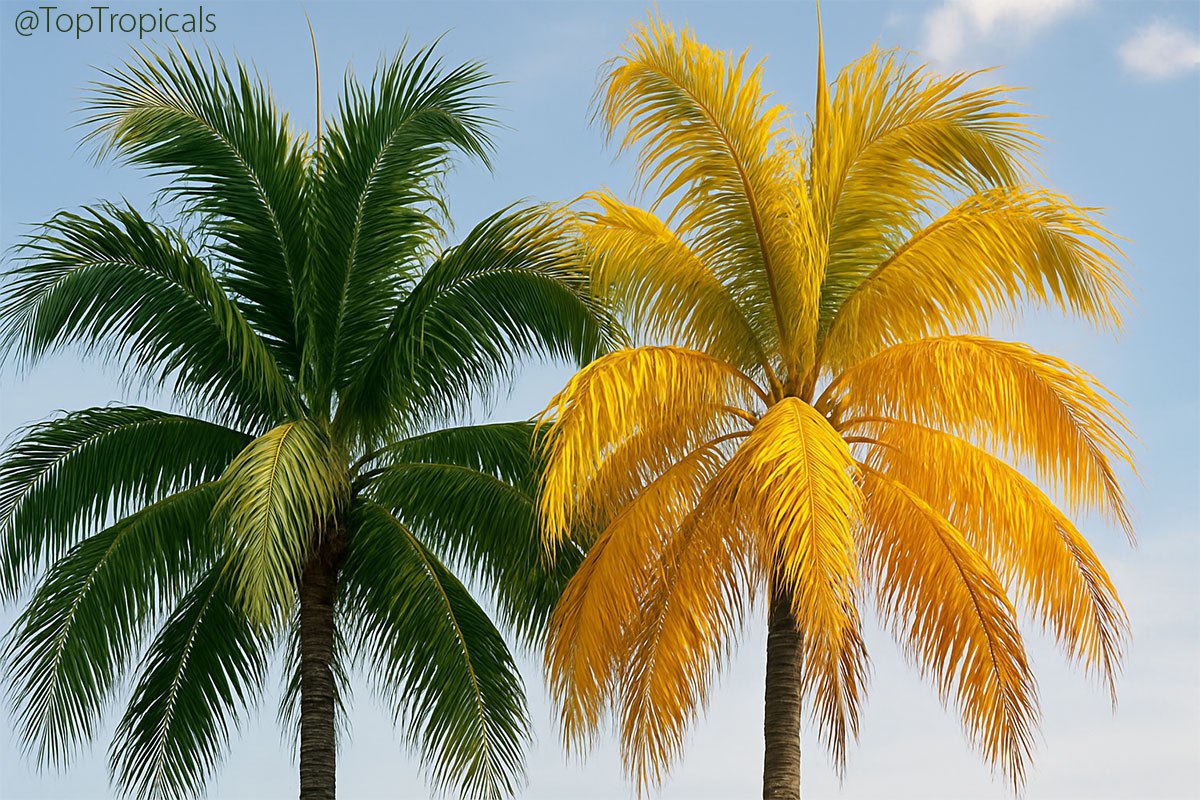
Green and yellow palm

Green and yellow palm

🌴 Why is my palm tree turning yellow?


Yellowing leaves are a common concern with palms and can be a sign of several issues, most commonly: nutrient deficiency and pests or disease. Additionally, leaf yellowing may be a sign off overwatering or poor drainage, underwatering, or cold damage.

✔️ Nutrient deficiency


Nutrient deficiency is the most frequent cause of palm issues. Palms are heavy feeders, and even a slight imbalance can lead to yellowing. Lack of nitrogen, magnesium, iron, or potassium is the leading cause.

✔️ Signs of nutrient deficiencies:


Magnesium and Iron deficiency is one of the top culprits, especially in sandy soils. It causes older fronds to turn yellow with green veins.
Potassium deficiency causes yellow or orange spots on older fronds.
Nitrogen deficiency leads to overall pale yellowing, especially in new growth.

✔️ How to fix?


Use a slow-release fertilizer with high Nitrogen content, like Green Magic, that includes all these elements; with 16-6-11 grade and 6 months release, it turns plants green very quickly! You can also use a balanced liquid fertilizer like Sunshine Robusta. Additionally, a supplement of magnesium sulfate (Epsom salt) and micro-element supplement containing chelated Iron can help, like Sunshine Superfood (amino-acid based natural product).

✔️ Pests and Diseases


Pests and fungal diseases can lead to yellowing. Check for signs of scale, mites, or fungal and bacterial problems, especially if yellowing is uneven or spotted.

✔️ Signs of pests:


Thrips cause silvery-yellow streaks or mottling
Spider mites, especially in dry conditions, cause yellow speckling
Scale insects can suck sap and weaken fronds
Mealybugs often found in leaf bases and crowns

✔️ How to fix?


Inspect your palm regularly and treat pests early with neem oil, insecticidal soap, or horticultural oil.

✔️ Lethal yellowing


Lethal yellowing is a serious disease caused by a phytoplasma, a type of bacteria-like organism. It affecting mostly Coconut palms and some other species like Phoenix (Date) palms. It causes premature fruit drop, yellowing of fronds starting from the lower ones, and eventual death of the tree.

✔️ How to fix?


Unfortunately, there's no cure, but early removal of infected trees can slow the spread. Disease-resistant coconut varieties are available.

✔️ Other causes


Overwatering or Poor Drainage: Too much water can suffocate roots and lead to yellowing. Make sure the soil drains well and let it dry slightly between waterings.
Underwatering: Dry soil for too long will stress the palm. Water deeply but infrequently.
Cold Damage: Exposure to cold temperatures can turn fronds yellow or brown, especially in tropical varieties.

✔️In most cases, leaf yellowing isn't fatal, but it's a sign your palm needs attention. Focus on balanced feeding, proper watering, and pest checks to keep your palm healthy and green. Trim only fully dead fronds - yellow ones still provide nutrients to the palm. With proper care, your palm should green up again.

🛒 Shop garden supplies

#How_to #Fertilizers

🟢 Join 👉 TopTropicals

Date: 17 Sep 2021

Hibiscus: TopTropicals' first plant

- September 2001 @ TopTropicals -

Q: I wonder how you started your plant business and what was your first plant?

A: It was 20 years ago this month that we started Top Tropicals Project. No idea where it was going or how to even get "there", just started with the idea of sharing these wonderful creatures we call plants with anyone and everyone who felt the same way.

Believe it or not, the first plant at TopTropicals was a hibiscus. Right before we opened our plant nursery in Florida, we ran into a place called Winn Soldani's FANCY HIBISCUS. The variety of colors inspired us to start our own tropical plant business. We asked the owner Winn Soldani: what plants do you suggest us to grow in Florida? His answer was, "Your plant will find you". Very soon we discovered jasmines, then perfume trees and fruit trees - all those became our specialty. Then very quickly TopTropicals.com turned into a large Plant Mall where you can find every tropical plant you can think of!
But at TopTropicals we still grow hibiscus!

- September 2004 @ TopTropicals -

Hibiscus Plus

Hibiscus is a wonderful plant, considering there are thousands of hybrids with color palettes you can only imagine. Especially interesting are those rare and useful species, yet very easy to grow, such as:
- Salad Hibiscus - Hibiscus furcellatus - yes, used in salads
- Coral Hibiscus with crazy pendant flowers - Hibiscus schizopetalus
- African Cranberry hibiscus that is used for making teas and salads - Hibiscus acetocella
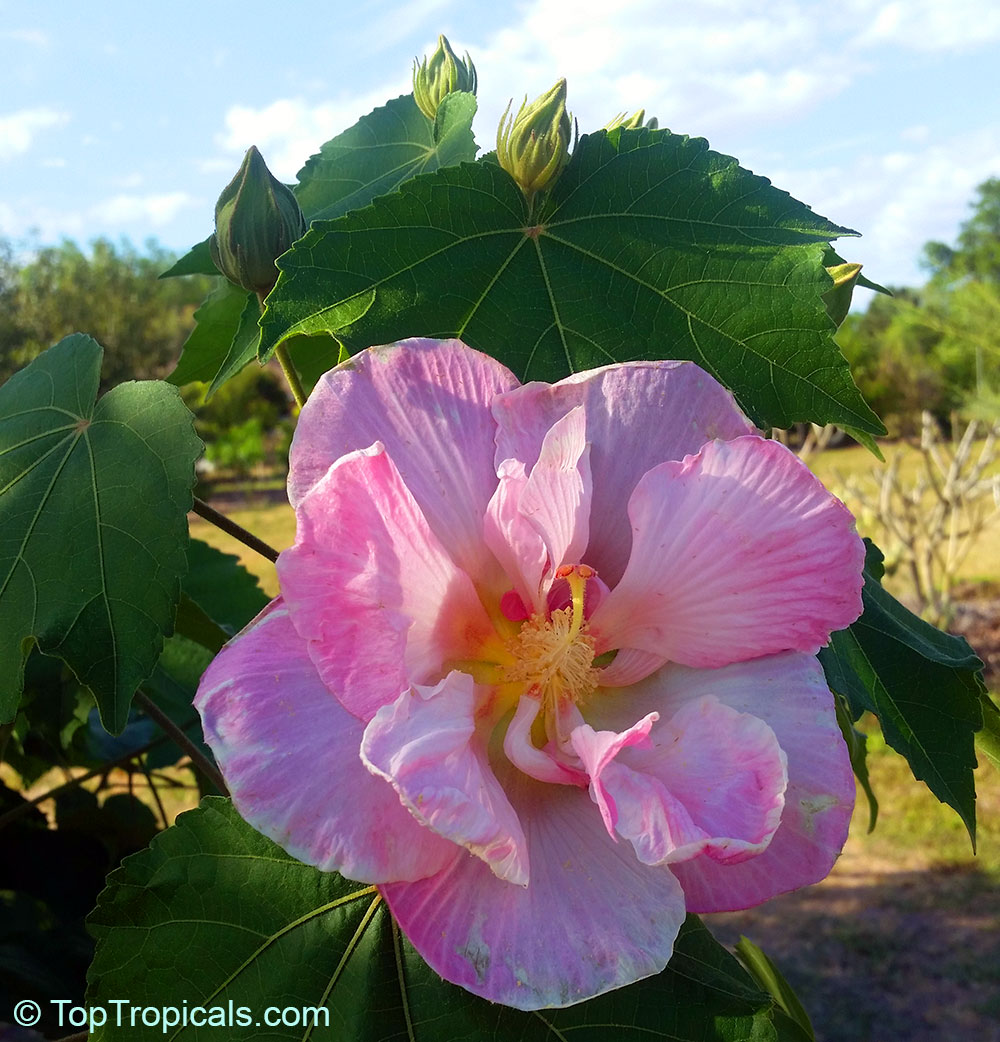
- Cotton Candy Hibiscus mutabilis - the flower changes color, opens as white and turns into bright pink within 3 days, like Yesterday-Today-Tomorrow

Photo above: Hibiscus mutabilis Cotton Candy

Care of Hibiscus and other flowering tropicals

"If your plant isn't flowering, feed it."
- Winn Soldani, Fancy Hibiscus -

Among gardeners, Hibiscus plants have a reputation to have couple maintenance issues:
1) they can get bugsy (because they must be so tasty!)
2) they can get leggy, especially fancy grafted cultivars, and after a while they don't look as perfect as when they came from a nursery.

4 tips for healthy and pretty hibiscus plant

1. Full sun. Essential for profuse flowering and keeps away diseases.
2. Pruning. Keep it pruned and it will get bushy and produce more blooms.
3. Well-drained soil. Hibiscus likes regular watering but hates wet feet.
4. Nutrition program. Hibiscus plants are heavy feeders. But keep in mind that if you just keep pushing granulated plant food, you can over-fertilize the plant. Excessive salts will accumulate in soil and you will end up with a sickly looking plant.

Keys to balanced plant food and bloom booster

1) Use liquid fertilizer, preferably amino acid based, it won't create nutrients lock up
2) Fertilize on regular basis, it's better dilute concentration and add food with every watering
3) Always add micro-elements - they are essential for plant health

If you do this part right, the result will be:
- healthy, green plants, like they just came from a nursery
- reliable blooming circle
- better cold tolerance and disease resistance. Remember that a strong plant will be less stressed and less "bugged" by bugs!

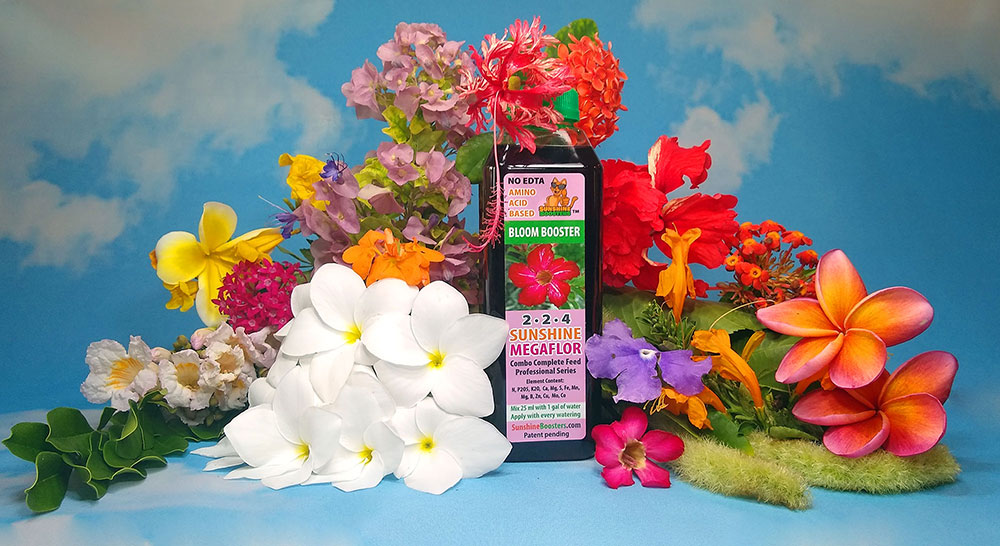
We always suggest Sunshine Boosters - scientifically balanced liquid fertilizers that are amino acid based = they are natural and organic, can be used for both flowers and edibles, and what's most important - year around. They are safe to use virtually with every watering.

This is all you need for healthy plants and lots of flowers!

Date: 24 Dec 2018

Growing Nutmeg from seed: secrets of successful germination

TopTropicals.com

Q: I received a Nutmeg nut and I am wondering do I need to open a hard shell before planting it? Any other tips on growing nutmeg from seed? When will you have Nutmeg plants for sale?

A: We just received fresh nutmeg seeds from Sri Lanka and planted them right away, so we should have Nutmeg plants by Spring/Summer. These are some tips on how to make germination a success:
- nutmeg seeds are viable only for a few weeks after harvesting so plant them as soon as possible.
- wash the seed and soak it in warm (100F) water with a few drops of SUNSHINE-S booster that improves germination. Soak for up to 24 hours. You may use a thermos to keep it warm.
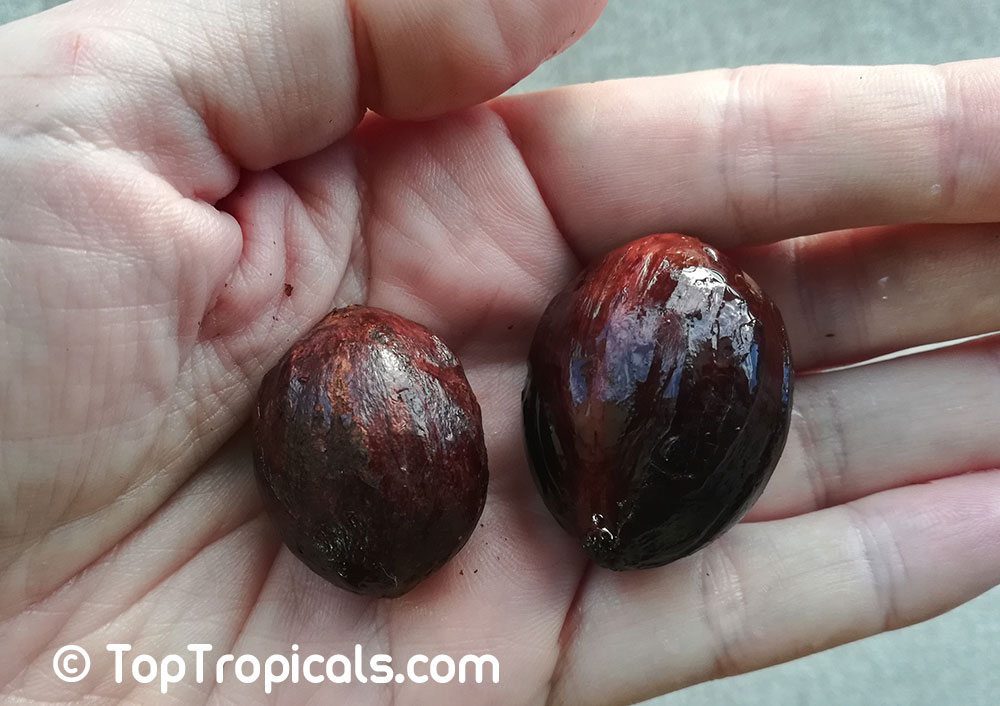
- there is no need for scarification. The outer shell of nutmeg is hard, however, it is not thick so the water will penetrate easily. On the photo above, you can see 2 seeds: the one on the right expanded twice in size after sozking.
- Plant in a porous soilless mix, preferably light seed germination mix, in 4-6"pot, and keep moist but not soggy. You may cover the pot with plastic to keep moisture in.
- Unless you are germinating the seed in hot tropical conditions, you should use bottom heat - 80-85F. A heating pad is the best solution (make sure it doesn't have a timer that automatically shuts it off). For safety, use GFI protected electric outlets since you will be watering the pot.
- Be patient and allow a few weeks for germination. Once the seed sprouted, keep it in bright filtered light and apply SUNSHINE Superfood to young seedling, along with a small dose of Slow Release Fertilizer, for kickstart.
- Move the seedling out in bright sun light once the temperature outside is above 70F.

We have a very long waiting list for Nutmeg plants (item 3878) and seeds (item 6203), so you may reserve one for yourself using our Wishlist form; this way you will be notified immediately when we have the plants in stock, as they won't last long. A few seeds are still available for sale, order now while they are fresh:

Top

Date: 2 Apr 2022

Cat of the month:
Frosya Yavorsky from Ukraine

Frosya  Ukrainian  Cat

Meet Frosya Yavorsky - an anti-war and anti-stress Cat of Alex and Lena Yavorsky. They live in Lviv, Ukraine and contribute their plant photos to Top Tropicals Catalog. Recently they sent us the beautiful Sunflower field photo that everyone can enjoy now at Top Tropicals home page. Frosya's main job today is psychological support of her parents during this cruel times. Top Tropicals recently sent to this family some proceeds of Kristi's Sunflowers sold at Sunday Event Sale. Frosya, please stay healthy and keep your parents calm and strong. You guys are in our thoughts, prayers, and hearts.

Our thoughts and prayers are with Ukraine

Ukrainian  Corn  and 
 Rye

Ukraine direct support:

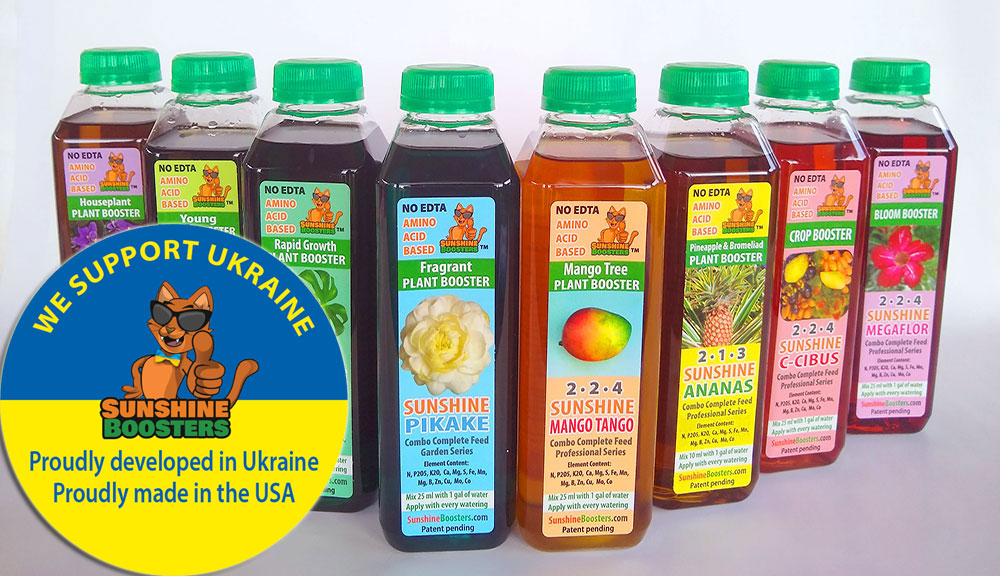
To support Ukraine, please make your purchase of so-much-needed plant food today: Sunshine Boosters, developed by our Ukrainian Team.
All profits from Sunshine Boosters sales go to Ukraine.
Your help is needed TODAY.

Sunshine  Boosters

Sunshine  Boosters

Photo above: Fedor Shabliy with his family - Oksana and Vova - are about to start planting vegetables in their backyard. Fresh start once the freeze is over... Fedor, the author of the Sunshine Boosters formulas, looks into the future with optimism. Staying strong!

Date: 8 Sep 2021

Fertilizer and the Fall Garden

by Ed Jones, the Booster Guy

...Well Labor Day has come and gone. Summer is winding down and depending on where you live, thoughts are now turning to pumpkin spice, witches, fall decor and gardening. Wait, did I just say gardening? Yes, if you live in the deep south, and I do, it is time to think about fall gardening and fertilizer. Even those of you in the north can put in a few quick crops now for fall. Think onions, radishes, lettuce and other greens and of course, garlic...

Next month, we can start putting out our plants that do better in cooler weather. We will put out some beans and of course cabbage. We may do some potatoes too. What do you like to grow?
But what about fertilizer? Glad you asked. Now, most of us have our favorite brand of fertilizer. Some of us had some secret fertilzers that we used in the past. For me it was composted alpaca manure. Yes, we raised alpacas in the north, but that is another story for another day....

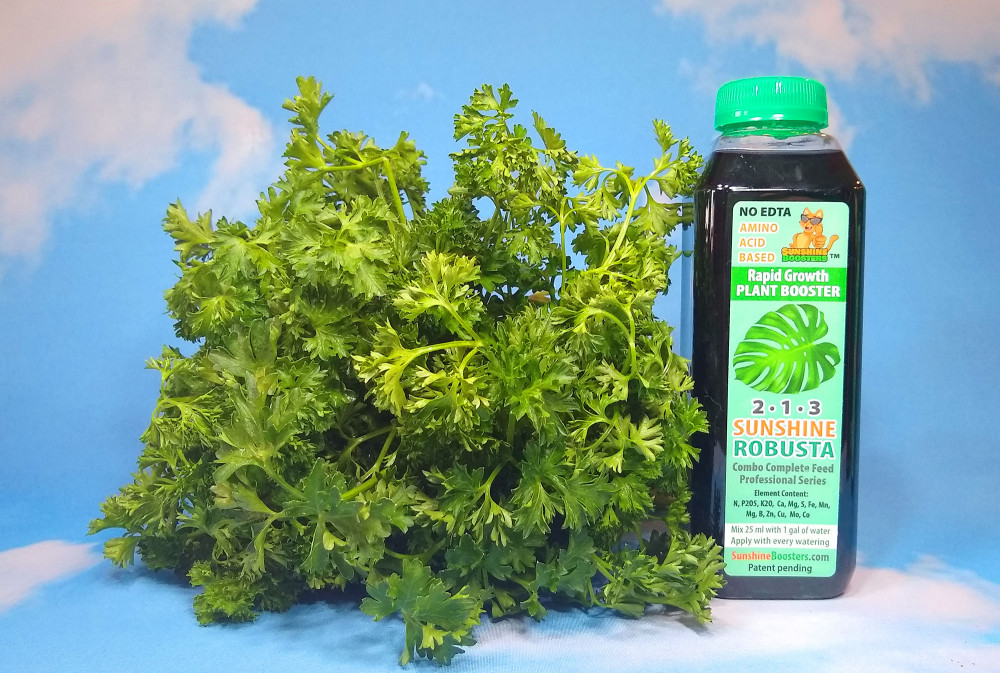
...Once the temperatures have begun to drop, it is better to use a good liquid fertilizer. The one I will be using this year is SUNSHINE Robusta. SUNSHINE Robusta is an organic amino acid based liquid fertilizer that is safe to use with every watering. It uses amino acids to chelate (bind) micro-nutrients and makes it easier for plants to take them up from the soil. Most fertilizers use EDTA to chelate their micro-nutrients and plants must use about 4 times more energy to break them down than they do with SUNSHINE Boosters. This means that your plants will have more energy to put into growth. And isn't that what we are after?
With Special Seasonal price for 16 oz bottle reduced to only $19 with FREE shipping, this is your best choice of organic, safe fertilizer for your vegetable garden!..

CONTINUE READING >>