Date: 24 Jun 2018

We can ID plants for you! Even Mango Elephant...
Q: I had a mango tree, the fruit was very large and no one knew the name of it. Can you please tell me the name of it or something about it? I have never seen this variety before. It weighed in at 7 lbs, it smells a little like bubble gum, its flesh is fiberless and the taste is watery with a little sweet. And do you have it for sale? I don't have the tree anymore. My pictures are about a year or two old, lighting struck the tree and it died so I have been trying ever since then to find another tree but I don't know what kind it is. I originally bought the tree on side of the road cause I always wanted a mango tree so I didn't care at the time what kind it was so I bought it but I was shocked at how big the mango was. However I collected rotten mangoes off the ground and planted the seeds. Only one germinated.
A: This
mango is called Elephant. We will try to
find this grafted variety and let you know when we have
it. Unfortunately seedlings take many years to fruit (8-15
for mango) and usually do not come trues to seed.
The closest variety by fruit size is Lancetilla, it is a giant 5
lb fruit, of a very good quality. And the best tasting and
the most popular - Nam Doc Mai
Date: 24 Jun 2018
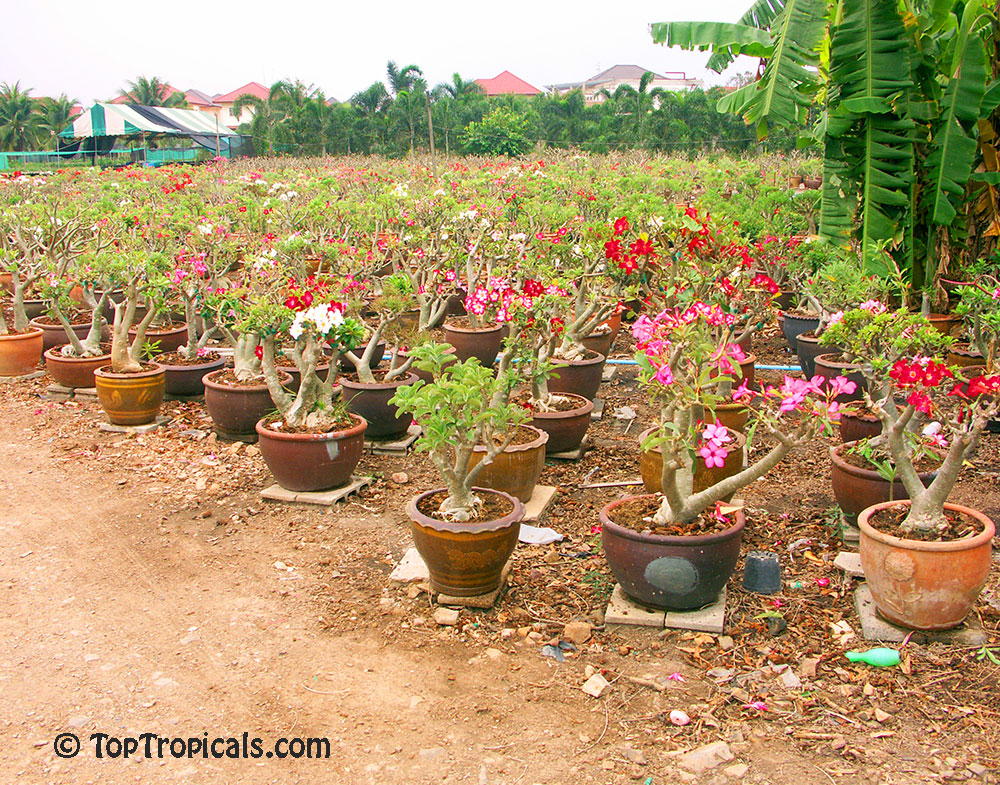
What you need for successful growing Adeniums
1) Adenium plants - from TopTropicals Endless selection of
Adeniums. We have double flower, red, purple, yellow
and even black flowers!
2) A small pot with excellent drainage is a must.
Position the plant in a pot, size of root system.
3) Adenium soil mix. TopTropicals Adenium Soilless Mix.
Use only well-drained soil.
4) Lots of light. Adeniums need lots of light for
heavy flowering. However from our own experience, in super
hot climates, they look healthier in filtered bright
light. After initial planting, once the plant is
established and starts growing new leaves (may take a few
weeks), gradually move it into brighter light.
5) Little water. Adeniums like a neutral to hard
water. Acidic water tends to sour the soil too fast and
may cause root rot. Water plants preferably in the early
morning, and allow them to drink up throughout the day.
Watering can be done daily to every few days. Do not water
again until soil dries on surface. Never allow your plants
to sit in a saucer of water, but don't let them to dry out
too often - this causes adeniums to go into early
dormancy. Adeniums do not like both over-watering or
drying-out.
6) Fertilizer. To make your plant develop a large
swollen base/trunk, you'll need a good quality fertilizer.
Use slow-release granulated fertilizer
for overall plant health, and liquid water soluble
fertilizer for swelling up trunks that is also used to
increase flowering. It shouldn't be too high in nitrogen,
the middle number should be the highest (similar to
10-50-10). Never apply fertilizer directly on roots and do
not liquid feed when a plant is thirsty: always water
first slightly to avoid root burn and leaf drop. Do not
wet leaves.
7) SuperFood micro-elements. Besides
macro-nutrients provided by fertilizer, Adenium needs
micro-elements for balanced development of root system and
especially caudex: Sunshine-SuperFood.
8) SUNSHINE-BC. Spray leaves with SUNSHINE-BC once a month to
encourage young growth, profuse flowering and large
caudex.
9) Growing caudex. There is a secret how to create
a large swollen caudex: raise the plant a bit every time
you re-pot it, so that the upper part of roots will be a
little exposed. The plant will form more roots that will
go down.
Date: 24 Jun 2018
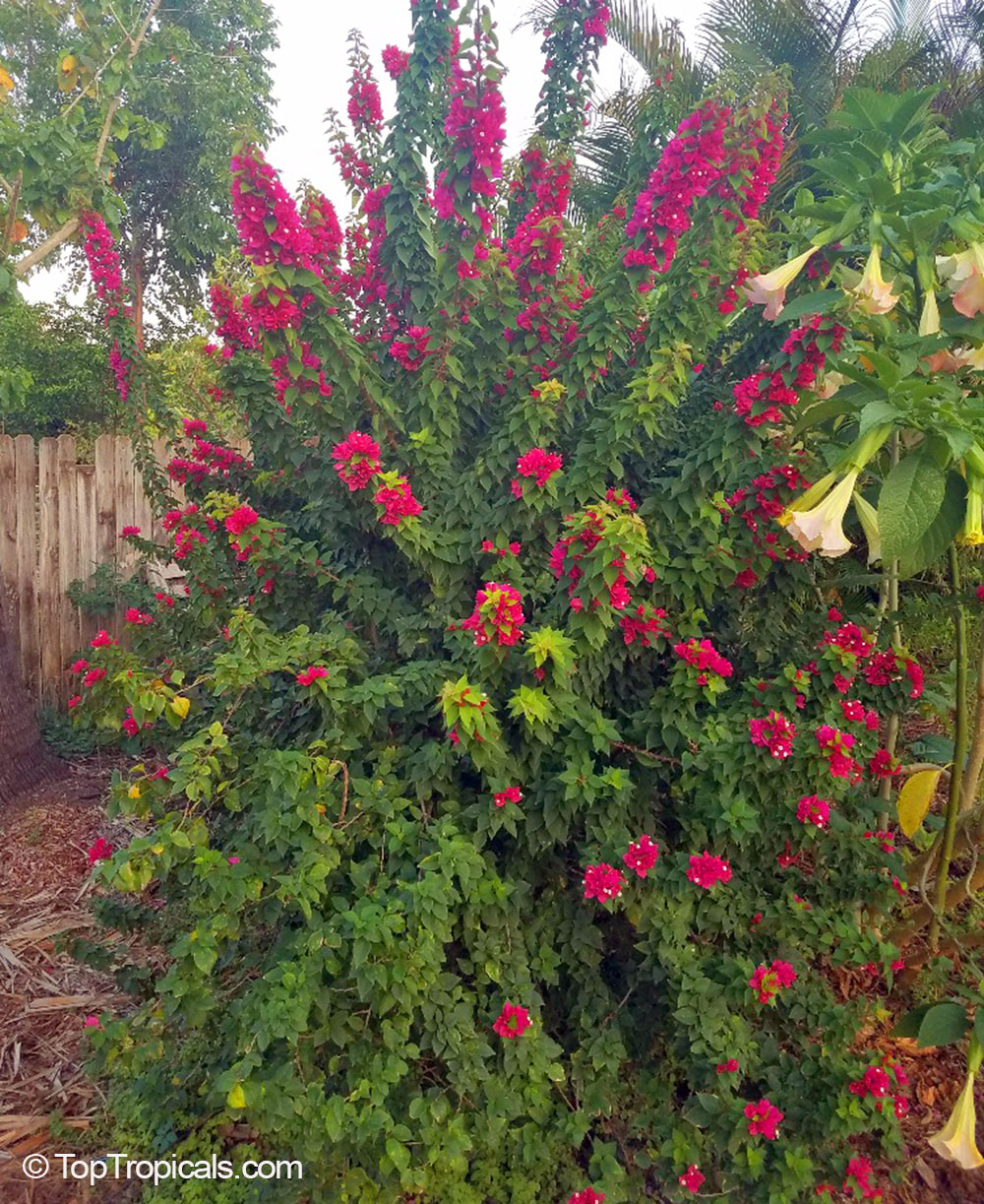
Growing Bougainvillea and Plumeria in Florida
Q: I have recently moved from New Jersey to Florida (Orlando area) and I am so excited to start my own Tropical Paradise Garden! A few years ago I visited Hawaii and saw many beautiful colorful Bougainvilleas as well as fragrant Frangipani. Do they grow well in Florida? These are flowers of my dream!
A:
Both Bougainvillea and Plumeria grow well in most
parts of Florida, especially South and Southwest.
Bougainvillea can tolerate some light freeze and can be
seen in the streets of Central Florida (young plants
require some cold protection for the first year), so it is
a very good candidate for your new garden. Keep in mind
that unlike in Hawaii, where they bloom year around,
Bougainvilleas tend to have a distinctive flowering season
which in Florida is winter time - these plants enjoy dry
weather that triggers their bloom. To enjoy Bright
bougainvillea flowers for a long time, apply balanced fertilizer, prune
regularly (this promotes flowering on new growth) and keep
established plants on a dry side. Dwarf cultivar Pixie is super compact and
can be grown in pots or in a small garden without any
pruning! See photo of Pixie on the left.
Plumerias, all-time perfume
favorites and symbols of Hawaii, are also residents of
many gardens and collections throughout state of Florida.
Their cold hardiness is close to the one of Bougainvillea,
however keep young plants protected from frost. There are
also many new exciting cultivars including multiple
"rainbow" colors, and several dwarf varieties, some of
them are evergreen - Plumeria obtusa
Date: 5 Apr 2016
Jungle on Windowsill 101
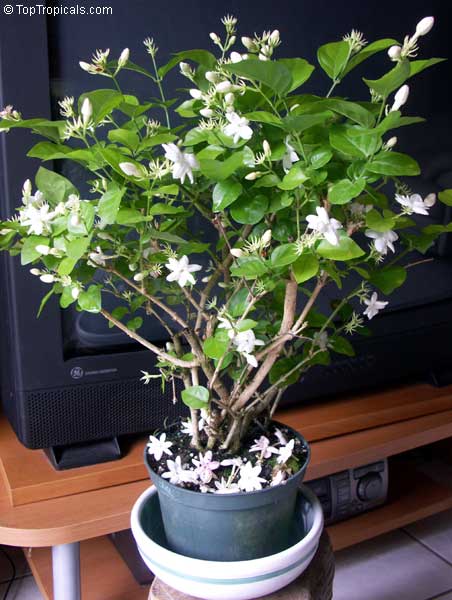
Q: I got a Jasmine Sambac and a Tahitian gardenia as presents, they are very cute plants with flowers and flower buds. I would like to be able to keep them alive and hopefully happy for a long time, but I don't know much about growing tropical plants, and I am not sure if my thumb is green enough to make everything right. What do they need? How much sun? How much water? What kind of soil? Sorry for all these (maybe silly) questions, but I want to keep them alive, please help! I live in Wisconsin and we had some snow again last week.
A: Growing tropicals is not a hard work, it is a lot of fun! These plants are actually a good starters for a beginner who wants to try growing tropical plants, no matter if you live in a mild frost-free climate, or up North where you can have these beauties as houseplants. Below are a few simple steps for you:
1. Read. Follow planting instructions included with your plants. Check plant names on the tags and learn more about them from our online catalog.
2. Soil. Plant in quality potting mix - it must be porous and well-drained, never use heavy soils (top soil or garden soil are no-no), in a pot exactly the size of the root system. You can step up your plants in the next size container once you notice vigorous new growth. Next size means: 4"pot can go into 6" pot, 6"pot into 10" pot, etc. Too big of a pot may create rotting environment, root system must fill the entire container to use all the moisture from the soil. Container must have good hole(s) for excess water to drain through. Put the pot in a saucer and get rid of excess water every time after watering.
3. Light. Most tropical plants require lots of light in order to produce flowers. If you ever visited Florida, remember the bright sun? - these are ideal light conditions for tropicals. Up North, provide as much light as possible: a bright spot on a windowsill of Southern or Western exposure would work the best. If the sun gets too hot in summer afternoon, you may shade the window a little bit with a sheet of white paper to avoid leaf burn.
4. Water. Keep soil slightly moist but not soggy. The best way is to wait until the top of the soil feels dry to touch - this is time to water again. Jasmines prefer to stay on a dry side; gardenias do not like soil to dry out - keep them slightly moist as long as soil is very porous and well-drained.
The main reason of most problems with potted indoor plants is over watering. With experience, you will feel the right balance of moisture in the soil: the brighter the light, the more water is consumed by a plant; the less light, the less frequent you should water.
5. Trimming. In low light conditions, plants tend to become leggy. Trim branches as they become too long: the more you trim, the busier the plant gets. New growth promotes more profuse blooming in many species.
6. Fertilizing. Fertilize indoor plants with slow-release granulated fertilizer from march to November.
7. Insects. Check for insects at least once a month, especially underneath the leaf. If notice any problems (deformed leaves, residue, holes, or tiny insects) - clean the leaves/stems with a solution of warm water (1 cup), vegetable oil (2 table spoons), and a few drops of a dish soap.
8. Fresh air and air humidity. As soon as air temperature gets above 65F, bring your tropicals outside in the sun and fresh air: porch, balcony, outside in the yard. Air circulation is essential for your plant health. Bright light and high air humidity will promote vigorous growth, and lots of flowers for you to enjoy!
For more information on growing Tropical Plants 101, see Problem solving with potted plants - how can we help them?
Date: 28 Sep 2025
 Guava Tree Plant Care
Tips from Top Tropicals Plant Expert - Tatiana Anderson
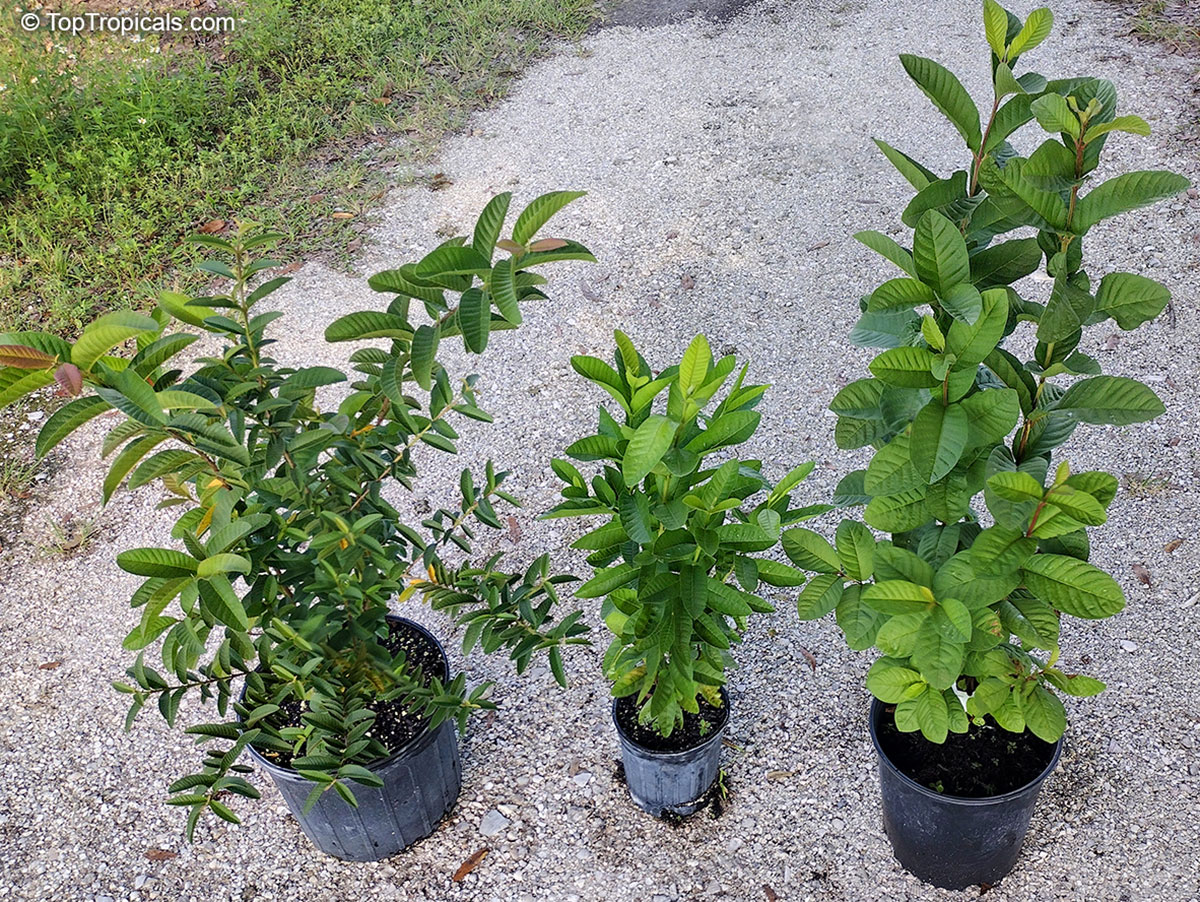
Where to Plant Outdoors
Guavas love full sun — aim for 6–8 hours of direct light. They’re adaptable to many soils but do best in well-drained, organic-enriched mixes. Plant them in a spot where you can water easily; guavas are thirsty trees during fruiting.
Container & Indoor Growing
Don’t have space or live in a cooler climate? Guavas thrive in large pots. Use well-drained potting mix. LINK TO OUR SOIL Keep them on a sunny patio during warm months and bring them indoors when nights dip below freezing. Compact varieties like Dwarf Hawaiian Rainbow or Tikal are especially good for pots.
Winter Care
Mature guavas can handle a light frost (down into the high 20s F), but young plants need protection. If planted outdoors, cover them with frost cloth on cold nights. Container guavas can be wheeled into a garage, greenhouse, or bright indoor window until the weather warms.
Watering and Fertilizing
Water deeply once or twice a week, more often in hot weather or when fruit is developing. They don’t like soggy soil, but they won’t complain about short floods either. Fertilize 3–4 times a year during the growing season with a balanced fruit tree fertilizer. Guavas especially love potassium and phosphorus for strong flowering and heavy crops. We recommend liquid crop booster Sunshine C-Cibus and balanced controlled release fertilizer Green Magic.
Pruning
Prune after fruiting to keep them compact and open up airflow. Remove crossing or dead branches. In containers, trim back vigorous shoots regularly to manage size and encourage more fruiting wood.
Pests and Problems
Guavas are generally tough and pest-resistant. The main thing to watch for in humid or rainy climates is mealybugs - those cottony white clusters on leaves or stems. They're easy to manage with neem oil or a quick spray of horticultural soap.
Fruit time
Guavas fruit young - often within a year or two.
Pollination
Guavas are self-pollinating, so you'll get fruit even with a single tree. Planting more than one tree, however, often boosts harvests and gives you a longer fruiting season.
If you've ever wanted instant gratification from a fruit tree, guava is it.
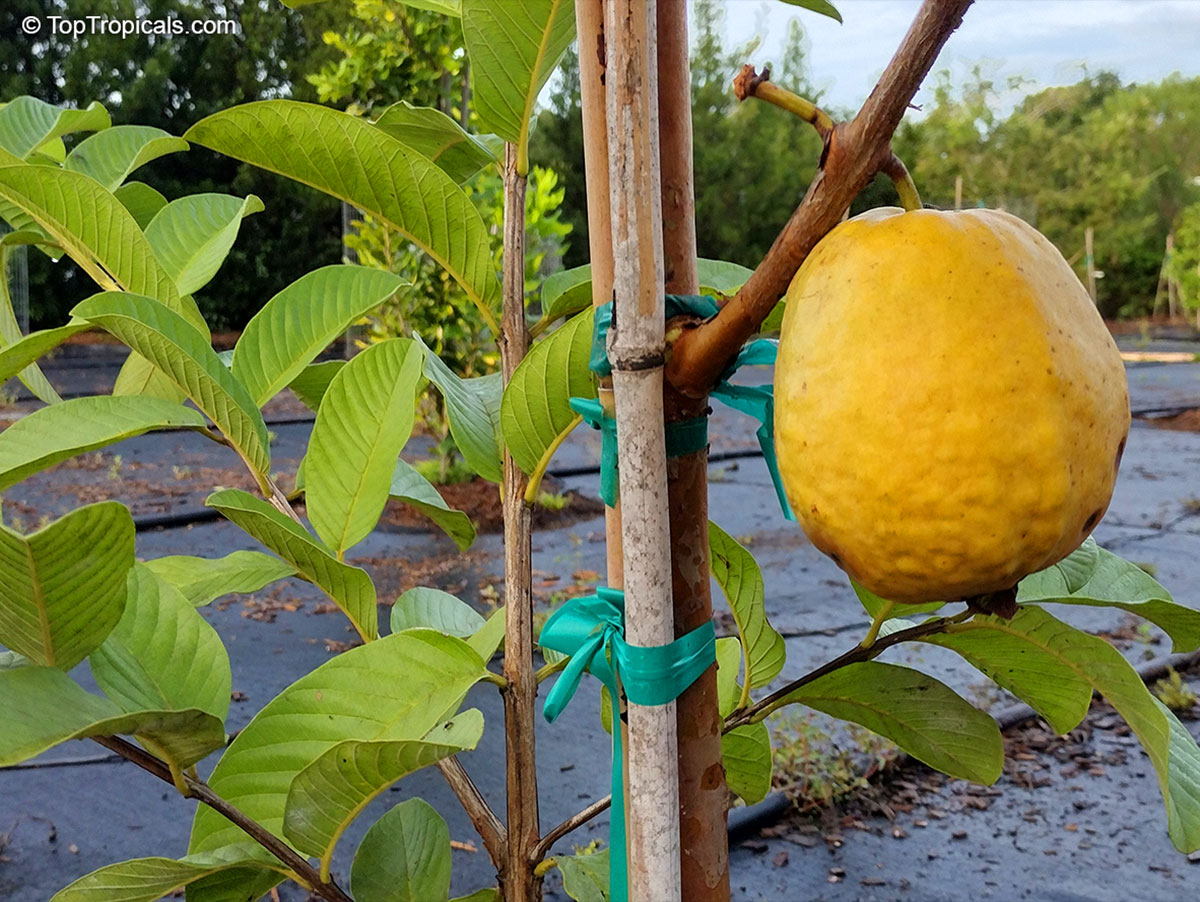
🍴 Guava Recipes
With all that fruit, the next question is always: "What do I do with it?" Here are our favorites:
Cas Guava: Make Agua de Cas
Boil halved Cas Guava fruits with sugar, simmer, strain, and bottle. Dilute with water when serving. The concentrate keeps for months in the fridge.
Check out the recipe.-
Hawaiian Gold: Make Drinks
Perfect for Mojitos or Margaritas. Sweet, tangy juice pairs beautifully with lime and mint. Learn more
-
Araca Pera: Guava Wine
Famous in Brazil, where the fruit is turned into a vibrant rosу wine. Locals say it’s the taste of summer in a glass — and yes, you can make it at home too. Learn more...
-
Quick snack: Guava Grilled Cheese
Spread guava paste or fresh mashed fruit with cheese, grill until golden. Sweet and savory heaven. Learn more...
-
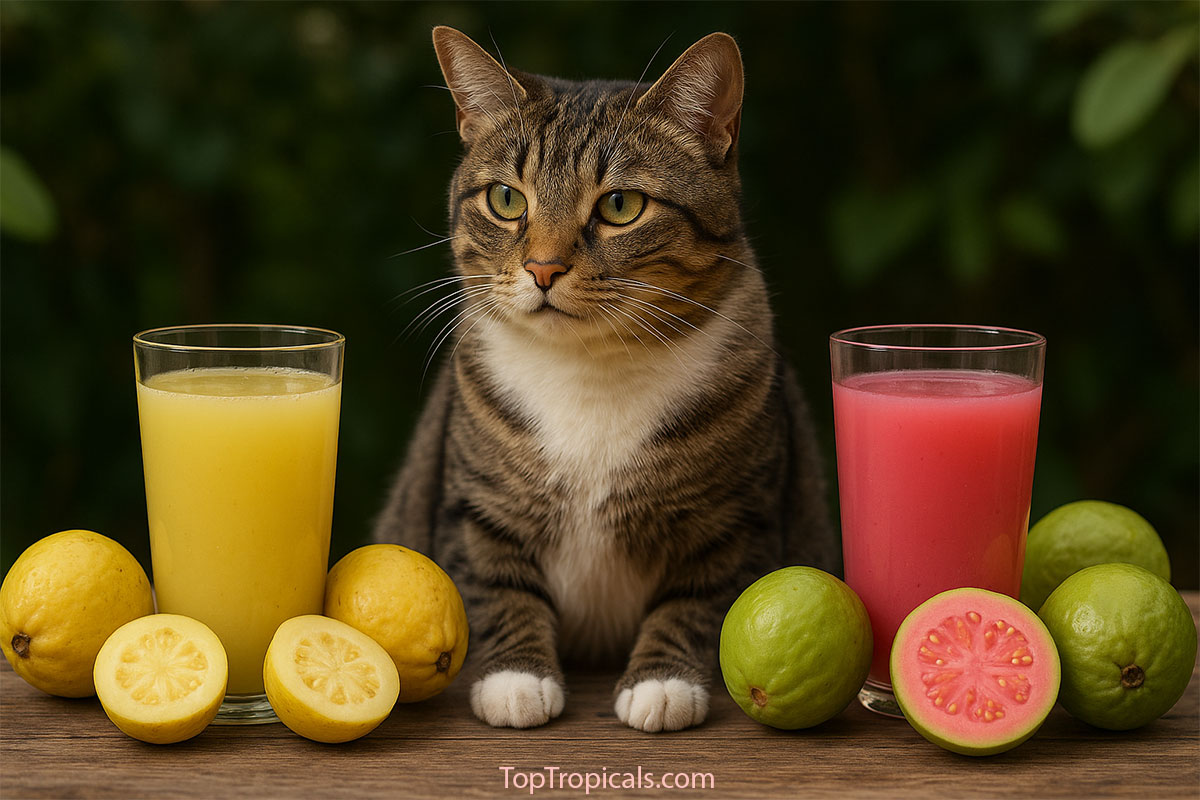
Simple Guava Juice
Blend ripe guavas with water, ice, and a little sugar if you like. Instant refreshment.
✅Ready to Grow? Whether you want fresh juice, sweet fruit, or even your own guava wine, we’ve got the best varieties in stock right now. Your future self, sipping guava juice on a hot summer afternoon, will thank you.