Garden Blog - Top Tropicals

Date: 21 Sep 2019

Shaping a tree and regrowing branches
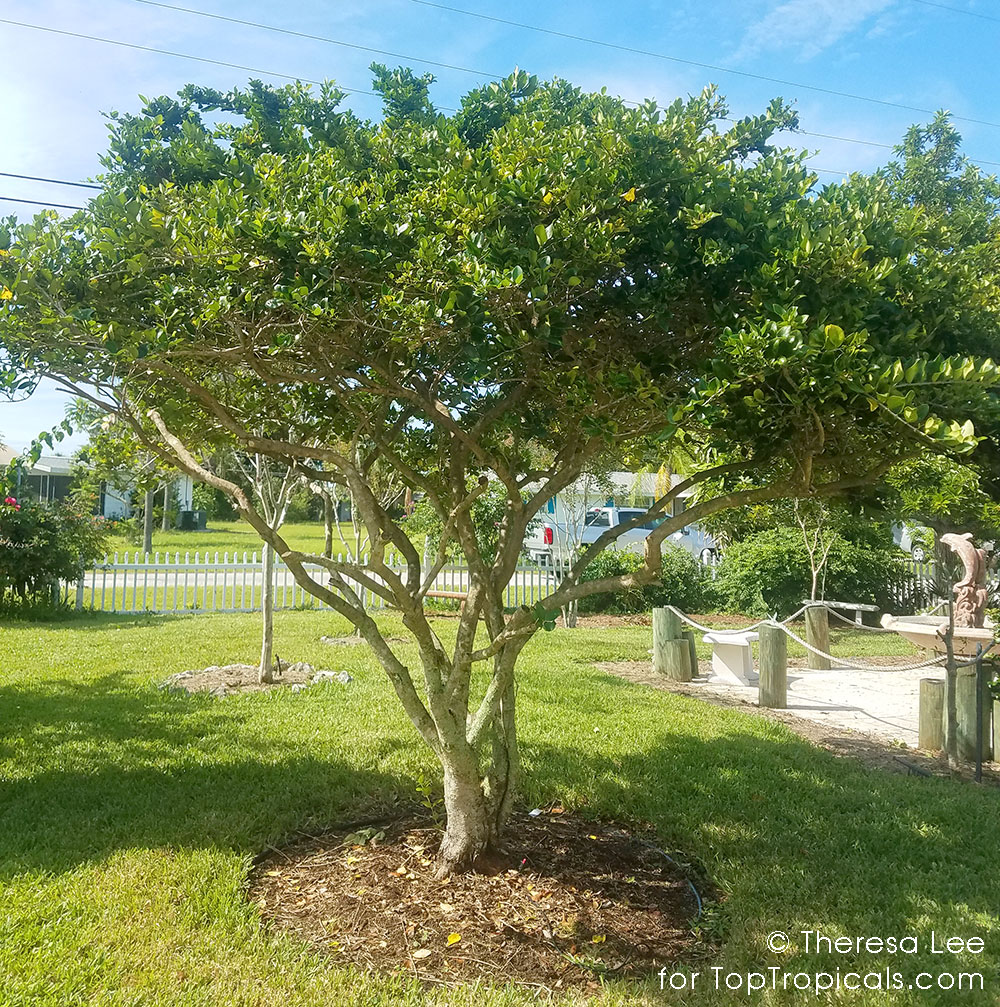
Q: I have been so worried about the beautiful ligustrum on my property since my husband decided to "prune" it 2 days ago. He removed about 20 branches from the tree and completely altered the look of the canopy which was so full and lovely 😭. Please advise me if there is anything I can do to help this tree. Will any of the branches grow back? Will the canopy return? It looks practically bare to me now.... so heartbroken. Any advice and reassuring would be greatly appreciated.

A: The good news is, the tree will regrow new leaves and will branch out. The question is, how soon. Ligustrum is pretty slow-growing species and it may take a while until it gets to the shape that is close to the original.
On the other hand, pruning is beneficial almost for every plant, it promotes new growth and bushy shape. So do not panic, your beautiful tree has good chances to become even prettier.
To speed up the process of re-leafing and promote healthy new growth, we recommend the following:

1) Provide extra watering, assuming you have a sprinkler system that covers the yard. Water additionally 1-2 times a week using a garden house, for 1-2 minutes, saturating the soil around the tree and up to a drip line.

2) Apply the following fertilizers:
Tropical Greenhouse Plus - Foliage Booster
Tropical Allure - Smart-Release Booster

3) In addition to fertilizers, we recommend these 2 supplements that will enhance effect of fertilizers and make re-grow process even faster:
SUNSHINEâ„¢ SuperFood
SUNSHINEâ„¢ HumiHum - a natural humate vitamin for plant

4) Mulch well around the tree, keeping it 2-3"away from the trunk

This should help to get your tree back in shape!

Date: 30 May 2019

Selecting the right jasmine

TopTropicals.com

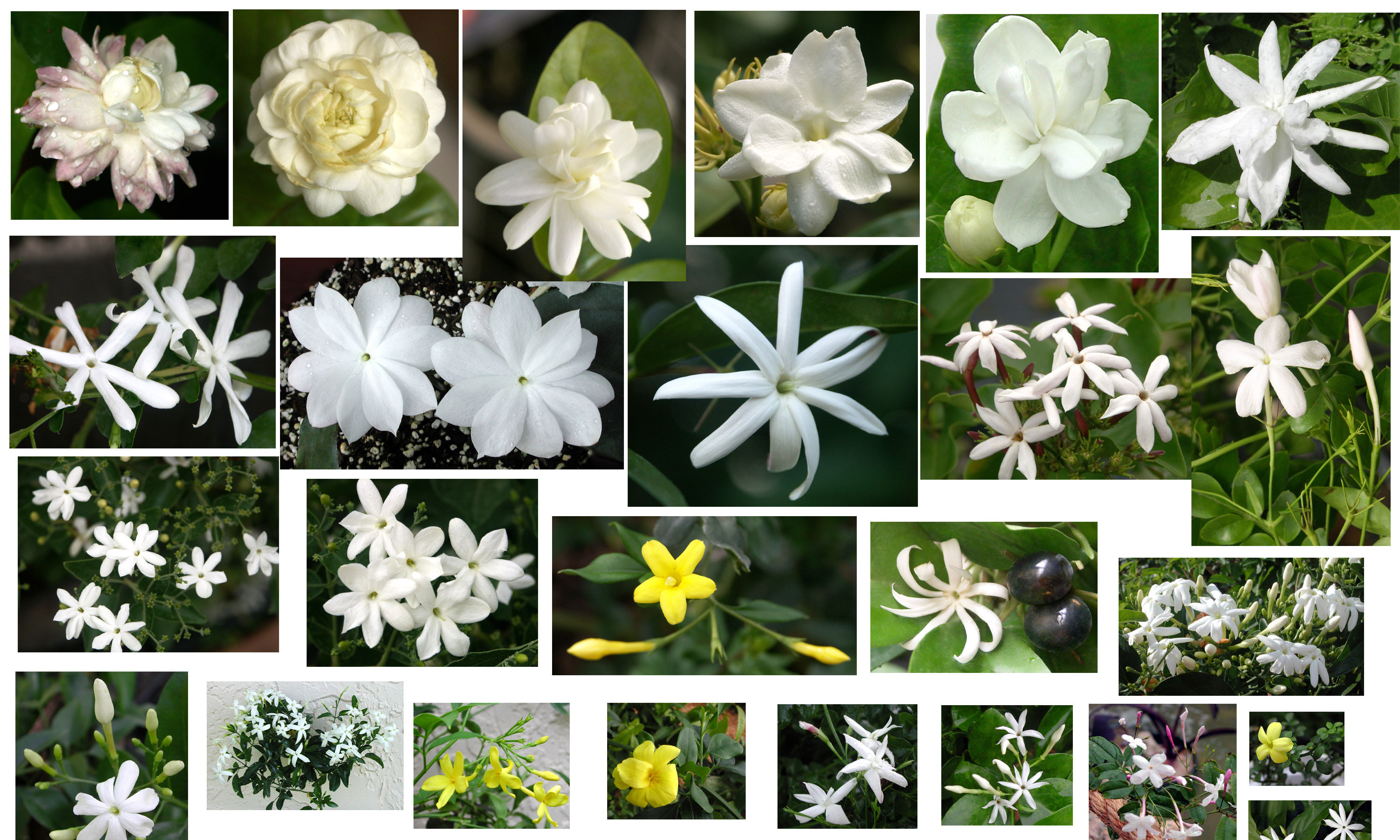
Q: Would you please help me select the right jasmine? I want to find a jasmine that smells like lily of the valley or honeysuckle or roses, not the one that smells like gardenia. I'm in Missouri, zone 6, so I want a jasmine for my deck for the summer, so I want it to bloom this season.

A: There are 3 major types of tropical flower fragrances - Sweet, Fresh, and Fruity (including Lemony). Below are the most interesting fragrant tropical flowers, excluding Gardenias (which are sweet type). These are all same-year bloomers, so you can enjoy the fragrance this year assuming proper care and bloom booster feeding.

* - The fastest growers that can be treated as annuals. Others can be grown in a pot and brought inside for winter, and be enjoyed every year.

Sweet

* Aloysia virgata - Almond Bush
* Cestrum diurnum - White Chocolate Jasmine, Day Blooming Jasmine
* Cestrum nocturnum - Night blooming jasmine
* Heliotropium peruviana - Turnsole, Cherry Pie
Portlandia Cubanola domingensis - Cubanola (Warm white Chocolate)
Portlandia grandiflora - Glorious Flower of Cuba (Warm white Chocolate)

Fresh

Beaumontia grandiflora - Easter Lily Vine
* Brugmansia Jean Pasco - Yellow Angels Trumpet
* Brugmansia Variegated Orange Angel Trumpet
* Brunfelsia americana - Lady of the night
* Brunfelsia lactea - Lady of the night
* Brunfelsia nitida - Lady of the night
Crinum Queen Emma - Spider lily
* Eucharis grandiflora - Amazon Lily
* Hedychium coronarium - Butterfly Ginger
Hiptage benghalensis - Helicopter Flower
Hoya odorata - Fragrant Hoya
Ixora hybrid Sea Green
Ixora odorata - Fragrant Ixora
* Jasminum azoricum - River Jasmine
* Jasminum Molle - Indian Jui
Jasminum nitidum - Star Jasmine
* Jasminum officinale Flore Pleno - French Perfume Jasmine
* Jasminum polyanthum - Pink Winter Jasmine
* Jasminum sambac Belle of India
* Jasminum sambac Grand Duke
* Jasminum sambac Maid of Orleans
* Polianthes tuberosa - Tuberose
*Sclerochiton harveyanus - Blue Lips, Mazabuka (Lavender-violet-like)

Fruity

Aglaia odorata - Chinese Perfume Plant (Lemony)
Artabotrys siamensis - Climbing Ylang-Ylang (Lemony)
Cananga fruticosa - Dwarf Ylang-Ylang
Carissa grandiflora - Natal Plum
Cerbera x manghas hybrid - Enchanted Incense
* Jasminum dichotomum - Rose Bud Jasmine
* Lonicera japonica - Japanese Honeysuckle
Magnolia figo - Banana Magnolia (Banana-like)
Magnolia x Alba grafted (Bubble-gum-like)
* Mirabilis jalapa - Four oclock plant
Oxyceros horridus, Randia siamensis
* Quisqualis - Rangoon Creeper
* Radermachera Kunming - Dwarf Tree Jasmine
* Stephanotis floribunda - Bridal Bouquet
Strophanthus gratus - Climbing Oleander
Telosoma cordata - Pakalana vine (Lemony)

Fertilizers for profuse flowering:

Pink N Good Daily Plant Food - Flower Booster
Tropical Allure - Smart-Release Booster
SUNSHINE-Superfood micro-elements

Date: 21 May 2019

Perfecting a Mango Tree

TopTropicals.com

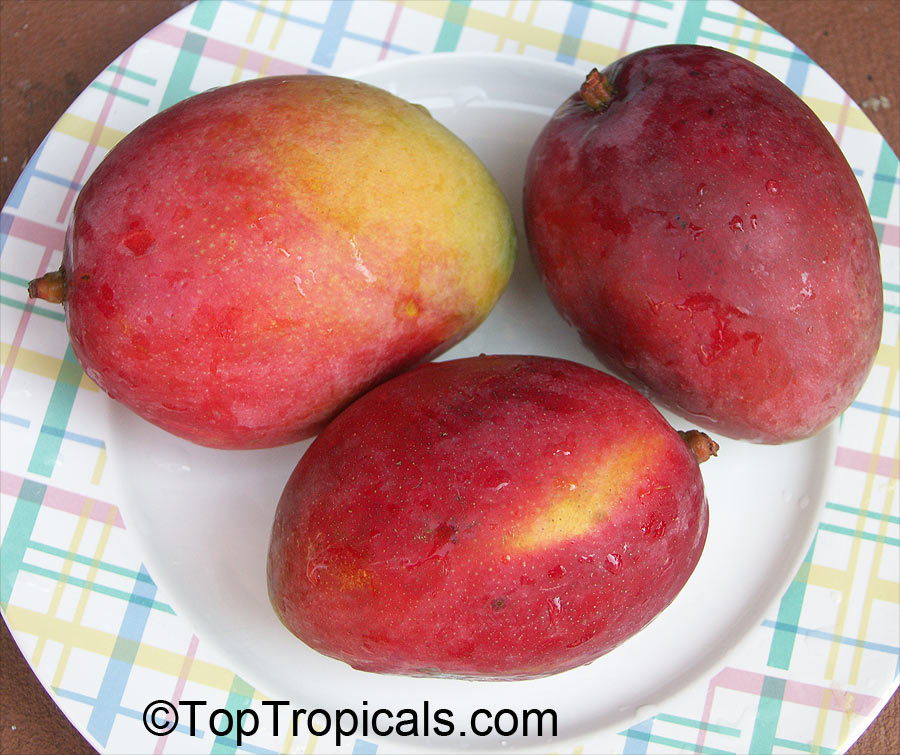
Q: I recently purchased a Mangifera indica - Coconut Cream Mango from you and would like to know if it is possible to keep this in a large pot rather than putting it in the ground. If so, I have a few questions:
1. How large would you expect this variety to get?
2. What are the ideal growing conditions? Full sun, partial sun, etc...?
3. What is the ideal soil?
4. Any specific watering directions for ideal growth?

A: Coconut Cream mango tree has a moderate growth. We've planted one in our garden 4 years ago and it is still under 10 ft tall. This variety should be well suitable for container culture.
1. Keep the branches trimmed after fruiting is over. Mango trees can be grown in 15 to 25 gal containers and can be trimmed under 7-8 ft high.
2. All mango trees need full sun, the more sun the better.
3. Mango needs very well draining soil, ideally with lots of bark and perlite. We recommend our professional soilless mix or a similar formula.
4. Mango trees hate wet feet, and prefer to stay on a dry side: make sure soil in a pot doesn't stay wet; allow it to dry a little between the waterings.
Remember to apply Mango Food fertilizer during warm season for vigorous growth and heavy crop!

Date: 20 Apr 2019

More about Mulberries

TopTropicals.com

Customer comment on our Mulberry column in the previous newsletter:

...I planted a Himalayan mulberry, Morus macroura, about six years ago. For several maddening years, it shot only very long, un-branching tentacles out there, and it resisted my efforts to force some branching by pruning. It would send another long, reaching shoot from the tip of the pruned branch, with NO laterals. Several times, it did this. Finally, two years ago, it broke buds that looked like they meant it all along those long branches, and in one season, it fluffed out. The next season it elaborated on this, acting much more like a proper tree. The fruit is fabulous, three or more inches long, very sweet, with a rich berry flavor that's more raspberry than mulberry. I guess it just needed more time. My understanding is that mulberries don't really like to be pruned, but it needed to happen in this case, along a driveway, so I reigned it in, and now it's a treasure. Be patient.
Cheers, your admirer, C

Check out our Mulberry trees.

Date: 17 Apr 2019

Mulberries - biggest, sweetest, and compact...

TopTropicals.com

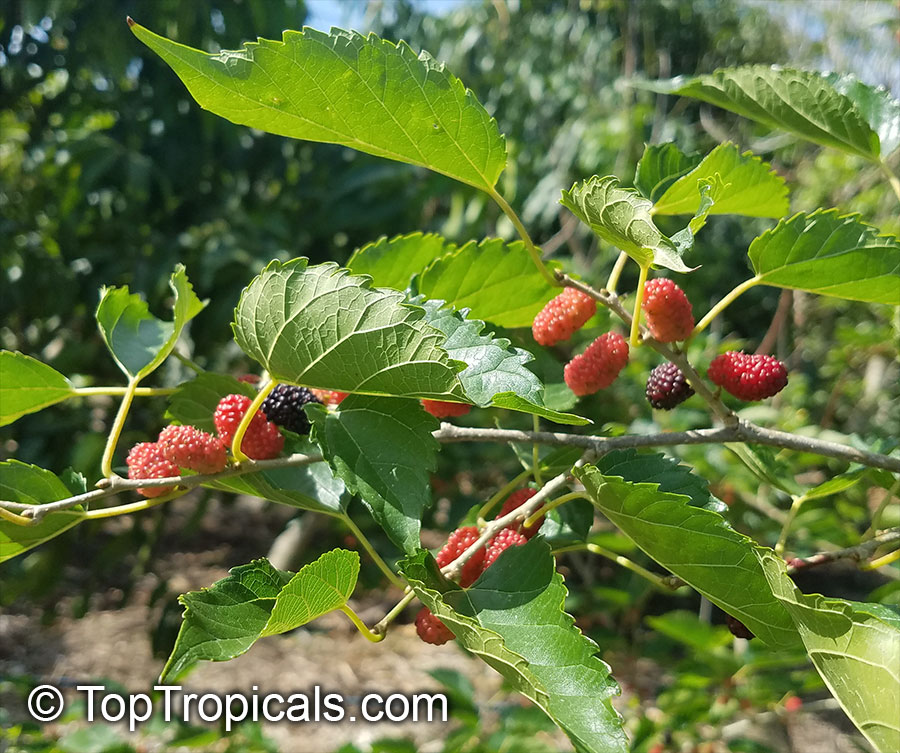
Q: What is the difference between Pakistani and Australian Mulberry plants? Would one be better suited for South Florida backyard? Can one be maintained/pruned to be a tall shrub vs a large tree? Which one has the sweetest fruit? Thank you for the previous plants we've purchased from you. They're all doing great.!

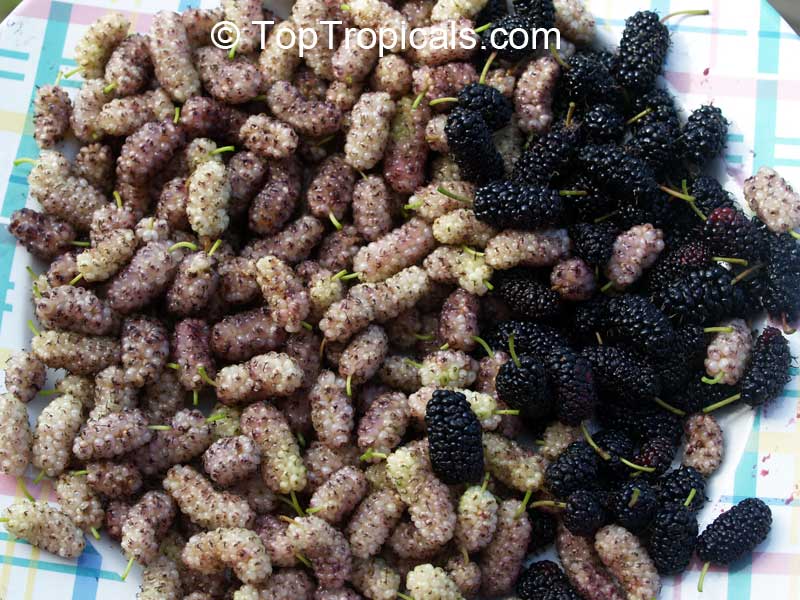
A: These two varieties are very similar indeed. Both fruit are very large. Var. Pakistani fruit is a little longer than var. Australia and the tree is a more vigorous grower, but they both are very sweet, even before the fruit fully ripen. Both trees are a good choice and start fruiting at a young age.
We've had Australia in the ground in our garden for 4 years by now and for some reason, it has been very slow growing which is normally not the case with Mulberries. Maybe it is not fully happy with FL humid conditions.
There are two Mulberry varieties that can be maintained as bushes: Issai and Dwarf Everbearing. However, even vigorous Mulberry trees respond well to pruning and can be kept compact for easy harvesting. Just make sure to prune before the flowering season starts; here in S Florida Mulberries start flowering in March, and fruit start ripening during April-May.

Check out our Mulberry trees.