Why your plants might stop growing in mid-Summer
and what to do about it
Q: Why some
tropical plants stop growing when it gets too hot? Aren't they supposed to like
the heat? Should I use more fertilizer during hot Summer?
You've been watching your tropical tree thrive all
spring. New leaves, steady growth, maybe even a flower or two. Then July hits,
and… nothing. The heat cranks up, and your once-busy plant just sits
there. No new shoots, no blooms, not even a twitch. If it feels like your plant
ghosted you - but don't worry! It's not dying. It's just hot!
Q: What
happens to tropical plants when it gets extremely hot?
When the heat hits, plants hit pause. In the peak of
summer, especially with temperatures above 90F, many tropical and subtropical
plants go into heat survival mode. Growth above ground may slow down or stop
entirely. It's not because you forgot to water or skipped a fertilizer dose -
it's just too hot. The plant's energy shifts underground, where roots may
still be growing. Think of it like a tropical version of a siesta - less
margarita, more mulch. This stage might last a few weeks or longer, depending on how
intense the heat gets. But the important thing is: it's normal.
Q: What NOT to
do?
Don't drown it in extra water. That leads to root rot.
Don't dump dry fertilizer on it. That can burn the roots or just get
flushed away. Use controlled release or liquid fertilizer dozed proportionaly
to the plant's water usage.
Don't prune aggressively, hoping to jolt it awake.
None of that helps - in fact, it can make things worse.
Q: What you
CAN do?
Water deeply in the early morning, and let the soil dry a bit between waterings.
Add mulch to help keep the root zone cool and reduce evaporation.
Provide temporary shade for potted plants or young trees.
Hold off on pruning or heavy feeding until you see new growth.
Just like you wouldn't run a marathon in a heatwave, your plant needs a
break too.
Q: Why you
shouldn't fertilize stressed plants with dry fertilizer?
Fertilizing seems like the obvious solution when a plant stalls, but in the
heat of summer, it can backfire. When temperatures soar, roots slow down, and absorption becomes inefficient. You
might pour in nutrients, but your plant can't use them - and what's worse,
any tender new growth that does emerge can get scorched or sunburned before it has a chance to harden.
Feeding a plant with strong fertilizers during a heatwave is like telling someone to sprint in a sauna. It's not just unhelpful - it's risky. That's why you need a fertilizer that’s engineered for hot weather - not just any slow-release formula.
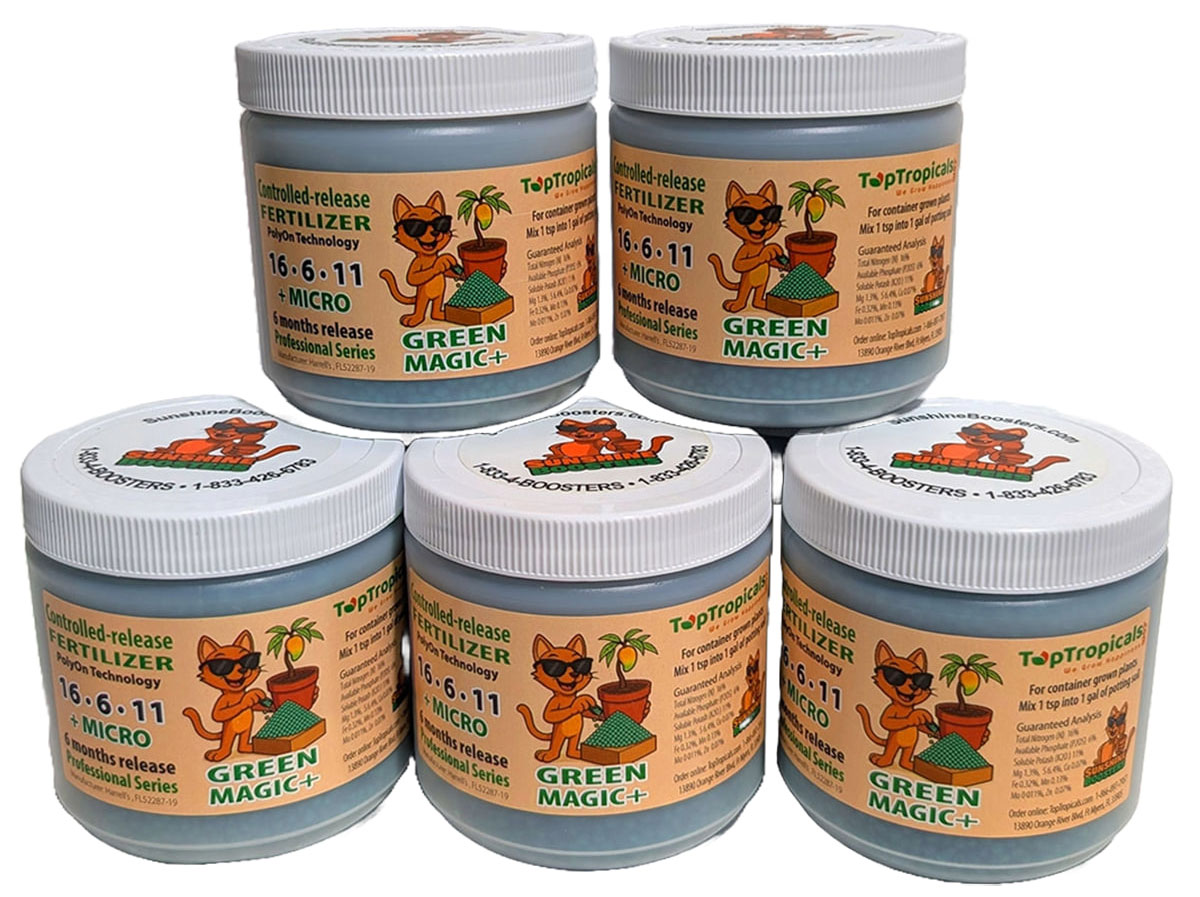
Liquid Sunshine Boosters mild formulas are safe to use year around. Controlled release fertilizer like Green Magic are safe as well, just make sure to follow directions and dosage.
Q: Why Green Magic fertilizer
works in heat better that Osmocote?
Not all slow-release fertilizers are built for hot summer. Some popular brands might seem like a good choice - but they’re optimized for soil
temperatures around 70-75F. That's a mild Spring day in the South, but in real-world Florida or Arizona heat? Not even
close.
Here's the problem: Osmocote releases nutrients based on moisture, not temperature. When it's hot and humid - or worse, when you water heavily - it can dump too many nutrients at once. That nutrient surge can:
Burn your plant's roots
Force tender new growth that gets fried in the heat
Leach straight out of the pot, wasting both fertilizer and money
It's unpredictable, especially in containers that heat up faster than
ground soil. What you think is "slow-release" can behave more like a fertilizer
bomb.
Green-Magic, by contrast, uses a temperature-sensitive polyurethane
coating that responds gradually and consistently as the soil warms. That means:
No sudden nutrient spikes
No wasted runoff
And no risk of heat-triggered burn
It's designed to feed steadily and predictably - even when temps hit 90F and stay there. For potted tropical plants, that kind
of control is the difference between stressed and thriving.
Q: How does Sunshine Boosters help with daily plant
recovery in summer?
Once your plant begins to show signs of life again - maybe a new bud, or evening perkiness - it's safe to resume feeding. But skip the salts,
and reach for something gentler: Sunshine Boosters.
These amino-acid based liquid fertilizers are designed for daily use, even in containers during the hottest days. They enhance nutrient uptake, even when roots are stressed or sluggish. Unlike synthetic chelators like EDTA, Sunshine Boosters won't bind nutrients or burn root system. They stay gentle, available, and
effective. Learn more from this short video.
Use SUNSHINE Robusta for foliage support, or Ca-Support
PRO for strong structure and recovery. It's like hydration and nutrition in one - perfect for tropical plants fighting through summer heat.
Q: How can I help my plants during extreme heat?
Don't fight the heat - work with it. If your tree looks stalled
this summer, don't panic. It's following a rhythm older than all of us. Support it with smart watering, the right fertilizer combo, and a little patience. Before long, you'll see buds again - and know your plant made it through
the heat.
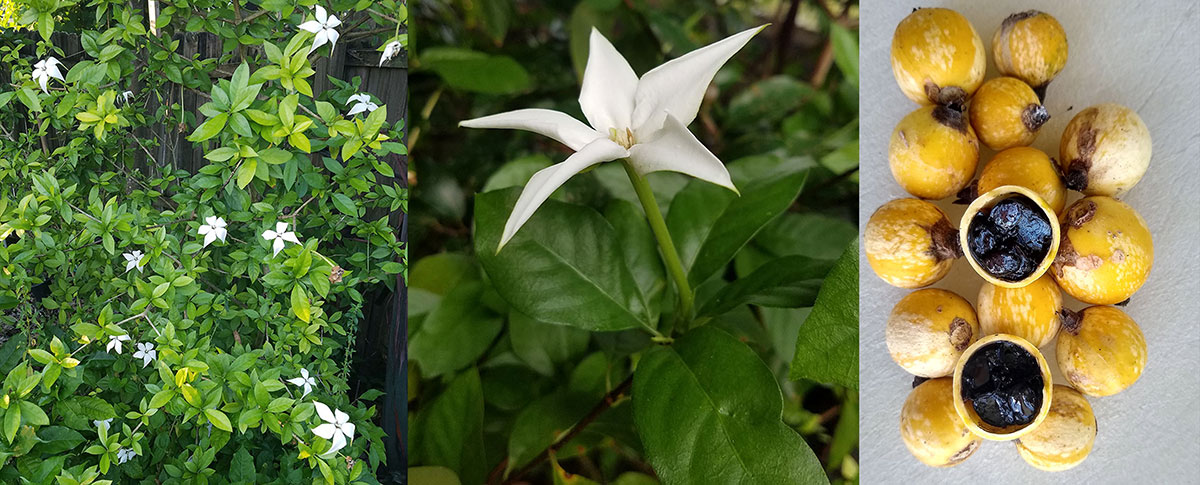
Randia formosa - Blackberry Jam Fruit Tree with Flowers and Ripe Fruit
You know how some plants just surprise you?
That's Randia formosa - the Blackberry
Jam Fruit Tree. At first, it just looks like a cute little gardenia-type
shrub. Glossy leaves, sweet white flowers. Nice enough. But then the fruit shows
up… and you crack one open and go, “Wait - this tastes like jam?!”
And not just any jam - like real, fresh blackberry jam. No sugar, no
cooking. Just soft black pulp inside this golden little fruit. It's weirdly
satisfying. One of those things you make everyone taste just to see their
face.
What's even cooler is how easy it is. This thing starts blooming and
fruiting when it's barely 2 feet tall. You can grow it in a pot on your porch,
or even inside if it gets enough light. And while most of your other plants
take the winter off, this one keeps going - flowers, fruit, the whole show.
If you've got a spot with filtered light and a little curiosity, it's
absolutely worth a try. Honestly, it's just… fun.
This rare South American evergreen shrub checks all the boxes: fragrant,
compact, easy, and edible.
✅ Grows in pots ✅ Indoors ✅ Small yards
Randia formosa – Blackberry Jam Fruit Tree – FAQ
What is Randia formosa?
Randia formosa,
also known as Blackberry Jam Fruit or Jasmin de Rosa, is a compact tropical
shrub that produces fragrant white flowers and small yellow fruits filled with
soft, black pulp that tastes remarkably like blackberry jam. It belongs to the Rubiaceae family, the same as Gardenia and Coffea.
Why gardeners love Randia
Delicious jam-flavored fruit – no sugar needed.
Compact grower – perfect for patios and indoor spaces.
Fast results – blooms and fruits within 1–1.5 years.
Big yield in a small pot – 25–30 fruits at once!
Fall–Winter performer – keeps going when others stop.
Kid favorite – fun to grow, fun to eat.
What does the fruit taste like?
The pulp inside the fruit tastes just like fresh blackberry jam - sweet,
tangy, and rich. It is edible fresh, without any processing or sweeteners,
and is loved by both kids and adults.
How big does the plant get?
In the ground, Randia formosa typically reaches 4 to 5 feet tall.
In containers, it usually stays smaller, around 3 to 4 feet, making it
perfect for small gardens, patios, or indoor growing.
How soon will it fruit?
Very quickly! This is one of the fastest fruiting tropicals. Plants begin to flower and produce fruit within two years from seed.
Еstablished plants in 3 gallon containers may begin fruiting at just 2 feet tall.
Does it need full sun?
No. It actually prefers filtered light or partial shade, especially in hot
climates. Leaves tend to look healthier and greener when grown in dappled light.
Can I grow Randia formosa indoors?
Yes! Its compact size and shade tolerance make it an excellent choice for bright indoor spaces. Just be sure to provide good air
circulation, high humidity if possible, and avoid cold drafts.
How cold-hardy is it?
Mature plants can tolerate temperatures down to about 26F for short period of time, but young plants are more
sensitive and should be protected from frost. It is best grown outdoors in USDA zones 9b and up or kept as a container plant that can be brought indoors in winter.
What kind of soil does it need?
Randia formosa requires acidic, well-draining soil. Avoid alkaline
soils, which may cause leaf chlorosis (yellowing with green veins).
How often should I water it?
Keep soil evenly moist but not soggy. It is sensitive to overwatering, especially in
cooler weather. During winter, reduce watering. Underwatering may cause sudden
leaf drop - but the plant usually recovers quickly once watered again.
What fertilizer does it need?
Yes. Use a slow-release fertilizer formulated for acid-loving plants.
Regular applications of micronutrients (especially iron and magnesium) help prevent chlorosis.
Foliar sprays can also be helpful. Apply Sunshine C-Cibus Booster or Green Magic controlled release fertilizer to keep your plant happy:
Blackberry Jam Fruit is a heavy feeder!
When does it flower and fruit?
This plant can bloom and fruit for several months, often from summer
through winter. It is known to bloom off-season, making it a fun and productive plant when others are dormant.
Are the flowers fragrant?
Yes, the white star-shaped tubular flowers have a light, sweet
fragrance, similar to gardenias but less intense. The flowers open at night.
Is it self-pollinating?
Yes. A single plant can set fruit on its own, although insect activity can improve fruit set.
Are there any common problems?
The most common issue is chlorosis, which shows up as yellowing
leaves with green veins - usually due to overwatering, poor drainage, or
alkaline soil. It's fixable with acidification and micronutrients. The plant may also drop leaves suddenly if underwatered but tends
to bounce back.
Is this plant related to Gardenia?
Yes. It is in the same plant family (Rubiaceae) as Gardenia and Coffee. That's why the flowers look similar and why it tolerates similar care needs.
Can it be used for bonsai or miniature tree styling?
Yes, due to its slow growth and branching habit, Randia formosa can be shaped into a miniature tree form and is quite attractive when trained.
Is it drought-tolerant?
Once established, it shows moderate drought tolerance. However, young plants need regular watering and are more vulnerable to drying out.