Garden Blog - Top Tropicals

Date: 5 Jan 2026

☘️ What plants are easy to ship in Winter?

Lush  tropical  garden  with  a  bright  green  leafy  Magnolia  champaka  surrounded  by  flowering  shrubs,  such  as  Brunfelsia  grandiflora,  at  Top  Tropicals  nursery

Ordering plants in winter is often easier than people expect - and for many plants, it is actually better. Lush foliage plants like philodendrons and medinilla, fine-leaved trees such as moringa, jacaranda, and poinciana, and even sensitive fruit trees like papaya, jackfruit or starfruit ship more safely in cool weather without overheating stress.

Winter is also ideal for subtropical and cold-tolerant plants, dormant or deciduous plants like plumeria and adenium, orchids - including ground orchids and vanilla orchids, and winter bloomers that flower their best right now. Winter care is simple: water less, use gentle liquid amino-acid fertilizers like Sunshine Boosters, and monitor insects.

In mild climates, many tropicals can be planted anytime, while extra-tender plants can stay potted until spring. Winter is a perfect time to bring tropical warmth indoors and enjoy greenery when you need it most.

🌿Learn more: easy plants for Winter shipping

Date: 10 Nov 2025

❄️ How to Prepare Your Tropical Garden for Winter

Two  cats  in  a  tropical  garden  at  sunset.  Smokey,  a  black-and-white 


tuxedo  cat  wearing  a  wool  cap,  holds  a  thermometer  while  Sunshine,  a  fluffy 


orange  tabby,  sits  beside  mulch  and  folded  frost  cloths  surrounded  by  banana
 
 
  and  hibiscus  plants.

Smokey and Sunshine Wrap Up the Garden with Frost Cloth Before the Chill.

Smokey: "Thermometer says 45. Time to wrap the bananas!"
Sunshine: "You wrap the bananas. I’ll guard the mulch… from this sunny spot."
Smokey: "Teamwork, Sunshine. Teamwork."

🌡️ Cold nights are coming - but your tropicals do not need to shiver!

Even in sunny Florida and other warm zones, one cold snap can undo months of growth. Preparation is everything. Tropical plants can handle a lot, but they dislike surprises. Let’s make sure your garden stays safe, strong, and happy all winter long.

Tips from Tatiana Anderson, Top Tropicals Plant Expert

👉 Group and Check Your Plants

You already know which plants are in pots and which are in the ground. What matters now is prioritizing by cold sensitivity. Identify the tender tropicals – papaya, banana, plumeria, adenium, heliconia – and decide which ones get covered first when temperatures drop. Keep frost cloths or old sheets near those areas, ready to grab fast. If your garden is large, label protection zones or mark plants that always need extra care. The goal is to have a plan, not a panic, when the cold alert hits.

Once you know your priorities, you can plan the rest of your protection strategy.

👉 Feed and Mulch

Stop using high-nitrogen fertilizers by late fall. They push soft new growth that freezes easily. Add compost around the base of your plants and top with 3 to 4 inches of mulch. Mulch acts like a blanket: it keeps warmth in, protects the roots, and keeps soil moisture steady. Just make sure the soil drains well; cold and soggy soil leads to root rot. In raised beds, check that water flows away easily.

After you feed and mulch, it is time to look at how your local zone changes the game.

👉 Zone-by-Zone Tips
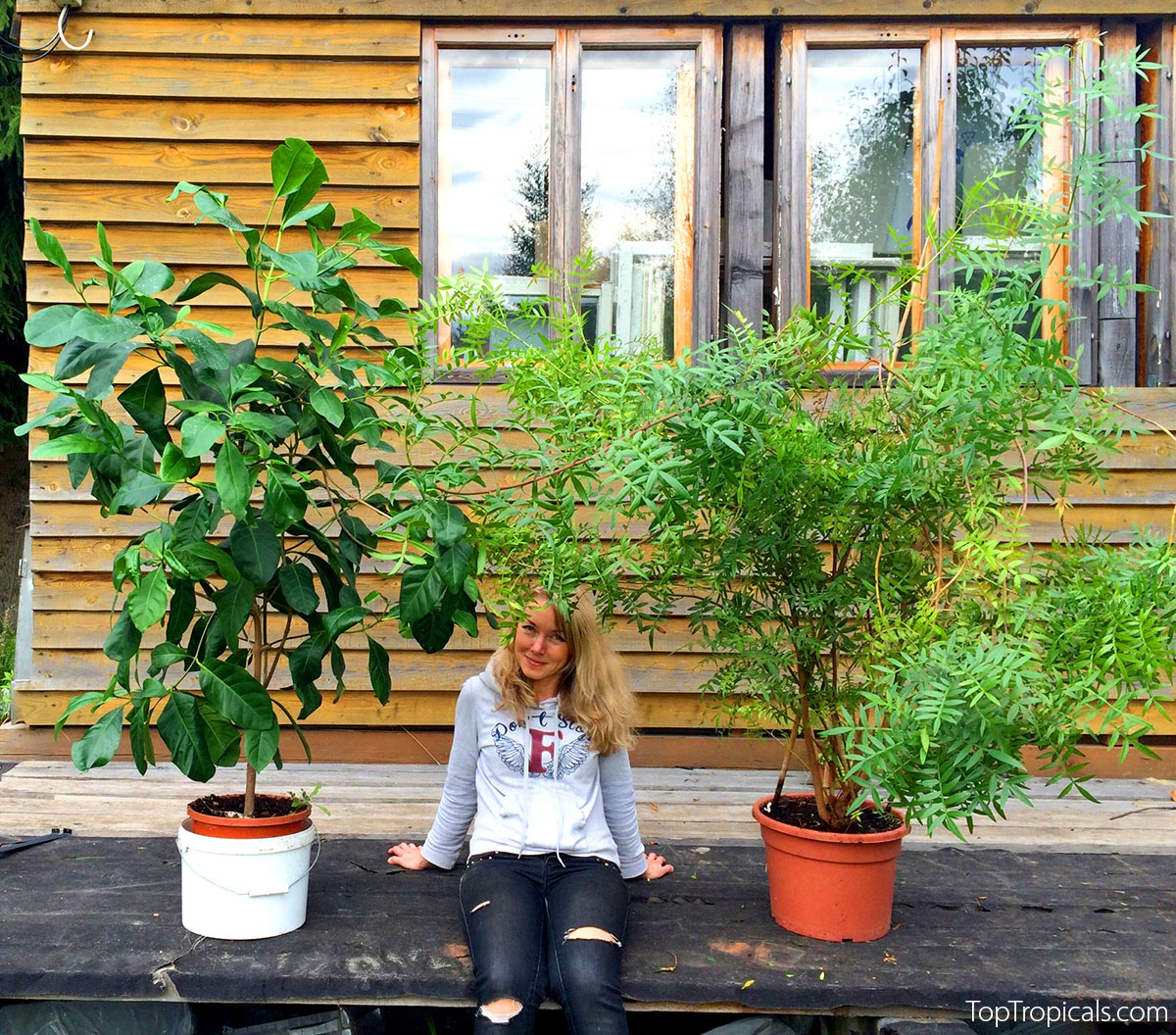
Woman  sitting  between  two  large  potted  tropical  plants  on  a  wooden  deck
 
 
  in  front  of  a  house,  preparing  to  move  them  indoors  for  the  winter.

Moving Tropical Plants Indoors for Winter Protection

  • Zone 10: You are lucky! This is mostly a maintenance season. Watch for root rot after heavy rain, trim lightly if needed, and protect tender young trees during surprise chills. Keep some frost cloth ready just in case.
  • Zone 9: This is the main action zone. Nights can dip into the 30s. Deep-water your trees once before cold nights to insulate the roots. Apply heavy mulch, and have frost protection ready to go. If you grow tropical fruit like mango or guava, consider wrapping young trunks in burlap or foam pipe insulation.
  • Zone 8: This is where tropical gardening becomes creative. Stick to cold-hardy tropicals such as loquat, guava, or cold-hardy avocado varieties. Use portable greenhouses, wrap trunks, and move smaller plants indoors or to a heated porch when frost threatens.

Now that the garden beds are set, let’s look at your pots and containers – your most mobile plants.

👉 Container and Patio Plants

Potted plants are the easiest to protect but also the quickest to freeze. Start reducing watering now so roots do not stay too wet in cooler weather. Before moving them, check for insects hiding under leaves or in the soil. Group your pots close to a wall for reflected heat and wind protection. If you plan to bring them indoors, do it gradually. Move them closer to the house for a few days before bringing them all the way inside to help them adjust to lower light and humidity.

When the chill starts, many gardeners rush to move everything inside at once – but a smooth transition works much better.

👉 Indoor Plants

When bringing plants inside, give them a good rinse to remove dust and bugs, and flush the soil to wash out salts from summer fertilizing. Keep them separate from your houseplants for a week to make sure no pests come along. Expect some leaf drop – it is normal as they adjust to lower light. Give them bright light near a window, and cut watering by about half until spring. Avoid misting too much; good airflow matters more than humidity during winter.

Many tropicals, like hibiscus, brugmansia, and crotons, may look tired for a while, but they will bounce back quickly once days get longer.

👉 Timing Is Everything

The key is to prepare before the first cold warning. Check your weather app regularly once nights start dropping into the 50s. Keep covers, mulch, and supplies ready so you are not running outside at midnight with a flashlight and a frozen hose. Have your frost cloths labeled by plant group and stored in an easy spot. A little organization now saves a lot of stress later.

Many tropicals, like hibiscus, brugmansia, and crotons, may look tired for a while, but they will bounce back quickly once days get longer.

Remember: the goal is to help your plants rest safely. Many gardeners prune or fertilize too late in the season – we will talk about why that can be risky next week." — says Tatiana Anderson, Top Tropicals Plant Expert

Coming next mail-list: The best gadgets for cold protection (lights, heaters, frost covers) and what NOT to do in winter.

📚 Learn more from Top Tropicals Blog:

Cold protection - winter action for your plant collection

What plants are good to order in Winter?

How to take care of house plants in Winter

How to protect tropical plants in Winter

How to take care of a mango tree in winter

How to protect Avocado from cold

Overwintering Adeniums outside of tropics
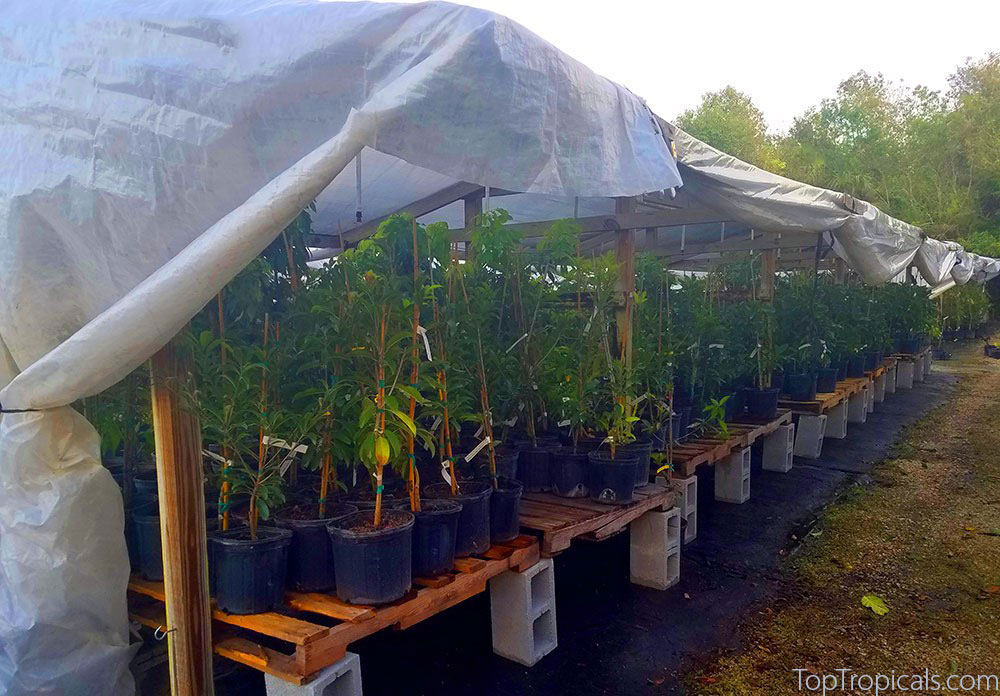
Rows  of  tropical  plants  in  black  pots  covered  with  frost  cloth  and 


plastic  sheeting  for  winter  protection  at  Top  Tropicals  nursery.

Protecting Tropical Plants with Frost Covers at Top Tropicals Nursery

Date: 25 Apr 2024

Top Tropicals is now in Telegram!

Cat  texting  telegram

Welcome to our new Telegram Channel!
We finally did it, and excited to connect with all of you on this amazing platform. After using Telegram for a few years for both business and personal communications, we realized it is a winner of the modern Social Media!

In Top Tropicals Telegram Channel you will find much more than on our website or Newsletter: Fun Plant Facts, Nature Wonders, Amazing Plant Videos, Gardening How-to Tips, Exotic Recipes, Contests, Sweepstakes, Give-aways and so much more. Plus, of course, your favorite PeopleCats!

Telegram is a messaging app with a focus on speed and security, it's super-fast, simple and free. You can use Telegram on all your devices at the same time - your messages sync seamlessly across any number of your phones, tablets or computers. It's perfect for sharing your comments, photos, videos, even making calls.

You can watch news, browse your interest, message to friends and colleagues, save your files, create groups, make phone calls, and the most amazing thing - Telegram works where nothing else works, no WiFi or cell service! It proved to be more reliable than any other apps and (surprise!) even works in airplane without wifi connection - proved!

The platform has its own cloud and offers limitless storage. And the last and not least - it's ad-free! Telegram is free and will stay free - no ads, no subscription fees, forever. It's a clean, clear and easy to use for all ages and applications. Try it yourself and discover how easy and pain-free it is!

Telegram is for everyone who wants fast and reliable messaging and calls.
See you in Telegram!

Date: 18 Apr 2024

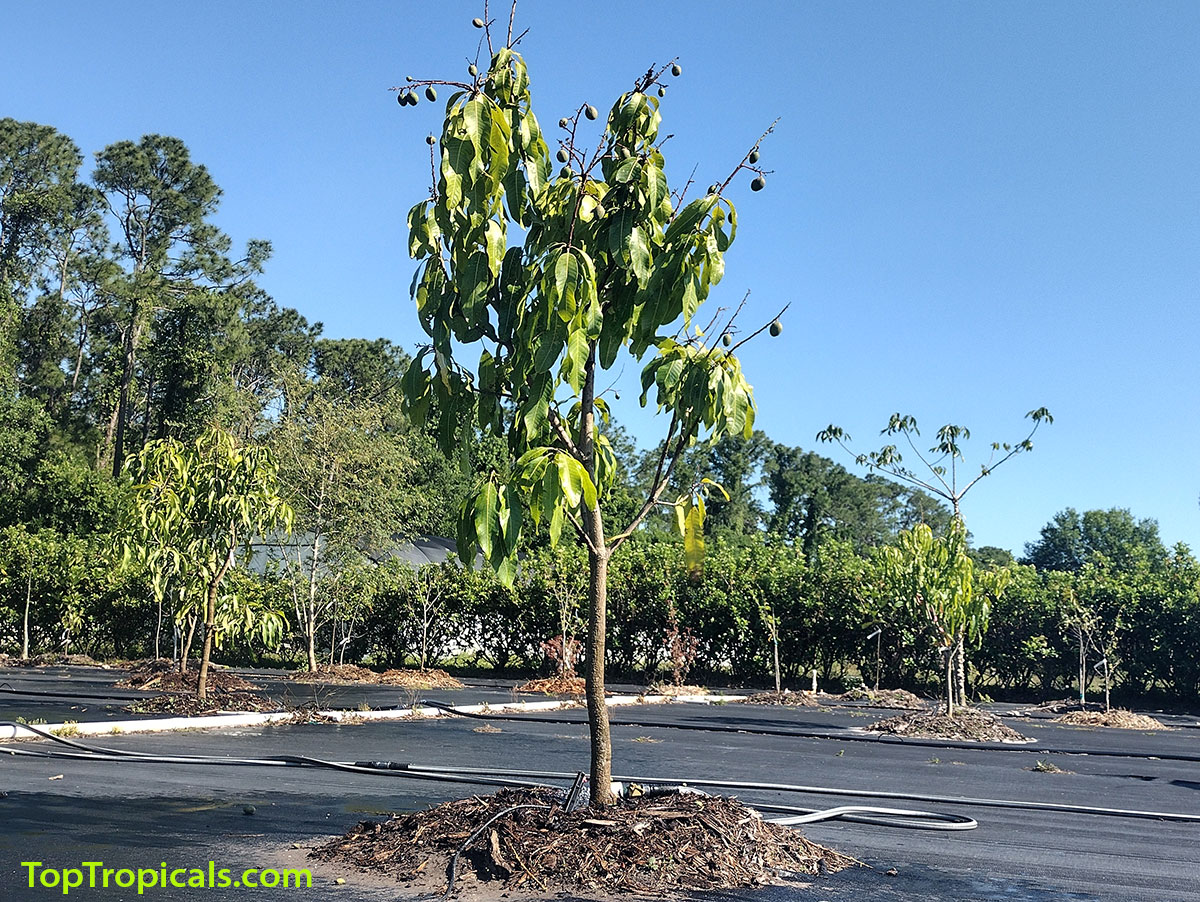
How to water a new Mango tree?

Mango  tree  in  the  ground  with  fruit

Q: I got a large mango tree from your garden center recently, planted in the ground, but noticed the corners of the leaves turning brown. It was full of little fruit when I planted it but now they are falling off... I wonder how much should I water the mango tree? We have lawn sprinkler system that runs daily, is this enough?

A: Generally speaking, never rely solely on your sprinkler system when planting a new tree, especially during the first week or even several weeks if you have no rain. By rain, we mean a nice downpour. Here in Florida, we usually have a hot and dry spring, and while springtime is great for starting new trees, additional hose-watering becomes essential for establishing them during the first months.

Dry leaves are a signal of under-watering. Make sure to hand water your mango tree every day for at least the first week after planting. Even if you have an individual sprinkler for the tree, ensure that the soil around the rootball receives enough water, not only around the trunk. Surprisingly, the bigger the tree, the more it may suffer from a lack of water, and sprinkler watering does not saturate the large root system, sometimes only reaching around the trunk. Big tree means lots of leaves and branches - they all get thirsty!

Mangos are pretty drought-tolerant trees, but only once established. They even benefit from hot, drier air (means less leaf fungus). However, young trees require regular irrigation until they start growing new leaves and branches.

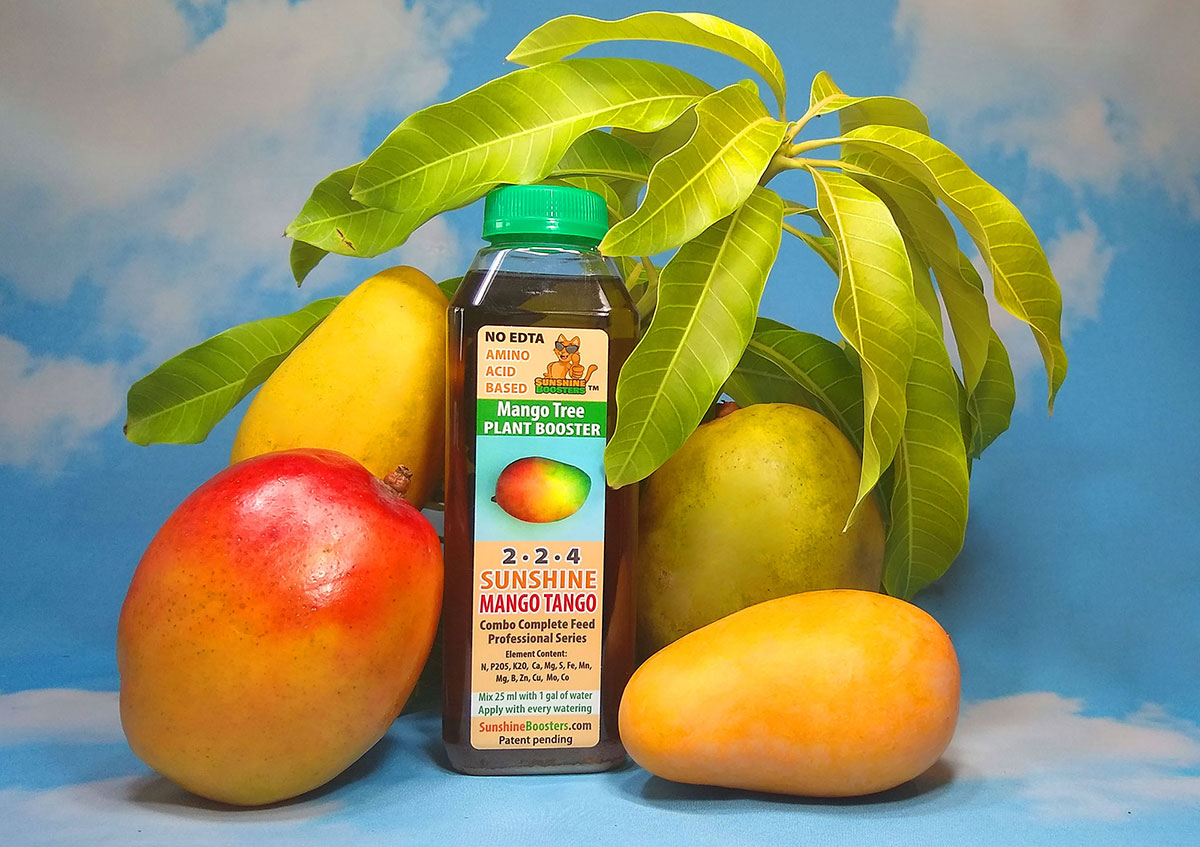
Note that fertilizing your Mango tree is especially important during the spring and summer seasons - the period of active growth. This ensures that the tree takes the best advantage of nutrients with a faster metabolism encouraged by high temperatures. Give your tree a chance to build up lots of energy for the cooler winter as well as for the next flowering and crop season. To ensure a strong tree and reliable crop with no fruit drop, apply Sunshine Mango Tango liquid fertilizer with every watering and watch your mango tree become a Champ!

Sunshine  Mango  Tango  liquid  fertilizer  with  mango  fruit

Date: 13 Apr 2024

Grow your own Olive Oil

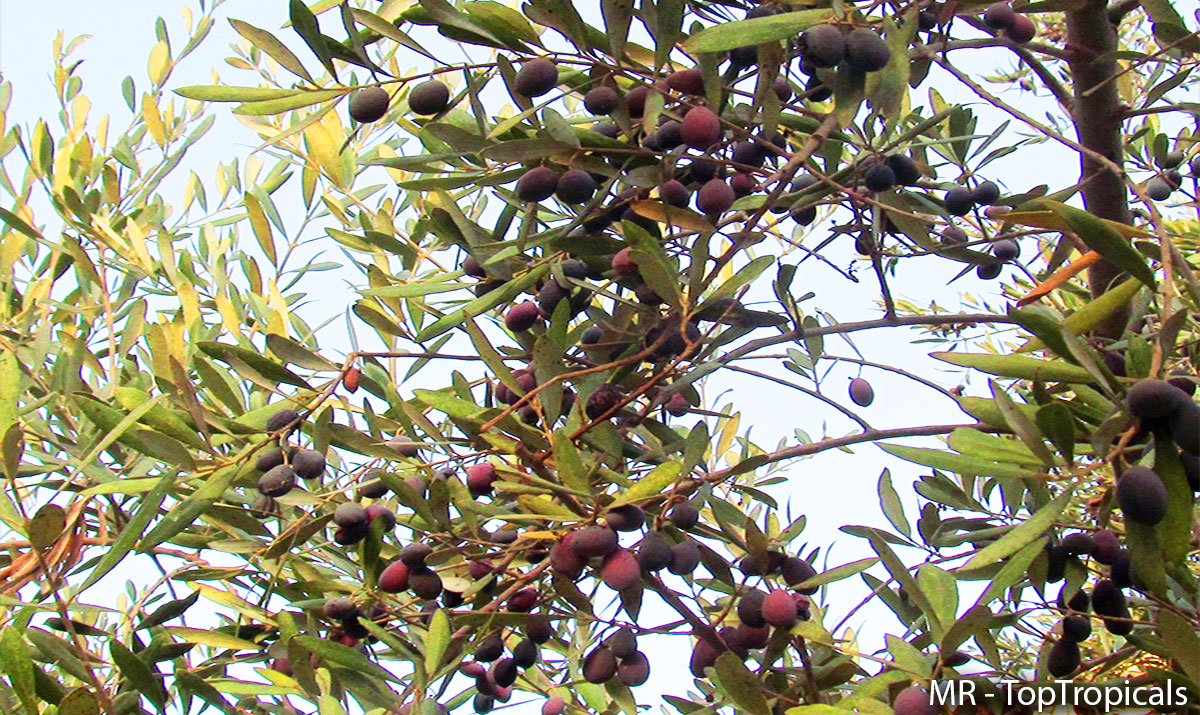
Branch  of  olives

Q: Can I grow an olive tree in Florida and have my own olives? How long does it take to fruit?

A: Olive trees can indeed thrive and fruit in various regions of Florida. Their adaptability to different climates makes them suitable for the state's diverse conditions. In the northern and central parts of Florida olive trees can flourish.

Easy to grow. Olive trees prefer well-drained soil, and they thrive in full sun, which Florida offers in abundance. While they may not produce as prolifically as in their native Mediterranean habitats, with proper care and suitable varieties, such as Arbequina, Coratina and Leccino, you can still enjoy a bountiful harvest.

Cold hardy. One advantage of olive trees in Florida is their cold hardiness. They can withstand occasional frosts and freezes, particularly when they are mature.

Heat- and drought-tolerant. Olive trees also offer additional benefits beyond their fruit production. They are drought-tolerant once established, making them well-suited to Florida's sometimes erratic rainfall patterns.

Beautiful in landscape. Evergreen foliage of olive trees adds aesthetic appeal to landscapes year-round, and their gnarled trunks and silvery-green leaves create a Mediterranean ambiance reminiscent of warmer climates.

Fertilize for quick fruit. Olives will start flowering within 1-2 years of planting, providing regular fertilizing program. We recommend Sunshine Boosters C-Cibus liquid fertilizer, perfect for edibles and organic gardens.

Symbol of Prosperity. The olive branch has long been revered for its symbolic significance, representing peace, prosperity, and hope across cultures and centuries. It transcends mere botanical importance to embody the enduring power of goodwill.

Healthy Olive Oil. Similarly, olive oil, extracted from these timeless fruits, has been celebrated not only for its culinary excellence but also for its remarkable health benefits. Rich in antioxidants and heart-healthy fats, olive oil has sustained generations with its nourishing properties, earning it a cherished place in both culinary traditions and holistic wellness practices worldwide. So, whether adorning Olympic crowns or enriching Mediterranean cuisine, the olive and its offerings continue to inspire and enrich our lives with their timeless allure and profound significance.

Get your own Olive tree today!

Read more: How to grow a nice Olive tree fast?

Large  olive  tree