Garden Blog - Top Tropicals

Date: 23 Jul 2016

Leo Zodiac lucky plants

Leo - 7/23-8/22. Naturally, Leo is a FIRE sign ruled by the brilliant Sun. Leo's plants are usually large and gold or orange in color, have heart-shaped leaves or a radiating shape, or have association with victory (like the Bay Leaf). Leo loves this colorful and special spice, which is known for amplifying prosperity and abundance.

The part of the body ruled by Leo the Lion is the heart. Plants related to Leo are primarily associated with the cardiac system, but also with the spine, the thymus gland, and the eyes. They strengthen and tone the heart, regulate blood pressure, raise the spirits and have an uplifting effect. Keep in mind that all cardio-active medicinal herbs should be used only in consultation with a qualified professional.

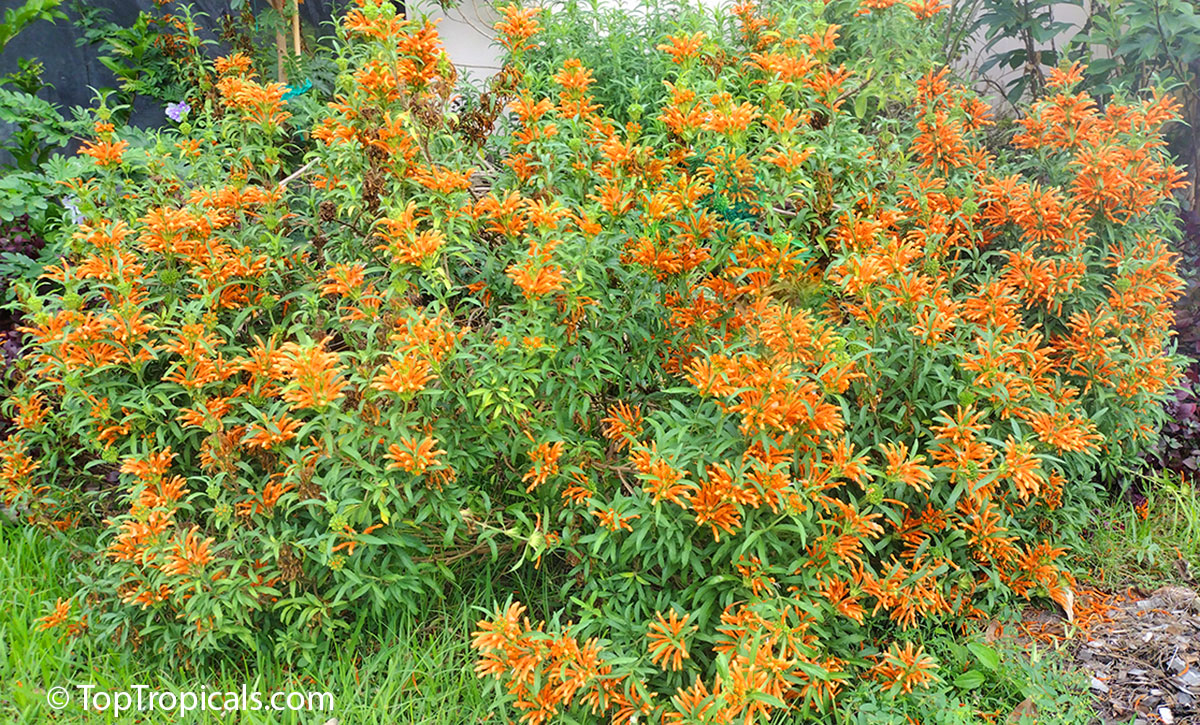
Leo Zodiac lucky plants: Sunflower tree, Delonix, Hibiscus, Abutilon, Mahoe, Hawaiin Sunset Vine (Stictocardia), Campsis, Passion flower, Calendula, Mexican Flame Vine, Bay Leaf, Safflower, Mint, Rosemary, Ruda - Ruta graveolens, Marigolds, Sunflowers, Palm trees, Lemon and orange trees, Grapefruit, Dieffenbachia , Croton, Lemon Balm, Chamomile, Tarragon, Kaligottu (Stereospermum chelonoides), Bel Fruit, White Madaar, Peppers, Pineapple, Coconut, Anise, Heliotrope, Gingers, Lavender, Ashoka Tree, Dombeya, Jacquemontia, Lychee, Mulberry, Philodendrons, Macaranga, Anthuriums, Aphelandra, Orchid trees, Leonotis.

For other signs information, see full Plant Horoscope.

Date: 2 Jul 2016

Cancer Zodiac lucky plants

Cancer - 6/21-7/22. Cancer is a WATER sign and is ruled by the Moon. Cancer's plants generally have soft or Moon-shaped leaves, contain a lot of moisture, or are found near water. Oftentimes they have white, pale blue or pale yellow flowers. Cancer rules the stomach, diaphragm, and liver, so plants that aid digestion or affect the subconscious are associated with the sign of the Crab. Maternal Cancer also governs the breasts, the womb, and the ovaries. It rules all fluid secretions, including menstrual blood, fluids in the eye, and tears. The moon is often associated with conditions involving irregular periodicity: irregular menstruation and related moods, epilepsy, insomnia, hysteria. Lunar herbs tend to have white or yellow flowers and soft, juicy leaves. They often live in or near water. As they are so nurturing and warm, Cancer loves the homey smell of cinnamon. This sweet spice is good for gently heating things up; it also promotes movement and flow in life. Its familiar scent is soothing and calming for those who need a little retreat every now and again.

Cancer Zodiac lucky plants: Lilies, Eucomis, Magnolia, Nicotiana, Brugmansia, Dombeya, White flowers, Water lilies, Lotus, Maidenhair fern, Monstera, Cinnamon, Sage, Aloe, Lemon Balm, Bay leaf, Palasa - Butea monosperma, Acai, Mahogany, Mango, Banana, Apple, Pear, Geranium - Pelargonium, White roses, Solandra Chalice Vine, Butter Cup, Acalypha, Cornutia, Ruda, Oregano, Camphor plant, Grapes, Brunfelsia, Alocasia, Colocasia, Canna, Cyperus, Iris, Equisetum, Mangroves.

For other signs information, see full Plant Horoscope.

Date: 21 Apr 2026

13 tropical flowers to plant in spring to attract pollinators year around

13 tropical flowers to plant in spring to attract pollinators year around

13 tropical flowers to plant in spring to attract pollinators year around


Spring is when everything wakes up - and if you plant smart now, your garden can stay alive with butterflies, bees, and hummingbirds all year long. The key is mixing tropical bloomers that flower in waves, not all at once. These plants don’t just look good - they keep pollinators coming back season after season, turning your yard into a living, moving ecosystem.

  • 1. Abutilon Fireball (Abutilon darwinii x striatum)

Bell-shaped flowers in warm red and orange tones hang like little lanterns. Very cold hardy, blooms on and off through the year, especially in mild climates. A steady nectar source for hummingbirds. More 👉

  • 2. Almond Bush (Aloysia virgata)

Light, airy clusters of tiny white flowers with a strong almond scent. Bees absolutely cover this plant when it’s in bloom. Flowers repeatedly through warm months. More 👉

  • 3. Calico Flower (Aristolochia littoralis)

One of the most unusual flowers you can grow - patterned like fabric. More importantly, it’s a host plant for butterflies, giving them a place to lay eggs. More 👉

  • 4. Pride of De Kaap (Bauhinia galpinii)

Bright orange-red blooms cover this shrub for months. Tough, fast-growing, and constantly visited by butterflies and bees. More 👉

  • 5. Mexican Bird of Paradise (Caesalpinia mexicana)

Sunny yellow flowers with a light fragrance. Handles heat, freeze, and poor soil easily. A reliable nectar plant for bees and butterflies. More 👉

  • 6. Red Tassel Flower (Calliandra tweedii With Love)

Very showy red-flowered powderpuff, fast-growing and spacey shrub. Cold tolerant to hard freeze, making it a strong choice for subtropical gardens. Forms a dense, many-stemmed plant with fine, feathery foliage that folds at night or by touch. Large scarlet tassel flowers bloom from spring to autumn and attract pollinators nonstop. More 👉

  • 7. Giant Milkweed (Calotropis gigantea)

A bold plant with thick leaves and waxy flowers. Important host plant for butterflies, especially monarchs. Handles heat and drought well. More 👉

  • 8. Blue Butterfly (Clerodendrum ugandense)

Flowers really do look like little blue butterflies. Blooms frequently and attracts actual butterflies along with bees. More 👉

  • 9. Tropical Hydrangea (Dombeya wallichii)

Large clusters of soft pink flowers appear in cooler months when little else is blooming. A major nectar source in winter. More 👉

  • 10. Fire Bush (Hamelia patens)

One of the best all-around pollinator plants and a tough bush - takes both cold and heat. Tubular orange-red flowers attract hummingbirds nonstop, plus butterflies and bees. More 👉

  • 11. Butterfly Orchid Vine (Mascagnia macroptera)

A climbing, cold hardy vine covered in bright yellow flowers and butterfly-like seeds. Great for fences or trellises, adding vertical color and feeding pollinators. More 👉

  • 12. Mexican Flame Vine (Senecio confusus)

Fast-growing, hardy vine with intense red blooms. Flowers heavily and brings in butterflies quickly. More 👉

13. Yellow Elder (Tecoma stans)


Bright yellow trumpet flowers that bloom over a long season. A dependable plant for both bees and hummingbirds. More 👉

✔️ Planting a mix of these gives you something in bloom almost every month.
That’s the real trick - not just planting for spring, but building a rotation of flowers that keeps pollinators fed all year long.

🛒 Transform your yard into a Butterfly Haven with exotic plants

📚 Learn more:


#Butterfly_Plants
Butterfly Haven or a Heaven on Earth?
Top 20 plants for a Butterfly Haven
Five best butterfly attractors for a Southern garden
Top Eight irresistible vines for a hummingbird haven: Part 1 - Part 2

#Hedges_with_benefits #Butterfly_Plants #How_to #Discover

🟢 Join 👉 TopTropicals

Date: 12 Dec 2023

Easy compact bush for sandy soil

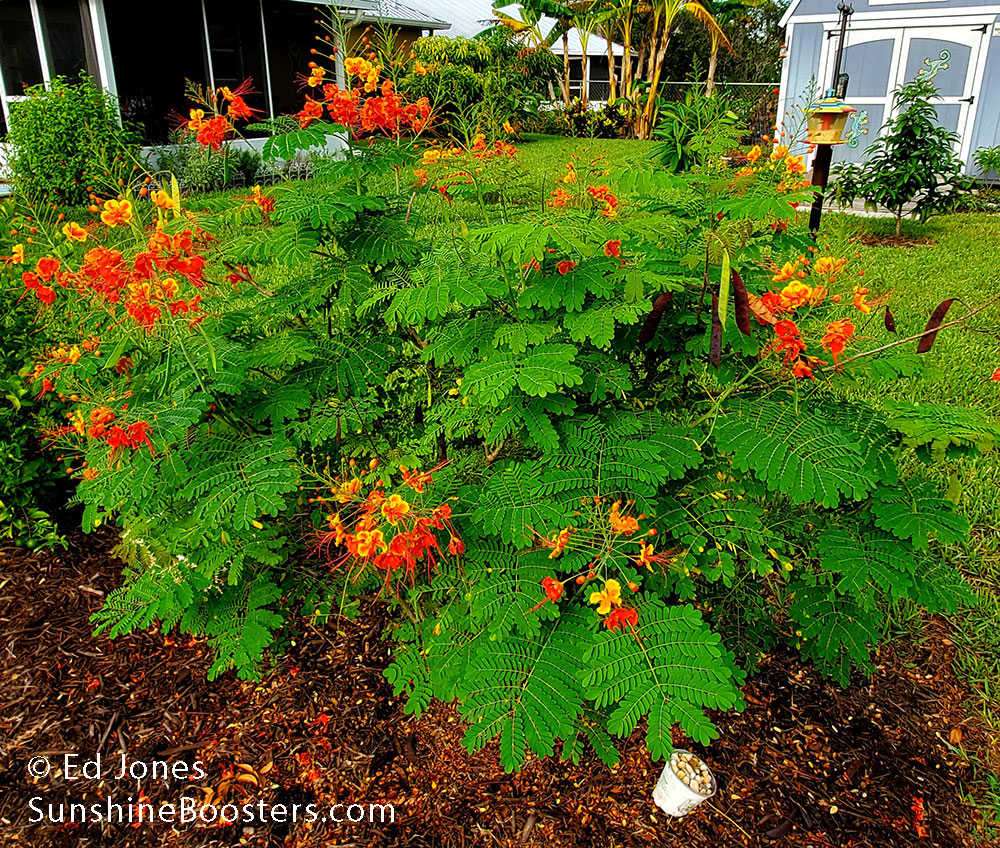
Caesalpinia  pulcherrima  -  Red  Dwarf  Poinciana,  Bird  of  Paradise

Caesalpinia pulcherrima - Red Dwarf Poinciana, Bird of Paradise.

Q: Can you recommend a flowering bush that will be in full sun and in sandy soil. I do not want it to exceed 10 feet.

A: For a garden specimen bush that is medium size and tolerates poor soils, we can recommend to choose from the plants below. These are all easy to grow, not fussy about soil and water, and stay compact and require minimal or no trimming at all.

Calliandra surinamensis - Powderpuff - 6-8 ft
Hibiscus mutabilis Cotton Candy - Mallow Hibiscus - 5-6 ft
Dombeya seminole - Tropical Rose Hydrangea 4-6 ft
Allamanda schottii - Dwarf Allamanda Bush 3-4 ft
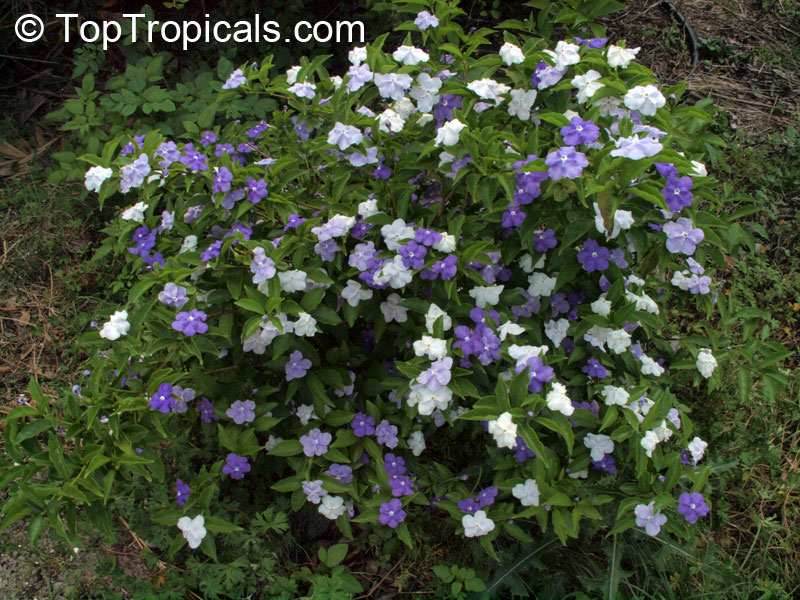
Brunfelsia pauciflora Compacta - Dwarf Yesterday-Today-Tomorrow - 4-5 ft
Calliandra schultzii - Dwarf calliandra - 4-5 ft
Plumbago auriculata Imperial Blue
Caesalpinia pulcherrima - Red Dwarf Poinciana, Bird of Paradise - 2-4 ft
Hibiscus schizopetalus - Coral Hibiscus - 5-6 ft
Jatropha integerrima compacta - 4-5 ft
Clerodendrum bungei - Glory Bower - tolerates shade, 4-5 ft
Eranthemum pulchellum - Blue Sage, Lead Flower (prefers shade) - 4-5 ft
Magnolia figo - Banana Magnolia - small tree, 6-8 ft
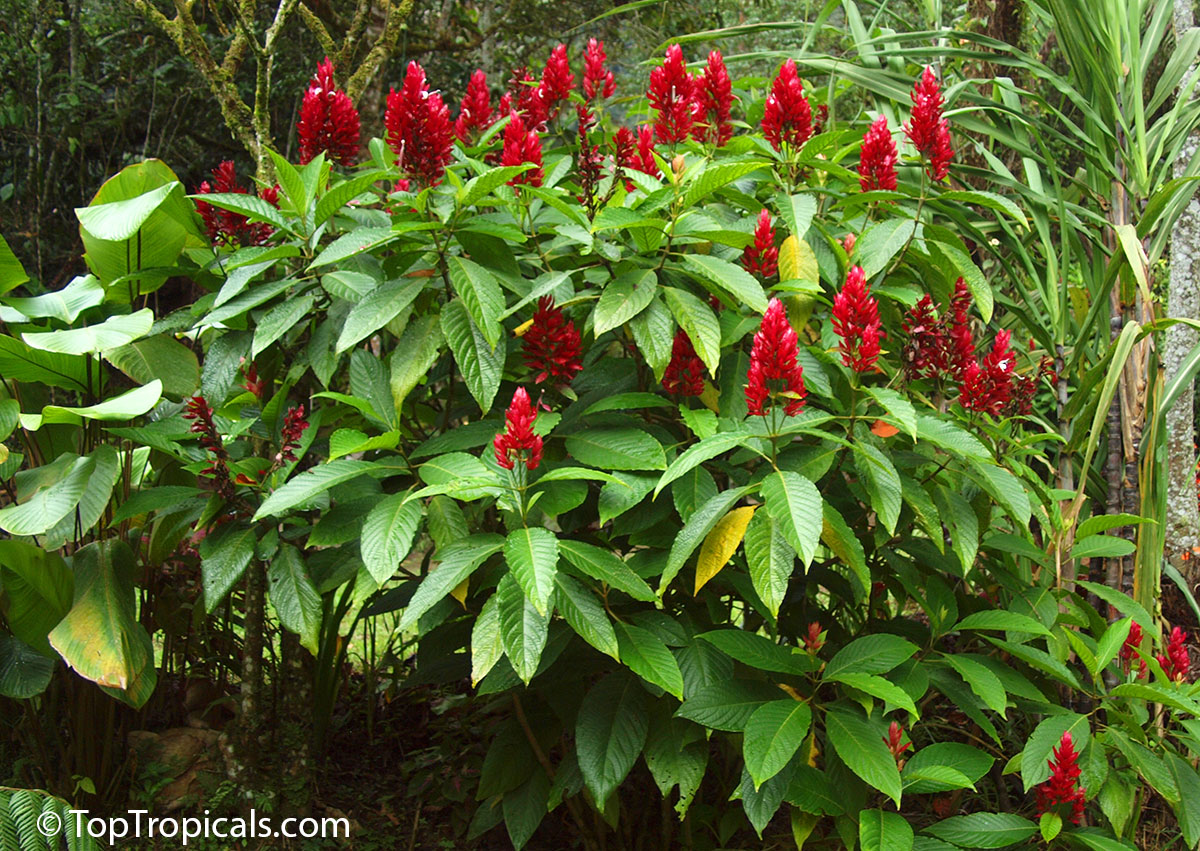
Megaskepasma erythrochlamys - Brazilian plume (tolerates shade) - 5-6 ft
Tibouchina lepidota - Ecuador Princess, Jules Dwarf - 3-4 ft
Leonotis leonurus - Lions Ears - 3-4 ft

Also, for your further reference, check out the reference chart Hedges with Benefits Chart to see different flowering bushes that are great for hedges as well as garden specimens, depending on your specific needs.

Megaskepasma  erythrochlamys  -  Brazilian  plume

Megaskepasma erythrochlamys - Brazilian plume.

Brunfelsia  pauciflora  Compacta  -  Dwarf  Yesterday-Today-Tomorrow

Brunfelsia pauciflora Compacta - Dwarf Yesterday-Today-Tomorrow.

Leonotis  leonurus  -  Lions  Ears

Leonotis leonurus - Lions Ears.