🎁 Mothers Day plant gift guide: something for
every
kind of mom
Skip the bouquet, give her something that
grows
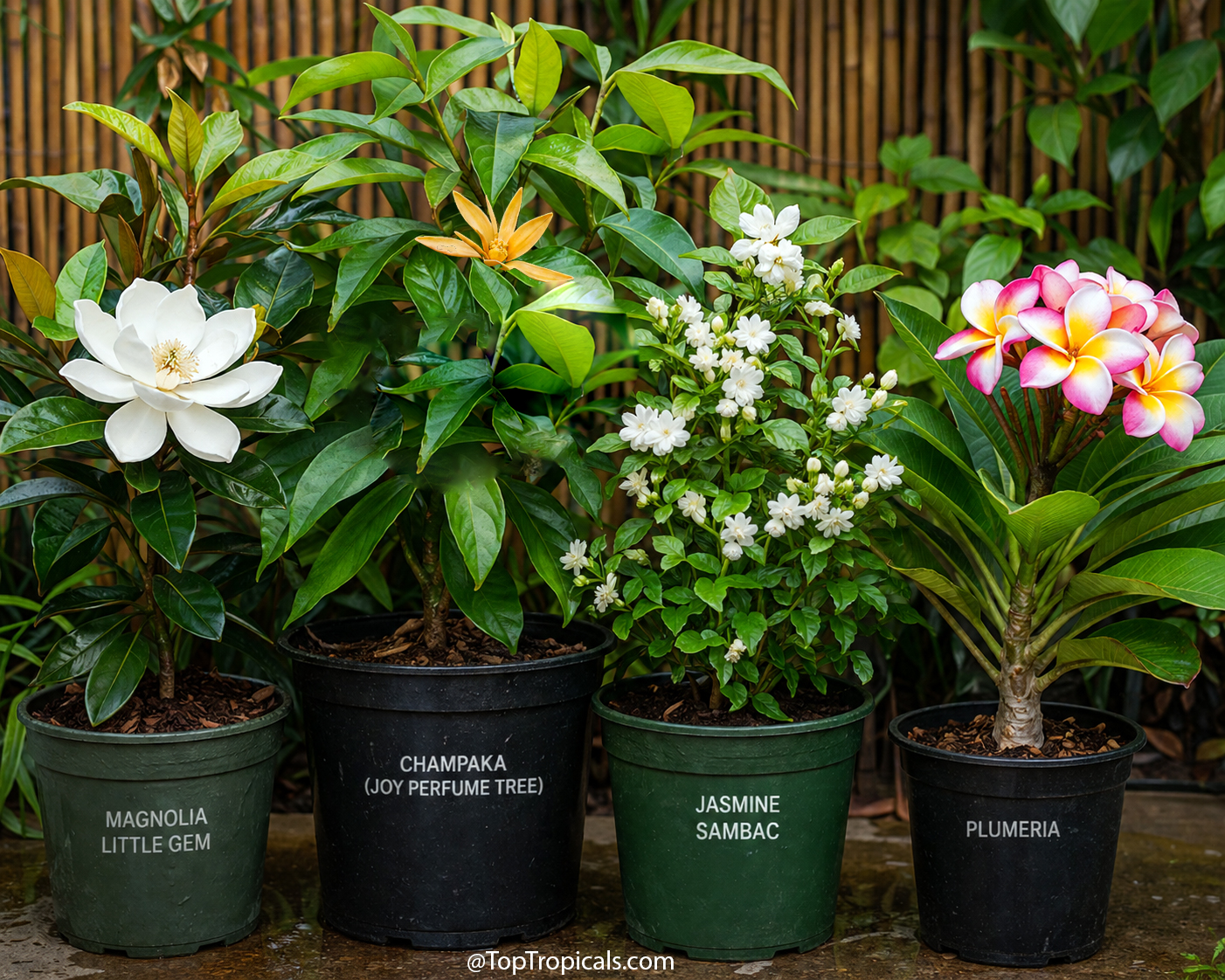
Magnolia Little Gem, Champaka, Jasmine Sambac, and Plumeria
Some gifts last a few days. These don't. Right now, these plants are at
their best in our nursery - full, established, and ready to impress the
moment she sees them. This year, give her something that doesn’t fade.
Pick
a plant that will keep growing, blooming, and reminding her of you long
after
Mother's Day is over. Here are a few easy ways to choose the right one.
Plumeria Plant Facts
Botanical name: Plumeria sp. Also known as: Plumeria, Frangipani
USDA Zone: 9 - 11
Highligths
All of these grow well in containers and are beginner-friendly.
1. For moms who love fragrance - give her living perfume ✨
These are the plants people remember. Soft, rich scent that fills the
garden, patio, or even a warm evening indoors.
Champaka Joy Perfume Tree - the legendary Joy perfume flower - rich,
sweet, and unmistakably bubble gum-like.
Magnolia Little Gem - the classic Southern magnolia in a smaller form -
big, creamy, fragrant blooms that never go out of style.
Wrightia religiosa - a sacred Buddhist tree - delicate white flowers
with a soft jasmine fragrance that feels calm and refined.
href="https://toptropicals.com/store/findname/Jasminum-Sambac.htm?utm_source=mlist"
>Jasmine Sambac - intensely fragrant and impossible to ignore - once you
have it, you won’t want a garden without it
Plumeria - the iconic Aloha flower - bold color, rich perfume, and pure
tropical feeling in bloom.
Parijat Tree Jasmine (Nyctanthes arbor-tristis) - blooms at night and
fills the air with a gentle, unforgettable fragrance.
4. For the fruit lover - grow something she can enjoy and taste
🍒
A gift that turns into harvest. Fresh fruit, right from her own
garden.
Mango Plant Facts
Botanical name: Mangifera indica Also known as: Mango
USDA Zone: 9 - 11
Highligths
Avocado Plant Facts
Botanical name: Persea americana, Persea gratissima Also known as: Avocado, Alligator Pear, Aguacate, Abacate
USDA Zone: 9 - 11
Highligths
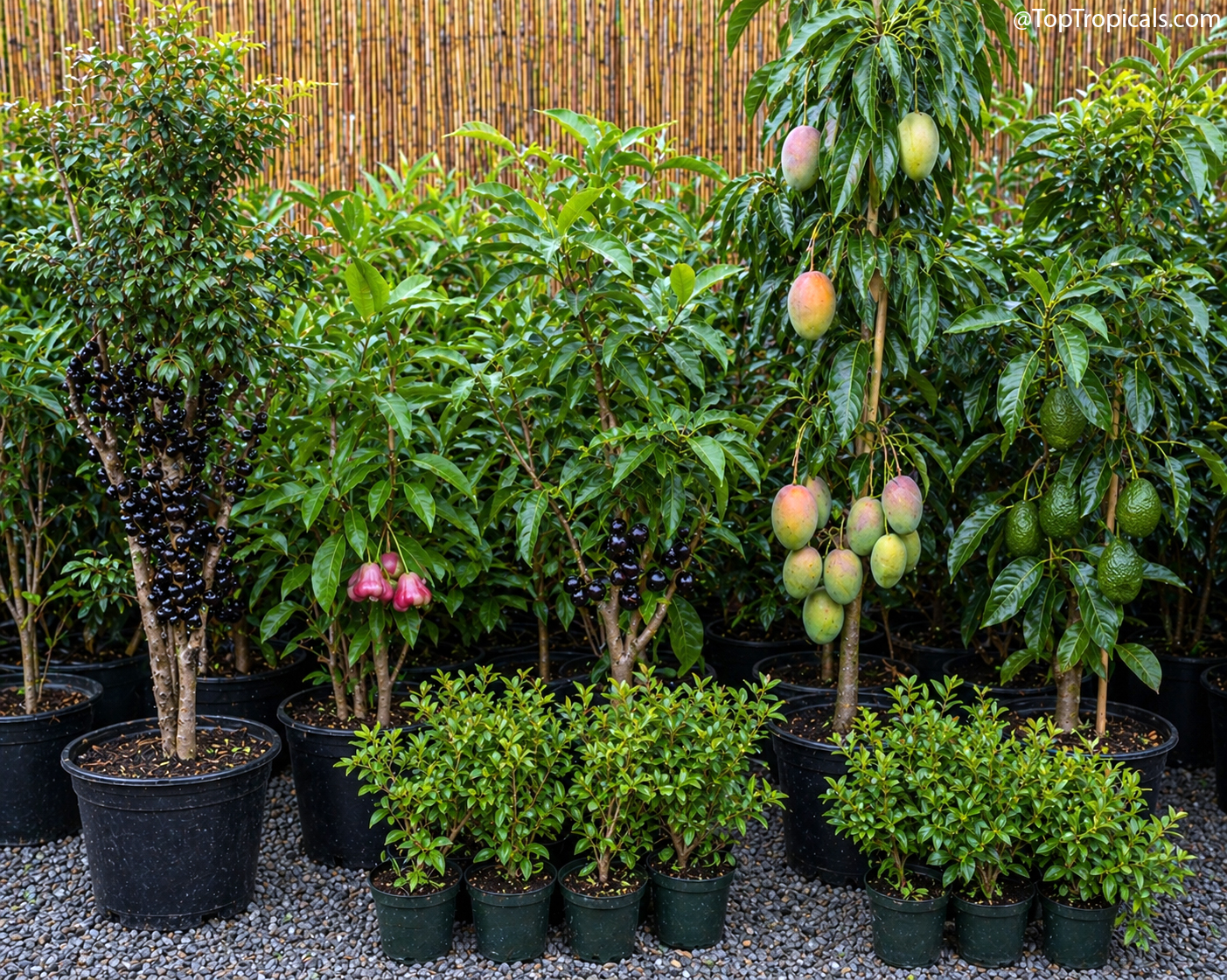
Jaboticaba - a truly unique fruit tree that produces sweet, grape-like
fruit right on the trunk, turning it into a conversation piece.
Rose Apple - crisp, refreshing fruit with a light floral taste and a
beautiful ornamental tree to match.
Java Plum (Jambolan) - deep purple fruit with a sweet-tart flavor,
loved for both its taste and its shade tree presence.
Mango - the king of tropical fruit - rich, sweet, and incredibly
rewarding to grow in your own garden.
Avocado - creamy, nutrient-rich fruit from a tree that becomes a
long-term staple in the garden.
Eugenia cherries - Surinam Cherry, Rio Grande and Grumichama - compact
trees with glossy foliage and delicious, dark cherries that are easy to grow
and quick to fruit.
Tropical fruit trees selection - from Jaboticaba fruiting on the trunk to
Mango, Avocado, and rare Eugenia cherries - a great mix for building a
productive food forest.
Mothers Day Gift Card
💌
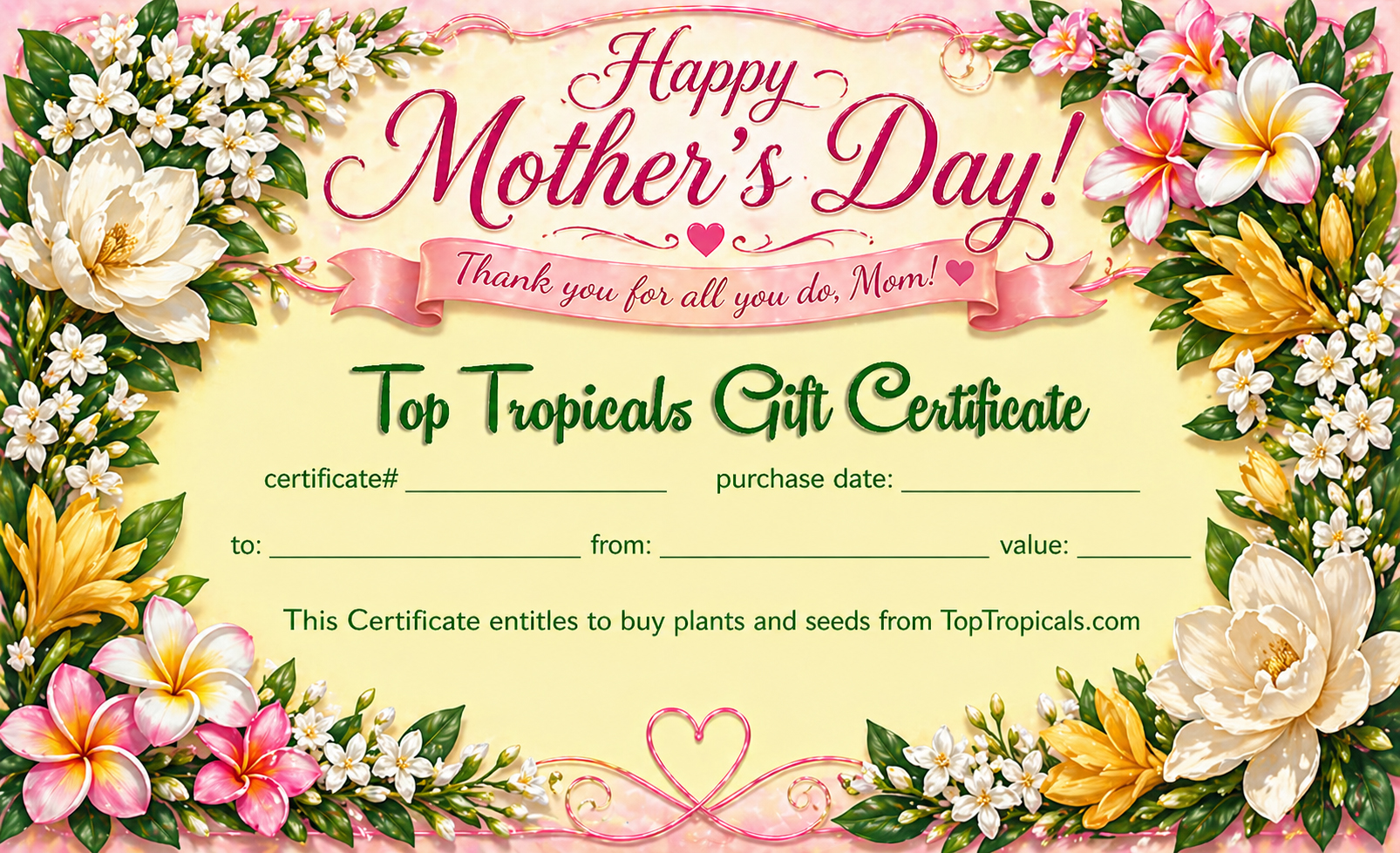
Mother’s Day Top Tropicals gift certificate
Still not sure what to choose? A gift card keeps it simple. She can pick
exactly what she wants, when she is ready for it. No guessing, no pressure -
just something she will actually enjoy.
Get 15% extra value on gift certificates. Just mention
Mother’s Day in the message field.
For example, a $100 certificate becomes $115. A $50 certificate becomes
$57.50.
Offer valid through 05/12/2026.
Bonus value applies to gift certificates only. Must include “Mother's
Day” in the message field at checkout. Not valid on previous purchases
and cannot be combined with other promotions or discounts. Offer subject to
change without notice.
Date: 29 Jun 2026
😾
When Orange
Isn't a Good Thing
Smokey: Those orange spots are plumeria rust. Sunshine: Orange is an excellent color. Smokey: On cats, yes. On plumeria leaves, no. Sunshine: I represent the good kind of orange.
🌸 Plumeria Rust in Humid Climates:
What Finally Worked for Us
By Tatiana Anderson, Plant Expert, Top
Tropicals
Healthy
plumerias with clean, vibrant foliage after successful rust
management. Good airflow, bright conditions, and effective fungicide
treatment
help keep plants growing strong through Florida's rainy season.
If you grow plumerias in Florida,
you probably know what comes next. Around June, when the rainy season begins
and afternoon thunderstorms become part of the daily routine,
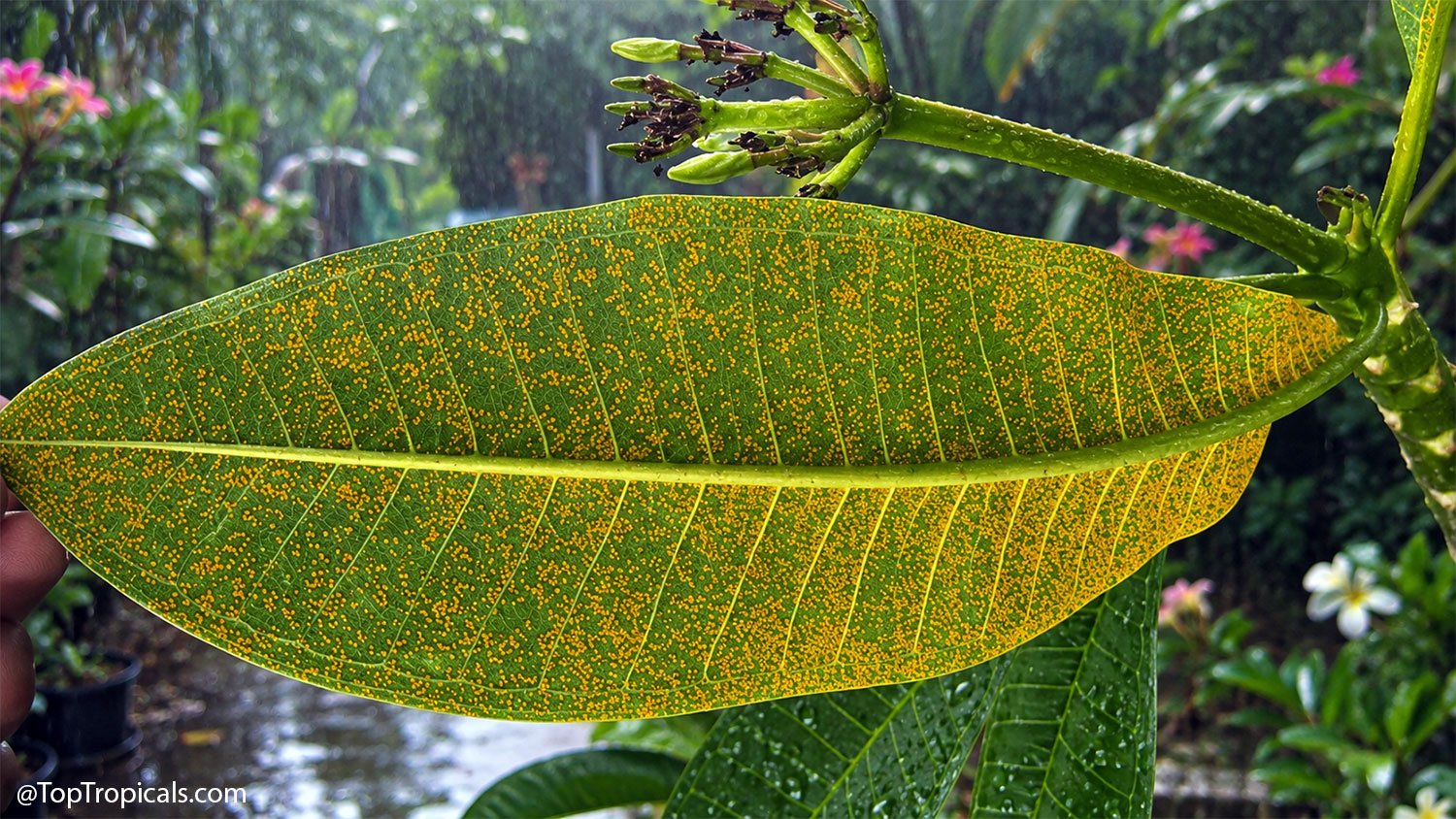
orange-yellow spots start appearing on the undersides of plumeria leaves.
Plumeria rust arrives almost like clockwork.
If you have ever tried to fight it, you know how frustrating that battle can
be.
Plumeria
rust appears as bright orange powdery spores on the underside of
leaves. Warm, humid, rainy conditions allow the fungus to spread quickly,
making it a common sight in tropical and subtropical gardens.
Let me be clear about something right away: Plumeria rust is
rarely fatal to an otherwise
healthy plant.
In our experience, we have never lost a healthy plumeria
to rust alone. The disease is mostly
cosmetic, but it causes significant yellowing, triggers premature leaf drop,
and can turn a beautiful specimen into something that looks ragged
throughout the best months of the growing season. For a plant grown as much
for its attractive foliage as its spectacular flowers, that matters.
At Top Tropicals, we have grown plumerias for many years and have tried most
of the approaches gardeners typically recommend: sulfur-based fungicides,
neem
oil, copper sprays, improving drainage, and removing infected leaves before
they hit the ground. Some of those things helped to varying degrees. None
of them felt like a real breakthrough until recently.
The Fungicide That Actually Did Something
Real-world results after treating plumeria rust with Southern Ag
Garden Friendly Fungicide. The inset shows a
leaf heavily infected with orange rust spores before treatment, while the
main image shows clean, healthy new foliage after the fungus was
brought under control.
A few seasons ago, on the recommendation of another grower, we tried
Southern Ag Garden Friendly Fungicide
. This biological fungicide contains the beneficial bacterium Bacillus
sp, and I want to be careful here: I am not suggesting it is the best
product for everyone or that it will produce the same results in every
situation. What I can say is that, in our experience, it was the first
fungicide that consistently produced visible improvement when applied
according to the label directions.
We applied it at the first sign of rust, repeated applications according
to the label, and actually saw the progression slow down while new
infections became less severe. Whether that was
the product, the timing, or some combination of factors, I cannot say with
certainty. But after cycling through several options over the years, it
was the one that felt like it was doing something real. If you are looking
for a starting point, it is worth trying.
But the fungicide wasn't our main discovery. That came this past season,
and it changed how we think about this disease.
☔️ What This Season Taught Us About Leaf Wetness
Healthy, dry plumeria foliage is one of the best defenses against
plumeria rust. Good airflow, bright light, and keeping leaves dry whenever
possible help prevent the fungus from taking hold during the rainy
season.
This season we moved our prized container plumerias under a covered
growing area with a clear plastic roof and approximately 30 percent shade
cloth overhead. The structure provides excellent light, warm temperatures,
and very good air circulation while protecting the plants from Florida's
frequent summer rains. It is not a climate-controlled greenhouse, but rather
a protected outdoor growing area.
Here is the important part: these plants were still irrigated regularly,
every two to four days, with overhead watering. The leaves did get wet. But
because they were not sitting outside
during Florida's daily summer downpours, the foliage dried within a
reasonable
amount of time instead of remaining wet for hours, which is common after a
heavy rain followed by cloudy skies and still air.
The result? Not a single case of rust developed on those plants
throughout the season.
Considering how consistently plumeria rust appears each summer in our
nursery,
that result immediately caught our attention. The most significant
difference was how long the foliage remained wet after watering or
rain.
Meanwhile, plumerias growing in the ground nearby, fully exposed to the
weather, showed rust
infection at the usual time.
💦 Ambient Humidity vs. Standing Water
That observation made us rethink what we believed was driving the
disease. We had always assumed Florida's high humidity was the primary
factor. Humidity certainly plays a role. But this experience suggested that
prolonged leaf wetness may be a much more significant factor than ambient
humidity by itself.
There is a real difference between air that feels humid and leaves that stay
wet for four, six, or eight hours after a rain. Humid air means the
moisture content of the atmosphere is high. Wet leaves means there is
standing water on the leaf surface. Both conditions can occur together, but
they are not the same thing. A leaf in a humid but breezy location can dry
within an hour. A leaf in still, wet conditions after a heavy rain may stay
wet most of the day. That difference may be far more important than many
gardeners realize.
We are not plant pathologists, and we do not want to overstate what we
learned from one growing season. But after many years of growing plumerias
in Florida, the results were convincing enough that we now
protect our best container specimens from prolonged summer rainfall whenever
possible.
👉 What We Recommend
Based on many years of growing plumerias in Florida, here are the
practices that have worked best for us:
Grow plumerias in full sun whenever conditions allow. Good light means
faster drying after rain or
irrigation, and plants grown in low light often seem to show rust symptoms
more readily.
Keep your plumerias well-fed. Healthy, vigorously growing plants recover
from stress and disease much better than weak ones. We apply Green
Magic
controlled-release fertilizer every six months for a steady supply of
nutrients, and supplement with Sunshine
Boosters Megaflor during the growing season. Because Megaflor is gentle,
it can be safely applied with every watering, all
year long.
During extended rainy periods, consider moving valuable container plants
under cover if possible. Even a covered patio can make a difference if it
keeps the leaves from remaining wet for most of the day.
Provide air circulation. Plants crowded together stay wet longer. Space
them properly and position them where they receive good airflow.
Remove infected fallen leaves. They can continue serving as a source of
spores.
Pick them up and dispose of them rather than leaving them beneath the
plants.
If rust begins to appear, start fungicide applications early. Slowing an
infection at the beginning is much easier than trying to control one that
is already well established.
💡 A Realistic Conclusion
A parade
of healthy plumerias in full color. Clean foliage, bright blooms, and
vigorous growth show what plumerias can look like when rust is kept under
control, letting each variety shine in its own unique colors.
Plumeria rust is mostly a cosmetic problem rather than a life-threatening
one.
Healthy plants usually recover well, but yellowing foliage and premature
leaf drop can take much of the beauty out of an otherwise
beautiful blooming season.
We cannot promise these methods will eliminate rust in every garden.
Every growing environment is different.
However, after years of battling this disease, reducing how long the leaves
remain wet made a bigger difference than any other single change we have
tried. If
you grow plumerias in a humid climate and continue struggling with rust, it
may be worth focusing not only on humidity itself, but also on how quickly
the foliage dries after the rain
stops.
Mix and match your favorite varieties! Purchase 2 or more
plumerias and receive 25% off all plumerias in
your order. No coupon code required. Discount is applied automatically when
qualifying items are added to your cart.
Valid through July 3, 2026
Offer applies to new orders only. Not valid on previous purchases, pending
orders, gift certificates, shipping charges, or combined with other
discounts or promotional offers.
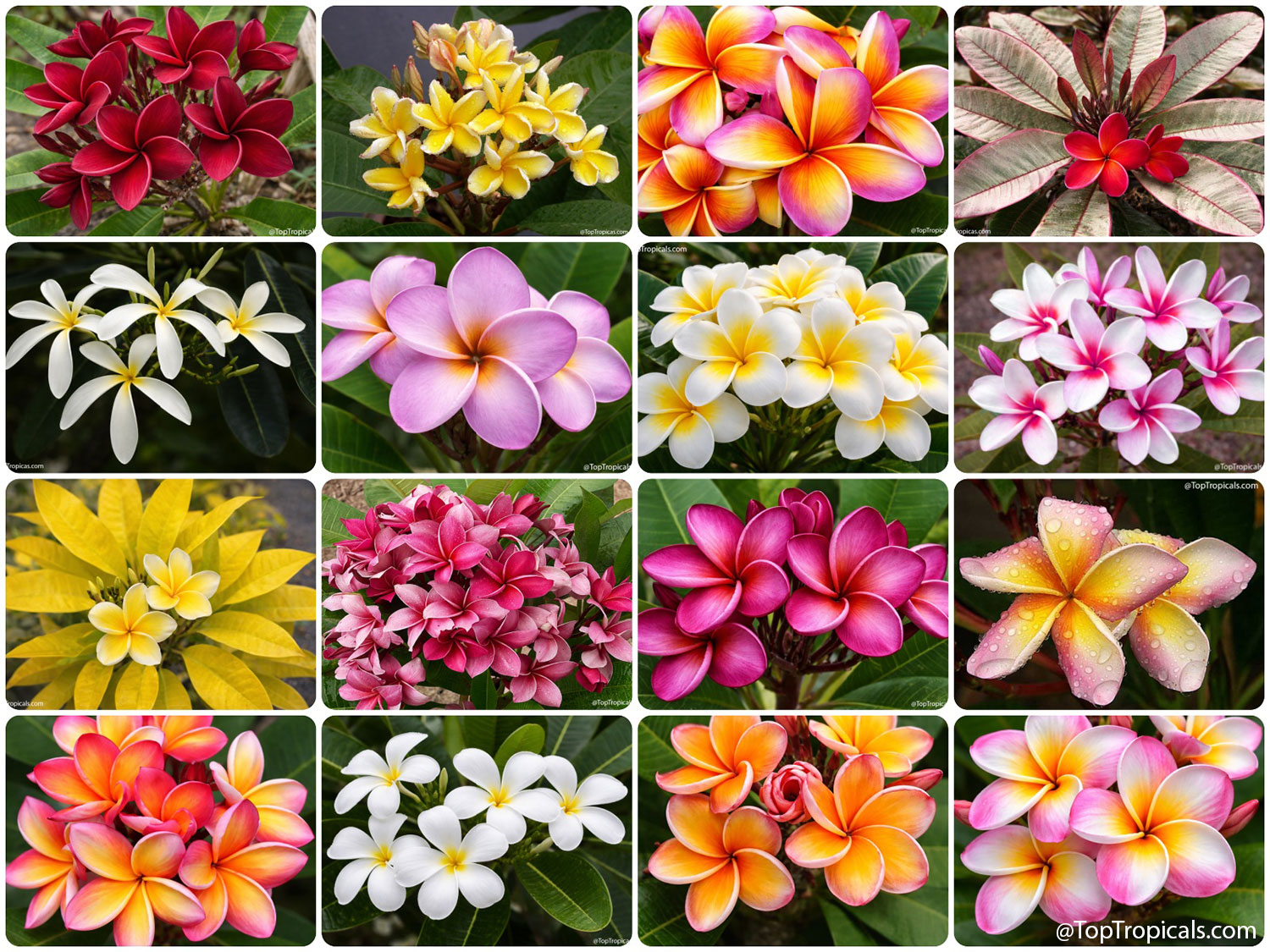
Plumerias come in an amazing spectrum of colors and forms. From pure
white
and buttery yellow to fiery reds, soft pinks, rainbow blends, and even
variegated foliage, there is a plumeria to match every tropical garden and
collector's taste.
Sunshine: Healthy plumerias need sunshine... that's me...
good airflow, and dry leaves. Smokey: That's a surprisingly accurate summary. Sunshine:We can help with all of that. Donut worry. Coffee
first.
Date: 21 Jun 2019
The Flower of Gold
By Onika Amell, tropical plant specialist
Q: I am concentrating on adding more fragrance to my garden. I've
had great success growing gardenias and I have many different varieties, but
their flowers are all white, and I would like to add some colors to my
garden too. Are there any gardenias available in different colors? I live in
Waipio Acres, Hawaii.
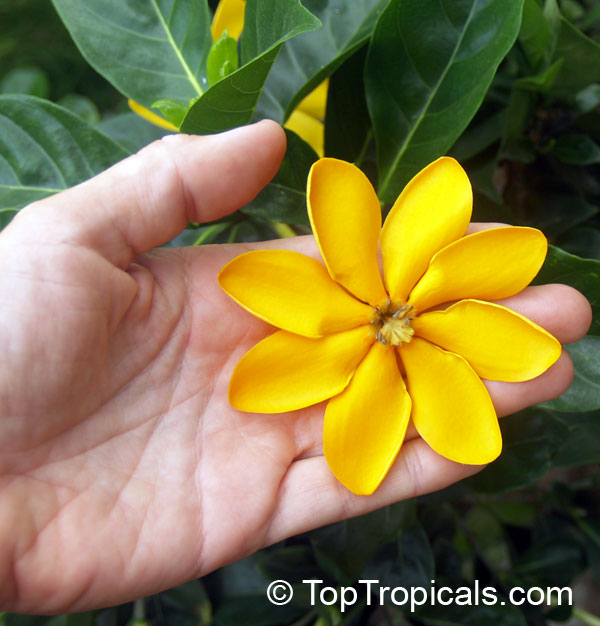
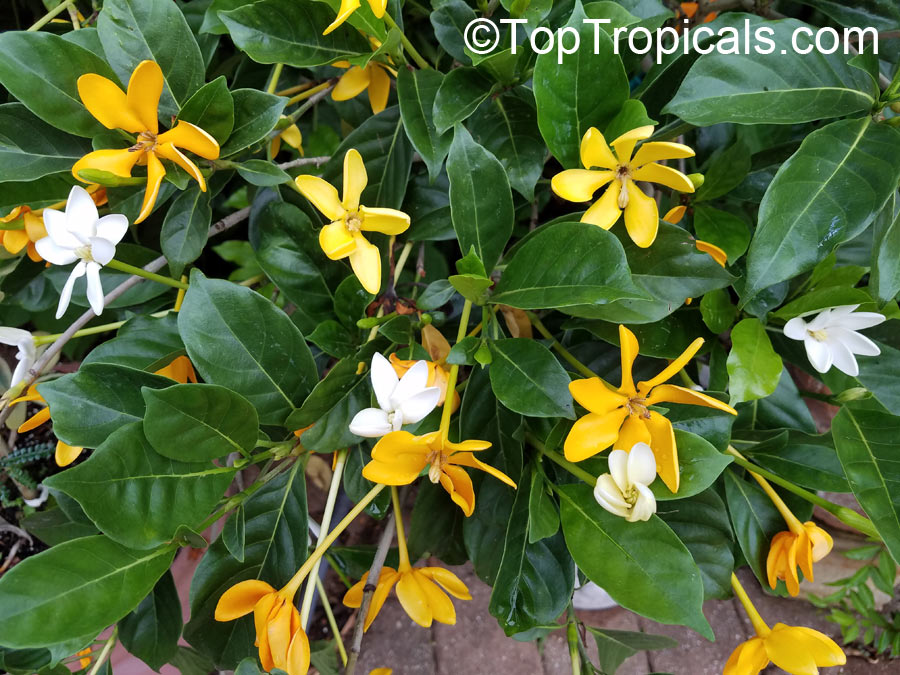
A: Meet the very rare and highly fragrant, tropical Gardenia tubifera Kula or Golden gardenia. Kula flowers change color as
they mature, which is a unique feature! Kula flowers start out as cream,
then change to yellow and finally to a beautiful gold. In addition to the
spectacular flowers, this gardenia also has beautiful, leathery, deep green
foliage.
This is a slow-growing and compact plant. Like all the other members in
the Gardenia family, the Golden gardenia will do best in an acidic,
well-drained, and fertile soil. It will appreciate a good deal of direct sunlight but
will be very happy if provided with midday and afternoon shade. As with with
gardenias, the more sunlight the more flowers.
It will eventually grow into a rounded shrub if left unpruned, but also
can be trained into a small tree, maintainable to a height of under 7-8
feet. Blooms will appear from spring onward. Prune after flowering, this will
encourage more flowers in a few months.
Gardeners living in colder areas, do not fret. Gardenias make perfect
container plants and can be grown indoors in colder climates. Just be sure to
provide high light when bringing them indoors.
The fragrance and changing colors of a Gardenia Kula is unforgettable.
They are most fragrant near sunset and during early evening hours. Plant them
near walks and patios where their lovely fragrance can be enjoyed. This
rare tropical Gardenia is sure to be a conversation piece in any garden.
Great collector's plant!
Tea and Jam with the PeopleCats – A Tropical Afternoon Beneath the Randia
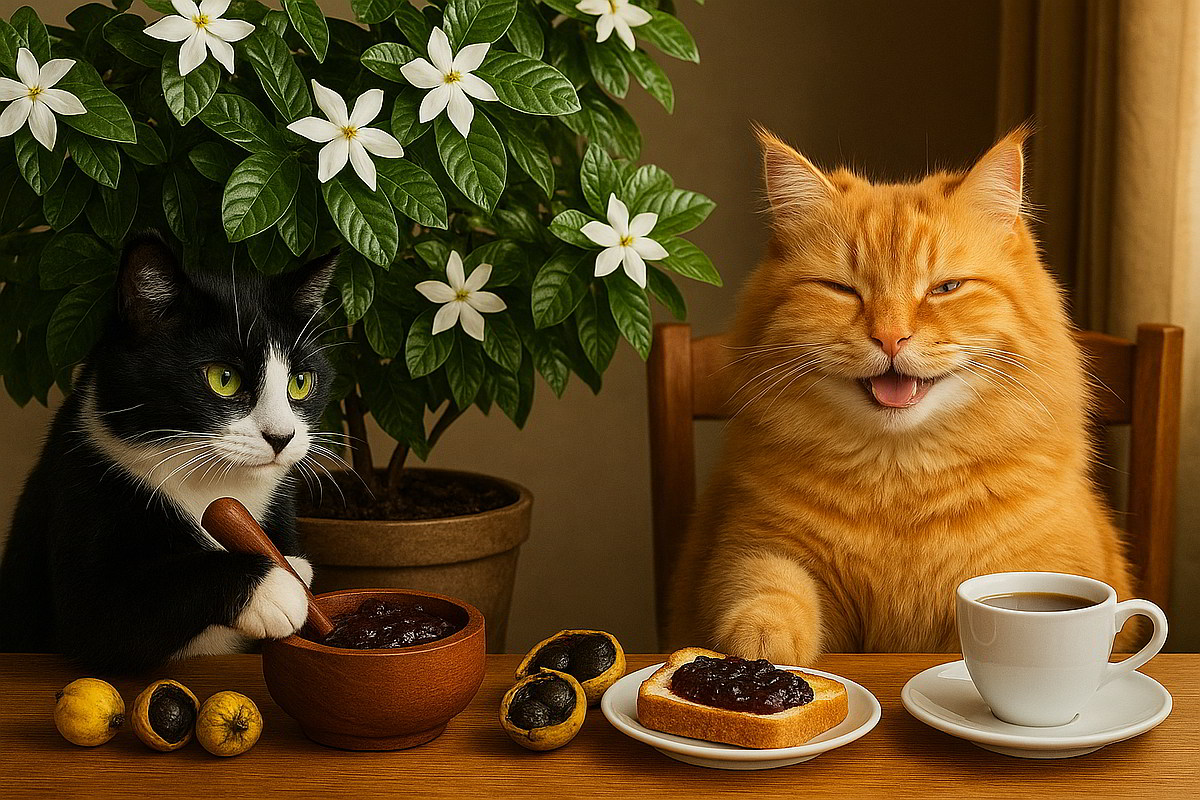
Meet the cats behind the jam! The tuxedo cat is none other than Google-the-cat - our beloved elder and one of the original cat-fathers of Top Tropicals PeopleCats.garden. At 18 years old, he’s still sharp, curious, and very much in charge. The orange fluffball? He represents the universal image of cat joy - and we’ve got a few real-life orange sunshine
residents just like him.
Why do you include cats in a plant newsletter?
Because they’re part of the garden. Our rescued PeopleCats live among the plants, nap under the
mango trees, inspect new arrivals, and occasionally steal a sunspot meant for seedlings. They’re not mascots — they’re part of our team. Sharing their presence is like showing a part of the soul of our space.🐈
Are the cat images real or AI-generated?
All our cats are real! We take lots of pictures and videos. And a few images are AI-generated illustrations inspired by our real PeopleCats.garden residents. While not literal photographs, they are creative interpretations that capture the spirit of
our tropical home and its furry citizens.🐾
Are the stories about the cats true?
Mostly! The jam-making, tea-drinking, and greenhouse meetings are creative interpretations - but inspired by real personalities. We use AI scenes to bring their spirit to life.
Real cats. Real plants. Imagined adventures.🐱
13 festive shrubs with bright flowers that bring color to your Winter Garden when everything else is dormant
13 festive shrubs for Winter Garden
💐 13 festive shrubs with bright flowers that bring color to your Winter Garden when everything else is dormant
Southern Living points to colorful berries as winter garden standbys. Tropical plants take it a step further, filling the cool season with real flowers, not just fruit. From vivid reds to electric blues, these plants prove winter does not have to be dull.
🌈 1. Gloxinia sylvatica - Bolivian Sunset
This plant waits for cool weather, then suddenly lights up the shade with fire-red blooms. Flowers appear almost overnight and continue through fall and winter. It rests in summer, returns in fall, spreads gently, and makes an easy, festive ground cover that is perfect for sharing. 👉 Learn more
🌈 2. Pereskia aculeata - Barbados gooseberry
An unusual vine that surprises in cool weather with delicate, star-shaped blooms followed by tasty fruit. It flowers steadily from fall through winter, adding light, airy color to fences and trellises when most vines are quiet. 👉 Learn more
🌈 3. Mansoa alliacea - garlic vine
Best known for its garlicky scent, this vine really shines in winter. Cooler temperatures bring clusters of lavender-purple flowers that brighten fences and trellises with very little effort. 👉 Learn more
🌈 4. Dombeya wallichii - tropical hydrangea
Large pink pompom blooms hang from bare branches in winter, creating a true holiday look. Lightly fragrant and impossible to miss, it brings hydrangea-style drama to the cool season. 👉 Learn more
Compact and cheerful, this shrub opens purple flowers that fade to lavender and white. The color shift makes it look like several plants blooming at once, perfect for pots or small garden spaces. 👉 Learn more
🌈 6. Clerodendrums
Long, cascading sprays of white flowers of Clerodendrum minahassae - fountain clerodendrum - spill from the plant during the cooler months. It brightens shaded areas and adds movement when the garden slows down. Most clerodendrums bloom through Winter! 👉 Learn more
🌈 7. Tibouchina multiflora - glory bush
Soft, fuzzy purple blooms cover this shrub in winter, backed by velvety leaves that look good year-round. It adds strong color and texture during the cool season. 👉 Learn more
🌈 8. Holmskioldia sanguinea - Chinese hat
Bright red, orange or yellow, hat-shaped bracts surround small flowers and hold their color through the cool months. The shape alone makes this shrub a standout in winter. 👉 Learn more
🌈 9. Barleria cristata - Philippine violet
This tough shrub blooms heavily in winter with rich purple flowers. It delivers dependable color when many plants take a break. There is a golden variety too! 👉 Learn more
🌈 10. Eranthemum pulchellum - blue sage, lead flower
Few plants offer true blue in winter. Electric-blue flower spikes appear in cool weather, adding rare color with minimal care. 👉 Learn more
🌈 11. Petrea volubilis - queen's wreath
In winter, this woody vine erupts into cascading sprays of lavender star-shaped flowers. It creates a wisteria-like effect right when the garden needs it most. 👉 Learn more
🌈 12. Tabebuia varieties - dwarf golden and dwarf pink
These trees save their show for winter, blooming on bare branches. Golden forms glow yellow, while pink varieties cover themselves in soft trumpet-shaped flowers. 👉 Learn more
🌈 13. Bauhinia trees - pink butterfly and Hong Kong orchid trees
Butterfly-shaped blooms open on leafless branches, giving bauhinias their signature winter elegance. The Hong Kong orchid tree stands out with especially large, vivid flowers. 👉 Learn more