Garden Blog - Top Tropicals

Date: 15 Oct 2023

Growing Barbados Cherry in container
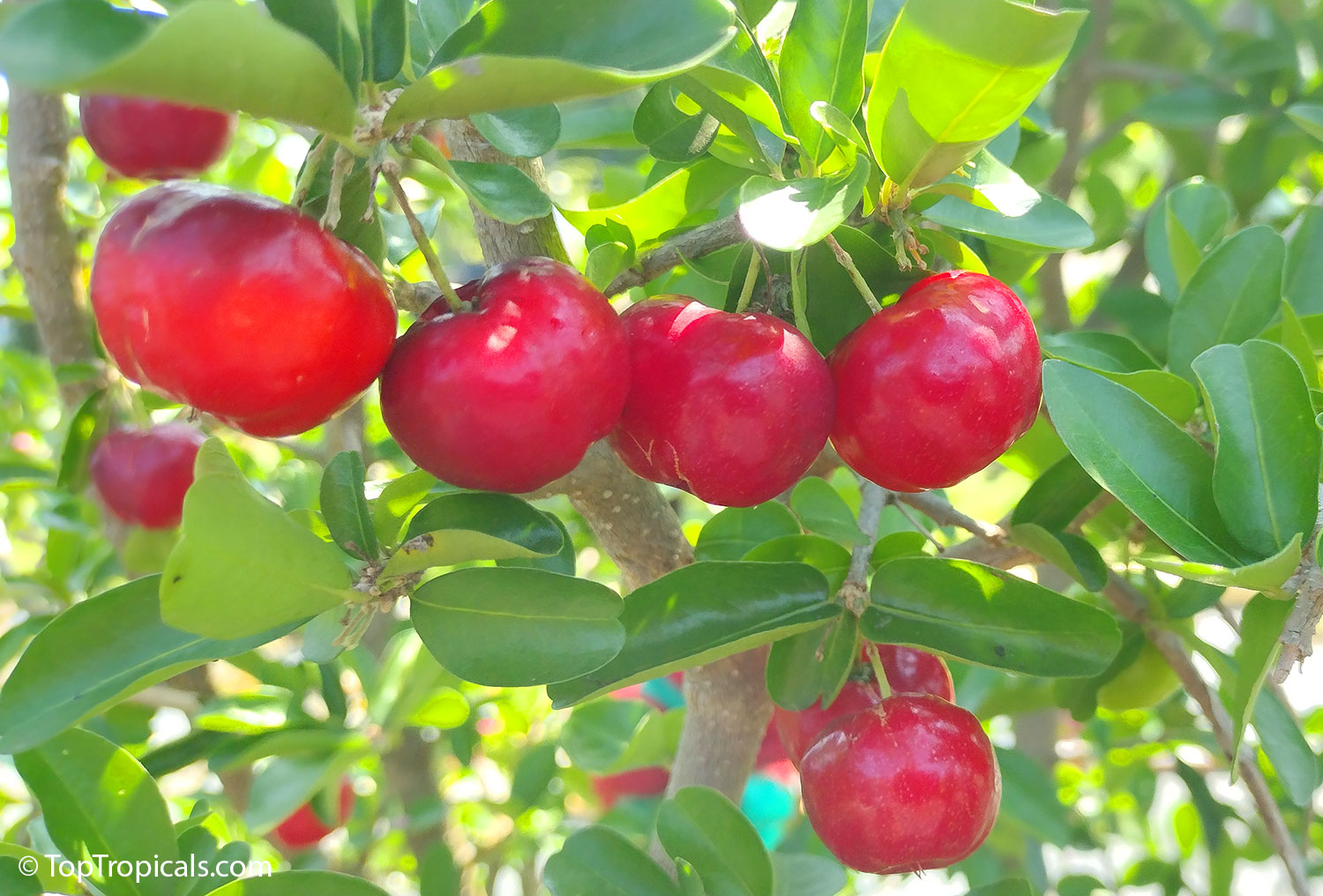
Barbados  Cherry  fruit  on  the  branch

Q: I am interested in buying some Barbados cherry plants. Could you please advise if these can be grown in containers indefinitely or it's still better for them to be planted in ground for nutrients etc?

A: The Barbados cherry, like other tropical cherry varieties, is exceptionally well-suited for cultivation in containers.

Barbados cherry grows into a dense bush, demands minimal pruning, and begins bearing fruit at a young age. Our plants, which are propagated from cuttings, initiate the flowering and fruiting process in the very same year. They produce fruit almost year around. This year we've had three big crops: April, July and October (still fruiting now!) besides sporadic fruiting throughout the warm season.
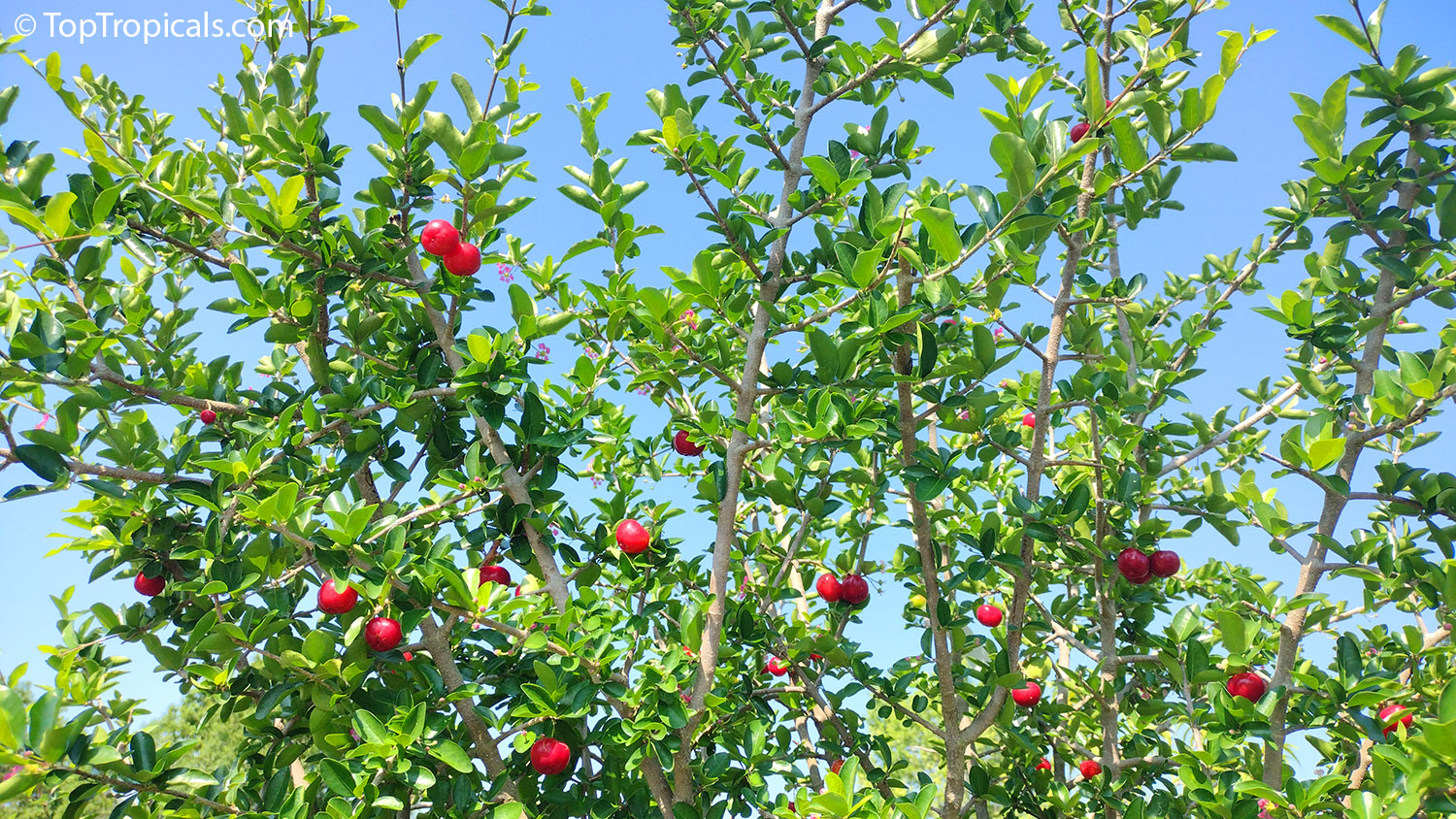
Barbados  Cherry  branches  with  fruit

You can cultivate Barbados cherry in a pot, commencing with a 1-3 gallon container and gradually increasing the size each year. Below is a photo of a fully developed tree in the ground, for reference. This tree is approaching its third year of growth. When grown in a container, it maintains a more compact size, with the largest container needed likely being between 7 to 15 gallons. Regular pruning can be employed to keep it smaller.
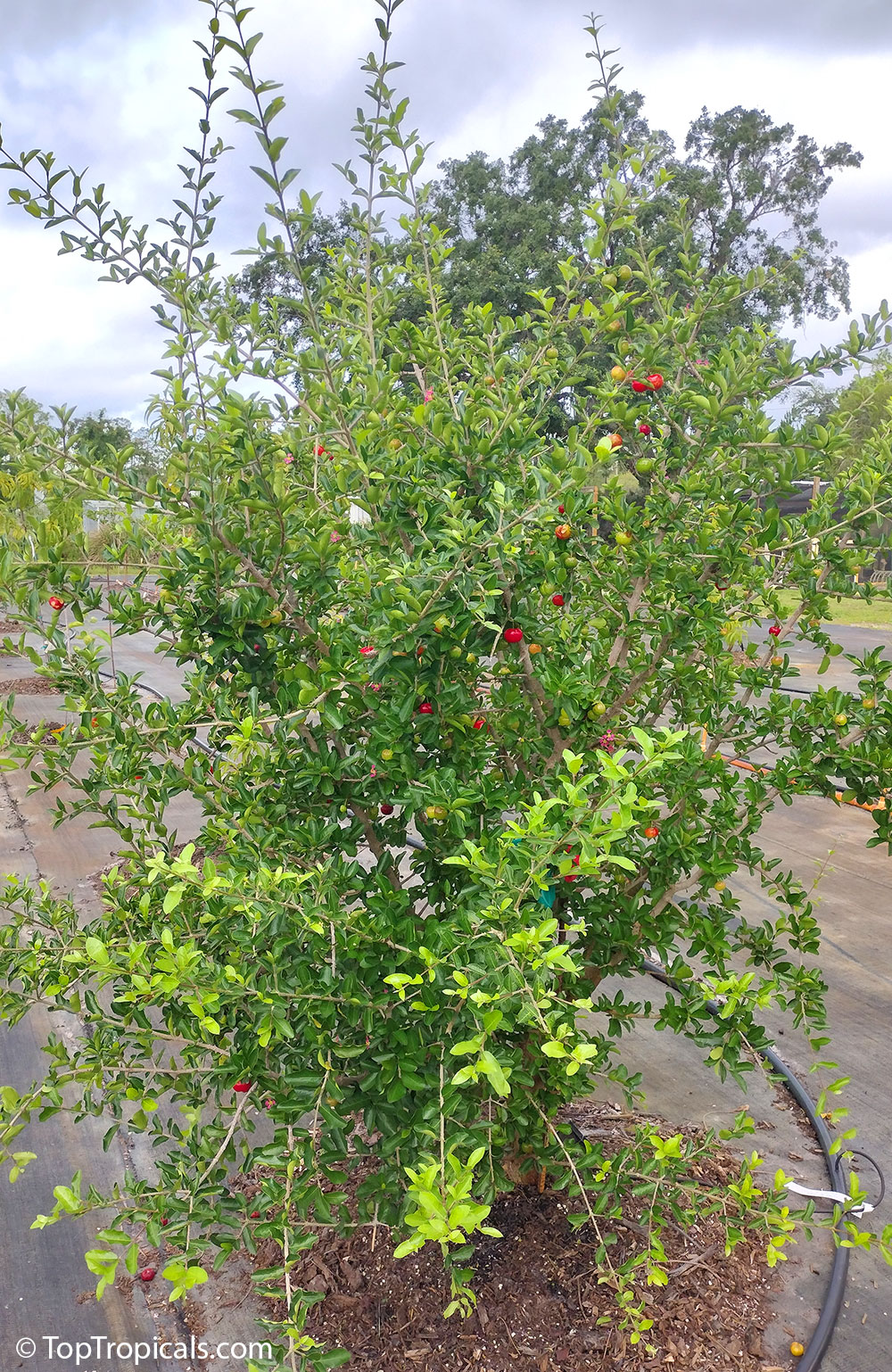
Barbados  Cherry  bush  in  the  ground

Photo above: Barbados Cherry bush in the ground

Barbados cherry (Malpighia) possesses a distinct growth pattern that sets it apart from other tropical cherry varieties - Eugenias. Malpighia's branches can assume peculiar shapes, even at angles of up to 90 degrees. Therefore, pruning to achieve the desired shape is advantageous.

Additionally, you may want to explore the Dwarf Barbados cherry, a miniature cherry variety ideal for container cultivation, with cascading growth habit. Although its fruits are slightly smaller than those of the regular variety, they are notably sweeter.
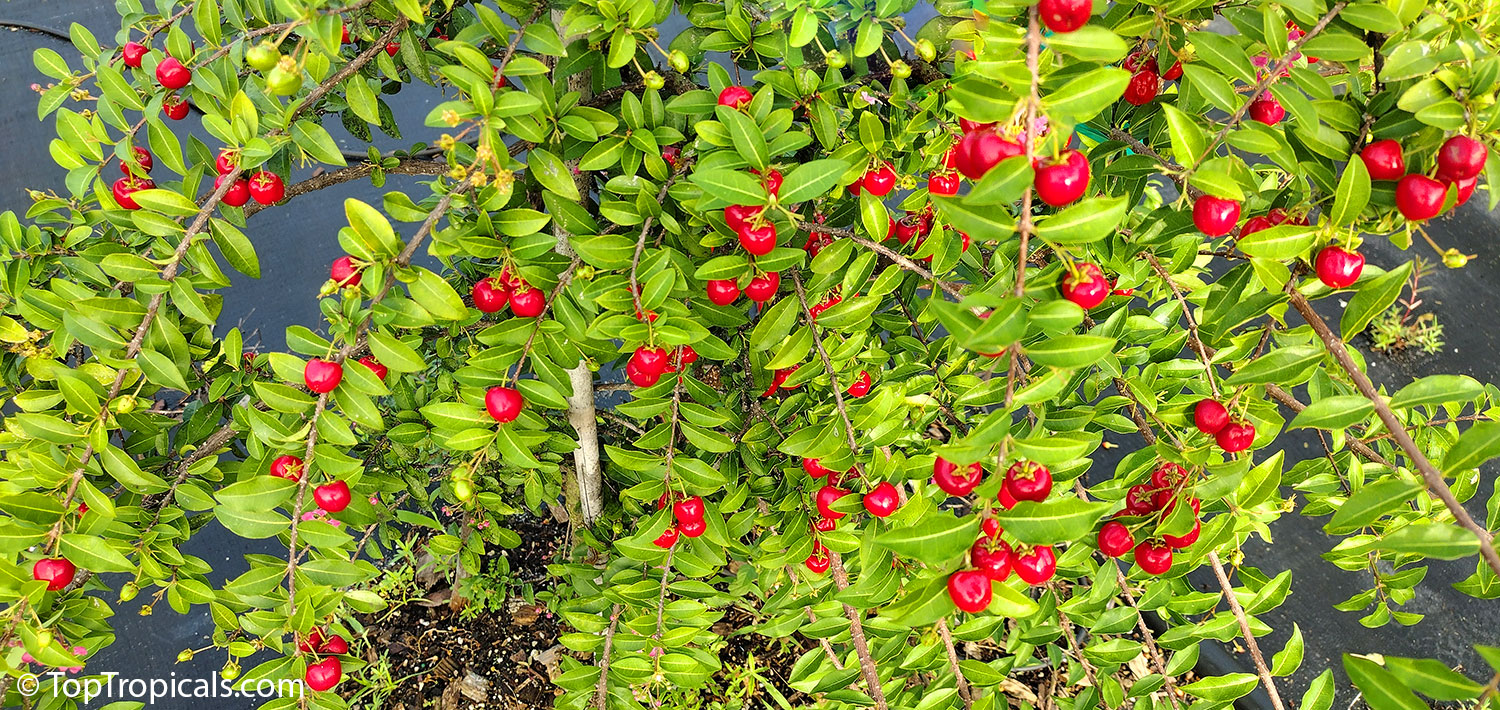
Dwarf  Barbados  Cherry  branches  with  fruit

Photo above: Dwarf Barbados Cherry fruit

When it comes to ensuring the health and vitality of your potted Barbados cherry plants, maintaining a consistent nutrient supply is crucial. Implementing a regular fertilization regimen is essential to promote robust growth, consistent flowering, and bountiful fruit production. For optimal results, we recommend using Sunshine Boosters, which are specially formulated to enhance the development of fruits and edibles. These boosters are derived from organic amino acids, making them environmentally friendly and safe for year-round use. By incorporating Sunshine Boosters C-Cibus into your plant care routine, you can ensure that your container-grown Barbados cherry plants receive the essential nutrients they need to thrive and flourish.
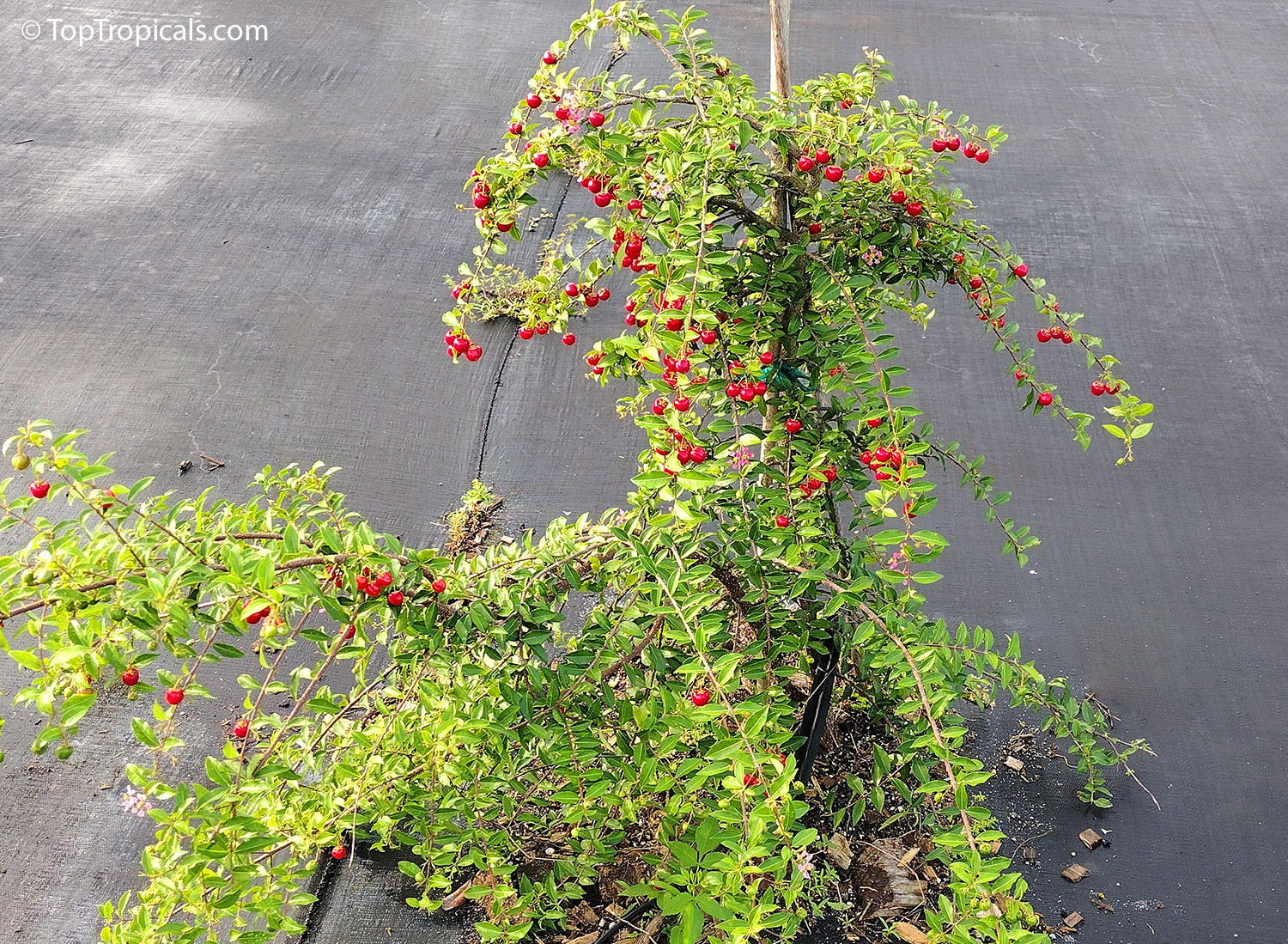
Barbados  Cherry  in  the  ground

Photo above: Dwarf Barbados Cherry in the ground
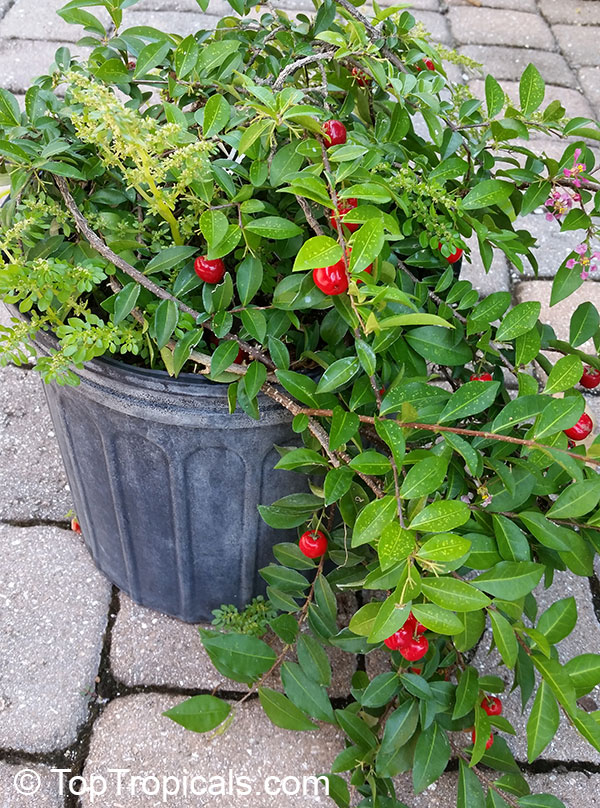
Barbados  Cherry  in  a  pot

Date: 25 Sep 2022

Guava, the easiest container fruit tree

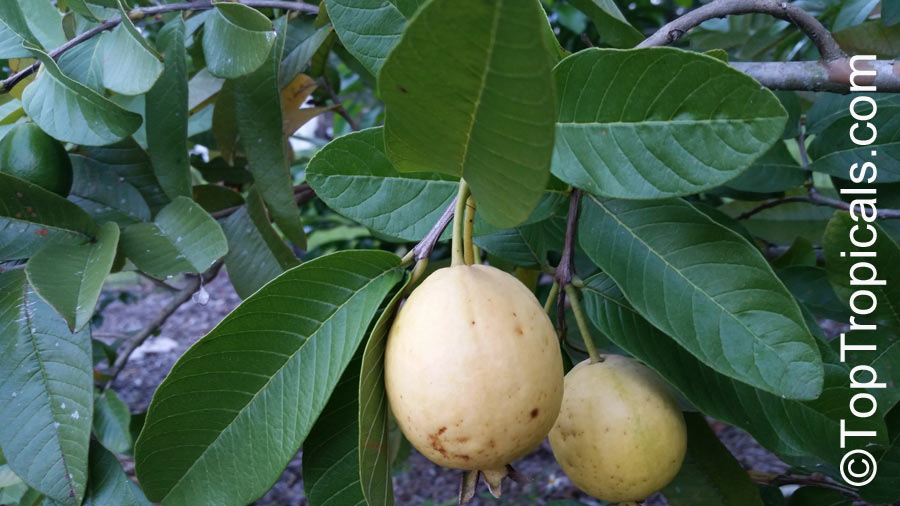
Guava  fruit  on  a  branch

Grow Your Own Food

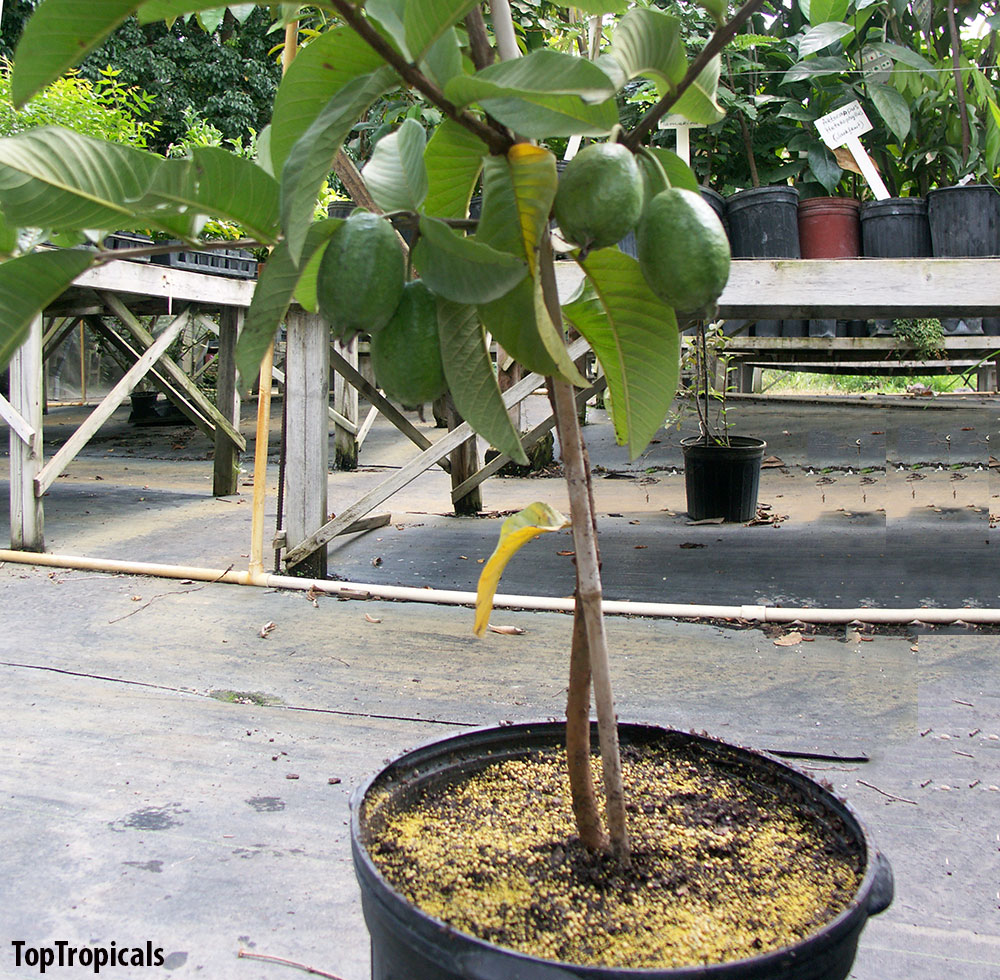
Guava is one of the most popular and well-known tropical fruit because it is so tasty, sweet, juicy and flavorful! Many people are familiar with it because of the large number of products made from this aromatic fruit. But very few people know that Guava tree culture is very easy and this plant can fruit in a pot right away. Guava tree start blooming and producing fruit as small as 1 gal pot size. It can be kept in compact shape, responds well to pruning, stays bushy and grows very fast. It is a perfect container fruit tree or a specimen for a tropical garden of any size.
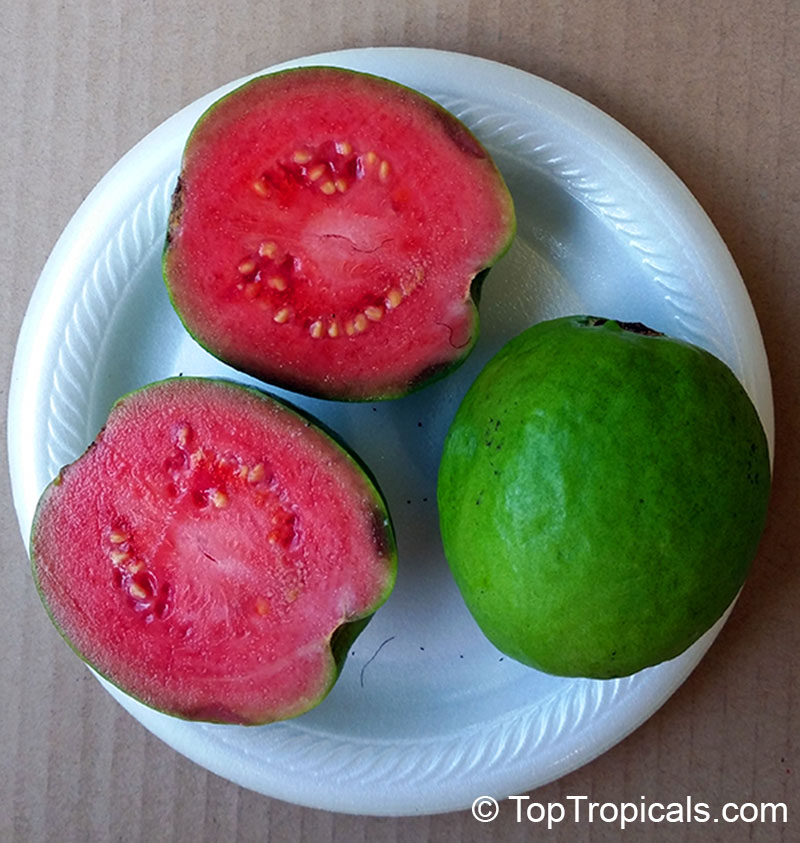
Upon ripening, the fruit becomes soft and juicy. It may be eaten fresh, made into a juice or nectar contain fruit pulp, or made into preserves, jam, jelly, or paste. A distinctive, savory-fresh aroma of fruit is thermo-stable, thus survives processing. The guava is an excellent source of vitamins C and A.
The plant is relatively cold hardy. Our young trees, 3 months after being planted in the ground were exposed to a short period of freeze last winter (mid-20's) but they grew back without significant damage. Try to keep Guava cold-protected for the first winter, then it will be much hardier once established.
Guavas are fast growers and heavy feeders, and benefit from regular applications of fertilizer. Make sure to get some Sunshine Boosters fertilizer: Sunshine C-Cibus - Crop Booster, and feed them your round.

Guava  tree  fruiting  in  container

Guava  fruit

Date: 15 Dec 2020

Plant of the Month:

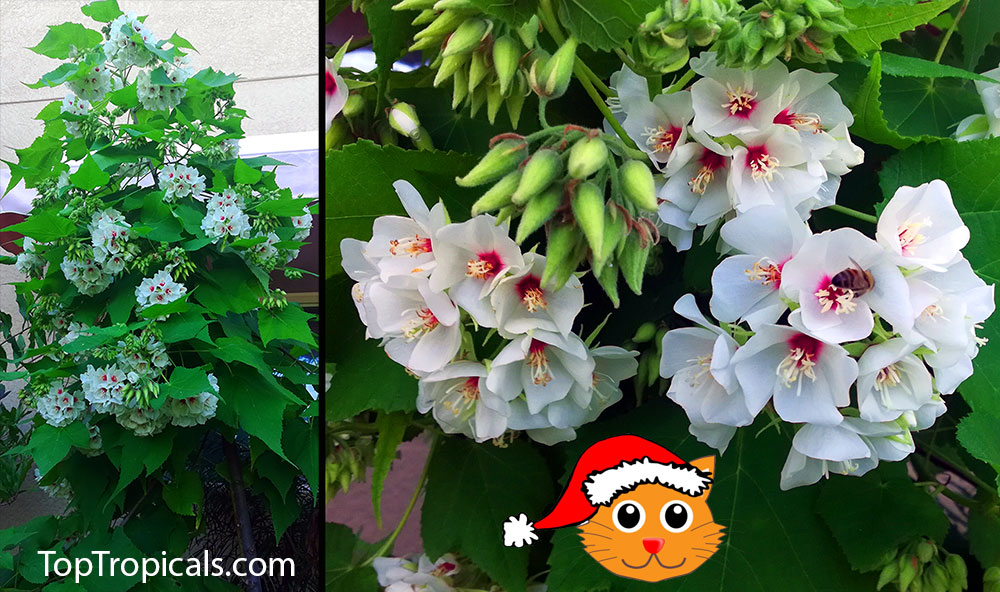
Fragrant Dombeya Tree

Every tropical gardener wants to have a Dombeya (a.k.a. Tropical Hydrangea) in their collection - an easy to grow, fast growing winter bloomer. These plants don't require any special care, thrive in neglect in both sun or shade, and flower profusely during Fall-Winter months - what an awesome treat! Dombeyas are also wanted for their vigorous growth habit - they can cover unwanted view in no time, fill and empty corner in your yard, create a colorful tropical display, and attract lots of butterflies and bees. They are not afraid of water logging, in fact the more you water them, the faster they grow. The large tropical leaves are beautiful - soft, fuzzy, with shallow, maple-like lobes. This plant is tolerant to both light frost and periods of drought.
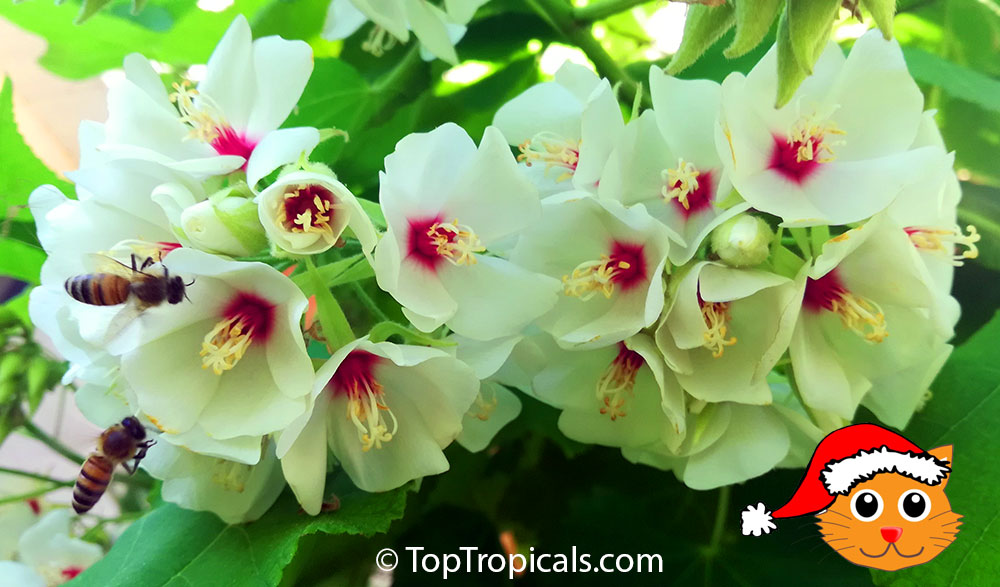
Most Dombeyas grow into round, dense bushes, but this one variety of is very special. Dombeya burgessiae from South Africa actually grows into a small (10-15 ft), pretty, upright tree that is covered with beautiful blossoms during winter. The flowers are creme color with raspberry centers, attracting lots of pollinators, and what is the most special - they are sweetly fragrant! What a beauty!

Surround yourself with aromatic cloud of Dombeya winter blooms!

Date: 15 Oct 2020

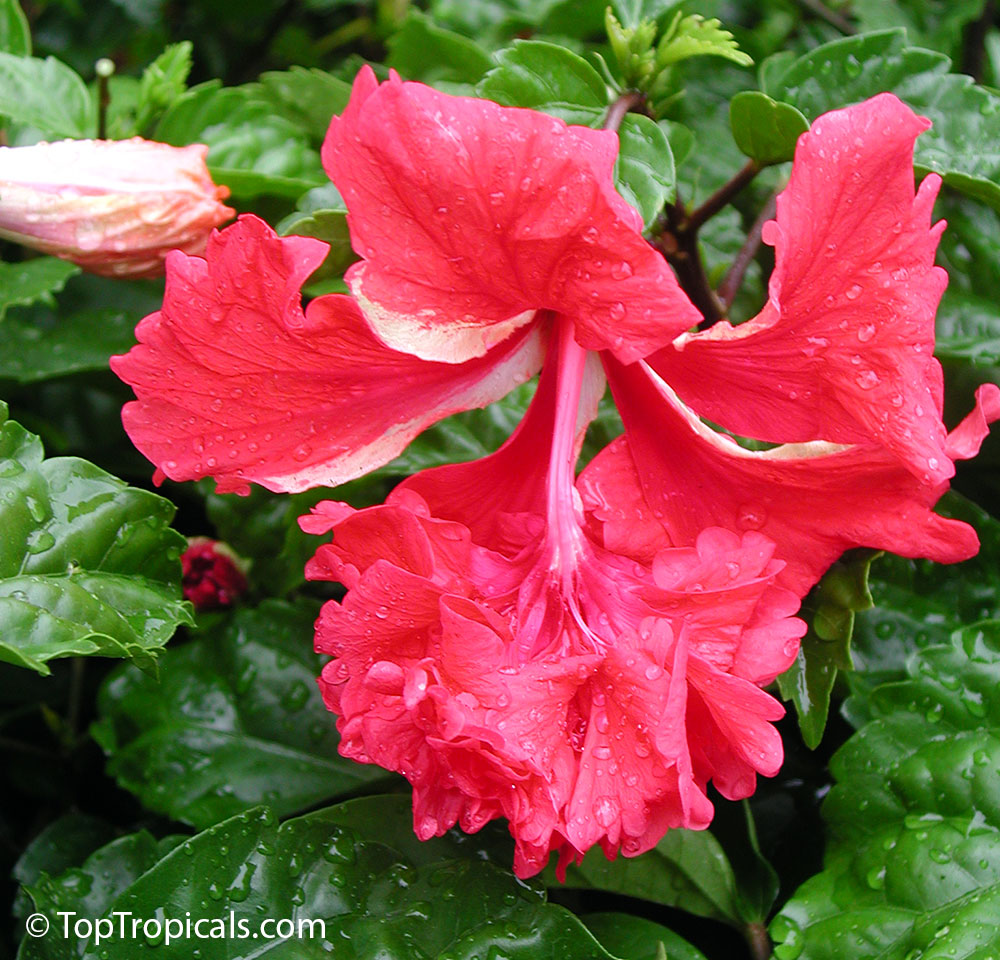
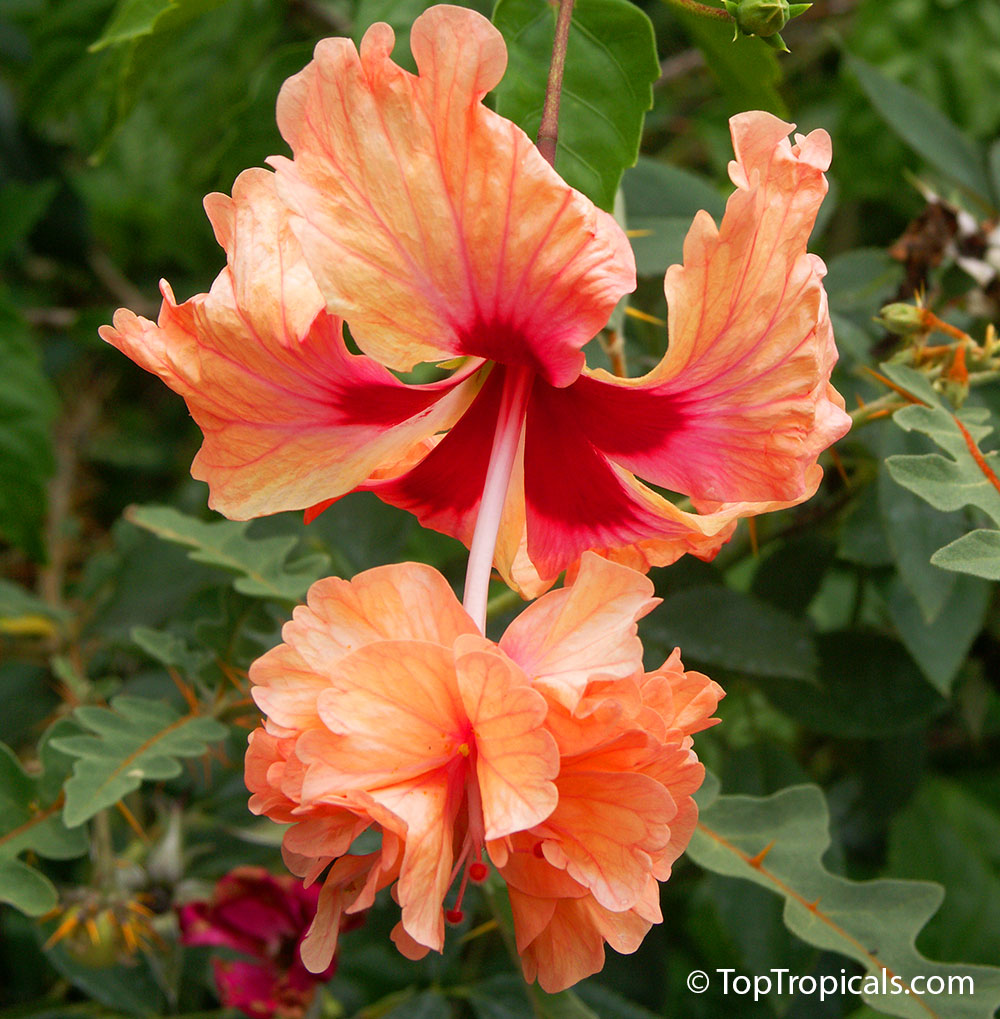
Plant of the Month: Hibiscus El Capitolio

Stevie's Pick: what's in bloom?

Our exotic plant grower Steven Gowdy will spotlight the most interesting plants he discovers and recommends today while working in TopTropicals greenhouses.

OMG! These plants are awesome. The flowers are stunning, ruffled, brightly colored. These are very unique double flowers about 5"long, with ruffled petals, followed by a sort of a stamen, than more ruffled petals... Wow. These are the perfect plants - they can be grown in a container or in-ground, in full sun. They are drought and disease resistant, ever-blooming, can be pruned into a standard weeping tree, or pruned into a bush... It's a convenient, dream plant! Prune frequently, because it blooms on new wood.
Hibiscus El Capitolio grows best in zones 9 through 11. In colder climates leave it in a container outside in the summer months, but bring inside in the winter months.
Remember - ever-blooming! You prune and they will flower all year long. These are fabulous plants that will satisfy any first-time or experienced gardener: you just can't go wrong El Capitolio! They will have you growing happiness... That's true.

Stevie with Kristi and Jamie celebrating his Happy Birthday. Check out Stevie's painting "TopTropicals Theme" at the beginning of this newsletter!

Date: 16 Sep 2019

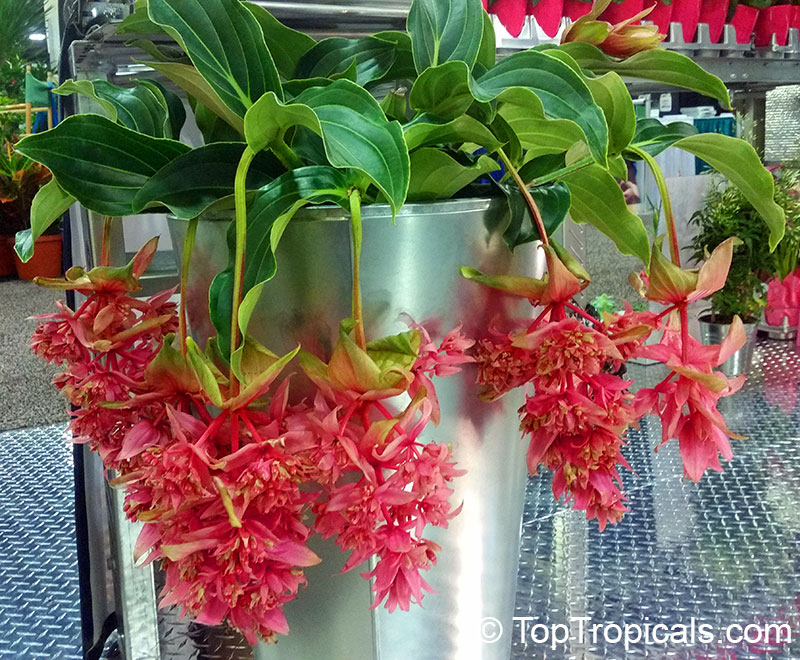
What pot is good for Medinilla?

Q: I just acquired a Medinilla plant. I have a cylindrical tall clay pot that I would like to repot this beauty into. Would like to know if a deep pot is good for this type of tropical plants even if the medium is lightweight with bark and perlite allowing adequate drainage. Would appreciate your advice.

A: Medinillas are very close to epiphytes, meaning they like high air humidity and very good soil drainage characteristics. Clay pots usually provide good air circulation, as long as they are not glazed. If you add a lot of soil conditioner into your mix, like orchid mix and perlite, the tall pot will provide a good drainage. Tall pot is also great for displaying the beautiful pendulous blooms!

Plastic pots work well too, as long as you provide a well-drained soil for the plant. If a nursery plastic pot is not pretty enough, you may place it in a fancy planter; however, make sure never let the pot sit in water, Medinillas do not like wet feet.