Garden Blog - Top Tropicals

Date: 22 Mar 2021

The most rewarding hardy fruit trees
Q: Recently I started working remotely and I kinda like it, no need to commute, it saves me so much time so I can have life now! My friend got me involved into growing some small houseplants but I really want to take advantage of our Florida climate and sun. I want to plant some cool fruit trees since I have a decent size yard. But I live in Florida Panhandle and we do have some occasional freeze in winter, although not for too long. But it gets very hot in summer! Are there any tropical fruit trees that will be happy here? Or should I keep everything in pots? I am excited to have my own tropical plant collection!

A: There is a perfect plant for everyone, and a perfect tree for every climate. Many tropical and especially subtropical plants can be much hardier than they are believed to be, both flowering and fruiting trees among them. You may keep the most sensitive species in pots and bring them inside for winter, while there are so many trees that will be happy in your area. Start with these that are perfect for climates with hot summers and cool winters:

1. Peaches and Plums

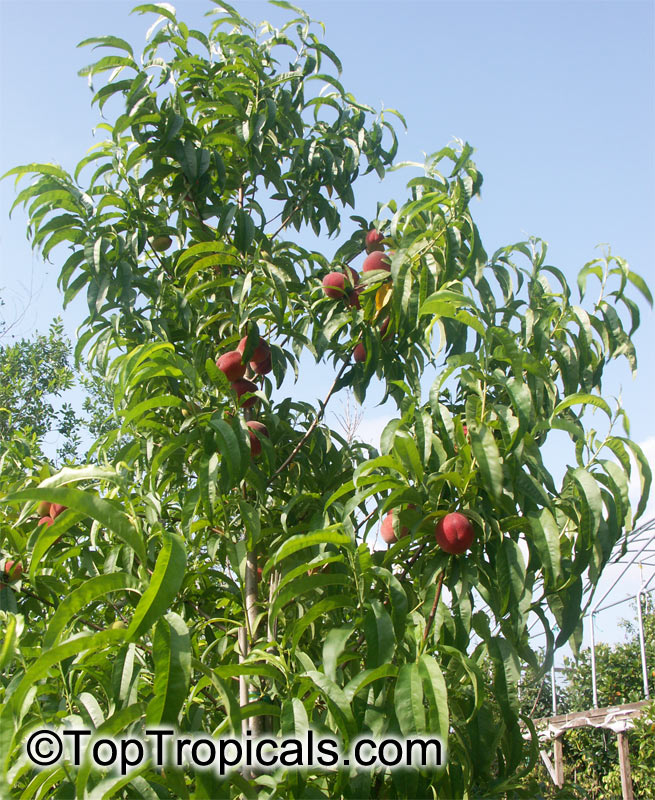
Low-chill, Heat-tolerant Peaches, Nectarines, Plums are especially selected for Florida hot summers. They produce well and do not require many "chill" hours like temperate fruit trees. They only need 150 chill hours and grow well in even in Arizona, so you know they are taking the heat.

2. Figs
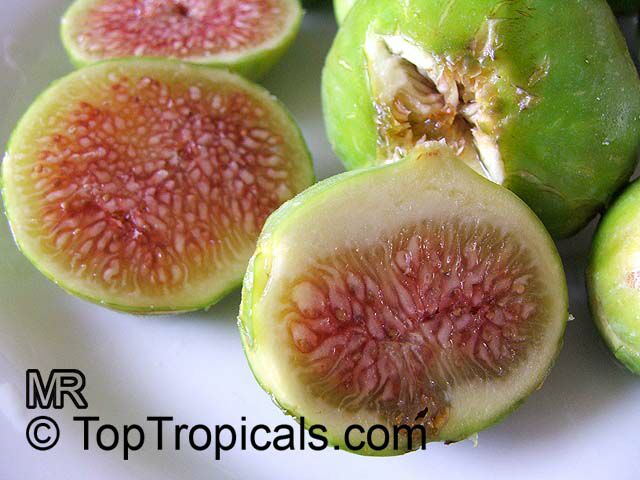
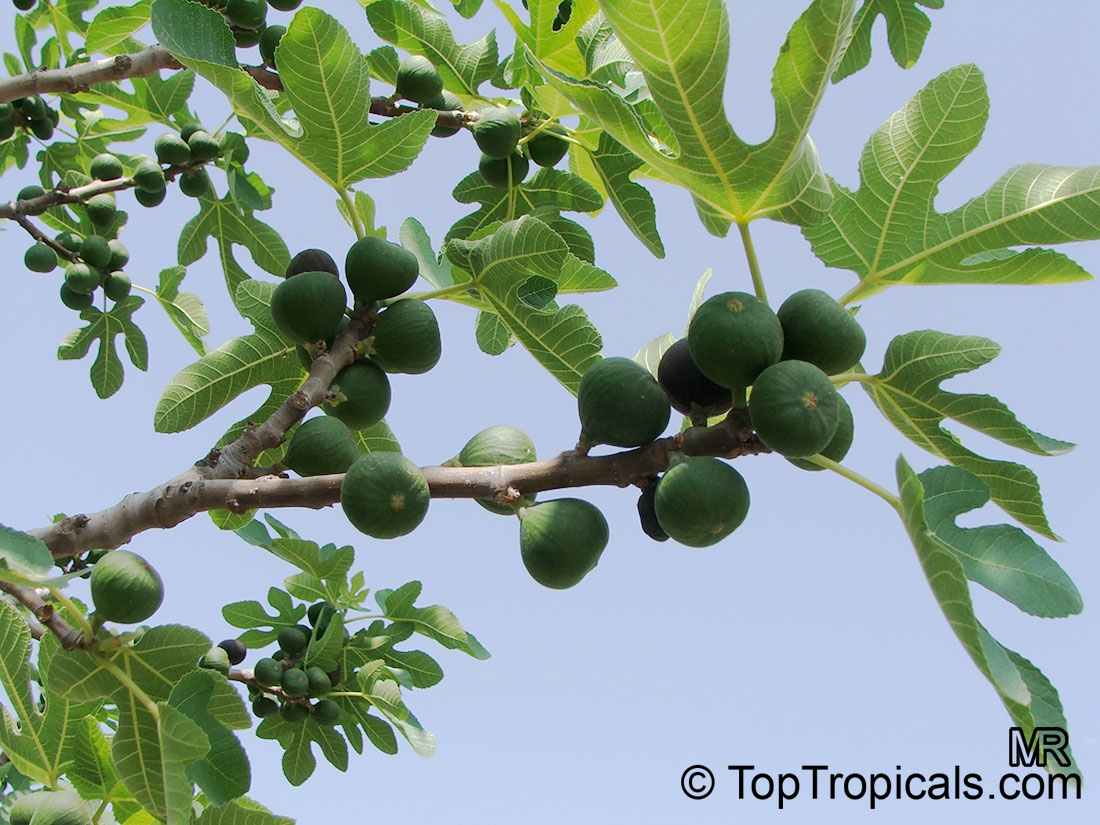
2) Fig trees - they are easy to grow, heat- and drought- resistant trees. They are prized for their delicious fruit, which can be one to three inches in length, violet, brown or black. There are even varieties with yellow fruit. Most fruits are borne from early summer to late fall on new growth, and the fruits generally mature very quickly. These trees are sensitive to frost only when actively growing, but can withstand 10F when dormant. Read more about Fig trees.
Date: 13 Sep 2018

Season Colors from Kristi, TopTropicals Flower Queen

TopTropicals.com

Q: I live in New Jersey and I have a collection of potted tropical plants in my sun room. Our Fall season comes in bright colors, do you have something with colorful foliage for Fall?

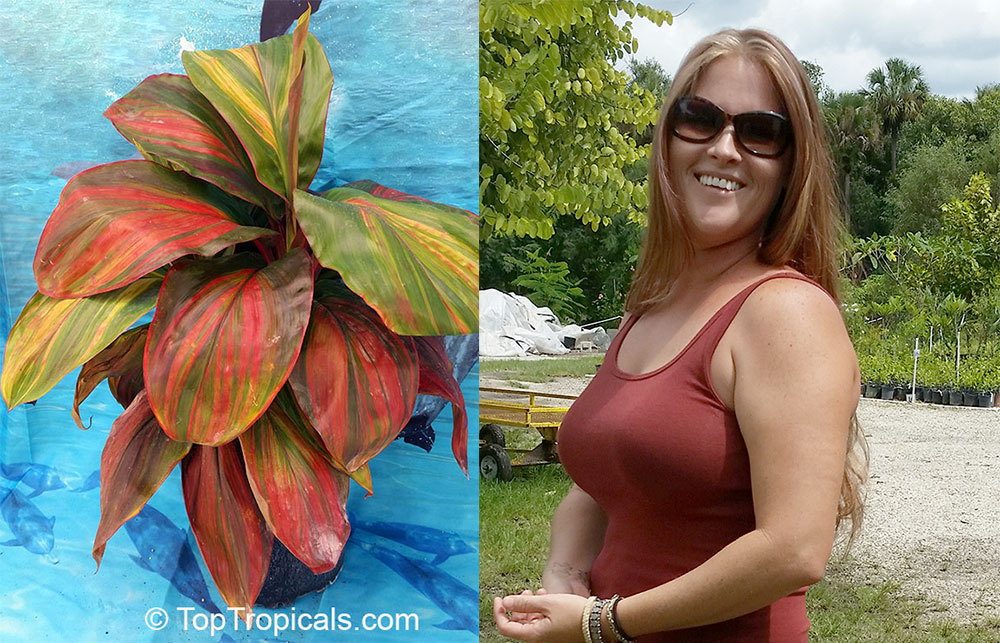
A: For our northern customers it's almost time for the changing of the seasons. It is a very exciting and enjoyable time. The onset of fall means, less humidity, cooler nights and the Fall foliage. Here in Florida we do not get the chance to see the changing of the leaves, except maybe a few like Florida Maple Tree. So we use plants that mimic the season change, for all year round color! These are a few examples of the plants with colorful leaves that you may use for your Fall colors, plus remember - there is always a big list of Fall and Winter Flowering Tropicals!

Colorful tropical plants for Fall

Hibiscus tiliaceus - Variegated Mahoe
Acalypha wilkesiana - Chicago Brick Copper Leaf - see all acalyphas
Mussaenda philippica x flava - Calcutta Sunset Marmelade
Pseuderanthemum atropurpureum Purple Haze
Acer rubrum - Red Maple
Adenium Nil with red veined leaves
Cerbera x manghas hybrid - Enchanted Incense
Cordyline fruticosa Willies Gold - see all codyline
Graptophyllum pictum Chocolate Queen

See Fall and Winter Flowering Tropicals.

Date: 15 Aug 2018

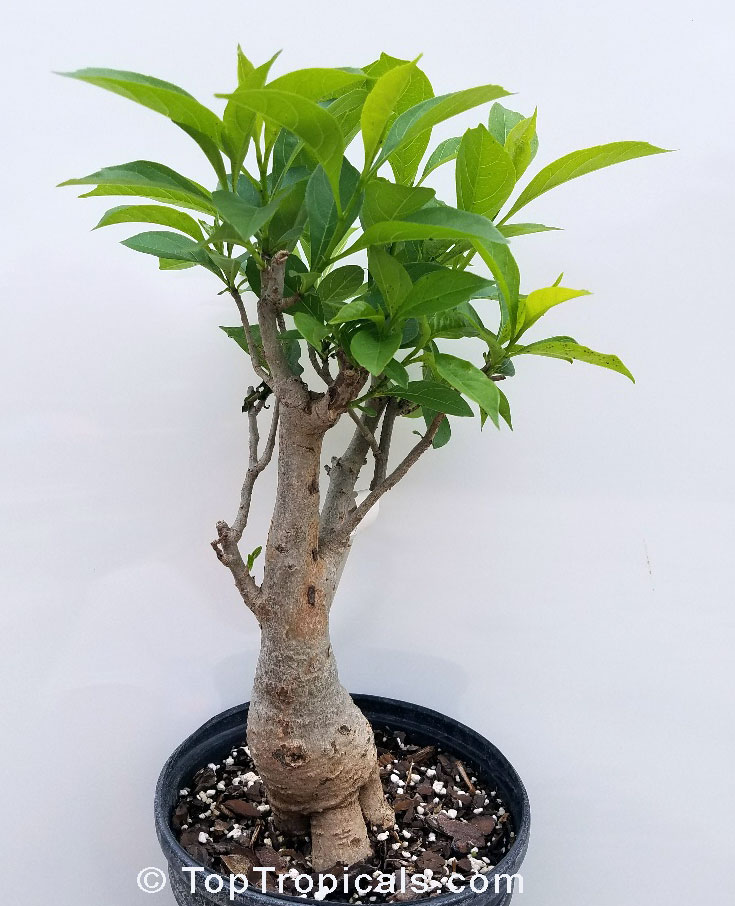
Care for a Baobab Bonsai

TopTropicals

Q: How to grow Baobab bonsai properly? How long does it take to shape a nice little bonsai tree?

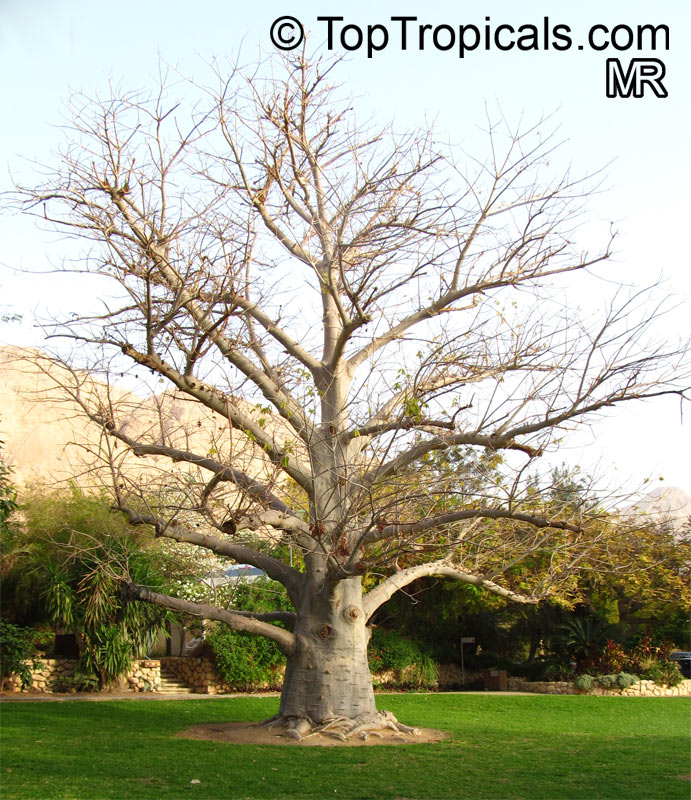
A: Baobab, or Adansonia digitata, is a unique addition to a bonsai collection. Native to Africa, it has an unusual structure and appearance. Some legends say that the tree was cast down from the heavens and landed upside down, where it began to grow. This story is no doubt a result of its appearance in the winter, when the upper branches of the tree look more like roots than treetops. The Baobab has some specific needs, but if you pay careful attention to its requirements, this tree is not difficult to grow and makes an excellent bonsai specimen.
1. Keep Baobab warm, it is sensitive to freeze.
2. Place Baobab in a bright, sunny window. Baobabs need at least six hours of full sunlight per day, so a window with a western or southern exposure is best. If your house doesn't get enough light, supplement natural light with artificial grow lights. See article Indoor lighting for tropical plants.
3. Water Baobab regularly during the growing season whenever the soil is dry. Never water the tree when it is dormant (dropped leaves).
4. Feed Baobab a good-quality fertilizer about once a month. Apply micro-element solution SUPERFOOD once a month, as well as SUNSHINE-BC plant booster for Bonsai and Caudex plants.
5. Prune the branches of your Baobab bonsai as often as they need it to give the tree the shape you desire, pruning or pinching off branches that are growing at odd angles or are too long. Trim early in the spring before new growth appears.
6. Repot the baobab bonsai every year in Spring. Remove it from pot and trim the roots back by one-third of their length, completely removing any that are damaged or dead. Place it in a container that is twice the size of the root ball and fill the pot with a well-drained soil like Adenium Mix.

It is believed that it takes forever to form a nice shaped tree, up to a few years. However if you provide warmth and bright light, branches grow very quickly, and an experienced bonsai hobbyist can make a unique specimen within 2-3 years. And then, the tree will stay with you for 5000 years - it can be passed from generation to generation!

Check out this plant... with FREE shipping to all states!
Se also Baobab Bonsai Kit and save more!

Date: 18 Nov 2021

7 reasons to get an Aroid Houseplant

1. It's almost Winter... You need something tropical in your home! Aroids have the most tropical look!
2. Aroids tolerate low light conditions of indoors.
3. Aroids require almost no care. Care is easy because if you watch for the signals, the plant will tell you exactly what it needs
4. Aroids adapt to wide range of conditions. Many of them thrive in neglect and survive even in sub-optimal conditions... Unlike most tropicals, Aroids don't experience much stress when moving from indoor to outdoor settings and adapt readily to conditions inside the home.
5. Aroids are compact and easy to manage.
6. Aroids are fast growing while still being compact.
7. They are on sale now!

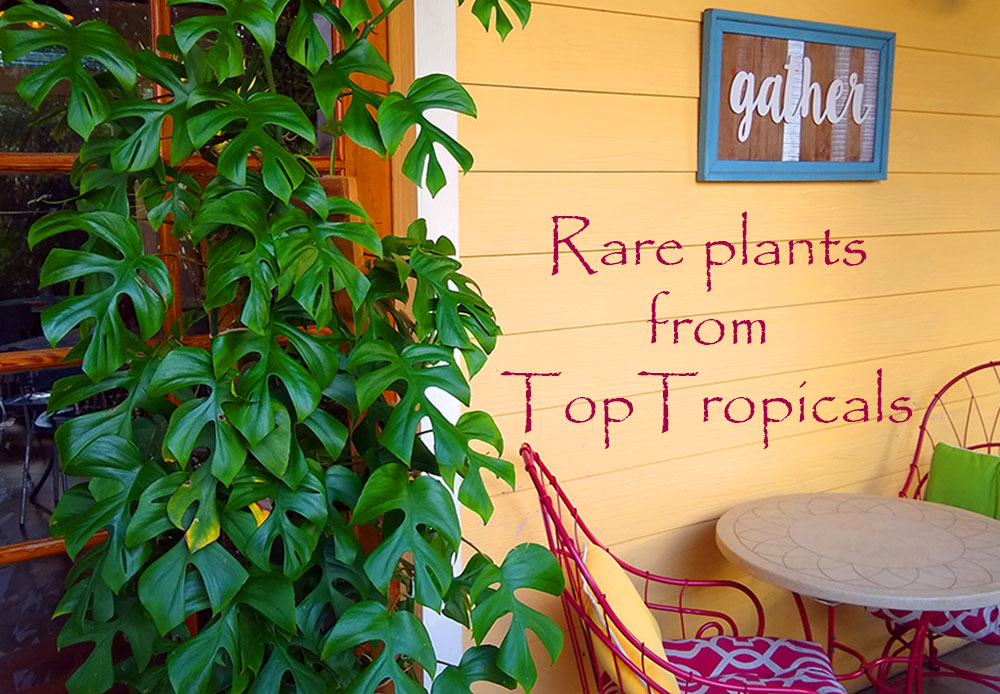
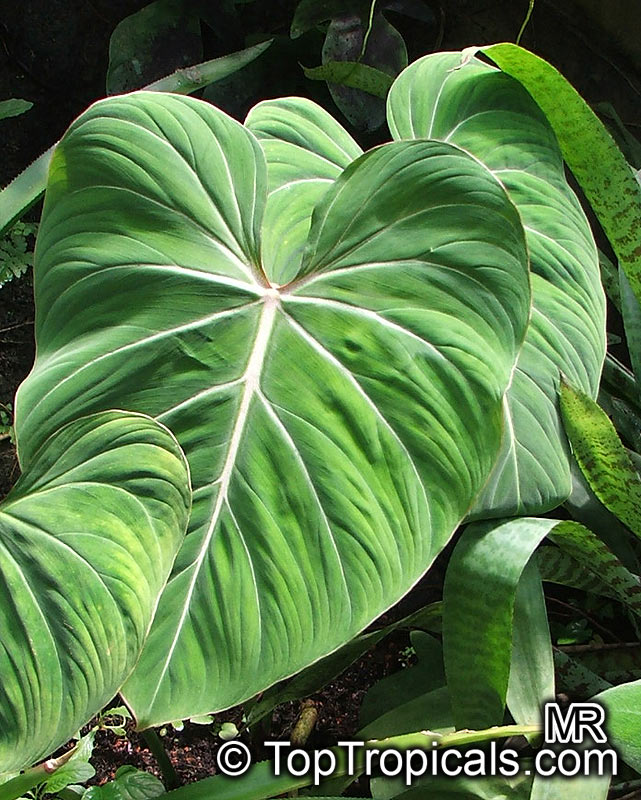
Check out our Philodendrons, Monsteras, Fancy Syngoniums, Alocasias, Colocasias.

Date: 25 Feb 2021

Healthy Plants: Q&A from Mr Booster

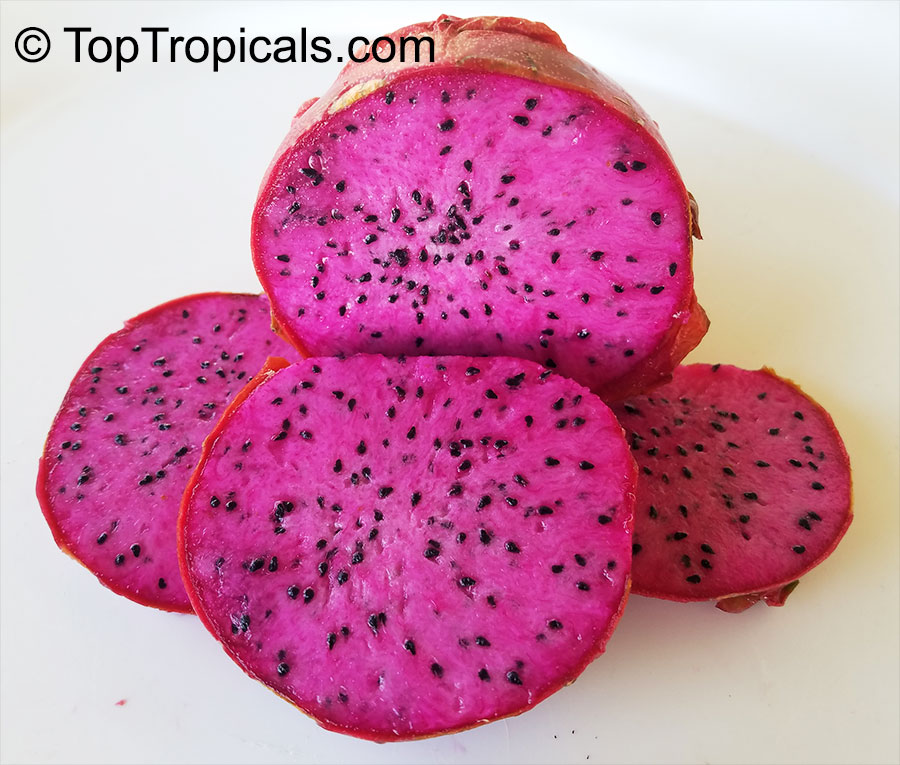
Dragon Fruit Magic Tricks

Q: I purchased two sweet red pitayas, that arrived and were planted on May 28, 2020, they were damaged but not serious. my question is this one pitaya is a beautiful green, and has grown 6or 8 "already, the other is bigger and is a grayish green and has not shown any sign of growth at all in six weeks, how long do I wait before I throw it out and buy another?

A: Being a cactus, sometimes Pitaya slows down its growth waiting for more favorable conditions. If one of your plants doesn't show any new growth, just give a it some more time and make sure the plant stays happy. To make pitaya happy, provide the following:
- Water. Unlike most cacti, Pitaya prefers regular watering (but not a wet soil). Make sure it is planted in well-drained media. Do not water again if soil remains moist, wait until it dries out on the surface. During hot weather, Pitaya enjoys light daily watering.
- Light. Unlike most cacti, Pitaya benefits from a filtered light especially while establishing. Try to create a temporary shade over the plant until it starts active growth (if grown in the ground), or move the pot in filtered light. Dull color or dry spots are signs of sun burn. Once the plant shows new growth, you may remove sun protection, or move the pot gradually into the full sun.
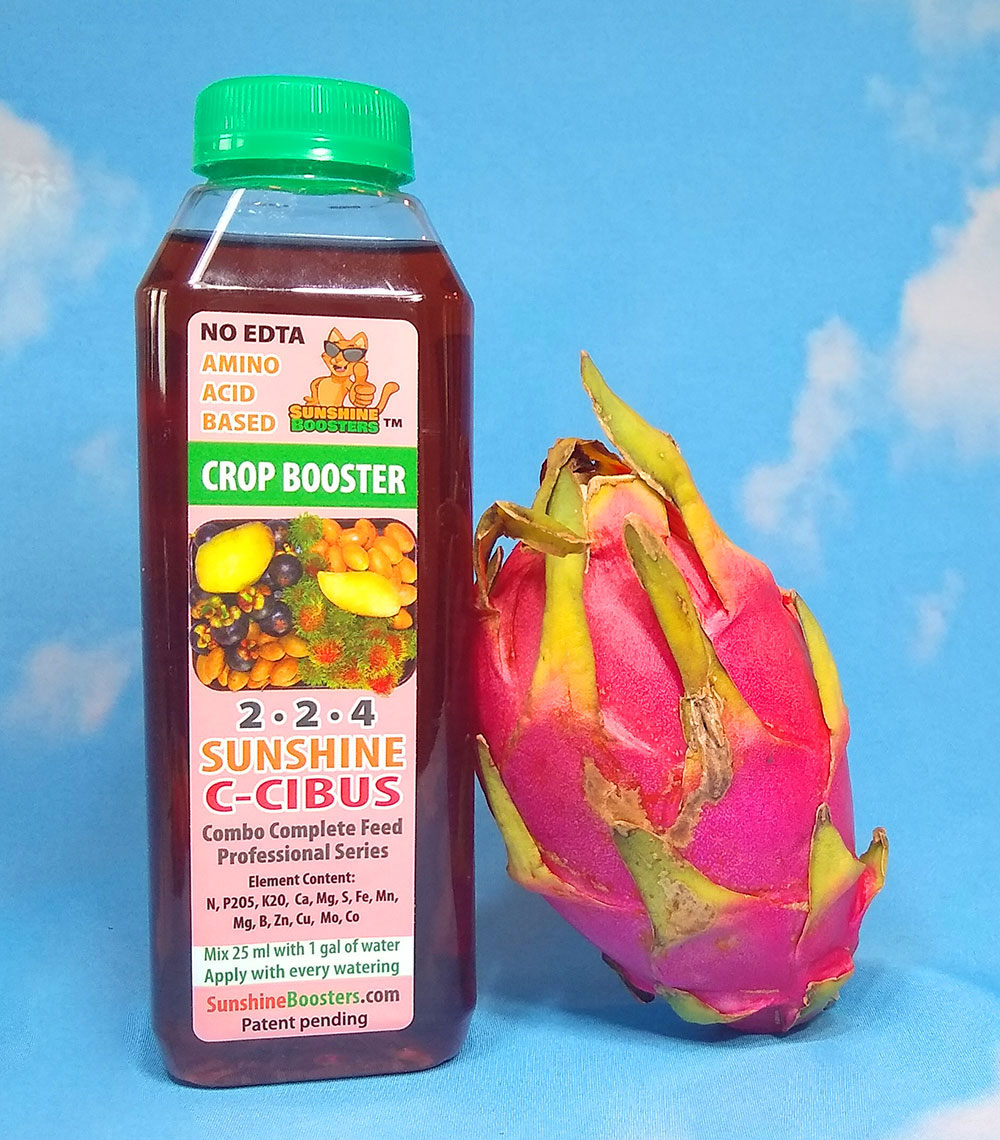
- Food. Pitayas are heavy feeders. Use the following fertilizer:
SUNSHINE C-Cibus - Crop Nutrition Booster

Q: I've been growing dragon fruit cuttings from Okinawa, Thailand and Vietnam for several years in pots and cannot get them to fruit. Any fertilizer suggestions? I live in Northern Virginia so I bring the massive pots in the garage under lights and a heater for the winter but back outside once the temperature warms up.

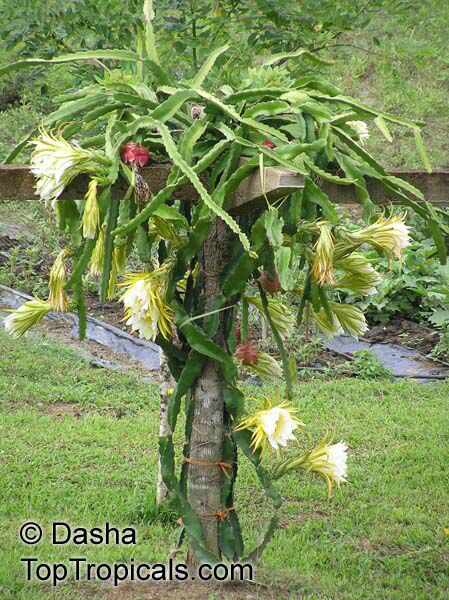
A: There is a little trick to get Dragon fruit to flowering and fruiting. This plant likes flowering when it is attached to a strong support. In commercial plantations, they use special trellises/frames made out of logs, but you can make one yourself using simple materials.
See article: Do-It-Yourself Support Structure for Dragon Fruit.
And of course, don't forget a special plant food for tropical fruit - Sunshine C-Cibus.
You can successfully get your Dragon fruits to fruit in pots, providing bright light in Summer. In Winter, keep the plants on a dry side to give them some rest and a chance to hibernate before the next fruiting season.