Garden Blog - Top Tropicals

Date: 19 Sep 2024

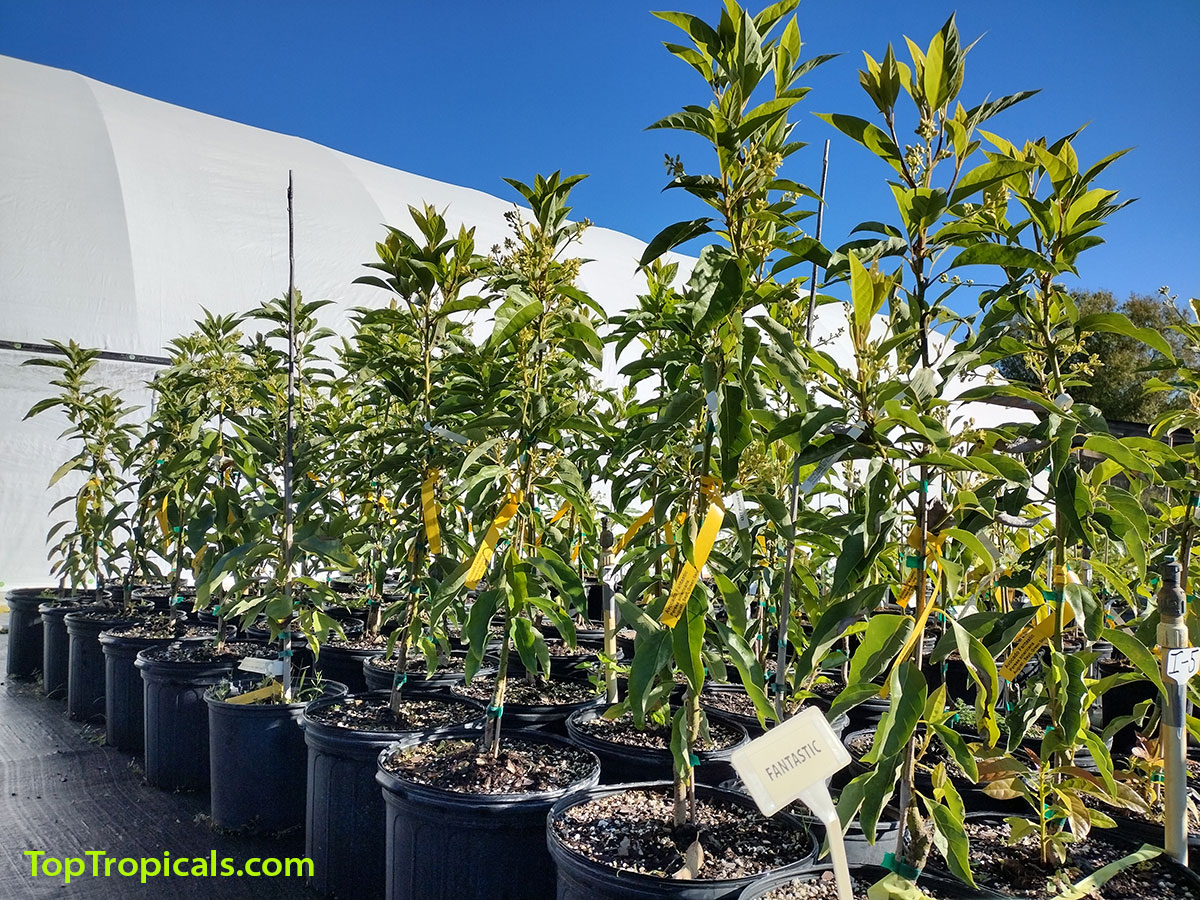
Enjoy FREE SHIPPING for Mangos and Avocados!

Free  shipping

Two taste better than one!

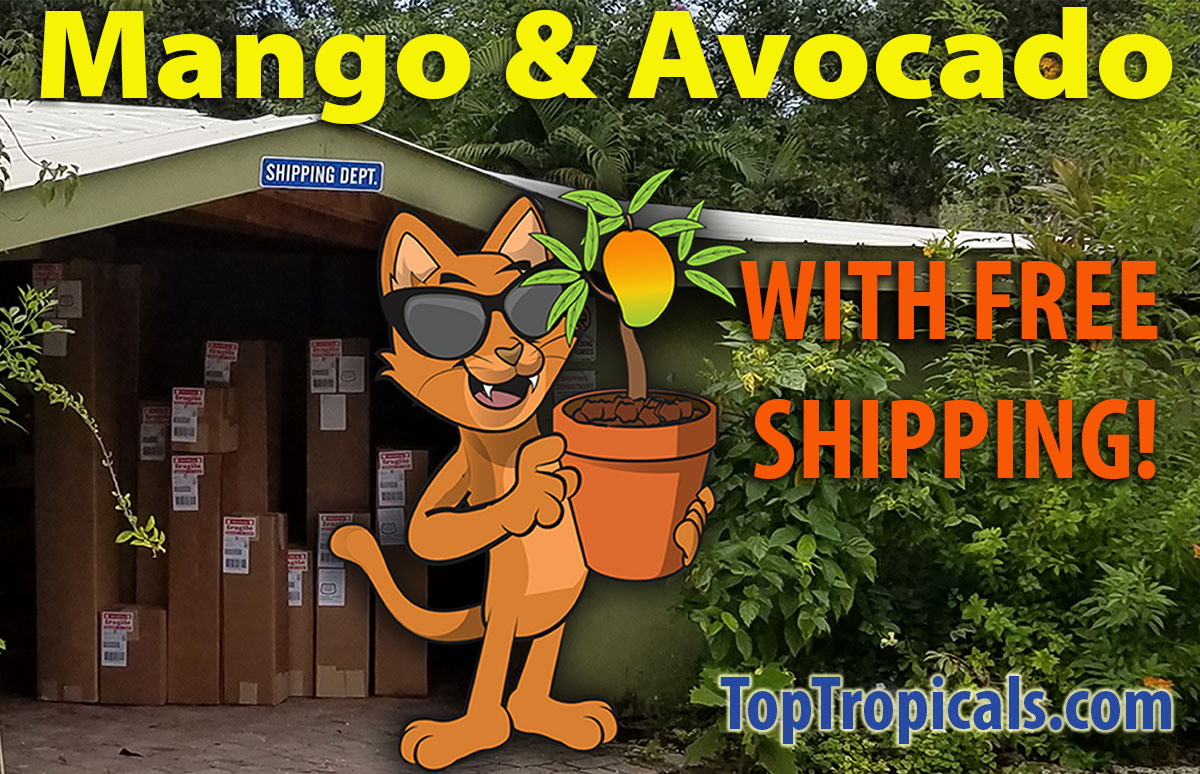
Limited time offer: FREE SHIPPING for Mangos and Avocados!
Buy any 2 (or more) 3-gallon mangos and/or avocados, in any combination, and those plants will ship to you for FREE!

We've managed to slash your shipping costs by working with our shipping partners. Now we are passing the saving to you!

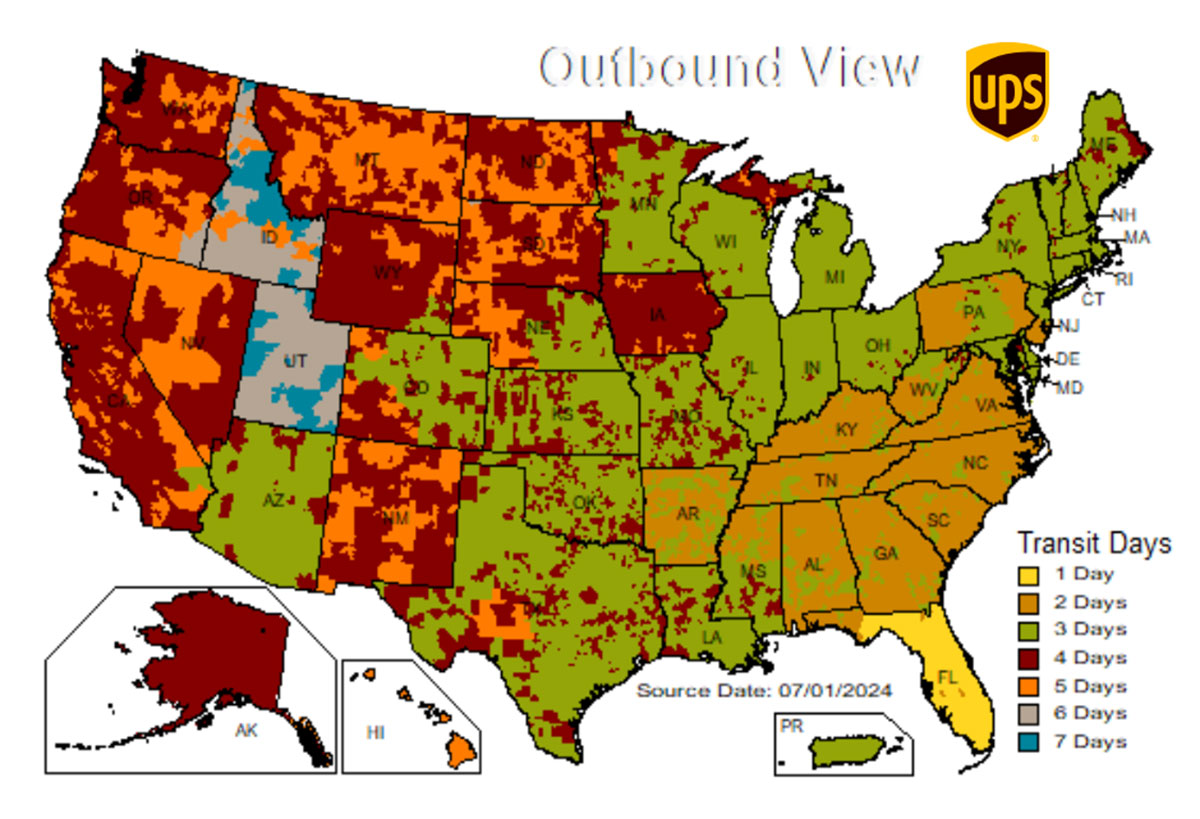
This promotion applies to ground shipping up to 4 days for eligible Florida*, Texas and California zip codes. Check the outbound UPS ground map below (from 33905) for qualifying locations. You can also see qualifying zip codes in your shopping cart.

Promotion applies to 3 gal size pots only. Any other plants in your order are subject to our normal shipping rates and policies.
Expiration: October 31st or while supplies last.
Must be UPS serviceable address, no PO Boxes.
*Free shipping of all Mango and Avocado trees to Florida has no expiration date.

Free  shipping

Avocado  trees

Cat  in  a  box

Date: 17 Jan 2025

How to take care of a mango tree in winter

Mango  tree  indoors  with  a  cat

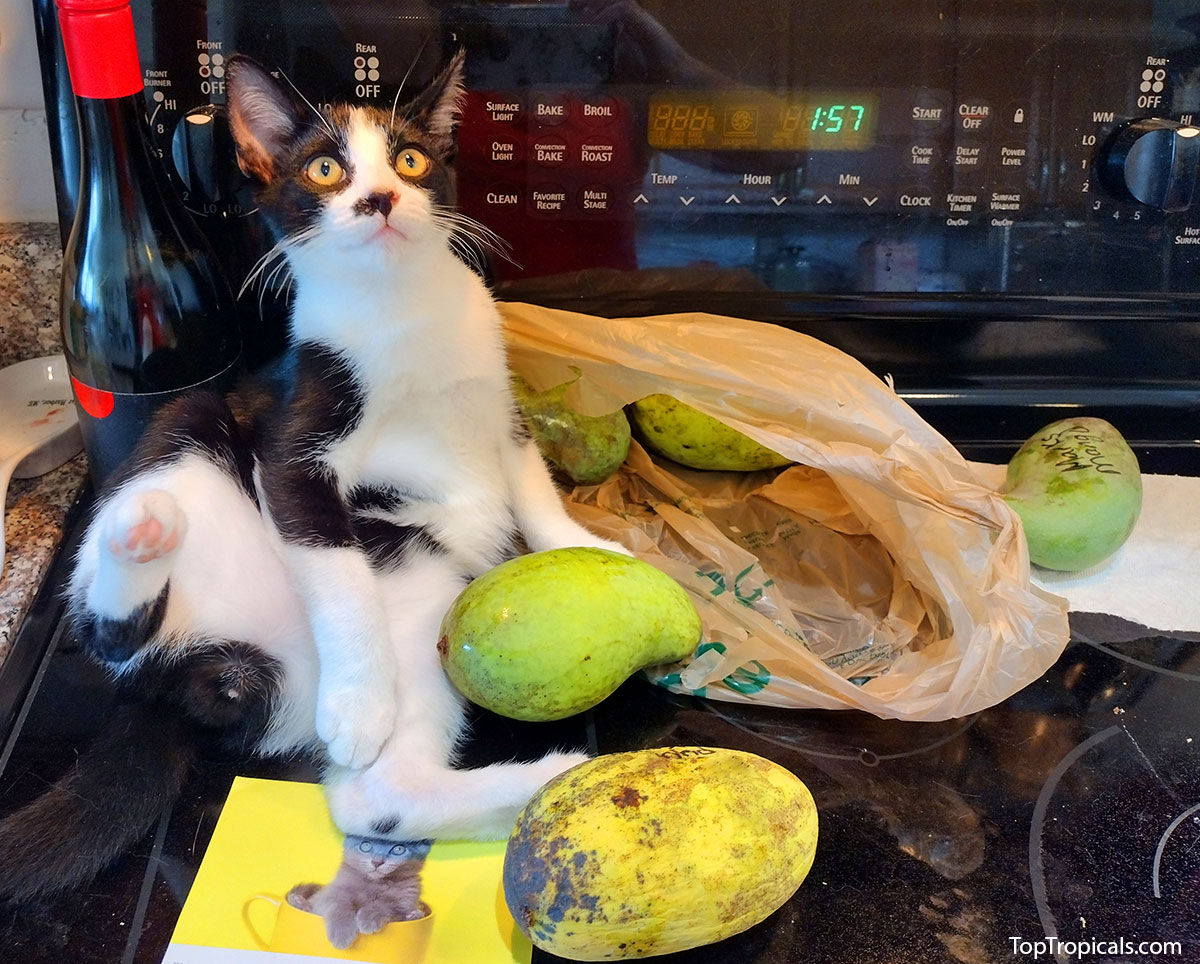
Q: I bought a mango tree for my husband for Christmas, and we are having kind of a butting of heads on how to take care of it. I personally feel that he has over-watered and over-fertilized. Any advice how to take care of a mango tree in winter?

A: We're happy to help you with your mango tree. It sounds like you're facing some common issues, and we'll guide you through the best care practices, especially for winter.

Watering.
During winter, mango trees need minimal watering. Overwatering can cause root rot, especially when temperatures are low. Water the tree only when the soil feels dry about 2 inches deep.

Fertilizing.
Avoid feeding in the winter with dry fertilizer. It may cause root burn, plus encourages new growth that is more susceptible to cold damage. Wait until spring when the weather warms up to resume heavy feeding your tree. You can continue using Sunshine Boosters natural liquid fertilizers - Sunshine Mango Tango: it is safe to apply year around since its intake is regulated by reduced water, and only the necessary amount of essential elements will be delivered.

Temperature Protection.
Mango trees are sensitive to cold. If you live in a region with freezing temperatures, move your mango tree indoors or to a sheltered location like a garage with a bright light source. If it's in a small container, consider bringing it inside for the winter.

Sunlight.
Ensure the tree gets as much sunlight as possible. If indoors, place it near a South-facing window where it can soak up the sun during the day.

Check for Pests.
Winter can bring pests indoors. Regularly inspect the tree for any signs of insect problems around the leaves and stems.

By following these guidelines, your mango tree will be healthier and better prepared for the next growing season.

Learn more: Mango trees and how to deal with cold weather.

Cat  with  mango  fruit

Date: 27 Feb 2025

What Fertilizer to Use Now and How?
Five important keys to healthy plants

Sunshine  Boosters  Selection

Q: It's early Spring this year. Should I start fertilizing my plants sooner than usual?

A: Most fertilizer instructions recommend fertilizing tropical plants from March to November. This is because plants don't need as much food during the cooler months when many go dormant, and excess nutrients can burn the roots if not absorbed. However, for the most effective fertilizer program and healthy plants, consider these points:

1. Sunshine Boosters Year-Round

Liquid amino-acid-based fertilizers like Sunshine Boosters are safe to use year-round. Since watering is reduced in cooler weather, the intake of water-soluble fertilizer is also lower, providing plants with just the essential nutrients for their minimal needs.

2. Dry Fertilizer Schedule

Be cautious with dry fertilizers. Apply them only during active growth in the hot season.

3. Temperature Is Key

If March is still cold, delay dry fertilizer use. However, if nighttime temperatures in February stay above 65F, you can start a dry fertilizer program using slow-release, granulated plant food.

4. What Fertilizers to Use and How

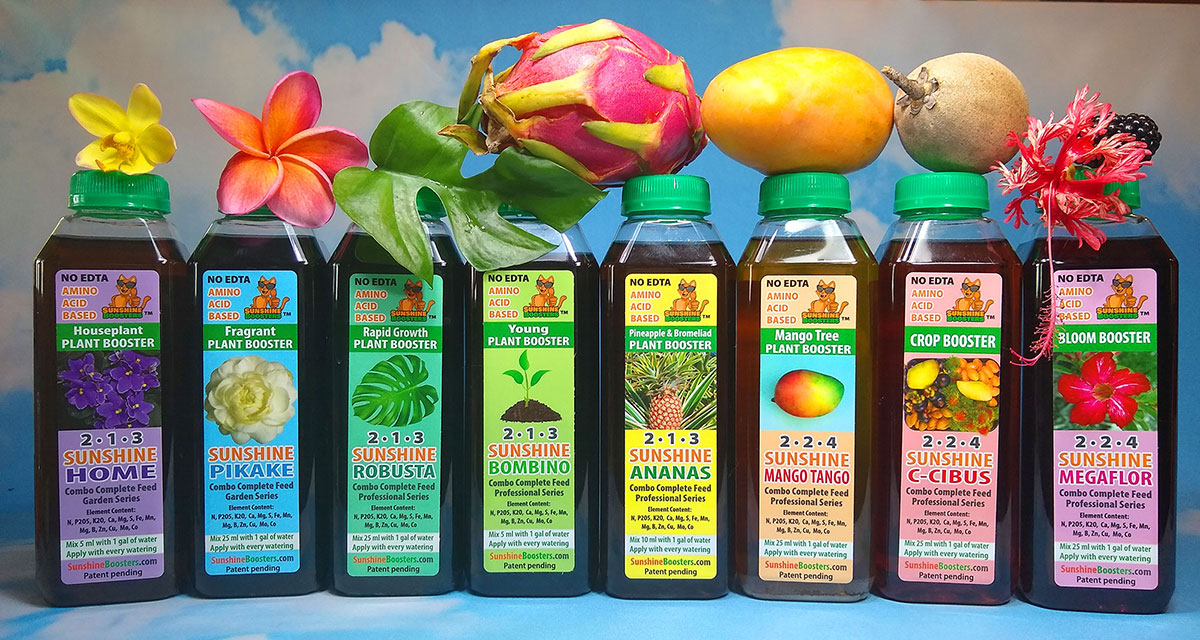
Check out our Sunshine Boosters selection for different types of plants and choose the right type for your needs. These can be applied as often as with every watering:

For Rapid Growth
Sunshine Robusta - Rapid Growth Booster: general fertilizer for both foliage plants and small starters that need an extra boost.

For Flowers
Sunshine Megaflor - Bloom Booster: boosts flowers on established plants; and Sunshine Pikake - Fragrant Plant Booster: best for fragrant flowers.

For Fruit Trees
Sunshine C-Cibus - Crop Booster: contains all necessary elements for fruit trees and their production. Sunshine Mango Tango - specifically formulated for Mango and Avocado trees, and Sunshine Citron - ideal for citrus trees.

For Tender Perennials
Sunshine Orchidasm - Orchid Total Feed and Sunshine Ananas - Pineapple and Bromeliad Booster: mild formulas for these tender perennials.

5. Microelement Supplements Are a Must

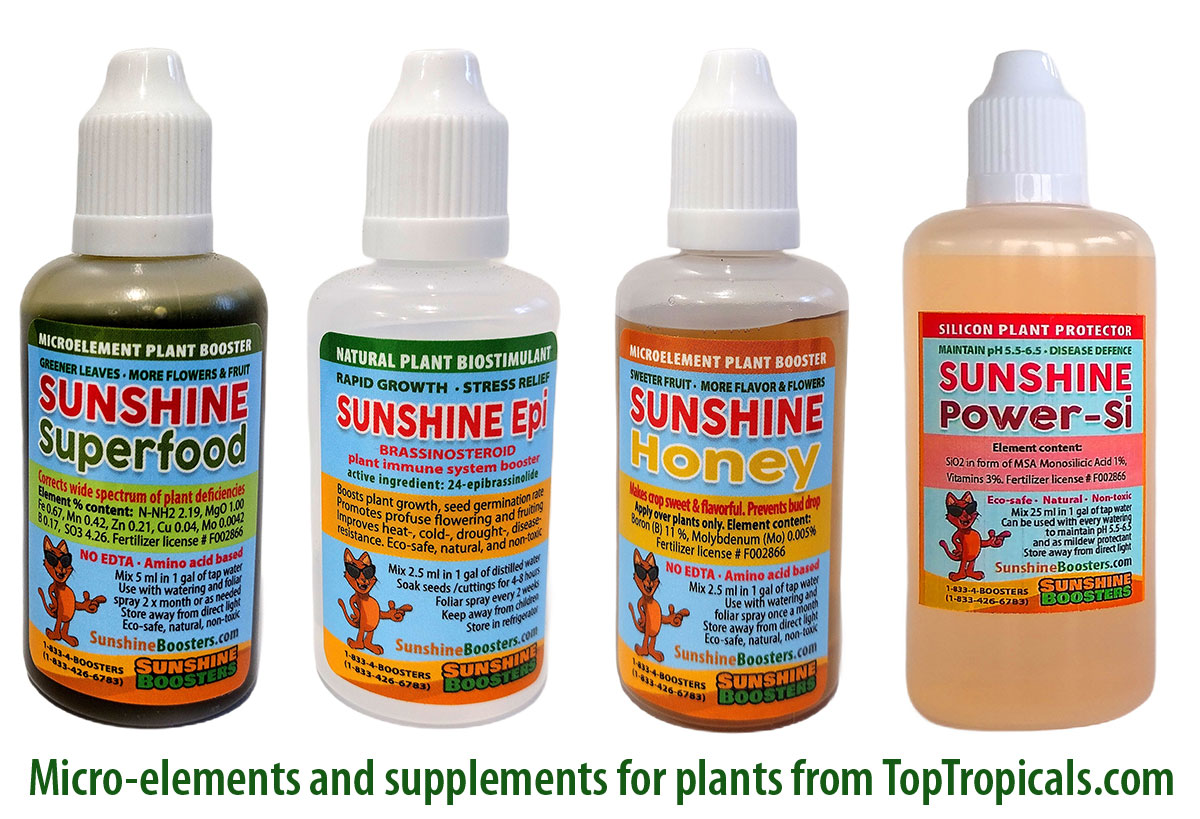
Besides macronutrients, plants need additional microelements, just like humans need vitamins. Be sure to apply these supplements along with your regular plant food:

For Green Leaves and Health
Sunshine SuperFood - Complex Microelement Supplement: a must for healthy plants. Apply once a month.

For Stress Relief
Sunshine-Epi - Brassinosteroid Plant Hormone: essential for plants recovering from stress (shipping, transplanting, drought, insect damage, cold stress, etc.). Apply as needed.

For Sweeter, Bigger Fruit
Sunshine Honey - Fruit Sugar Booster: application on fruit trees will make fruit bigger and sweeter by directing sugars to the fruit from other plant parts, and helps to prevent bud drop. Apply 4 times a year: at bud setting, flowering, fruit setting, and after harvesting.

For Better Resistance
Sunshine Power Si - Silicon Protector - enhances resistance to insects, diseases, drought, and frost, while boosting growth. Apply once a month, along with Sunshine SuperFood.

Need Help? Our Plant Experts Are Ready to Assist!

Microelements  and  supplements  for 


plants

Date: 5 Apr 2025

Go Bananas - up to 20% OFF Banana Trees!

Now through 4/15 - Limited Time Only!
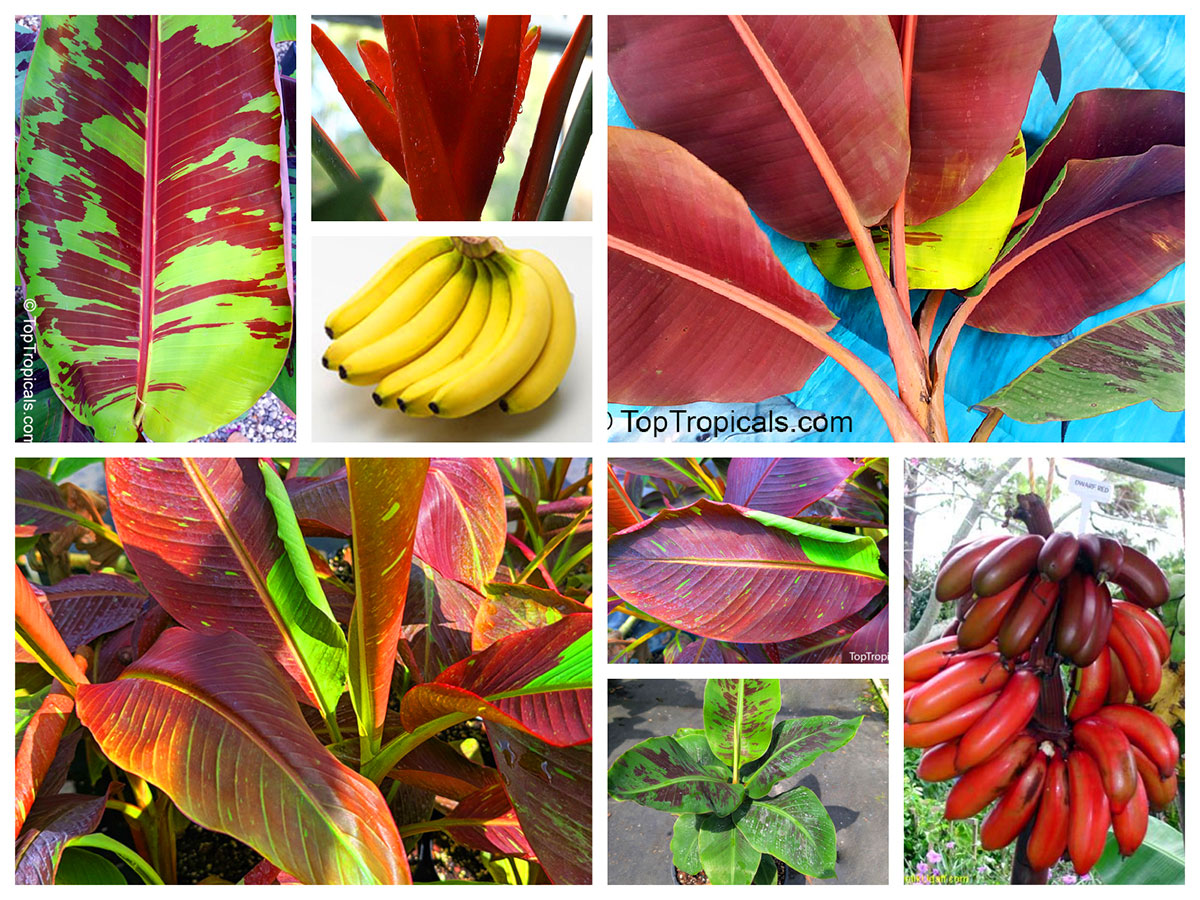
Banana  varieties  collage

Banana Health Benefits

Bananas are a powerhouse of nutrition - rich in potassium for heart health, and packed with vitamins B6 and C to boost energy and immunity. They come from fast-growing, easy-care trees that thrive in warm climates or containers. Whether eaten fresh, blended, or baked, bananas are a naturally sweet and tasty treat you can grow yourself!

Ready to turn your garden into a tropical paradise and grow your own delicious bananas? Now's your chance - use our offer below!

A Banana for Every Space and Taste

At Top Tropicals, we've got over a dozen top banana varieties - from exotic ornamental beauties like Blood Leaf and Siam Ruby to edible showstoppers. Edible varieties range from popular, heavy-producing types like Double Mahoi to rare collector favorites like Ice Cream (Blue Java) - the kind you'll never find at the grocery store. We also carry dwarf varieties that grow just 4 feet tall but still produce full-sized fruit - perfect for containers, patios, and small spaces. Collect them all - edible, ornamental, dwarf, rare - and enjoy the fun, flavor, and beauty of growing your own banana grove.

From Collectors to Beginners - We've Got Your Banana

"Growing bananas is like growing sunshine. They bring energy, beauty, and fruit to your doorstep." - said Dr. Richard Campbell, tropical fruit expert and co-creator of the condo mango concept.

Growing bananas is easy, low-maintenance, and budget-friendly. With Sunshine Boosters plant food, these tropical favorites grow fast and can start producing as soon as next season! Whether you live in the South or up North, in a house or an apartment - you can grow your own bananas in the garden, on a balcony, patio, or lanai and enjoy the taste of the tropics at home.

Special Offer

Get instant 10% off all bananas for 1 week only, plus extra 10% OFF sitewide with code below for qualified orders.

Additional 10% off your entire purchase (including any other plants), saving total of 20% on your Banana trees:

GOBANANAS

Min order $150, excluding S/H. Exp. 4-15-25

Hurry, offer ends April 15th!
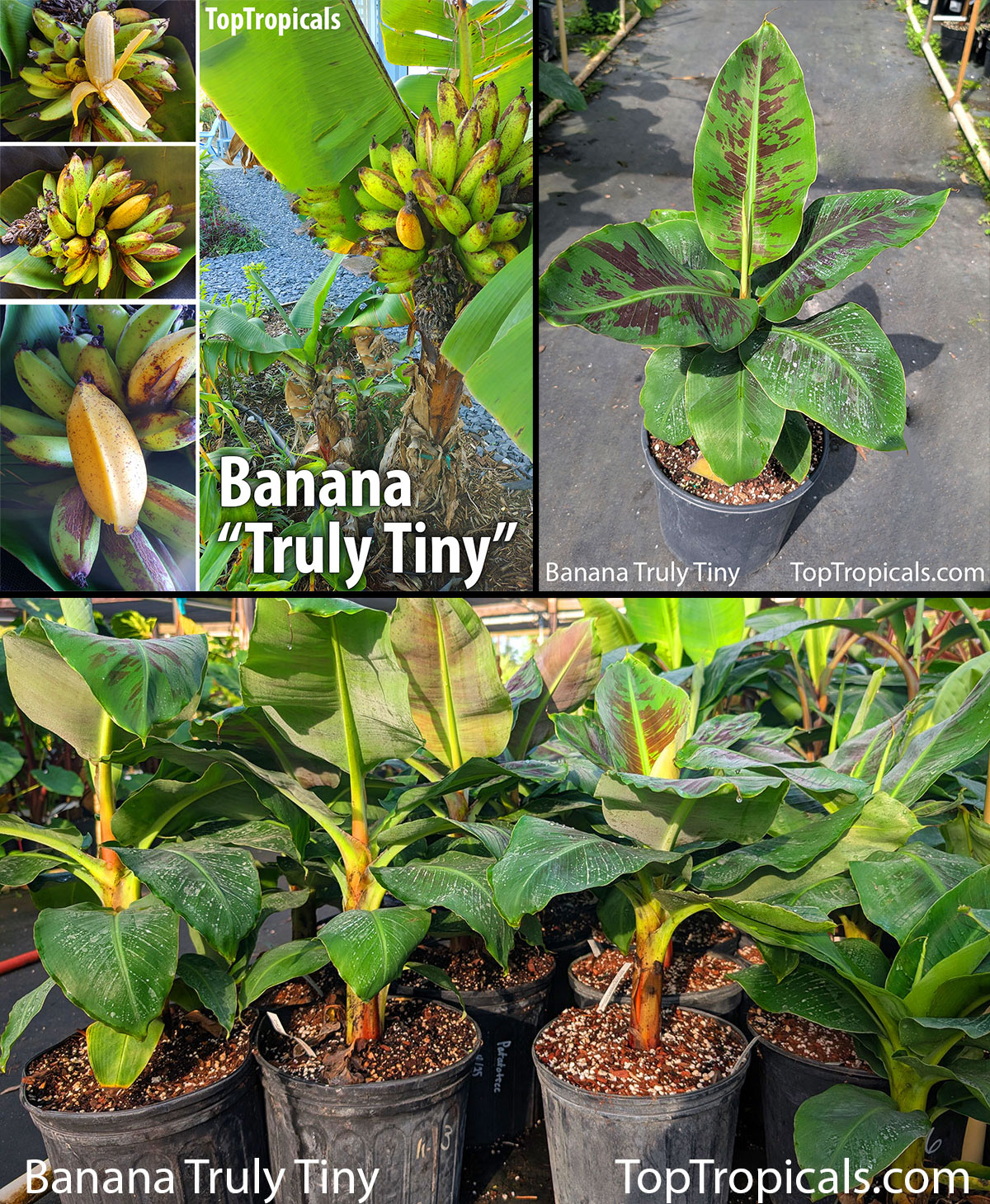
Banana  Truly  Tiny

Learn More About Banana Varieties:

- Top Ornamental Banana Varieties - Which One Belongs in Your Garden?
- Best Edible Bananas to Grow - Sweet, Unique, and Delicious!
- How Many Banana Varieties Can You Grow? (More Than You Think!)
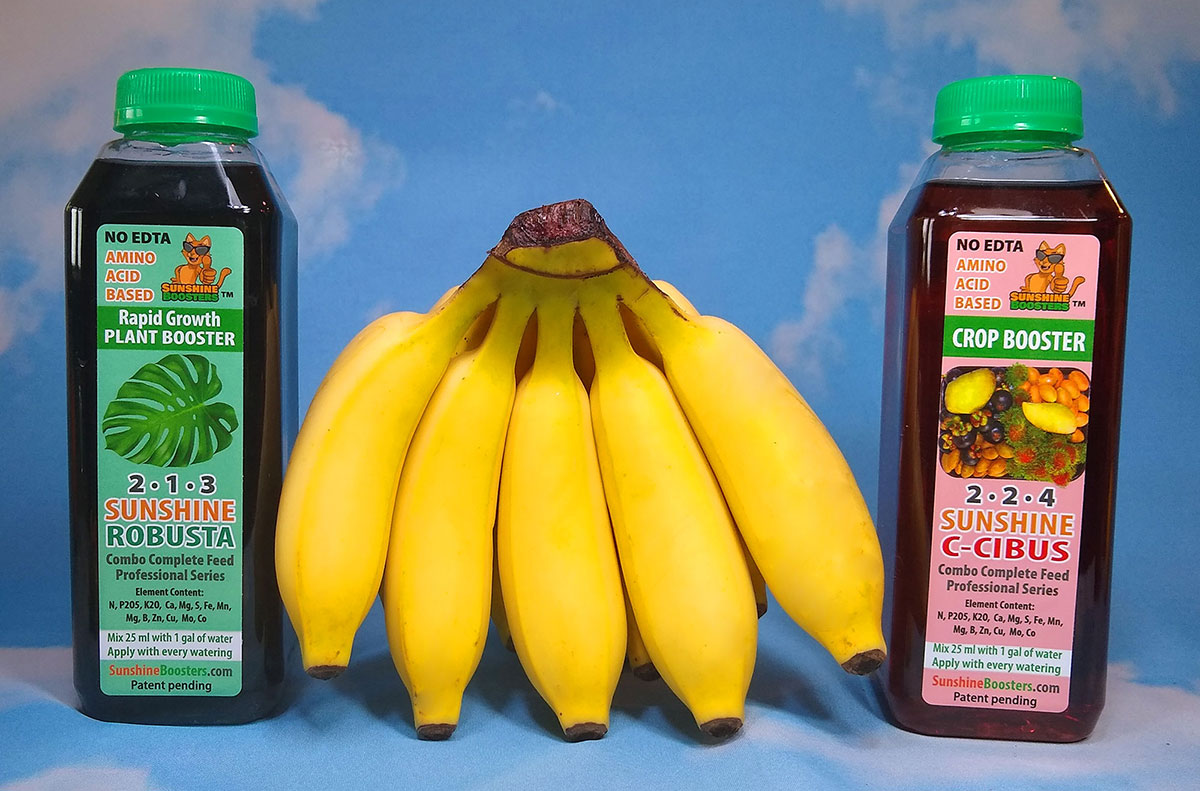
Sunshine  Boosters  fertilizers  for  Banana  trees

In the photo above: Sunshine Boosters are the best fertilizers for ornamental (Sunshine Robusta) and edible bananas (Sunshine C-Cibus).
Date: 24 Jun 2018

Cold hardy tropical fruit trees for Luisiana

Q: I've just moved to Louisiana and have been wondering whether it would make sense to plant some tropical fruit trees in our garden. Average lows in New Orleans are 41 deg F in January and February, although we did hit 25 once with the Arctic vortex. I'm interested in litchi, longan, rambutans, and persimmons. Do you have varieties that can tolerate Louisiana's temperature range? I'd love mangosteen but I don't suppose they will survive. Do you have any suggestions on tropical fruit trees that I could try?

A: Average temperatures are for statistics only; it is actual temperatures that may hurt your cold sensitive plant. This is what you should keep in mind when starting your tropical fruit collection:
1) Ultra-tropical plants like Rambutan can not survive winters below 45-50F. However, they can be successfully grown in containers in a greenhouse or moved indoors into a sun room during cold periods.
2) Tropical plants like Litchi and Longan may take some light frost once established. Still, for areas with freeze our advice is - keep them in pots and move inside in case of cold.
3) There is a number of subtropical fruit trees that are hardy enough to take some freeze. Persimmon, Feijoa, Fig, Cattley Guava, Jujube, Kiwi, some Eugenias and others. Please refer to our Tropical Fruit Sensitivity Chart.
4) Remember that plant's ability to survive winter depends on several factors, not only temperature itself. Important factors are: wind protection (chill wind kills rather than low temperature itself), exposure, how close the tree is planted to the house, plant maturity and its overall strength and health. If a plant had received good nutrients during summer, has well established root system, planted in enclosed area protected from winds and has plenty of bright sunlight - it has better chances to survive than a weak plant in warmer conditions.
5) Use SUNSHINE plant boosters for improving cold tolerance of your tropical plant. It only takes a few drops, and only costs $5!