Garden Blog - Top Tropicals

Date: 5 Sep 2016

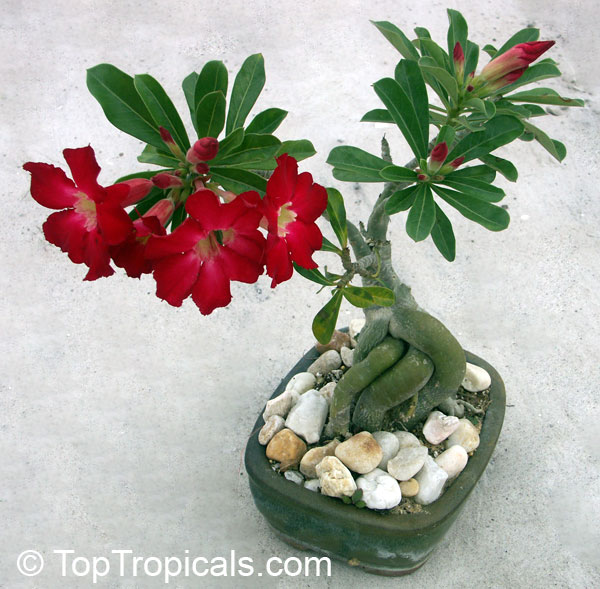
Planting instructions for bare-rooted succulent plants

Q: I would like to order a few Adeniums from your selection. You website says "shipped barerooted". What do I need to know about potting these plants before I order?

A: Adeniums do not require much soil; large 4-5"wide caudex plant can be grown in 1 gal pot. After unpacking the plants, position it in a pot, size of root system. Use only well-drained soil with high content of perlite and/or sand. Cactus mix can be used too, although we recommend using our special TopTropicals professional soilless potting mix. Water once and keep in warm (75-80F) place in filtered light. Do not water again until soil dries on surface. Once the plant is established and starts growing new leaves (may take a few weeks), gradually move it into brighter light. Then you can start fertilizing it. You may place shells and lime rocks on top of adenium planting, as these plants benefit from slightly alkaline soils.

See Info sheet on Adenium care.
See full list of Adeniums.
See full list of Plumerias.
See full list of Euphorbias.

Date: 1 Aug 2016

Growing gardenias indoors

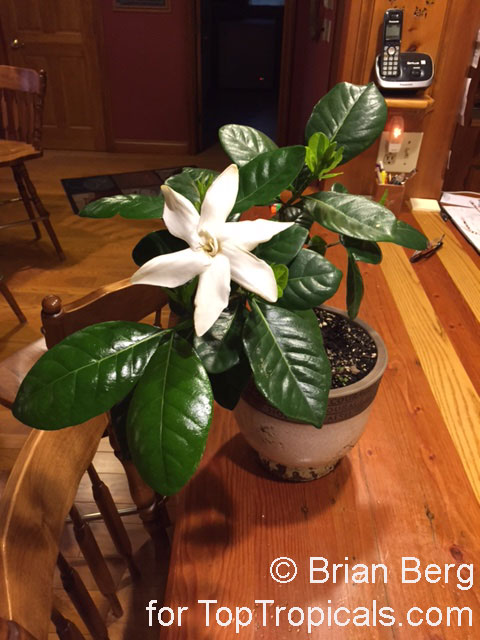
From Brian B, WI: Just wanted to share this photo of one of the plants my parents got from you 3 months ago.

Q: Gardenia taitensis is my favorite gardenia. I would need to keep it indoors under a grow light. Is it worth trying to grow indoors or is really difficult? If so, can you recommend and indoor plant that has big fragrance and blooms often?

A: When growing gardenias indoors, four most important factors must be taken in consideration:
1. Bright light (Southern window and/or proper lighting set up)
2. Proper watering (gardenias love water, but roots are very sensitive to excessive water)
3. Rich organic soil with perfect drainage characteristics, regular feeding with high phosphate component and micro-elements containing Iron or Ferovit.
4. Insect control (inspect underneath leaves regularly and apply systemic or on-contact treatments as needed). See target=_blank>Top Tropicals video on easy insect control.

We definitely recommend Gardenia taitensis (both single and double flower varieties) for indoor culture. Another species, Gardenia vietnamensis, is even easier in cultivation as it takes wide range of conditions and may tolerate slight overwatering (unlike other varieties which are more sensitive). These three mentioned gardenias are somewhat tolerant to low light conditions. Under a proper care, they will grow successfully even in bright shade, however for blooming they require as much light as you can provide. Properly adjusted growing light may be helpful. You may refer to our article about indoor plant lighting in our magazine Tropical Treasures, Issue # 15, or website page.

Date: 24 Jun 2016

Coastal plants. Suggestions for coastal regions


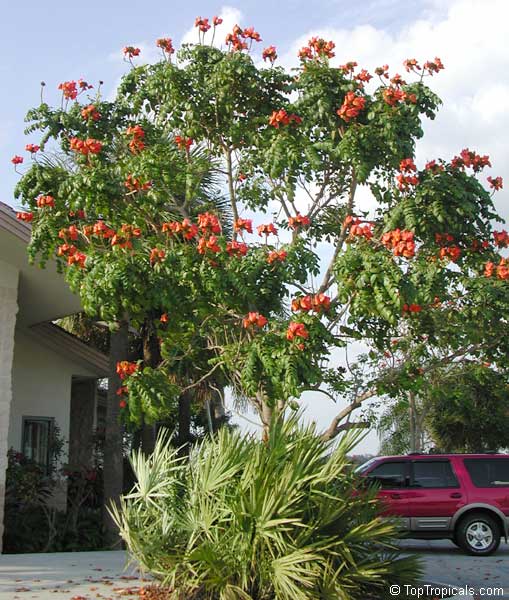
Spathodea campanulata - African Tulip Tree

Q: I'm looking for a plant to replace a Torrey pine that was sadly cut down. The pine made the soil very acidic and it's already silty, sandy, and salty from being near a coastal marsh. I was thinking of a Kei Apple. However, there are only seeds available on the website and I'd prefer a sapling to get things started faster. Are there other trees you'd suggest for that environment?

A: Here are some fast growing salt tolerant trees that we can suggest, just to name a few: Bucida buceras - Florida Black Olive Tree, Callistemon citrinus - Weeping red Bottlebrush, Capparis cynophallophora - Jamaica Caper, Cassia fistula - Golden Shower Tree, Coccoloba uvifera - Sea Grape, Cordias, Delonix regia - Royal poinciana, Flamboyant, Elaeocarpus grandiflorus - Fairy Petticoats, Ficus lyrata - Fiddle-Leaf Ficus, Ficus religiosa - Bo-Tree, Peepal, Sacred Ficus, Mahoe, Peltophorum pterocarpum - Yellow Poinciana, Plumeria, Spathodea campanulata - African Tulip Tree (shown on right). See full list of salt tolerant plants.

15% on all mango trees! This weekend only. Offer is valid through Sunday, June 26. See all mango varieties available.

Date: 26 Apr 2016

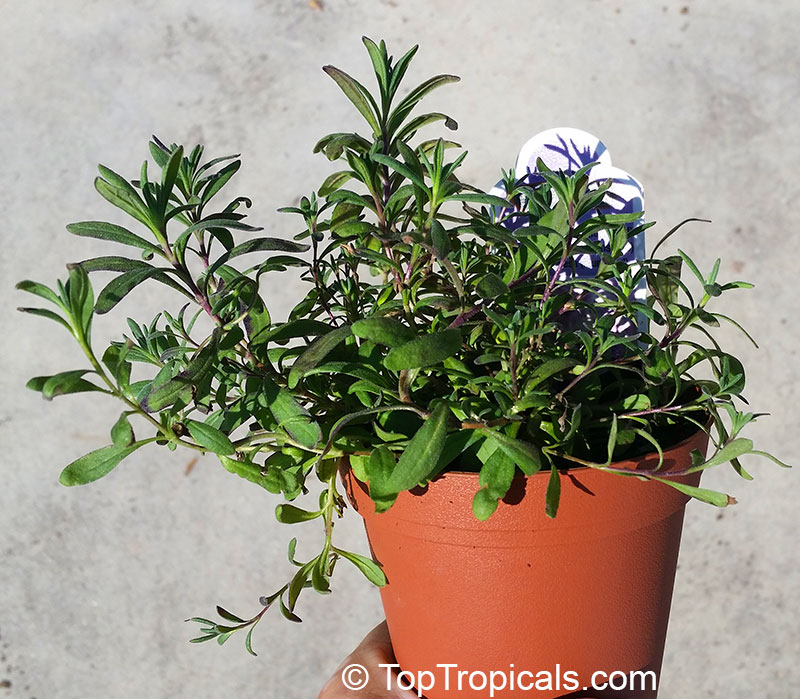
HEALING POWER OF HERBS

The most effective herbs to help you sleep. Tick-tock, tick-tock. Nothing is worse than the feeling of lying awake, unable to sleep as the numbers on the clock edge closer and closer to morning. Perhaps like many others, you toss and turn with your mind racing, playing the events of the day over and over again. Maybe you fall asleep easily, but wake up shortly after and can't get back to sleep for the rest of the night. If this sounds familiar, you are not alone. Fortunately, there are natural alternatives to prescription sleeping pills that are just as effective but are far gentler on the body. The following article by Marilyn Reid takes a closer look at some of the best herbs to help you sleep. Reed more...

Mother's day discounts. Fruit tree is the best gift for your Mother. Take advantage of these generous discounts to make a good present!
15% for orders over $100 (excluding S&H): MOTHERS15
20% for orders over $200 (excluding S&H): MOTHERS20
Can't be combined with any other offers. Not valid for past purchases. Codes are valid through Mother's Day - Sunday, May 8, 2014

Date: 20 Apr 2016

5 secrets of propagation
How to propagate rare plants? It is exciting and fascinating process - to be a Creator of a rare plant collection. Sometimes when you have a rare plant, you baby it and wish you could have at least two of the kind, just in case you lose one to weather conditions or an accident... If you lose one, it hurts! Plant collectors know the feeling - it is always a good idea to propagate a few more of the rare kind. Here at Top Tropicals we know that feeling too, and we want you to keep your baby plants alive and thriving, multiply them, share with others, and make our planet better - one plant at a time! Know your different plants, and different ways of their propagation. Ready for the secrets revealed?

1. Seeds. The most popular way and in most cases the most reliable. Also, a seedling has a strong, vertical root system (cuttings or air layers have shallow roots). However growing from seed is the only sexual method of propagation (vs other methods - asexual, or cloning), which means, some varieties don't come true from seed. Similar to a baby born from two parents, blonde mother and brunette father, can have either light or dark hair... or even red, genetically provided by the great-grand father! The most important factors of success when growing from seed are - well-drained germination mix (check out our Seed Germination Mix #3), and a combination of perfect temperature (high temperature 80-90F induces germination, but some species like it cooler!) and mix moisture level (can't stay soggy).

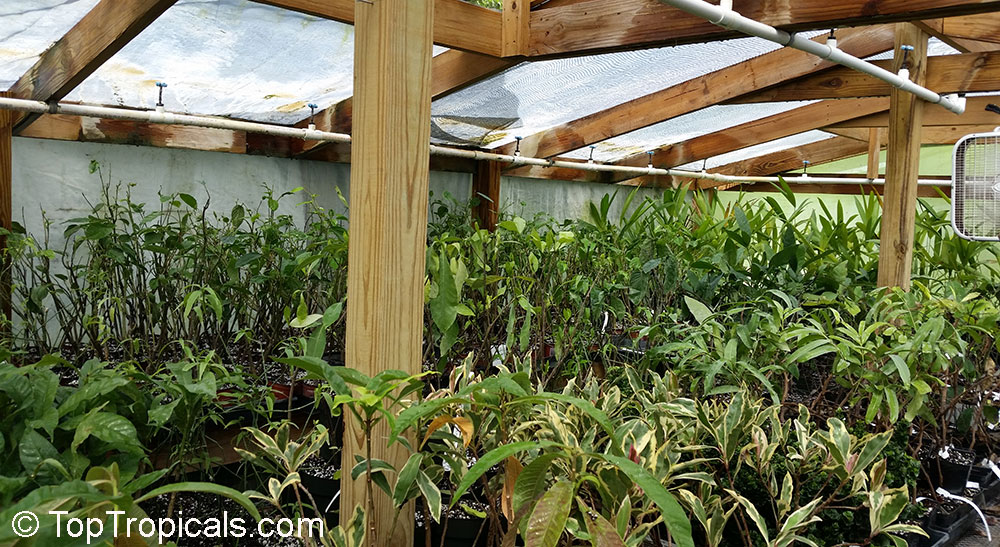
2. Cuttings. In most cases, works great as long as you know the secret for this method: clean (sterile) soil mix (check out our Propagation Mix #2), warm temperatures and very high air humidity (not moist soil, but humid air!). Mist house works well (see picture) with periodically controlled foggers (5-20 sec of fog every 5 to 20 min during light time - depending on species, and temperature), but simple clear plastic bag over a pot or tray works as well! Large leaves should be trimmed in half, or more, to eliminate extra evaporation, and soil should be only slightly moist, not soggy. Remember to use rooting hormone that not only improves rooting but keeps away fungus problems. You are welcomed to visit mist house in our facility, we will be happy to share experience.

3. Air Layers. From our experience, key to success with this method is patience. Most air layers take a few months to set root. Keep sphagnum moss moist, and create air layers only during active growth season - Sprint through Summer. Use rooting hormone.

4. Grafting. This method requires the most skills and experience but is not as difficult as it sounds. Plants can be grafted withing the same genus (e.g. one Gardenia sp. on another Gardenia sp.). There are many grafting manuals on internet. Try once, and you will get addicted to grafting! In many cases it is the most effective method. Especially when seeds not available and cuttings don't work with the species, while grafting works much faster than air-layering. The main secret in grafting is using the right type of graft, which comes with experience. Another important thing is keeping grafting parts and tools clean/sterile. Treat/clean surfaces with anti-fungicides horticultural soap (Example: Abound anti-fungal, Green Shield soap) and use rooting hormone.

5. Root divisions. All gardeners know that some plants are best to propagate by rhizome/root divisions, like Gingers, Heliconias, or Iris. And not everyone knows that some fruiting and flowering trees don't mind to reproduce by root divisions. For example, Jujube - Ziziphus jujuba, and Strawberry tree - Muntingia calabura, readily produce root suckers. Watch out for them and don't let them go to waist when spraying weeds. All time favorites, fragrant Clerodendrums also like this easy method of reproduction, especially C. bungei, C. philippinum, and many others.

Check out our Growing supplies section for professional soil mixes and drainage components that are so important in your propagation success. At Top Tropicals, we often use Coconut Coir for propagation. Good luck in your growing, and remember - if you propagated a few extra collectibles, Top Tropicals may trade or buy from you!