Garden Blog - Top Tropicals

Date: 28 Oct 2016

Devil Flowers - Bat Lilies - for Halloween!
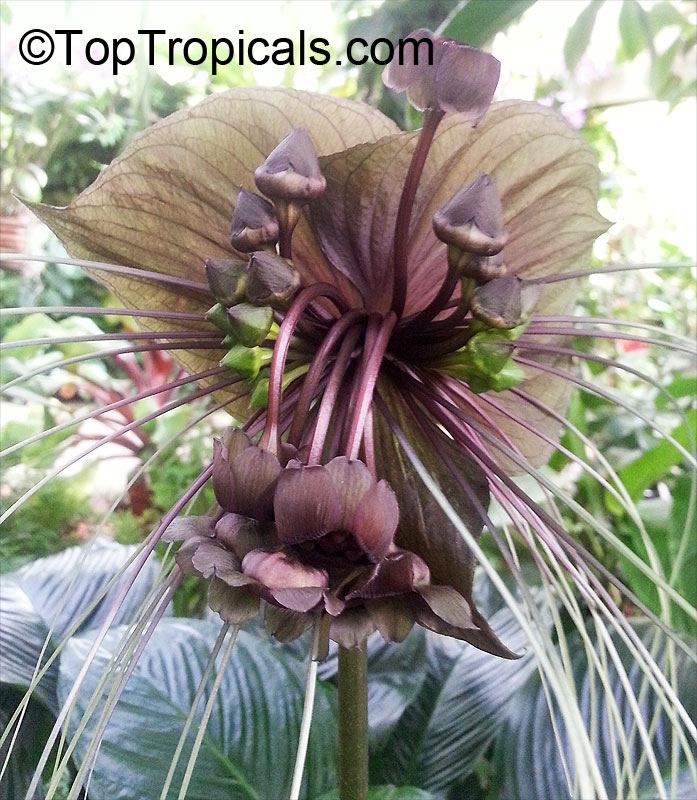
Tacca. Growing Tacca is a great way to have an unusual flower or novelty plant, both indoors and out. Tacca is an exotic plant with flowers that mimic a bat in flight, deep purple (or white), with ruffled wings and long, hanging filaments. Curious, bat-like inflorescence both in shape and color, with wide spreading, wing-like bracts of rich maroon-black (some varieties have white flowers), accompanied by long trailing filaments or "whiskers"; the small black flowers are succeeded by heavy berries; corrugated olive-green leaves with oblique base surround the bloom... Those in warm areas can learn how to grow the beautiful and unique bat flower outdoors. In more seasonal areas, bat flower info says the plant and frilly flower grows vigorously indoors when it is happy with the conditions.

How to Grow Bat Flower. Growing bat flowers requires a little extra care, but blossoms of this unusual specialty plant makes it worthwhile. Large plants usually have a greater rate of success than smaller ones. Keep your bat flower away from cold temps and away from direct sun. When growing this plant outside, plant it in the shade. Care of bat flower indoors will include a shady location as well, and yearly repotting for the rapidly growing plant. This plant does not like to be root bounded. Pot up until reaching a 10- or 12-inch pot; after that, trim the roots and return to the same size pot, if desired. Well-drained soil is a must when growing Tacca bat flowers and should remain slightly moist. Soil should be light and retain moisture but never allowed to get soggy. Our special potting mix will work best for this plant.
The plant should be allowed to dry out during dormancy. Keep this in mind during its time of rest, in fall and winter. In warmer areas, bat flowers reportedly do not experience a dormant period. Fertilize monthly or every six weeks with a slow-release plant food.
For improving cold hardiness in winter, and heat tolerance in summer, apply SUNSHINE-E booster once a month. Tacca, as well as most plants with large lush foliage, responds well to such treatments, the plant will look greener, healthier, and bloom more readily.

Black Tacca and White Tacca, as well as Tacca seeds are available from our store.
Date: 4 Oct 2016

Plants for happiness and joy

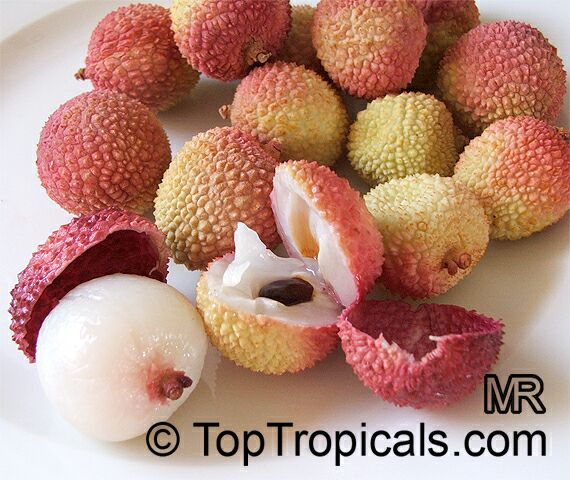
Plants as homeopathic remedies and happiness boosters. Many people know about health benefits of vitamin C which improves and boosts our immune system similar to SUNSHINE plant booster stimulating growth of plants. But not everybody realizes that this vitamin is responsible for overall happiness of our body, it brings many systems in balance. A number of tropical plants used in salads, as well as fruit with high content of vitamin C can play dual role in your life. You can use them as food, as well as enjoy their beautiful tropical appearance. Such plants will help you feel interest and joy in life when you feel apathetic and resigned to the situation you are in. Just to name a few:

Lychee
Barbados Cherry
Eugenias
Hibiscus Karkade

Try them out. Stay healthy and happy!

Date: 5 Sep 2016

Planting instructions for bare-rooted succulent plants

Q: I would like to order a few Adeniums from your selection. You website says "shipped barerooted". What do I need to know about potting these plants before I order?

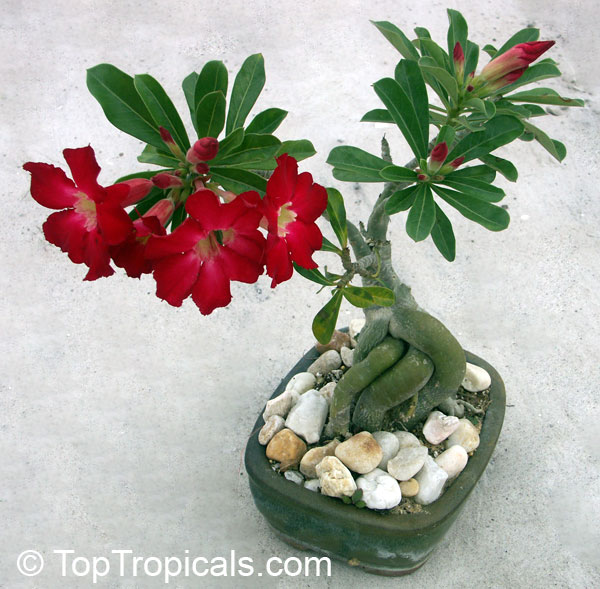
A: Adeniums do not require much soil; large 4-5"wide caudex plant can be grown in 1 gal pot. After unpacking the plants, position it in a pot, size of root system. Use only well-drained soil with high content of perlite and/or sand. Cactus mix can be used too, although we recommend using our special TopTropicals professional soilless potting mix. Water once and keep in warm (75-80F) place in filtered light. Do not water again until soil dries on surface. Once the plant is established and starts growing new leaves (may take a few weeks), gradually move it into brighter light. Then you can start fertilizing it. You may place shells and lime rocks on top of adenium planting, as these plants benefit from slightly alkaline soils.

See Info sheet on Adenium care.
See full list of Adeniums.
See full list of Plumerias.
See full list of Euphorbias.

Date: 1 Aug 2016

Growing gardenias indoors

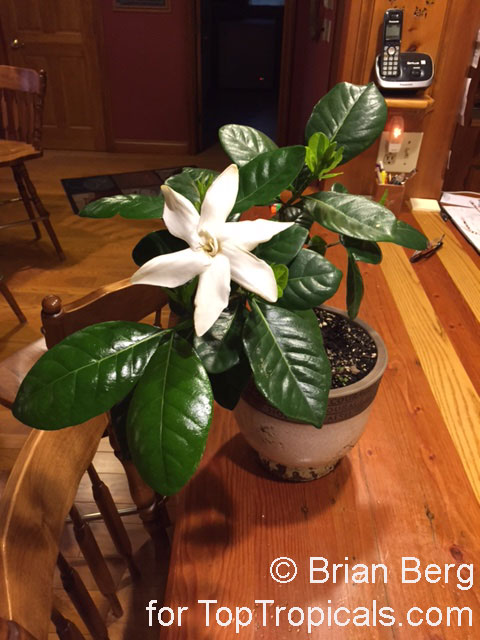
From Brian B, WI: Just wanted to share this photo of one of the plants my parents got from you 3 months ago.

Q: Gardenia taitensis is my favorite gardenia. I would need to keep it indoors under a grow light. Is it worth trying to grow indoors or is really difficult? If so, can you recommend and indoor plant that has big fragrance and blooms often?

A: When growing gardenias indoors, four most important factors must be taken in consideration:
1. Bright light (Southern window and/or proper lighting set up)
2. Proper watering (gardenias love water, but roots are very sensitive to excessive water)
3. Rich organic soil with perfect drainage characteristics, regular feeding with high phosphate component and micro-elements containing Iron or Ferovit.
4. Insect control (inspect underneath leaves regularly and apply systemic or on-contact treatments as needed). See target=_blank>Top Tropicals video on easy insect control.

We definitely recommend Gardenia taitensis (both single and double flower varieties) for indoor culture. Another species, Gardenia vietnamensis, is even easier in cultivation as it takes wide range of conditions and may tolerate slight overwatering (unlike other varieties which are more sensitive). These three mentioned gardenias are somewhat tolerant to low light conditions. Under a proper care, they will grow successfully even in bright shade, however for blooming they require as much light as you can provide. Properly adjusted growing light may be helpful. You may refer to our article about indoor plant lighting in our magazine Tropical Treasures, Issue # 15, or website page.

Date: 24 Jun 2016

Coastal plants. Suggestions for coastal regions


Spathodea campanulata - African Tulip Tree

Q: I'm looking for a plant to replace a Torrey pine that was sadly cut down. The pine made the soil very acidic and it's already silty, sandy, and salty from being near a coastal marsh. I was thinking of a Kei Apple. However, there are only seeds available on the website and I'd prefer a sapling to get things started faster. Are there other trees you'd suggest for that environment?

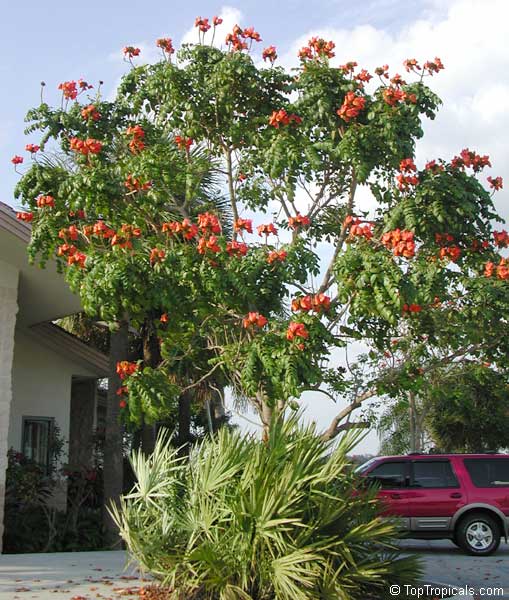
A: Here are some fast growing salt tolerant trees that we can suggest, just to name a few: Bucida buceras - Florida Black Olive Tree, Callistemon citrinus - Weeping red Bottlebrush, Capparis cynophallophora - Jamaica Caper, Cassia fistula - Golden Shower Tree, Coccoloba uvifera - Sea Grape, Cordias, Delonix regia - Royal poinciana, Flamboyant, Elaeocarpus grandiflorus - Fairy Petticoats, Ficus lyrata - Fiddle-Leaf Ficus, Ficus religiosa - Bo-Tree, Peepal, Sacred Ficus, Mahoe, Peltophorum pterocarpum - Yellow Poinciana, Plumeria, Spathodea campanulata - African Tulip Tree (shown on right). See full list of salt tolerant plants.

15% on all mango trees! This weekend only. Offer is valid through Sunday, June 26. See all mango varieties available.