Garden Blog - Top Tropicals

Date: 24 Jun 2018

TopTropicals

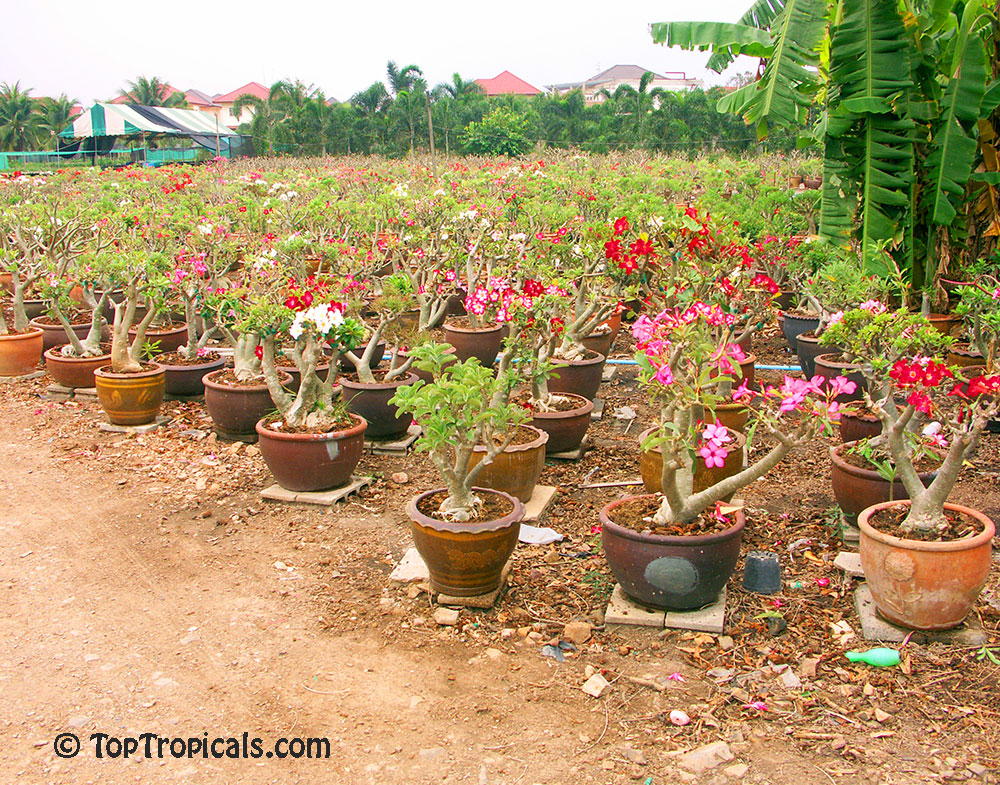
What you need for successful growing Adeniums

1) Adenium plants - from TopTropicals Endless selection of Adeniums. We have double flower, red, purple, yellow and even black flowers!
2) A small pot with excellent drainage is a must. Position the plant in a pot, size of root system.
3) Adenium soil mix. TopTropicals Adenium Soilless Mix. Use only well-drained soil.
4) Lots of light. Adeniums need lots of light for heavy flowering. However from our own experience, in super hot climates, they look healthier in filtered bright light. After initial planting, once the plant is established and starts growing new leaves (may take a few weeks), gradually move it into brighter light.
5) Little water. Adeniums like a neutral to hard water. Acidic water tends to sour the soil too fast and may cause root rot. Water plants preferably in the early morning, and allow them to drink up throughout the day. Watering can be done daily to every few days. Do not water again until soil dries on surface. Never allow your plants to sit in a saucer of water, but don't let them to dry out too often - this causes adeniums to go into early dormancy. Adeniums do not like both over-watering or drying-out.
6) Fertilizer. To make your plant develop a large swollen base/trunk, you'll need a good quality fertilizer. Use slow-release granulated fertilizer for overall plant health, and liquid water soluble fertilizer for swelling up trunks that is also used to increase flowering. It shouldn't be too high in nitrogen, the middle number should be the highest (similar to 10-50-10). Never apply fertilizer directly on roots and do not liquid feed when a plant is thirsty: always water first slightly to avoid root burn and leaf drop. Do not wet leaves.
7) SuperFood micro-elements. Besides macro-nutrients provided by fertilizer, Adenium needs micro-elements for balanced development of root system and especially caudex: Sunshine-SuperFood.
8) SUNSHINE-BC. Spray leaves with SUNSHINE-BC once a month to encourage young growth, profuse flowering and large caudex.
9) Growing caudex. There is a secret how to create a large swollen caudex: raise the plant a bit every time you re-pot it, so that the upper part of roots will be a little exposed. The plant will form more roots that will go down.

See full list of Adeniums - plants and seeds.
Date: 24 Jun 2018

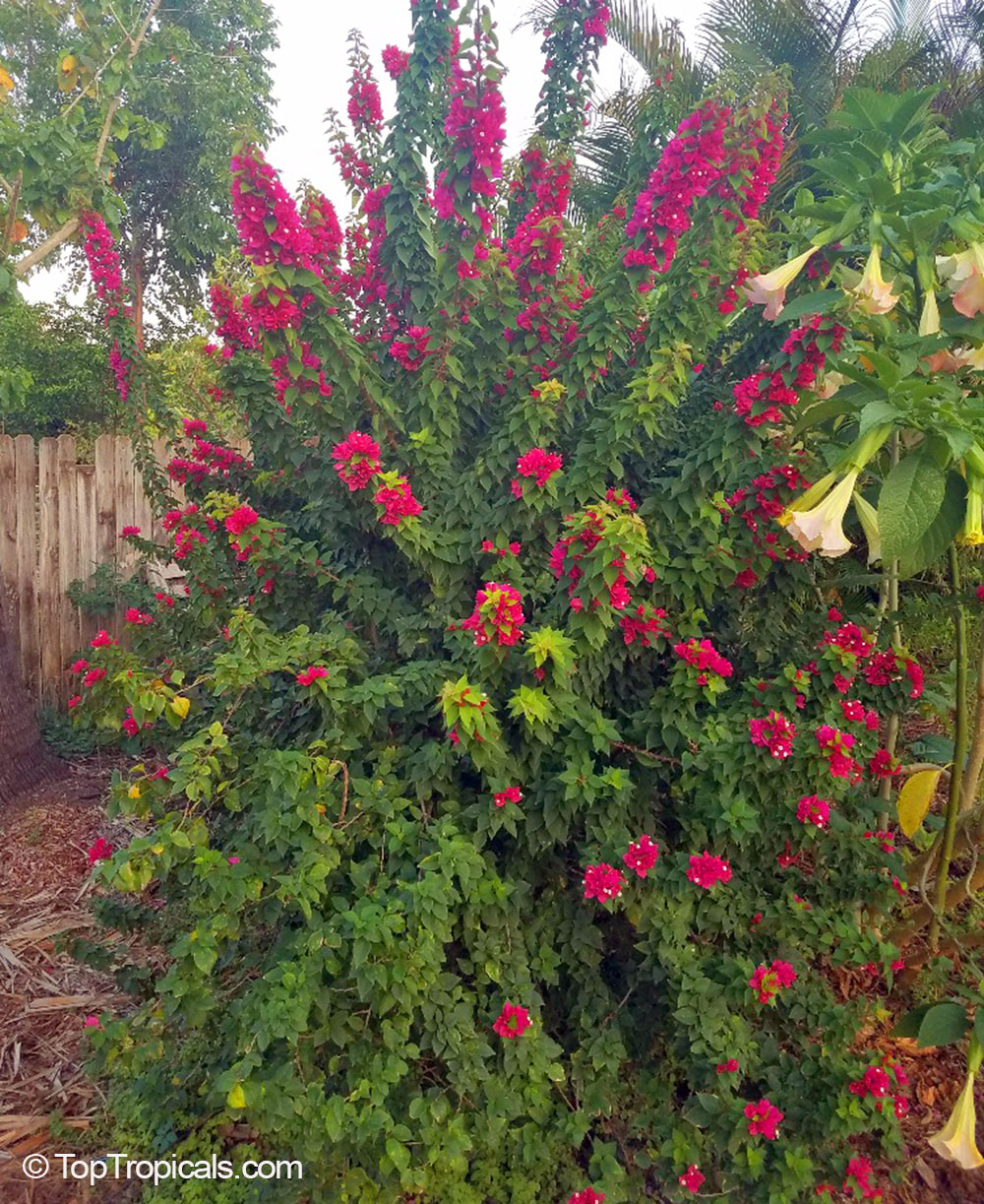
Growing Bougainvillea and Plumeria in Florida

Q: I have recently moved from New Jersey to Florida (Orlando area) and I am so excited to start my own Tropical Paradise Garden! A few years ago I visited Hawaii and saw many beautiful colorful Bougainvilleas as well as fragrant Frangipani. Do they grow well in Florida? These are flowers of my dream!

A: Both Bougainvillea and Plumeria grow well in most parts of Florida, especially South and Southwest. Bougainvillea can tolerate some light freeze and can be seen in the streets of Central Florida (young plants require some cold protection for the first year), so it is a very good candidate for your new garden. Keep in mind that unlike in Hawaii, where they bloom year around, Bougainvilleas tend to have a distinctive flowering season which in Florida is winter time - these plants enjoy dry weather that triggers their bloom. To enjoy Bright bougainvillea flowers for a long time, apply balanced fertilizer, prune regularly (this promotes flowering on new growth) and keep established plants on a dry side. Dwarf cultivar Pixie is super compact and can be grown in pots or in a small garden without any pruning! See photo of Pixie on the left.
Plumerias, all-time perfume favorites and symbols of Hawaii, are also residents of many gardens and collections throughout state of Florida. Their cold hardiness is close to the one of Bougainvillea, however keep young plants protected from frost. There are also many new exciting cultivars including multiple "rainbow" colors, and several dwarf varieties, some of them are evergreen - Plumeria obtusa. Plumerias are very undemanding and can stay happy and blooming in a pot and without regular watering. Give them as much sun as possible, and enjoy the fragrance for many months!

Date: 24 Jun 2018

TopTropicals

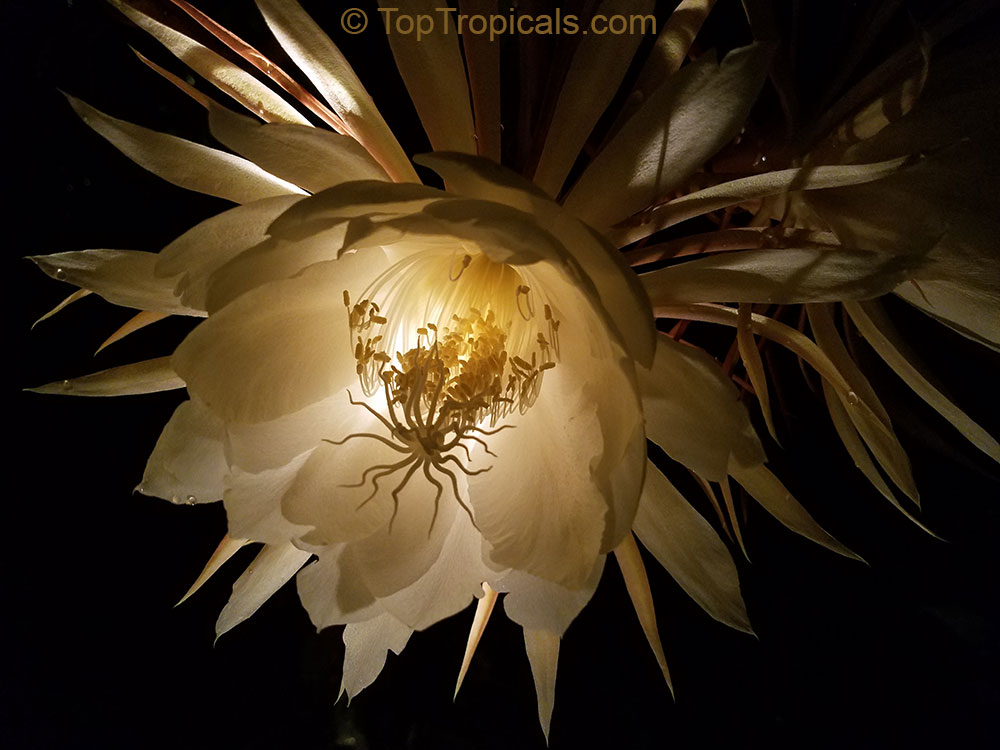
Mysterious Night Blooming Cactus - Epiphyllum. How to grow it?

Q: My friend has a huge Queen of the Night Cactus, and the blooms are so gorgeeous! She gave me a cutting but I am not sure how do I plant it? How long will it take till it starts blooming? Is it true that it has only one flower once a year and only at night?

A: Queen of the Night is a very popular and yet mysterious plant. The flowers open once a year after sunset for one night. However the flowering period can last a month or two during the warm season. So each flower lasts only one night, but there will be more flowers to come! In the Nature, Epiphyllum oxypetalum - Queen of the Night - grows on trees in the jungles of Central and South America. It is actually very easy to grow as an indoor plant in colder climates. Here is South Florida we grow them outside in hanging baskets. This is how to start Queen of the Night from a cutting:
1) Put the cutting in a dim, dry place for three days, with no soil and its base exposed to the air, so it will form a callus.
2) Fill a 4-6-inch pot with slightly damp potting soil or succulent mix. Insert the cutting 1 or 2 inches into the soil and tamp the soil around its base.
3) Place the pot where the cutting will get bright light, but no direct sun. Spritz it occasionally with a spray bottle of water to keep the soil only slightly moist. It should root in couple weeks.
4) Keep the plant on an east- or west-facing windowsill where it will receive direct sunlight only in early morning or late afternoon. Water the cactus until water runs out of the pot's drainage holes. Dump the excess out of the pot's saucer immediately, and wait until the surface of the soil is dry to the touch before watering your cactus again.
5) Fertilize once a month from March through October with a balanced plant food, and apply micro-elements once a month for a healthy vigorous growth. Refrain from feeding the plant in December and January.
6) Position the cactus in partial shade under a porch roof or tree, if you decide to move it outdoors during the summer. This plant likes summer humidity!
7) Repot the cactus only once every two years or so, to keep it slightly root bound. Wait until after it flowers in summer, and repot it after it blooms. Prune off any damaged growth at that time as well.
8) Move the plant to a cooler room over the winter months, one that remains dark during the evening hours with temperatures above 45 degrees. Reduce the frequency of watering, waiting until its soil is dry. Resume regular watering in March.

If grown from cutting, it may take 2-3 years until the plant starts blooming, so if you don't want to wait that long - just get a blooming size plant from our store!

We only have a few plants... if sold out, add to wish list and we will have more soon!

Date: 31 May 2024

The best place to find God is in a garden

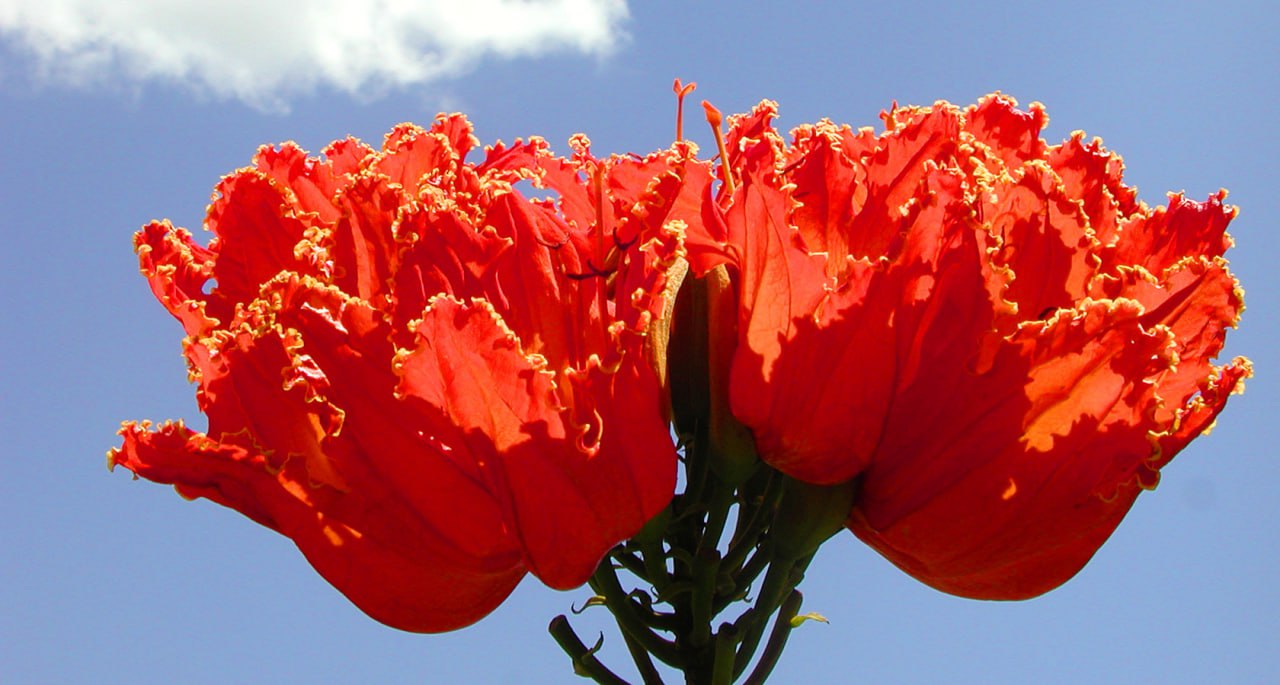
Spathodea campanulata - African Tulip Tree

Spathodea campanulata - African Tulip Tree

✍️ "The best place to find God is in a garden. You can dig for him there." - George Bernard Shaw

📸 Spathodea campanulata - African Tulip Tree

#Quotes

🏵 TopTropicals

Date: 14 Oct 2024

You can find comfort in a small space

You can find comfort in a small space

❤️ You can find comfort in a small space


"The price of anything is the amount of life you exchange for it." - Henry David Thoreau

Share your cats in comments!
📸 🐈🐈🐈👇

🐾 More #PeopleCats in our Garden:
PeopleCats.Garden 

#Quotes

🔴 Join 👉 TopTropicals