Garden Blog - Top Tropicals

Date: 21 Jun 2026

How to Grow Massive, Exotic Lobster Claw Blooms Anywhere (Even in Pots!)

How to Grow Massive, Exotic Lobster Claw Blooms Anywhere (Even in Pots!)

How to Grow Massive, Exotic "Lobster Claw" Blooms Anywhere (Even in Pots!)


If you’ve ever dreamed of transforming your patio or backyard into a lush, dramatic tropical getaway, there is one iconic plant that needs to be on your radar: Heliconia rostrata - famously known as the Lobster Claw or Parrot’s Beak.
With its massive, neon-bright, dangling inflorescences, it looks like something straight out of a high-end botanical resort. But here is the best-kept secret in tropical gardening: you don’t need to live in the deep jungle to grow them. Whether you have a sprawling tropical landscape or a simple sunny patio in a colder climate, this showstopper is ready to perform.


🔻 Why Heliconia Rostrata Rules the Tropics


There’s a reason the Lobster Claw is one of the most recognized and celebrated exotic plants in the world. It delivers maximum visual drama with surprisingly little fuss.

Jaw-Dropping Blooms: The vibrant, cascading flower bracts feature intense shades of red, yellow, and green, looking exactly like bright lobster claws or parrot feathers.
Unbeatable Vase Life: These flowers don’t just look spectacular on the plant; they last for weeks in water, making them the ultimate centerpiece for tropical floral arrangements.
Instant Scale: Growing up to 7 feet tall, a healthy cluster of Heliconia creates a dense, gorgeous tropical screen in no time.

🔻 The Container Secret: Growing in Pots


Think your winter weather is too harsh for jungle exotics? The Lobster Claw is surprisingly resilient. While it loves tropical heat, it can actually withstand brief temperature drops down into the high 20s F.
More importantly for northern gardeners, it adapts beautifully to container life.

By planting your Heliconia in a large, sturdy pot, you unlock the ability to grow them anywhere. When summer hits, your patio becomes a tropical oasis. When winter sets in and sustained freezing weather arrives, you simply roll the container into a greenhouse, garage, or bright indoor room until spring.

🔻 Pro-Tips for Maximum Blooms


To get those massive, vibrant stalks to stretch to their full potential, just follow these three golden rules:

1. Give the Underground Room
Heliconias grow from thick underground structures called rhizomes. To get a 7-foot canopy, use a large, deep pot with excellent drainage. Give those stalks room to multiply and spread!

2. Keep the Fuel Coming

These are fast-growing plants that require plenty of energy to produce those heavy, cascading flowers. Keep the soil consistently moist (never soggy) and feed them regularly with a high-quality tropical fertilizer to maximize bloom production. We put a scoop of Green Magic controlled release fertilizer every 6 months and Sunshine Booster Megaflor that is safe to apply with every watering, year around.

3. Sun and Shelter
Position your plant where it can soak up plenty of bright, filtered sunlight or partial afternoon sun. Try to protect it from harsh, whipping winds so those beautiful, banana-like leaves stay pristine and tear-free.

🛒 Claim Your Lobster Claw

📚 Learn more:

Lobster Claw Plant Facts

Botanical name: Heliconia rostrata, Bihai rostrata
Also known as: Lobster Claw, Parrot's beak
USDA Zone: 9 - 11
Highligths Small plant 2-5 ftSemi-shadeShadeFull sunWatering: Regular. Let topsoil dry slightlyYellow, orange flowersRed, crimson, vinous flowersSubtropical plant. Mature plant cold hardy at least to 30s F for a short timeFlood tolerant plantSeaside, salt tolerant plant
Get personalized tips for your region

Heliconia rostrata in Plant Encyclopedia
Blooming Lobster Claw Show at TopTropicals
Lobster Claw - Simply Spectacular
How to grow Lobster Claw
🎥 Lobster Claw Show at TopTropicals

#Hedges_with_benefits #Shade_Garden #Nature_Wonders #Discover

🟢 Join 👉 TopTropicals
Date: 22 Jun 2026

Carambola Starfruit FAQ: how dwarf is a seedling?

Carambola Starfruit FAQ: how dwarf is a seedling?

🌟 Carambola Starfruit FAQ: how dwarf is a seedling?


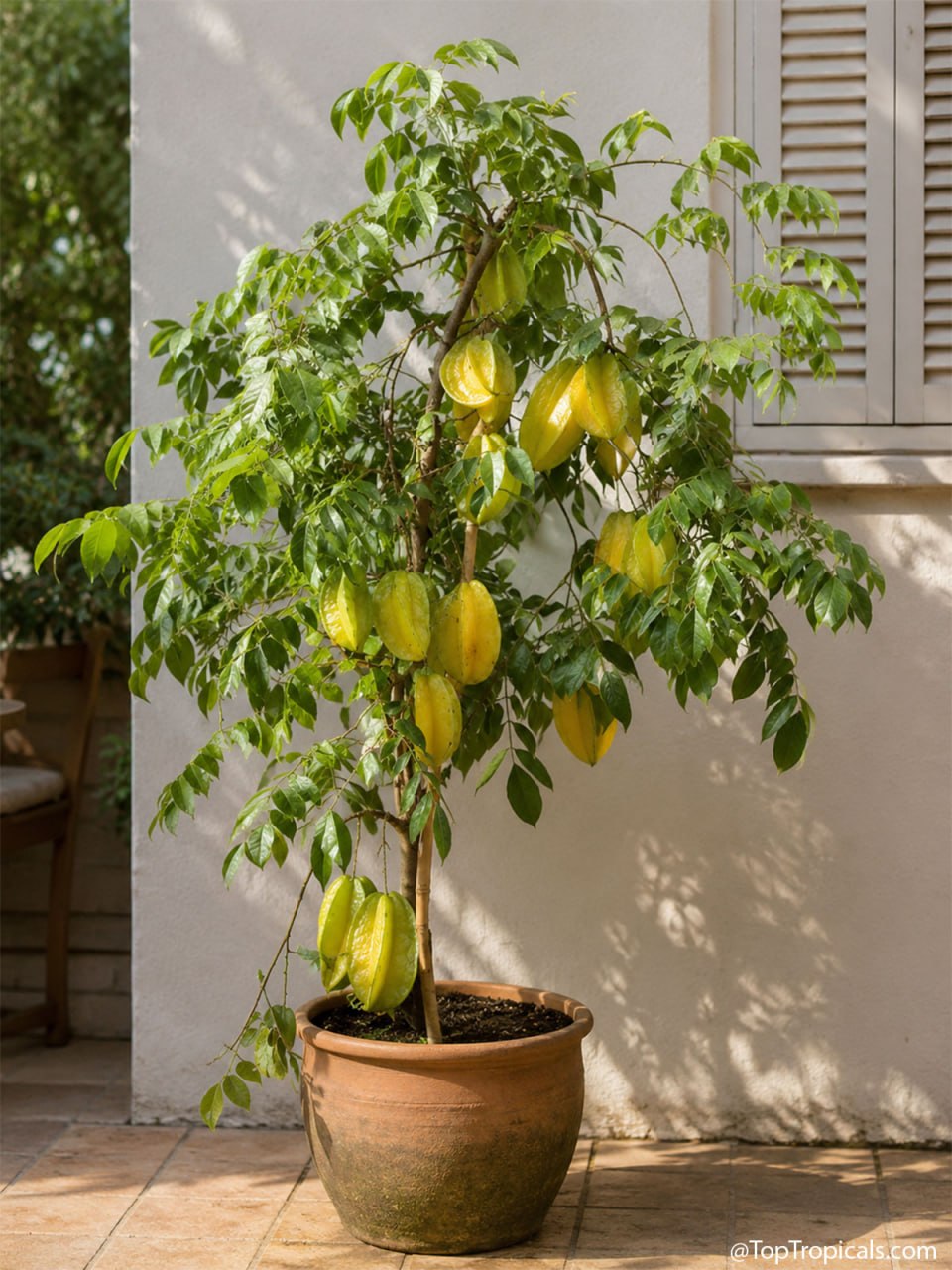
I recently ordered a dwarf Hawaiian star fruit seedling from your glorious stock of tropical trees, however upon doing further research it seems like grafted trees guarantee fruit results while seedlings may vary from what the parent plant was. I was planning on putting it in a planter since it’s a dwarf but I’m worried about the quality of fruit since it’s a seedling. Could you elaborate on that a bit?

✅ You are correct that grafted trees provide the greatest certainty because they are clones of a known variety. Seedling trees can show some variation from their parents.

In this case, however, your seedling is not from an unknown or mixed genetic background. The seeds were collected from a true Dwarf Hawaiian cultivar that was growing among other selected dwarf carambola cultivars, primarily Dwarf Hawaiian and a few Fwang Tong trees. Because both the seed parent and the surrounding pollen parents were dwarf, we expect the offspring to retain many of the desirable dwarf characteristics.

While we cannot guarantee that every seedling will be identical to the parent tree, the chances of obtaining a compact, productive tree with good fruit quality are quite favorable. In fact, seedlings sometimes combine the best qualities of both parents and may even produce fruit that is equal to or better than either parent.
The main difference between a grafted tree and a seedling is predictability. A grafted tree gives you a known result. A seedling introduces some genetic variation, but in this case the variation comes from a pool of carefully selected dwarf varieties rather than from unknown parents.

For container growing, we would still expect your tree to be well suited to pot culture, especially with periodic pruning to maintain size and shape. Many growers actually enjoy growing seedlings because there is always the possibility of discovering an exceptional individual. Carambola is a quick fruit tree: 3-4 years from seed to fruit.

We believe your Dwarf Hawaiian seedling has excellent potential and should make a rewarding container-grown fruit tree.

🛒 Plant Star Fruit Carambola Tree

📚 Learn more:

Carambola Plant Facts

Botanical name: Averrhoa carambola
Also known as: Carambola, Starfruit, Five-finger, Balimbing
USDA Zone: 9 - 11
Highligths Small tree 10-20 ftSemi-shadeFull sunWatering: Regular. Let topsoil dry slightlyEdible plantSubtropical plant. Mature plant cold hardy at least to 30s F for a short time
Get personalized tips for your region

Averrhoa carambola in Plant Encyclopedia
Star fruit chili relish: quick-n-fun exotic recipes
Grilled star fruit slices: quick-n-fun exotic recipes
How to gets lots of Star Fruit Carambola
Star Fruit from our garden
Grow your own Carambola
Top 10 fast-fruiting trees: #8. Carambola - Starfruit
Carambola Banana Whip
Carambola Jam recipe
When young Carambola trees are covered with fruit
Carambola tree is the Star of the orchard

#Food_Forest #Discover #How_to

🟢 Join 👉 TopTropicals