Garden Blog - Top Tropicals

Date: 20 Jun 2025

Ten common greenhouse mistakes and how to avoid them

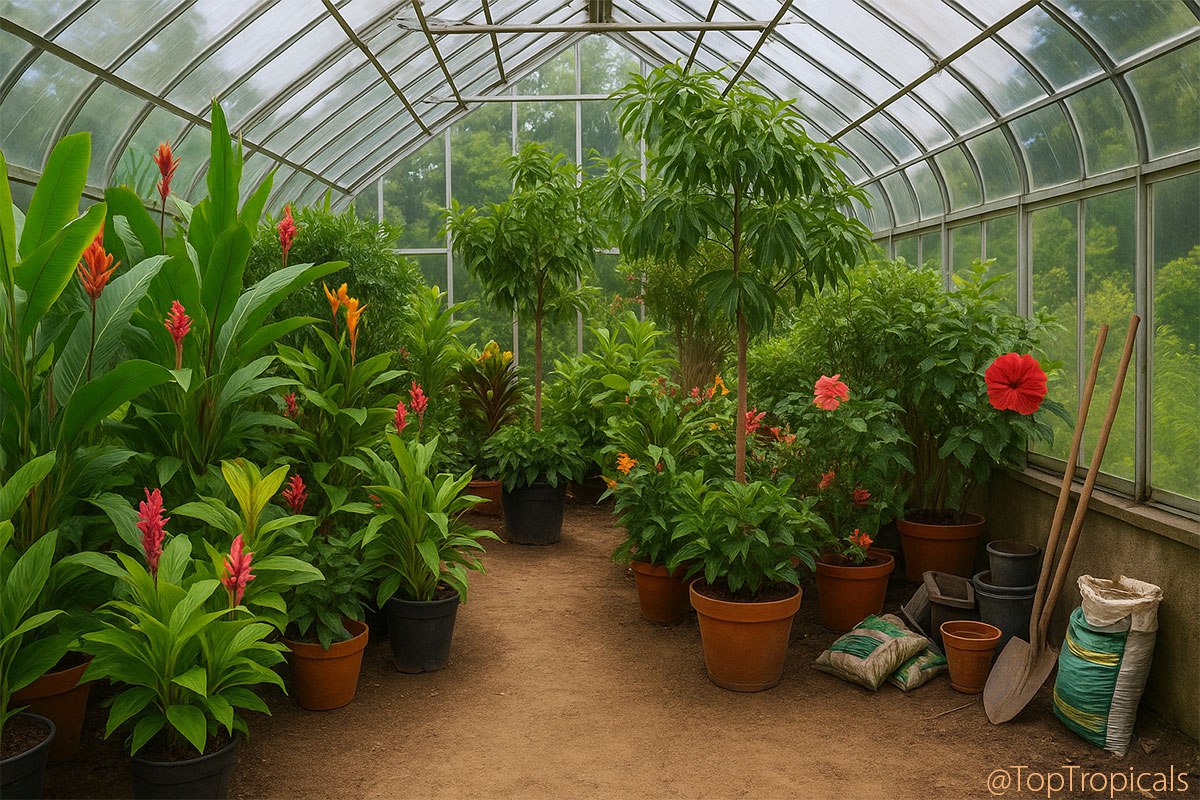
Greenhouse with tropical plants

Greenhouse with tropical plants

🏠 Ten common greenhouse mistakes and how to avoid them

  • 1. Overwatering


    It's easy to overwater in a controlled environment. Many greenhouse plants need less water than you think. Overwatering can lead to root rot, yellowing leaves, and fungal issues. Monitor soil moisture regularly and adjust watering based on the plant type, season, and current weather conditions.
  • 2. Not enough light


    Don’t block too much light - plants need full-spectrum light to thrive. Most greenhouse plants require as much light as possible to ensure healthy, vigorous growth. Lack of light causes leggy, weak plants and increases the risk of disease, pests, and fungal problems.
  • 3. Too much of sun and heat


    Greenhouses with plastic covers can trap intense heat, and during sunny afternoons, plants may get “cooked”. Direct sunlight can quickly overheat and damage foliage. Use shade cloth during the hottest months or to protect light-sensitive plants and prevent heat stress.
  • 4. Overcrowding plants


    Packing in too many plants reduces airflow, creating ideal conditions for disease and pest outbreaks. Give each plant enough space to breathe, grow, and receive light. Proper spacing also makes pest control and maintenance easier.
  • 5. Poor ventilation


    Lack of airflow leads to overheating, humidity buildup, fungal disease, and weak growth. Use fans, roof vents, or roll-up sides to improve circulation and maintain healthy growing conditions.
  • 6. Skipping pest inspections


    Greenhouses can trap pests in an ideal environment. Check plants regularly for aphids, spider mites, whiteflies, and fungus. Use systemic insecticides or organic treatments like neem oil at the first sign of trouble.
  • 7. No consistent schedule


    Inconsistent watering, feeding, and lighting can stress your plants and reduce productivity. Set a simple routine, and monitor conditions daily - even a quick walkthrough helps catch problems early.
  • 8. Neglecting temperature and humidity control


    Temperature and humidity can fluctuate dramatically between day and night. Use a thermometer (preferably with max/min memory) and a hygrometer to track conditions. Install heaters, shade cloth, misting systems, or dehumidifiers as needed.
    Modern WiFi-based sensors that monitor temperature and humidity 24/7 are convenient tools - you can keep tabs on your greenhouse right from your smartphone.
  • 9. Recycling old soil


    Avoid reusing soil from plants that died, as it may harbor root diseases or pests. Always use fresh, high-quality soil for new plantings. Don't cut corners - healthy soil is key to healthy plants.
  • 10. Dirty tools, containers, and covers


    Reusing dirty pots or tools spreads disease. Clean and disinfect containers, trays, and tools regularly. Use a diluted bleach solution to clean clear plastic or ground covers if they show mold or algae buildup.

    #How_to


🟢 Join 👉 TopTropicals

Date: 14 Jul 2025

The fastest vine to cover a fence - everyone asks about it

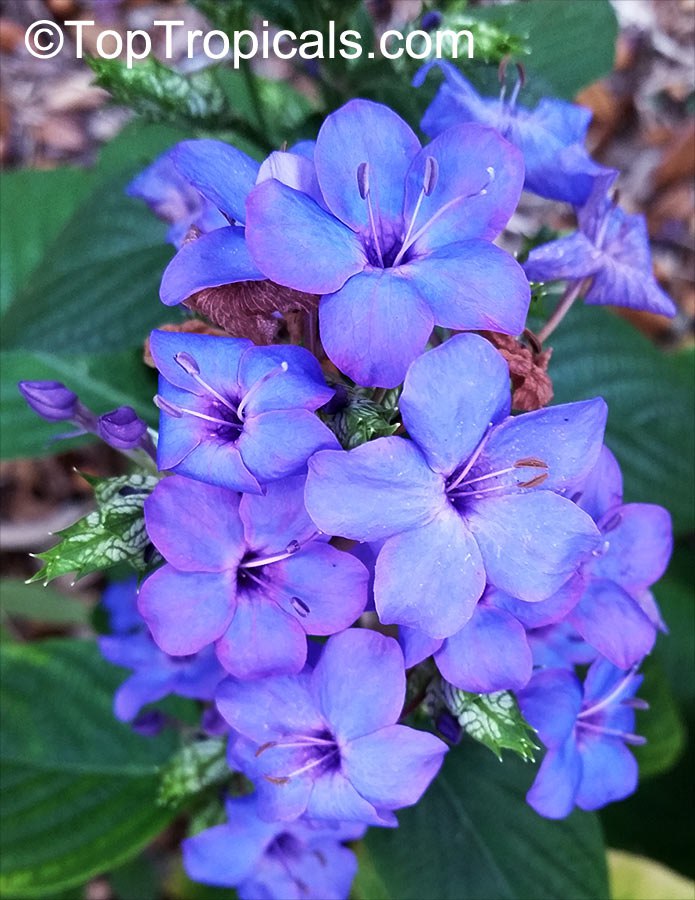
Thunbergia laurifolia - Blue Sky vine

💙 The fastest vine to cover a fence - everyone asks about it

  • 🔵 If you need a beautiful vine to cover your fence quickly - plant Thunbergia laurifolia, Thunbergia grandiflora - Blue Sky vine, Blue Trumpet Vine, Scrambling sky flower.
  • 🔵 This vigorous tropical climber explodes with 3-inch trumpet-shaped blossoms in a shade of blue so vivid, it looks unreal. In just one season, it can cover a fence, trellis, or arbor with lush green foliage and long cascading chains of flowers.
  • 🔵 Once established, it blooms heavily from fall through spring, creating a waterfall of sky blue that feels cool and soothing even in the heat. It's not just a pretty face either - its fast growth makes it ideal for quickly creating privacy, shade, or a living screen.
  • 🔵 Thrives in heat and humidity, low-maintenance once established
  • 🔵 Dramatic focal point, pollinator magnet, and conversation piece! And if blue isn't your color, the rare white version, Thunbergia grandiflora Alba, offers the same performance in pure ivory tones.


🛒 Get the vine everyone asks about

📚 Learn more:


How to have the Blue Sky in just one season and forever

#Hedges_with_benefits
🟢 Join 👉 TopTropicals

Date: 7 Sep 2025

10 reasons to grow this Indian secret tree - the miracle Fruit of the Gods you never knew about: Syzygium cumini - Jambolan

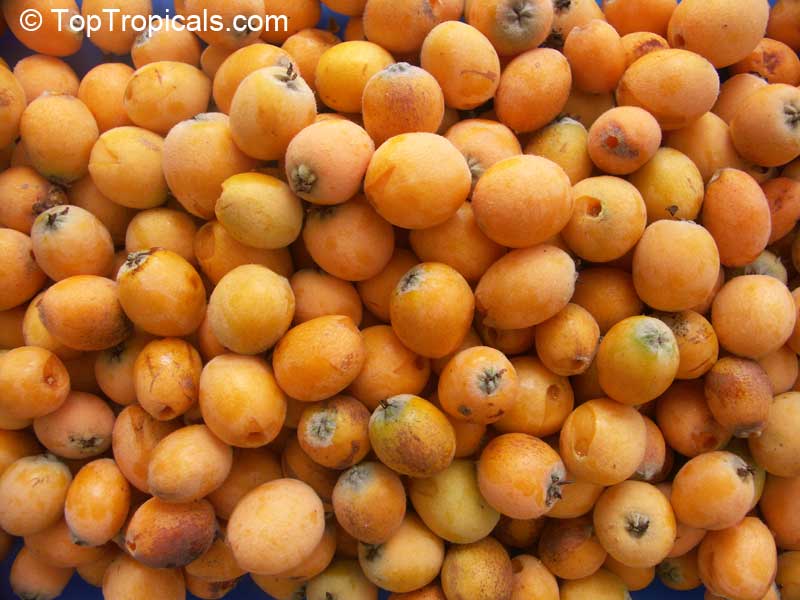
Syzygium cumini - Jambolan, Java plum, Malabar plum, Black Plum, Jamun, Jaman, Jambul, Duhat, Lilly Pilly

🍆 10 reasons to grow this Indian secret tree - the miracle Fruit of the Gods you never knew about

  • Sacred and secret Indian divine Berry - Jambolan (Syzygium cumini) - goes by many names: Java plum, Malabar plum, Black Plum, Jamun, Jaman, Jambul, Duhat, even Lilly Pilly! Which one do you know it by?
  • Sweet-tart and healthy fruit. The tree is a heavy producer of juicy, sweet-tart black fruits that can be eaten fresh or turned into tarts, sauces, and jams. In Ayurveda and Chinese medicine, both the fruit and plant are valued for their powerful health benefits. The flavor is unique, with a mile herbal note (maybe Oregano?).
  • A tree steeped in tradition. According to Hindu belief, Rama survived on this fruit during his 14-year exile, which earned it the title Fruit of the Gods. Lord Krishna himself is often described as having skin the color of jambul. In India, its leaves are still used to decorate marriage pendals.


♥️ Jambolan health and life benefits

  • 1. Fights diabetes - helps manage blood sugar naturally.
  • 2. Weight loss - low in calories, high in fiber, keeps you full and curbs cravings.
  • 3. Fiber-rich digestion aid - improves gut health, prevents constipation, and soothes indigestion.
  • 4. Vitamin C boost - strengthens immunity, brightens skin, and supports healthy hair.
  • 5. Controls heart rate and blood health - potassium regulates heart rate and blood pressure, while iron supports hemoglobin and circulation.
  • 6. Slows aging - loaded with antioxidants, it protects cells and supports vitality.
  • 7. Liver and kidney detox - traditionally used for cleansing and protection.
  • 8. Skin and oral care - helps with acne, blemishes, mouth ulcers, and freshens breath.
  • 9. Respiratory relief - eases coughs, asthma, and colds.
  • 10. Quick privacy screen! Here's what most gardeners don't realize: Jambolan is the ultimate low-maintenance, fast-growing tree with dense glossy leaves. It thrives in any soil, stays pest free, and in just a couple of seasons can grow into a dense, bushy privacy screen - perfect if you want quick shade, an ornamental barrier, or a living fence with health benefits that practically takes care of itself!


🛒 Plant Jambolan: shade, fruit, beauty, and health - all in one tree!

📚 Learn more:
The Divine Berry - large, bushy, exotic fruit tree in no time

#Food_Forest #Remedies #Hedges_with_benefits

🟢 Join 👉 TopTropicals

Date: 22 Jan 2023

1-22-2023: New Lunar Year

Happy  New  Lunar  2023  Year  Cat  Rabbit

Customer message: Happy new year! My family is Chinese and we celebrate the lunar new year this weekend… the year of the rabbit. Wasn't sure if this email was sent in error (maybe your founder is Vietnamese? I think they celebrate the year of the cat...

Answer: You are right, it is a Year of the Rabbit in Chinese calendar, and it is also a Year of the Cat in Vietnamese, both starting from January 22nd, 2023. While in Chinese culture it is called a Year of the Rabbit, the Cat was seen as more relevant to the daily lives of Vietnamese farmers, who valued the cat's ability to protect their crops from rats, squirrels... Here at Top Tropicals we have a multi-national team, and although we don't have a Vietnamese person yet, but we have lots of cats - all kinds!

Happy New Year of the two furry friends:
RABBIT and CAT!

Cat,  Rabbit  and  Flowers

Flowers in the photo above: Clerodendrum philippinum - Cashmere Bouquet, Scent Malli. Very fragrant off-white flowers, carnation-like, coming in big clusters. Shade tolerant shrub, great for shade gardens as well as indoor culture to enjoy tropical fragrance year around.

Date: 9 Jul 2019

Growing desert roses

Q: I purchased a Desert Rose and planted it in Adenium mix. I keep it in full sun with once a week watering assuming this is a desert plant that likes lots of sun. Some leaves turned yellow and now I am not sure should I move it into shade or need to water more? Or maybe fertilize with something?

A: Desert Rose - Adenium, unlike cacti and other succulents, prefers filtered light. It can grow in full sun but leaves look healthier in light shade. Watering must be very moderate, however don't let soil harden like a rock: water again right after the soil gets dry. We suggest to use special Adenium Mix. Cactus mix may work well, as well as regular potting mix, in which case it is recommended to add a bit of limestone (we simply put sea shells on top of the pot - it looks very pretty!) - because adeniums prefer slightly alkaline soil (while most of tropical plants like acidic soils). If leaves turn yellow, this may be a sign of underwatering. Use water soluable fertilizer with high phosphate as foliage spray, and only on healthy plants, according to label dosage. It helps both caudex growth and flowering. Make sure to avoid fertilizer contact with a caudex.

RECOMMENDED SUPPLIES:
Adenium Plant Food - Flower and Caudex Booster
SUNSHINE-BC - Caudex booster
Adenium Soilless Mix

Read more about growing Adeniums:
What you need for successful growing Adeniums
Growing Exotic Adeniums