Garden Blog - Top Tropicals

Date: 30 Sep 2023

Avocado Variety Guide: Snack or Guacamole?
Collector's inspiration

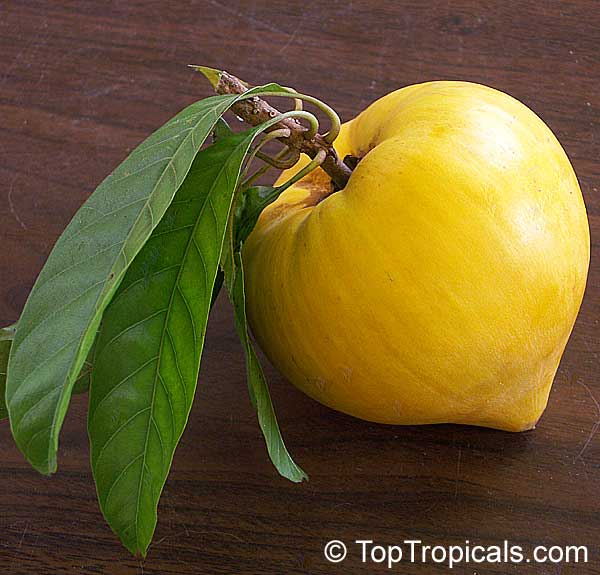
Avocado  Red  Russel

Photo above: It's NOT an egg plant! It's a Red Russell :)

A comprehensive guide to Avocado varieties by: flower type A or B, tree habit, fruit shape and quality, cold hardiness, origin, season and more!

Many gardeners who are eager to purchase their first avocado tree often wonder which variety to choose. Most people are familiar with two primary classifications commonly found in grocery stores: Small & Black or Large & Green.

Frequently, we hear customers ask, "Do you have the one I like, the smaller fruit with bumpy skin? Not that big, tasteless, and watery one!" What they may not realize is that this basic (but practical!) classification doesn't encompass all the wonderful qualities avocados have to offer. There are numerous hybrids in cultivation, and once you plant your first tree and taste the REAL fruit (not from the grocery store), you'll be eager to explore other varieties. It's a guarantee! While it's true that avocado fruit can vary in "butter" content and how "watery" or "buttery" it is, most superior varieties are equally delicious. Or perhaps we should say they are so versatile and distinct in taste that you'll start building your collection of these trees, much like fruit enthusiasts do with mango varieties.

Every garden has unique requirements based on climate, temperature, and property size. These factors must be considered before planning your avocado garden. Additionally, many gardeners may wonder about Type A vs. Type B classifications and whether they need more than one tree to yield fruit. You'll find all this valuable information in our Avocado Variety Guide.

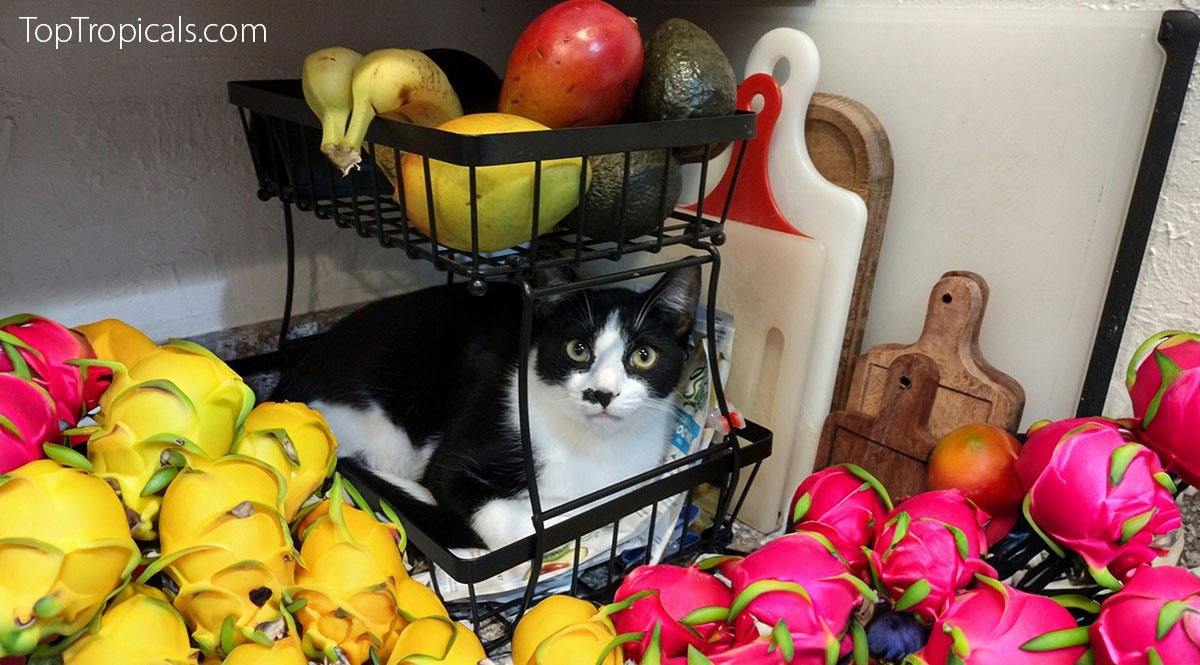
Cat  with  avocados

Basic classifications of avocados

1) By flowering pattern and pollination behavior: Type A and Type B

2) By origin: Mexican, Guatemalan, and West Indian (along with many hybrids)

3) By fruit appearance, texture and taste: Guacamole Avocado ("Smooth skin") and Snack Avocado ("California" or "Hass" type)

4) By growth habit: full size trees, free branching or upright, semi-dwarf low growing, and dwarf ("condo avocados")

5) By cold hardiness: Cold sensitive (requiring frost-free conditions), cold tolerant (able to withstand light frost), and cold hardy (capable of enduring some hard freezes once established)

6) By ripening season: Early or Spring (March-June), Mid or Summer (July-September), and Late or Fall-Winter (October-February).

Cat  with  Red  Russel  Avocado

Date: 25 Sep 2022

Guava, the easiest container fruit tree

Guava  fruit  on  a  branch

Grow Your Own Food

Guava is one of the most popular and well-known tropical fruit because it is so tasty, sweet, juicy and flavorful! Many people are familiar with it because of the large number of products made from this aromatic fruit. But very few people know that Guava tree culture is very easy and this plant can fruit in a pot right away. Guava tree start blooming and producing fruit as small as 1 gal pot size. It can be kept in compact shape, responds well to pruning, stays bushy and grows very fast. It is a perfect container fruit tree or a specimen for a tropical garden of any size.
Upon ripening, the fruit becomes soft and juicy. It may be eaten fresh, made into a juice or nectar contain fruit pulp, or made into preserves, jam, jelly, or paste. A distinctive, savory-fresh aroma of fruit is thermo-stable, thus survives processing. The guava is an excellent source of vitamins C and A.
The plant is relatively cold hardy. Our young trees, 3 months after being planted in the ground were exposed to a short period of freeze last winter (mid-20's) but they grew back without significant damage. Try to keep Guava cold-protected for the first winter, then it will be much hardier once established.
Guavas are fast growers and heavy feeders, and benefit from regular applications of fertilizer. Make sure to get some Sunshine Boosters fertilizer: Sunshine C-Cibus - Crop Booster, and feed them your round.

Guava  tree  fruiting  in  container

Guava  fruit

Date: 18 Sep 2022

The fruit of Heaven:
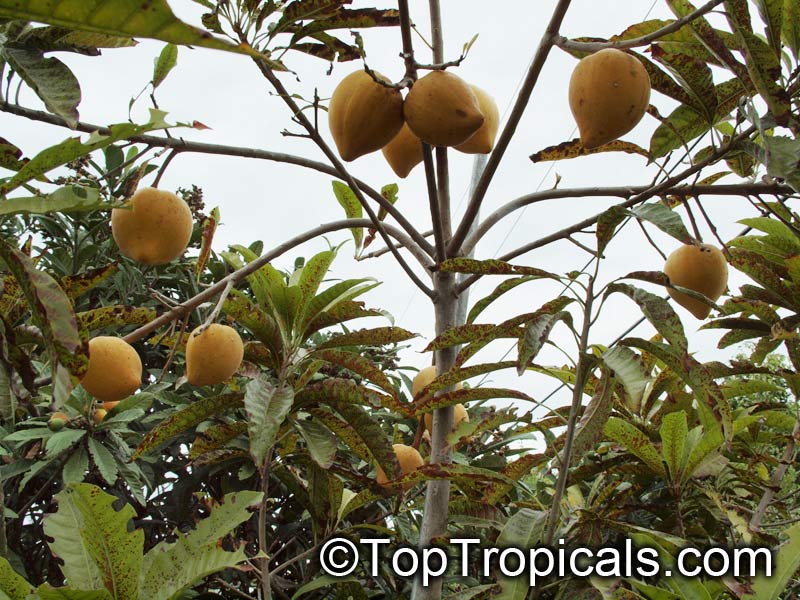
Phyllanthus acidus - Amlak, Otaheite Gooseberry

Phyllanthus  acidus  -  Amlak,  Otaheite  Gooseberry  in  a  pot

Grow Your Own Food

This is a fun rare fruit tree to have if you like lemonade and believe in Vitamin C benefits! The tree is super easy to grow, relatively cold hardy and doesn't require any special care. It is a fast growing plant, however the mature tree is only about 20 ft so it will be well suited for any size garden, even container garden. As you can see, it happily fruits in a pot. Bright yellow fruit are beautiful and curious, they always make a conversation piece!

About Otaheite Gooseberry

Otaheite Gooseberry, or Amlak, is a rare tropical fruit tree from SE Asia and India, very close related to Phyllanthus emblica (Amla, Amlaki), however it is much cold hardy than Amla. Known as Amritphala in Sanskrit, which literally means "the fruit of heaven" or "nectar fruit". It is so called because it has many helth benefits. Amlak is one of the favorite fruit of Indian people who definitely know what is good for you! Fruit paste is a major ingredient of Chavyanprash, a popular Ayurvedic tonic. It is the richest source of vitamin C.
Fruits are borne in loose clusters, which hang from the tree trunk and main branches. Fruits are esteemed for jellies, preserves and pastries, and are great for making a delicious lemonade rich in vitamin C. There are no commercial plantings; trees grow only in home gardens.

You need to have one! Or two. We have only limited quantities.

Phyllanthus  acidus  -  Amlak,  Otaheite  Gooseberry,  mature  tree

Phyllanthus  acidus  -  Amlak,  Otaheite  Gooseberry,  lot  of  loose  fruit

Date: 29 Aug 2021

Tropical Fruit Collections

September is a great month to plant. The soil is warm and the air is beginning to get cooler which helps to encourage new roots to grow. For much of the Country, September typically brings more opportunity for additional rain and moisture, allowing you to water less. Take advantage of this time of year to establish new plants in your gardens!

Tropical Fruit Starter Collection

Tropical Fruit Starter Collection - 4 plants for price of 2.
Tropical Fruit Starter set for half price! Rare tropical fruit trees that are easy to grow even for beginners. Start today to get fruit of your labor tomorrow! The Collection includes 1 of each: Fig, Banana, Mulberry, and Pomegranate.
Ficus carica - Fig Brown Turkey
Musa - Banana Double Mahoi
Morus sp. - Mulberry, Dwarf Everbearing
Punica granatum - Pomegranate var. Eversweet

Super Foods Bundle

Super Foods Bundle Collection - 4 plants for price of 2
Super Foods Bundle for half price! Get health foods right from your backyard. Start today to get healthy tomorrow! The Collection includes 1 of each: Goji Berry, Spice Ginger, Pomegranate, Tropical Asparagus (Katuk).
Lycium barbarum - Goji Berry
Zingiber officinale - Spice Ginger
Punica granatum - Pomegranate var. Eversweet
Sauropus androgynus - Katuk, Tropical Asparagus

Rare Fruit Collection

Rare Fruit Collection - 4 rare plants for half price.
Rare Fruit Set for Real Collectors - for half price! Hard to find, much wanted species all at once at low cost! Limited time offer. The Collection includes 1 of each: Chocolate Tree, Vietnamese Pepper, Peanut Butter Tree, Jackfruit.
Theobroma cacao - Chocolate tree
Piper sarmentosum - Vietnamese Pepper, Lalot
Bunchosia argentea - Peanut Butter Tree
Artocarpus heterophyllus - Jackfruit Super Thai

Date: 25 Jun 2021

Peanut Butter Fruit... tastes like peanut butter!

by Alex Butova, the Witch of Herbs and Cats

...One of the most fascinating exotic fruit, as amazing as Miracle fruit, Peanut Butter Fruit is loved by both kids and adults... and yes, it tastes exactly like peanut butter!.. Yet it is much healthier food, with many medicinal benefits...
...The easy, low-maintenance Peanut Butter Fruit tree is essential for any edible landscape, rare fruit collector, or tropical/subtropical garden. It has a great ornamental or screening value. Also can be grown in container, and will fruit indoors... Similar to fast-fruiting Annonas, and its close relatives Malpighia (Barbados Cherry) and Bursonima (Nancy Tree), Bunchosia tree starts fruiting in small size and at young age: 2-3 years from seed!..

CONTINUE READING >>