"Life is not measured by the number of breaths we
take,
but by the moments that take our breath away."
- Maya Angelou -
"...Remember, spend some time with your loved ones, because they
are not going to be around forever... ...Remember, say a kind word to someone who looks up to you in awe,
because that little person soon will grow up and leave your side... ...Remember to give a warm hug to the one next to you, because that
is the only treasure you can give with your heart and it doesn't cost a
cent... ...Remember to say"I love you"to your partner and your loved ones,
but most of all - mean it. A kiss and an embrace will mend hurt when
it comes from deep inside of you... ...Remember to hold hands and cherish the moment for someday that
person will not be there again. Give time to love, give time to speak, and give
time to share the precious thoughts in your mind... ...And always remember, life is not measured by the number of
breaths we take, but by the moments that take our breath away."
(A Life message from George Carlin after he lost his wife)
1. Throw out nonessential numbers, including age, weight and height. Let the doctor worry about them. That is why you pay them. 2. Keep only cheerful friends. The grouches pull you down. 3. Keep learning. Learn more about the computer, crafts, gardening. Never let the brain idle. "An idle mind is the devil's workshop." And the devil's name is Alzheimer's. 4. Enjoy the simple things. 5. Laugh often, long and loud. Laugh until you gasp for breath. 6. The tears happen. Endure, grieve, and move on. The only person who is with us our entire life, is ourselves. Be ALIVE while you are alive. 7. Surround yourself with what you love, whether it's family, pets, keepsakes, music, plants, hobbies. Your home is your refuge. 8. Cherish your health. If it is good, preserve it. If it is unstable, improve it. If it is beyond what you can improve, get help. 9. Don't take guilt trips. Take a trip to the mall, to the next county, to a foreign country, but NOT to where the guilt is. 10. Tell the people you love that you love them, at every opportunity.
Q: Recently I started working remotely and I kinda like it, no
need to commute, it saves me so much time so I can have life now! My friend got
me involved into growing some small houseplants but I really want to take
advantage of our Florida climate and sun. I want to plant some cool fruit trees
since I have a decent size yard. But I live in Florida Panhandle and we do
have some occasional freeze in winter, although not for too long. But it gets
very hot in summer! Are there any tropical fruit trees that will be happy
here? Or should I keep everything in pots? I am excited to have my own tropical
plant collection!
A: There is a perfect plant for everyone, and a perfect tree for
every climate. Many tropical and especially subtropical plants can be much
hardier than they are believed to be, both flowering and fruiting trees among
them. You may keep the most sensitive species in pots and bring them inside
for winter, while there are so many trees that will be happy in your area.
Start with these that are perfect for climates with hot summers and cool winters:
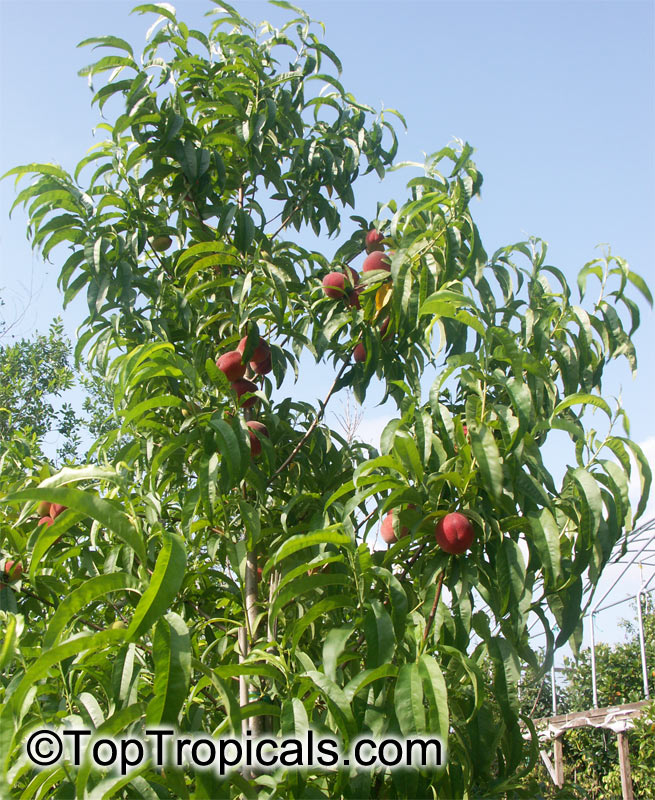
1. Peaches and Plums
Low-chill, Heat-tolerant Peaches, Nectarines, Plums are especially
selected for Florida hot summers. They produce well and do not require many
"chill" hours like temperate fruit trees. They only need 150 chill hours and grow
well in even in Arizona, so you know they are taking the heat.
2. Figs
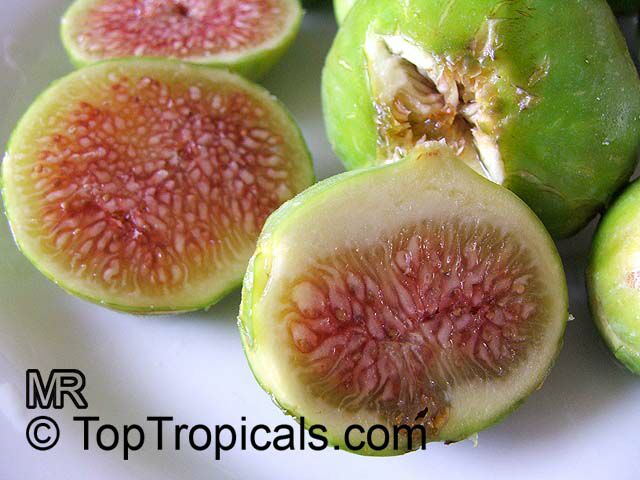
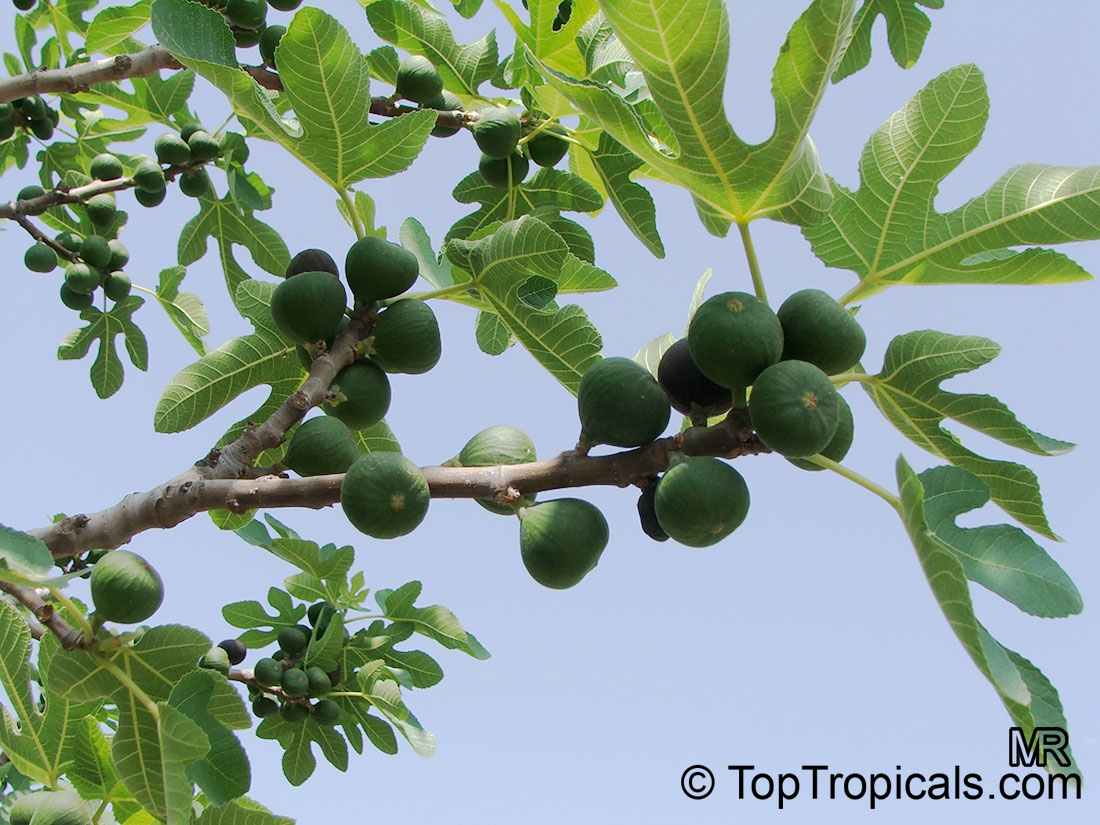
2) Fig trees - they are easy to grow, heat- and drought- resistant trees.
They are prized for their delicious fruit, which can be one to three inches
in length, violet, brown or black. There are even varieties with yellow fruit.
Most fruits are borne from early summer to late fall on new growth, and the
fruits generally mature very quickly. These trees are sensitive to frost only
when actively growing, but can withstand 10F when dormant.
Read more about Fig trees.
Date: 27 Oct 2025
🌳 Why Large Grafted Trees Are Better
These are not seedlings — they’re grafted trees, which means
you get the true variety with known flavor, quality, and performance. Large
grafted trees give you a real head start:
Already mature with a strong root system.
Handle transplanting and weather shifts with ease.
Can bloom and fruit in the first or second season.
No space for a full orchard? You can still grow your own tropical
paradise!
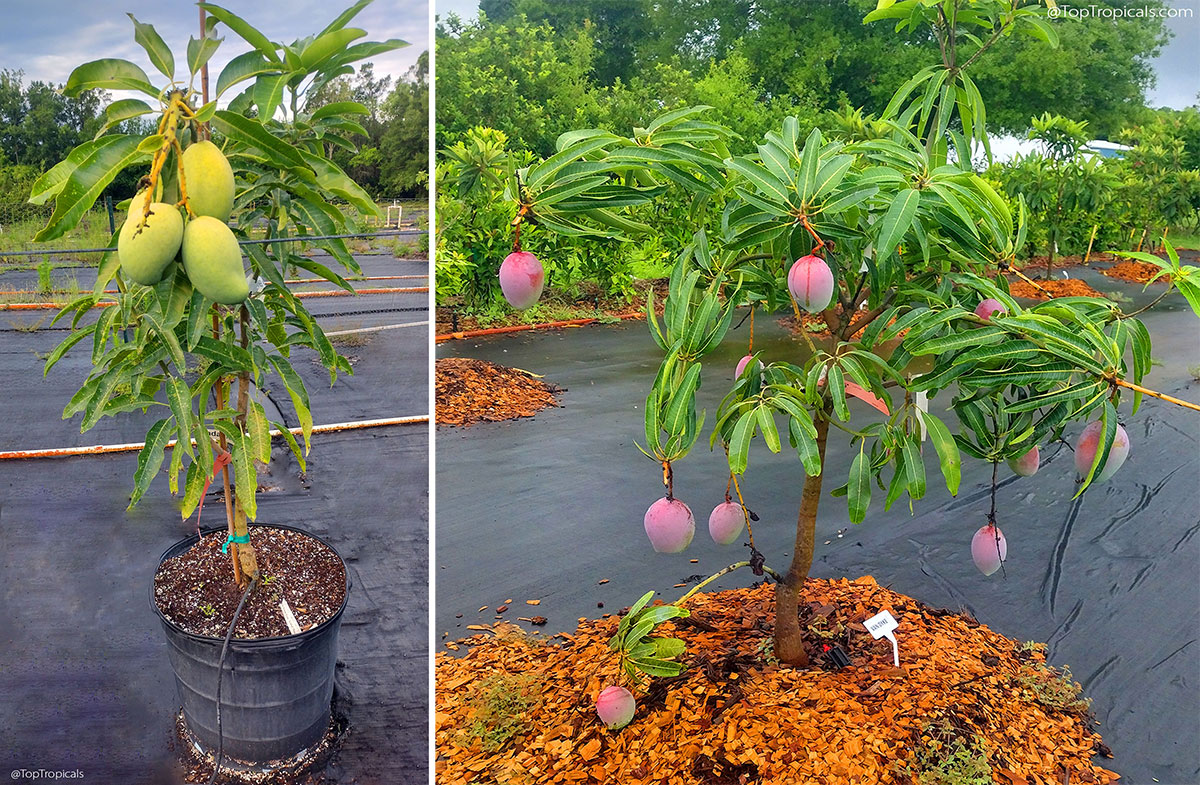
Our large grafted Condo Mango
trees adapt beautifully to big containers on patios,
balconies, and sunrooms. They stay compact, flower sooner, and can fruit
even in
pots when given good light and warmth. 👉 Learn more: What are the Condo Mangos?
Bring the tropics indoors — move your tree outside for summer sun,
then back inside before frost. It’s the perfect way to enjoy homegrown
fruit wherever you live.
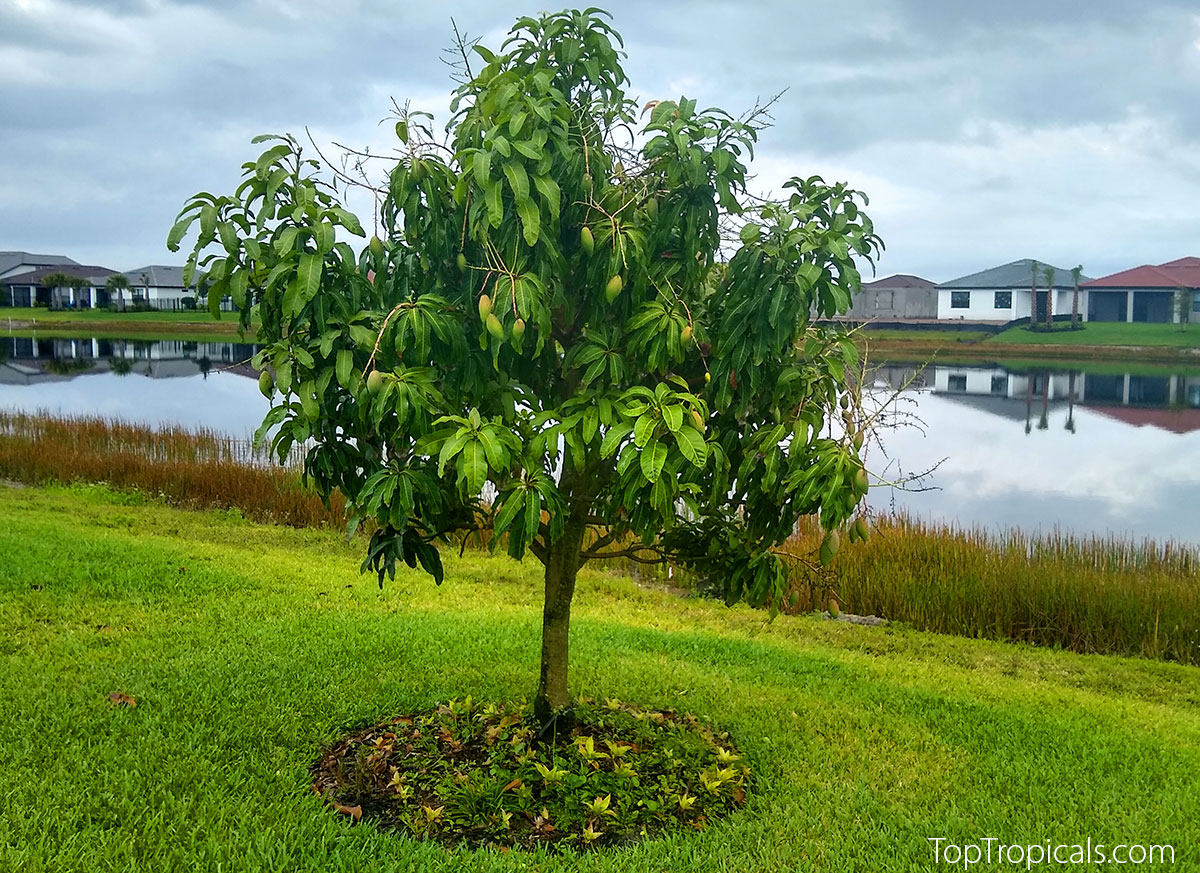
Give your garden a smart start this season. Large grafted Mango trees
are ready — but only for a short time before winter.
👉 Plant now, harvest sooner, and enjoy the true
variety!
Plant Care Tips by Top Tropicals Plant
Expert Tatiana Anderson
Large grafted Mango trees are easy to establish.
Soil: Well-drained, rich mix — avoid heavy clay.
Water: Deeply once or twice a week after the tree is established; keep soil
evenly moist during the first few weeks after planting.
Light: Full sun or bright patio spot.
Feeding: Use balanced fertilizer Sunshine
Boosters Mango Tango with every watering and Green
Magic controlled release fertilizer every 6 months for steady
growth.
Protection: Cover on cold nights for the first winter.
Plant once, care lightly, and your tree will reward you with fast growth
and early fruit.
🌳
Big Trees, Local Pickup Only
For our local gardeners, we have something special. Extra-large 15- and
25-gallon Mango trees. These are full, mature specimens that simply
can’t be shipped, but they’re perfect for local pickup or
delivery.
Instant Impact and Faster Fruit
These trees already have strong trunks, big root systems, and start
blooming next Spring. Plant one in your yard and it instantly looks like
it’s been there for years.
Delivery and Installation
We offer local delivery and professional installation for large
trees in the nearby area. Our team can bring the tree to your garden,
position
it correctly, and help with planting and setup.
Limited Availability: Quantities are small, and these big trees
go fast — once sold, they won’t be available again until next
growing season.
"Large grafted trees give you a head start — they’re stronger,
settle in faster, and can reward you with fruit the very next season," says
Tatiana Anderson
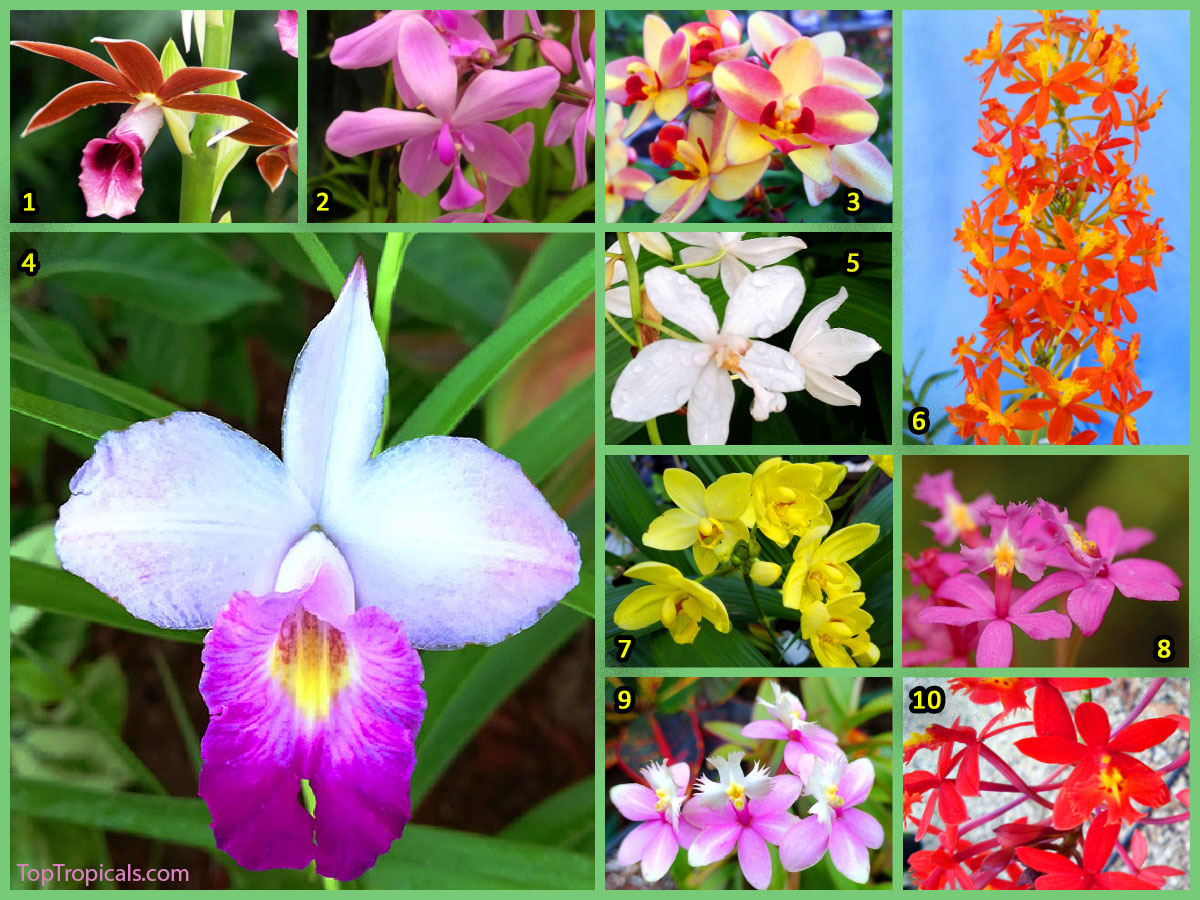
Orchids have a mystique that sets them apart — elegant, exotic,
almost unreal in their perfection. But let’s be honest, not everyone
has
luck with the fancy ones that cling to trees or need greenhouse tricks.
Ground orchids are different. They grow in regular garden soil, bloom in
sun or shade, and come in all sorts of shapes and colors. They’re the
orchids you don’t have to fuss over.
Nun Orchid
(Phaius tankervilleae) – Ever wonder why it’s called the
Nun
Orchid? The flowers really do look like the white veil and brown habit nuns
used to wear. The plants send up spikes 3–4 ft tall with 10–20
fragrant blooms that open one after another for weeks. I like them best
tucked
under trees where they just keep spreading year after year.
Spathoglottis – The nonstop bloomer – If you want flowers
that
just don’t quit, this one’s it. Spathoglottis clumps up and
throws
spikes of purple, pink, or yellow that last for weeks, then keep coming back
through the summer. In warm spots they’ll bloom almost year-round.
Honestly, it’s one of the easiest orchids you’ll ever grow.
💲
Special Offer – 20% off Ground Orchids!
Get 20% OFF ground orchids with code
ORCHID2025
Min order $100. Excluding S/H, valid online only,
cannot be combined with other offers.
7 best exotic dwarf trees for maximum impact in small tropical landscapes 🏡
For a yard that feels like a tropical escape but doesn't have the space for a massive jungle, these seven selections from TopTropicals are game-changers, chosen for their compact size, high "curb appeal," and unique tropical flair.
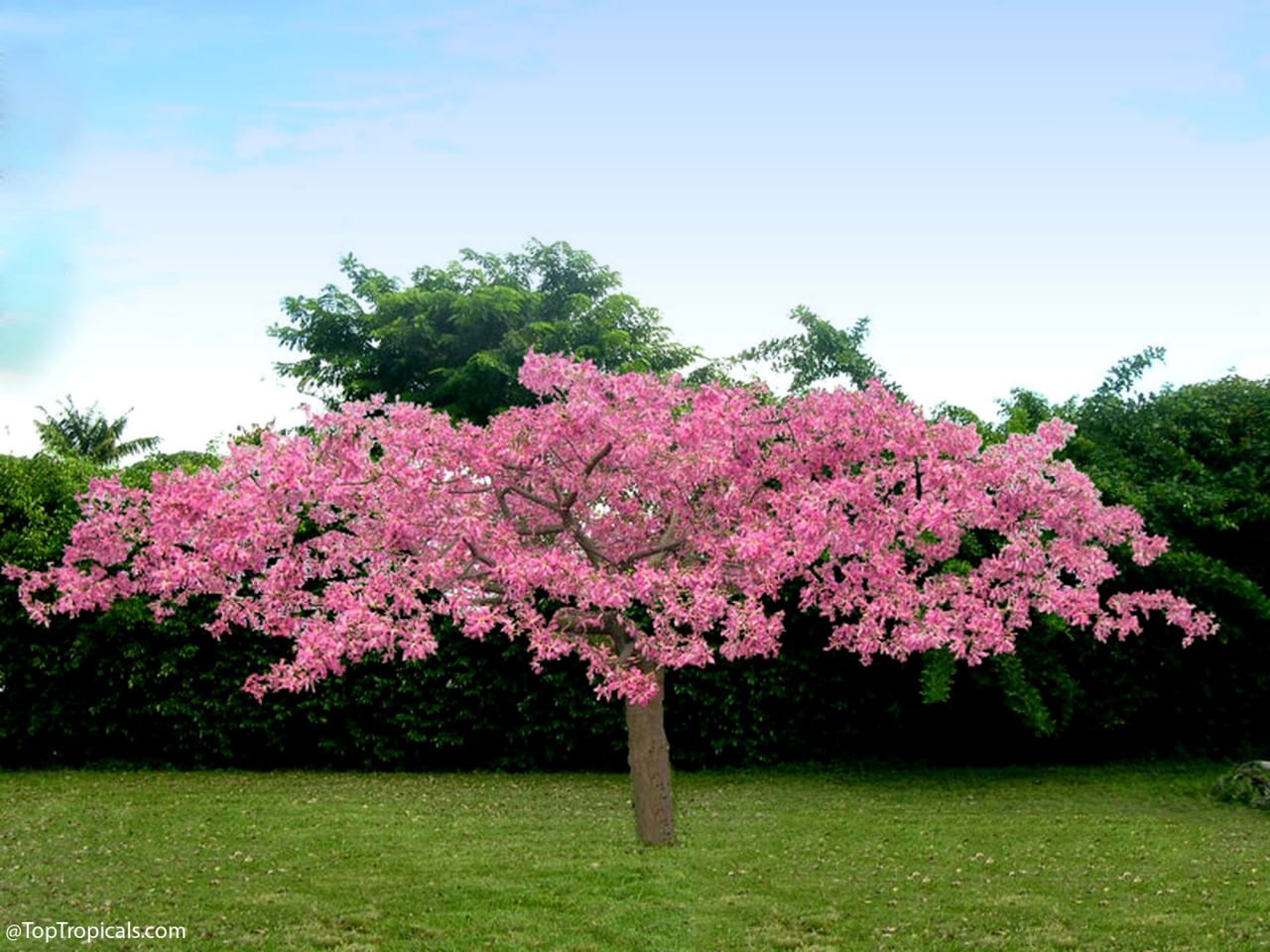
1. Dwarf Pink Princess Silk Floss Tree (Ceiba hybrid)
🌳 A spectacular grafted hybrid of the famous Silk Floss tree, but in a much smaller package: a unique, often "fat" or bottle-shaped trunk and large, showy pink flowers with white centers. 🏡 Unlike the standard Ceiba which can become a giant, the 'Pink Princess' is grafted to stay compact (usually under 10 - 12 feet), allowing you to enjoy those exotic, orchid-like blooms even in a tiny garden.
Ceiba Plant Facts
Botanical name: Ceiba sp. Also known as: Ceiba, Floss Silk Tree, Kapok Tree
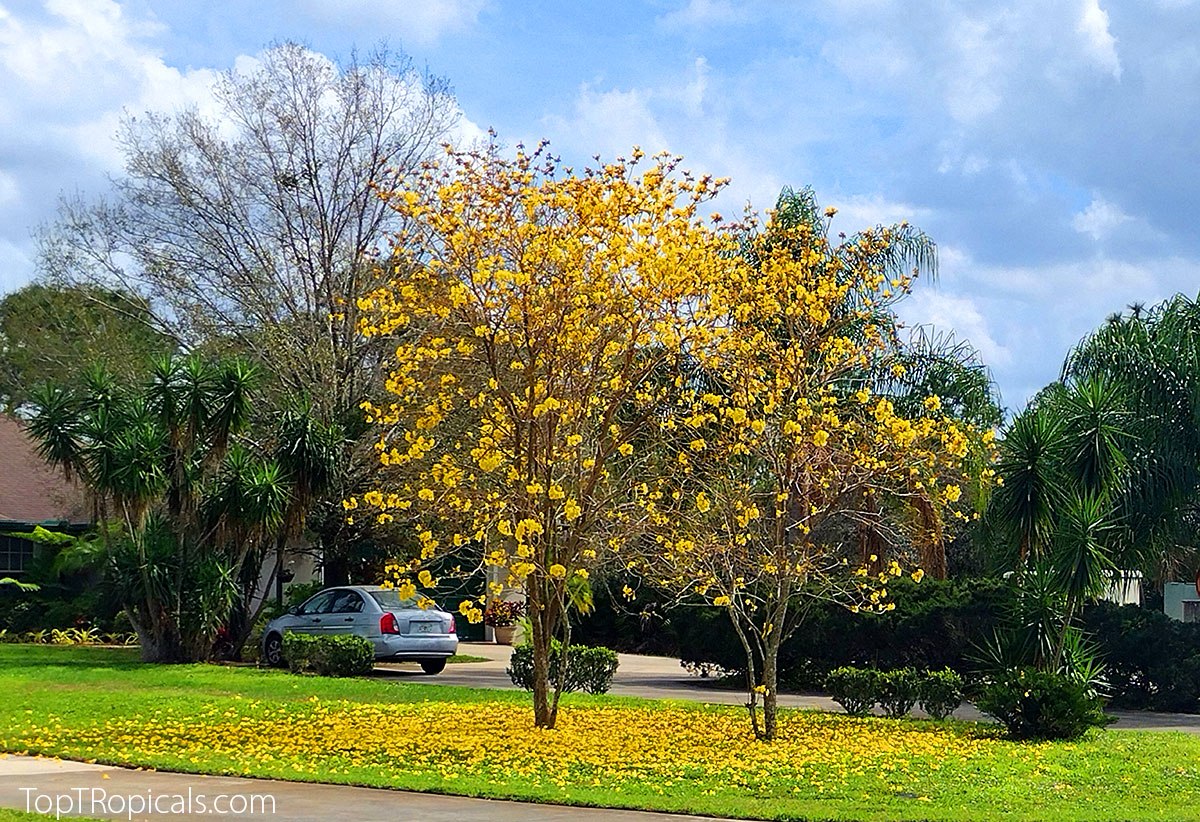
🌳 Known as the "Golden Trumpet Tree," this dwarf selection puts on one of the most brilliant displays in the plant kingdom. Before the leaves emerge in spring, the entire tree is covered in bright, trumpet-shaped yellow flowers. 🏡 This specific dwarf form stays much smaller and more manageable than the standard Tabebuias seen on city streets. Its silver-green foliage and rounded canopy make it an ideal "specimen" tree that acts as a focal point for your front yard.
Dwarf Golden Tabebuia Plant Facts
Botanical name: Handroanthus chrysotrichus, Tabebuia chrysotricha, Tabebuia chrysantha Also known as: Dwarf Golden Tabebuia
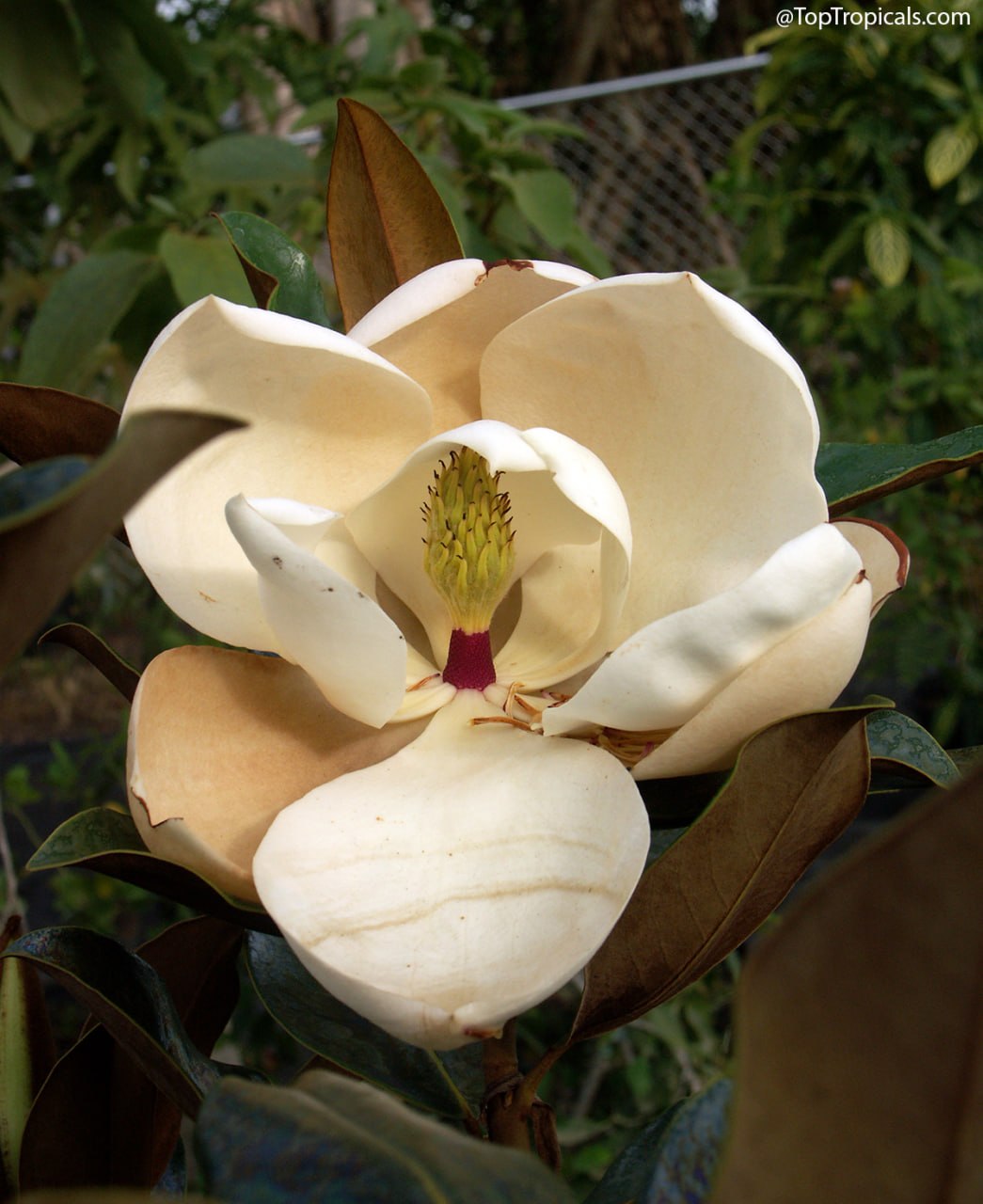
3. Little Gem Southern Magnolia (Magnolia grandiflora)
🌳 All the elegance of a classic Southern Magnolia but in a miniaturized version. It has the iconic waxy white, lemon-scented flowers and glossy leaves with fuzzy bronze undersides. 🏡 'Little Gem' is narrow and columnar, typically reaching only 15-20 feet (half the size of the standard species). It starts blooming at a very young age, so you don't have to wait years for those famous fragrant flowers.
Southern Magnolia Plant Facts
Botanical name: Magnolia grandiflora Also known as: Southern Magnolia, Bull Bay
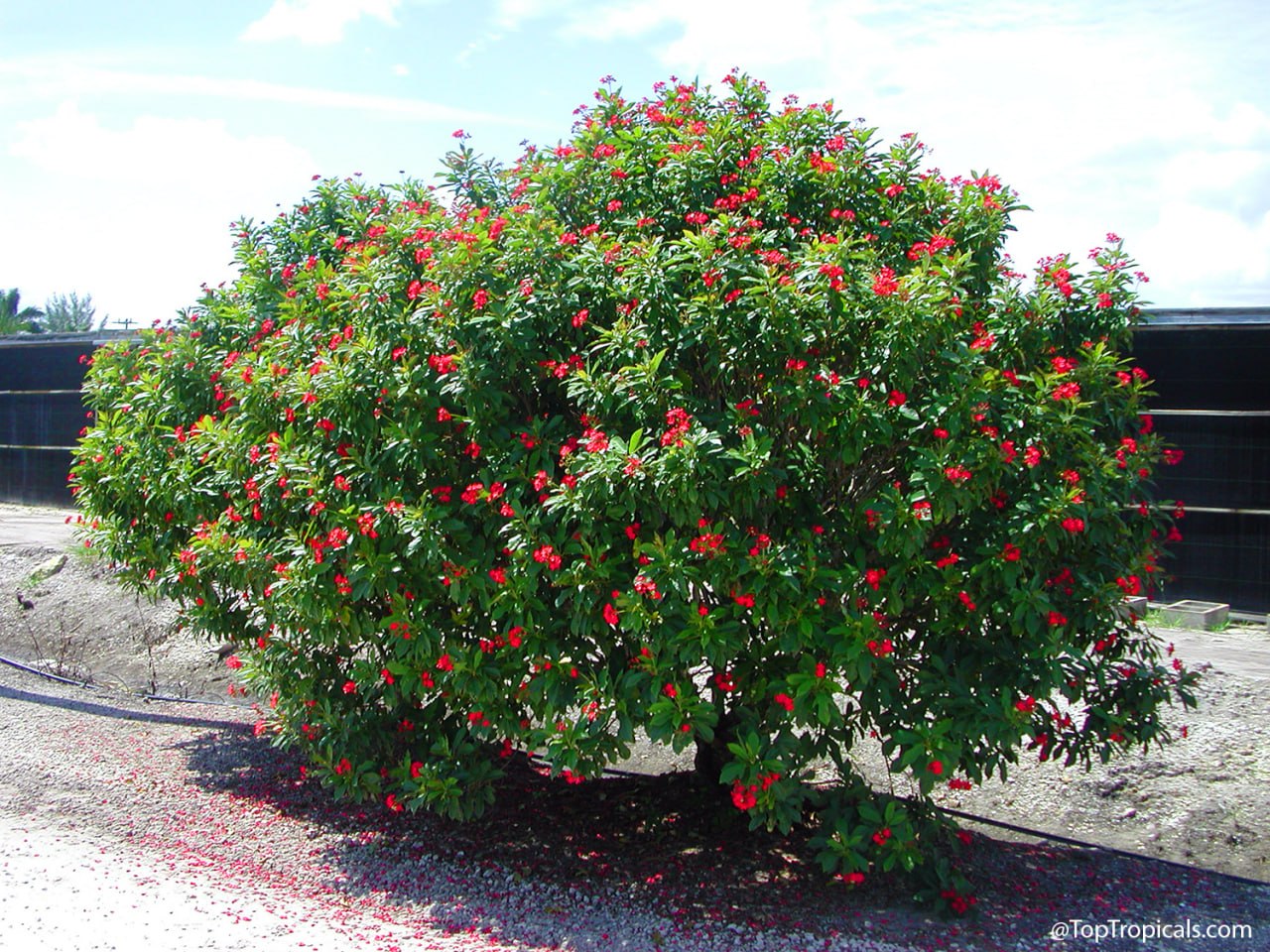
🌳 This "ever-blooming" small tree is a butterfly magnet. It features clusters of bright, cherry-red star flowers against glossy, fiddle-shaped leaves. 🏡 The Compacta variety is specifically bred to stay bushy and small. It blooms almost 365 days a year in warm climates, providing a constant splash of red that draws in hummingbirds and pollinators.
Peregrina Plant Facts
Botanical name: Jatropha integerrima, Jatropha pandurata Also known as: Peregrina, Spicy Jatropha, Coral Plant, Physic Nut
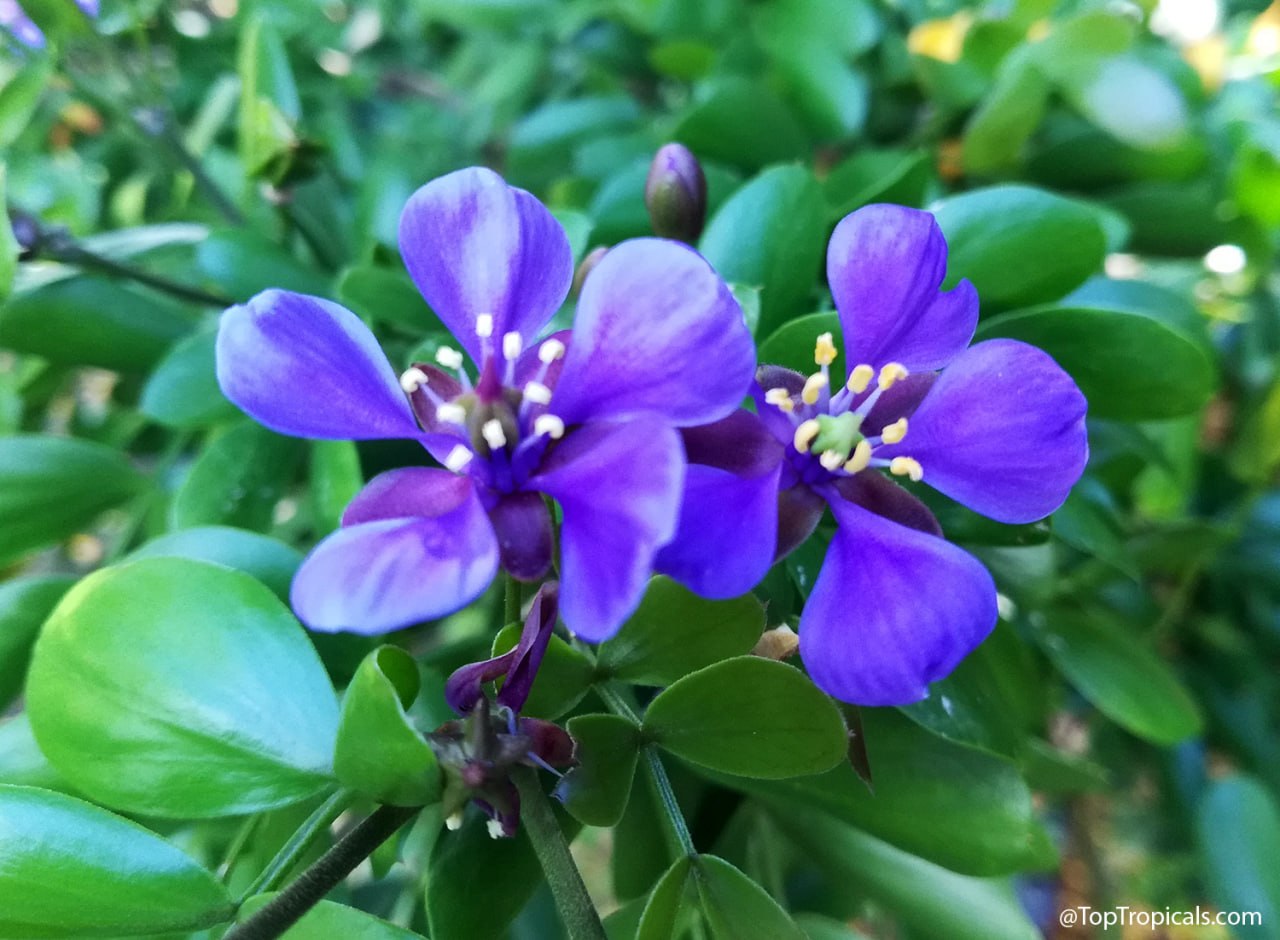
🌳 Known as the "Wood of Life," this is one of the slowest-growing trees in the world. It has fine-textured, dark green foliage and produce stunning, small blue flowers that fade to white, followed by bright orange seed pods. 🏡 Because it grows so slowly, it will never outgrow its space. It is extremely hardy, salt-tolerant, and hurricane-resistant, making it a "plant it and forget it" heirloom tree for coastal or small urban lots.
Lignum Vitae Plant Facts
Botanical name: Guaiacum sanctum Also known as: Lignum Vitae, Tree of Life, Gaiac tree
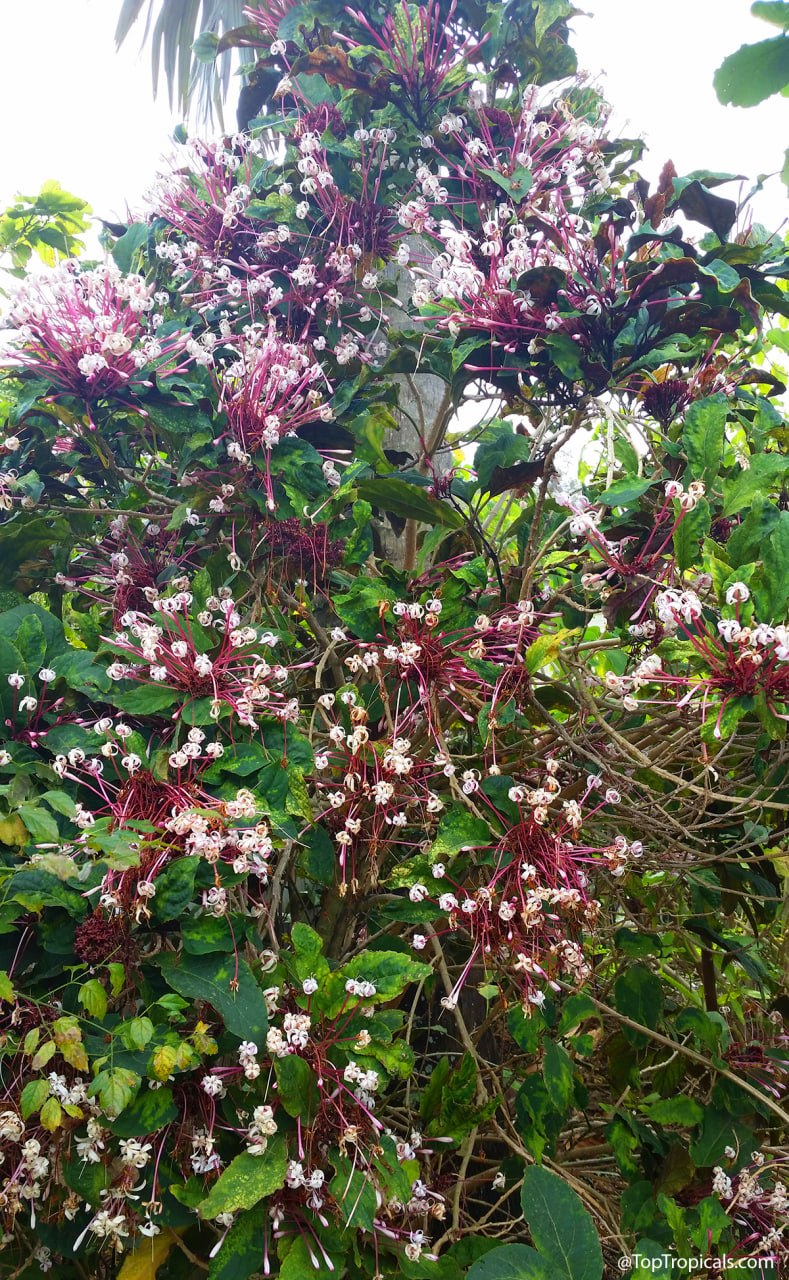
🌳 A visual firework display. The leaves are deep green on top and rich purple underneath. In late winter, it produces massive, 8-inch wide clusters of tubular pink-and-white flowers that look like an exploding star. 🏡 It is easily pruned to a single-trunk tree form. The purple foliage provides "curb appeal" year-round, while the winter blooms provide a much-needed pop of color when other plants are dormant.
Winter Starburst Plant Facts
Botanical name: Clerodendrum quadriloculare Also known as: Winter Starburst, Fireworks, Clerodendron
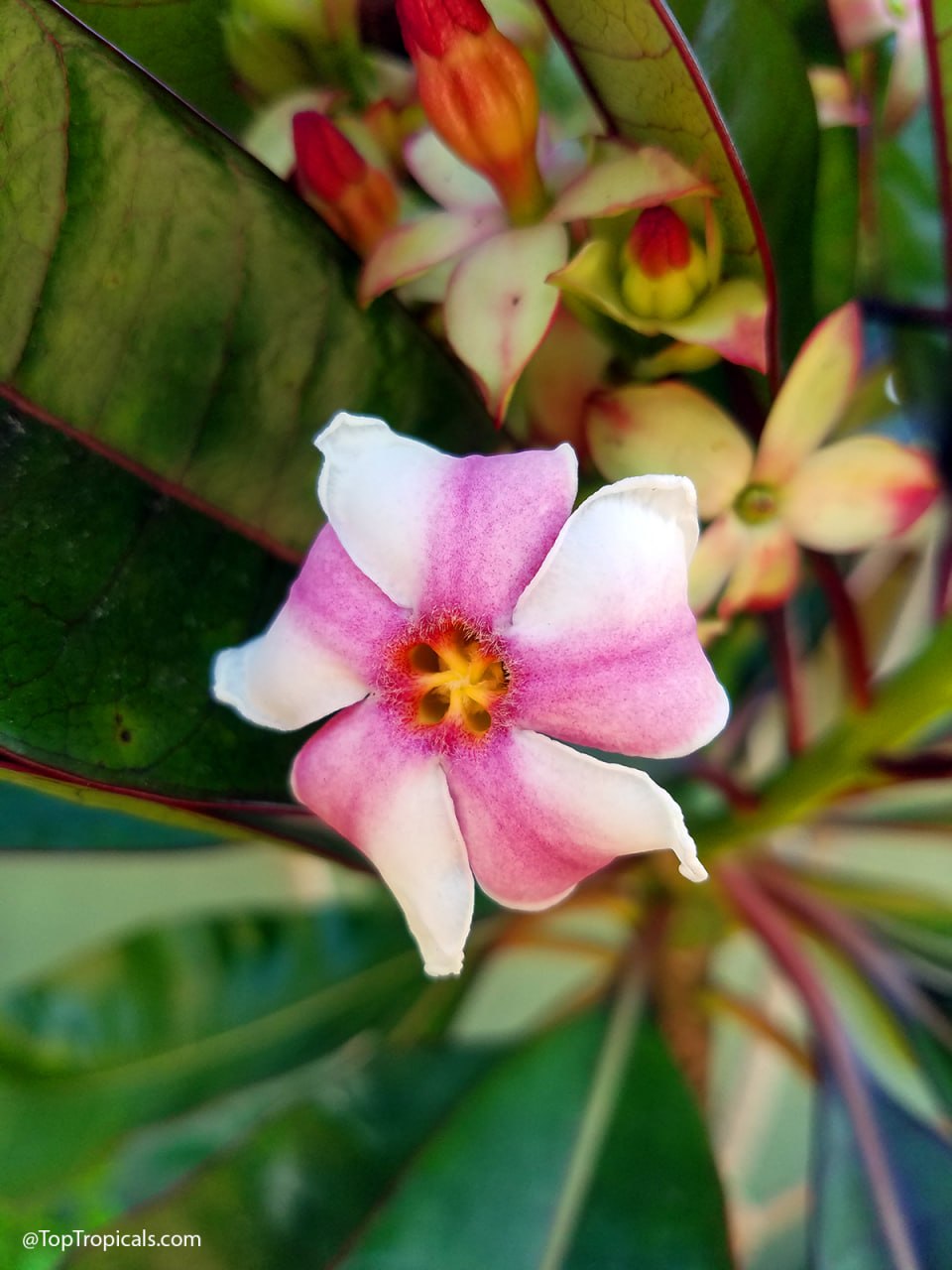
🌳 This is a rare, small evergreen tree with glossy, dark green leaves and clusters of highly fragrant, star-shaped white flowers with a red "eye." 🏡 It has an naturally architectural, upright habit. The fragrance is incredible - sweet and heavy - making it a perfect "sensory" tree to plant near a patio where you can enjoy the scent on summer evenings.
👉 more

 Plant Care Tips by Top Tropicals Plant
Expert Tatiana Anderson
Plant Care Tips by Top Tropicals Plant
Expert Tatiana Anderson