Garden Blog - Top Tropicals

Date: 25 Jan 2021

Coastal Plants. List of plants that do well in coastal areas
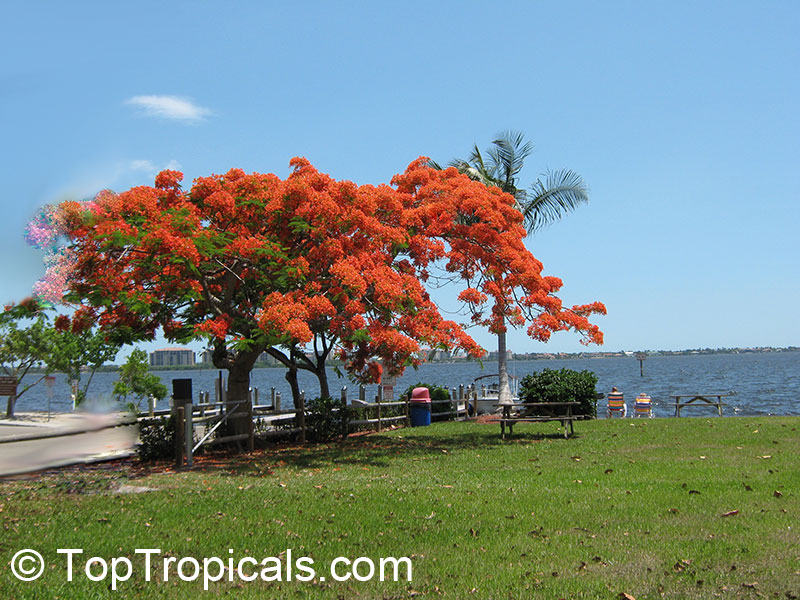
In the photo: Delonix regia - Royal poinciana, Flamboyant

Q: How can I get a list of plants that do well in coastal areas (i.e. next to sea)?

A: Many tropical plants live by the sea in natural habitat and don't mind ocean breeze. We have a large selection to pick from. The following groups of spectacular flowering trees will enjoy coastal environment:
Cordia trees
Plumerias
Orchid trees (Bauhinias)
Caesalpinias
Callistemons (Bottle brush trees)
Cassias
Many palm trees

See full list of salt-tolerant plants available at this time.

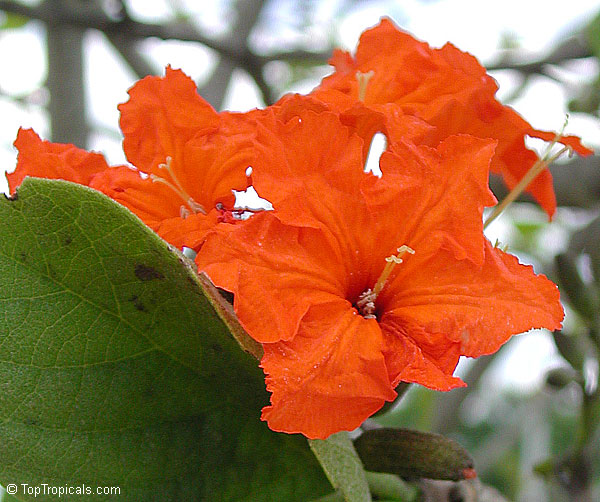
In the photo: Cordia sebestena - Scarlet Geiger tree
Date: 19 Jan 2021

Tropical Planting Breaks the Rules. WInter planting in Florida

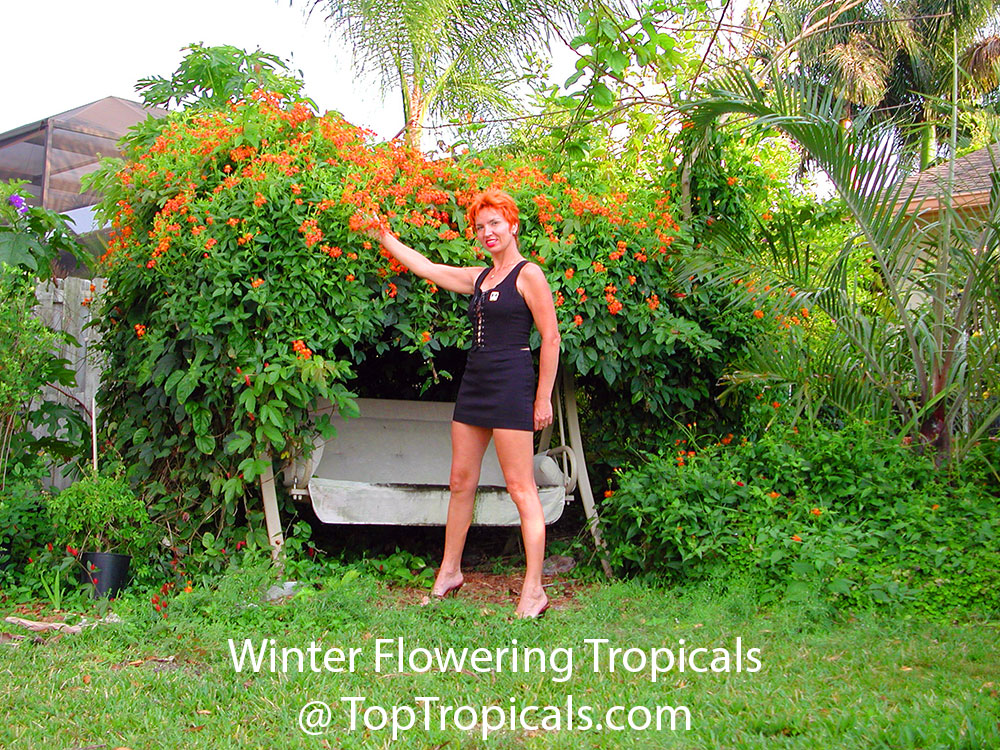
In the photo: Senecio confusus - Mexican flame vine, one of the most spectacular winter-bloomers.

by Murray Corman (Garden of Delights)

Waiting for Arbor Day or the first day of spring to plant a tree is something of a missed opportunity for those of us who live in the virtually evergreen world of the tropics and subtropics. Wintertime does not just mean hard work for tropical gardeners. It is also a time to enjoy the fruits of our labor. Winter-blooming plants and the visitors they attract - birds, bats and butterflies - make the garden as enjoyable in winter as any other time of year.
What a welcome relief: January daytime temperatures in the 70s, dropping to the 60s at night. This is why I came to live in the subtropics of southern Florida. The balmy climate of South Florida represents one of the few places on the mainland United States where tropical plants thrive unprotected outdoors...

CONTINUE READING >>

Date: 28 Dec 2020

Spanish Lime Tree

Q: Do I need two plants of the Spanish lime to have fruits? Do you have a grafted tree that I would only need one plant?

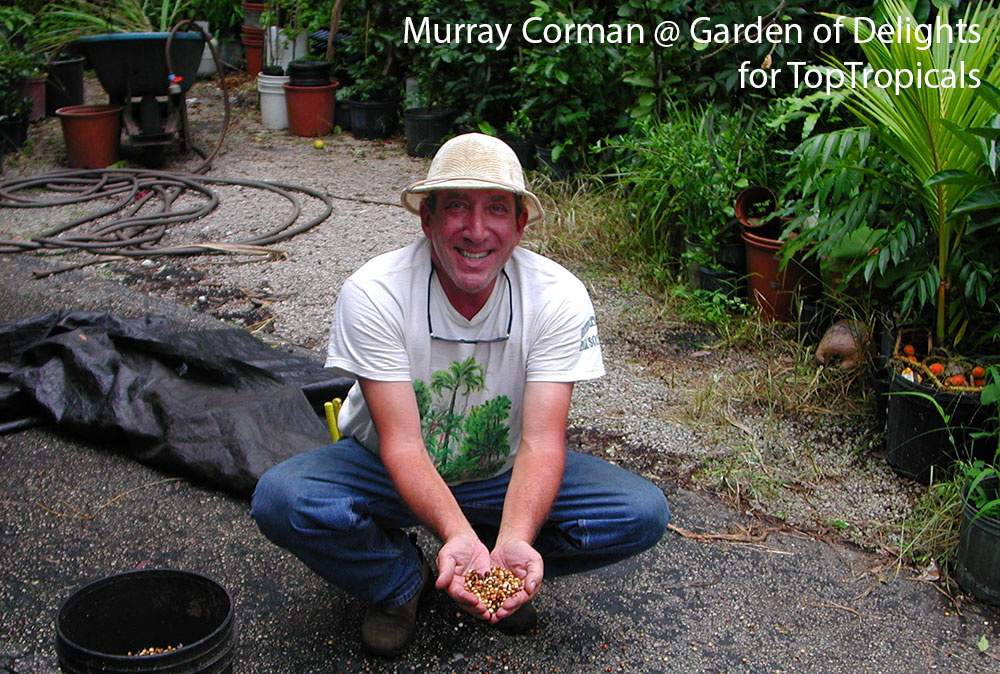
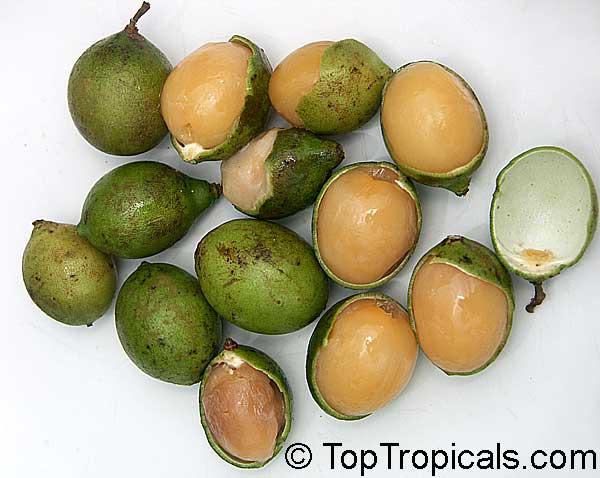
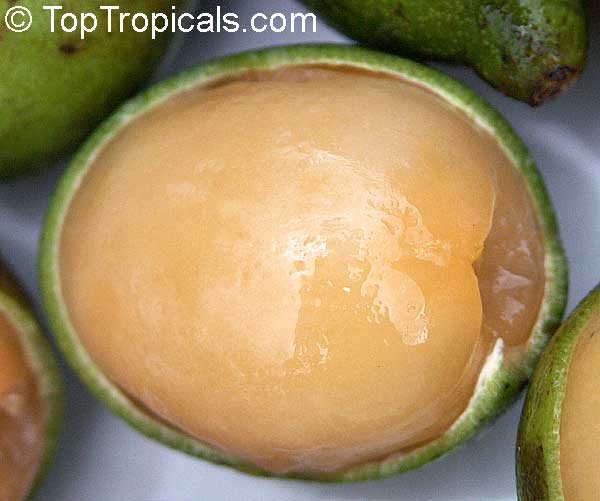
A: From our experience with Spanish Lime trees - Melicoccus bijugatus, fruiting habit really depends on variety. There are self-pollinating varieties that only require one tree. Seedling usually require cross-pollination between two trees for better production. It doesn't mean that one tree won't bloom or fruit - it will, but production may be lower than if they were cross-pollinated.
The Spanish Lime trees we currently have in stock are seedlings from a good, self-pollinating variety Key West, however, only grafted trees are precisely true to variety since they are technically clones. Seedlings normally take a few years (3-4) until they start fruiting. Spanish Limes don't have to be grafted to produce quality fruit, however, grafted trees may take less time till they fruit.
This species is really hard to obtain and we do not have any grafted trees now, and probably not for another year. So if you really want this fruit tree, you may want to try at least with a seedling. We only have a few left in stock and many people want them. Otherwise, you may sign up for the wish list and wait until we (hopefully) have grafted specimens (enter Melicoccus bijugatus in wish list).

Date: 9 Dec 2020

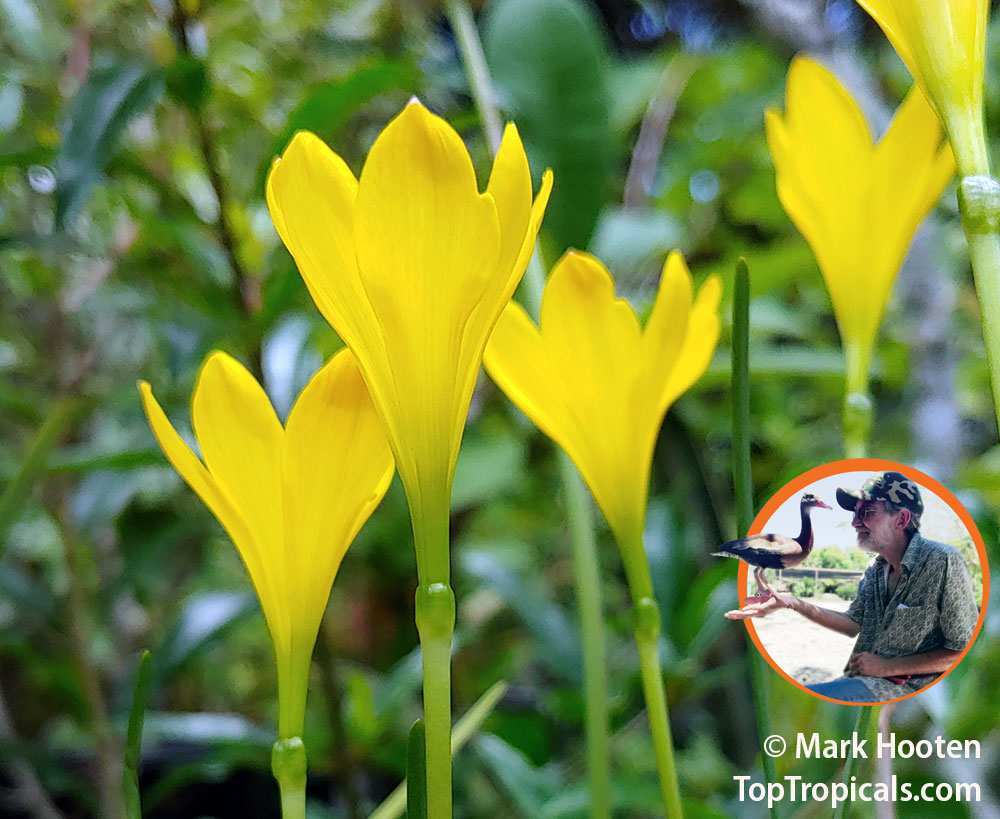
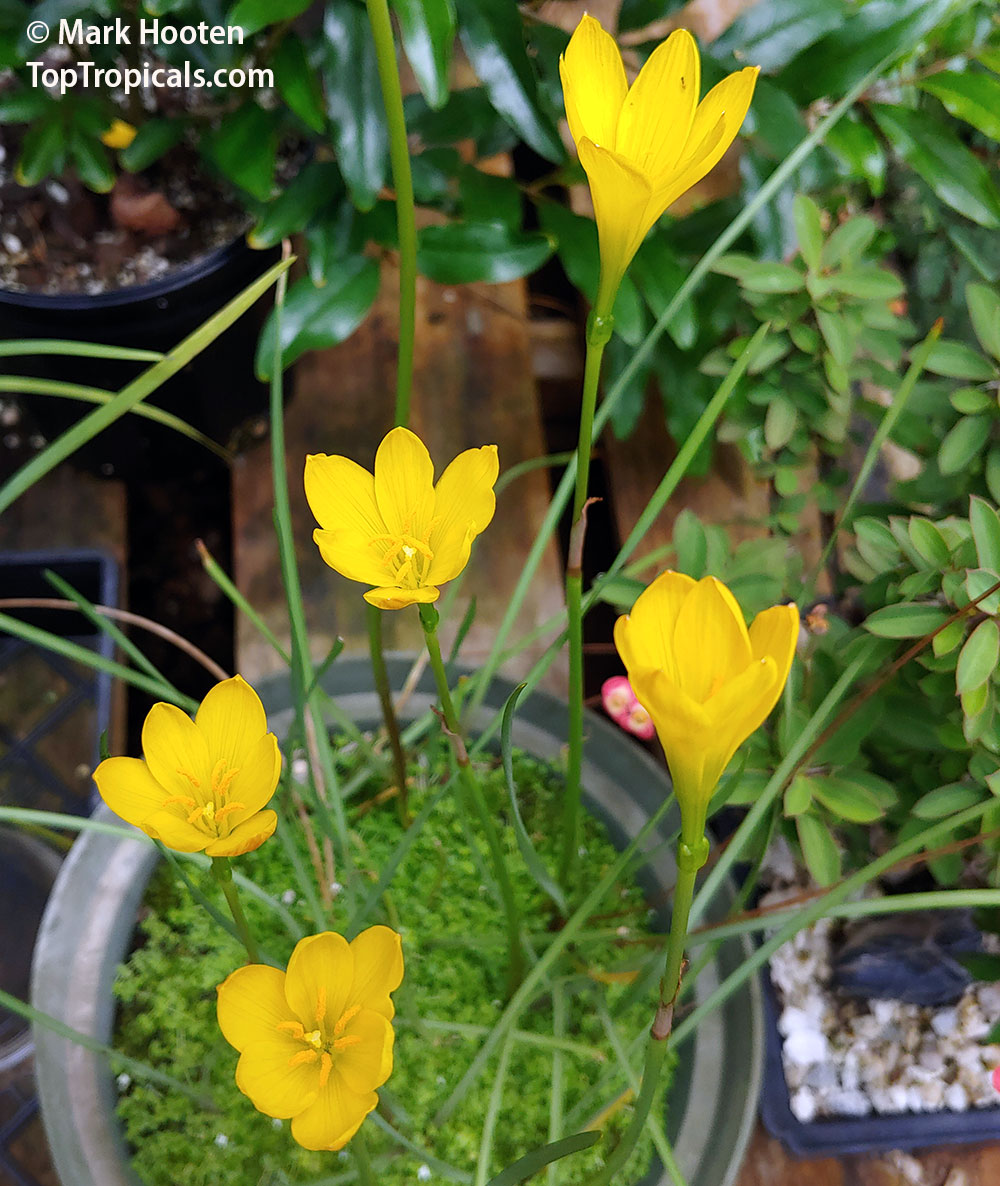
Zephyranthes pulchella - sunny face of incredible Magic Lily

by Mark Hooten, the Garden Doc

...These wonderful little lilies came as a gift from a botanist studying the native plant life of Southern Texas nearly 30 years ago. Originally grown from seeds collected for a doctoral thesis, near the town of Refugio (along the Southern Texas Gulf Coast, just north of Corpus Christi), this brilliant, fetching tiny lily really deserves to be more well known. The thin, grass-like leaves grow from small onion-like bulbs that produce an abundance of shockingly bright cadmium-yellow flowers which greatly resemble those of certain yellow Crocus, except on longer stems.
There is one caveat which goes along with this incredible species... it can be wonderful, depending upon a growers situation... which is that this species is "apomictic". This means that they produce seeds which do not require cross pollination, and technically are clones of each mother plant!..

CONTINUE READING >>

Date: 4 Dec 2020

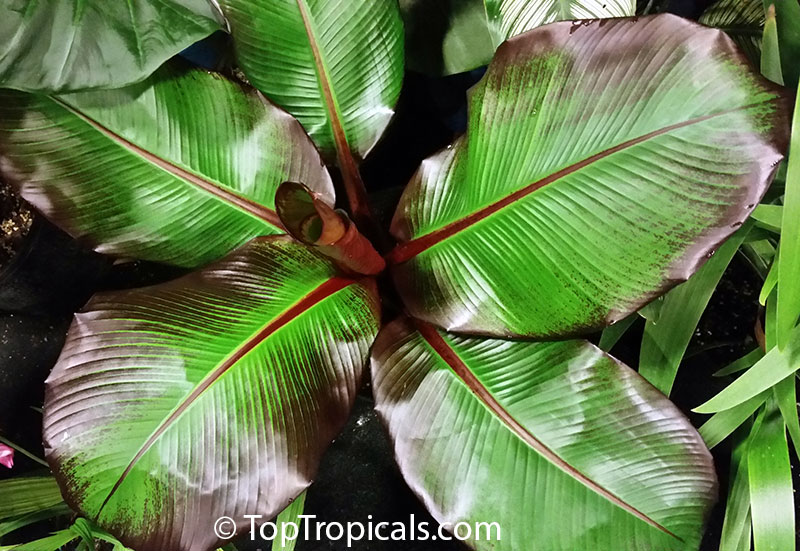
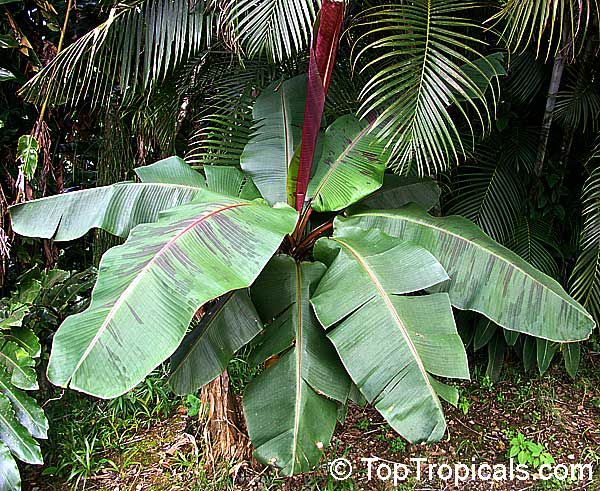
Musa ensete Maurelli - Red Abyssinian Banana

by Onika Amell, tropical plant expert

Q: I am looking for a colorful, tropical plant with in particular, coarser texture, to add to planting beds next to my decks and around my swimming pool. Any suggestions? I am located in St. Petersburg, FL.

A: Consider incorporating some fast growing Red Abyssinian Banana, also known as wild banana or Ethiopian banana. This is a fantastic ornamental from East Africa and an excellent choice to create a tropical feel and to add coarse-textured foliage. This plant is not a true banana and therefore does not produce any edible fruit. American gardeners were rather slow to discover this enormous perennial, but finally woke up to them over the last decade to a point where they now are considered to be one the most beautiful ornamental banana plants for the landscape and for good reason...

CONTINUE READING >>